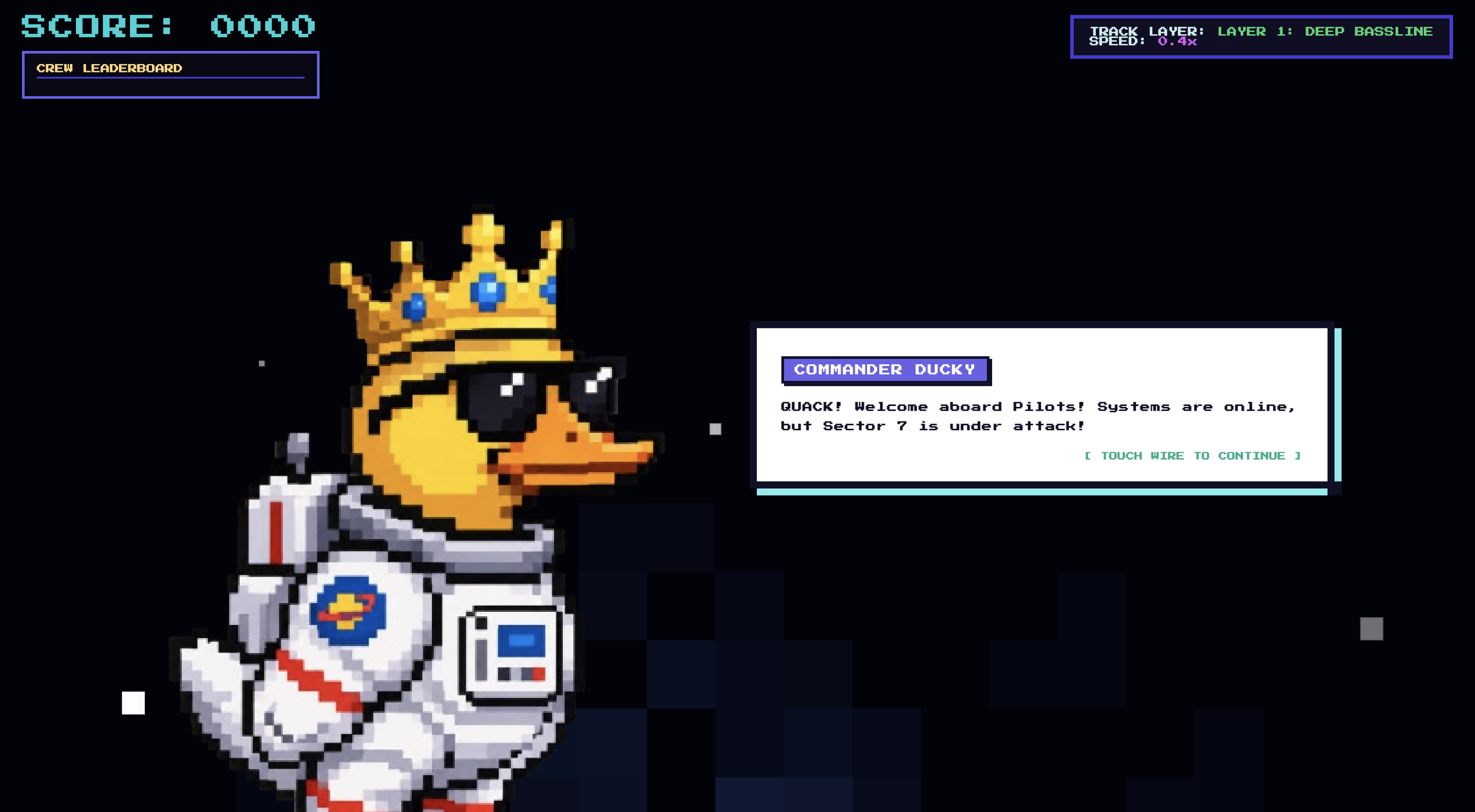
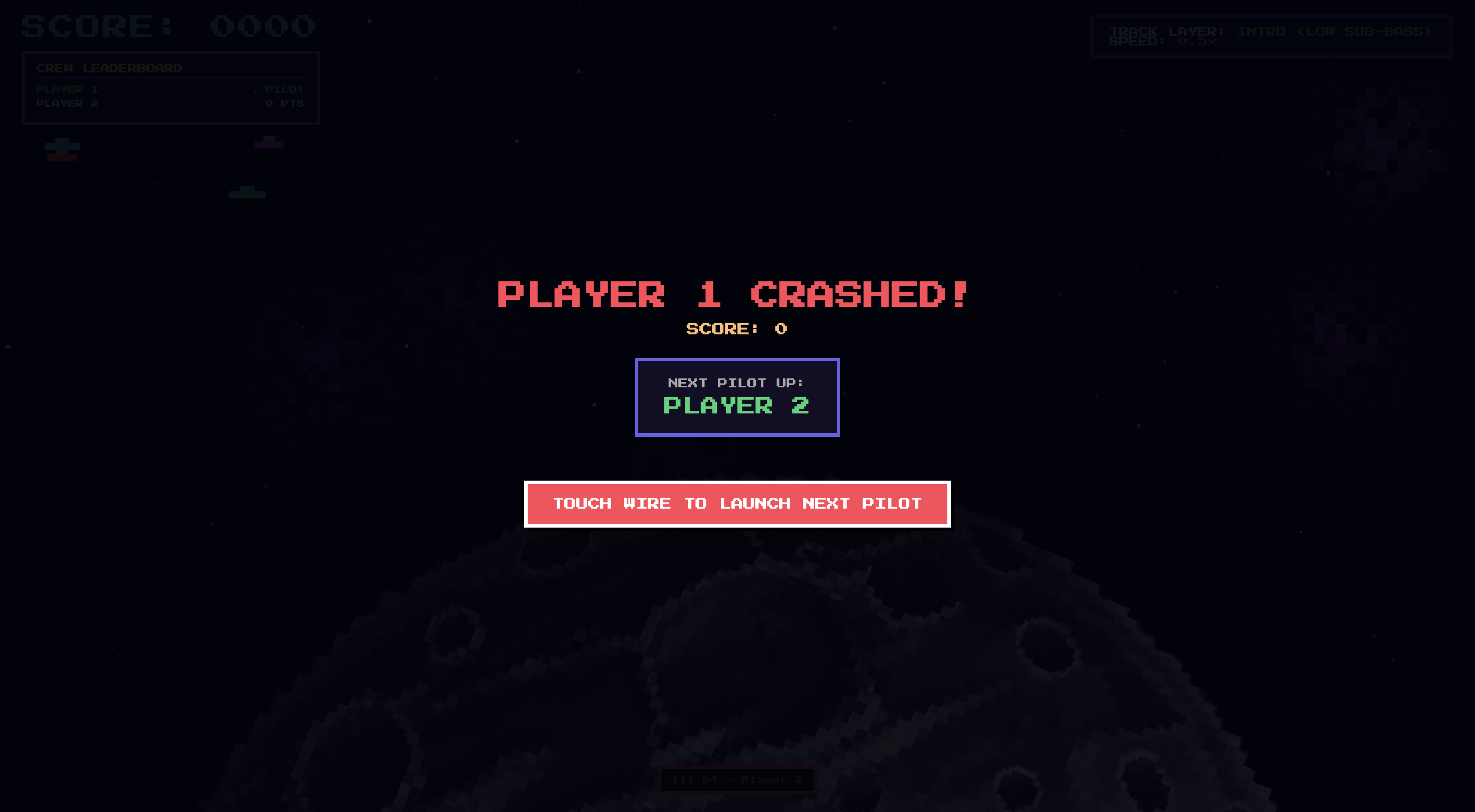
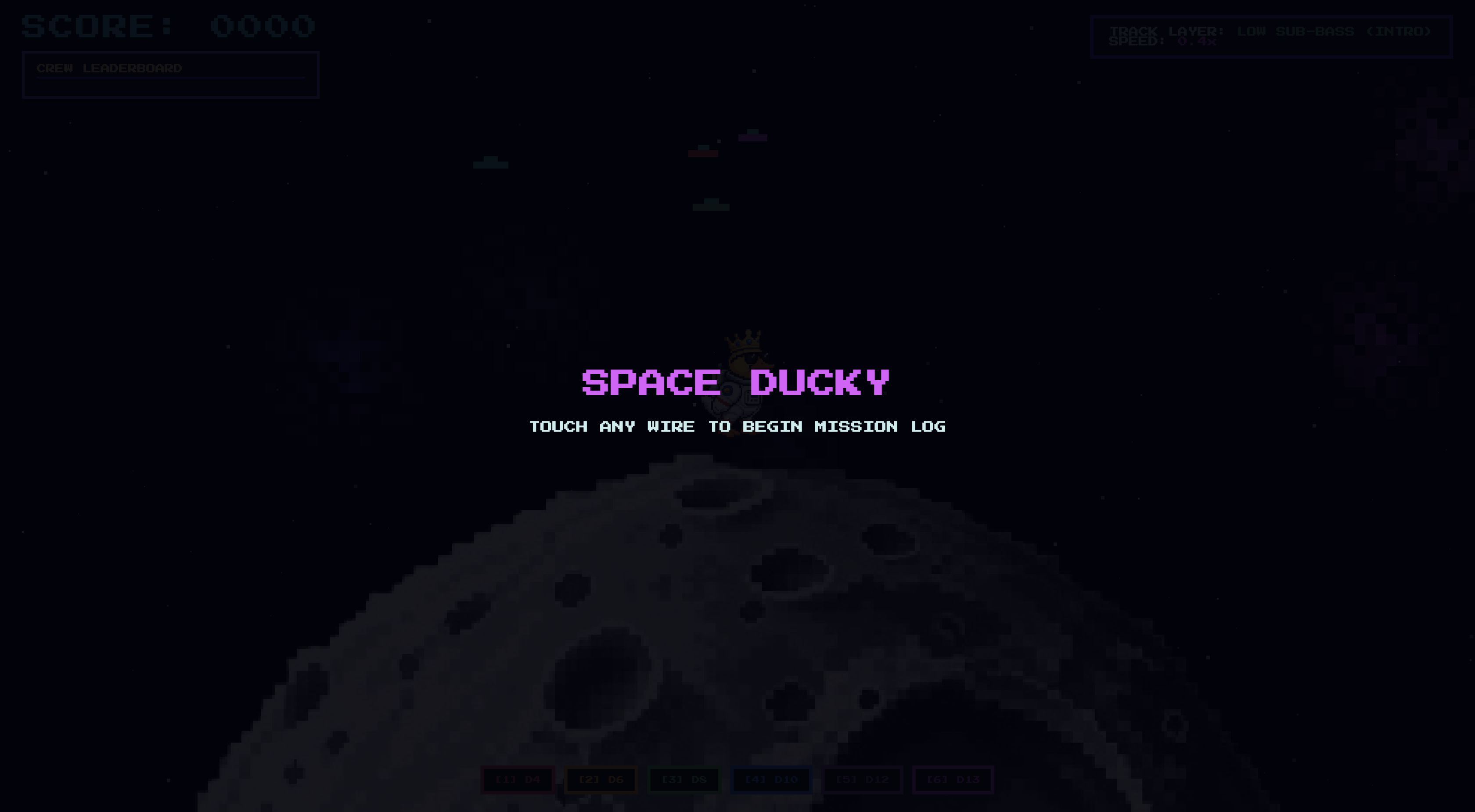
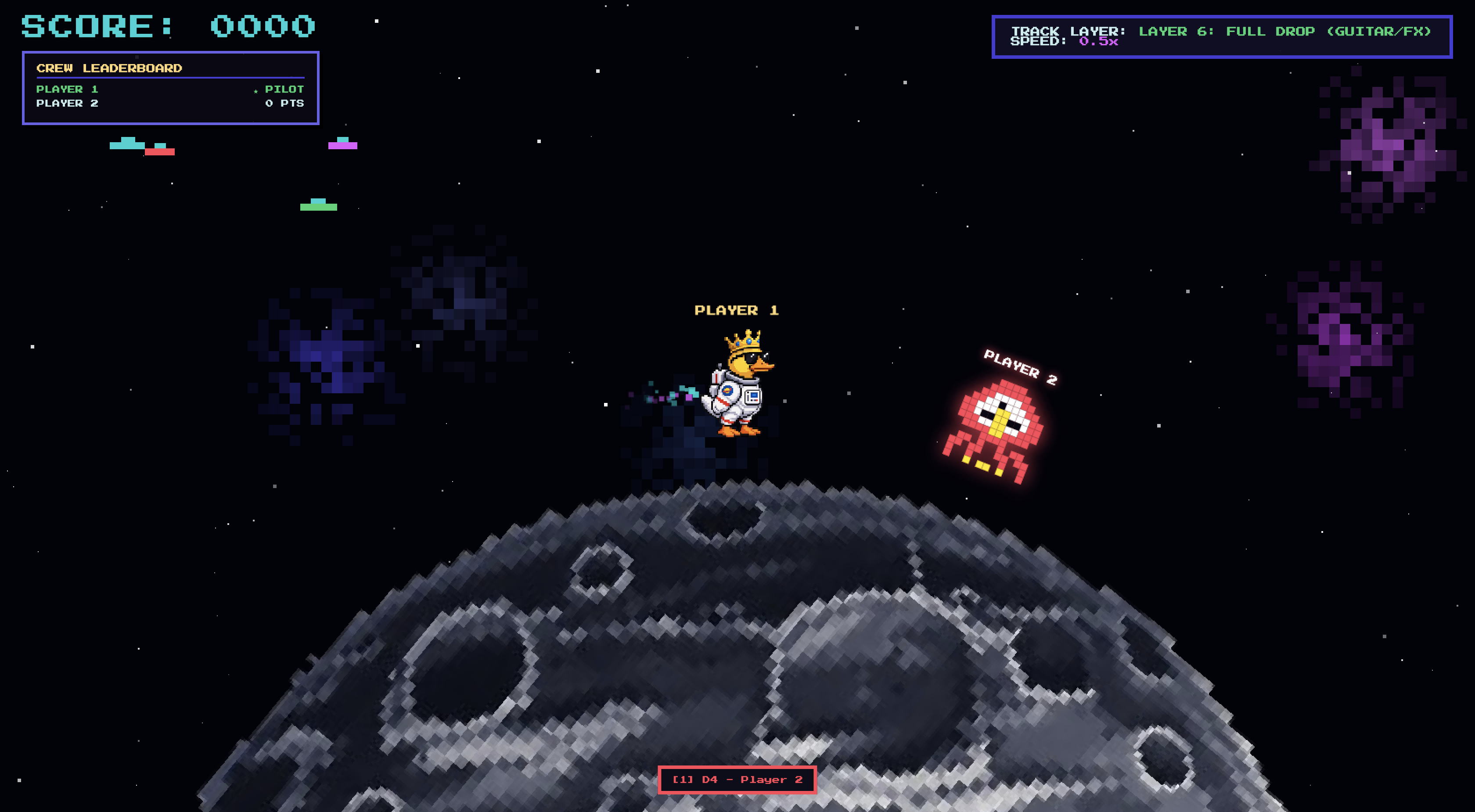
Inspiration In a world where multiplayer games usually mean sitting behind separate screens, we wanted to create an arcade experience that forces players to interact in real life. We asked ourselves: What if the controller wasn't a piece of plastic, but another human being? Inspired by bio-conductive technology, we set out to build a cooperative game where touch, high-fives, and holding hands are the only way to play.
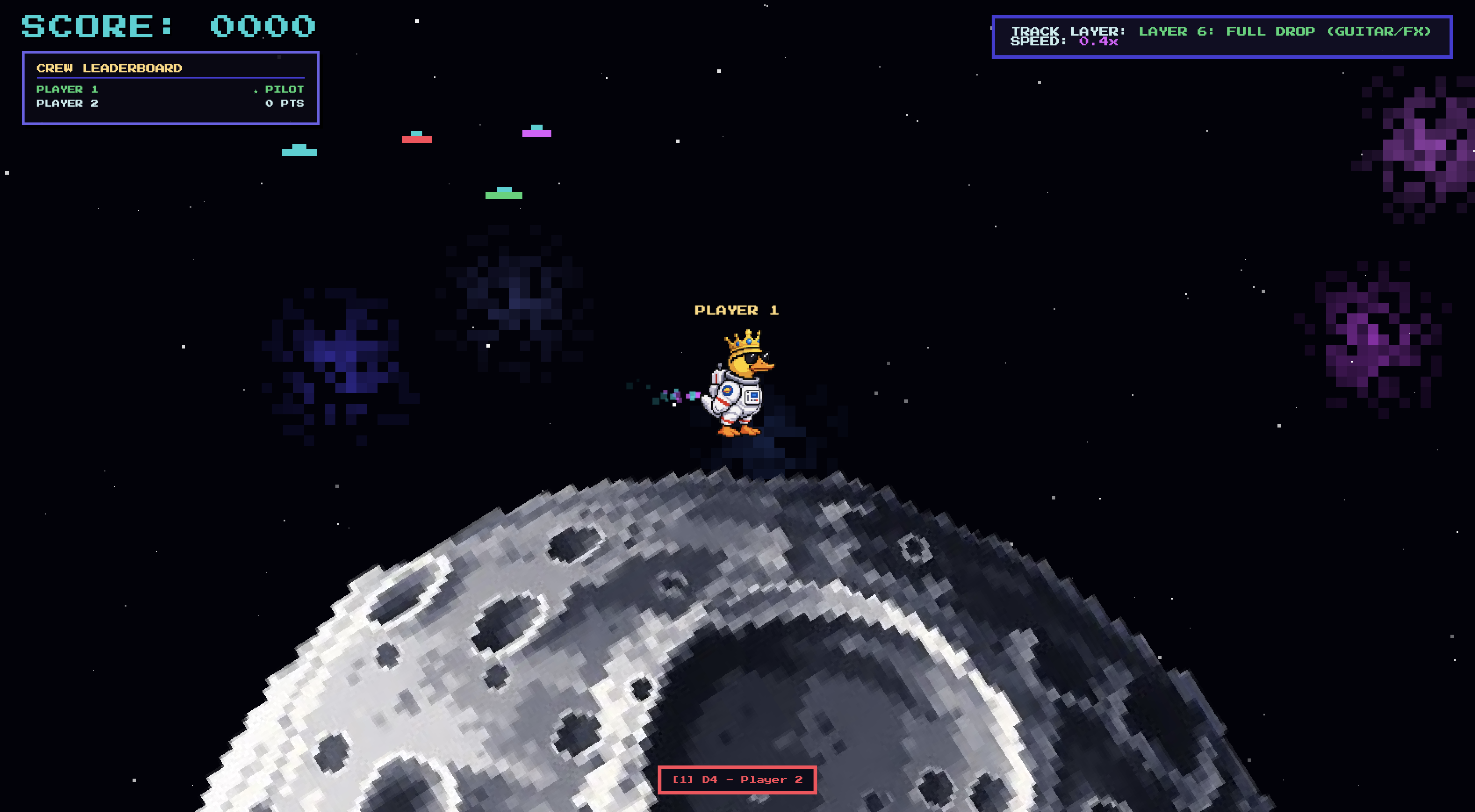
What it does Space Ducky is a multiplayer arcade survival game where players pilot Commander Ducky through hazardous cosmic sectors. To trigger shields and dodge alien disruptors, players must use skin-to-skin contact:
One player holds an electrode wire while another holds the control lead.
To execute in-game actions, players must physically touch hands, high-five, or tap arms to complete the low-voltage electrical circuit.
The game automatically routes dynamic stem tracks and audio layers in real time as players physically connect, building a rich musical soundtrack while defending the ship.
How we built it Custom Hardware: We wired an Arduino directly to multi-channel capacitive/resistive touch leads. The Arduino reads micro-current changes transmitted through human skin when two or more people touch.
Serial Bridge: A Python background worker reads high-baud rate serial input (230400 baud) from the Arduino, decoding touch triggers with sub-millisecond latency.
Web Socket & Game Engine: The Python backend streams live input events via Socket.IO to a web-based Canvas arcade engine built with HTML5/JavaScript, driving real-time WebAudio synth layers and retro pixel-art animations.
Challenges we ran into Human Skin Resistance: Skin conductivity varies wildly between people depending on moisture and pressure. Tuning the Arduino thresholds so that a high-five triggers cleanly without false positives was a major hardware challenge.
Serial Latency: Preventing input lag between a physical hand-touch and the in-game shield response required optimizing the Python serial listener and WebAudio buffer scheduling.
Accomplishments that we're proud of Creating a hardware prototype that turns literal physical human contact into seamless, real-time game inputs.
Watching complete strangers laugh, high-five, and hold hands to beat the game together during playtests.
Building a full retro WebAudio synthesizer engine that dynamically layers instruments as players trigger different wire frequencies.
What we learned We learned how to handle serial communications at high baud rates and route bio-conductive signals safely. More importantly, we learned that game mechanics that encourage real-world physical interaction break the ice faster than any traditional multiplayer game!
What's next for Space Ducky Building custom capacitive copper wristbands for easier multiplayer setups.
Adding cooperative gesture mechanics (e.g., holding hands for 3 seconds creates a continuous super-shield).
Designing portable arcade cabinets with built-in metal hand-pads for tournaments.

Log in or sign up for Devpost to join the conversation.