-
-
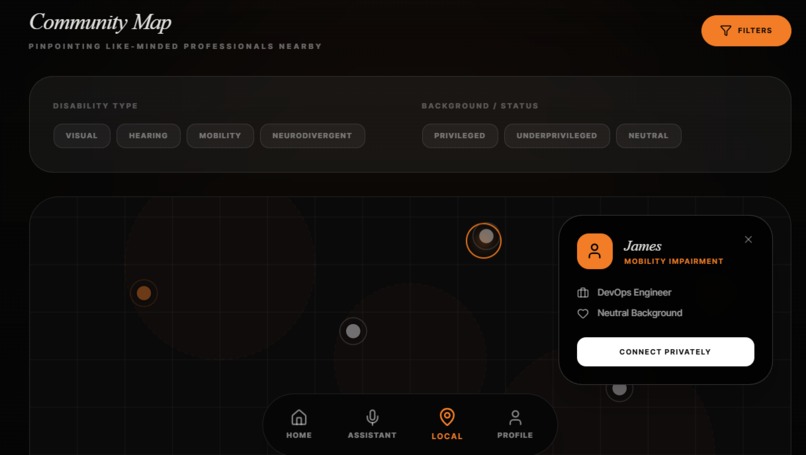
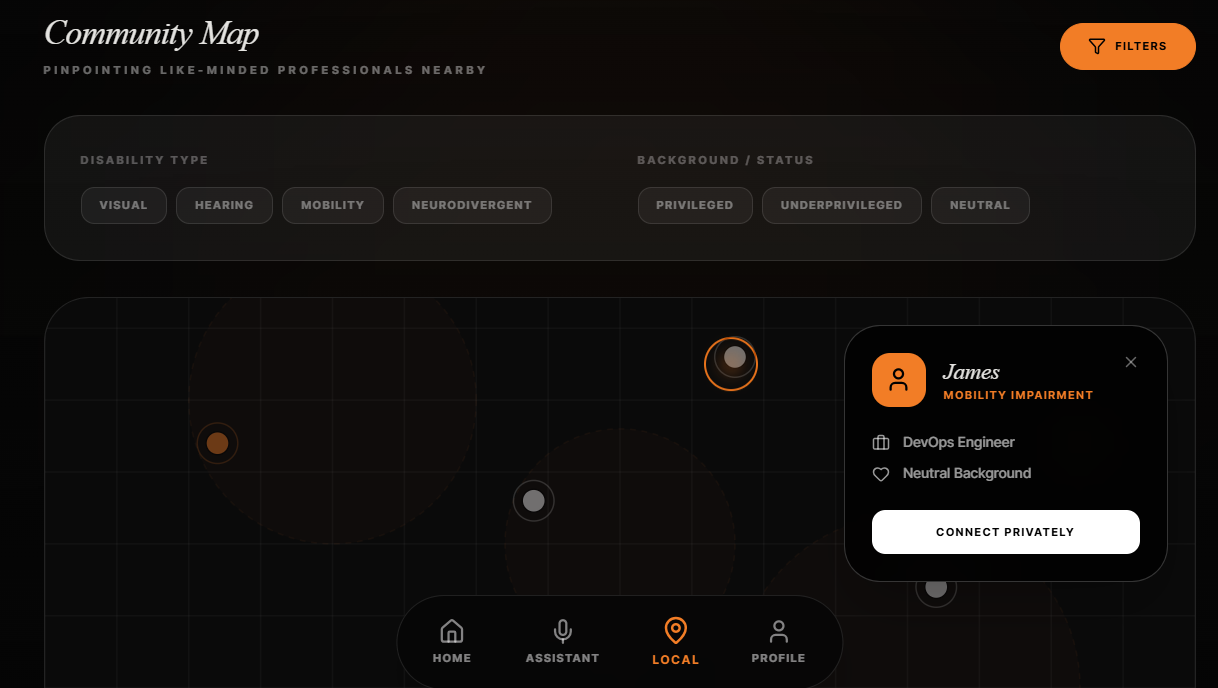
Community page
-
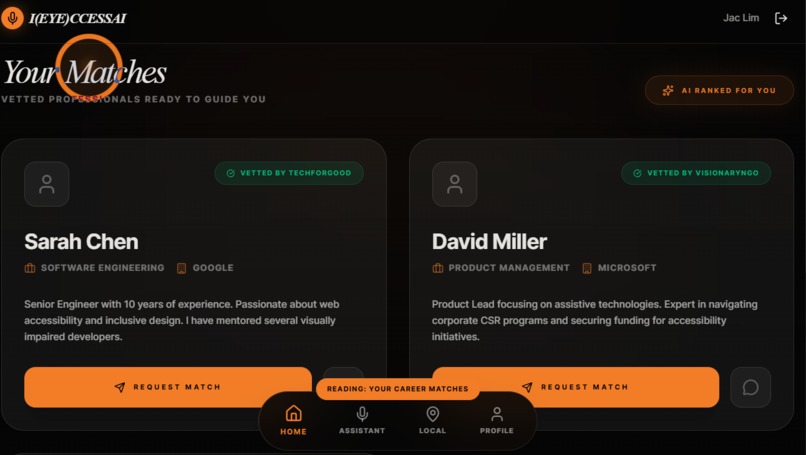
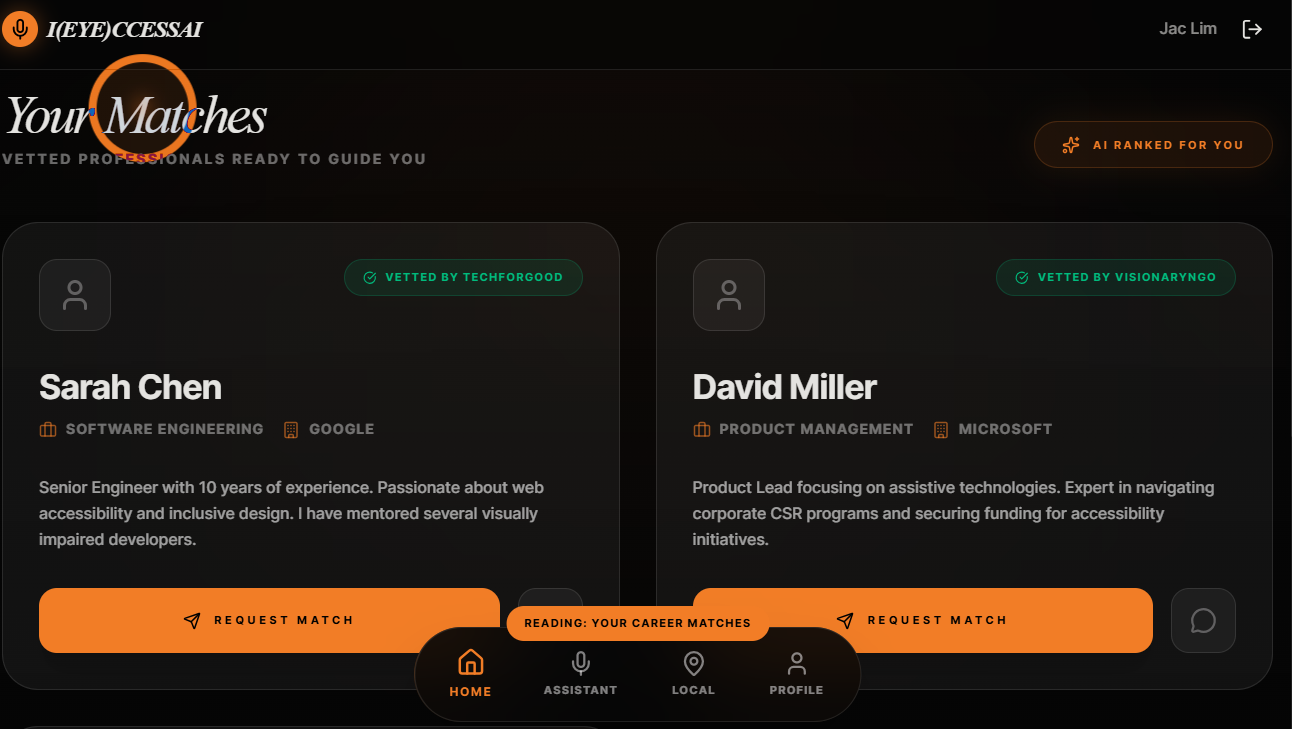
Mentor page
Inspiration
I(Eye)cess was inspired by a simple observation: Platforms like LinkedIn have made opportunities more visible, but they remain largely inaccessible to visually impaired users. Through research on accessibility and conversations around screen-reader experiences, we discovered that many users face cognitive overload, poor navigation, and inaccessible UI structures. We know that opportunities alone are not enough; mentorship and guidance are what truly unlock growth. So we try to envision a future where accessing mentorship doesn’t require seeing a screen at all.
What it does
Users speak their goals, for example: “I want to learn backend development, but I’m a beginner.”
The system then: Converts speech into structured data Understands intent and career goals Matches users with the most suitable mentor Suggests next steps and learning pathways
How we built it
Frontend: React Native (optimized for VoiceOver & TalkBack) Backend: Python with FastAPI
AI Stack: Speech recognition via OpenAI Whisper NLP and intent extraction using Llama 3 (via Featherless.ai) Semantic matching using Sentence-Transformers (all-MiniLM-L6-v2) Vector similarity search (cosine similarity) for mentor matching
Data: Synthetic dataset of mentor profiles Skill-based embeddings for accurate matching
Challenges we ran into
Accessibility is more than UI Designing for visually impaired users required rethinking the entire interaction model, not just adding voice features. Cold start problem (mentors) Matching systems need quality data. We addressed this with a CSR + NGO partnership model to onboard vetted mentors. Balancing AI accuracy vs speed Real-time voice interaction required optimising model responses while maintaining meaningful outputs. Structuring unstructured voice input Translating natural speech into clean, structured data was technically challenging.
Accomplishments that we're proud of
Built a fully voice-first interaction flow (not just a feature, but the core UX) Successfully implemented AI-powered mentorship matching using embeddings Designed a solution that is both technically robust and socially impactful Integrated accessibility at the foundation level, not as an afterthought
What we learned
AI is most powerful when it removes friction, not adds complexity Accessibility design benefits everyone, not just specific groups Building impactful solutions requires combining: Technology Human understanding Ecosystem thinking (mentors, NGOs, users)
What's next for I(Eye)ccess
By 2030: Scale mentor network through partnerships with companies and NGOs Improve AI personalisation (learning styles, emotional intelligence) Add multilingual voice support for wider accessibility Integrate real-world job and scholarship data Build long-term mentor-mentee engagement tracking
