-
-
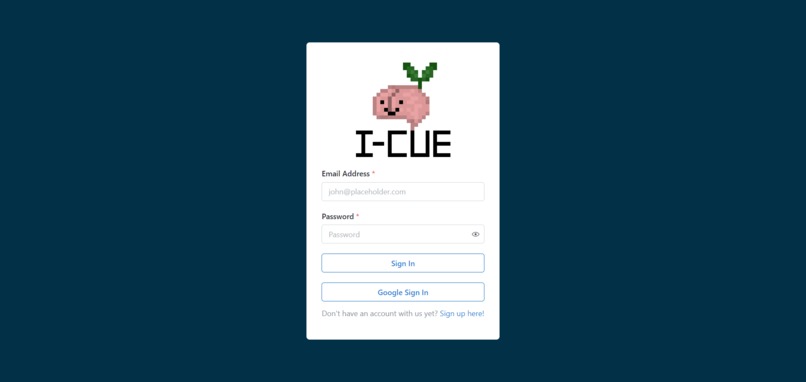
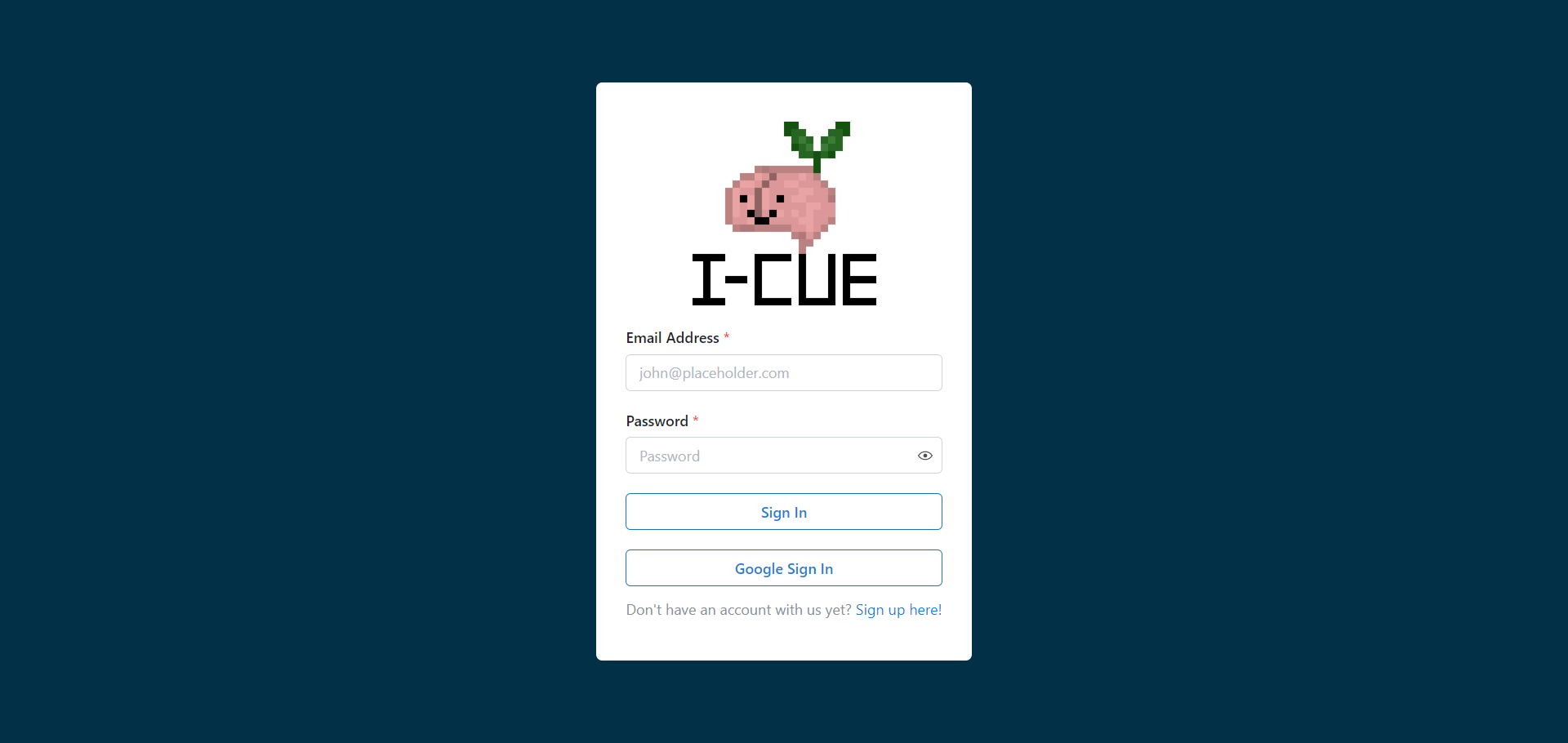
I-Cue's login page and our mascot Hedgar
-
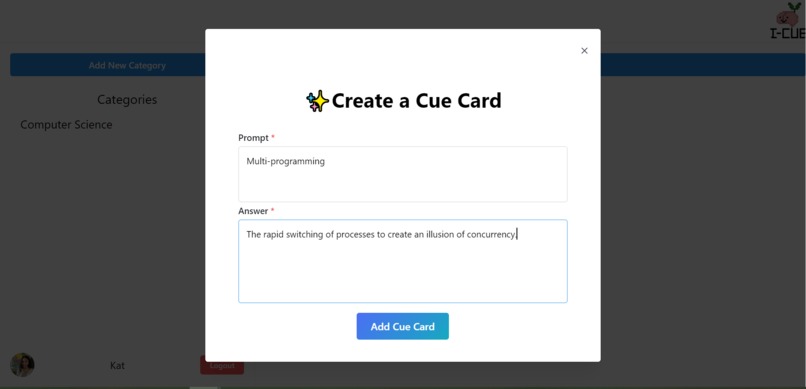
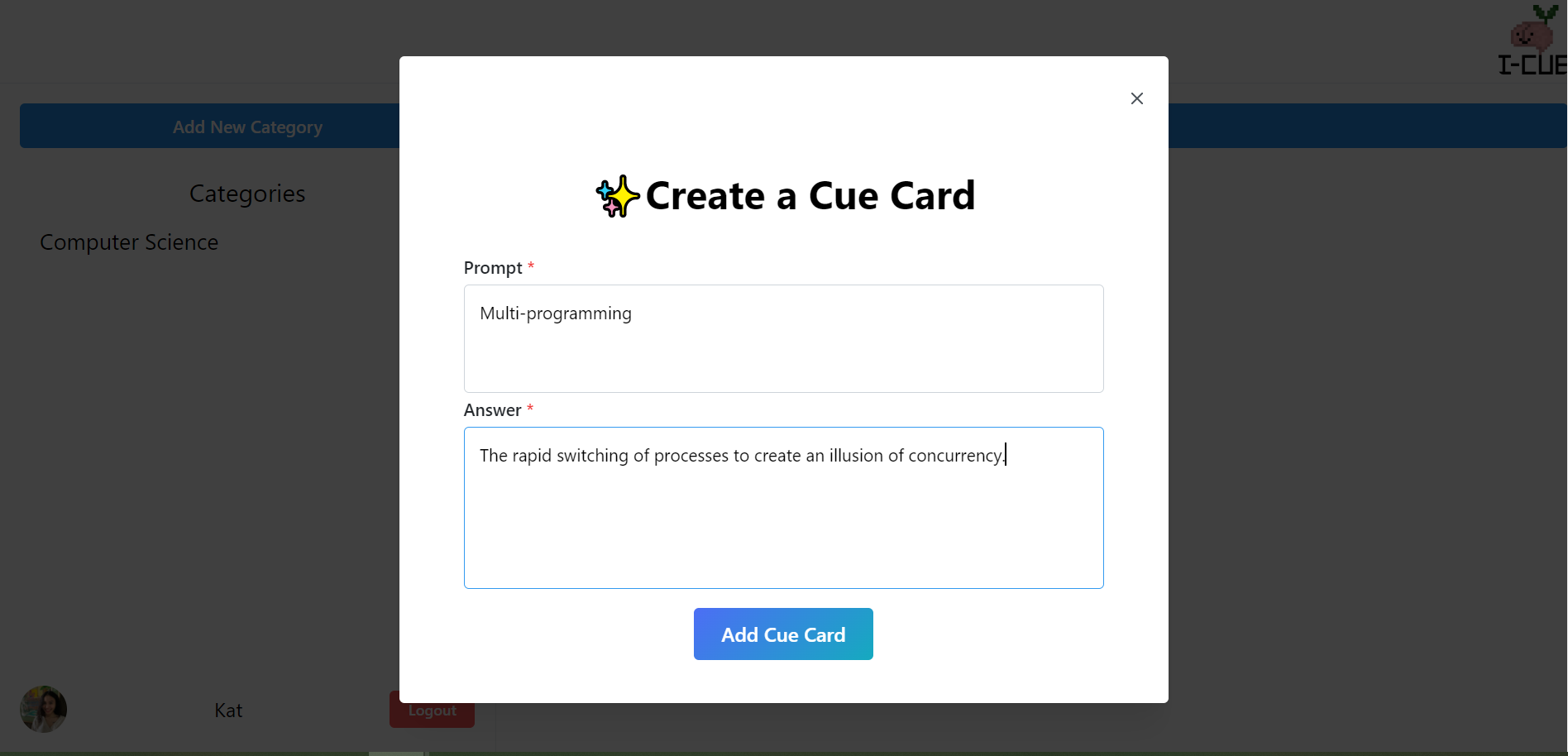
Adding a card
-
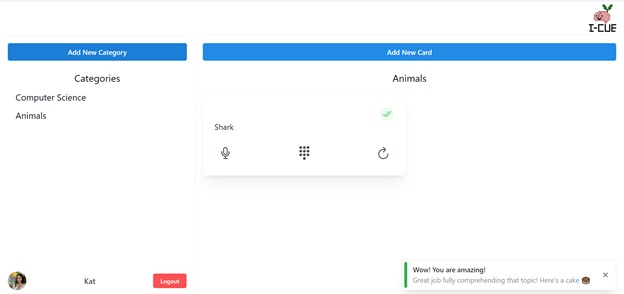
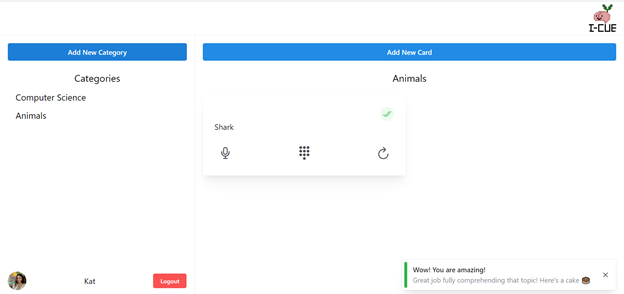
A successful response!
-
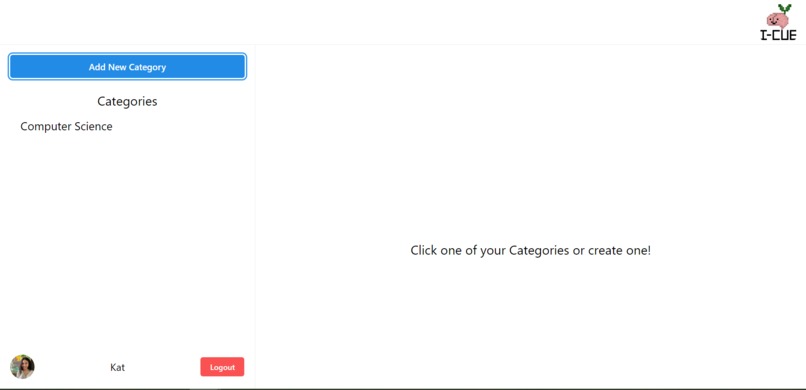
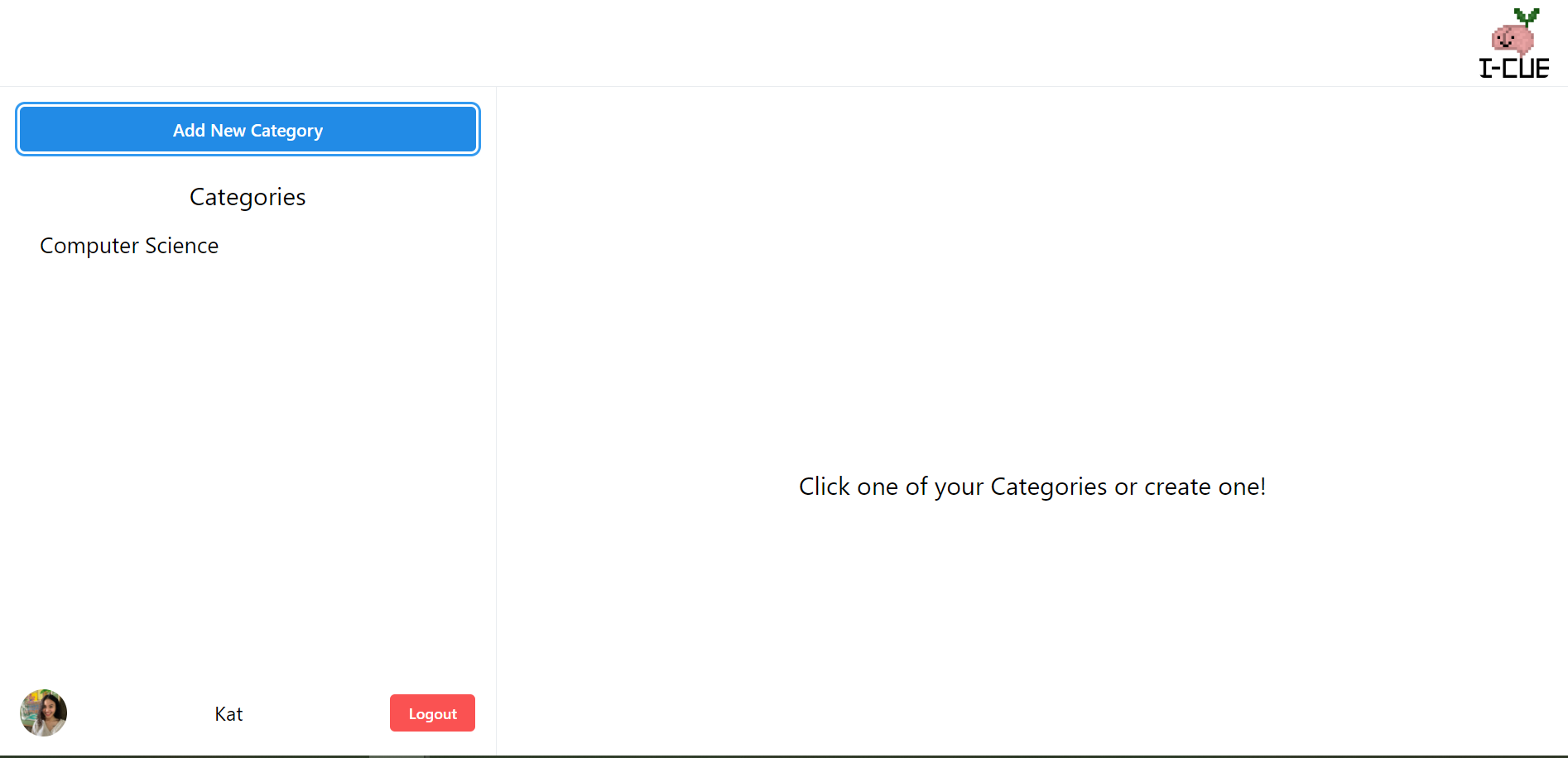
Cue card component page
-
The logo for I-CUE with Hedgar the growing brain sprout
Inspiration
One of the most impactful forms of studying is an increase in intensity. The shift to online learning during the COVID-19 pandemic highlighted the need for diverse educational tools and strategies as the pandemic had a negative impact on student learning. Existing assistive technologies that test one’s recall are proven to increase the grade of 90% of students. Tools like Kahoot and Quizlet use multiple choice and flash cards to test your memory. What I-Cue does is use AI to examine the context of your answers to test understanding instead of rote memorization. I-Cue was inspired by what scientists have dubbed the protégé effect, where research has shown, is one of the best ways to facilitate your learning process.
What it does
When adding your flashcards, the important keywords of the answer are parsed using OpenAI’s GPT3, a cutting edge language model that uses machine learning. When you want to review your notes, you can simply start by navigating to one of your flashcards and enter your answer through our React Front End at a single click of a button.
How we built it
I-Cue is a progressive web application primarily written using TypeScript and uses Next.js. User Experience was a key pillar when initially designing the application. To help us achieve this goal we used a CSS framework called Mantine and prioritised the design process while using Figma to initially wireframe the app. For the backend development, we used Node.js and Firebase for processing user input, managing data, and user authentication. Visual graphics were produced using Adobe Photoshop and Adobe Premiere Pro.
Challenges we ran into
It was our first time using a whole new tech stack and a machine language API. We had some growing pains while learning to adjust from loosely to strongly typed with the transition from JavaScript to TypeScript. Understanding how to get proper keywords and using temperature variables taught us a lot about components of machine learning.
Accomplishments that we're proud of
We are proud of making an application that we are excited to use for our own studies and can continue to work on. We also got to improve our development pipeline as a team and are incredibly proud of meeting our minimum viable product while making fun of each other till the sun rose the next day.
What we learned
It was our first time using a whole new tech stack and a machine language API. We had some growing pains while learning to adjust from loosely to strongly typed with the transition from JavaScript to TypeScript. Understanding how to get proper keywords and using temperature variables taught us a lot about components of machine learning.
What's next for I-Cue
The next step for our team in I-Cue is to use speech-to-text, sign language and scans of paper notes to scale further in terms of accessibility in study aids. Our dream is to see our classmates and teachers use our application to be able to both study harder and study less.
Built With
- adobe-creative-suite
- css
- figma
- firebase
- html5
- mantine
- nextjs
- node.js
- openai
- photoshop
- typescript


Log in or sign up for Devpost to join the conversation.