

Inspiration
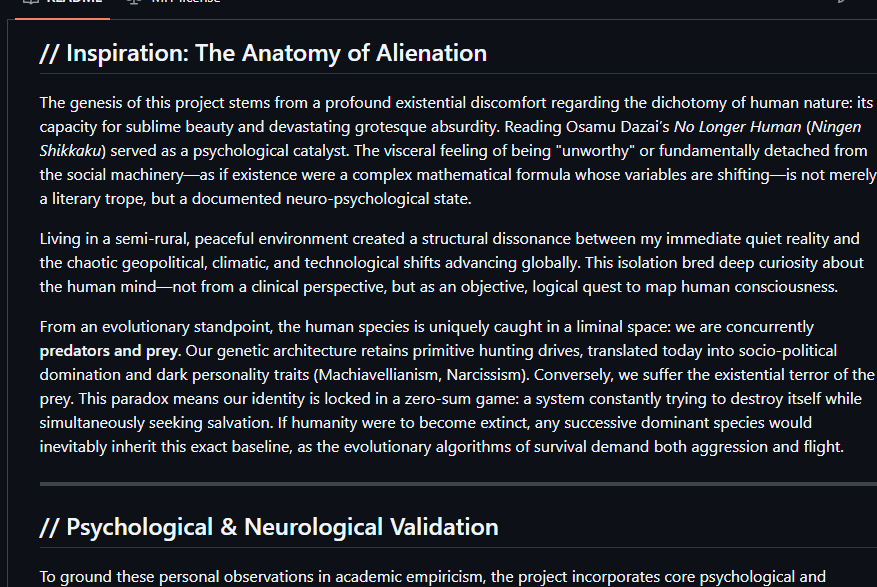
The genesis of this project stems from a profound existential discomfort regarding the dichotomy of human nature: its capacity for sublime beauty and devastating grotesque absurdity. Reading Osamu Dazai’s "No Longer Human" (Ningen Shikkaku) served as a psychological catalyst.
Living in a semi-rural, peaceful environment created a structural dissonance between my immediate quiet reality and the chaotic geopolitical, climatic, and technological shifts advancing globally. This isolation bred deep curiosity about the human mind—not from a clinical perspective, but as an objective, logical quest to map human consciousness.
From an evolutionary standpoint, the human species is uniquely caught in a liminal space: we are concurrently predators and prey. This paradox means our identity is locked in a system constantly trying to destroy itself while simultaneously seeking salvation.
What it does
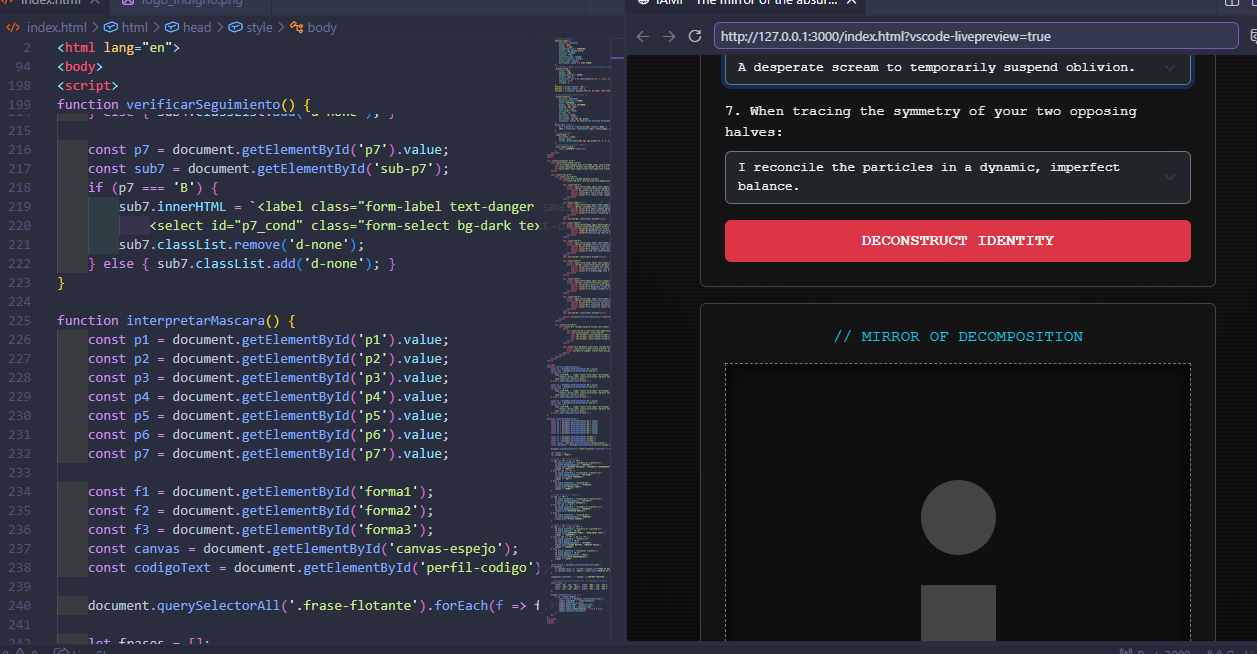
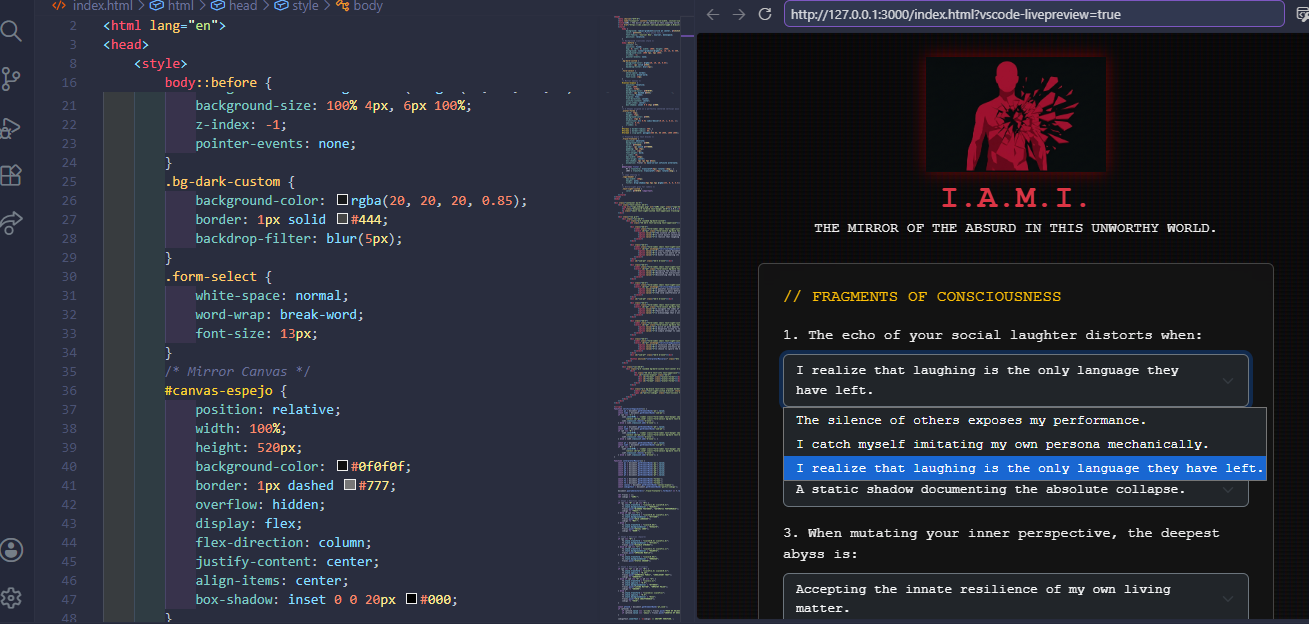
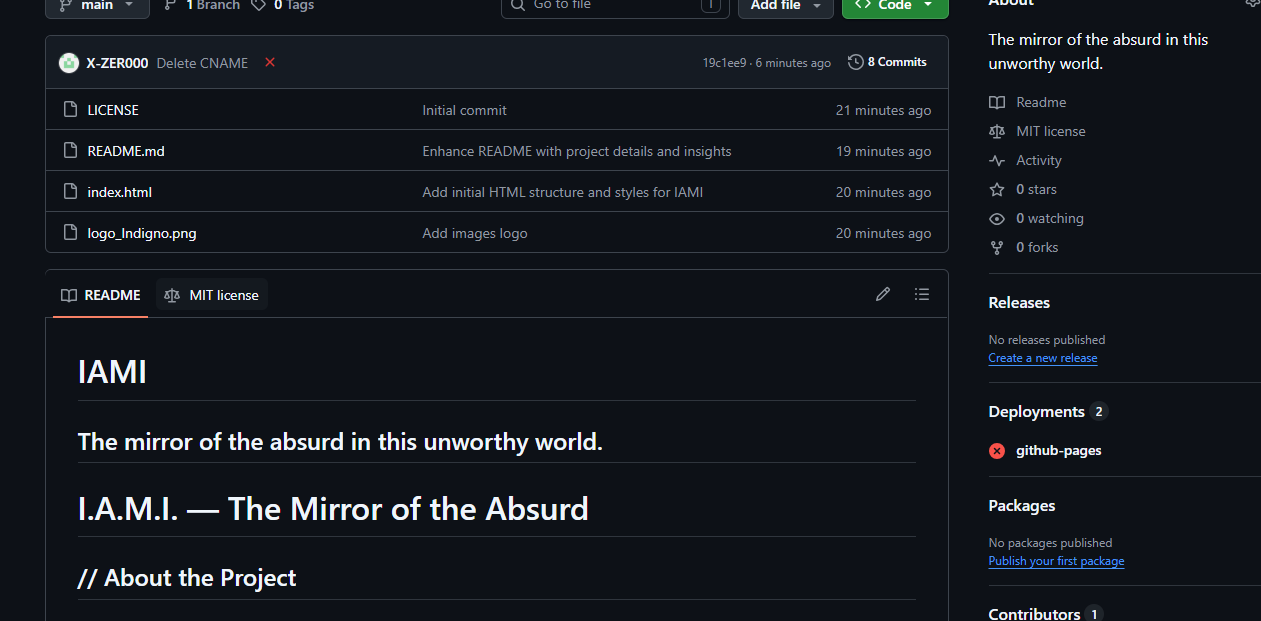
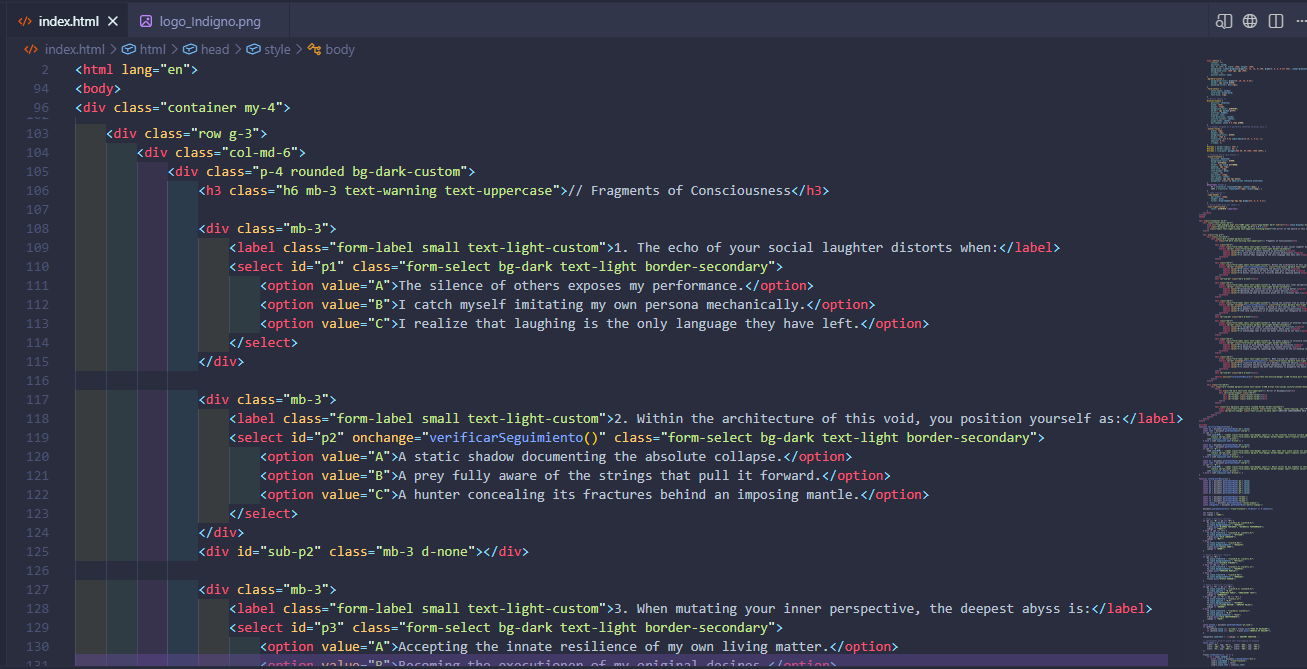
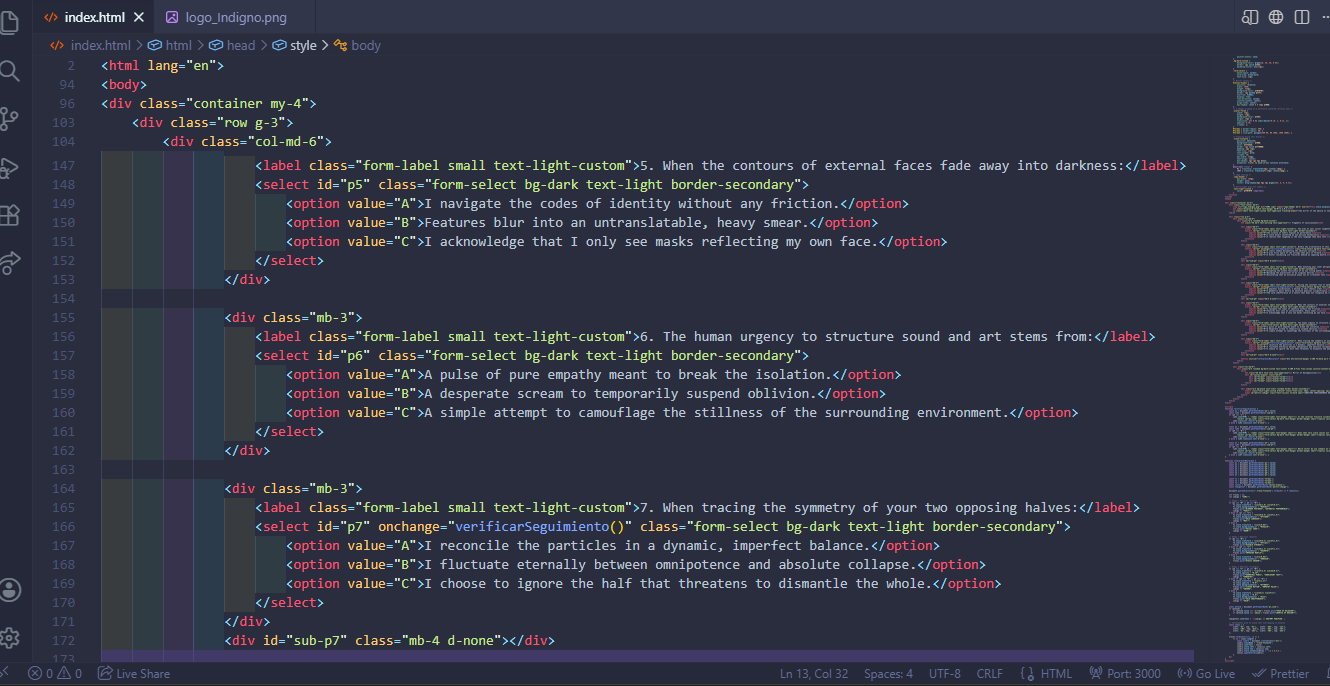
I.A.M.I. is an interactive digital mirror designed to dissect the layered complexity of the human psyche. Developed as a psychological and philosophical interface, the project translates qualitative existential inquiries into dynamic visual feedback.
It acts as an analytical tool that forces the user to confront their own dualities—the tension between their genuine self and the synthetic mask constructed to survive in a modern, hyper-technological environment. It incorporates core psychological and neurological frameworks such as the "Smiling Depression" Phenotype, Prosopagnosia (face blindness) models, and Dark Tetrad personality vectors.
How we built it
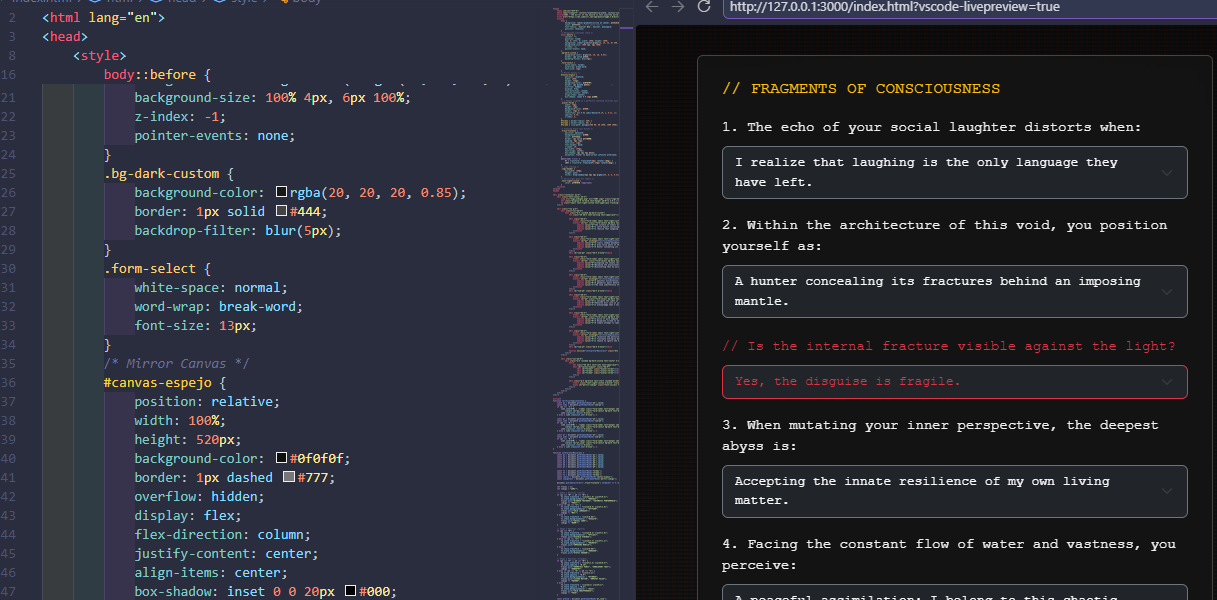
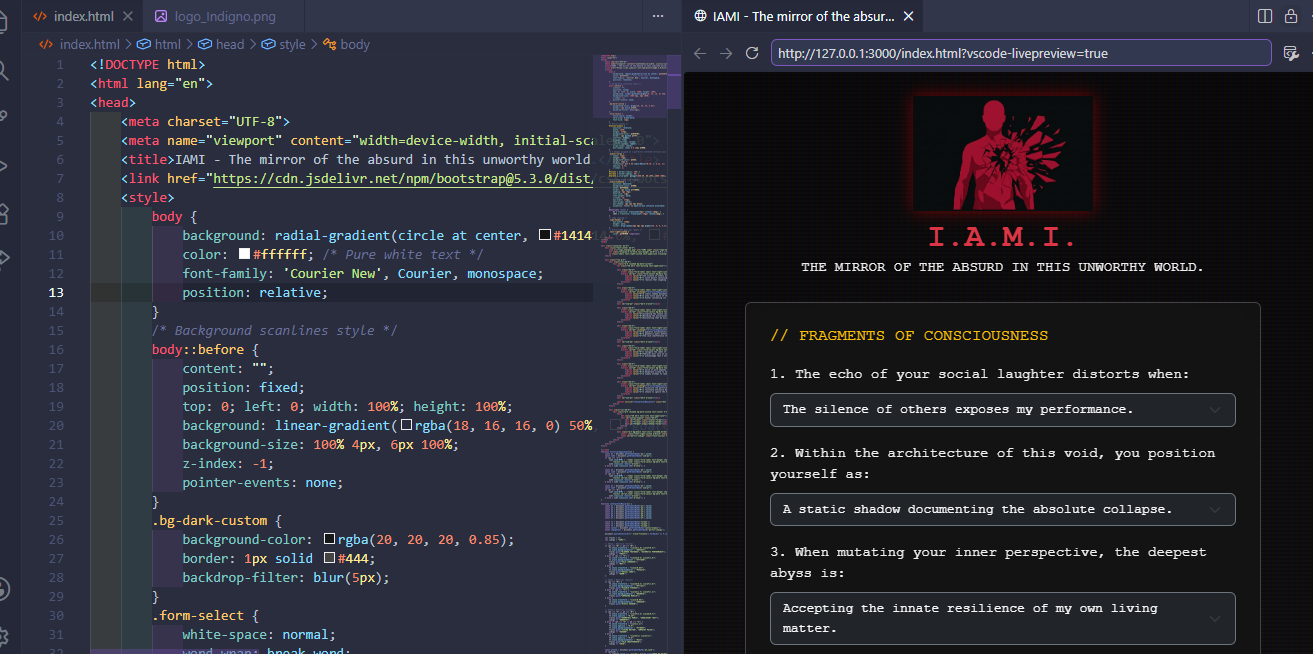
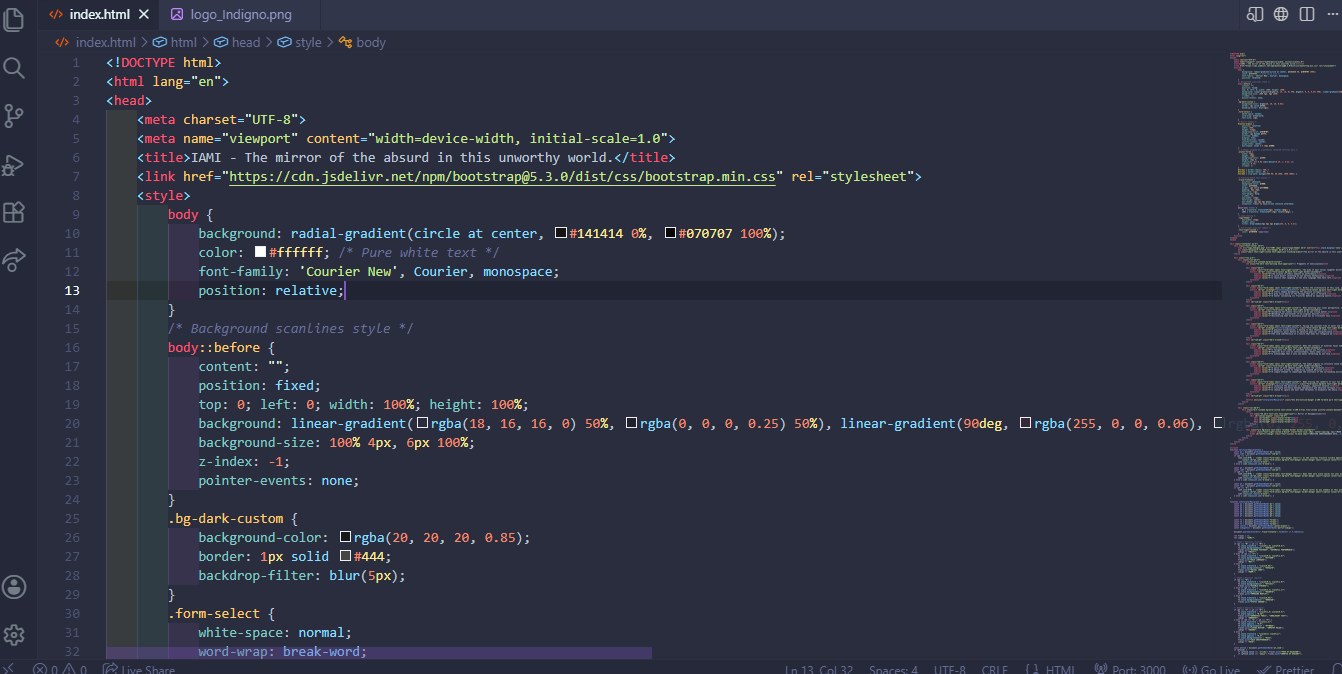
The application architecture was intentionally designed to be clean, modular, and highly responsive using a single-page optimization architecture (index.html).
- Frontend & Layout: Implemented Bootstrap 5.3 combined with custom CSS3 to deploy a dark, high-contrast user interface. The background utilizes a custom radial gradient overlaid with simulated retro CRT scanlines.
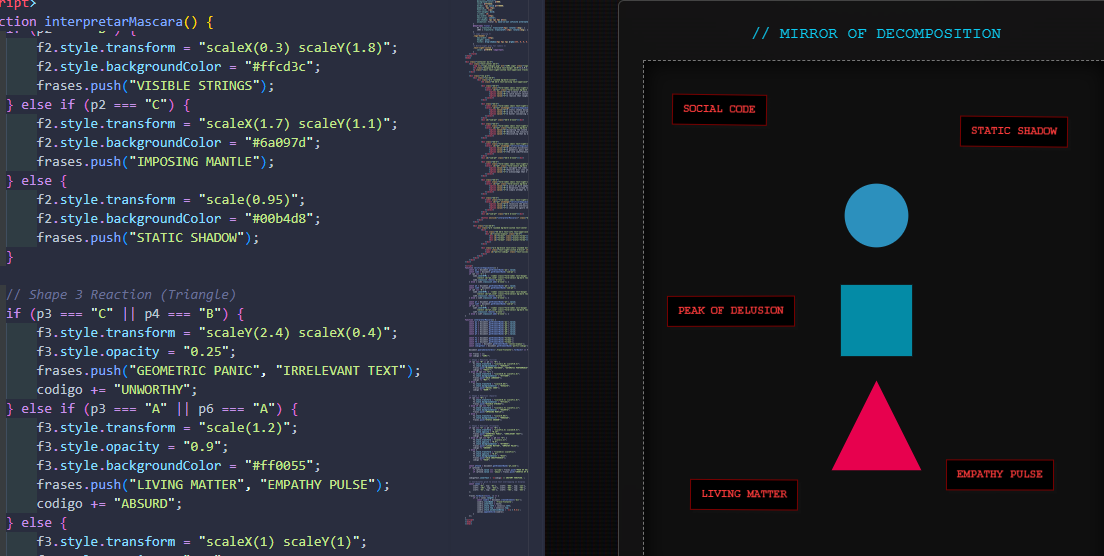
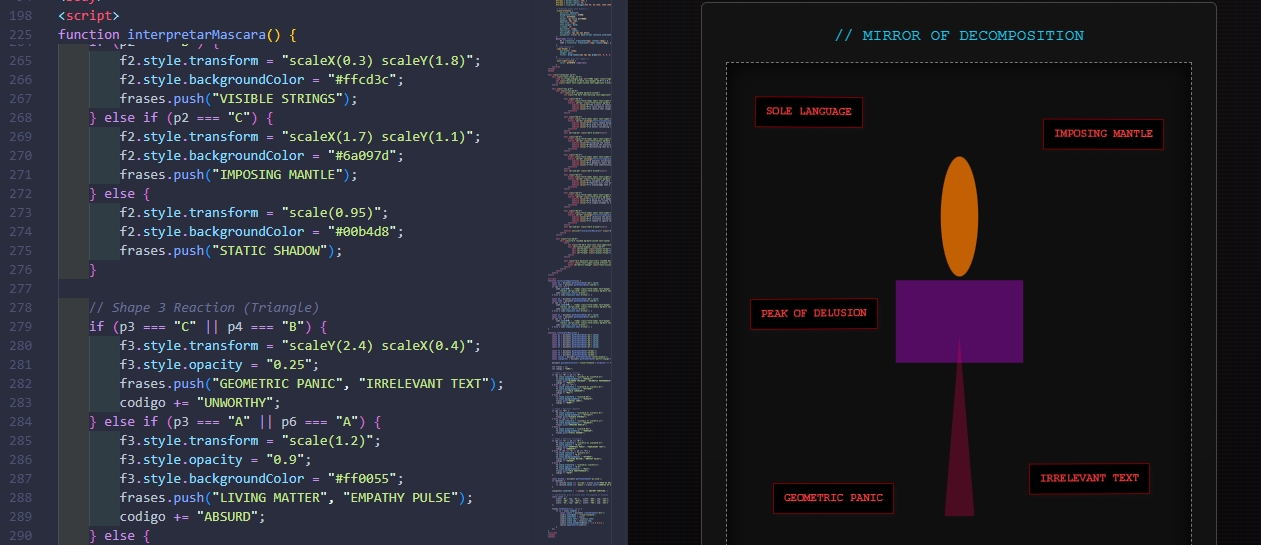
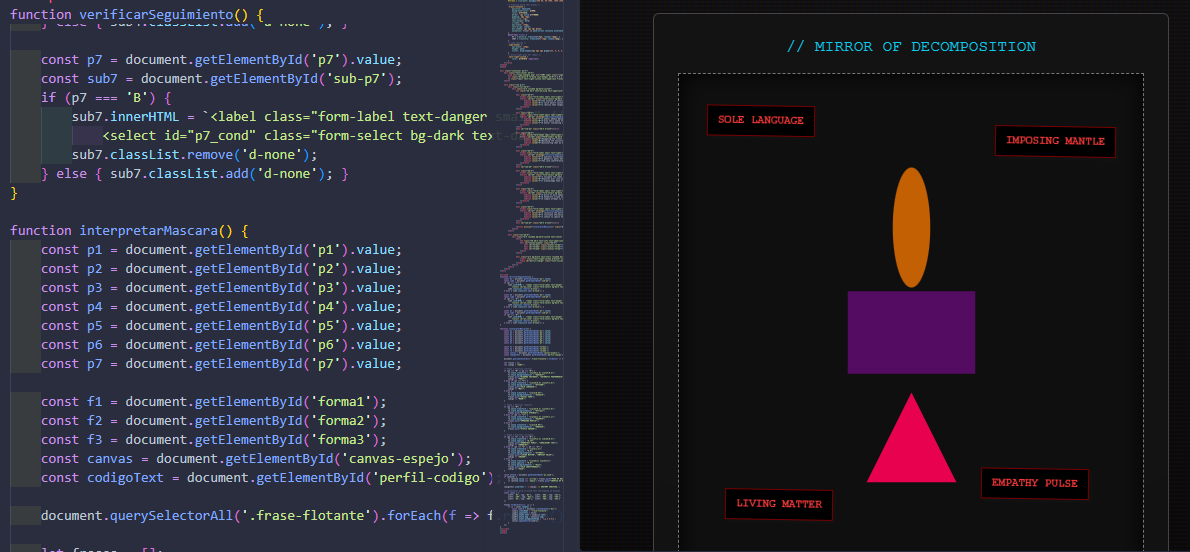
- Logical Engine: Powered entirely by native JavaScript (ES6+). The script captures real-time input values through conditional matrix tracking ( f(x) ) algorithms, instantly recalculating CSS properties (
transform: scale(),clip-path, and hex matrix values) to dynamically warp the visual shapes in the container based on psychological vectors:
$$f(x) = \begin{pmatrix} \alpha & 0 \ 0 & \beta \end{pmatrix} \cdot \vec{v}_{input}$$
Challenges we ran into
The primary constraint of this development phase was time. Due to strict technological limitations and narrow time windows, managing the extensive logic and translation required for a seamless experience within a localized frontend prototype was a significant hurdle.
Accomplishments that we're proud of
We are proud of successfully merging dense, validated psychological and neurological concepts with an artistic, high-contrast digital interface. Translating deep human emotions and philosophical dilemmas into a working logical model that visually responds to user consciousness data is a major milestone for this lifecycle.
What we learned
We learned how fragile human identity processing can be under stress, expanding our knowledge on clinical phenomena like Prosopagnosia (the dysfunction of the Fusiform Face Area) and social masking. On the technical side, we deep-dived into dynamic CSS manipulation and real-time DOM updates via native JavaScript arrays and matrix simulation.
What's next for I.A.M.I
The project is built to scale. The next development phase includes migrating the logical engine to a backend framework (Node.js/Express) and integrating an algorithmic neural network. This will allow the application to mathematically map the user's psychological profile using vector analysis, rendering complex multidimensional geometries rather than simple 2D transformations.
// References / Bibliography
- American Psychiatric Association. (2013). Diagnostic and statistical manual of mental disorders (5th ed.).
- Kanwisher, N., McDermott, J., & Chun, M. M. (1997). The fusiform face area. Journal of Neuroscience, 17(11).
- Paulhus, D. L., & Williams, K. M. (2002). The Dark Triad of personality. Journal of Research in Personality, 36(6).
- World Health Organization. (2019). International statistical classification of diseases.
- Dazai, O. (1958). No Longer Human (New Directions, Trans.).

Log in or sign up for Devpost to join the conversation.