Inspiration
Lan parties in the early 2000s had a magic to themselves — diving into chaotic custom servers on FPS, exploring bizarre and brilliant user-made maps, and seeing scoreboards lit up with rainbow-colored player names. It was a time of experimentation, community, and unfiltered fun. With HyperStrike, we set out to recapture that spirit in a modern VR and mobile setting, drawing inspiration from the core pillars that made those classic shooters unforgettable.
What it does
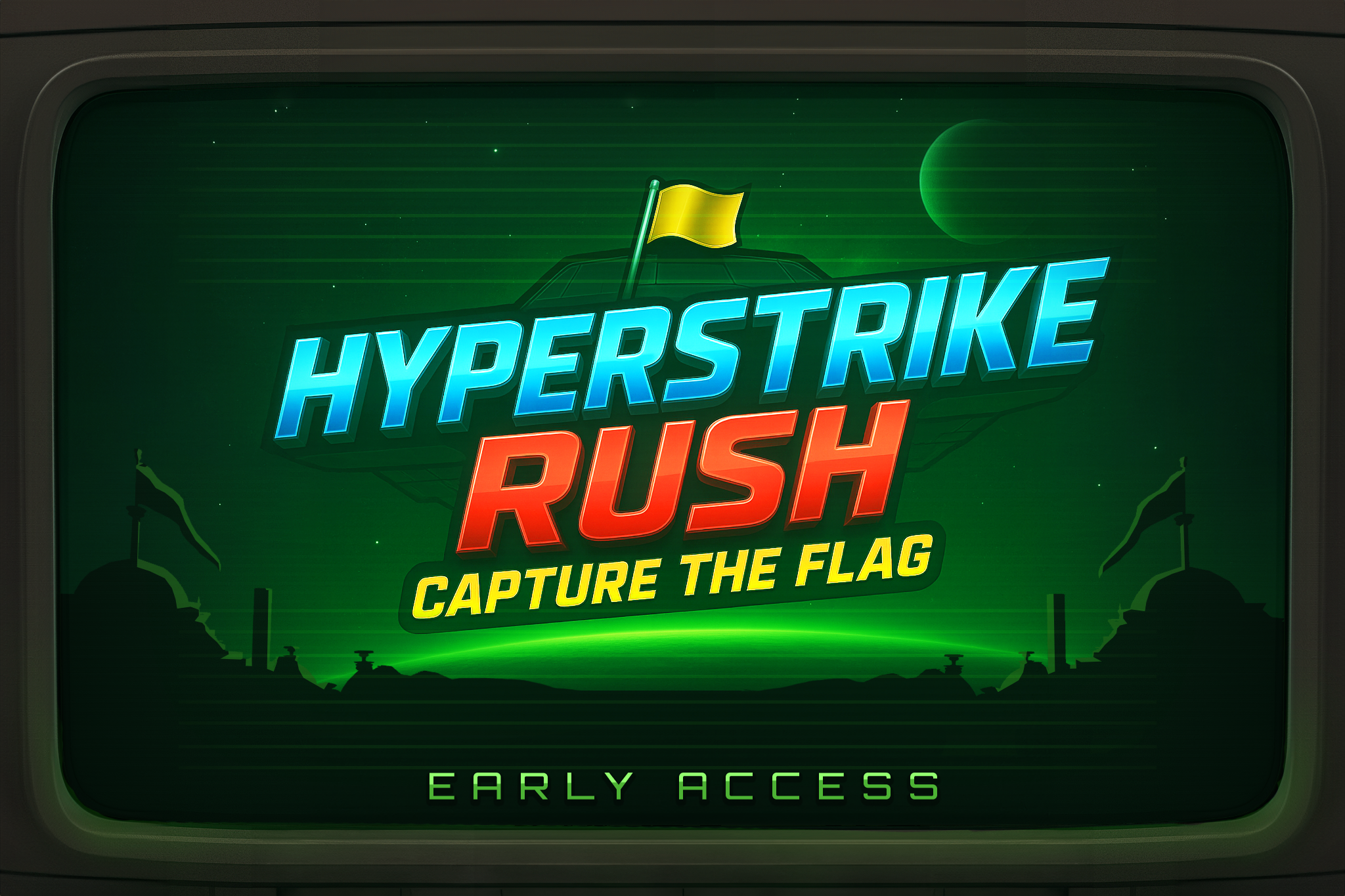
At its core HyperStrike is a 3v3 team FPS shooter where you battle across dimensions with the objective of capturing your enemies flag and returning it to your base. The game mode has everyone using the same two weapons, a gun and a sword. Every hit is instant death and respawns are very quick. There is also a speed boosting mechanic inspired by the movement system in Quake 3 that once mastered will allow quick captures of the enemies flag. A custom spectator mode that has been built with the camera API offers players who are on the go a tailored experience allowing them to watch matches, socialise with friends or sabotage players by calling out their location all while out and about.
How we built it
We used the Desktop Editor, Visual Studio Code/Typescript and a selection of 3D modelling software.
Challenges we ran into
The largest challenge we had was due to missing API functionality such as the ability to disable run in worlds. Speed is a main mechanic in HyperStrike, and the inability to turn off the default run behaviour in an elegant way to stop it fighting with the mechanics in the world has caused a lot of challenges.
Accomplishments that we're proud of
Having worked previously with Gyandhi creating Hover Harmony for the last competition (a primitive world), this time we were looking to move into doing a trimesh world. Gyandhi had developed a unique comic book noir art style across his primitives world and we were looking to adapt that to a trimesh work flow for HyperStrike. Over the course of the worlds development we created a custom model creation work flow that allowed him to not only translate his style, but update it and push it further than before. On top of that, we developed an entire 2nd art style for the lobby. Creating different art styles for the map and lobby help convey our multiversal themeing.
What we learned
We have all learnt a lot about developing within Horizon Worlds through the duration of the competition, gaining advance knowledge of Typescript and the desktop editor.
What's next for HyperStrike Rush: Capture the Flag
This is just the early access release, we have many more features and updates planned for the game. Our main next focus is polishing up what we ran out of time to do for the competition, then the addition of more maps and later down the line more weapons and more game modes.
Built With
- 3dsmax
- blender
- typescript


Log in or sign up for Devpost to join the conversation.