-
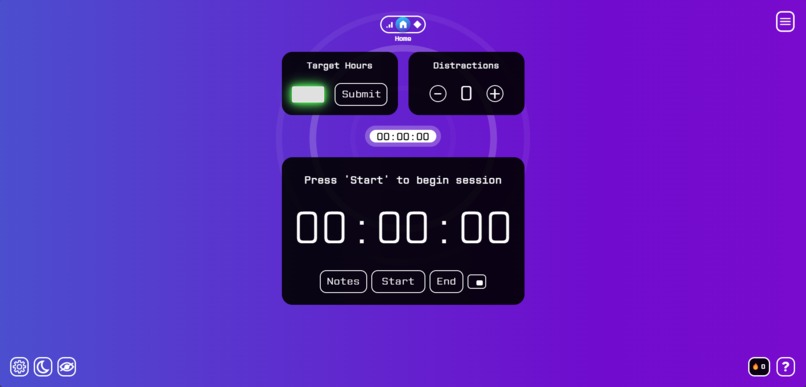
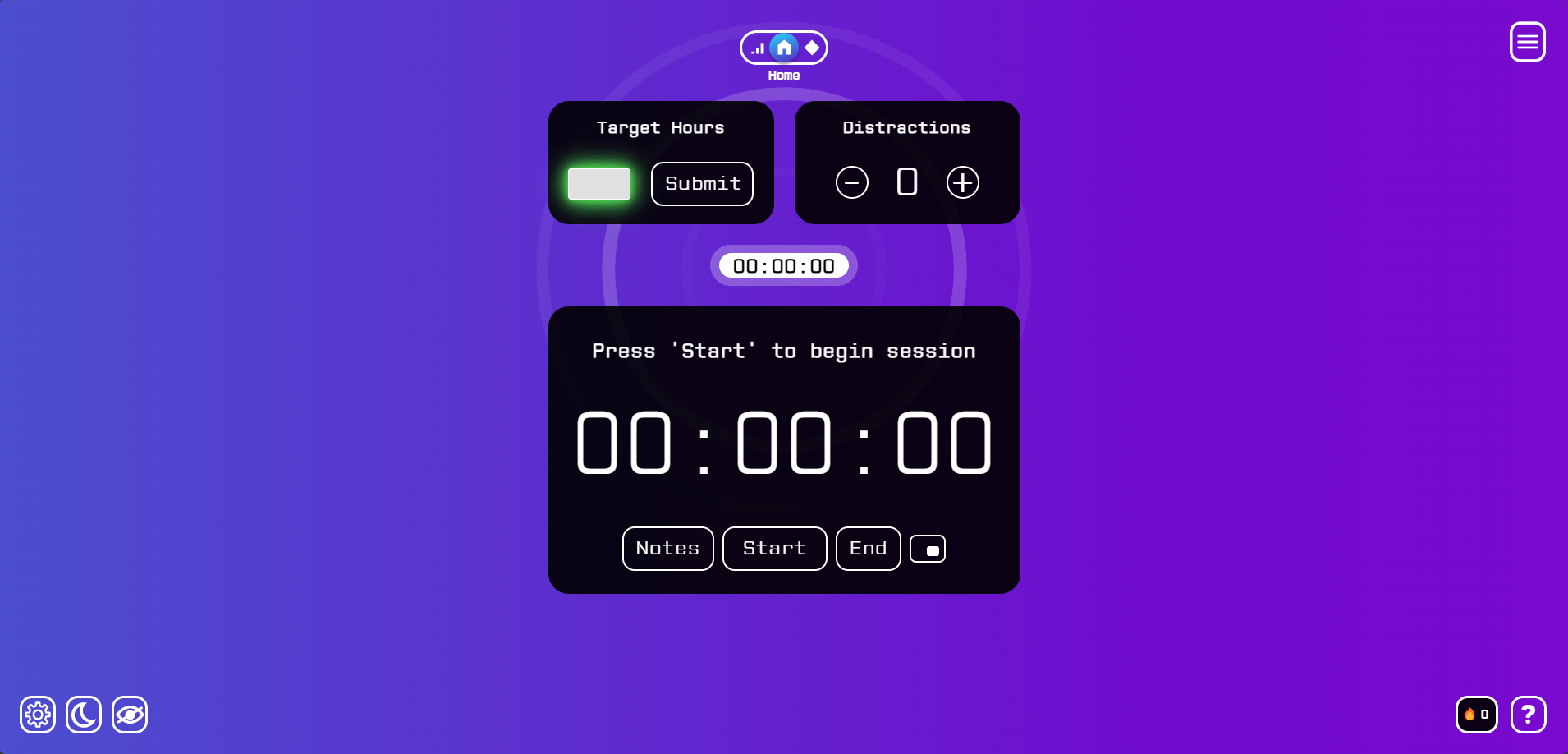
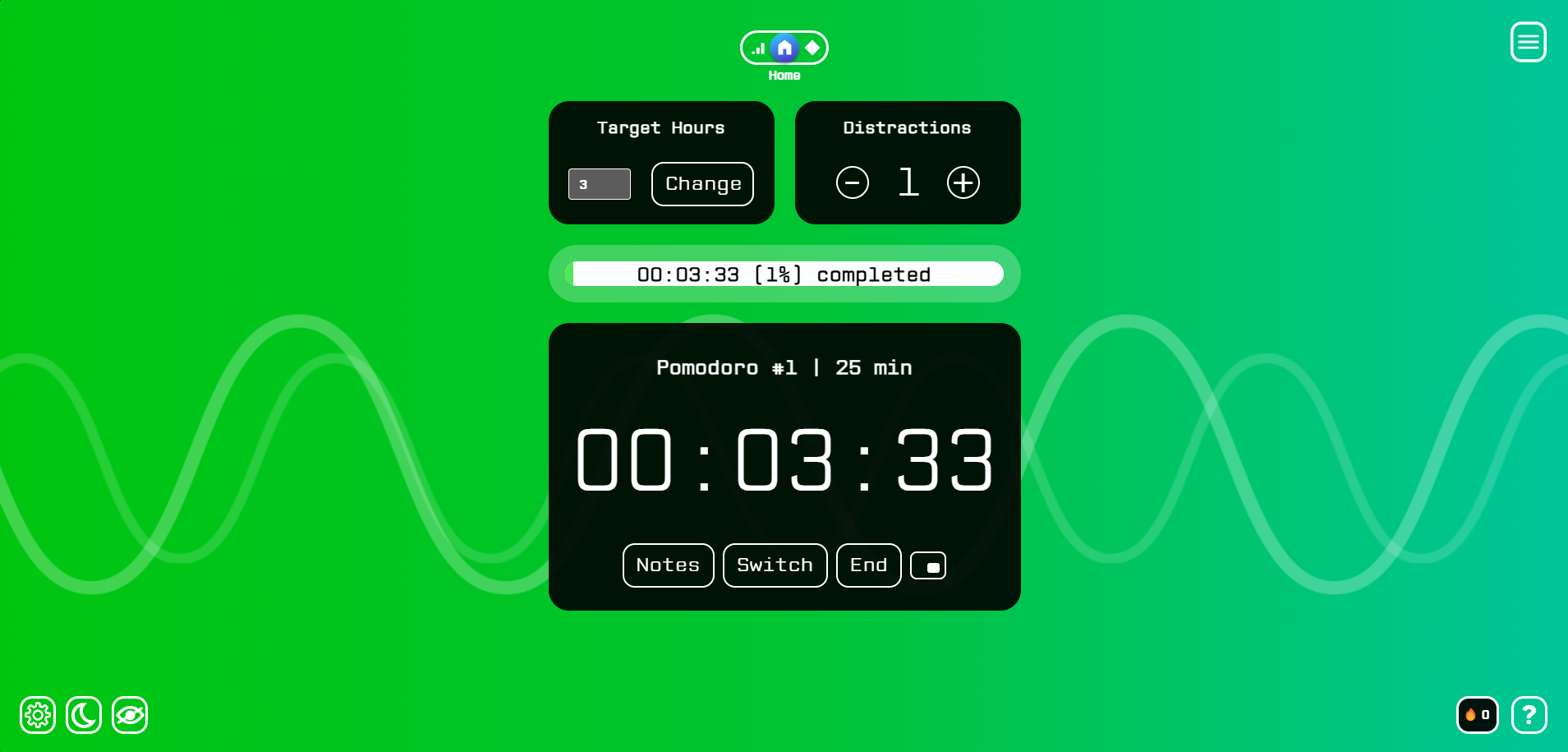
Main UI
-
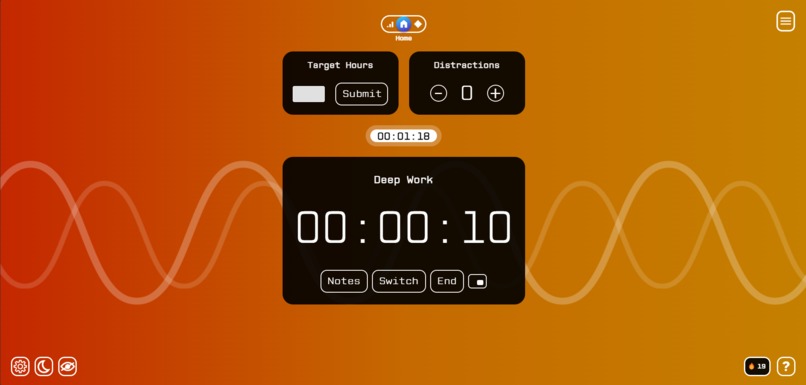
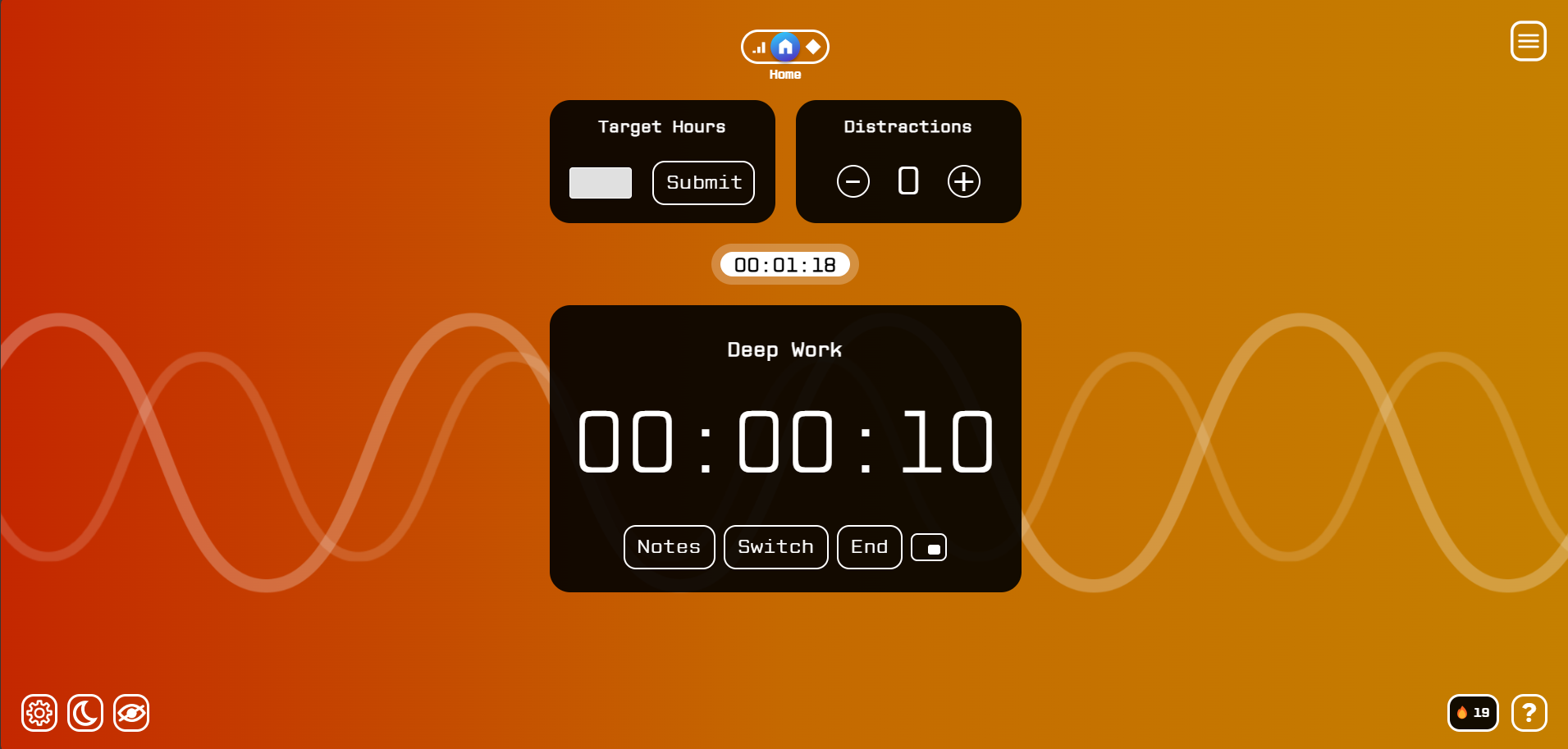
Deep Work Mode
-
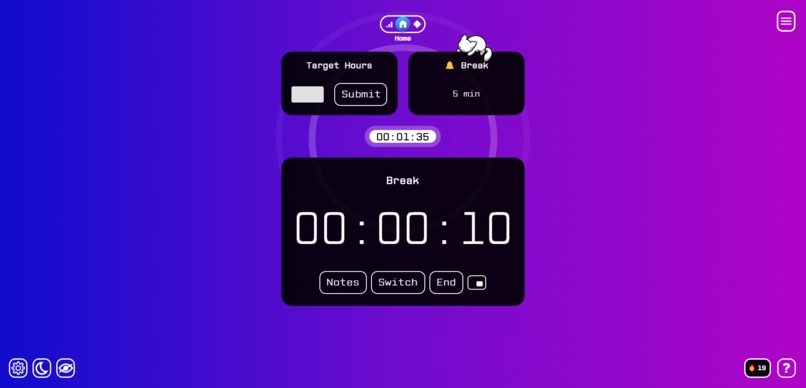
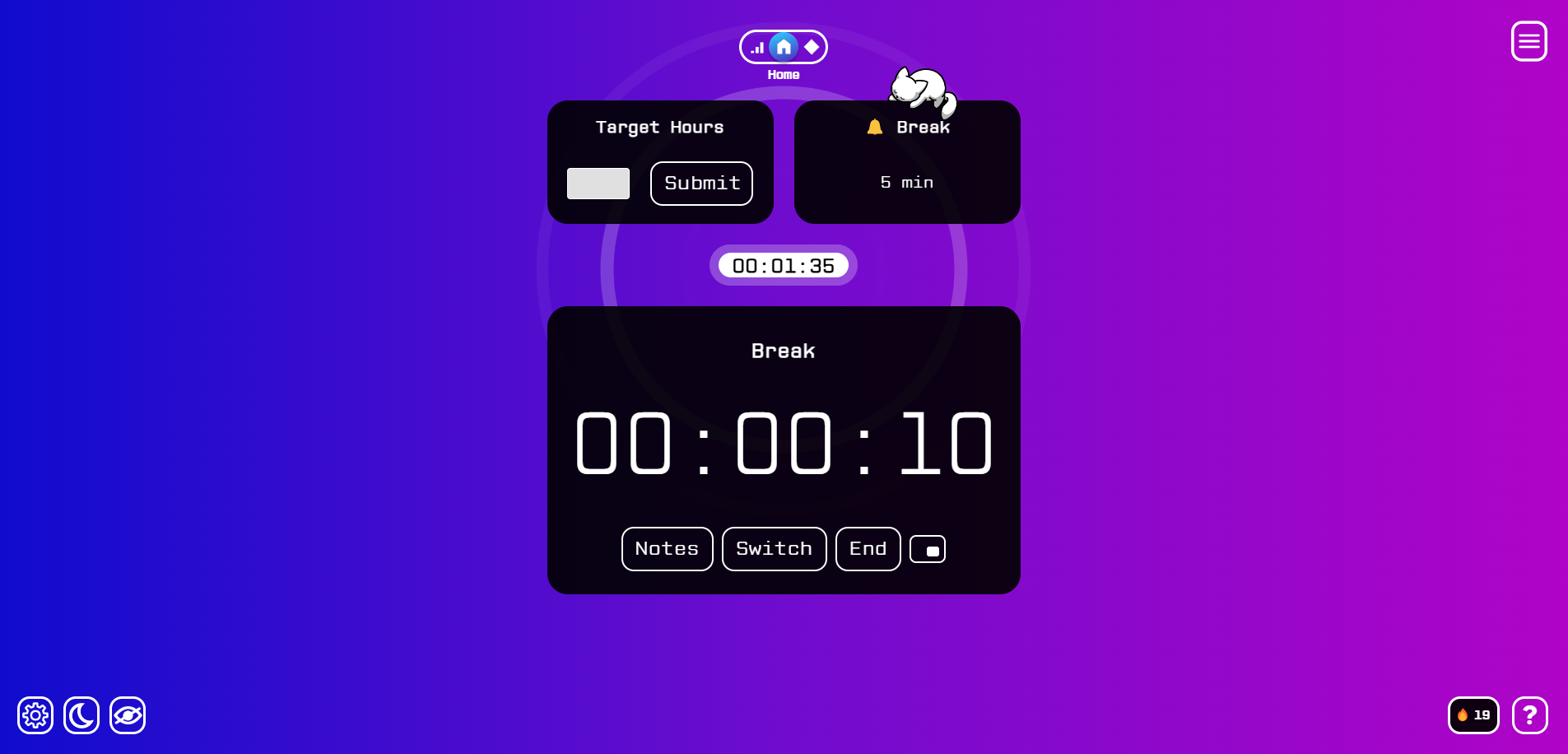
Break Mode
-
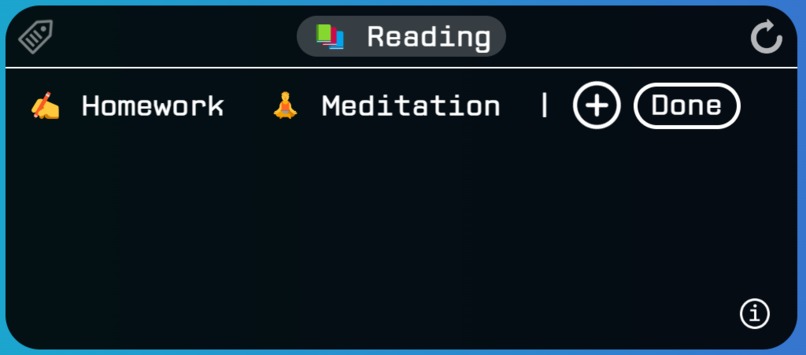
Time Label Selection
-
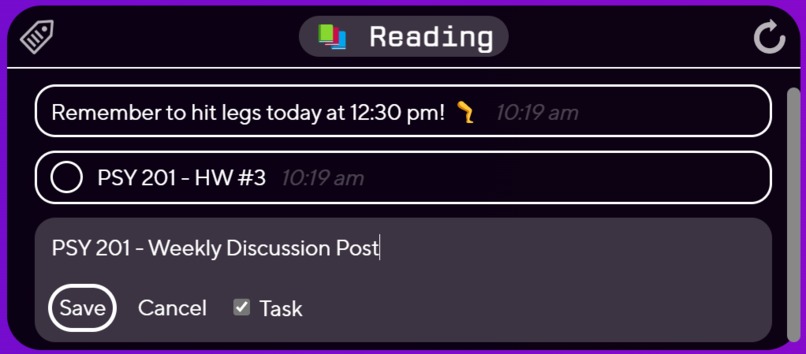
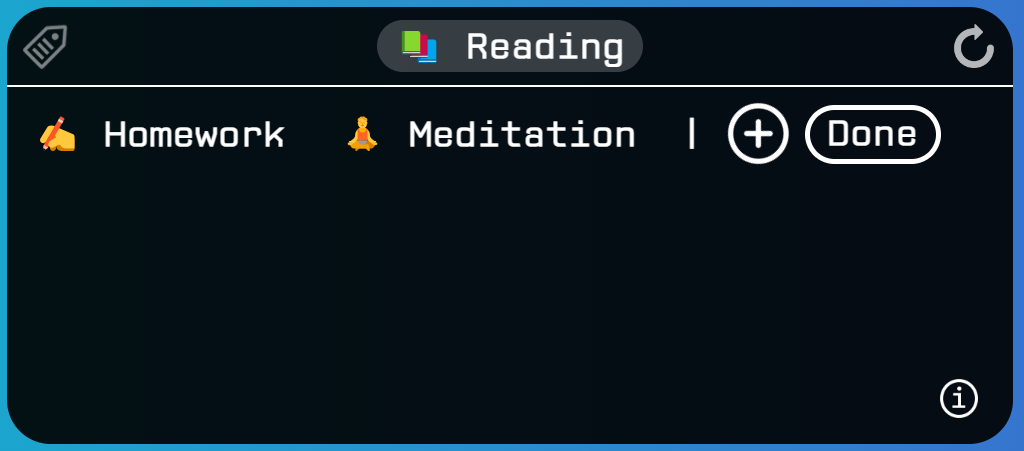
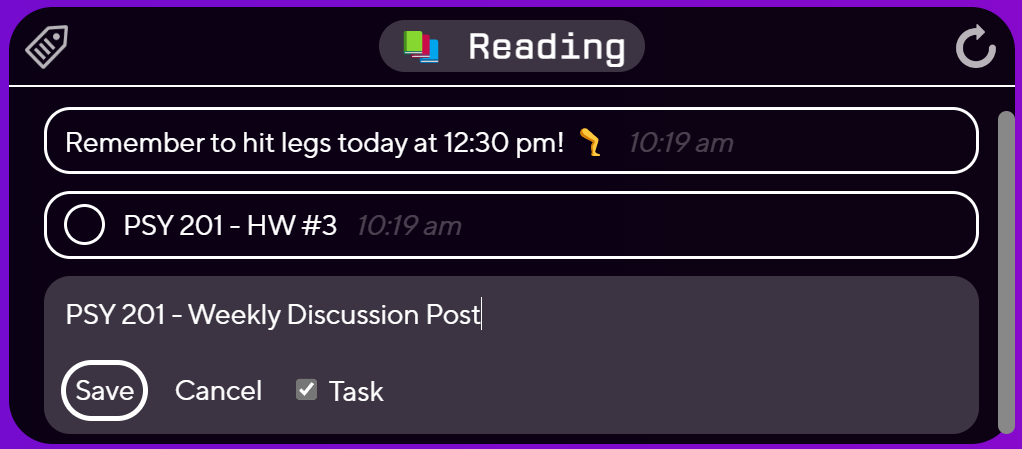
Adding Notes and Tasks
-
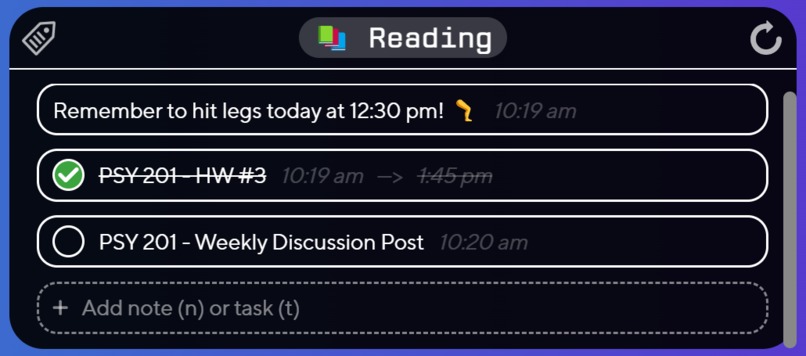
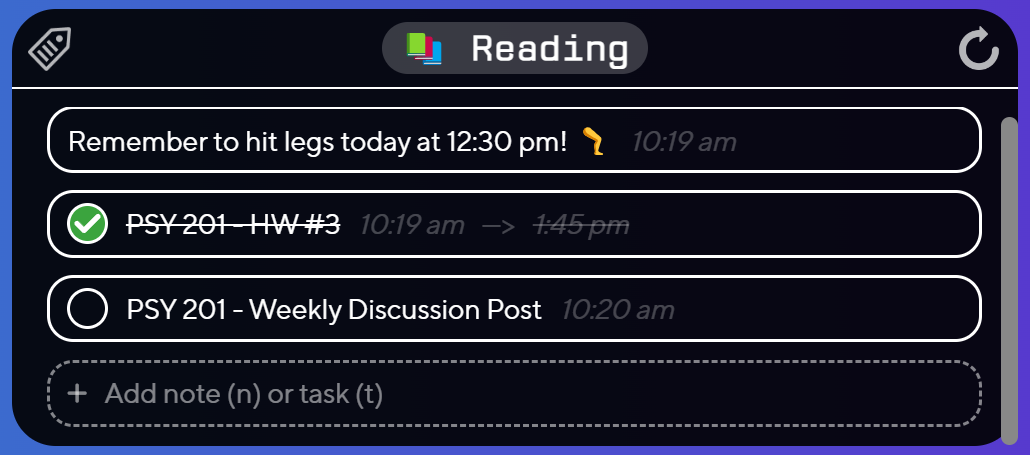
Checking Off a Task (completion timestamp appended)
-
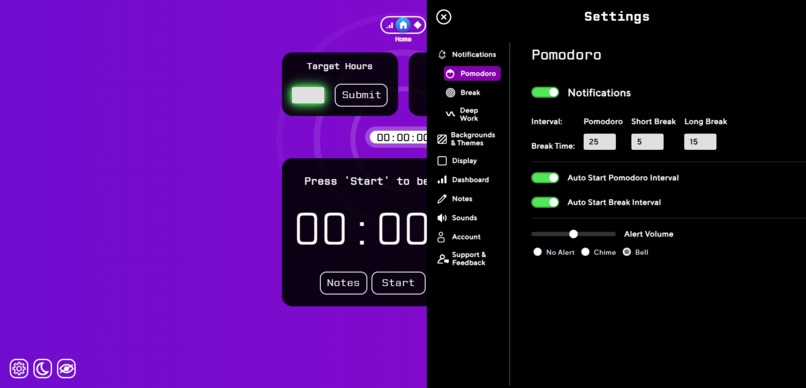
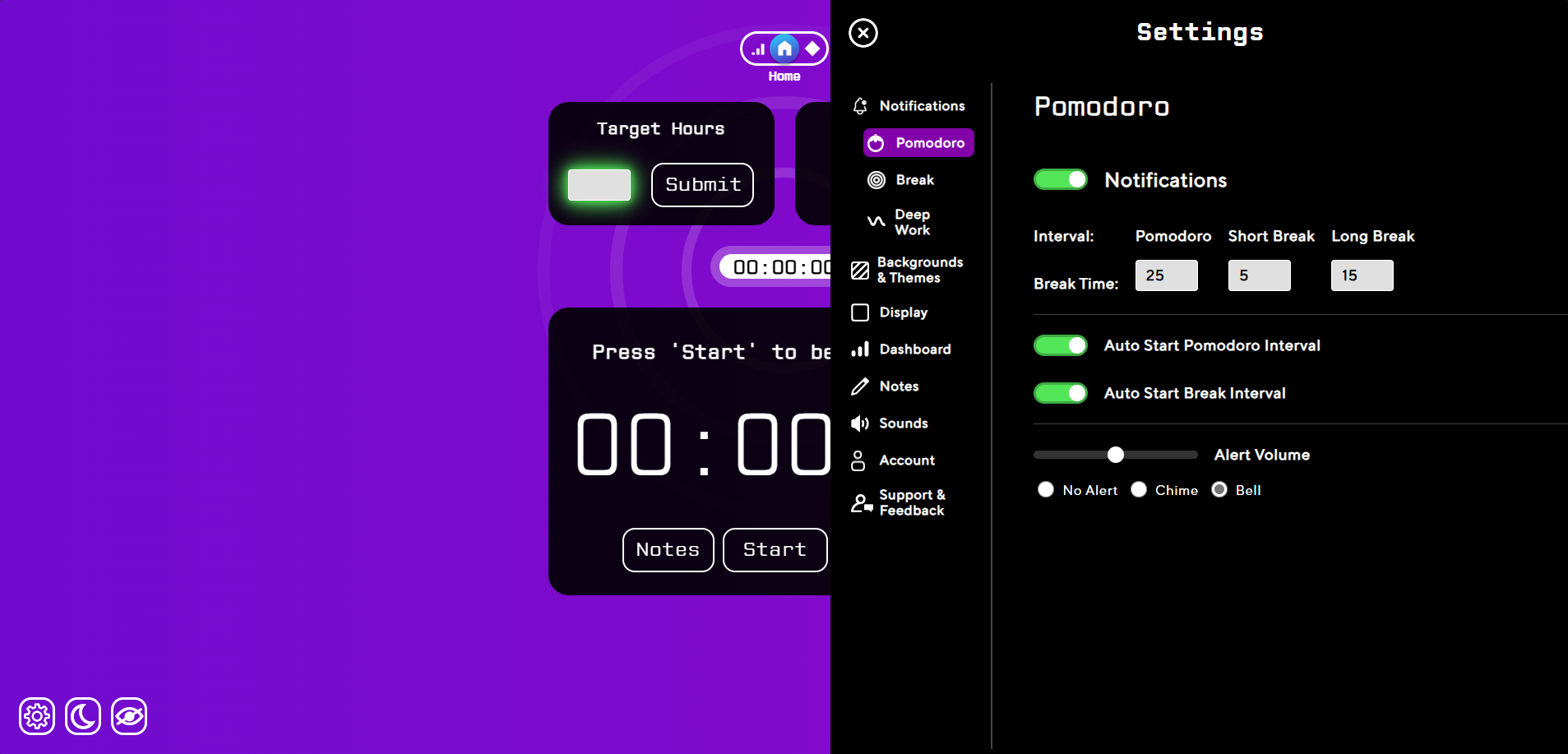
Various Settings Options, Including Pomodoro!
-
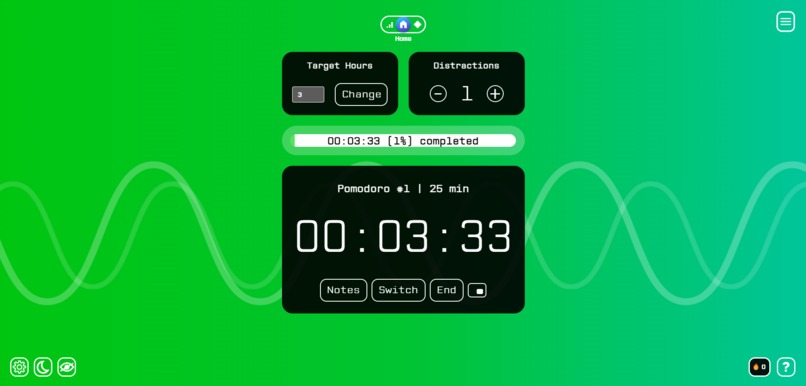
25 min Pomodoro Interval
-
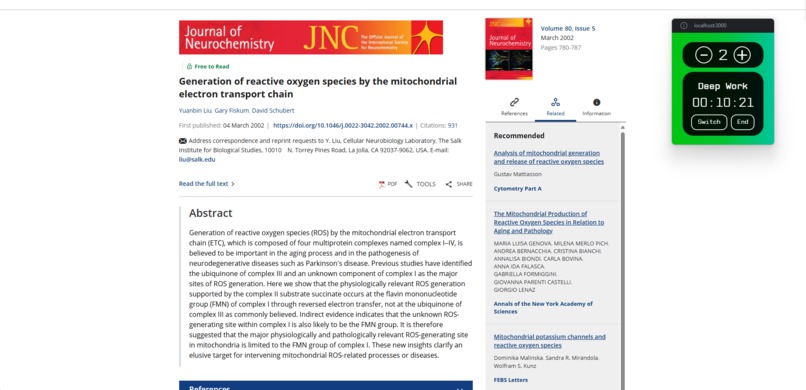
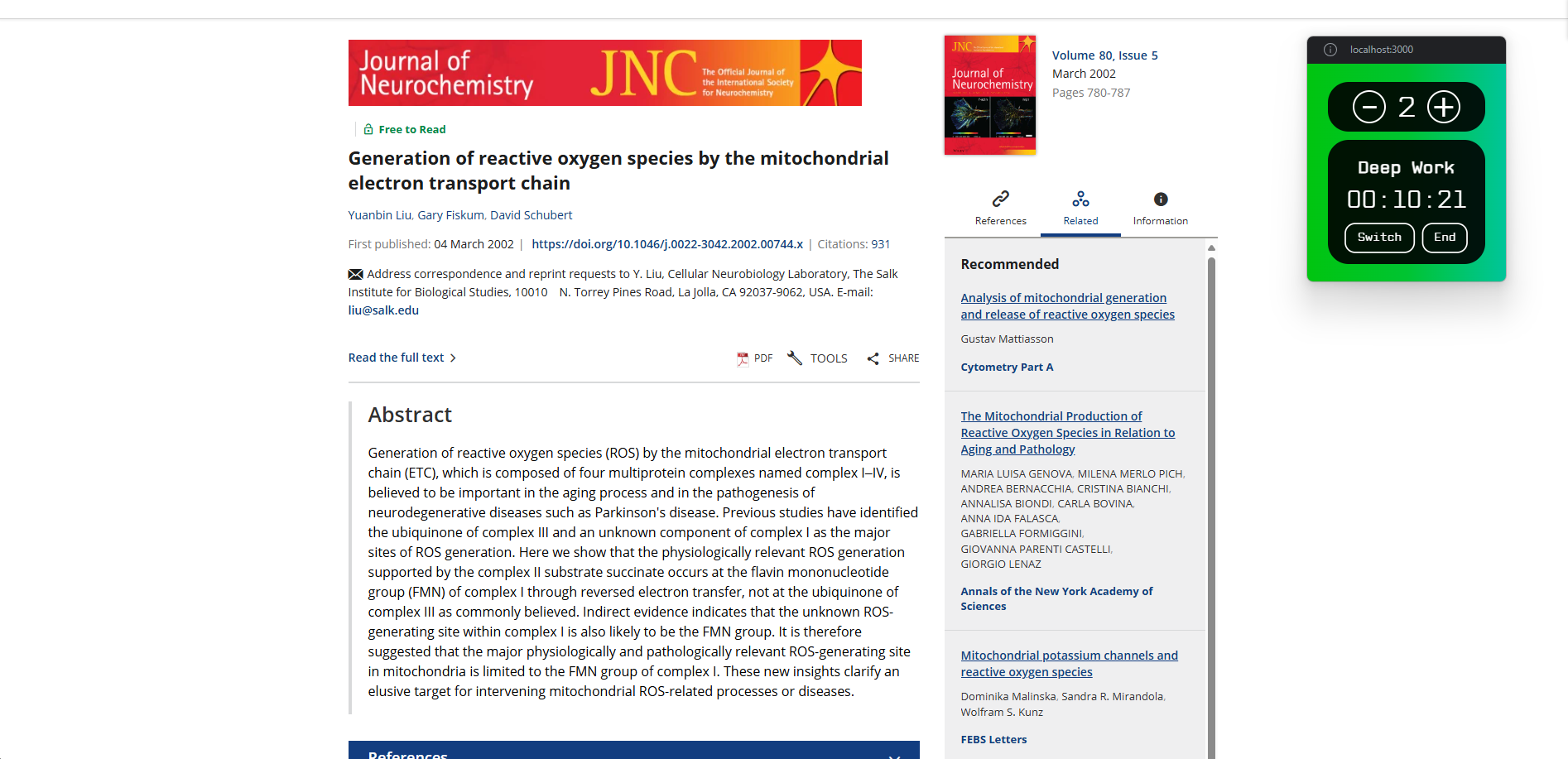
Mini-Mode allows for a mini window which always remains on top (Edge, Chrome only)
-
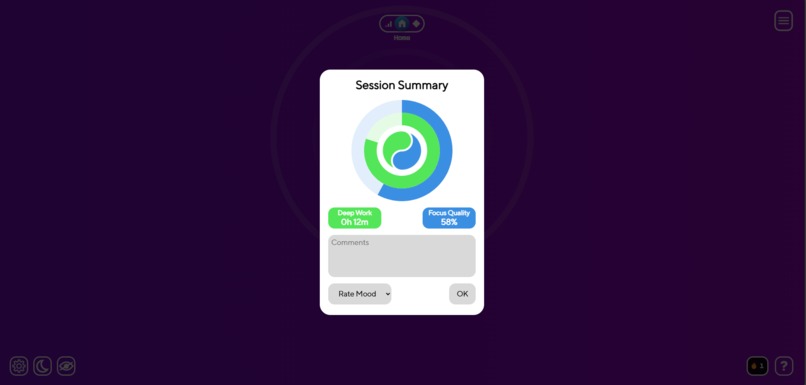
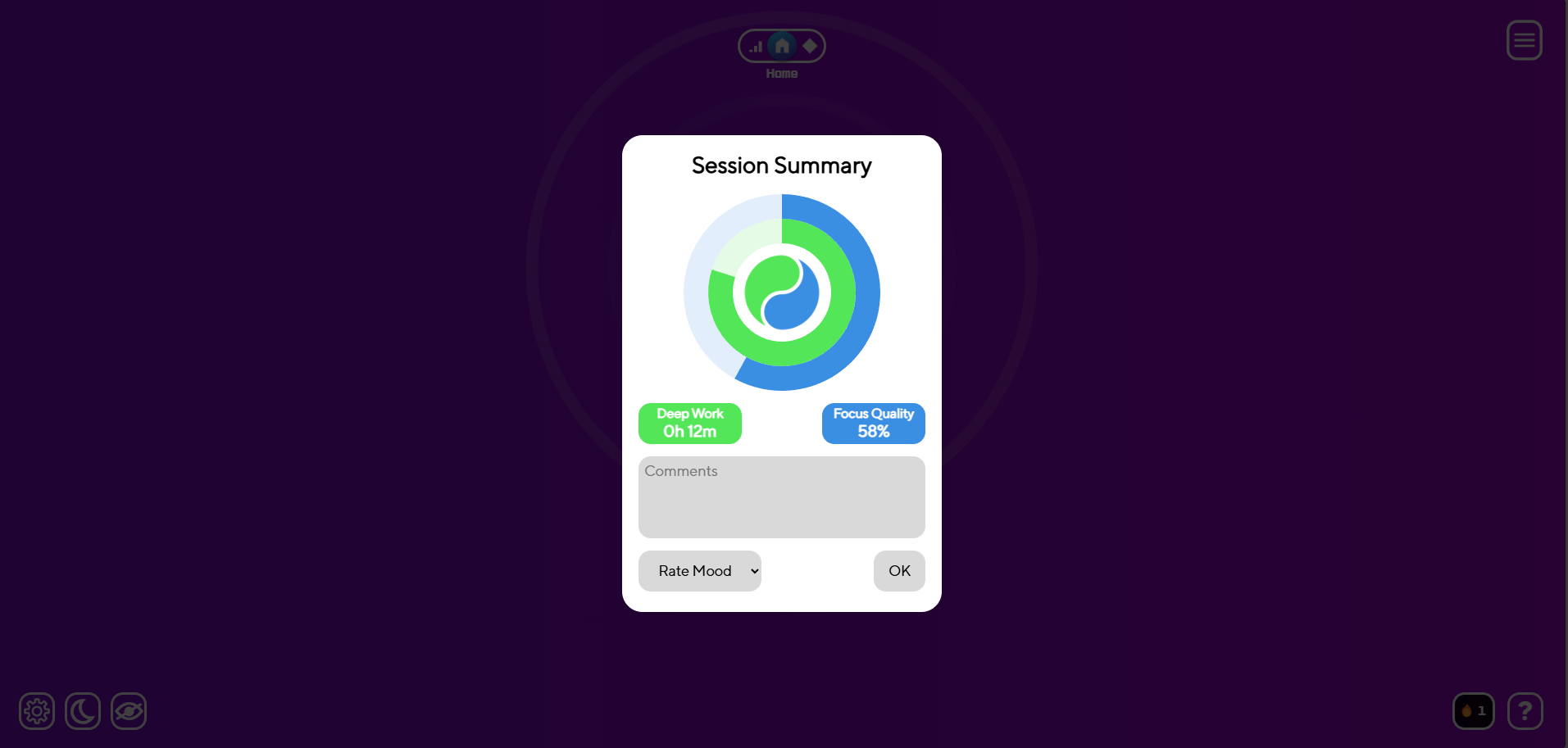
After ending a session, a session summary popup appears w/ summary stats
-
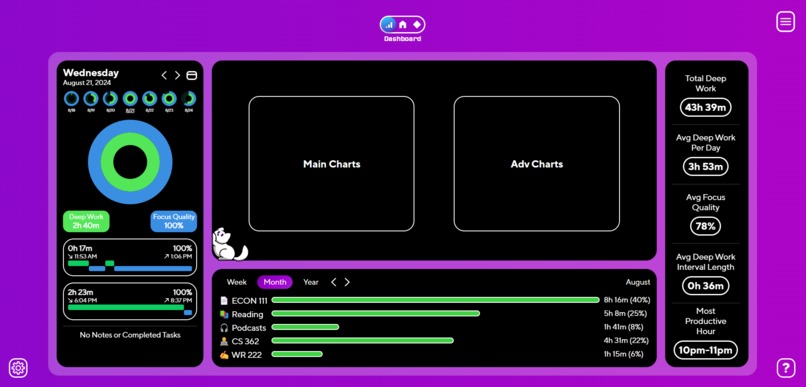
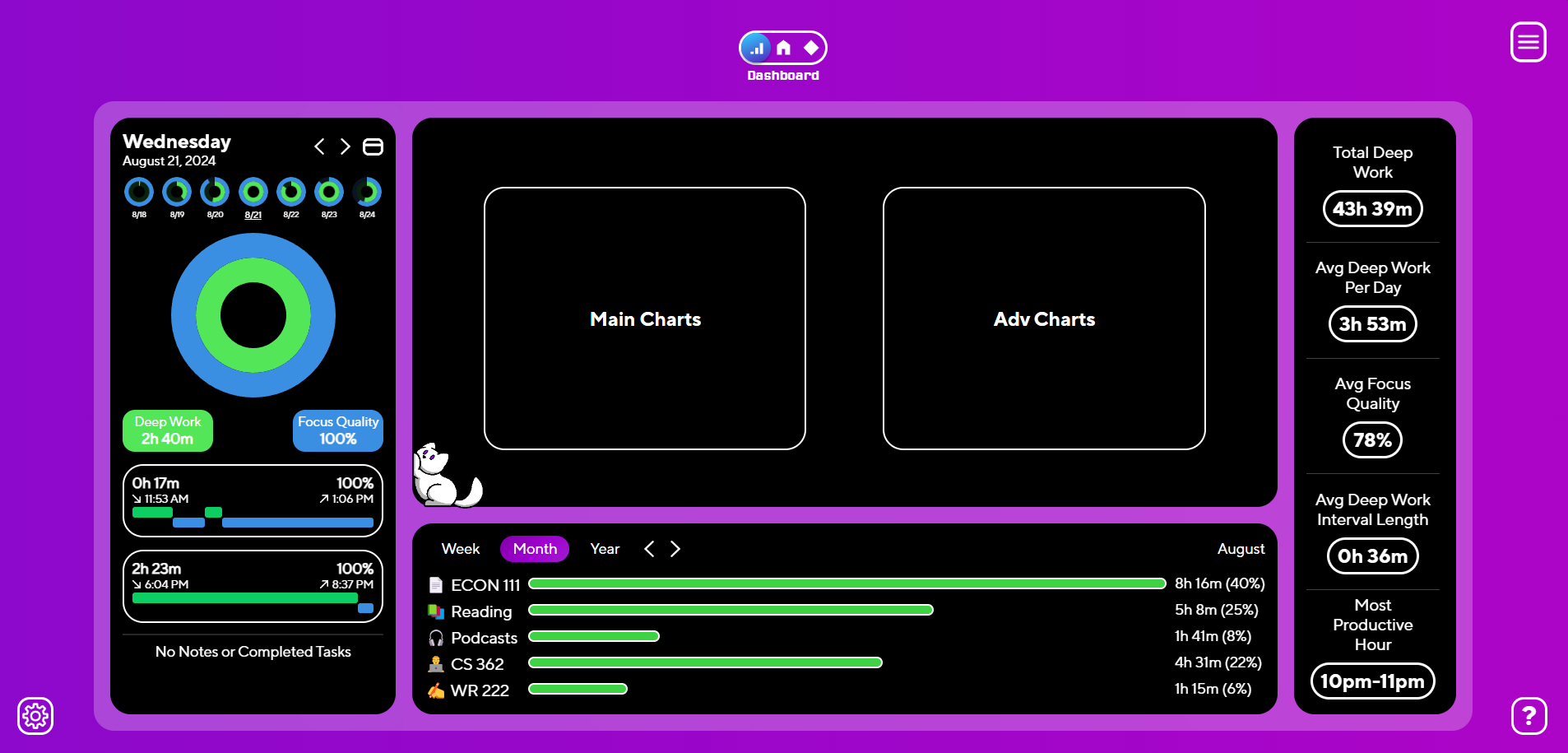
Dashboard View
-
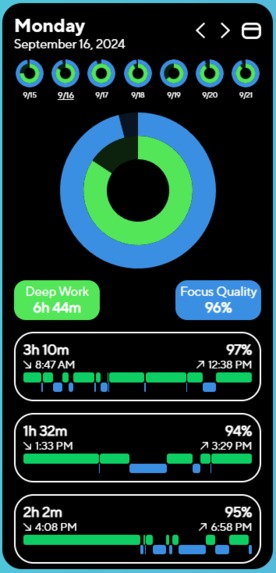
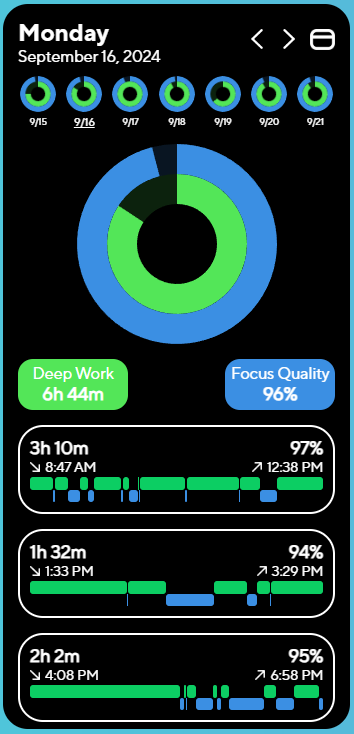
Daily Container contains detailed session information
-
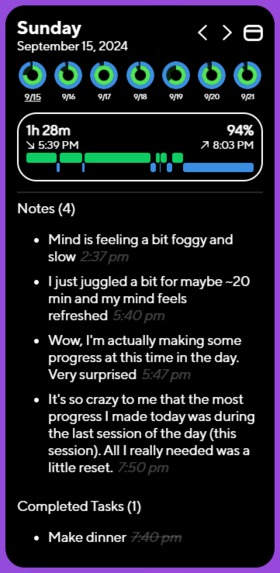
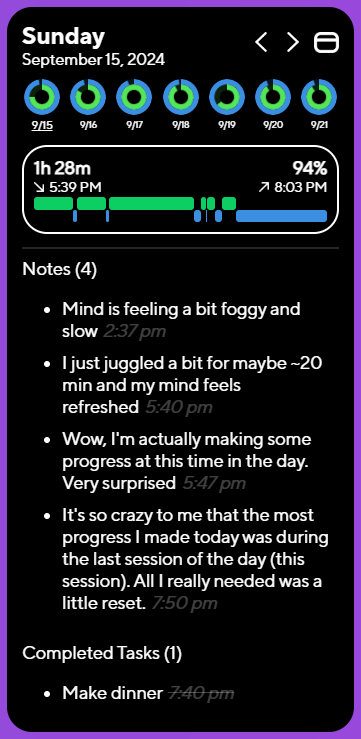
At the bottom, notes and tasks appear that were created/ completed during the selected day
-
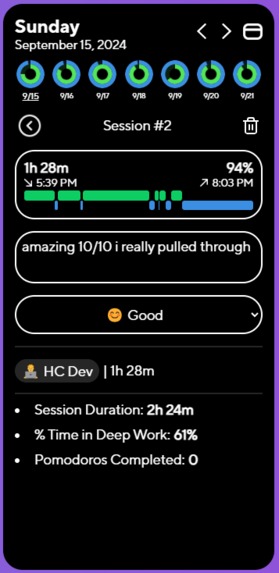
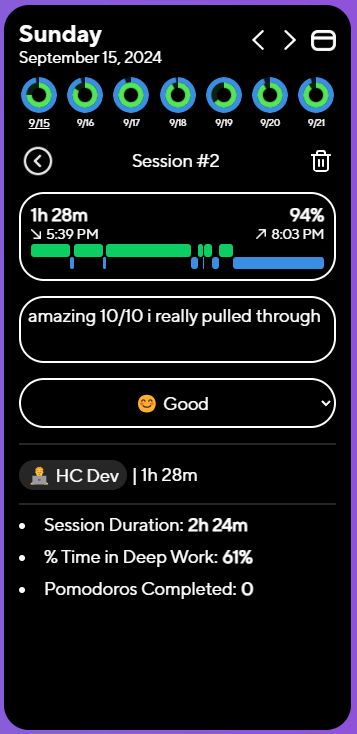
Clicking on the session will take you to the session view
-
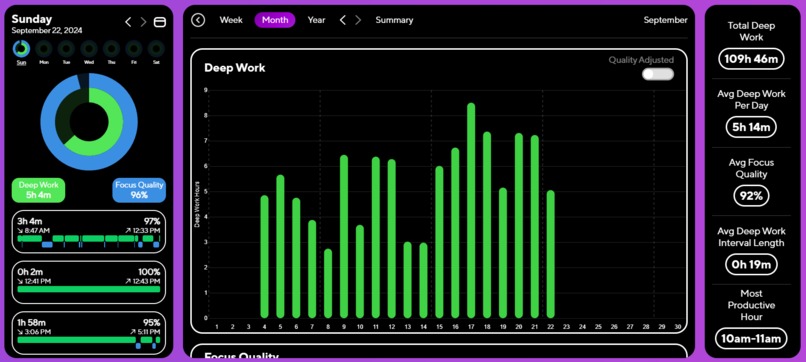
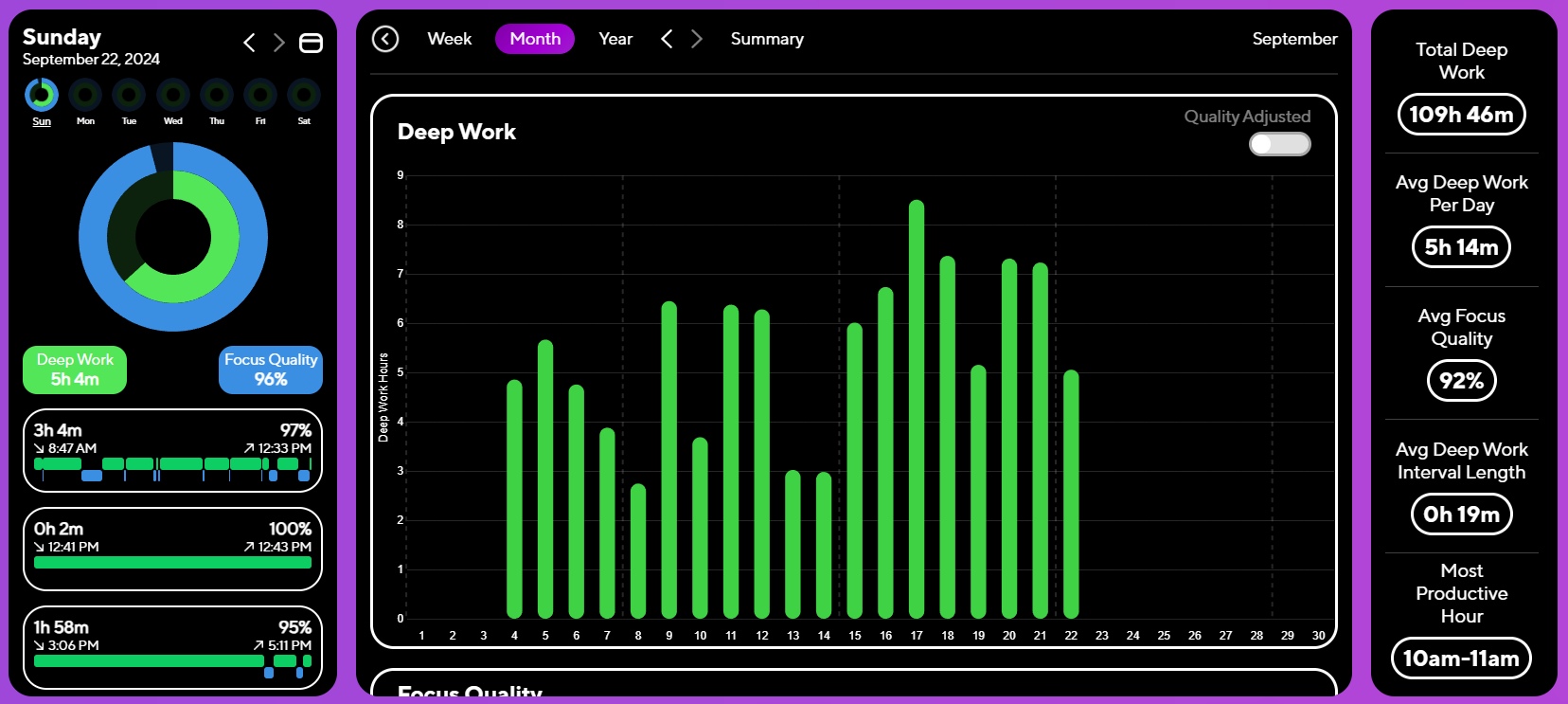
Deep Work Chart (Main Charts) - Side Note: Clicking on any bar will display the corresponding day in the daily container
-
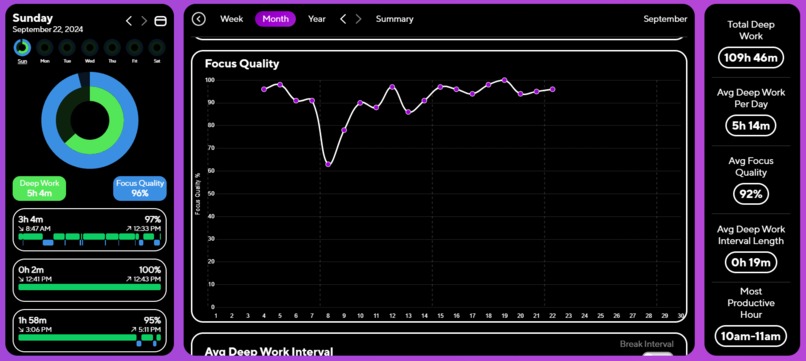
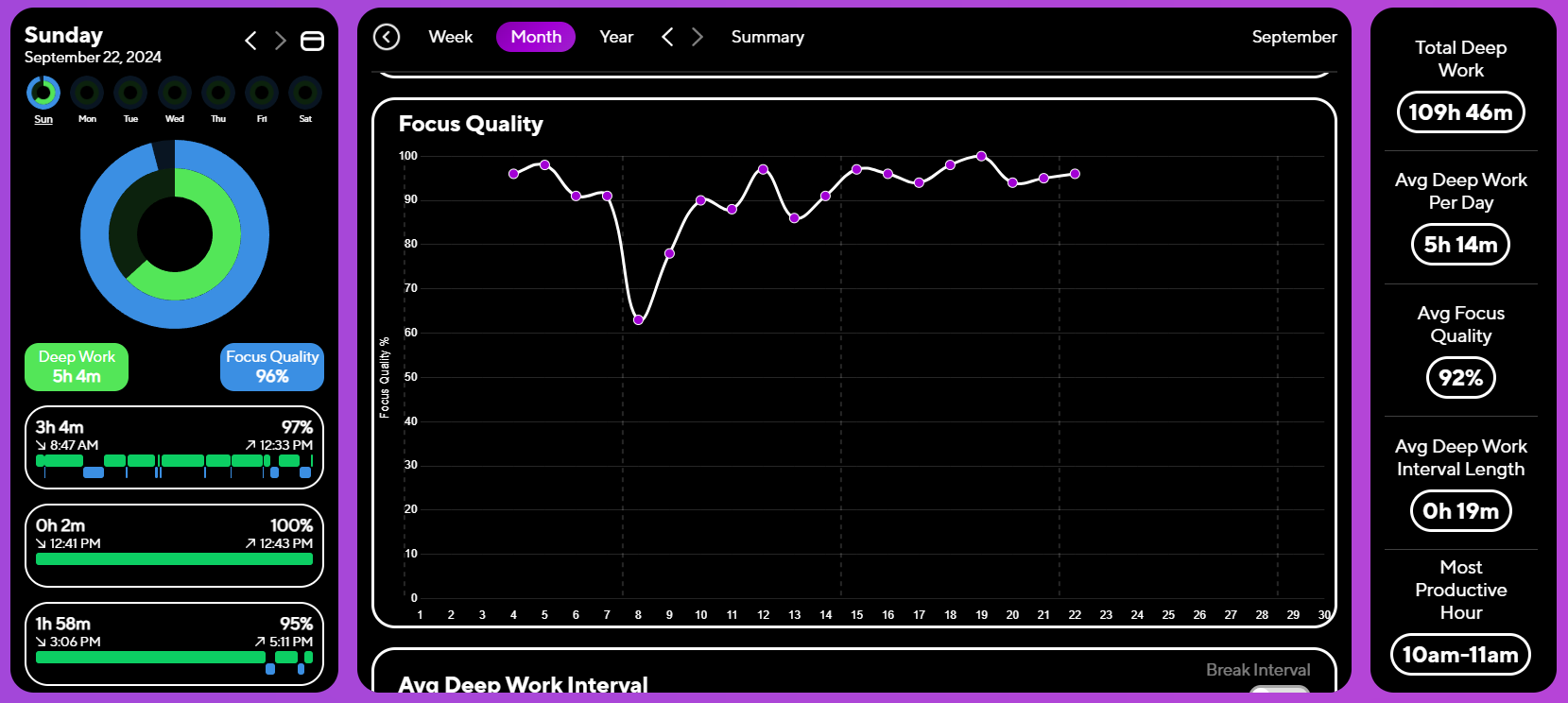
Focus Quality Chart (Main Charts)
-
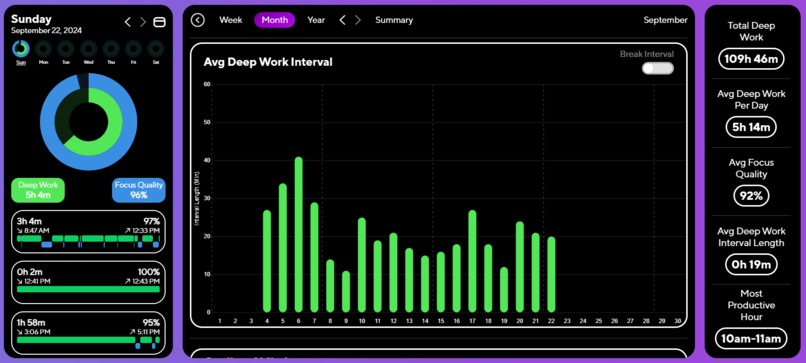
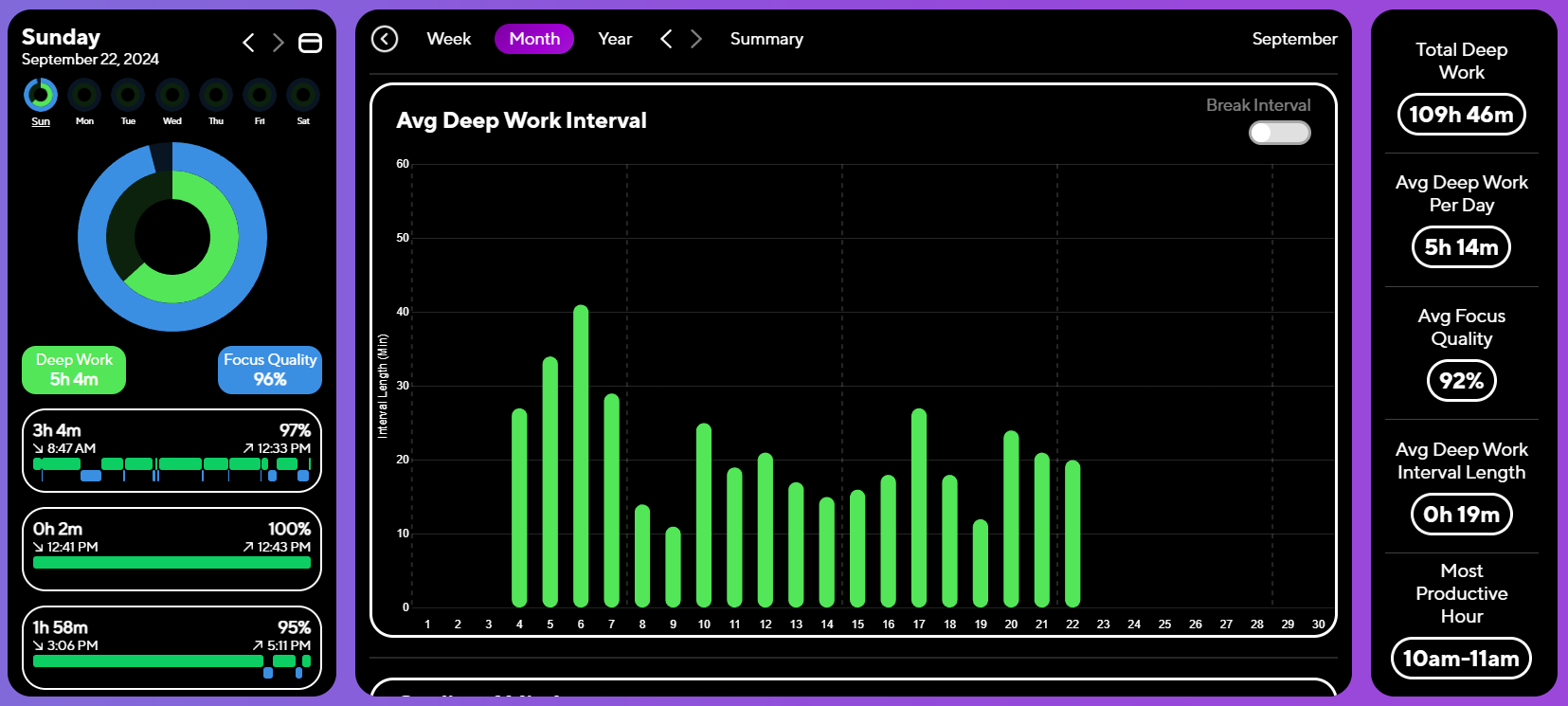
Avg Interval Time Chart (Main Charts)
-
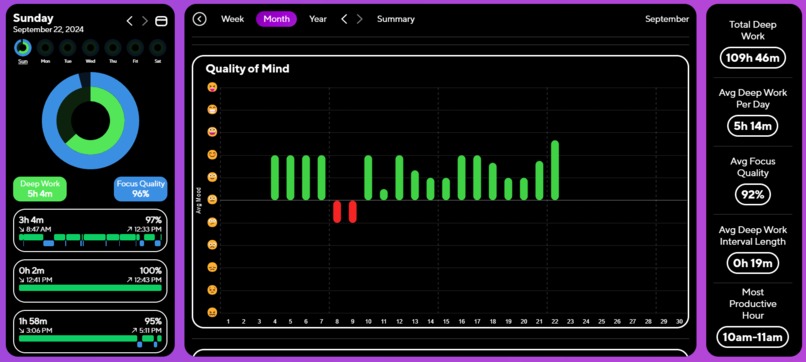
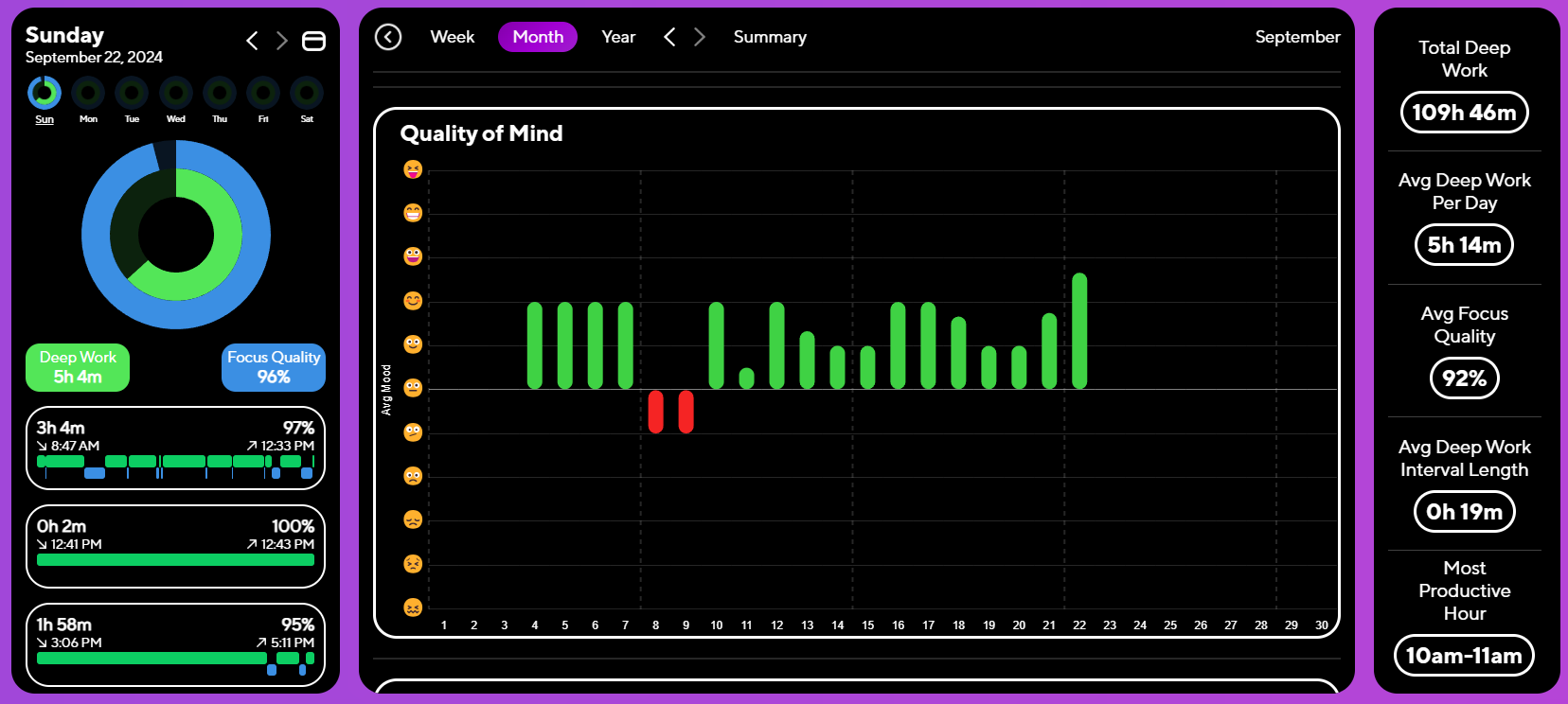
Quality of Mind Chart (Main Charts)
-
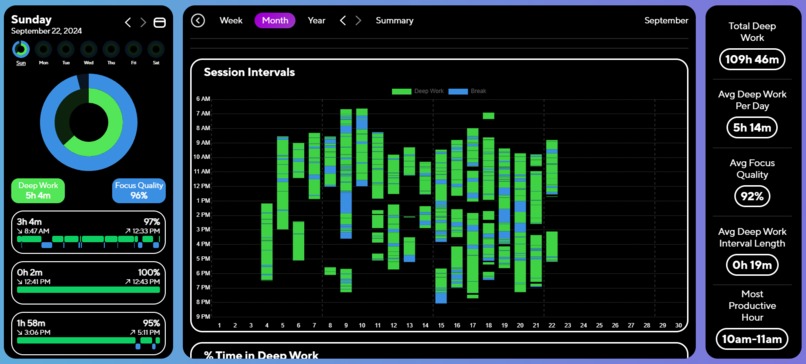
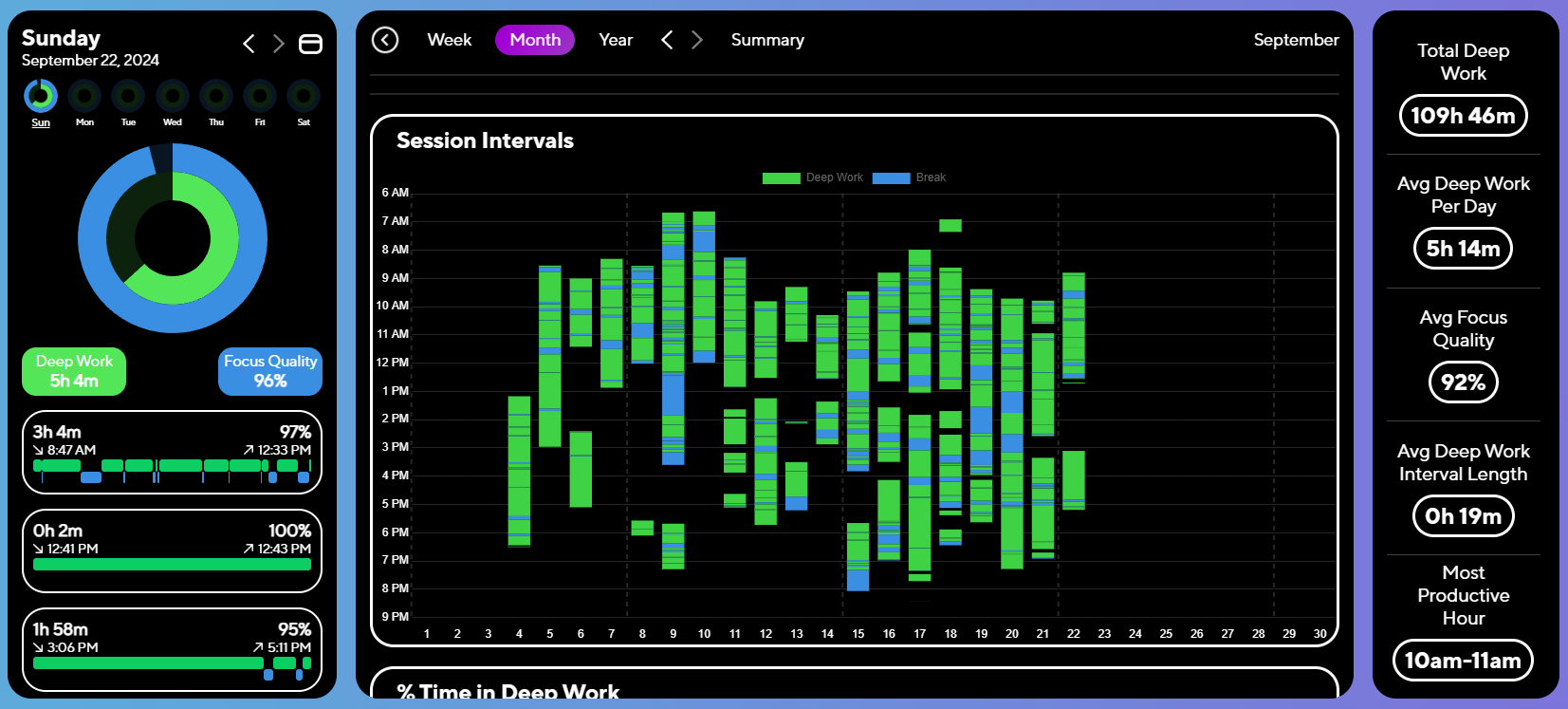
Session Intervals Chart (Main Charts)
-
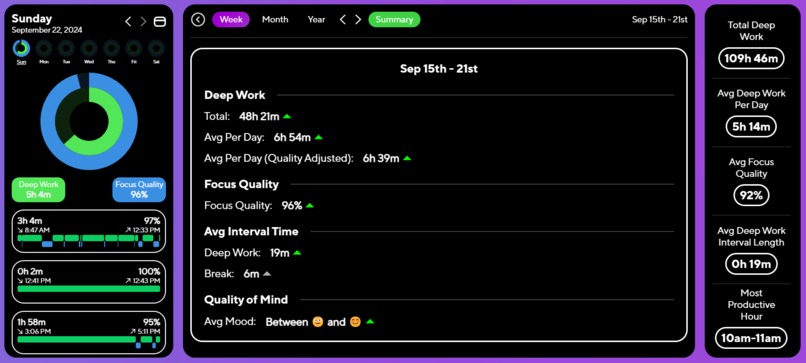
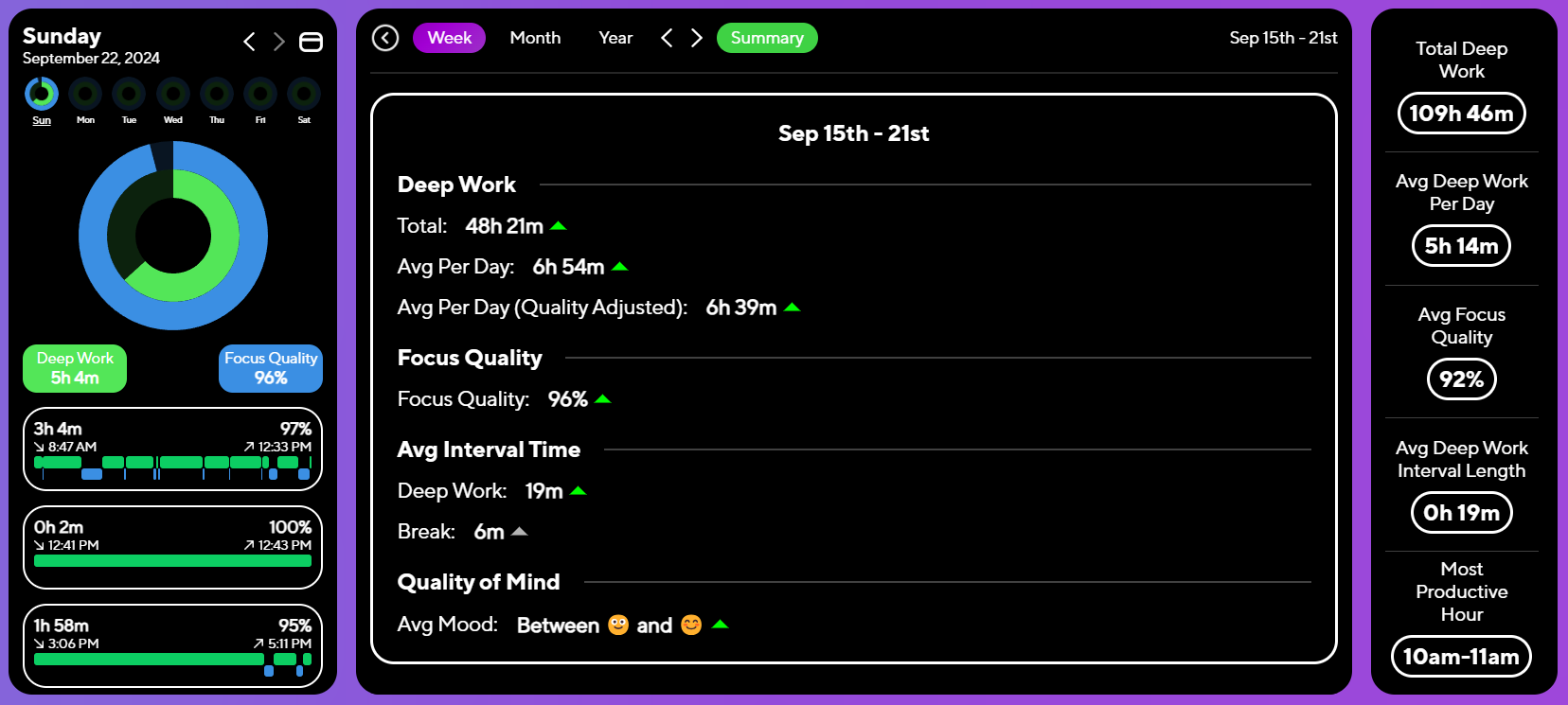
Summary View (Main Charts)
-
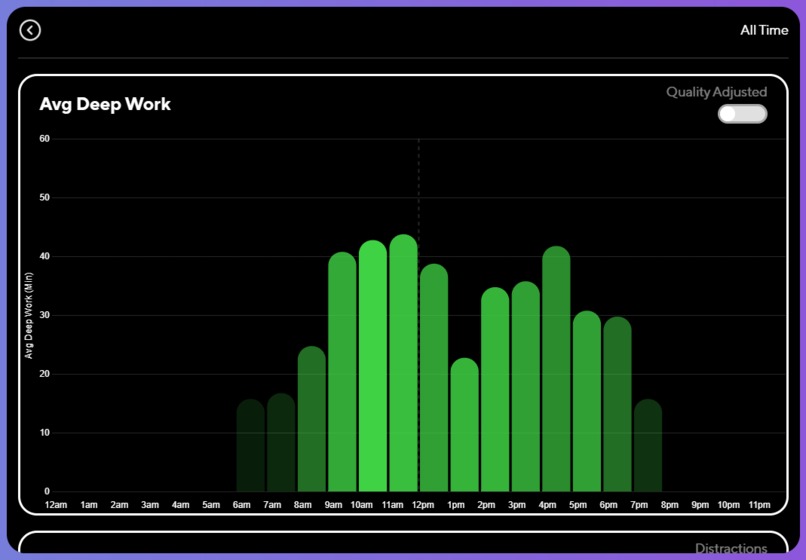
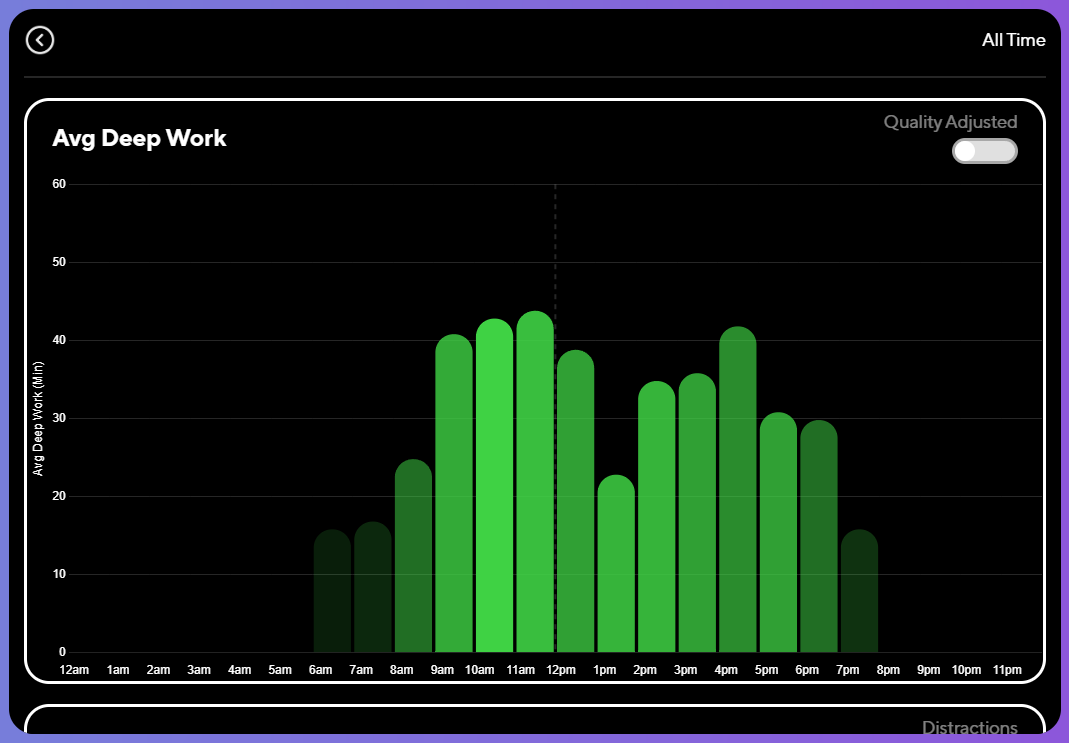
Avg Deep Work Per Hour Distribution (Adv Charts) - Side Note: Opacity represents relative sample size between bars
-
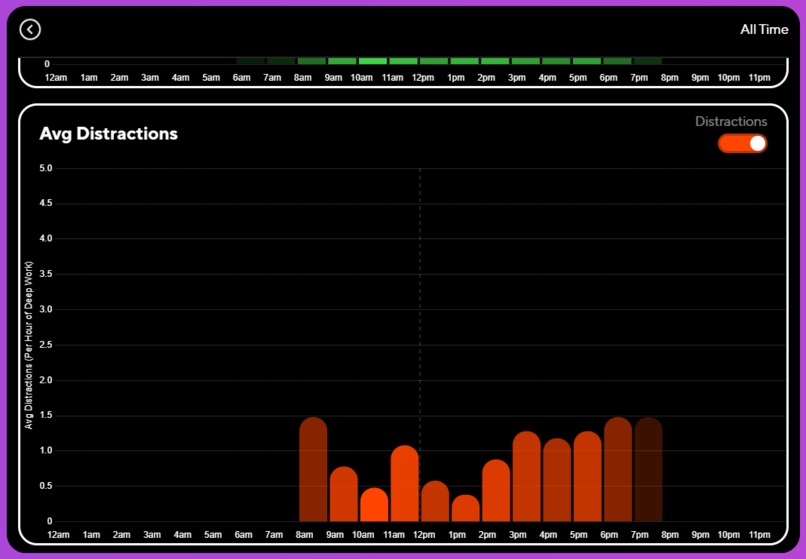
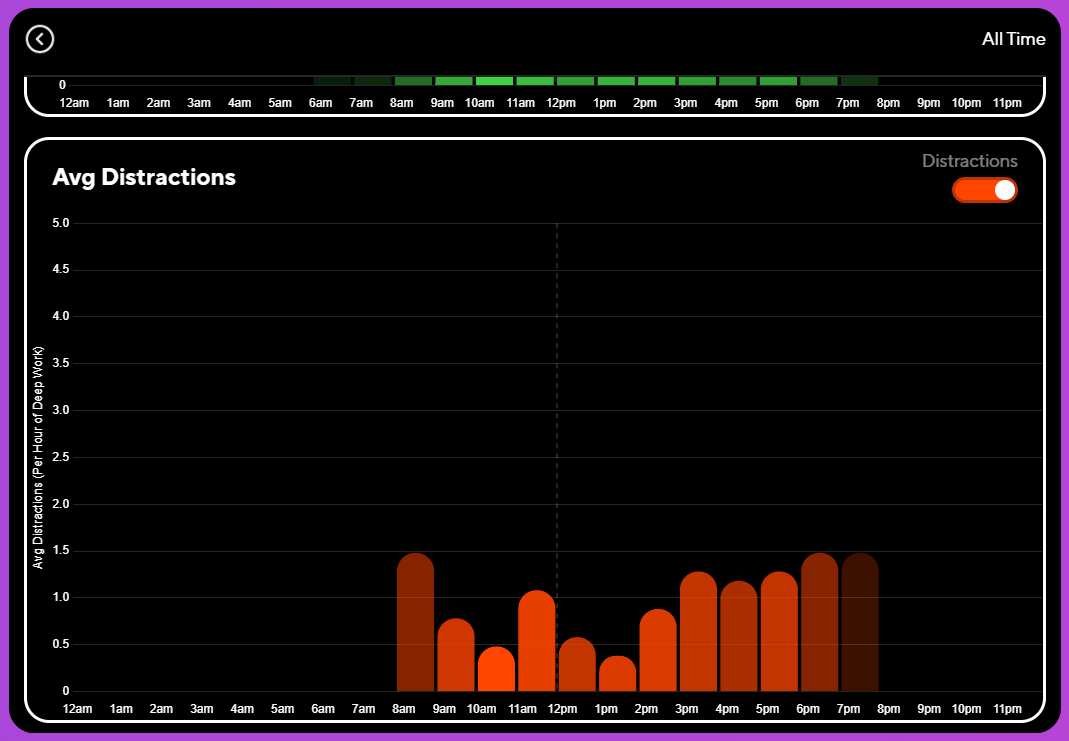
Avg Distractions Per Hour of Deep Work (Adv Charts)
Inspiration
In the initial spec I wrote nearly a year ago, I remember describing the mixed feelings I had with the current time tracking apps available on the web, most of which utilize a timer-based structure, where the time counts down, rather than a stopwatch-based structure with no mandatory upper bound (although one could be enforced).
Eventually, I came to realize that the primary value provided by these apps wasn't necessarily the timer counting down or the corresponding "time pressure" it caused, but rather the general dichotomous structure they enforced, where you're either in "work mode" or "break mode". In my personal life, this structure facilitated a higher level of awareness regarding what I was doing during my work/ study session (increased intentionality) and decreased my tendency to impulsively and frequently distract myself with actions that weren't aligned with the task I had initially set out to conquer (E.g. Browsing the web, going onto YouTube, getting lost in irrelevant thoughts, etc.). This was due in large part to the fact that in order to do those things, I would need to be in a certain mode, and this mode was made explicit and clear on the GUI of whatever app I was using. Thus, I would become more aware of what I was about to do. This allowed time for the parts of my brain in charge of executive functioning to make a more intelligent determination as to whether or not engaging in any specific activity aligned with my high-level goals.
Now, here's a list of the following issues I encountered when using these timer-based products:
(1) Too constrained:
- Couldn't account for unexpected breaks (e.g. bathroom breaks), and needing to work longer than the set time if I felt I was able to (e.g. if I fell into a flow state)
(2) Ill-suited for accurate time-tracking of focused time (e.g. deep work) due to rigid time structure
(3) Didn't take into account the approximate quality of focus (based on number of distractions experienced)
- Any "stats" that were provided were more often than not, unidimensional, and failed to account for focus quality
With that being said, I knew there had to be a better solution -- a solution that acknowledged the complexity of life, the multifactorial nature of one's ability to focus, and emphasized a more mindful approach towards work.
In more concrete terms, I wanted to make something that treated any study/ work session as a mini observational experiment for the purpose of accurate data collection and meaningful reflection rather than direct manipulation of the user's behavior.
What it does
Hyperchill.io is a Digital Productivity Journal. Its function is two-fold:
(1) Increases focus and intentionality directly via recognition of the mode the user is in (work or break) along with distractions experienced
- By consciously changing modes and acknowledging distractions when they're recognized, you're effectively training your executive functioning, which is critical for psychological wellbeing and success in virtually any domain
(2) Provides feedback in the form of data visualization regarding numerous dimensions of the study experience, which allows you to make conceptual connections between your habits (documented in Notes Feature), and the data which includes, among others:
- Total Deep Work Time (can be adjusted for focus quality)
- Focus Quality (derived from the number of distractions experienced)
- Avg. Interval Time
- % Time in Deep Work
- How your focus changes throughout the 24 hours of the day (available in Adv. Charts)
How I built it
I built Hyperchill.io by slowly becoming obsessed with the process of developing an app that could provide a reliable way to work mindfully and ultimately encourage an understanding of work as an endeavor worthy of our full attention. JavaScript was also involved.
This started out as a personal project and continues to be so. However, if you are also a developer or someone who's potentially interested in collaborating on this project, feel free to reach out.
Challenges I ran into
Putting aside the few weeks (in total) I wasted implementing things that shouldn't have existed in the first place, overall, I was pleasantly surprised with the consistency of the progress I would make each time I sat down to work on the app. Any challenges I ran into were, at worst, mildly annoying, but certainly able to be solved. Generally speaking, I'd say the biggest category of issues where those caused by the edge case where the user's computer would "go to sleep", and thus certain aspects of the program (namely intervals and other time-related functions) would pause. This did, however, offer the opportunity to implement some fun recursive algorithms* that would "go back in time" and account for the things that couldn't be accounted for while the computer was in sleep mode.
- I still wonder sometimes if our reality has a recursive structure to it, where systems are always contained within a larger system, ad infinitum. I honestly don't see why not.
Accomplishments that I'm proud of
It took a year to build this thing. A FULL YEAR to get this app to where I wanted it to be but damn, I'm happy with it. It is everything I wanted it to be and no more. Furthermore, the app works for me, and for that reason alone, I'm absolutely elated.
I know that taking a year to create an MVP goes against every single founder's advice for creating an initial product, but again, this enterprise started as a humble side project by a man addicted to eating flautas at 3 a.m. Understandably, my mindset revolved more around "I'm going to attempt to build this thing and see what happens" as opposed to "let's build fast, get feedback quickly, and rapidly iterate."
What I learned
Elon Musk once said: "One of the biggest traps for smart engineers is optimizing a thing that shouldn't exist."
In retrospect, Elon couldn't be more spot on. Luckily, because I'm a dumb engineer, I never had to run into any of these issues and all of my time was used wisely by not optimizing overly complicated solutions to edge cases or wasting time implementing features didn't deserve to have a spot on the UI (I'm joking).
What's next for Hyperchill.io
For the immediate future, the goals of Hyperchill.io revolve around getting user feedback and validation of the concept. Anything past that is unknown, but I'm optimistic that the app will continue to bring value to users and remind them about the importance of efficient use of this infinitely valuable commodity we refer to as time.

Log in or sign up for Devpost to join the conversation.