-
-
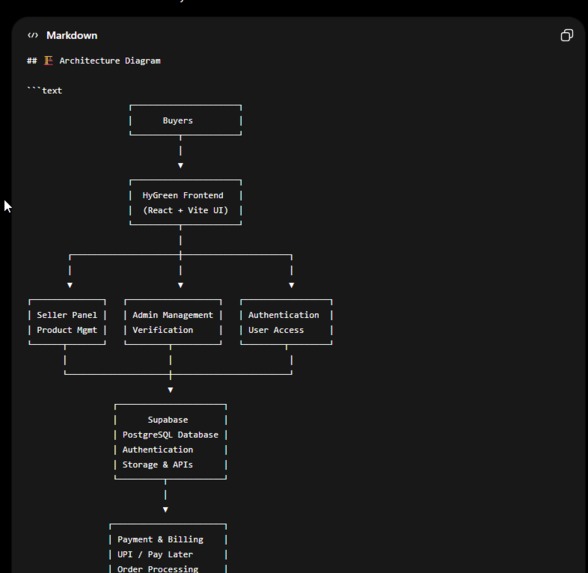
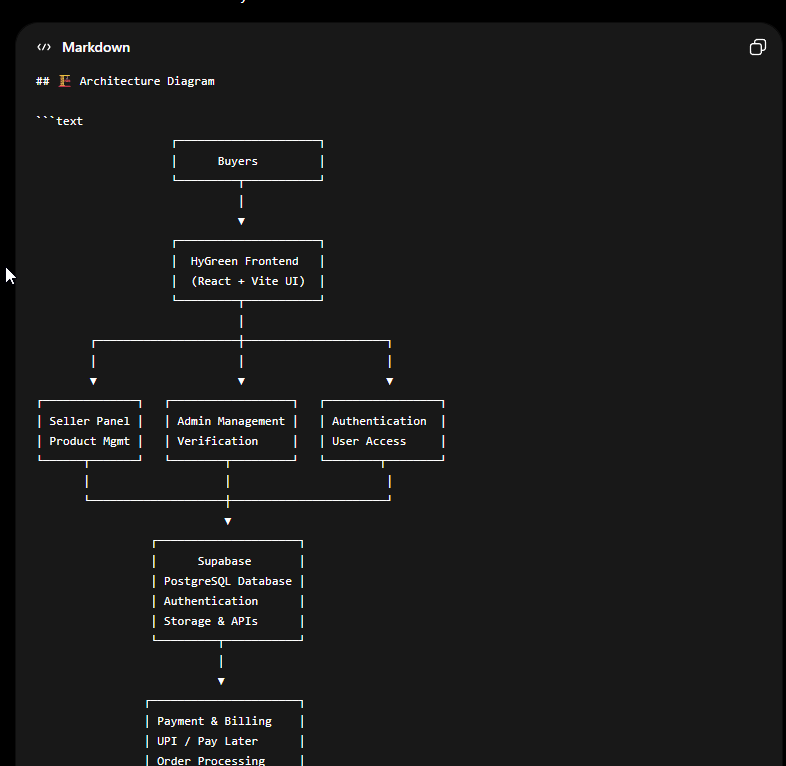
Architecture diagram
-
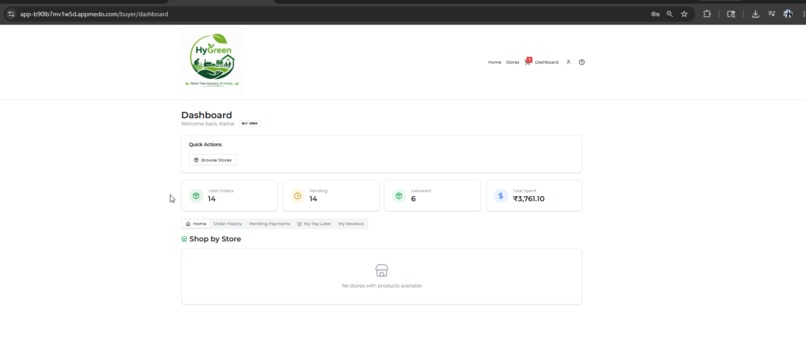
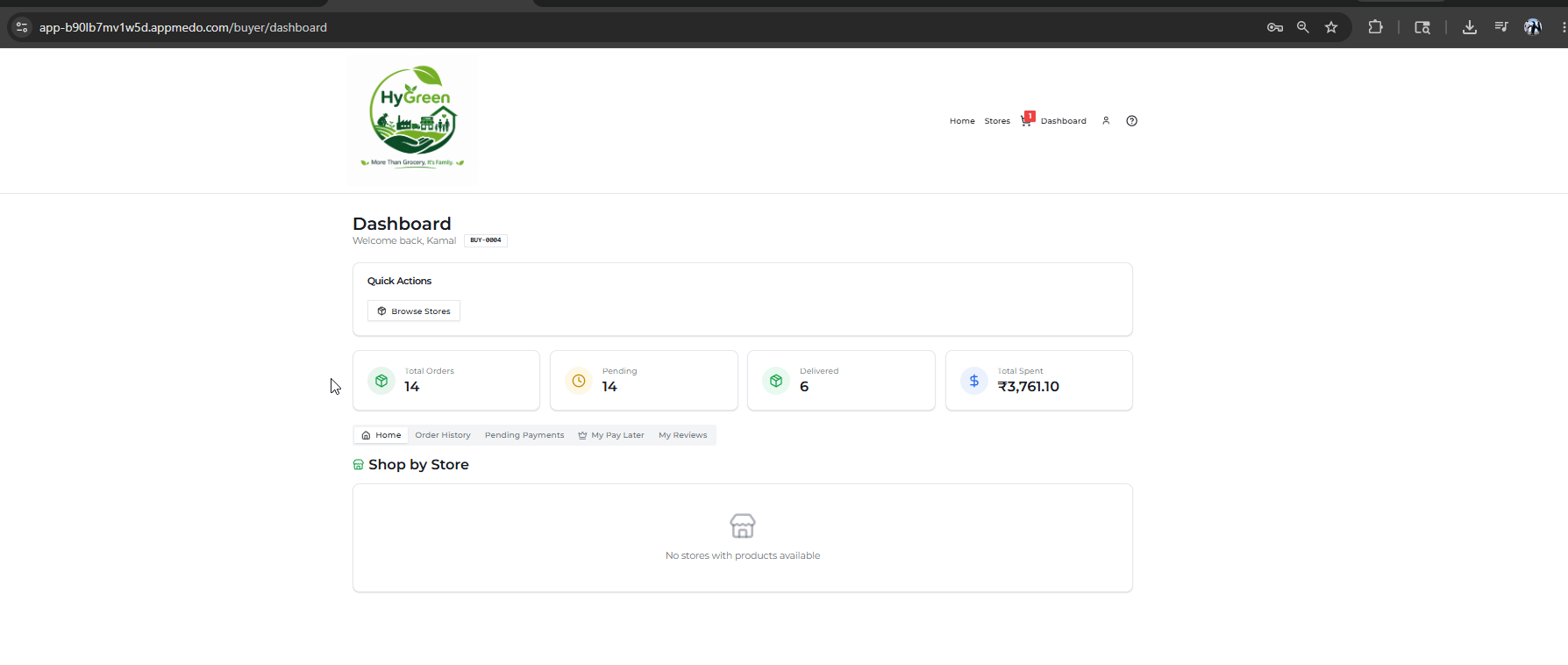
Buyer dashboard screenshot
-
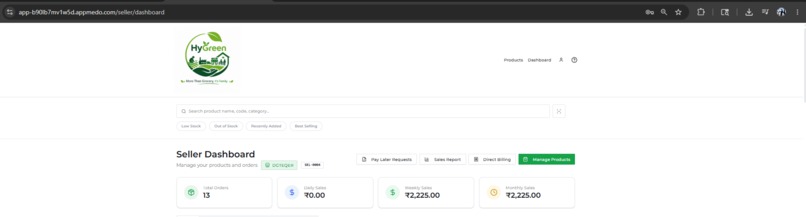
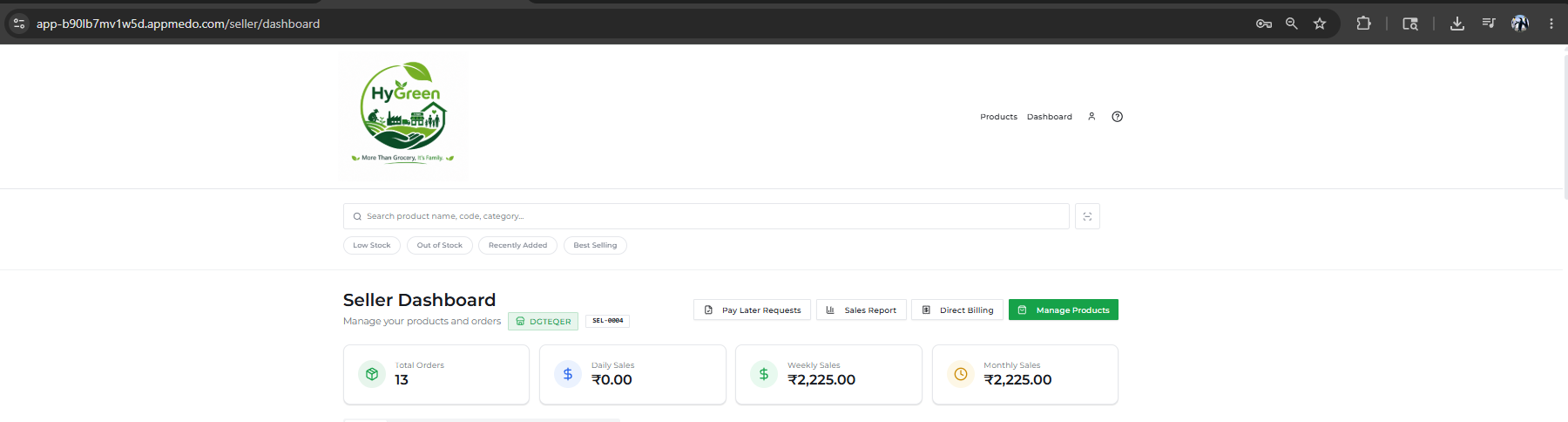
Seller dashboard screenshot
-
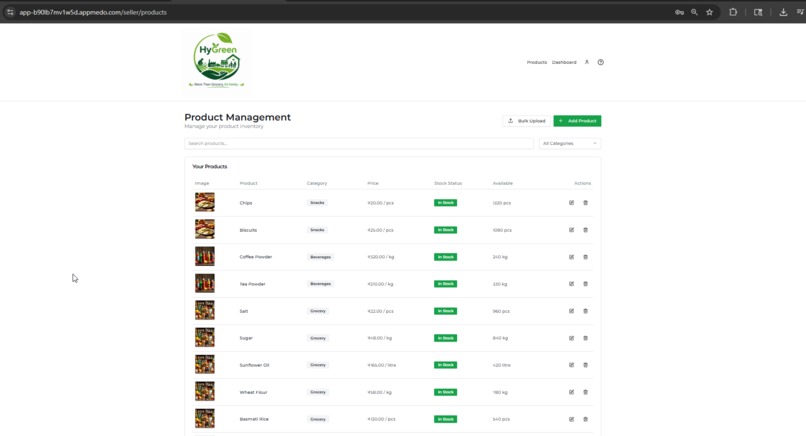
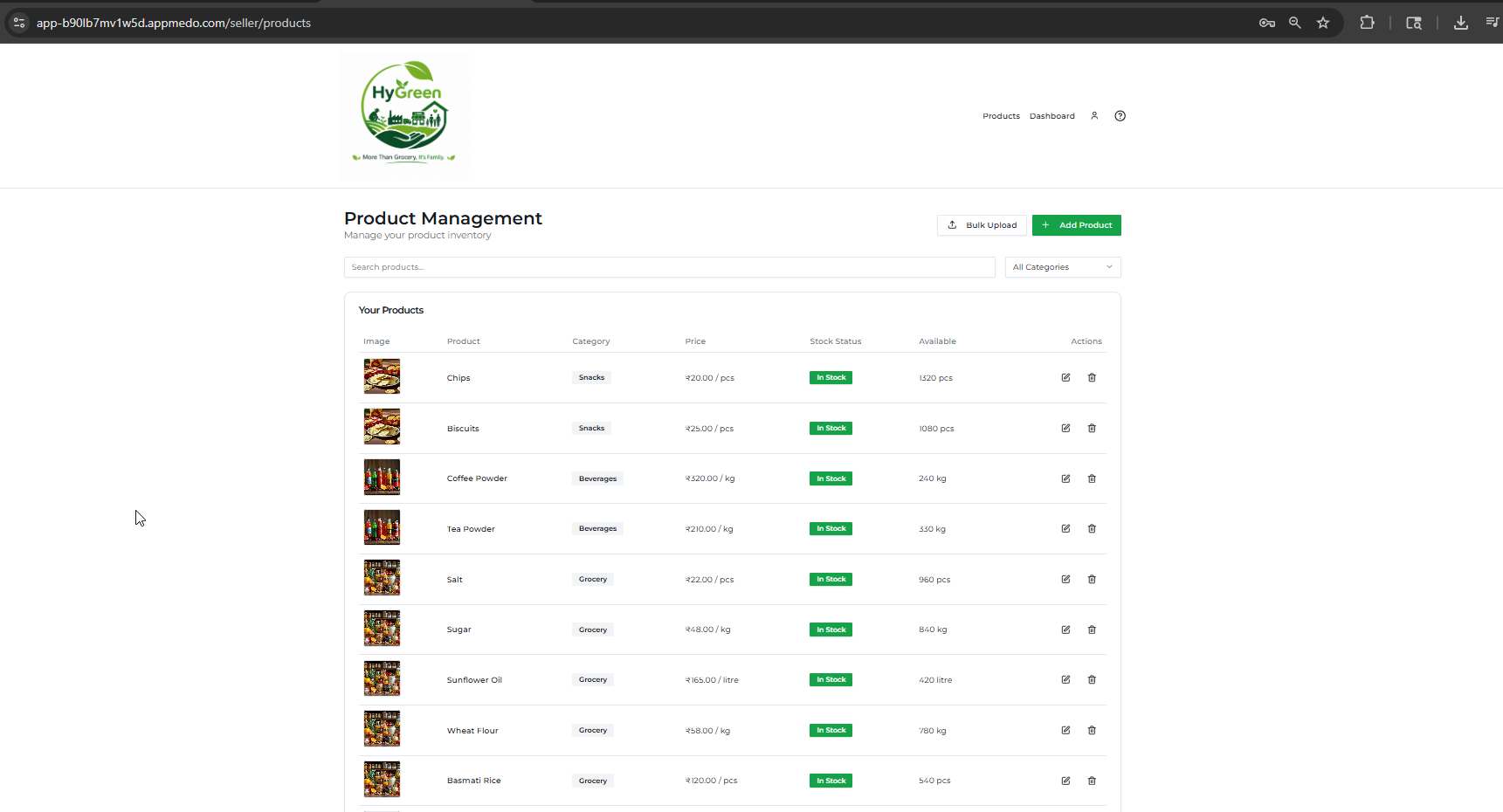
Product management screenshot
-
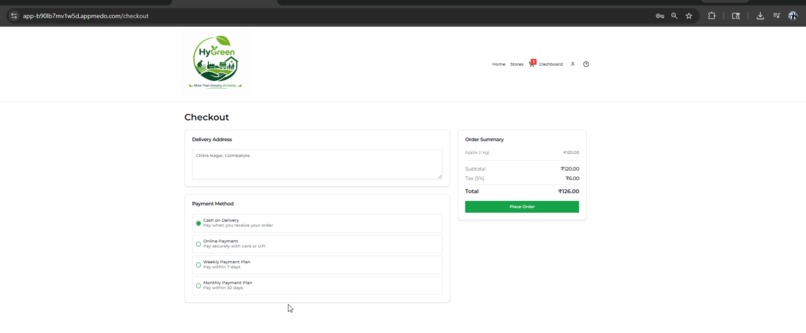
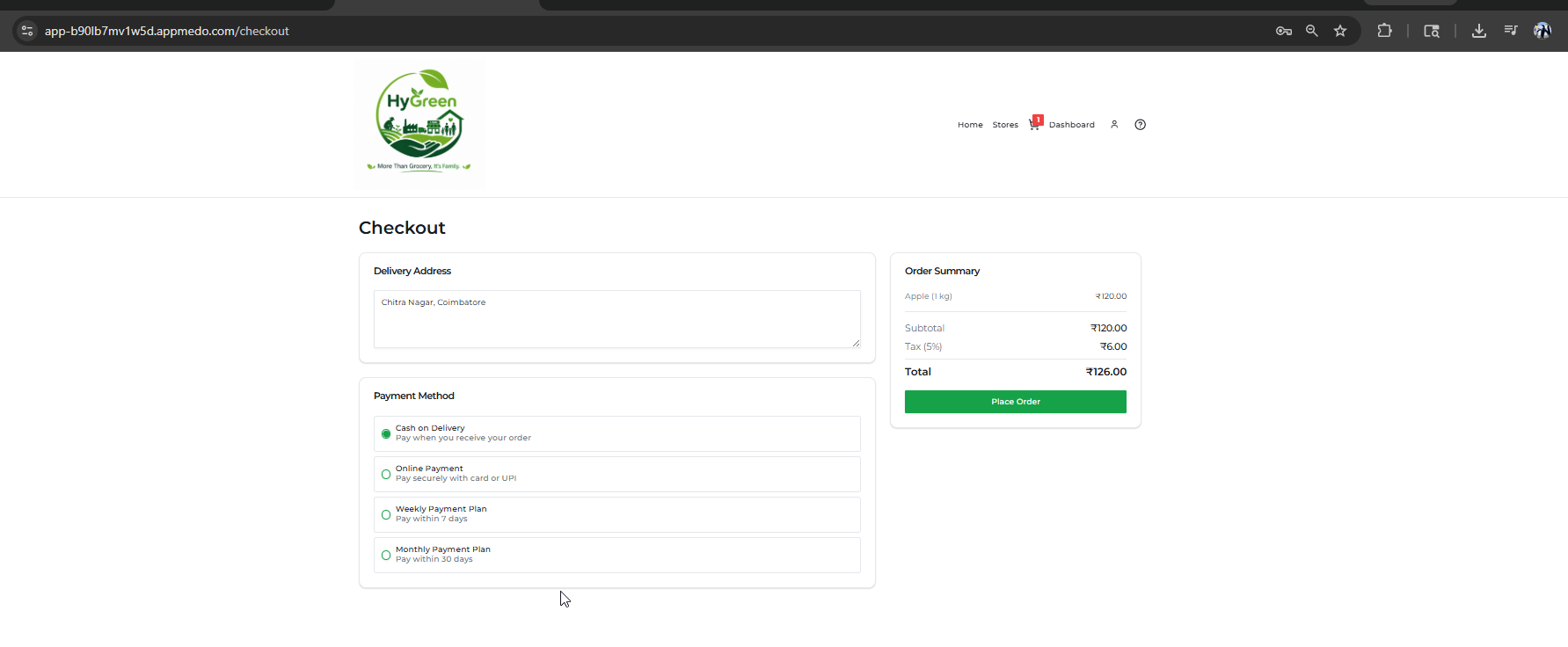
Billing page screenshot
Inspiration
HyGreen Marketplace Platform was inspired by the growing need for a smarter and more connected digital marketplace for farmers, manufacturers, sellers, and consumers.
Many small and medium businesses still struggle with fragmented selling systems, poor digital visibility, manual order management, and lack of scalable commerce tools. We wanted to create a centralized multi-vendor platform that simplifies digital selling while remaining scalable and modern.
The vision was to design a marketplace ecosystem where buyers and sellers can interact seamlessly through secure dashboards, intelligent workflows, and cloud-based infrastructure.
What it does
HyGreen Marketplace Platform is a full-stack multi-vendor marketplace platform that enables:
- Buyer and seller account management
- Product listing and inventory management
- Order placement and tracking
- Seller dashboards and analytics
- Admin management system
- OTP-based authentication and security
- Payment workflow integration
- Responsive mobile and desktop experience
- Scalable cloud backend using Supabase
The platform creates a digital commerce ecosystem connecting multiple stakeholders in a clean and user-friendly way.
How we built it
The platform was built using:
- React + TypeScript for frontend development
- Vite for fast development workflow
- Tailwind CSS for responsive UI design
- Supabase for backend services and database
- PostgreSQL for data management
- Modular component-based architecture for scalability
We designed separate dashboards and workflows for buyers, sellers, and administrators while maintaining reusable frontend components and scalable backend integration.
The project architecture was structured carefully to support future expansion and production-level improvements.
Challenges we ran into
Some of the biggest challenges included:
- Designing scalable multi-vendor workflows
- Managing buyer and seller role separation
- Handling secure authentication flows
- Structuring database relationships properly
- Building responsive UI layouts quickly during hackathon time constraints
- Maintaining clean architecture while developing rapidly
Time management during the hackathon was also a major challenge because multiple modules had to be integrated within a limited development window.
Accomplishments that we're proud of
We are proud that we successfully built:
- A working full-stack marketplace architecture
- Dedicated buyer and seller dashboards
- Responsive modern UI
- Secure authentication workflow
- Modular and scalable code structure
- Cloud-connected backend integration
- Production-style project organization
We are also proud of creating detailed documentation, architecture diagrams, and GitHub project structure within the hackathon timeline.
What we learned
During this project we learned:
- Faster multi-vendor system architecture planning
- Better frontend-backend integration workflows
- Scalable React application structuring
- Database schema optimization
- Rapid UI prototyping techniques
- Importance of modular architecture in hackathon development
We also gained deeper understanding of balancing speed and maintainability during rapid product development.
What's next for HyGreen Marketplace Platform
Future plans for HyGreen Marketplace Platform include:
- AI-powered product recommendations
- Real-time order tracking
- Advanced analytics dashboards
- Mobile application support
- Integrated logistics management
- Smart agriculture marketplace features
- Multi-language support
- Payment gateway expansion
- Vendor verification workflows
- AI-based demand forecasting
The long-term vision is to evolve HyGreen into a scalable digital commerce ecosystem supporting agriculture, manufacturing, and sustainable marketplace growth globally.
Built With
- html5
- node.js
- postgresql
- react
- supabase
- tailwind-css
- typescript
- vite


Log in or sign up for Devpost to join the conversation.