-
-
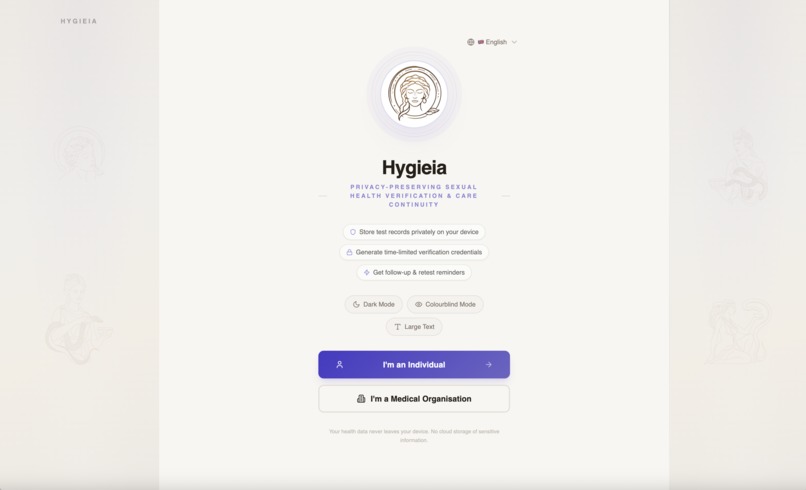
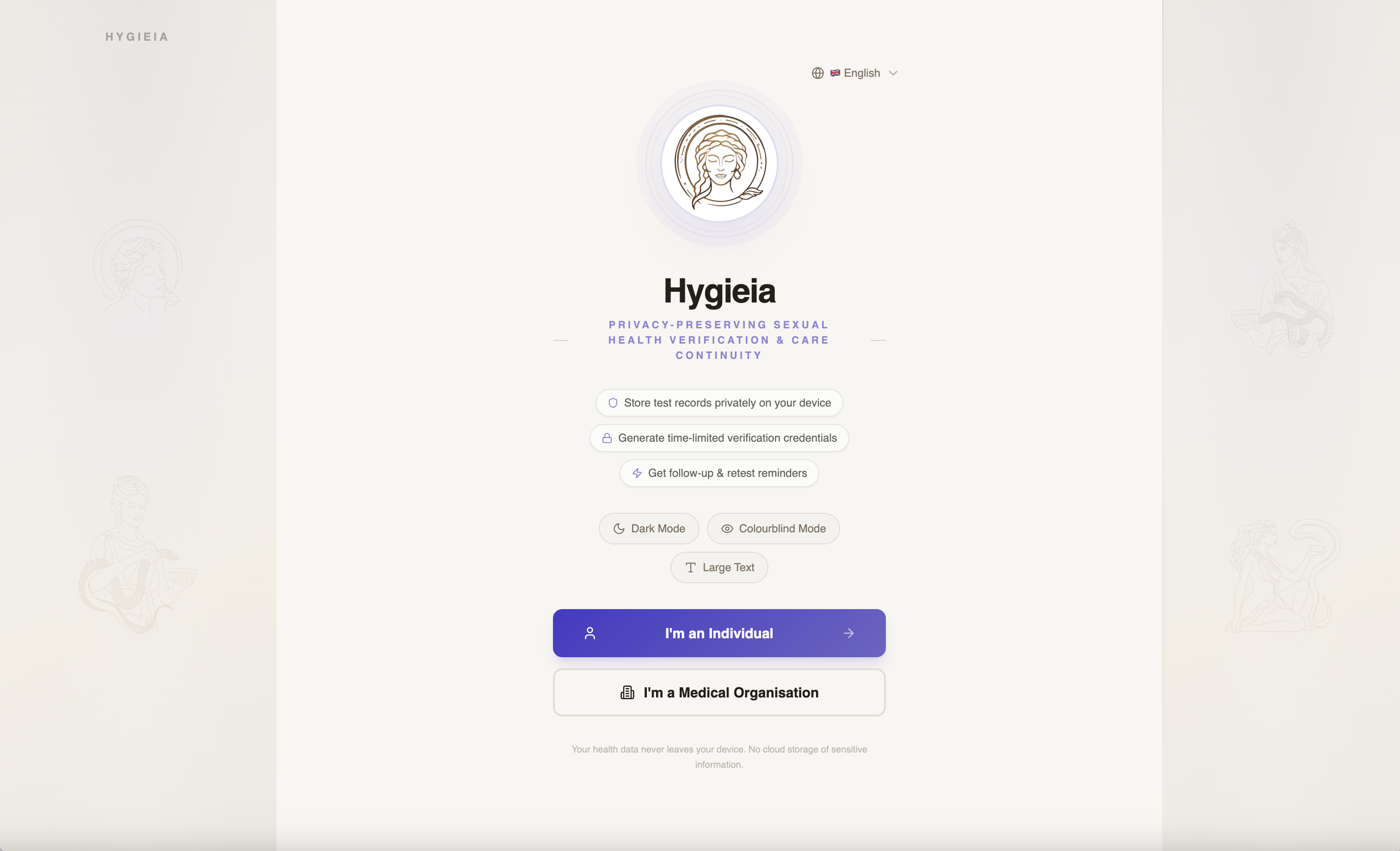
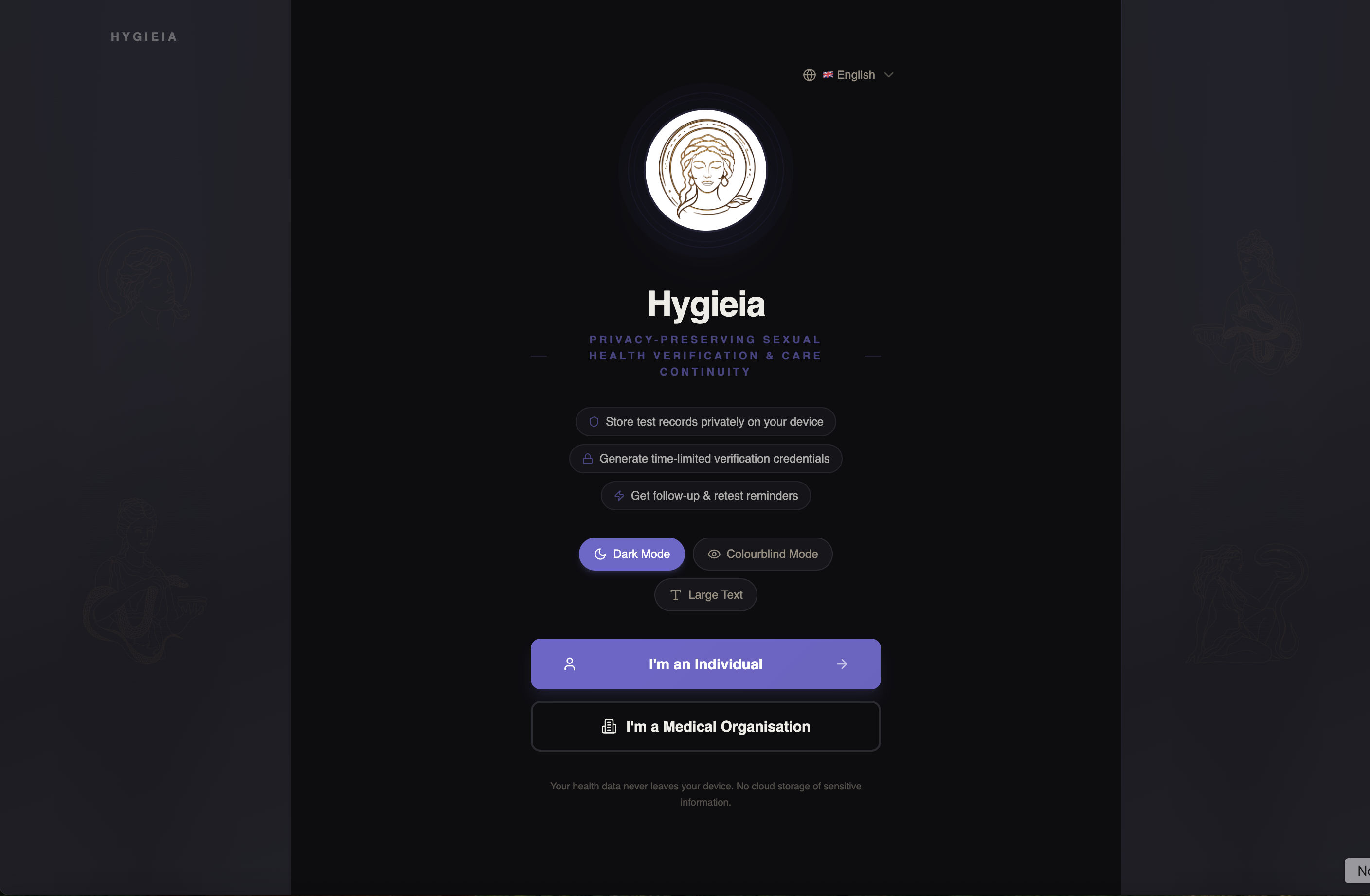
Landing Page
-
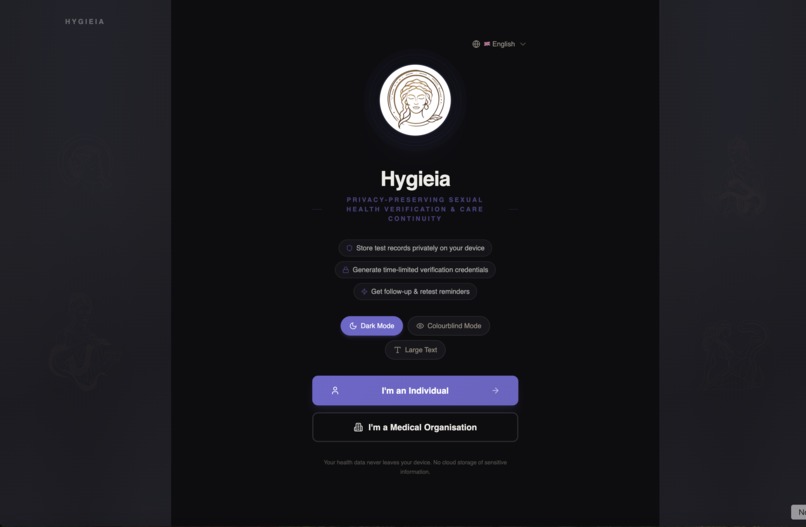
Dark Mode + Language Selection
-
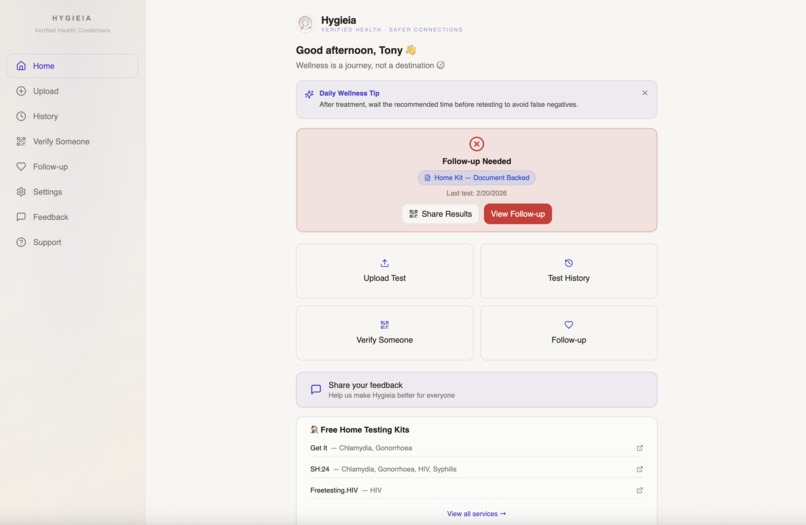
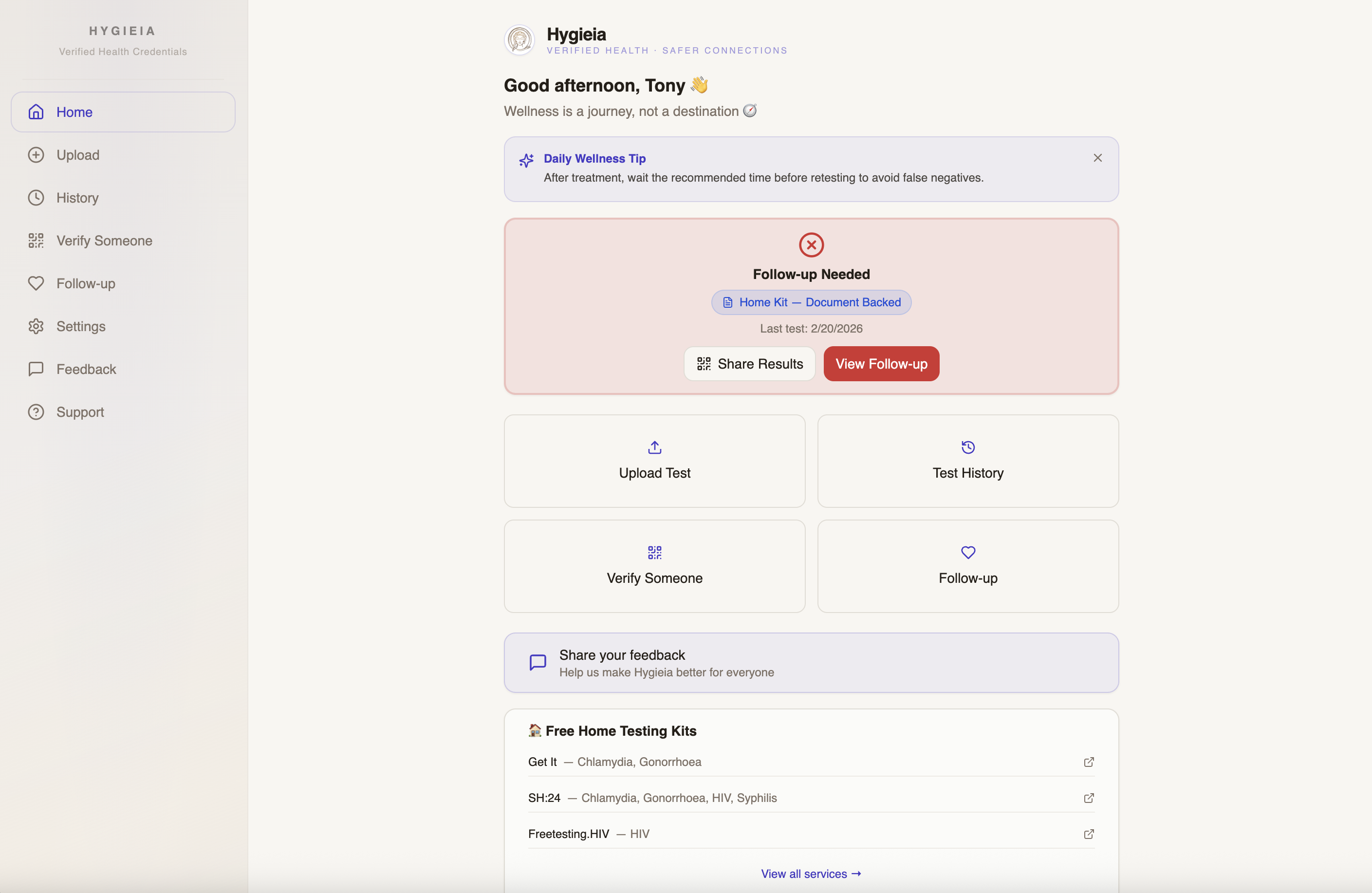
User Home Page
-
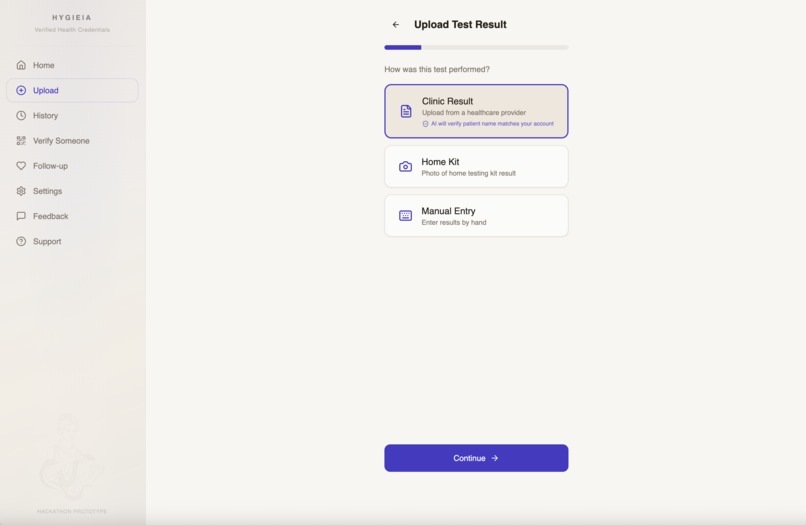
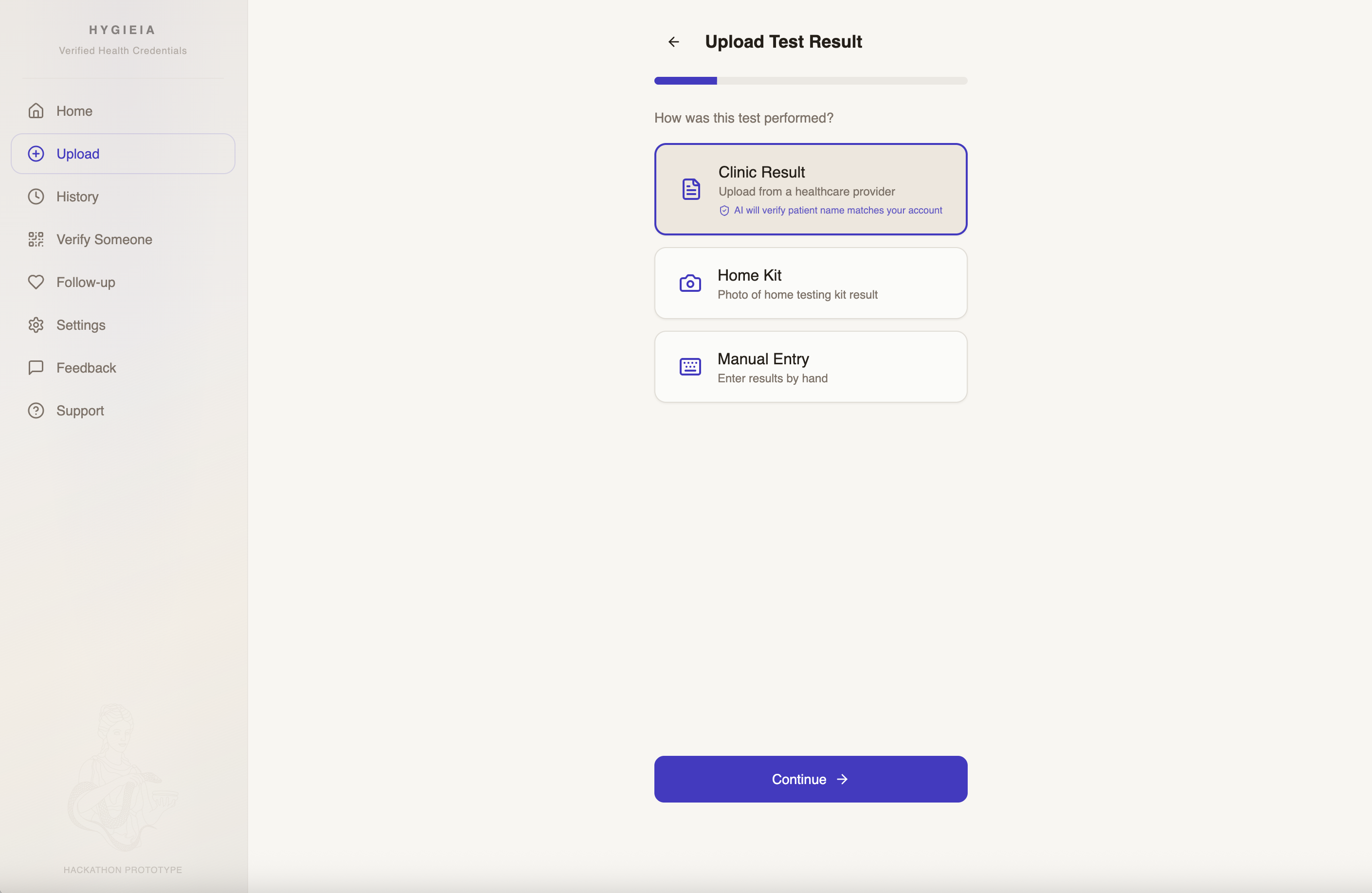
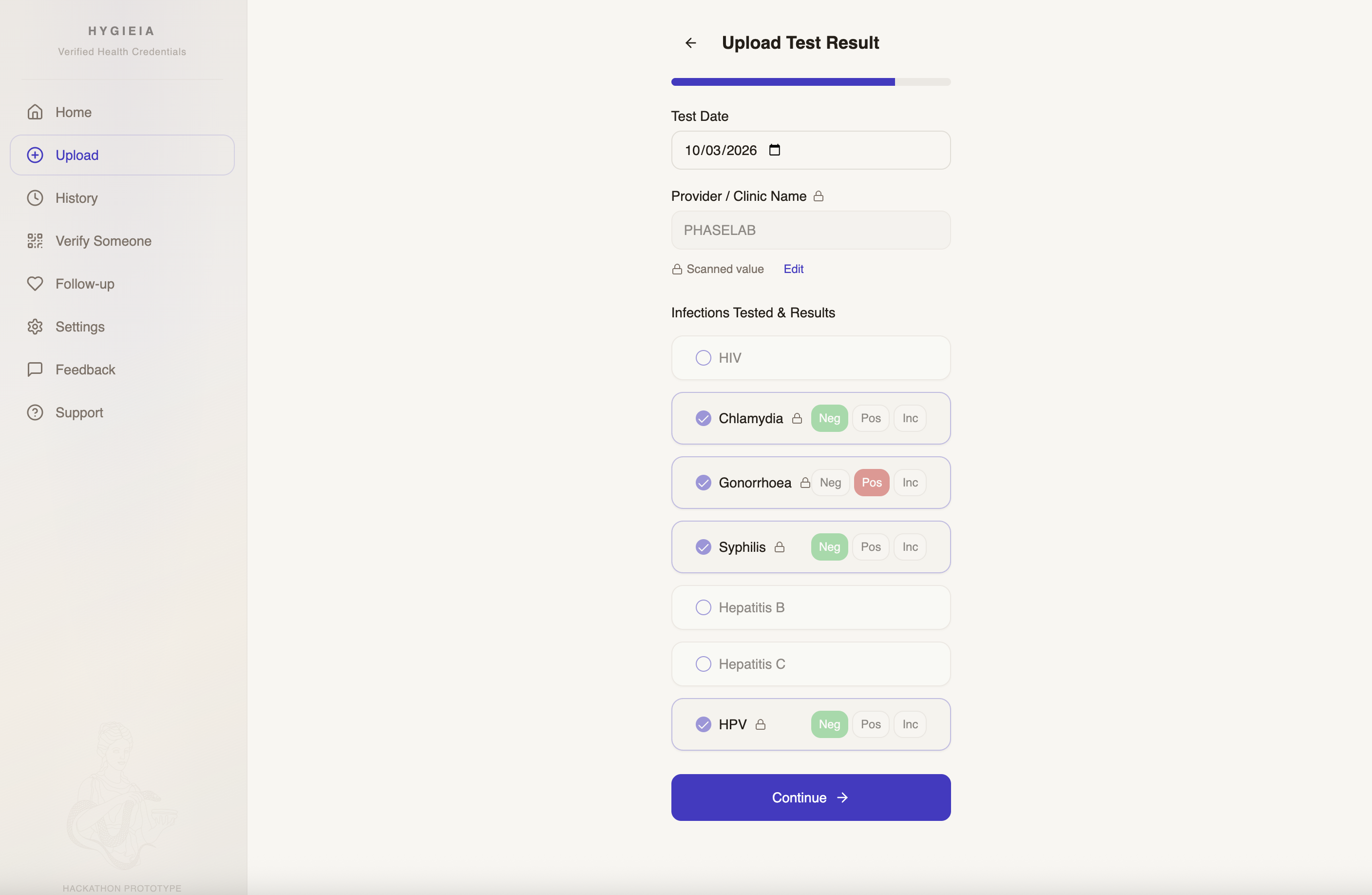
Uploading Test Results Screen
-
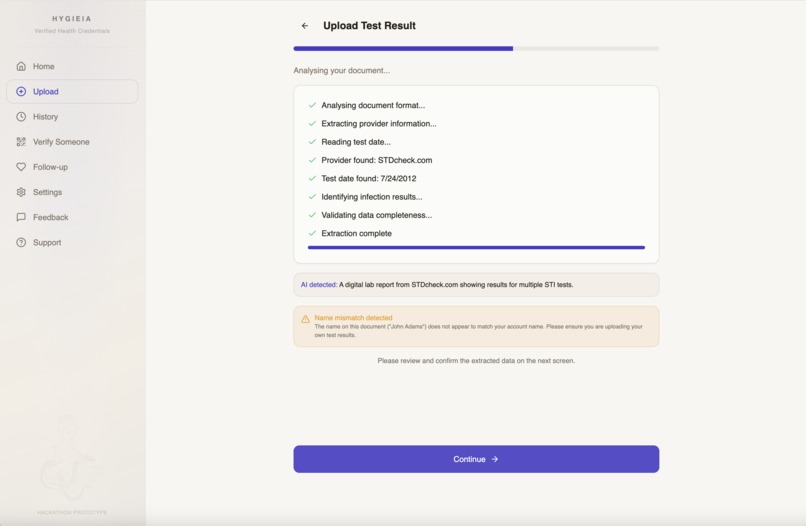
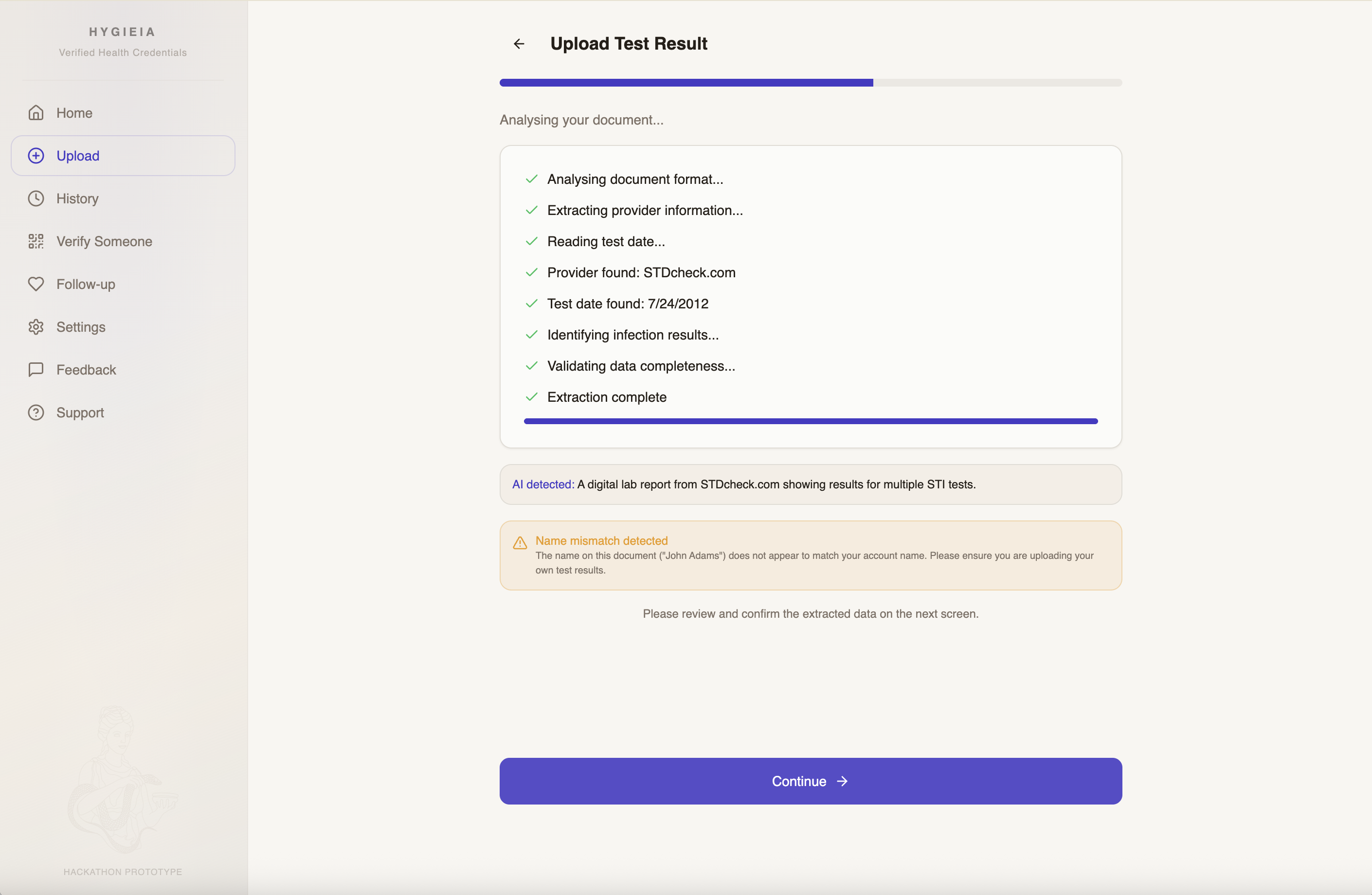
Results Analysis
-
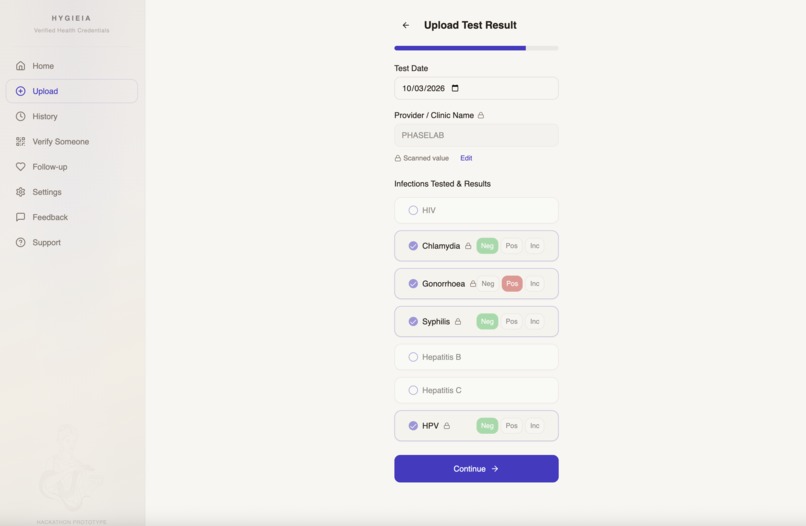
Results Analysis Output
-
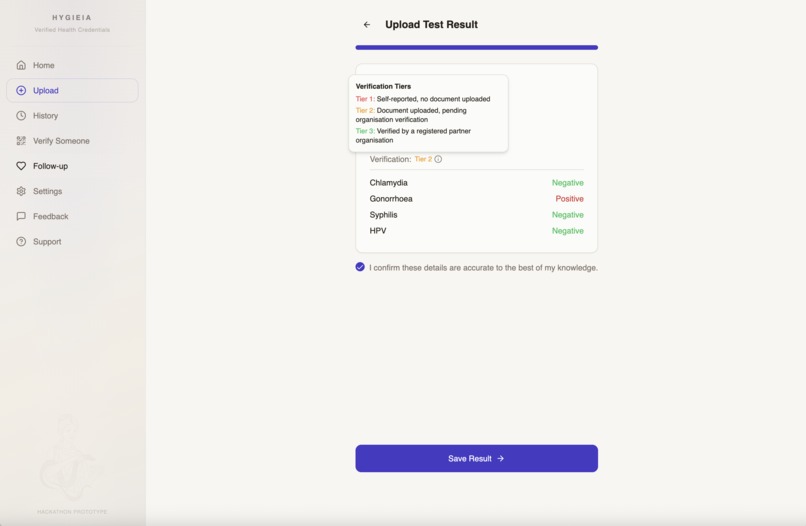
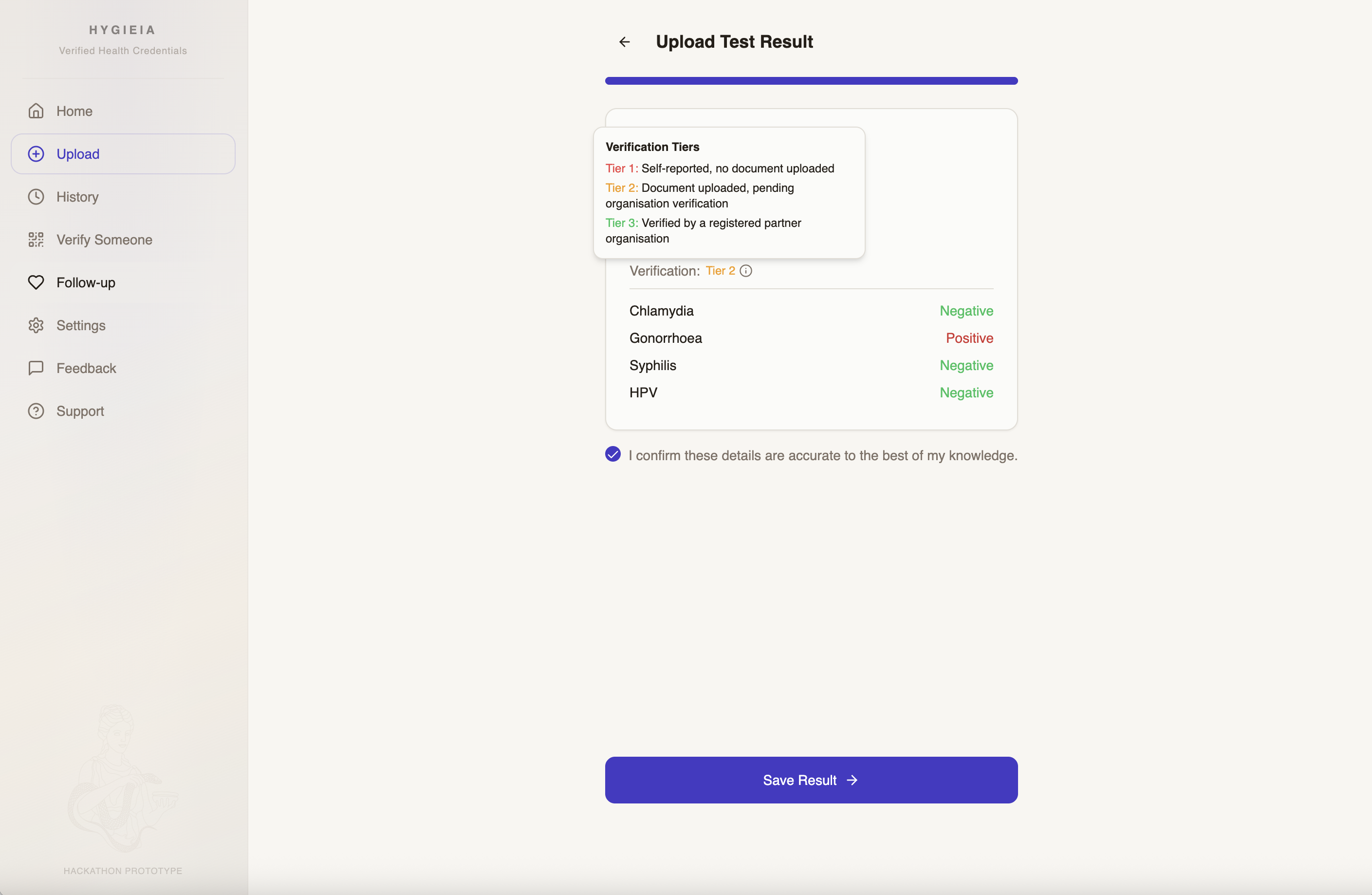
Confirmation
-
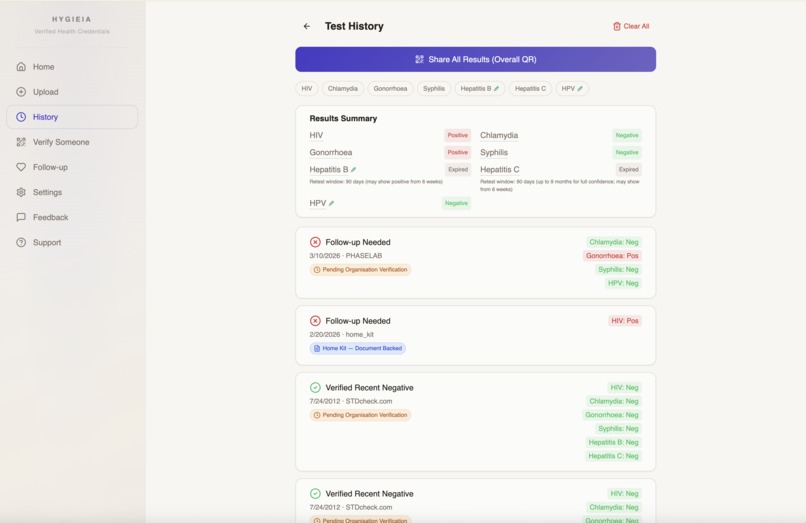
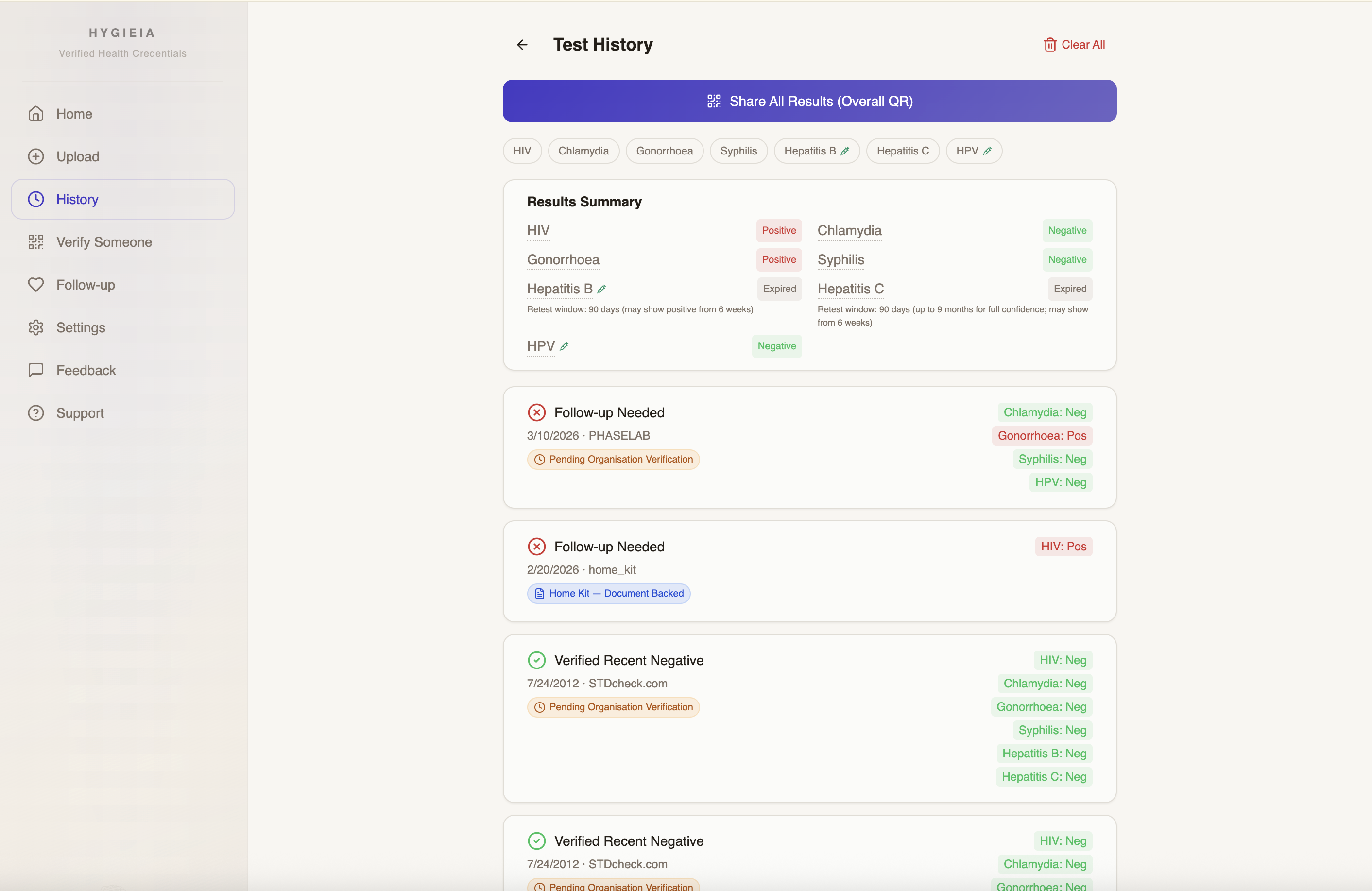
Tests' History
-
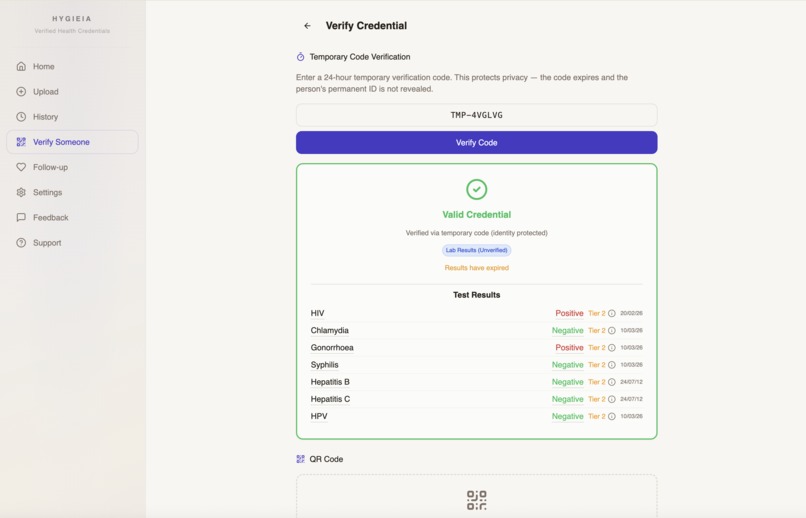
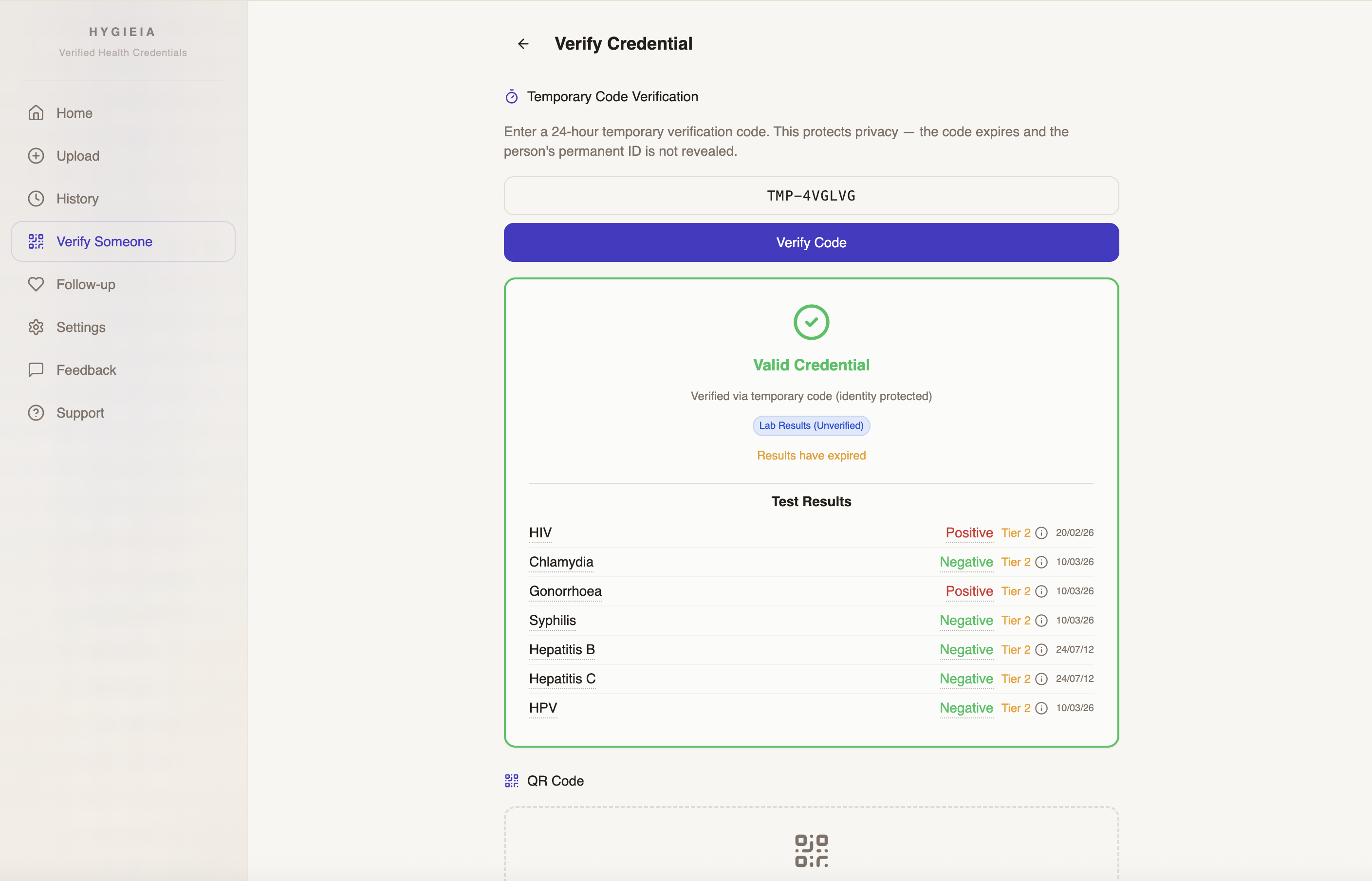
Verification Using Code
-
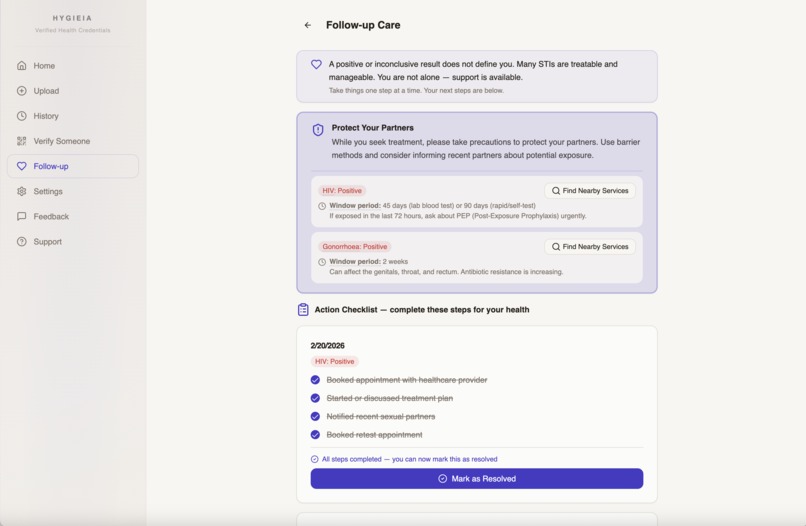
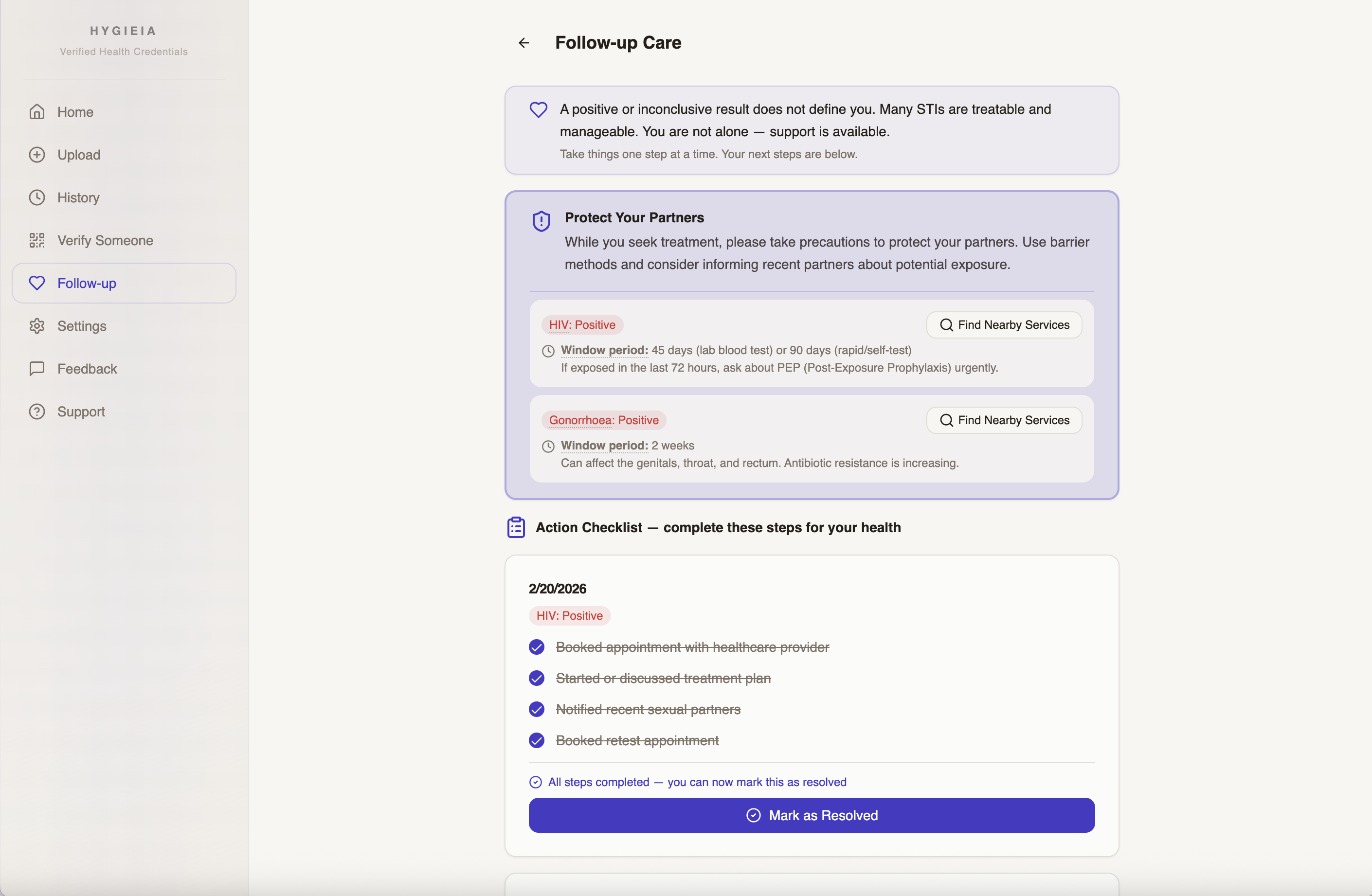
Follow-Up Page
-
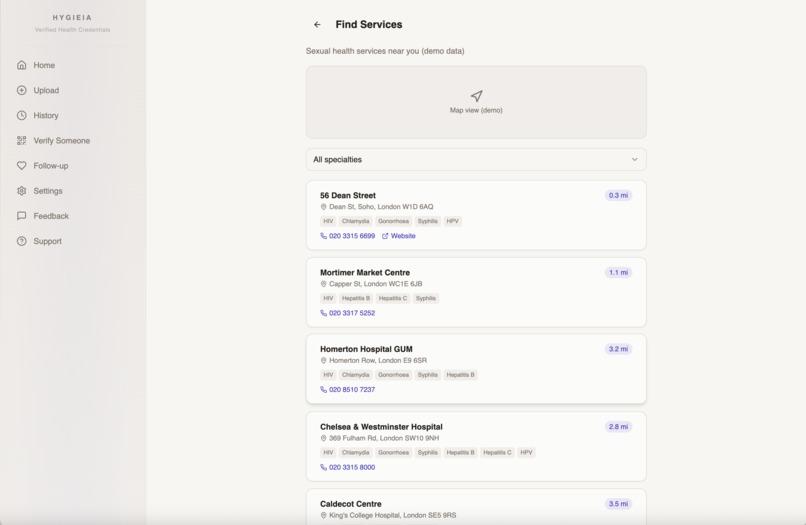
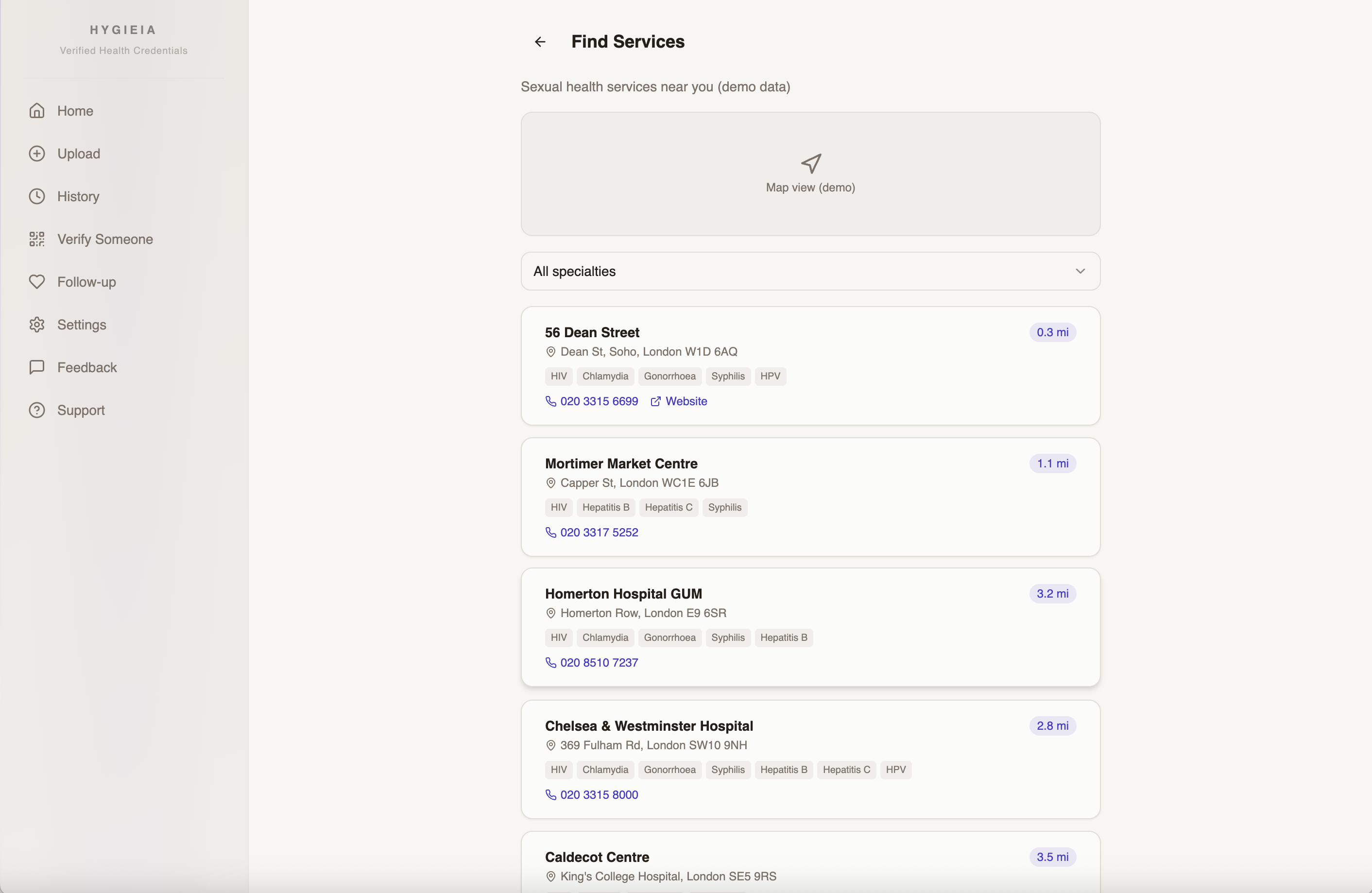
Find Nearby Services
-
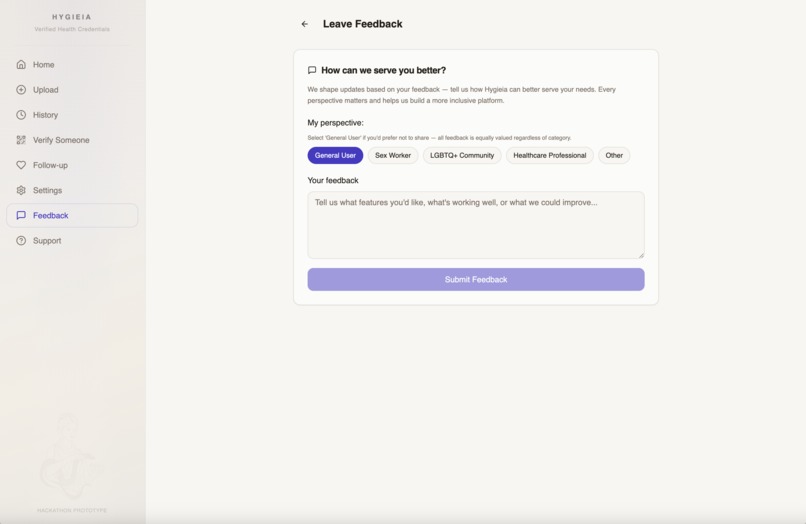
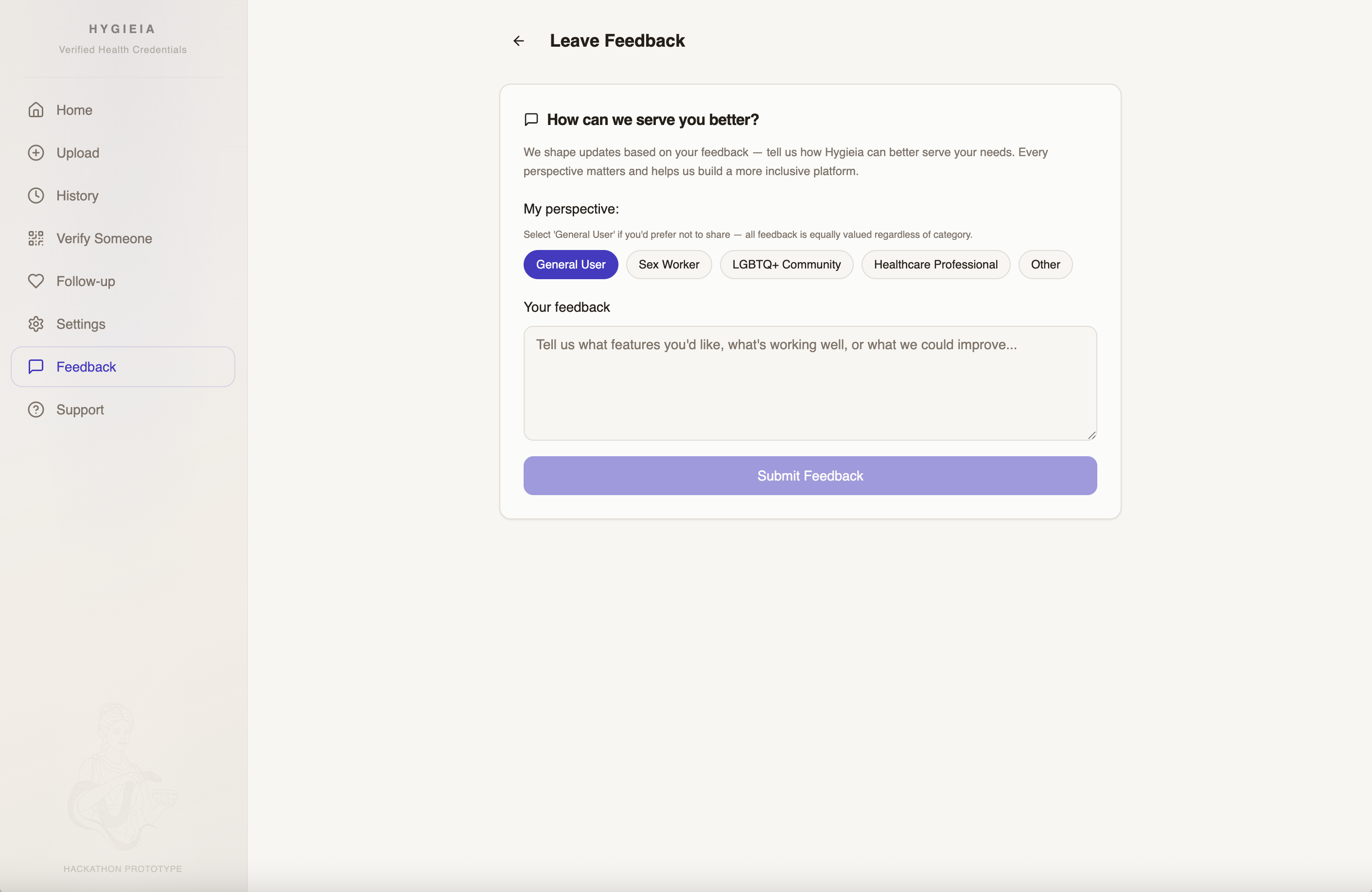
Feedback
-
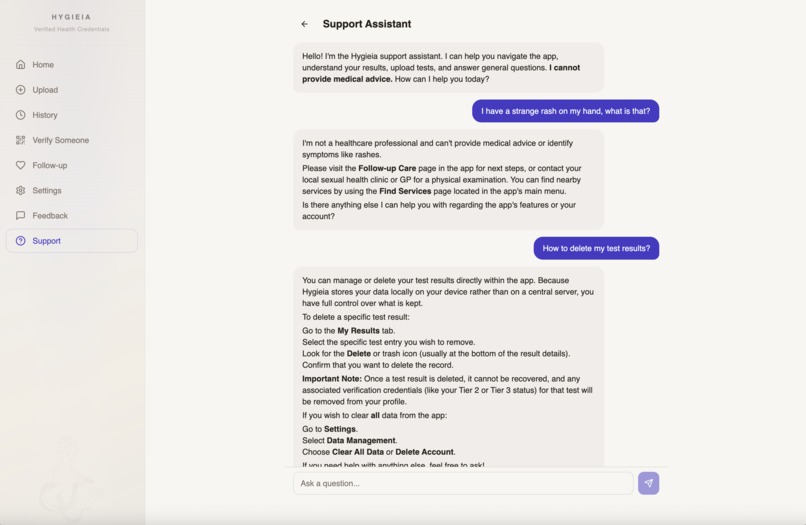
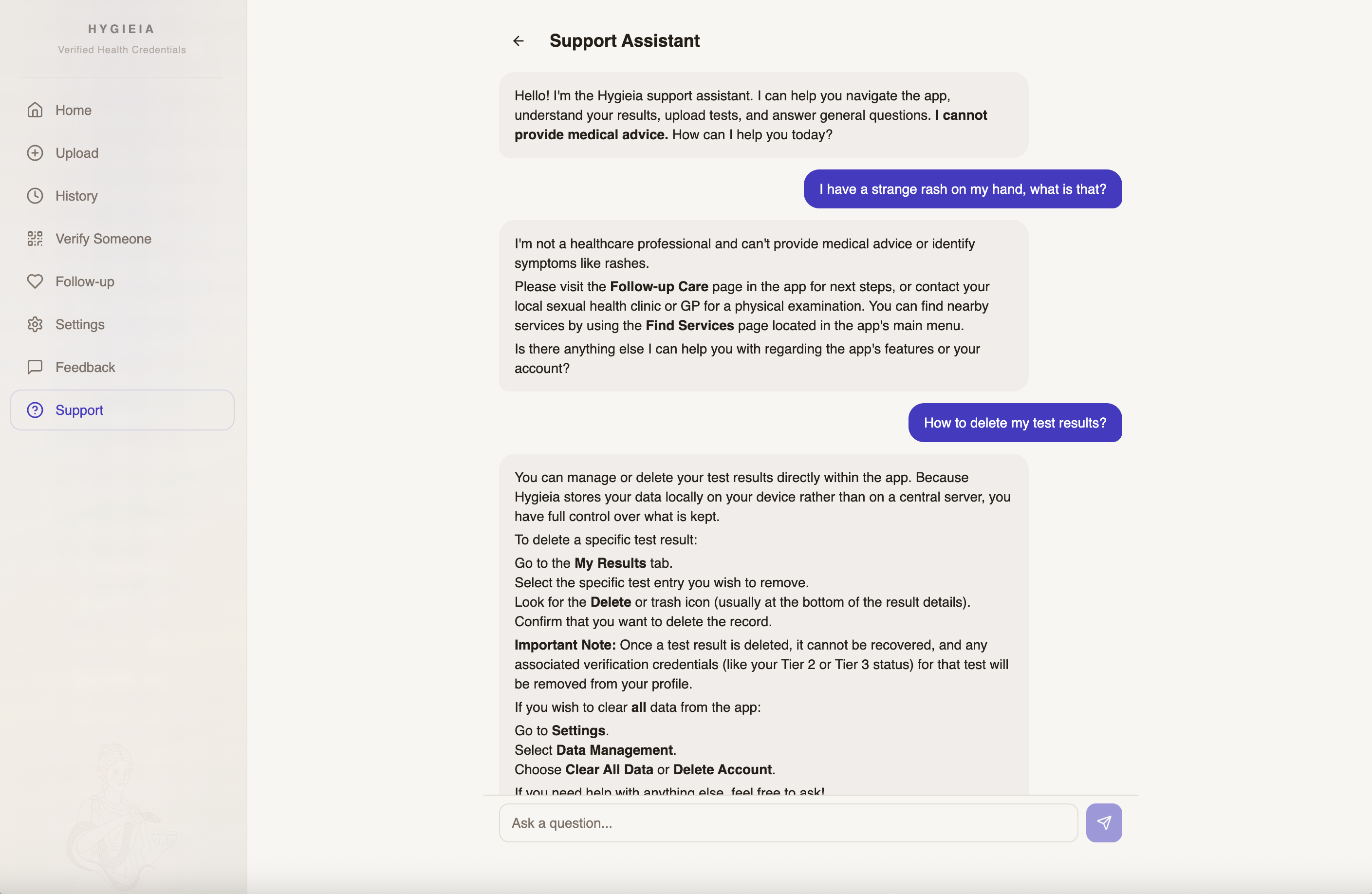
AI Assistant
-
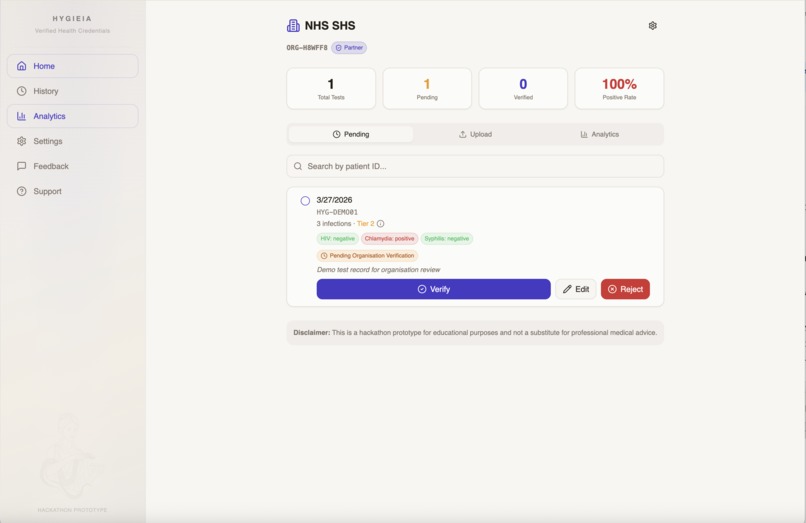
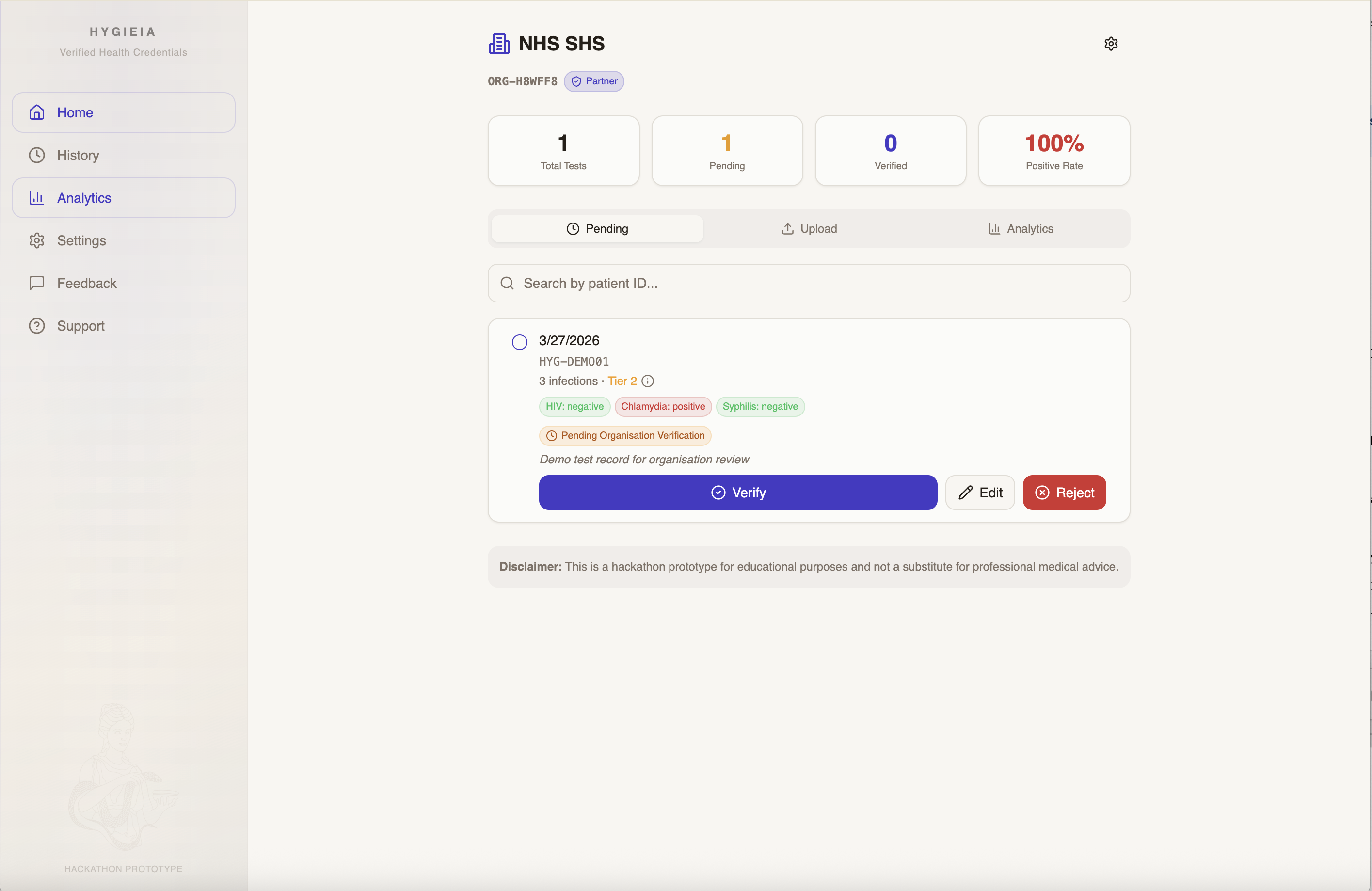
Partner Medical Organisation Home Page
-
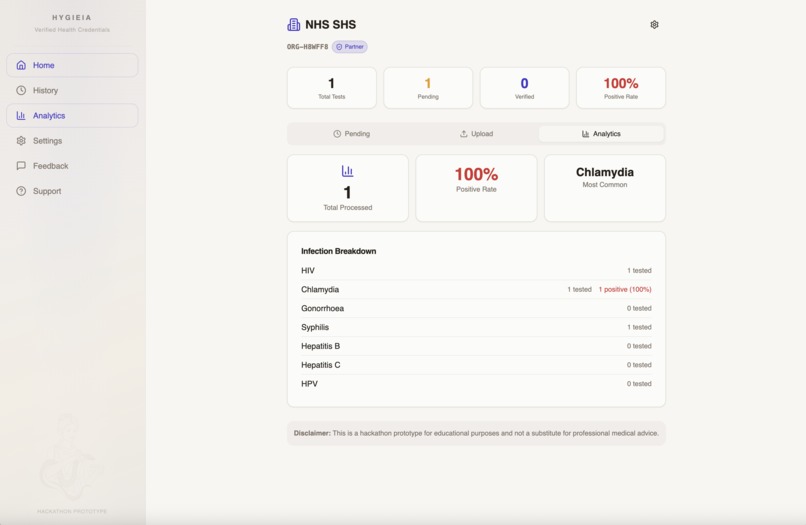
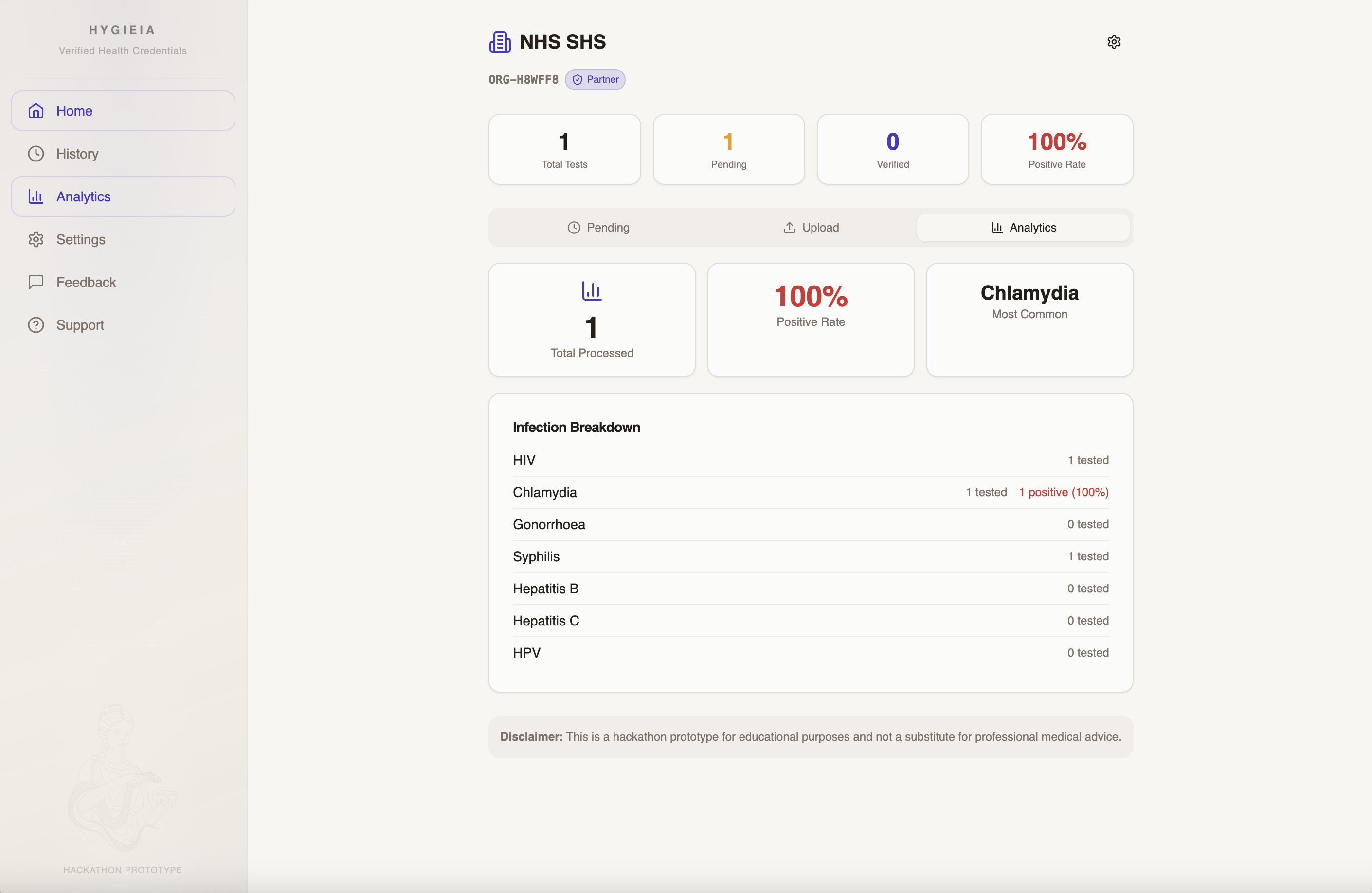
Analytics Page (shows verified data for this specific organisation)
-

Our Logo

Project Story
Hygieia - Verified health. Safer Connections
Inspiration
Hygieia started from a simple but important public health observation: sexual health prevention often ends too early.
As an international team brought together through our Master’s in Public Health, we kept returning to the same gap across different settings. People may get tested for STIs, but after that, the system often becomes fragmented. Many are left unsure whether their result is still recent enough to be meaningful, what steps to take next, or when they should test again. In practice, testing is often treated as the endpoint, while from a public health perspective it should be the beginning of prevention continuity.
That gap inspired us to build Hygieia. We wanted to create a solution that reflects how we think as public health students: practical, prevention-focused, and adaptable across contexts. Our idea was not just to digitise a test result, but to support what should happen after testing: verification, follow-up, and ongoing prevention.
What it does
Hygieia is a mobile app designed to support STI test verification, follow-up, and prevention continuity.
Users can securely upload their STI test results. The app then verifies the result based on key parameters such as test date, validity period, and completeness. If the result is negative, Hygieia generates a time-limited verification credential that confirms a recent test without disclosing sensitive medical details. This allows users to demonstrate recent testing status in a privacy-conscious way.
If the result is positive, the pathway changes. Instead of stopping at notification, Hygieia supports referral, follow-up, and care engagement, helping ensure that users are guided toward the next step rather than left alone with the result.
To strengthen prevention, the app also sends routine re-testing reminders. In the future, Hygieia could be expanded to include privacy-first verification features for safer digital interactions, including possible integration with dating platforms, while still protecting sensitive health information.
How we built it
We built the Hygieia prototype using Lovable for app development, Canva for interface and visual design, and Python to support core logic and functionality.
Before moving into development, we carried out focused market research to better understand current gaps in STI prevention, result verification, and post-test follow-up. This step was essential, as we did not want to create a concept that sounded innovative but had little practical value. Instead, we wanted the project to respond to a clear and realistic public health need.
This research helped us shape Hygieia into a solution that was feasible within the hackathon timeframe while still grounded in real-world use. Throughout the build, we prioritised clarity, simplicity, and functionality.
Challenges we ran into
One of the first challenges was narrowing the idea into a clearly defined and realistic concept. Sexual health is a broad area, and we needed to identify a specific problem that was important enough to matter, but focused enough to solve well within a hackathon setting.
We also had to think carefully about target population and applicability across regions. As an international team, we were aware that STI testing pathways, access to care, and public health systems differ by country. The challenge was to make the project adaptable without making it too broad or losing its practical focus.
On the technical side, we had to work beyond our comfort zones. Some of us had limited experience in app building, so part of the process involved learning quickly while still keeping the project realistic. Designing the interface, mapping secure user flows, thinking through privacy protection, and considering storage and verification logic all required careful decisions. One of our central concerns throughout was making sure the concept was not only impactful, but also safe, feasible, and responsible.
Accomplishments that we're proud of
We are proud that we turned a clear public health gap into a structured and functional app concept within a short period of time. More importantly, we are proud that Hygieia is not just a technical prototype, but a prevention-oriented solution. It addresses a point in sexual health that is often overlooked: what happens after testing. By combining verification, follow-up, and reminders in one concept, we built something that reflects both innovation and public health relevance.
We are also proud of our teamwork. Coming from different backgrounds, we brought different ways of thinking to the project, and that strengthened the final result. What began as an early discussion became a coherent shared vision.
What we learned
This project taught us that building a digital health solution requires much more than a good idea.
We learned more about the burden of STIs, the differences in sexual health systems across settings, and the importance of comparing public health needs without losing sight of local realities. We also learned that effective digital health design depends not only on coding, but also on communication, teamwork, user-centred thinking, and a strong understanding of privacy and feasibility.
On a practical level, we developed new skills in app prototyping, Python-supported logic, and visual design. More importantly, we learned how to move from discussion to implementation under time pressure while keeping the project focused and grounded.
What's next for Hygieia
The next step for Hygieia is to further develop it into a tool that can connect with sexual health clinics, national health systems, and trusted community partners.
In the future, we also see potential for carefully designed collaboration with dating platforms, where privacy-first verification could support safer connections without exposing sensitive personal health information.
Looking ahead, we want Hygieia to remain equitable, inclusive, and adaptable. That means thinking seriously about sustainability, accessibility, and implementation across different contexts. While the idea is relevant in the UK, its wider value lies in its potential to support prevention continuity across Europe and beyond.
Our long-term goal is clear: to make sexual health prevention more continuous, more supportive, and more accessible.
Explore Hygieia with us: https://secure-check-pass.lovable.app/
Built With
- canva
- javascript
- loveable
- python
- sql


Log in or sign up for Devpost to join the conversation.