-
-
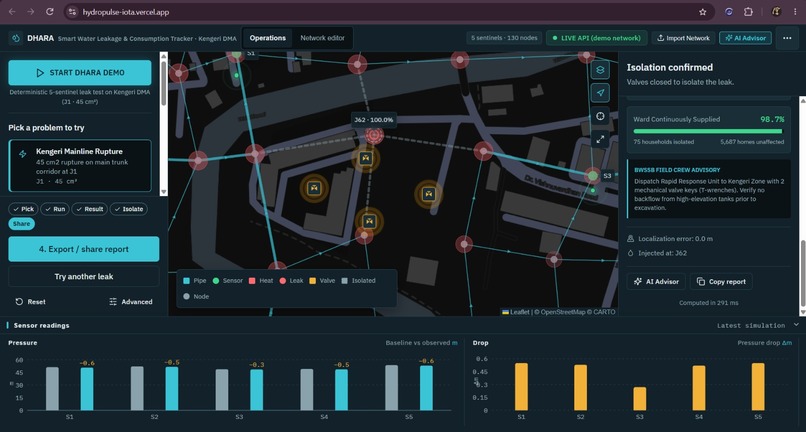
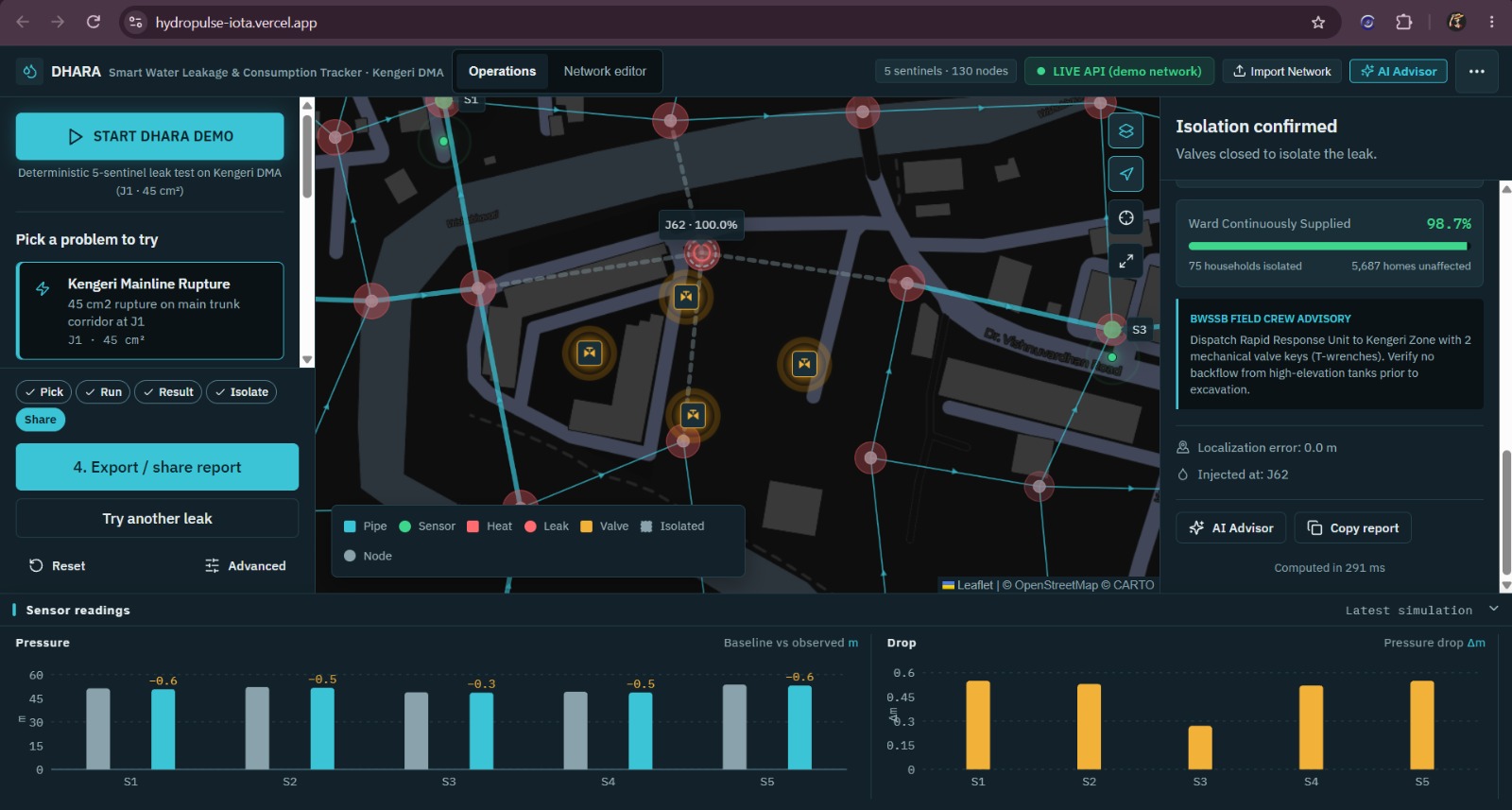
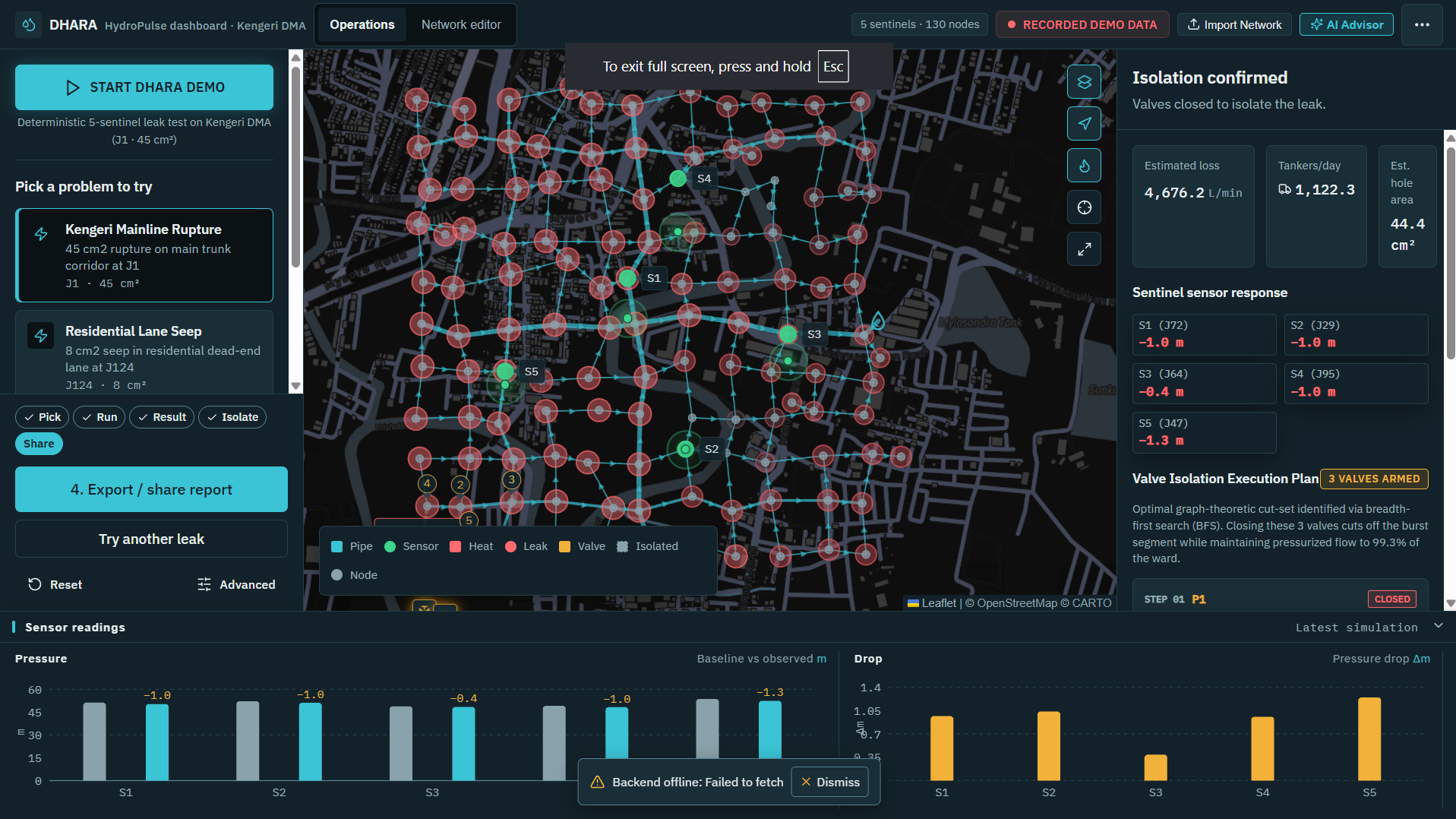
dashboard
-
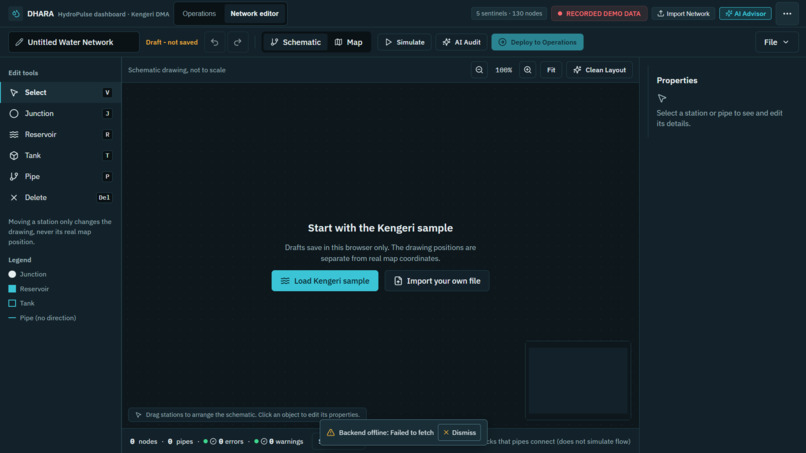
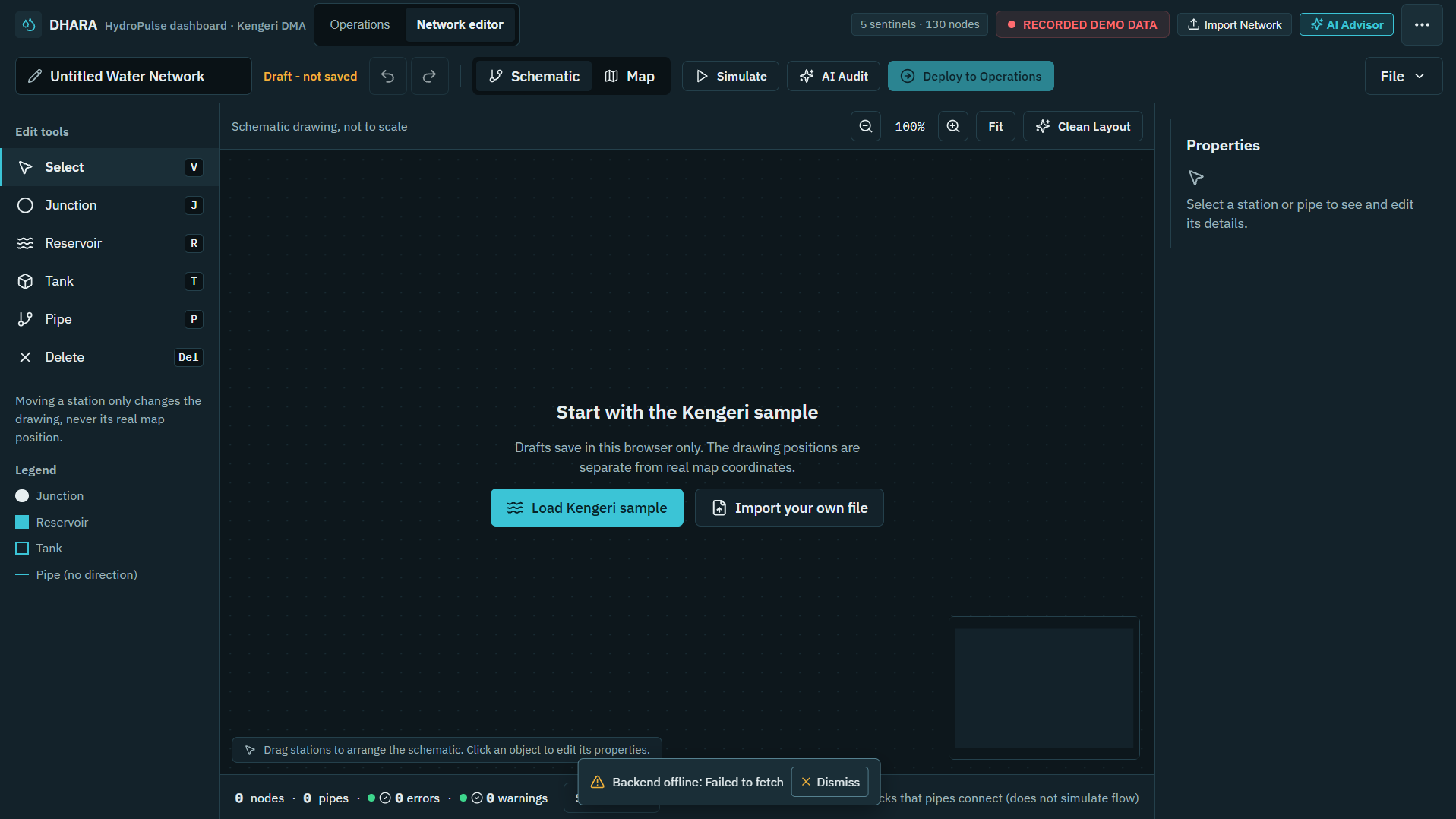
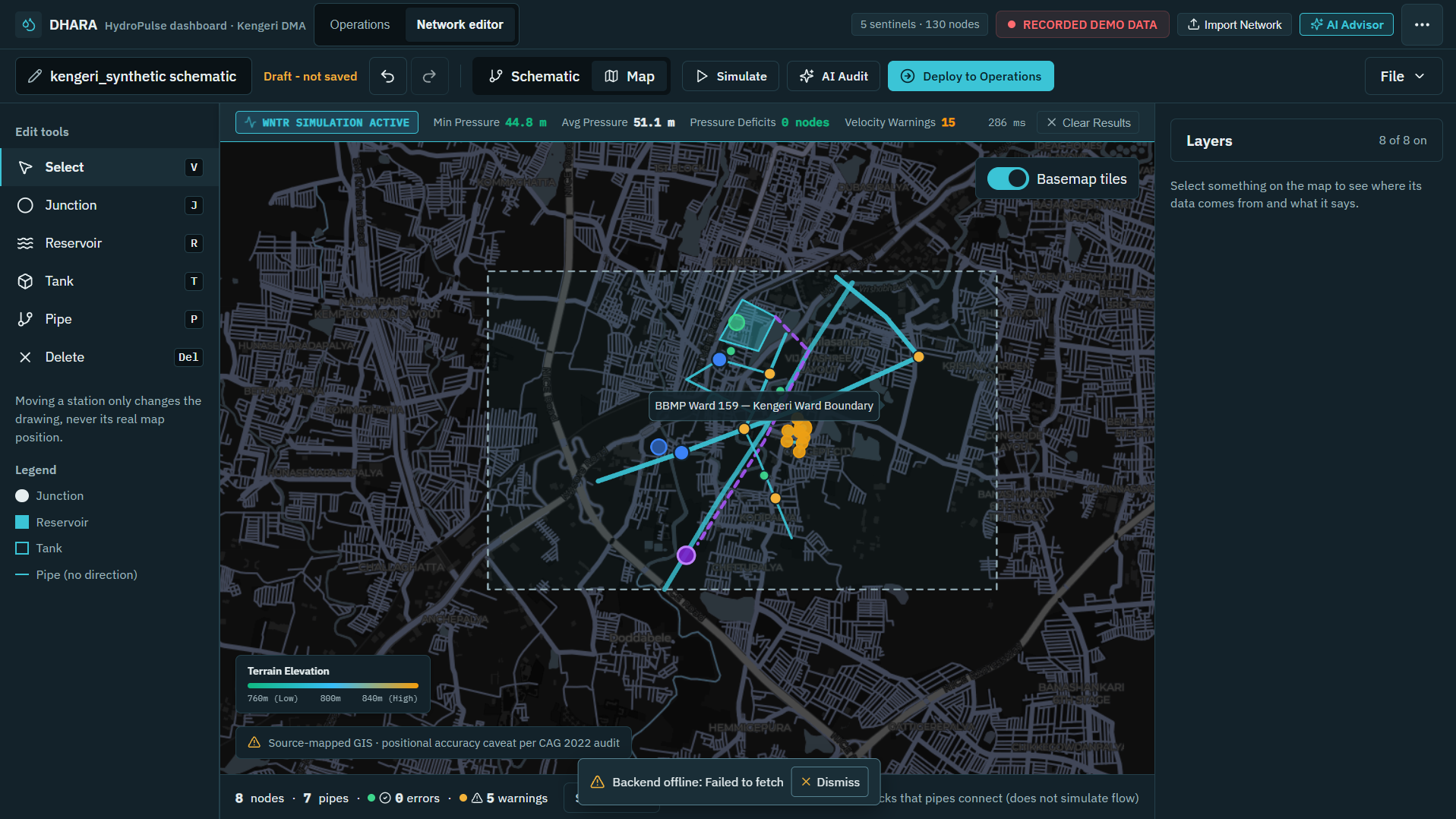
loading map for the editing feature
-
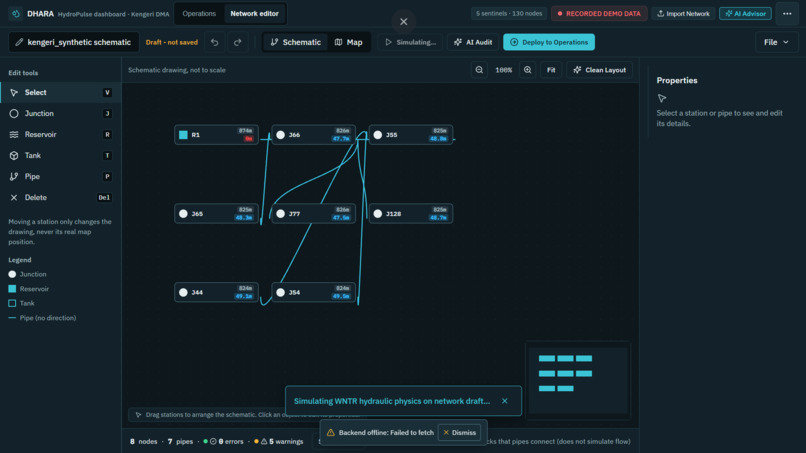
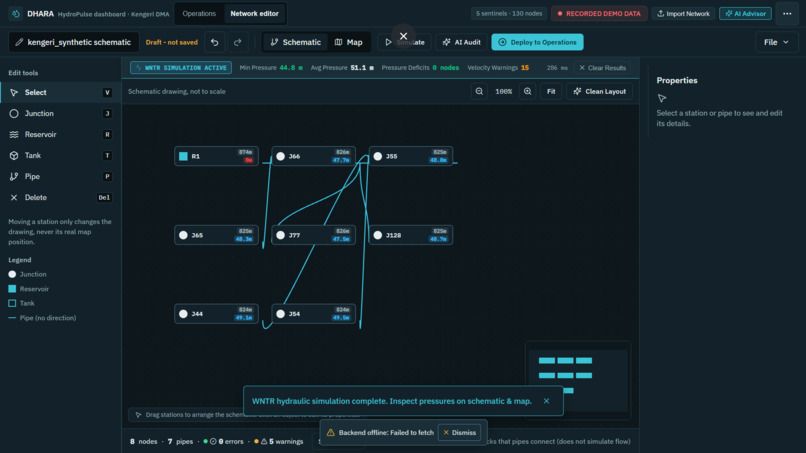
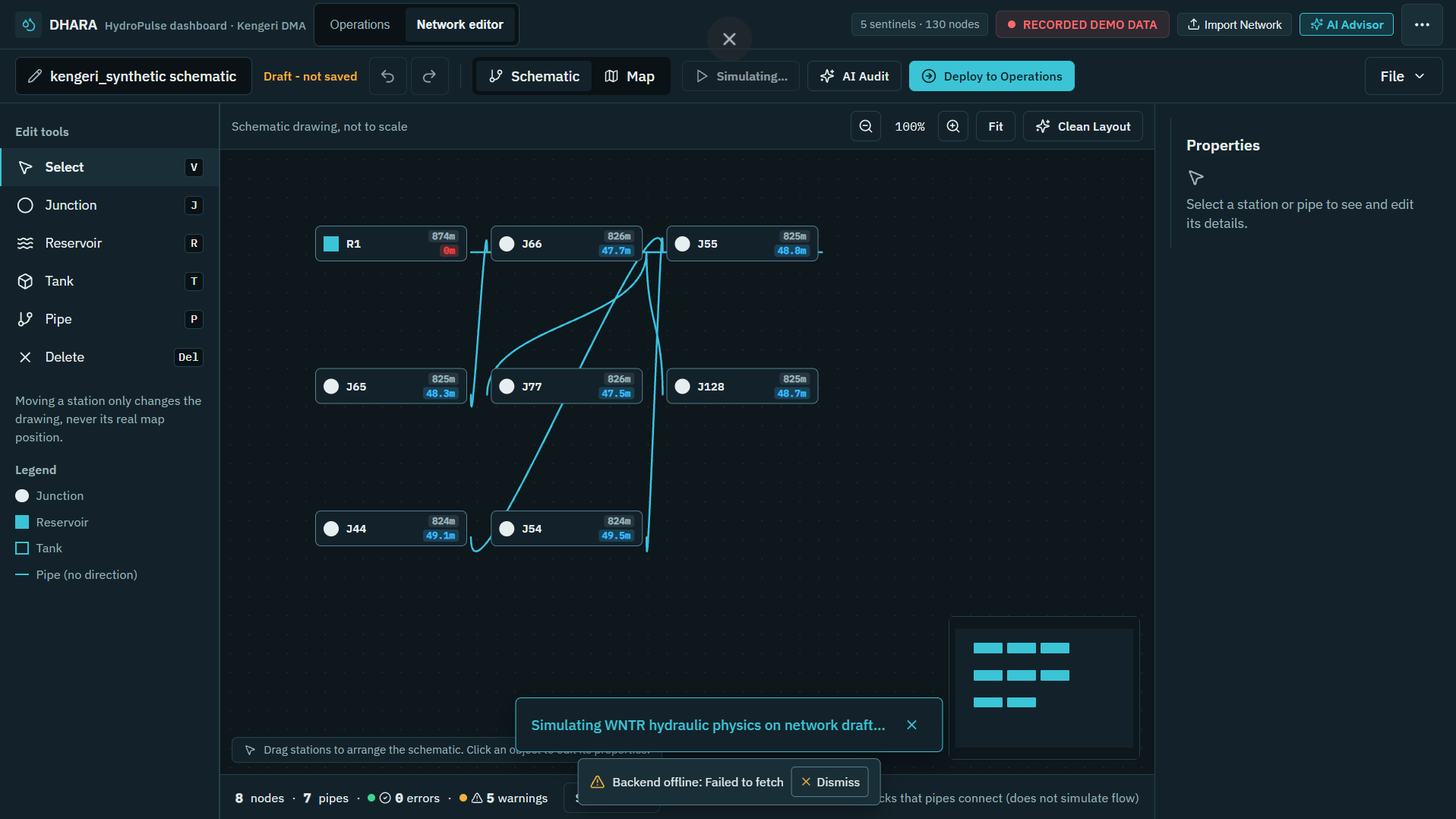
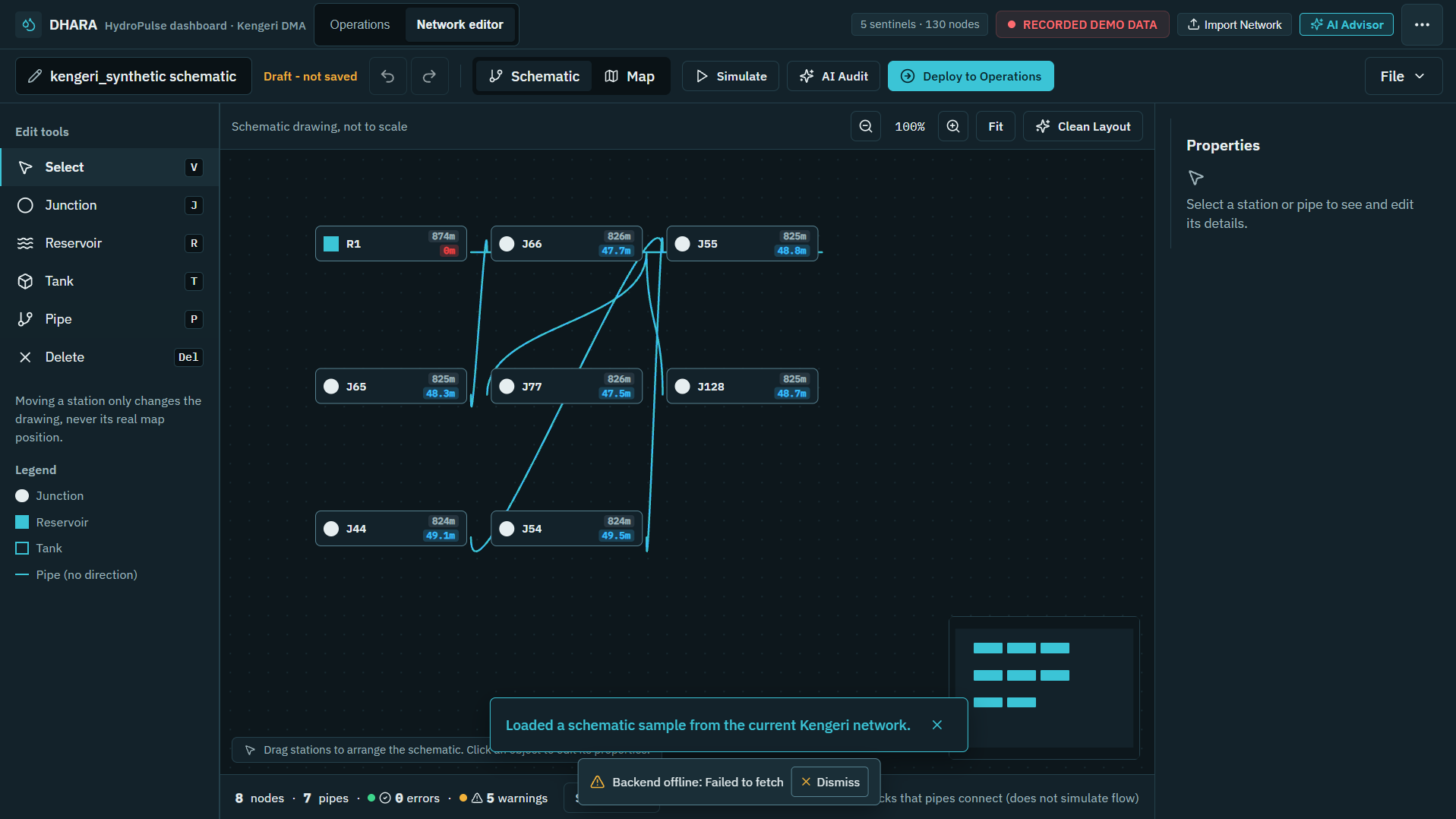
schematics building for the pipe network
-
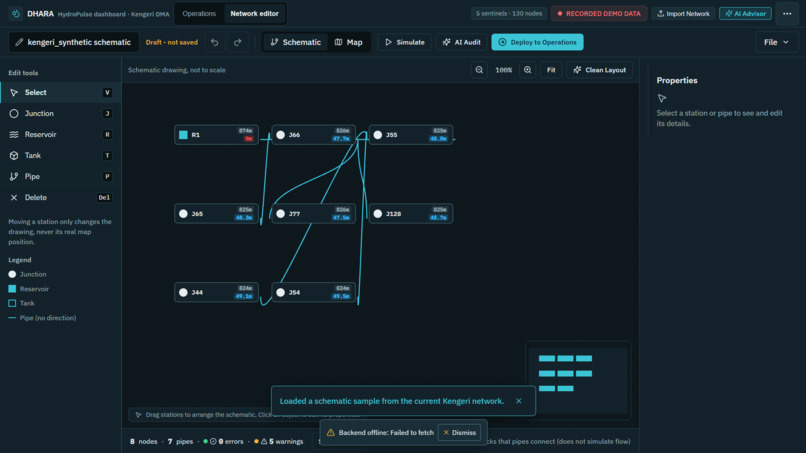
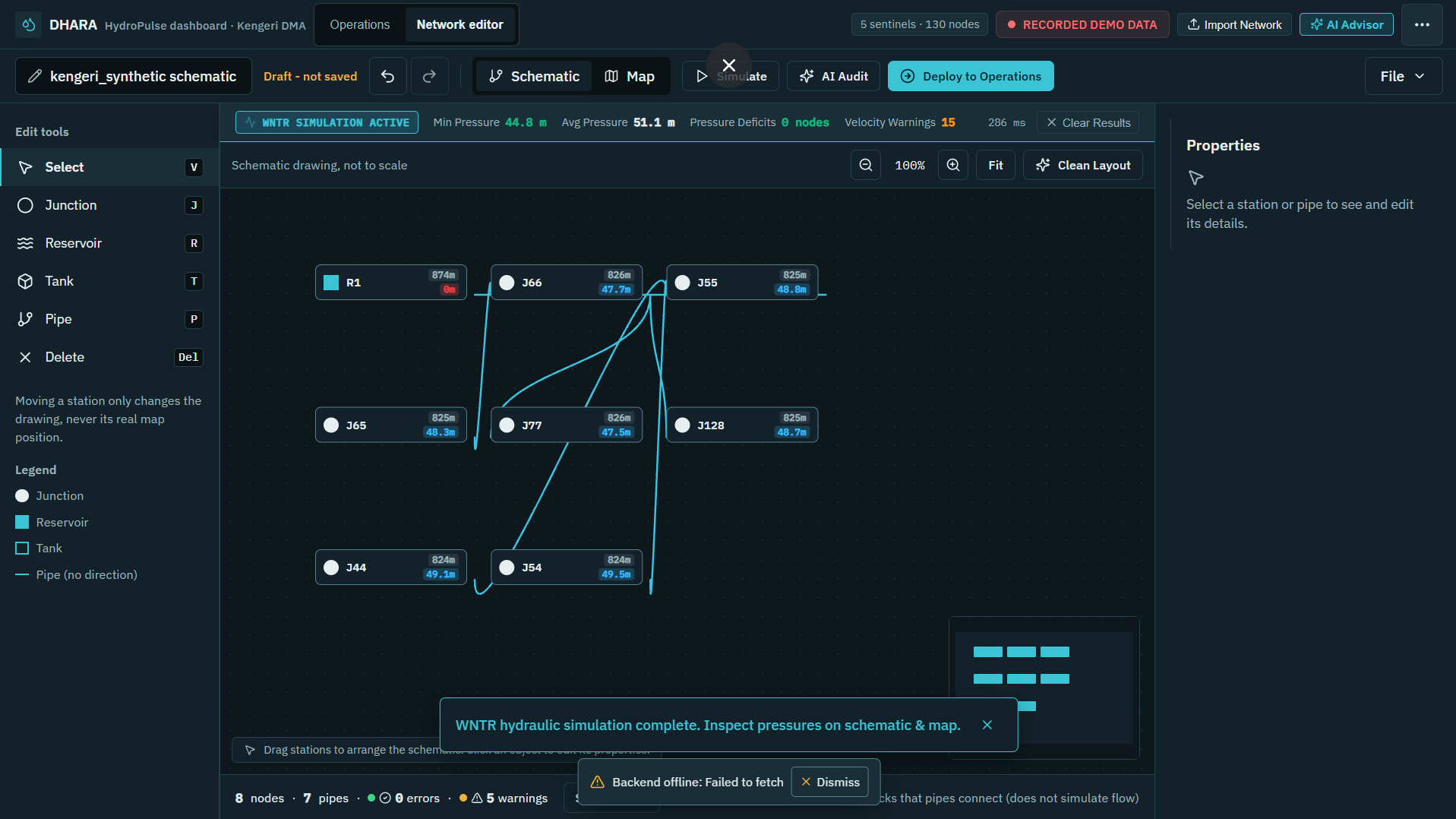
schematics simulation
-
-
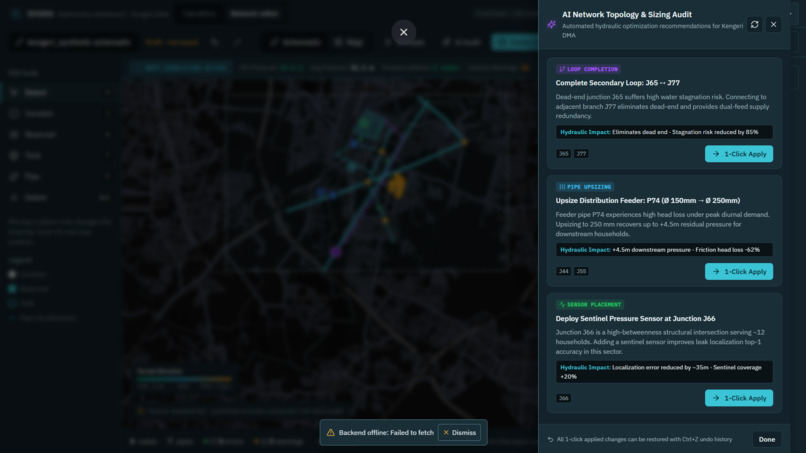
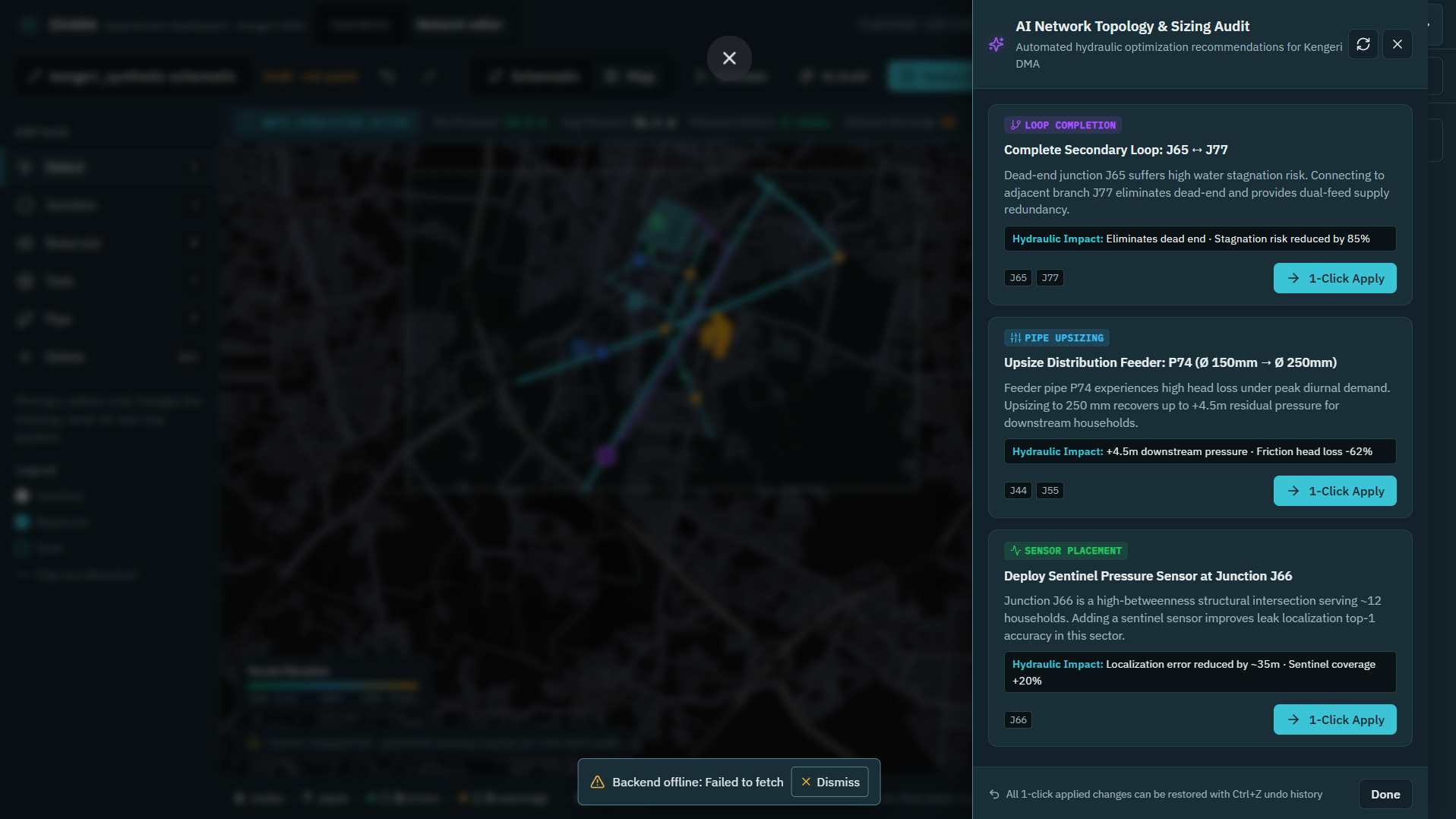
ai audit feature
-
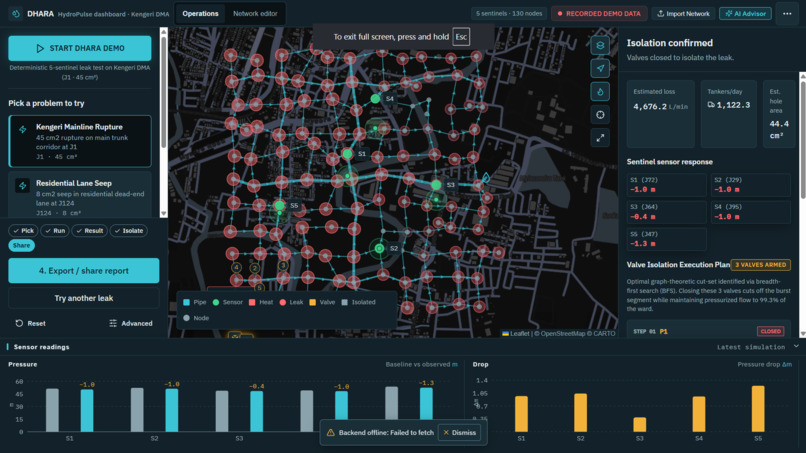
leak simulation
-
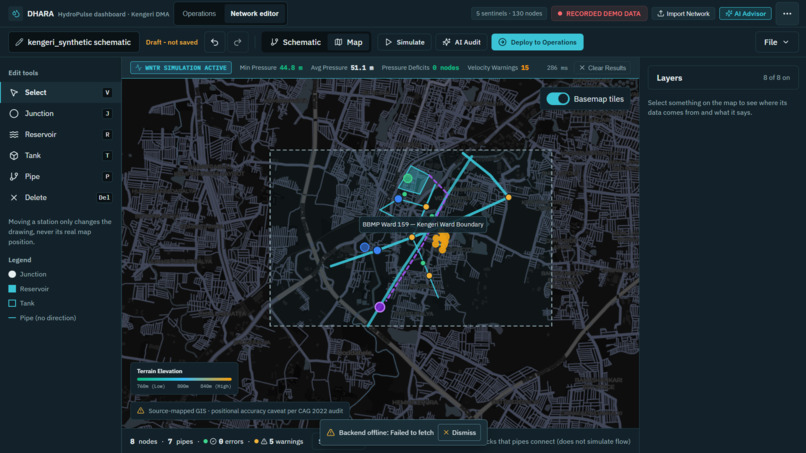
schematics to map
-
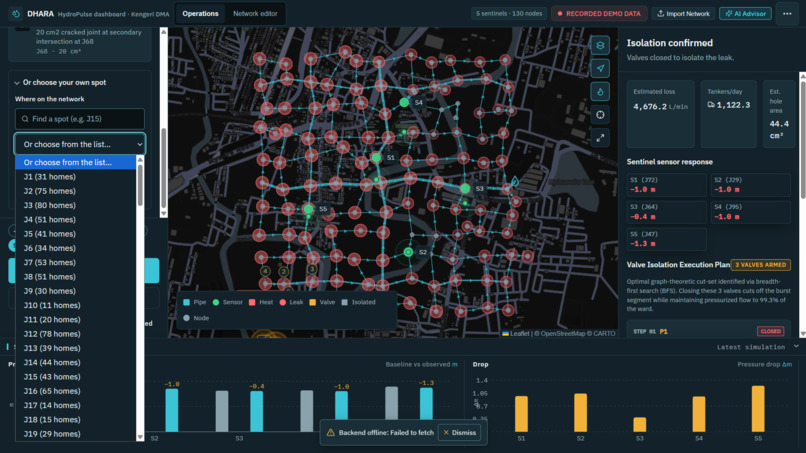
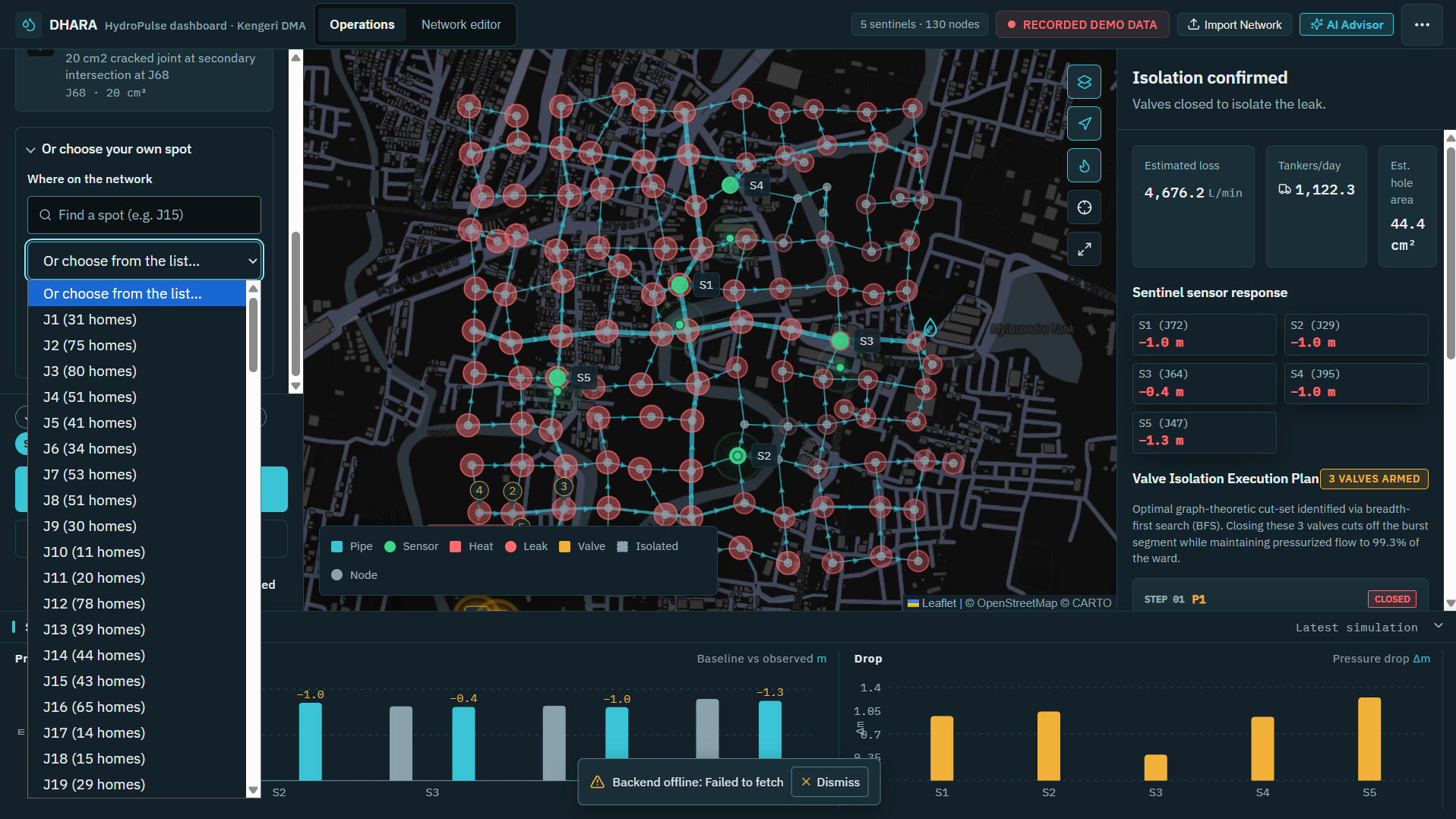
choosing a particular junction for leak simulation
-
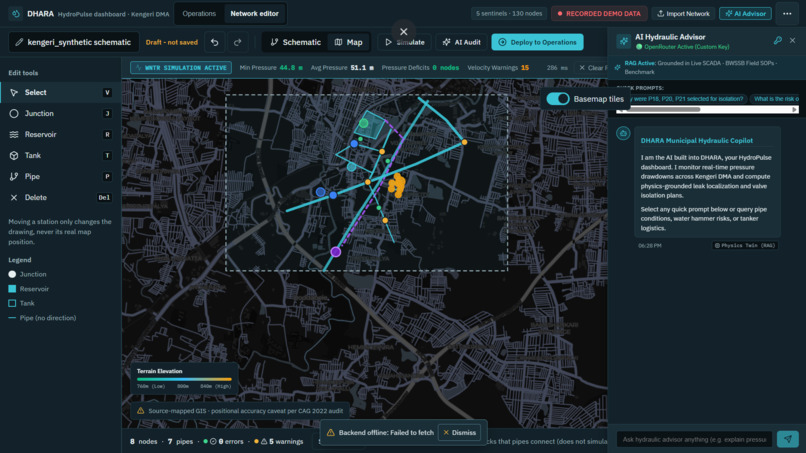
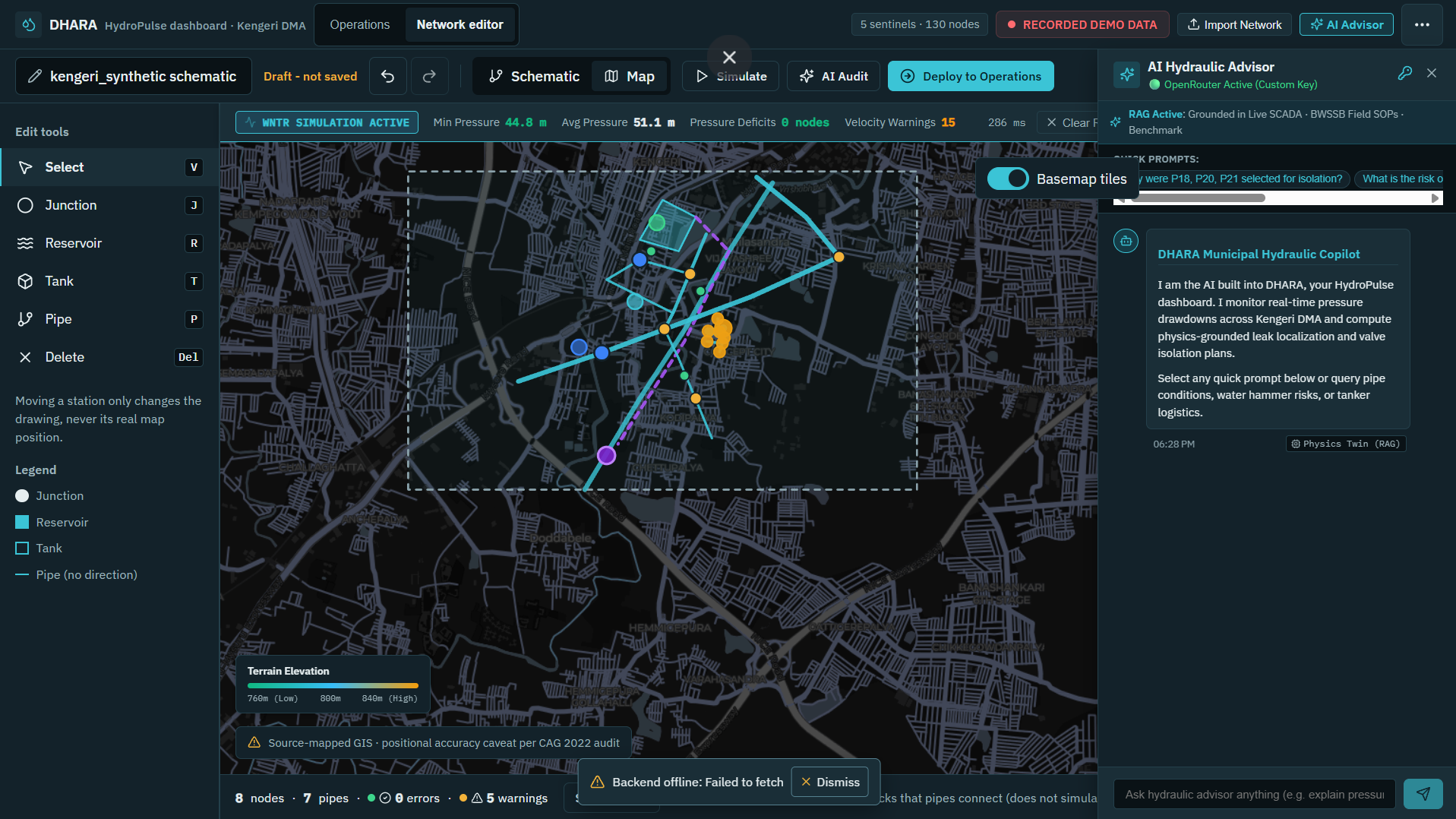
ai advisor feature
Inspiration
HydroPulse, is a smart municipal water-pipeline monitoring and management system.
A real incident: Bengaluru, November 2024 A major Cauvery water pipeline burst near Hegde Nagar in North Bengaluru.
According to reports:
- Approximately 5 million litres of water were wasted.
- A nearby NGO office suffered damage estimated at ₹75 lakh.
- The surrounding area was flooded.
- The pipeline was repaired after the incident was reported. This incident shows why early detection and faster response are important.
Our aim is to reduce this avoidable loss through technology and is not just to detect a leak, but also to understand its location, estimate the water loss and help authorities take suitable action."
What it does
Instead of waiting for people to complain about water leakage or pipeline bursts, HydroPulse helps authorities identify possible damage, locate it, estimate water loss and decide which valves should be closed.
How we built it
“We built HydroPulse as a web-based digital twin of a municipal water distribution network. First, we created the frontend to display the pipelines, junctions, sensors and valves. Then we created a simulated network and pressure-sensor data because our prototype is not yet connected to physical sensors. Our backend analyses the sensor readings, detects abnormal pressure changes, estimates the suspected leak location and calculates the estimated water loss. It then identifies suitable valves that can isolate the affected section. Finally, these results are displayed on our interactive dashboard.”
- Frontend – the user interface
We first created the web application interface where the user can see the water network.
It contains:
- Network map
- Sensors
- Pipelines
- Valves
- Incident information
- Sensor readings
- AI Advisor
- Operations
- ROI Calculator the language used is : typescript+react
Backend / algorithm The backend receives the network and sensor data and processes it.
The basic logic is: Sensor Data ↓ Compare with normal pressure ↓ Find abnormal pressure drop ↓ Analyse nearby sensors ↓ Estimate suspected leak location ↓ Estimate water loss ↓ Find suitable isolation valve ↓ Send result to dashboard
So the backend is basically the brain of HydroPulse. the language used is : python
Challenges we ran into
Limited real-world data
- We did not have access to live municipal pipeline and sensor data.
- So, we created simulated sensor data for our prototype. Connecting the map with the algorithm
- Showing pipelines, junctions, sensors and valves on the map was one part.
- Making the algorithm use that network information to identify a suspected location was another challenge.
Accomplishments that we're proud of
We are proud that we converted our idea into a working prototype in a short time. We successfully built the digital water network, simulated sensor data and leak scenarios, implemented the detection and response workflow, and integrated everything into one dashboard. We also designed it so real IoT sensor data can be added in the future.
What we learned
We learned how to convert a real-world problem into a technical solution, work with sensor data, build a digital pipeline model, develop the detection algorithm and integrate everything into one application. We also learned the importance of teamwork, testing, time management and designing a prototype with future scalability in mind.
What's next for Hydropulse
Currently, our prototype uses simulated sensor data to demonstrate the complete workflow. Our next step is to connect real IoT pressure and flow sensors to the system. We also want to add real-time alerts for water authorities, so when an abnormal pressure change is detected, the concerned team can immediately receive an alert.
