-
-
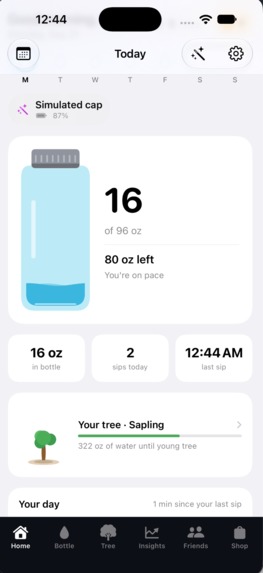
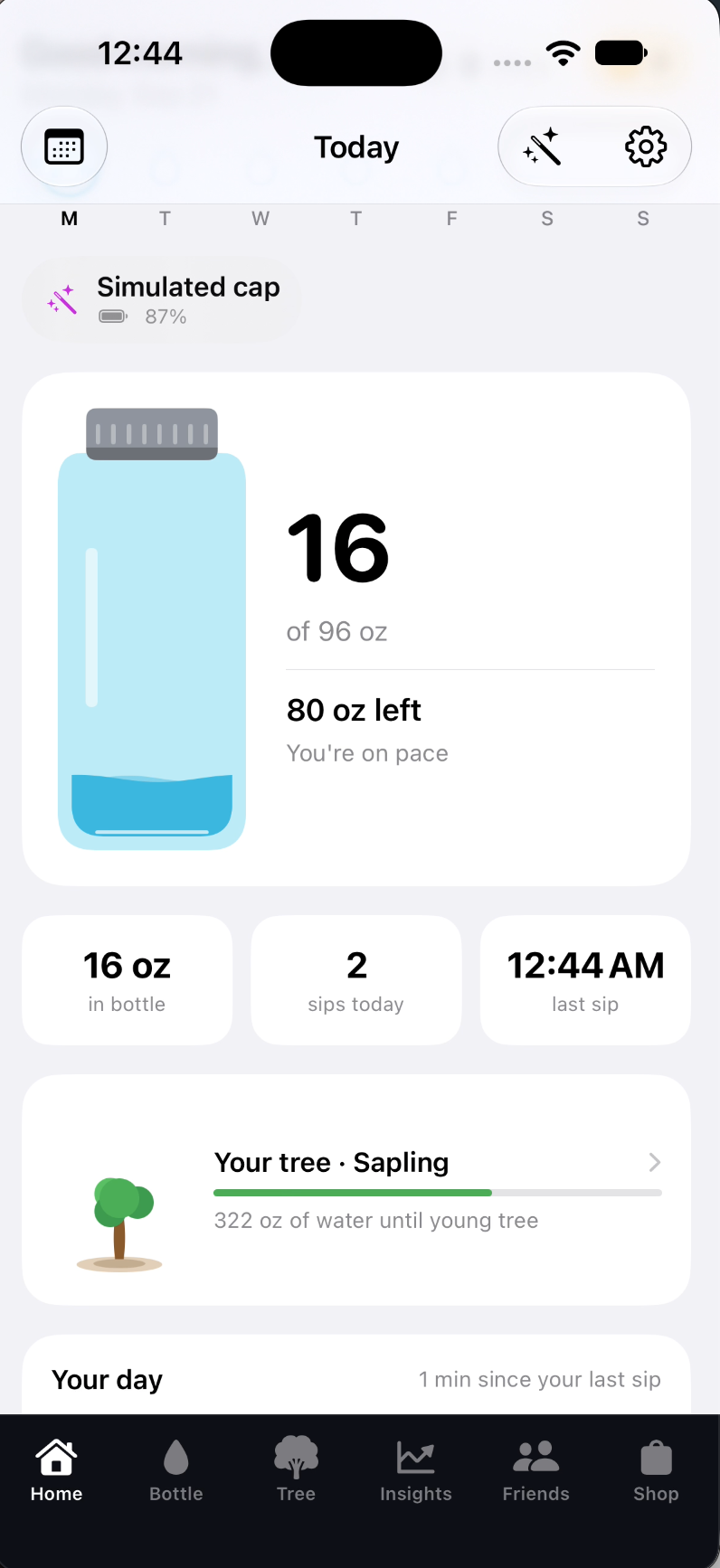
Main Screen Dashboard
-
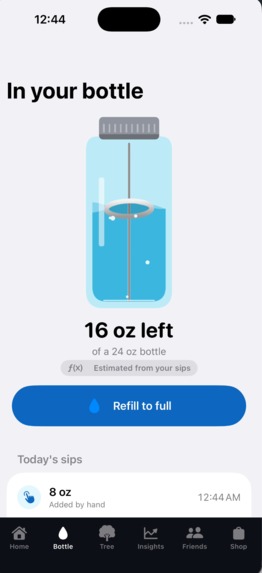
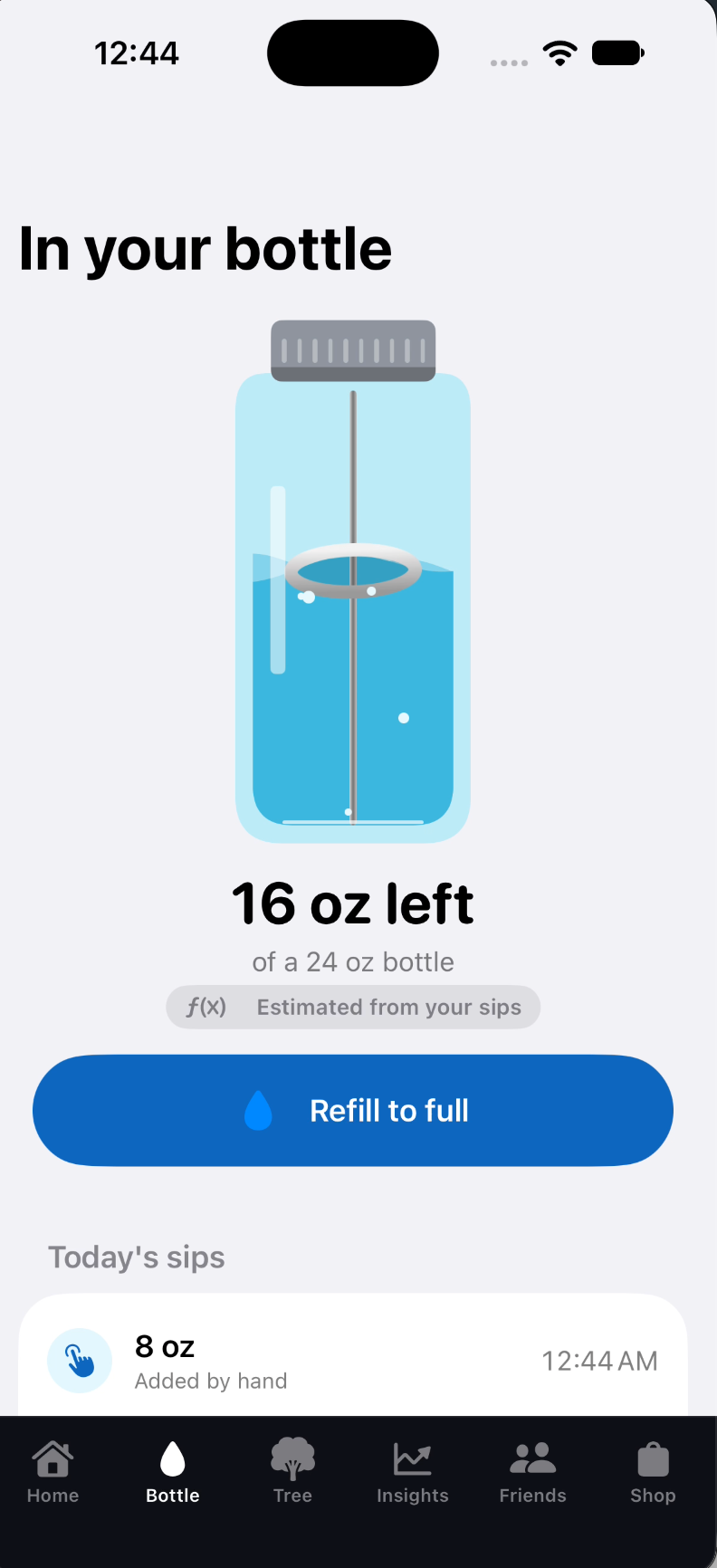
In Your Bottle Dashboard
-
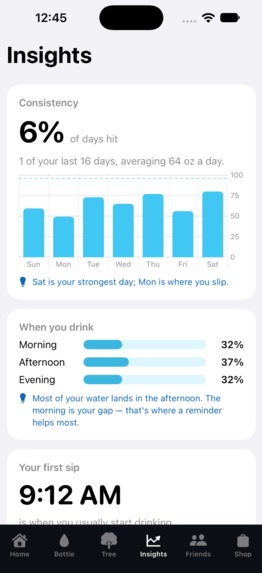
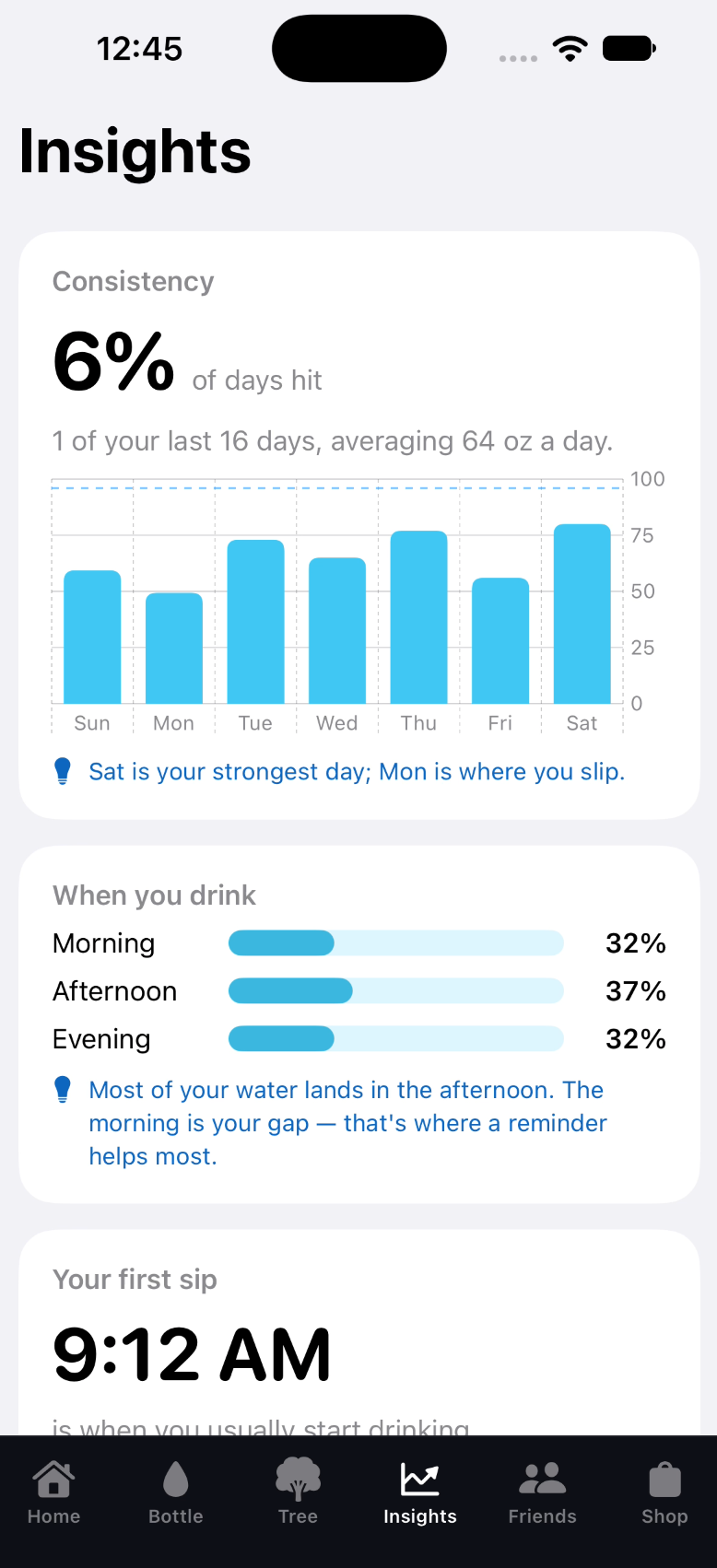
Insights Dashboard
-
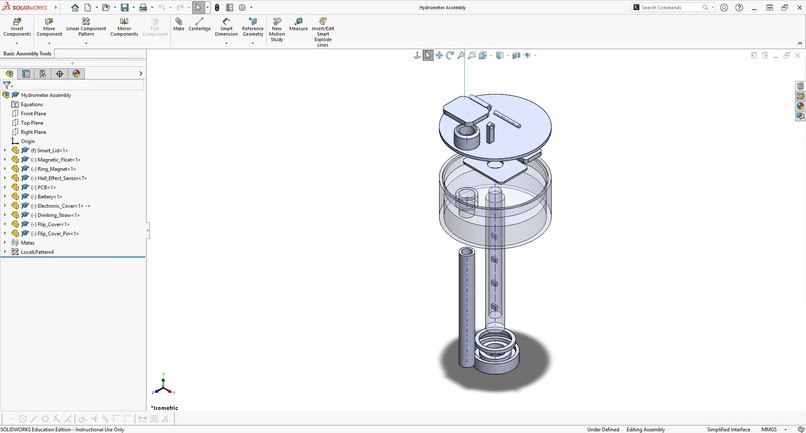
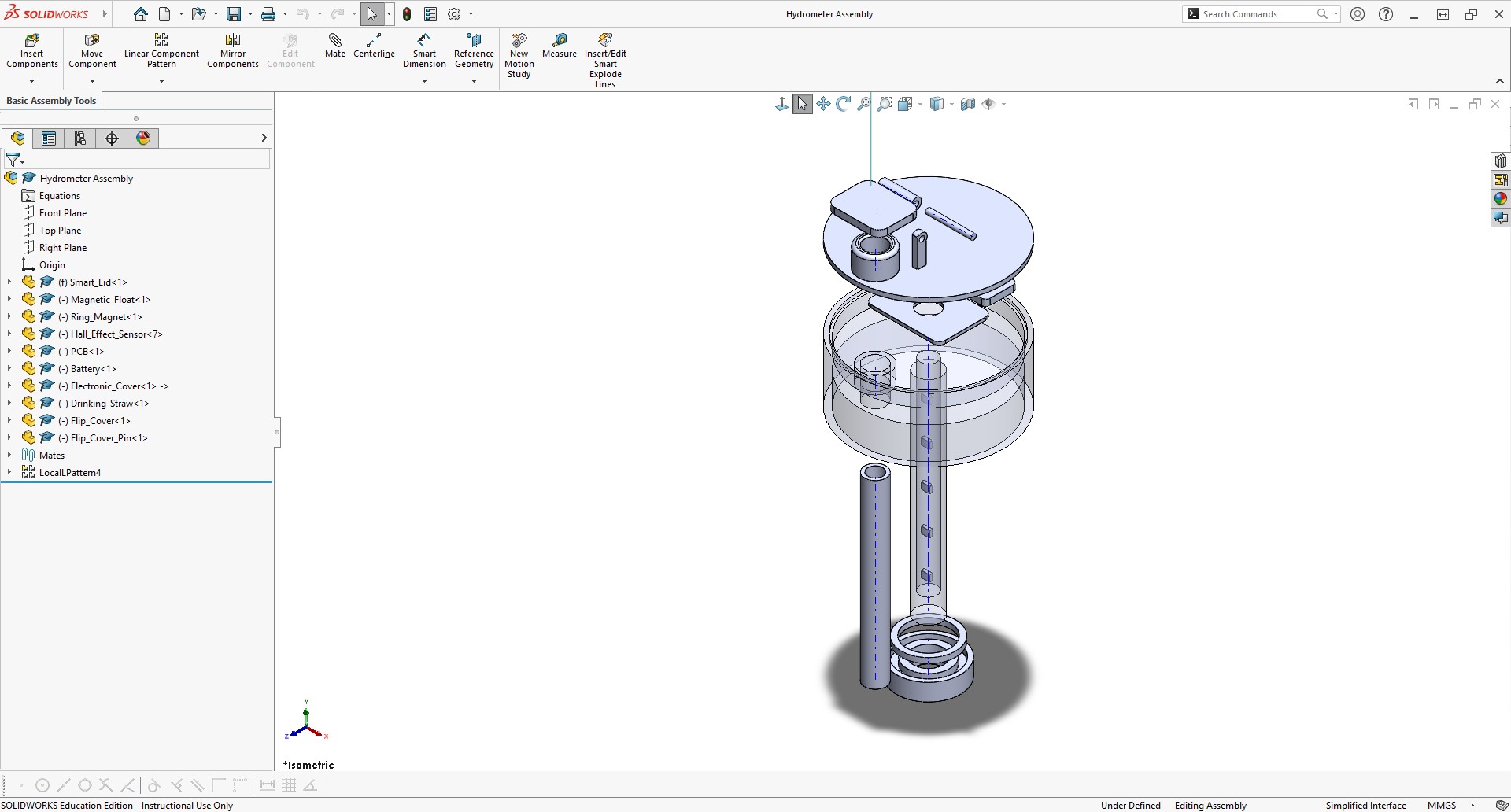
Exploded SolidWorks model showing how Hydrometer’s smart lid, electronics, sensor stem, straw, and magnetic float fit together.
-
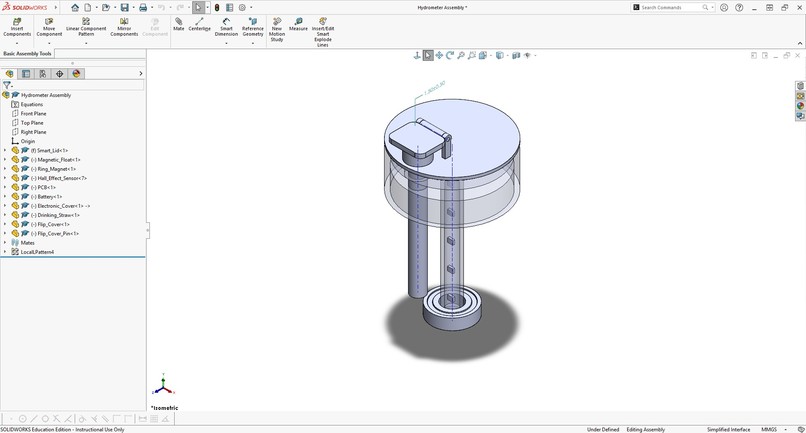
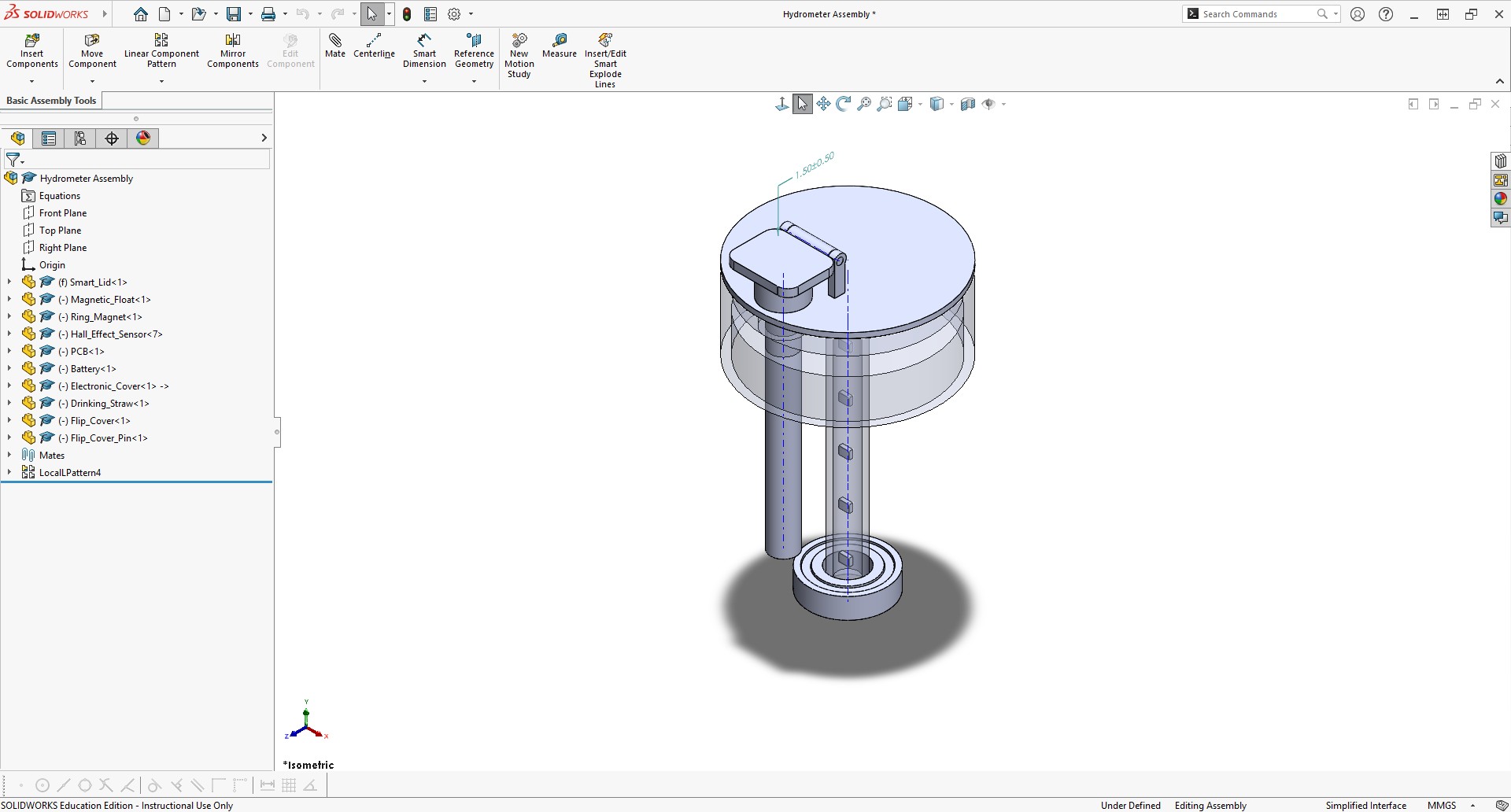
Assembled SolidWorks model showing how Hydrometer’s smart lid, sensors, electronics, straw, and magnetic float form one system.
-
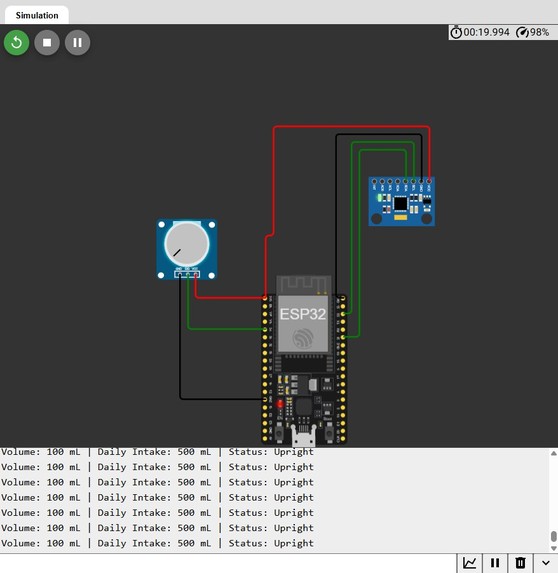
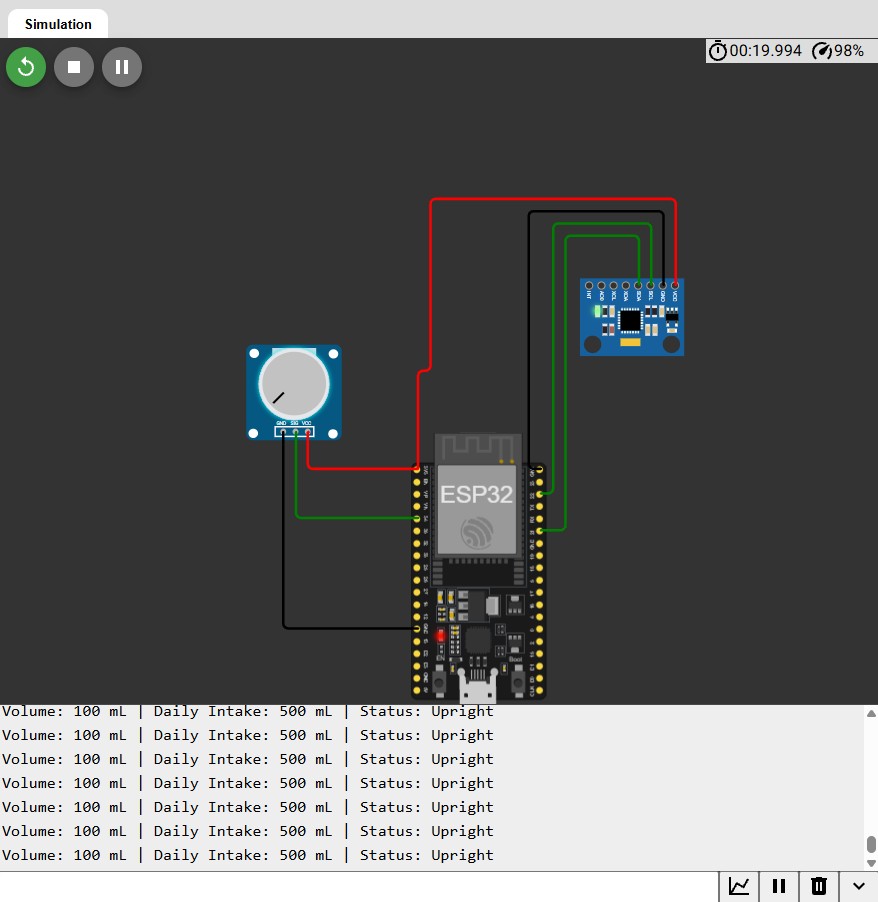
Wokwi simulation using an ESP32, potentiometer, and motion sensor to test volume readings, intake tracking, and bottle orientation.
Inspiration
One of the biggest lessons I took from Scouting was the importance of staying hydrated. At the 2023 National Jamboree, intense heat made hydration a constant concern. We were repeatedly reminded to drink water, but I still had no easy way to know how much I had consumed—or how much remained inside my insulated bottle. Traditional bottles rely on users to estimate their intake, while hydration apps require every drink to be entered manually. During busy activities, it is easy to forget both. We wanted to create a system that could track hydration automatically without interrupting the user’s day. That experience inspired Hydrometer: a smart hydration system designed to measure water levels, recognize drinks and refills, and turn that information into useful insights. Our goal was to make staying hydrated more effortless, whether someone is hiking, exercising, working, or going through their daily routine.
What it does
Hydrometer is a smart hydration-tracking system that automatically measures how much water a user drinks without requiring manual logging. A magnetic float follows the water level inside the bottle, allowing the system to detect changes in volume. Hydrometer identifies drinks and refills, then sends that information to an iOS app where users can monitor their daily intake, view hydration patterns, maintain consistency streaks, and receive personalized reminders.
How we built it
We began by comparing several water-measurement methods, including a load-cell base, a flow sensor, and a magnetic float system. We selected the magnetic float because it could fit into a portable bottle design and track the water level without restricting flow through the drinking straw. We then modeled the complete smart-lid assembly in SolidWorks. The design includes a magnetic float that moves with the water level and an enclosed stem containing an array of Hall-effect sensors. As the float moves, the sensors detect the magnet’s position while remaining isolated from the water. A microcontroller processes these readings, estimates the remaining volume, identifies drinks and refills, and sends the results to the iOS app. Because our selected DRV5053 sensor was unavailable in Wokwi, we used a potentiometer to simulate its changing analog voltage output. This allowed us to test the circuit and data-processing logic before obtaining the physical components. We developed the mobile interface using Swift and Xcode to display hydration progress and insights. Be clear that it is a proof of concept if the CAD model, circuit simulation, and app were not physically integrated during the hackathon. This makes the submission credible while still showing everything your team accomplished.
Challenges we ran into
With only three days to develop Hydrometer, one of our biggest challenges was choosing the most practical method for measuring the water level. We considered several approaches before deciding to use Hall-effect sensors. From there, translating the concept into a clear CAD model required significant time, iteration, and problem-solving. We had to determine how the magnetic float, sensor stem, lid, and internal electronics could work together as one realistic design. Another major challenge was collecting meaningful data without access to all of the physical components. We used Wokwi to simulate our hardware, but the platform did not offer the DRV5053 Hall-effect sensor used in our design. As a workaround, we used a potentiometer to imitate the sensor’s changing analog voltage output. This allowed us to test how the system would interpret different readings and convert them into estimated water levels. Finally, as first-time hackers, we had to learn a completely new development environment while building an iOS application. Learning Xcode and Swift within the hackathon’s limited timeframe was challenging for the entire team. Despite these obstacles, we successfully brought the mechanical, electrical, and software sides of Hydrometer together into one cohesive proof of concept.
Accomplishments that we're proud of
We are proud that, in only three days, we transformed an initial idea into a complete proof of concept that combines mechanical design, electronics, simulation, and mobile development. We evaluated multiple sensing methods and developed an innovative approach that uses a magnetic float and Hall-effect sensors to measure the water level without requiring users to manually log their intake. We also created a detailed CAD model showing how the magnetic float, sensor stem, lid, and electronics could be integrated into a practical bottle design. Although the DRV5053 sensor was unavailable in Wokwi, we adapted by using a potentiometer to simulate its analog voltage output, allowing us to test our circuit and water-level processing logic. Finally, we designed and developed an iOS application despite having no previous experience with the development environment. Bringing each part of Hydrometer together as first-time hackers—and creating a cohesive product concept within the hackathon’s limited timeframe—is what we are most proud of.
What we learned
Throughout this project, we learned how important it is to evaluate multiple solutions before committing to a final design. Comparing load cells, flow sensors, and Hall-effect sensors helped us understand the tradeoffs between accuracy, portability, cost, and ease of integration. We also gained experience connecting different engineering disciplines. Developing Hydrometer required us to combine mechanical CAD, circuit design, hardware simulation, data processing, and mobile app development into one system. When Wokwi did not support our chosen DRV5053 Hall-effect sensor, we learned how to adapt by using a potentiometer to simulate its analog output and continue testing our logic. Most importantly, we learned how quickly we could acquire new skills when working toward a shared goal. As first-time hackers, we became more comfortable with rapid prototyping, working under time constraints, dividing responsibilities, and communicating across different technical backgrounds. We also gained hands-on experience with new tools, including Wokwi, Swift, and Xcode.
What's next for Hydrometer
Our next step is to turn Hydrometer from a proof of concept into a working physical prototype. This will involve assembling the magnetic float and DRV5053 Hall-effect sensors, calibrating sensor readings to actual water volumes, and testing the system across different bottle shapes and sizes. We also plan to improve the software so it can distinguish between drinking, refilling, and ordinary bottle movement. Future development will include connecting the physical device to the iOS app through Bluetooth, conducting waterproofing and durability tests, and improving battery efficiency. In the long term, we hope to add personalized hydration goals based on activity and weather, smarter hydration reminders, and optional water-quality sensors. Our goal is to make Hydrometer a practical system that fits naturally into everyday life and helps users build healthier hydration habits.


Log in or sign up for Devpost to join the conversation.