Inspiration
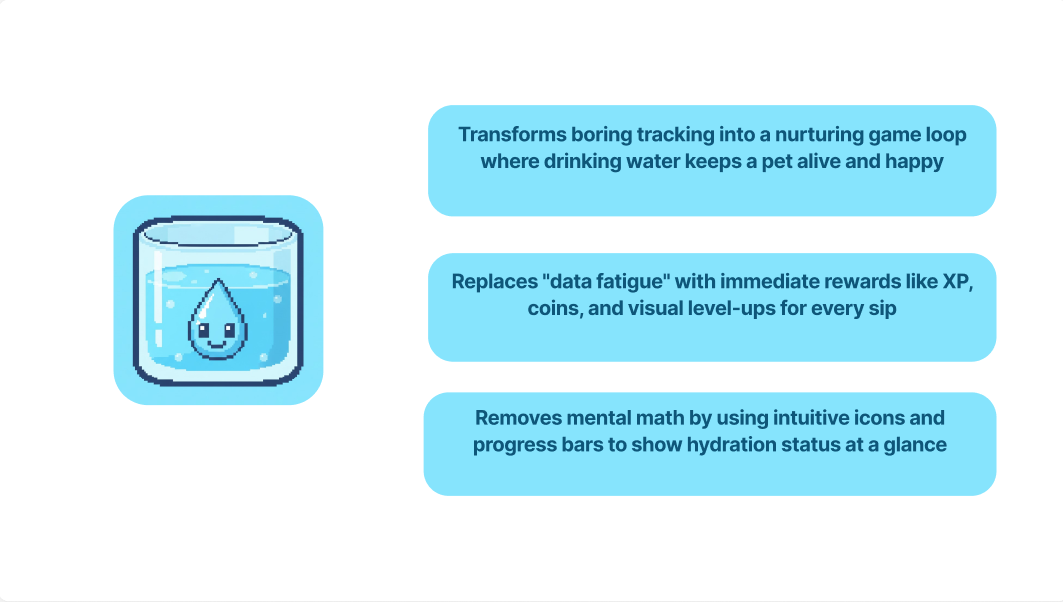
We’ve all been there: it’s 4 PM, your head is pounding, and you realize you haven’t had a sip of water since breakfast. We noticed that existing hydration apps are boring—they feel like chores. We wanted to fix dehydration by tapping into two things people actually care about: social pressure and nostalgia. Inspired by the addictive nature of Tamagotchi and Duolingo, we set out to build an app that makes drinking water competitive, rewarding, and actually fun.
What it does
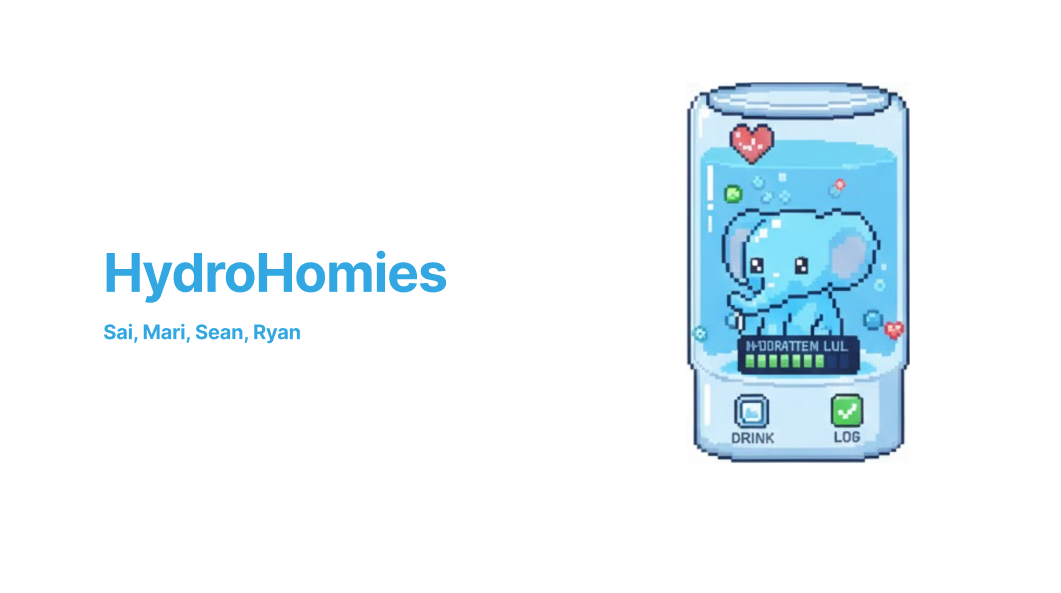
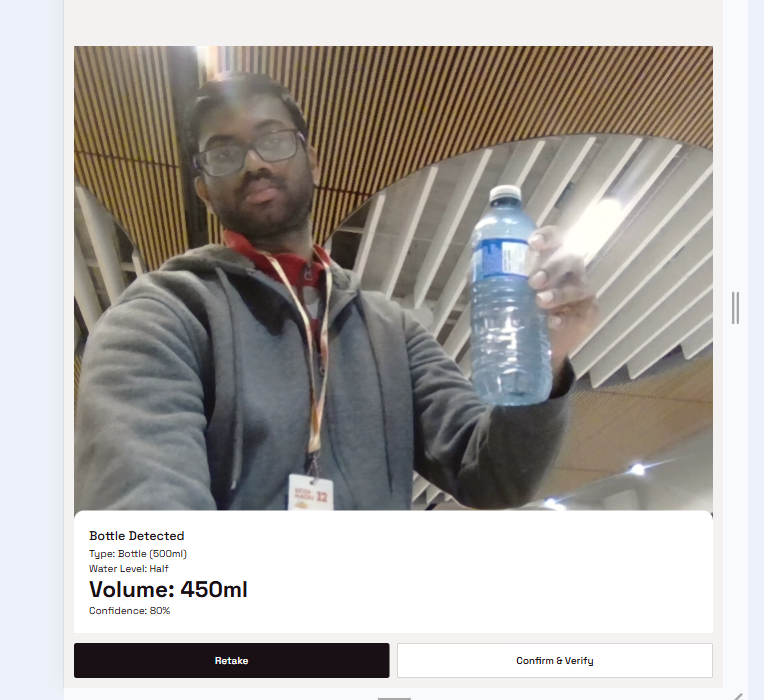
HydroHomies is a gamified hydration tracker powered by Computer Vision.
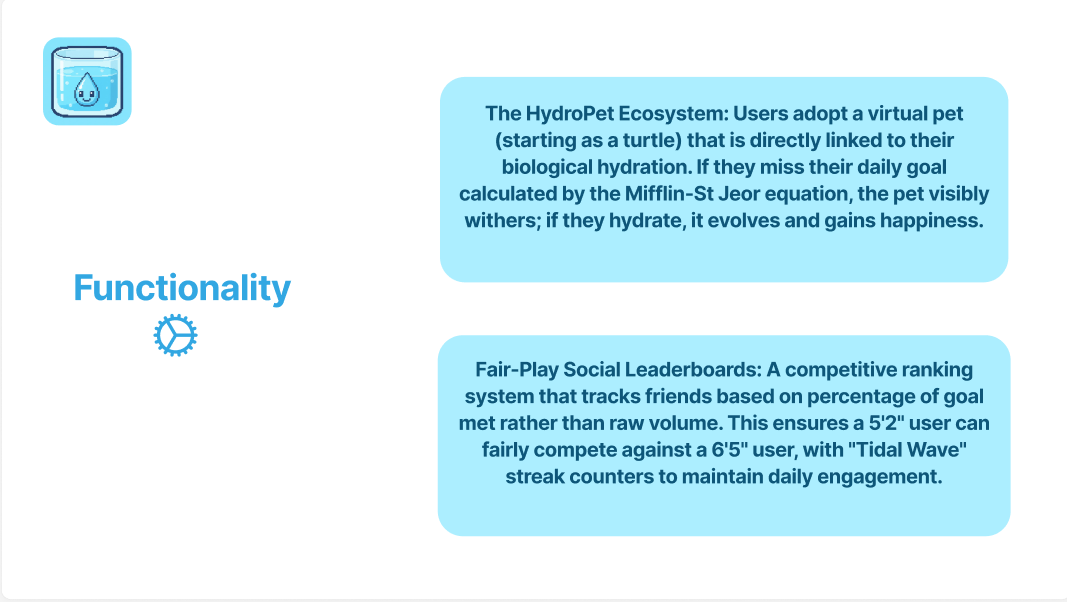
- Personalized Goals: Upon onboarding, it calculates your exact daily water needs based on biological factors (Height, Weight, Age, Activity Level) using the Mifflin-St Jeor equation.
- Scan-to-Track: Instead of boring manual entry, you use the camera. Our custom ML model detects your water bottle and verifies if you are actually drinking.
- The HydroPet: You are responsible for a virtual pet (starting with a turtle) that evolves as you hit your goals. If you get dehydrated, your pet gets sad.
- Social Leaderboard: You compete against friends not just by volume, but by percentage of daily goals met, making it fair for everyone regardless of size.
How we built it
- Frontend: We built the mobile app using React Native (Expo) for cross-platform compatibility. We used NativeWind (Tailwind CSS) to create our custom "grid/liquid" aesthetic.
- AI/ML: We trained a custom object detection model using Teachable Machine to recognize three states: "Full Bottle," "Empty Bottle," and "No Bottle." We exported this as a TensorFlow Lite (TFLite) model to run on-device for real-time verification.
- Backend: We used Firebase for Authentication and Cloud Firestore to handle real-time leaderboard updates and sync pet states across devices.
Challenges we ran into
- The "Glass" Problem: Training an ML model to recognize water bottles was harder than expected because clear glass/plastic is reflective and changes appearance in different lighting. We had to retrain our model multiple times with different backgrounds to get accurate detection.
- React Native Integration: Bridging the TFLite model with Expo Camera required navigating complex native dependencies to ensure the app didn't crash during the "scan" phase.
- Gamification Logic: Balancing the "Pet Health" decay rate was tricky—we didn't want the pet to die too fast (discouraging the user) or too slow (boring).
Accomplishments that we're proud of
- Real-time ML on Mobile: Getting the camera to recognize a water bottle instantly on the phone feels like magic.
- The "Vibe": We managed to move away from the sterile "medical" look of most health apps and created something that feels like a game.
- The Algorithm: Implementing a scientifically accurate hydration formula rather than just saying "drink 8 cups."
What we learned
- User Psychology: Gamification only works if the feedback loop is instant. The visual reward of the pet smiling or the "Tidal Wave" streak animation is crucial.
- Mobile AI: We learned a ton about the limitations and optimizations required to run Neural Networks on mobile devices without draining the battery.
What's next for HydroHomies
- Smart Bottle Integration: Connecting directly to Bluetooth-enabled water bottles for passive tracking.
- More Pets: Adding a shop where users can spend their "Hydration Points" to unlock different pets (Axolotls, Penguins) and accessories.
- Team Challenges: Allowing groups of users to pool their hydration stats to complete "Ocean Cleanup" community events.
Built With
- android
- express.js
- firebase
- kaggle
- react-native
- tensorflow
- typescript


Log in or sign up for Devpost to join the conversation.