-
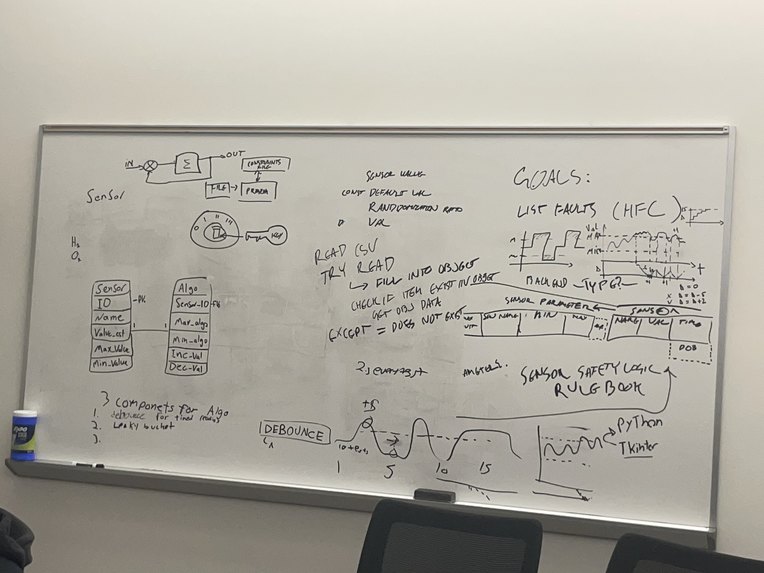
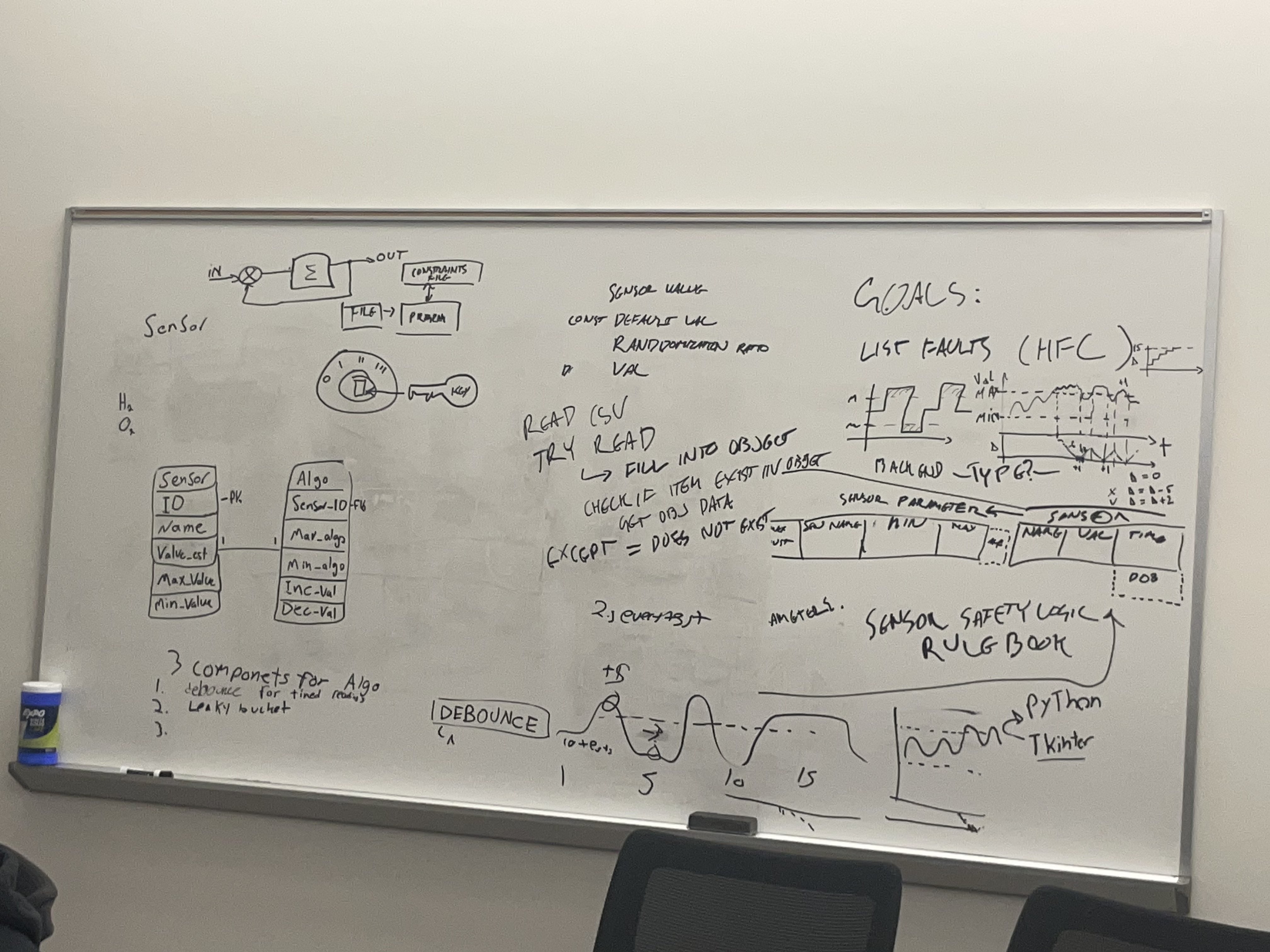
ERDs and Algorithm planning
-
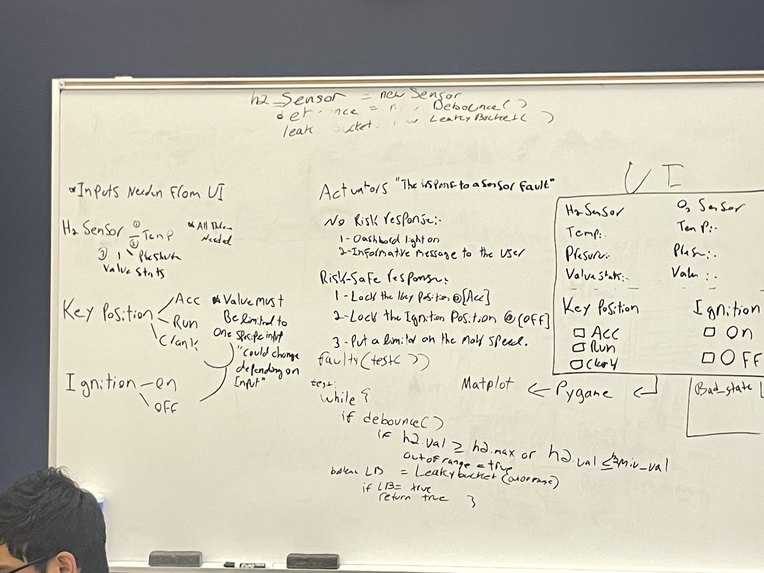
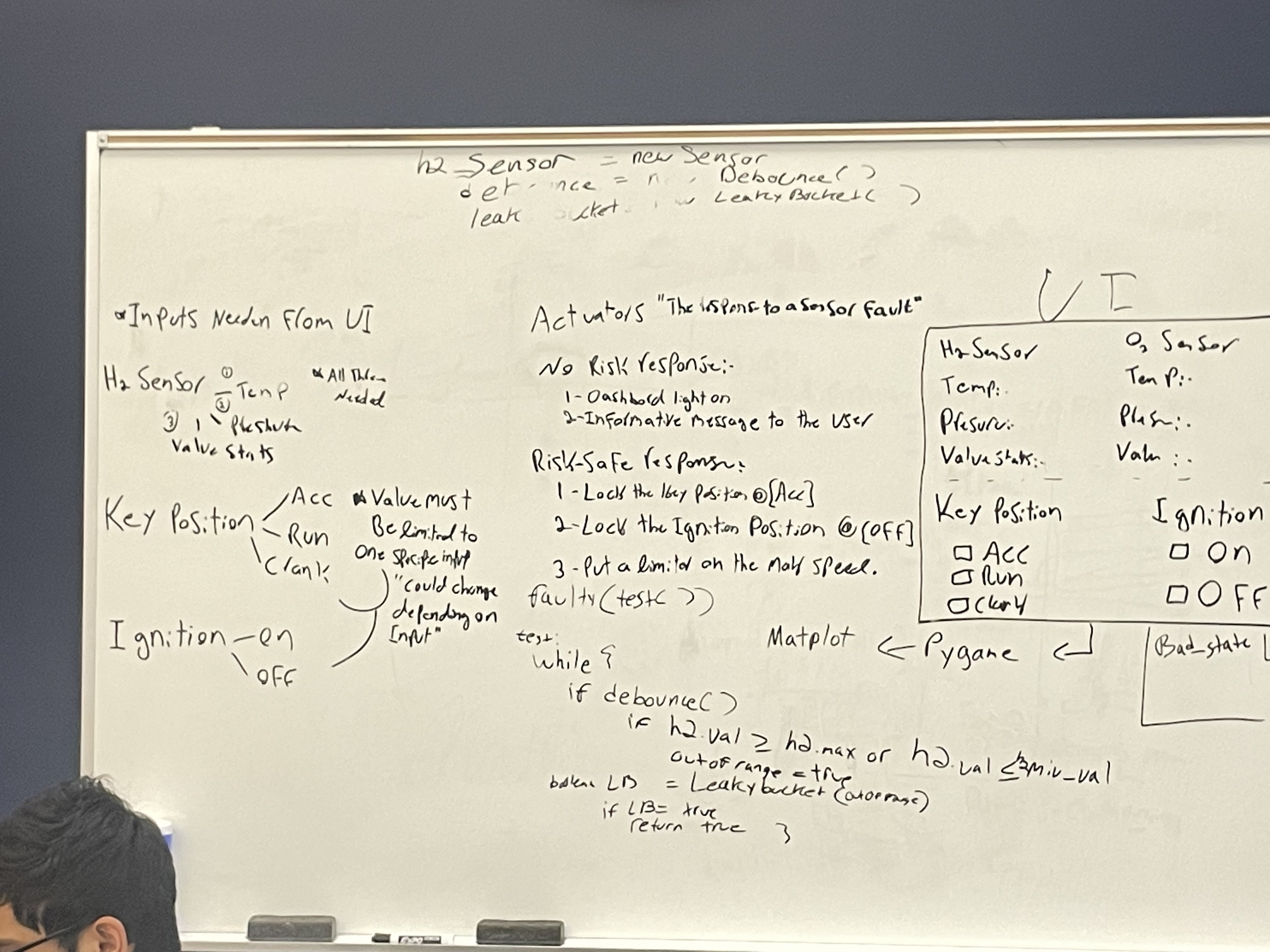
Data relations and error handling relationships
-
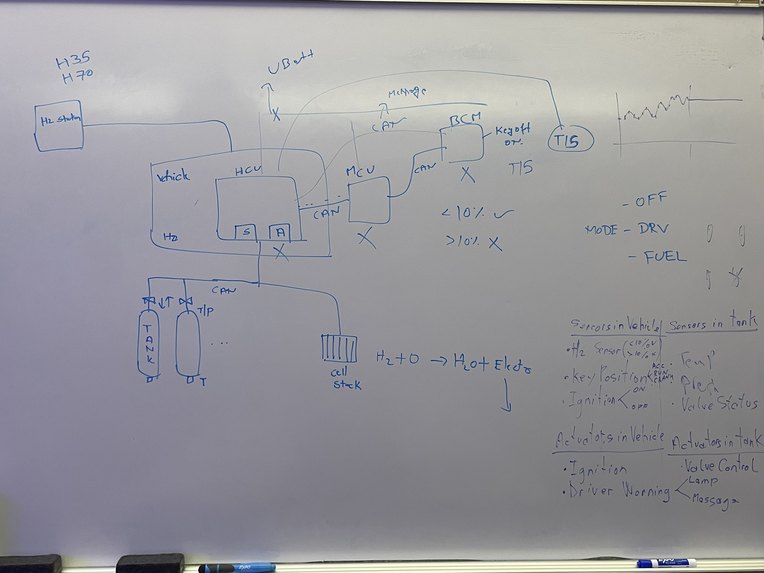
High level overview of Hydrogen Fuel Cell with related data

Inspiration
Bosch Automotives
What it does
Our hack reads information from sensors and reacts accordingly based on upon various conditional statements.
How we built it
We used python to read and write information from the csv files. We created the sensor to be an algorithm based on the Leaky Bucket Algorithm, in which data is stored locally through through the MCU in the case of a CAN signal loss so the system can be controlled remotely long enough to bring the system to a safe stopping place.
Challenges we ran into
- Implementing simulated sensors data in csvs, and interacting with them in python.
- Understanding the functionality of sensors.
- Incorporating UI design
- Detection of faults, false positives, debouncing algorithms
Accomplishments that we're proud of
Brainstorming and structuring the design. Developed a PyGame Usage and implementation of Debouncing/ Leaky Bucket Algorithm.
What we learned
Covered algorithms, high level idea of hydrogen fuel systems, identifying fault areas, and finding safe reactions to faults.
What's next for Hydrogen Fuel Cell Monitor
More implementations of python prototypes. More usage of algorithms. Various ways of handling data.
Built With
- csv
- python


Log in or sign up for Devpost to join the conversation.