-
-
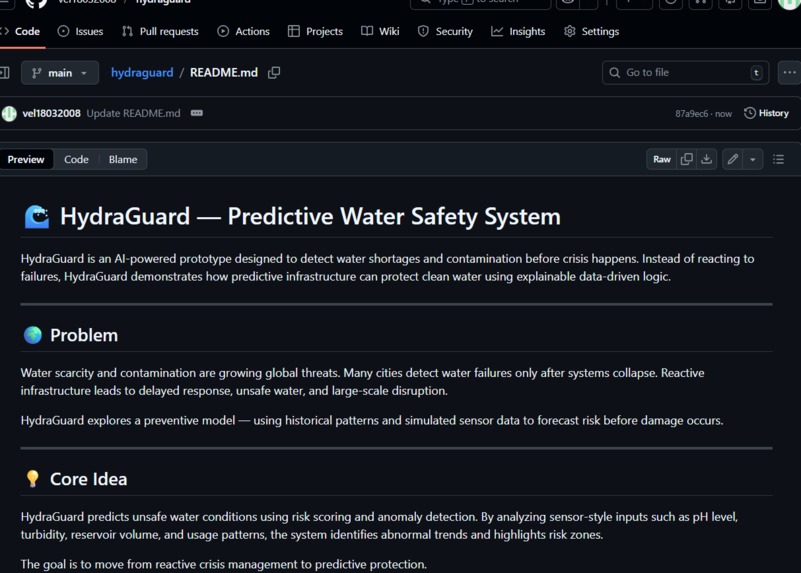
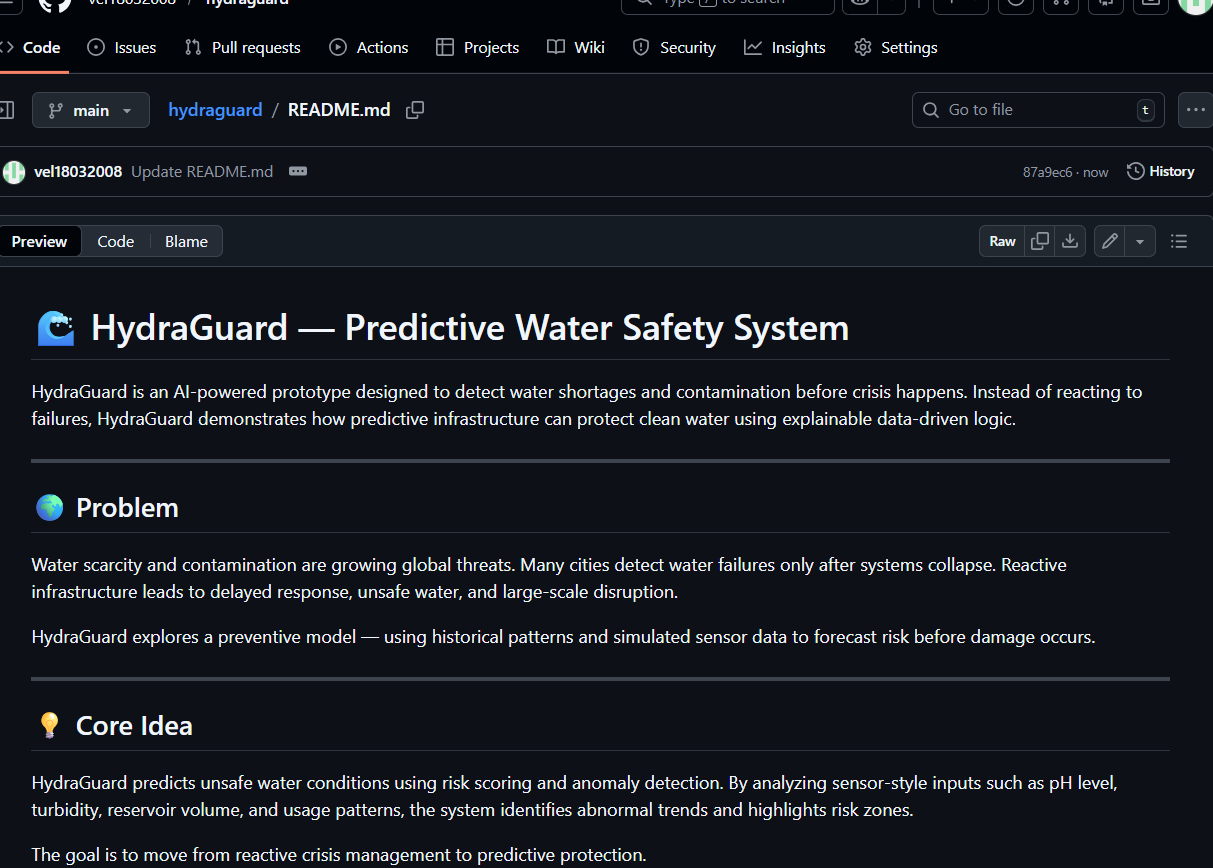
HydraGuard overview and predictive water safety architecture
-
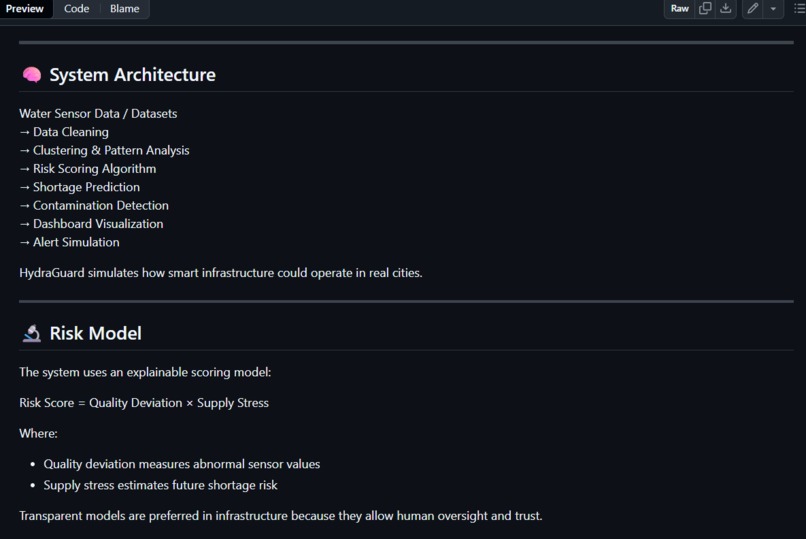
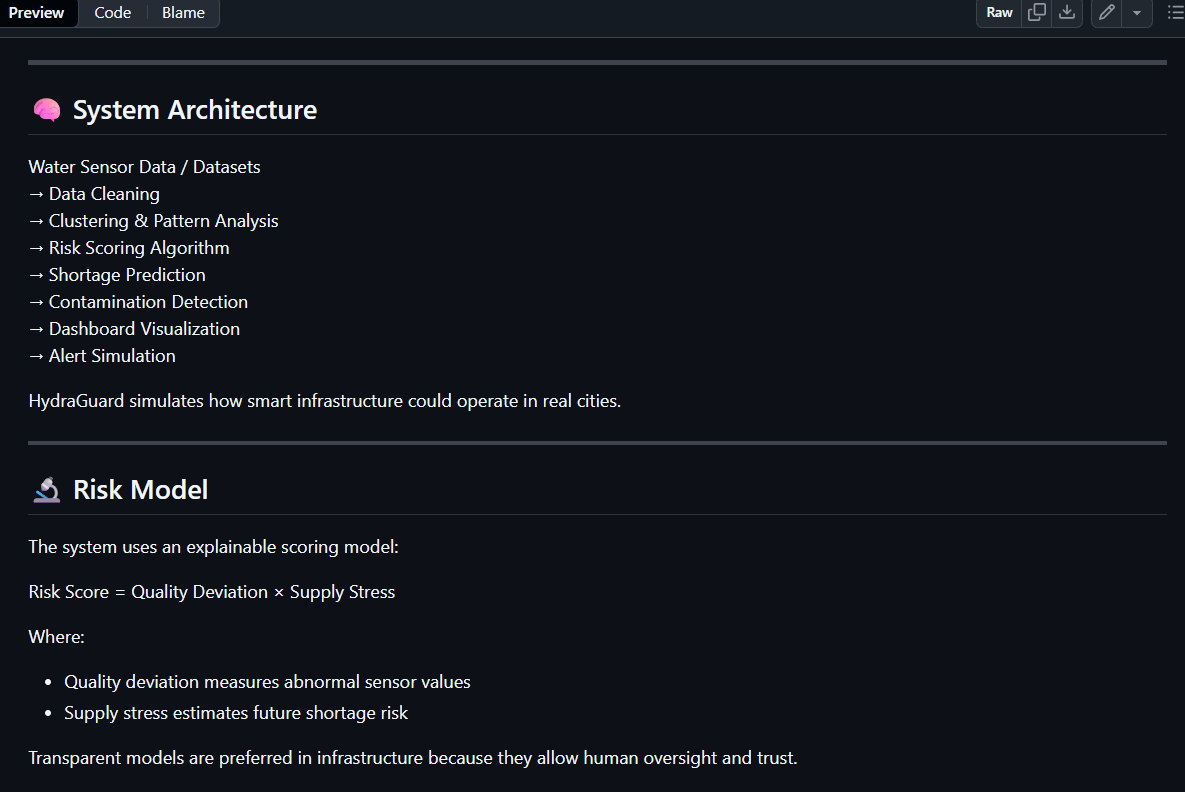
Explainable AI risk model for water shortage and contamination prediction
-
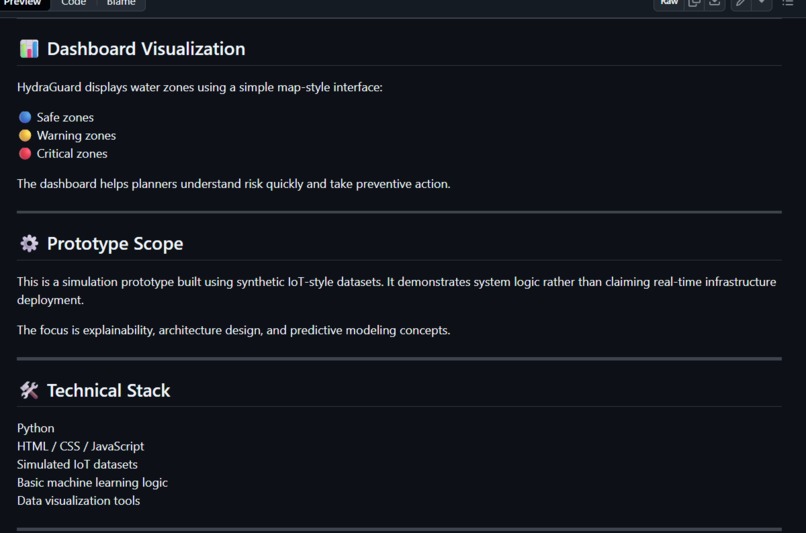
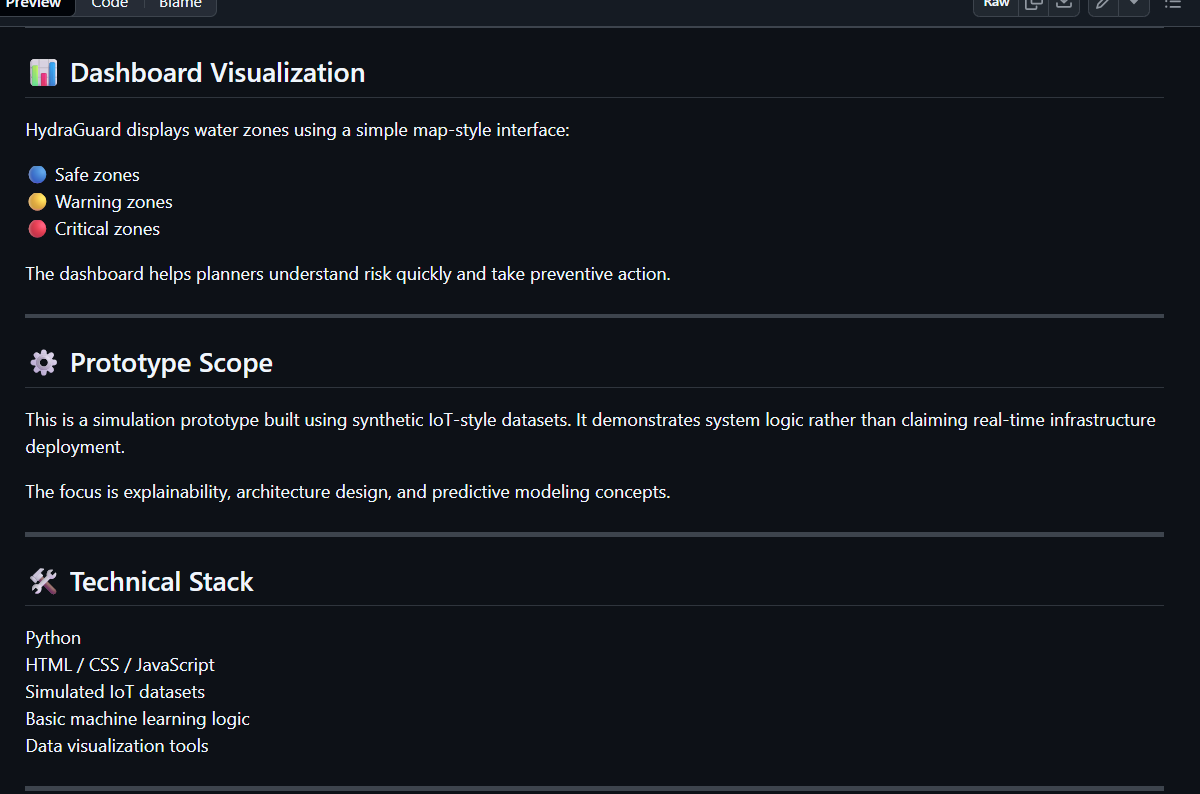
Dashboard visualization showing safe, warning, and critical water zones
-
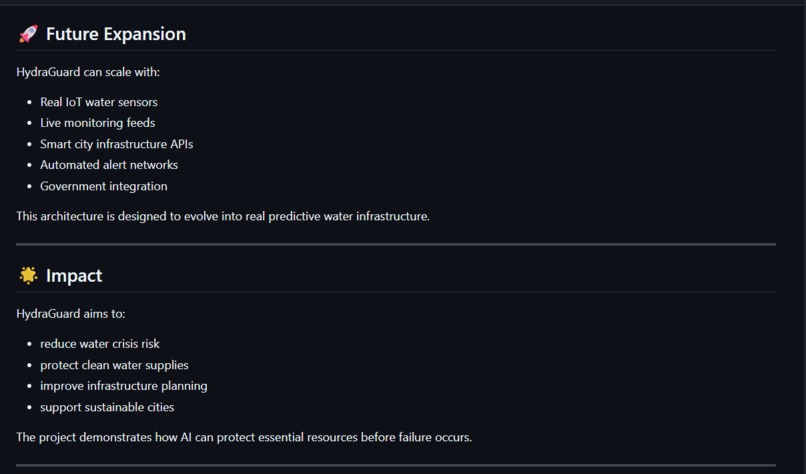
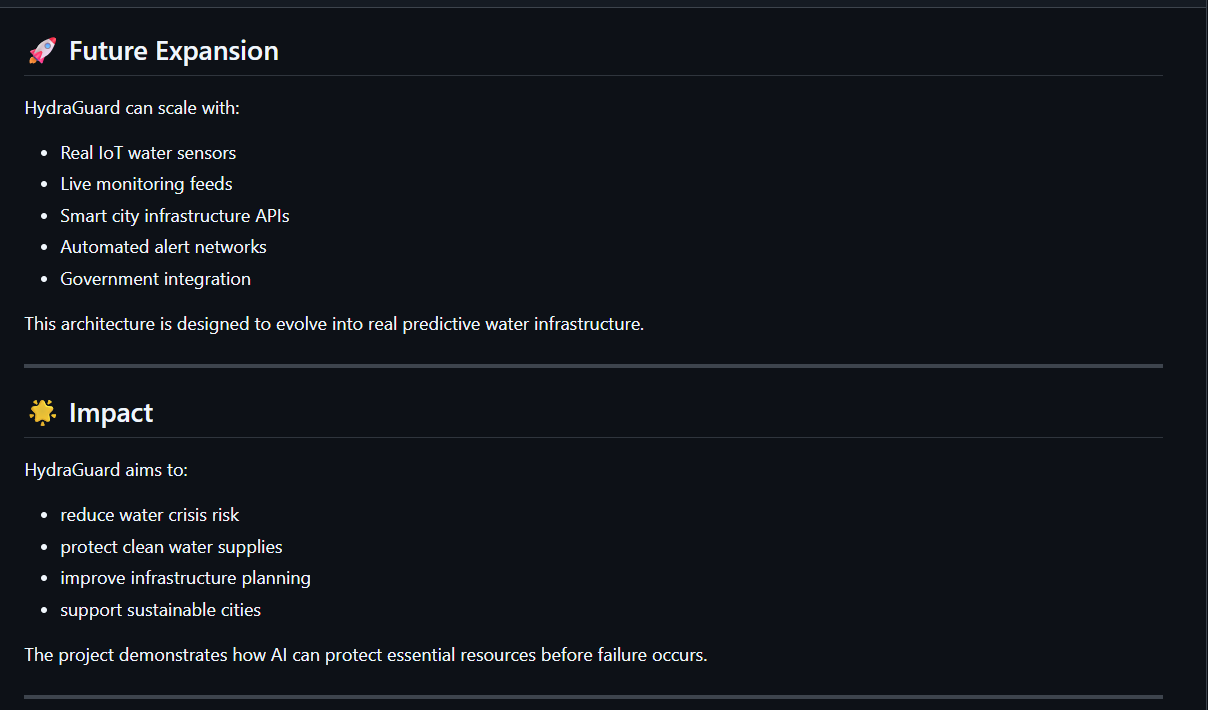
Future expansion roadmap for real-time smart water infrastructure
Inspiration
Global water shortages and contamination are becoming serious threats to cities worldwide. Many regions detect problems only after water systems are already damaged. We were inspired by the idea of predictive infrastructure — using data and AI to prevent crisis instead of reacting to it. Clean water is one of the most important resources for human survival, and we wanted to design a system that protects it before disaster happens.
What it does
HydraGuard is an AI-powered prototype that monitors water quality and predicts shortages before they occur. The system analyzes simulated sensor data such as pH levels, turbidity, reservoir volume, and usage patterns to identify risk zones. It visualizes safe, warning, and critical areas on a dashboard, helping cities make proactive decisions.
Instead of reacting to contamination or scarcity, HydraGuard enables prevention.
How we built it
We created a prototype using simulated IoT sensor data and a rule-based predictive model. A simple risk scoring algorithm evaluates water safety:
Risk Score = quality deviation × supply stress
The system groups abnormal patterns and generates alerts, which are displayed on an interactive dashboard. The goal was to demonstrate how explainable AI can support infrastructure decisions.
Challenges we ran into
We learned how predictive infrastructure differs from traditional apps. We explored data modeling, system architecture, and explainable AI design. Most importantly, we learned how technology can protect essential resources like water.
Accomplishments that we're proud of
We’re proud that we turned a global water crisis problem into a working predictive prototype within a short timeframe. We successfully designed a system that models water quality risks, predicts shortages, and visualizes safety zones in a clear dashboard. Most importantly, we built a project with real-world impact that demonstrates how AI can protect essential resources like clean water.
What we learned
We learned how predictive infrastructure differs from traditional apps. We explored data modeling, system architecture, and explainable AI design. Most importantly, we learned how technology can protect essential resources like water.
What's next for HydraGuard
The next step for HydraGuard is integrating real-time IoT water sensors and live environmental data to improve prediction accuracy. We plan to expand the prototype into a scalable smart-city platform that supports real reservoirs, treatment plants, and distribution networks. Future versions will include automated contamination alerts, predictive shortage forecasting, and decision tools for city planners. Our long-term goal is to evolve HydraGuard into a global water safety infrastructure that helps communities protect clean water and prevent crisis before it happens.
Built With
- basic-machine-learning-logic
- css
- dashboard
- data
- data-visualization-libraries
- datasets
- html
- iot
- javascript
- learning
- logic
- machine
- simulated
- simulated-iot-sensor-datasets
- visualization

Log in or sign up for Devpost to join the conversation.