-
-
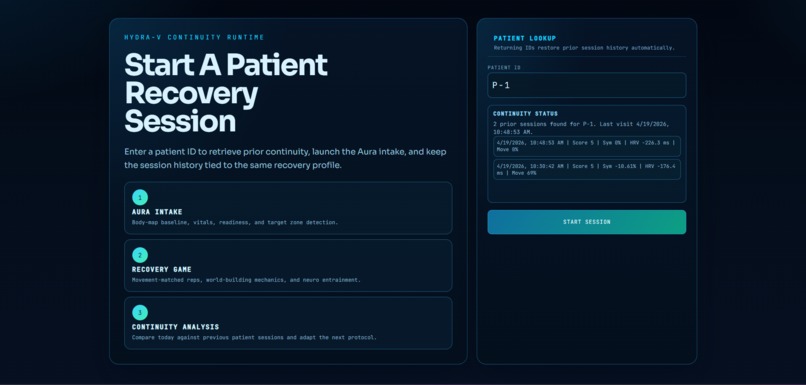
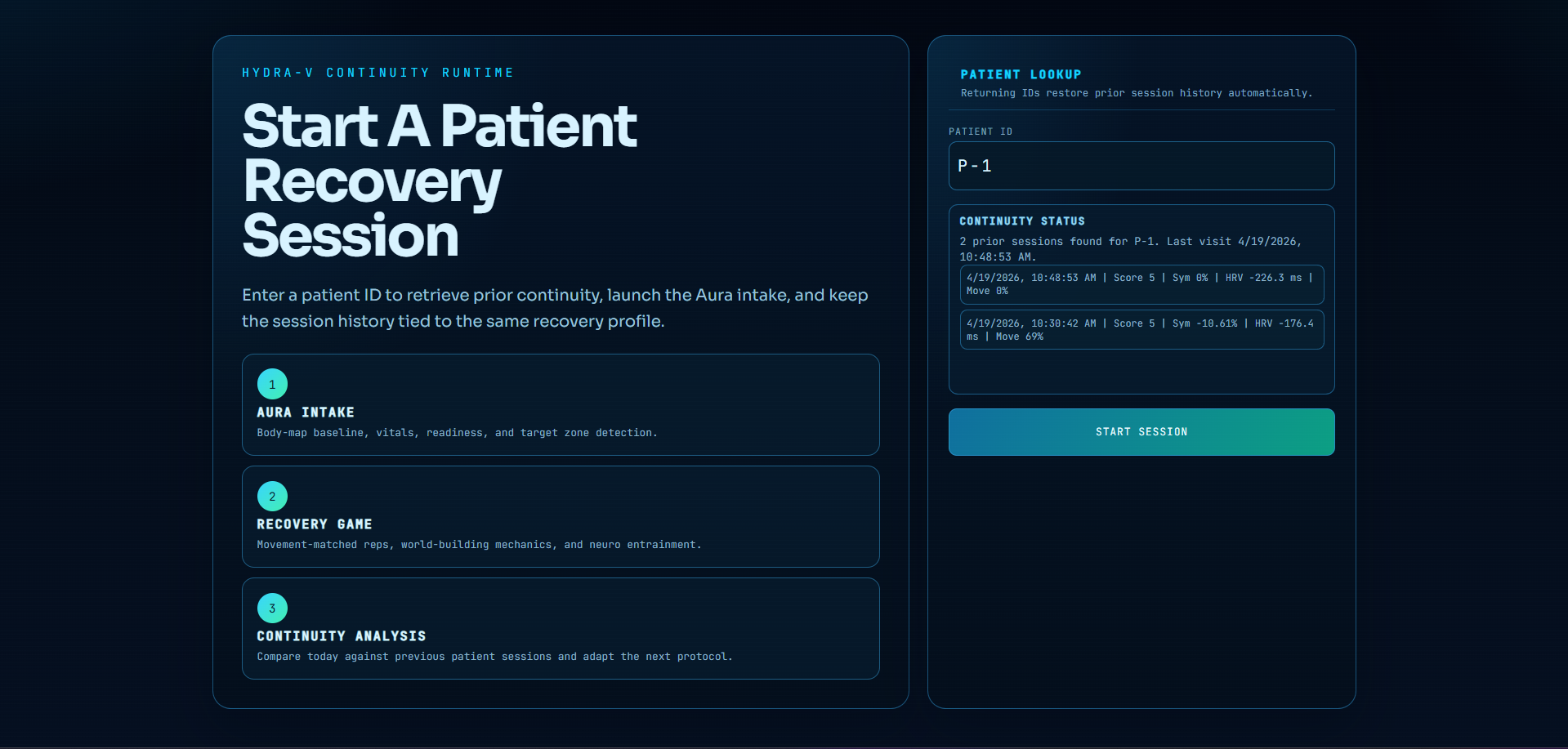
Landing Page
-
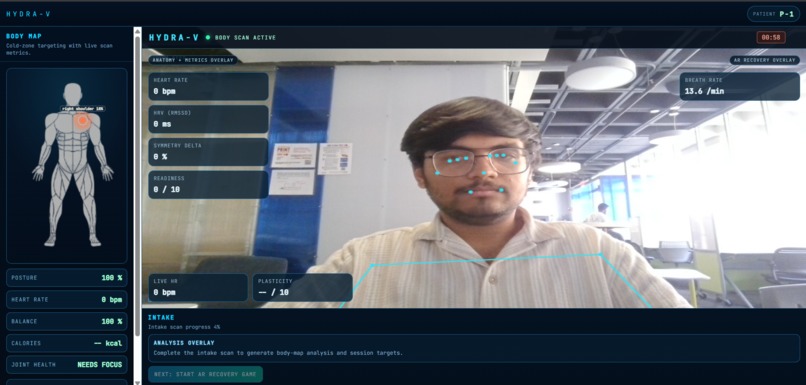
Aura Scan
-
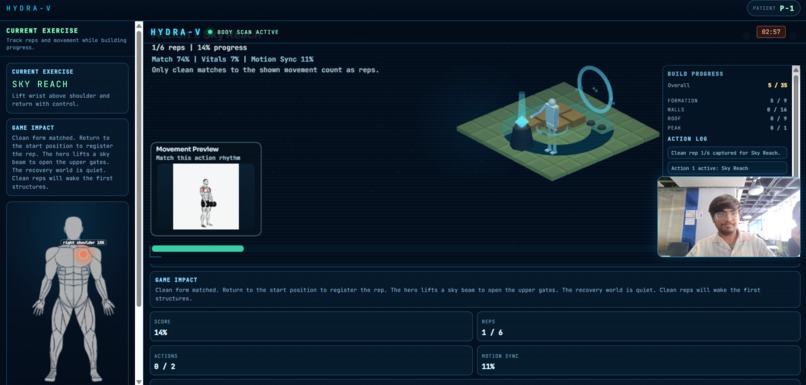
Game Recovery
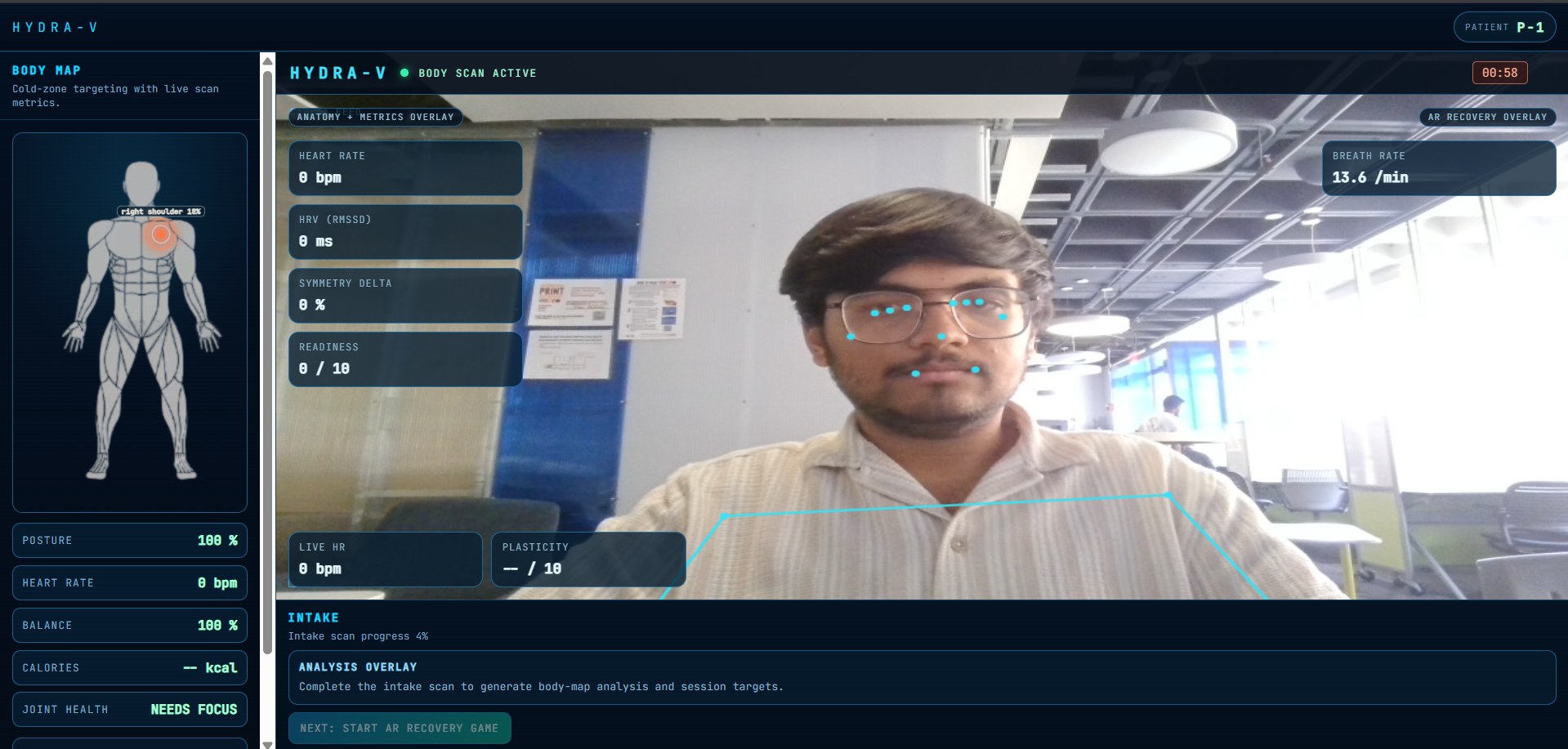
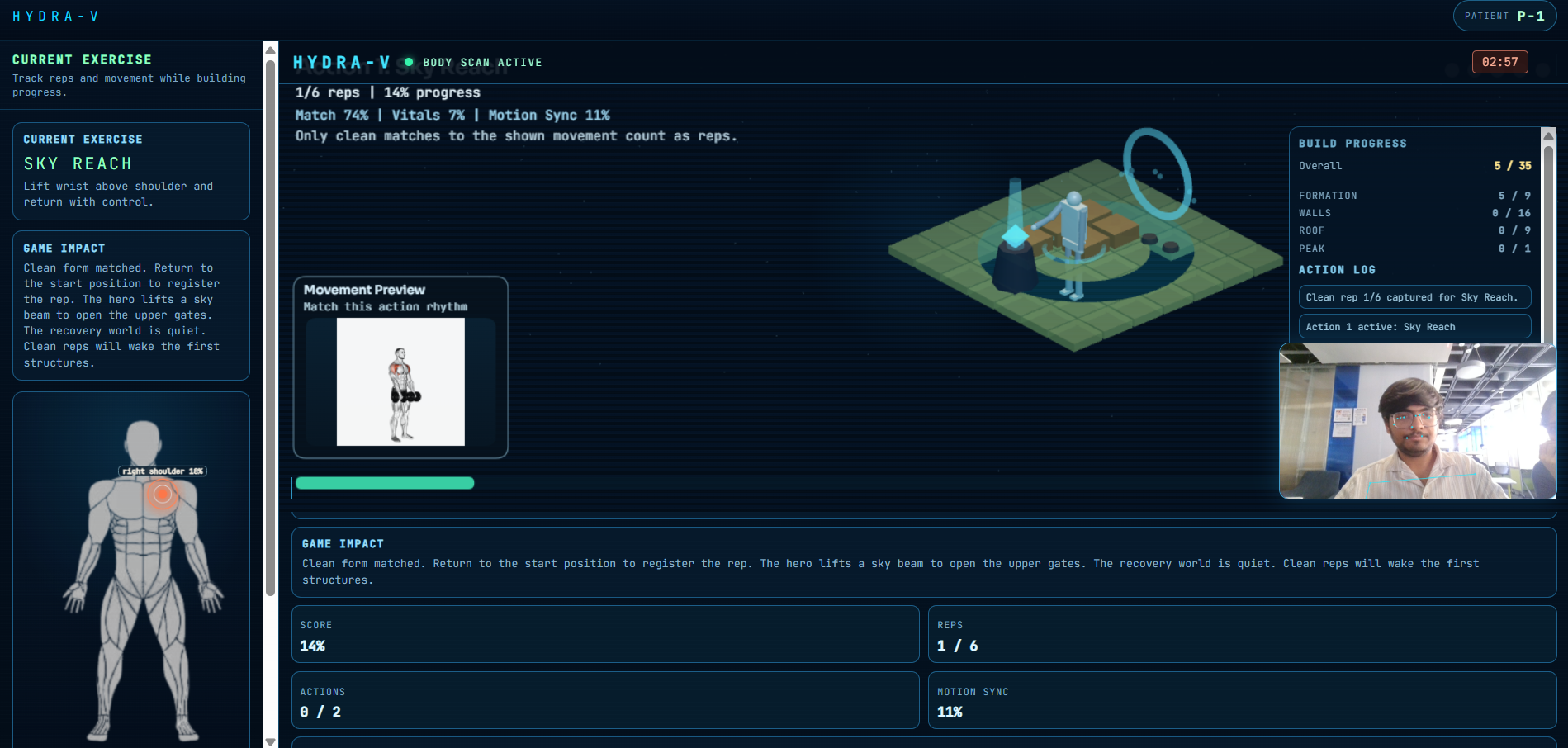
Inspiration Recovery today is mostly based on intuition and fixed protocols. Practitioners have limited time and no real-time insight into the nervous system, which actually controls recovery. We wanted to build something that actually listens to the body and responds in real time.
What it does HYDRA-V is a neural operating system built on Hydrawav3 that uses a webcam to extract signals like HRV using rPPG, movement asymmetry, and signs of nervous system fatigue. It uses this data to adapt therapy in real time by priming the brain, syncing stimulation to the heartbeat, and guiding recovery through audio and immersive interaction. Over time, it learns what works best for each individual.
How we built it We used MediaPipe for pose and face tracking, built an rPPG pipeline for HRV, and used OpenCV for optical flow. The interface is built with React, and we integrated audio using Web Audio API and ElevenLabs. We also implemented an adaptive AI model using Bayesian optimization. Most of the system runs locally for speed and privacy.
Challenges we ran into Getting stable physiological signals from a webcam was difficult because of lighting changes and motion. It was also challenging to combine vision, signal processing, and AI into something that feels simple and usable in real time.
Accomplishments that we're proud of We built a working pipeline that goes from camera input to real-time physiological insights. We were also able to connect sensing, adaptation, and learning into one system that feels cohesive.
What we learned We learned that a simple webcam can provide meaningful physiological insights with the right processing. We also understood how important the nervous system is in recovery and how different the approach becomes when you design around it.
What's next for HYDRA-V We want to improve sensing accuracy in real-world conditions and integrate directly with Hydrawav3 hardware. We also plan to refine the AI model and expand the interactive recovery experience to make it more engaging and effective.

Log in or sign up for Devpost to join the conversation.