-
-
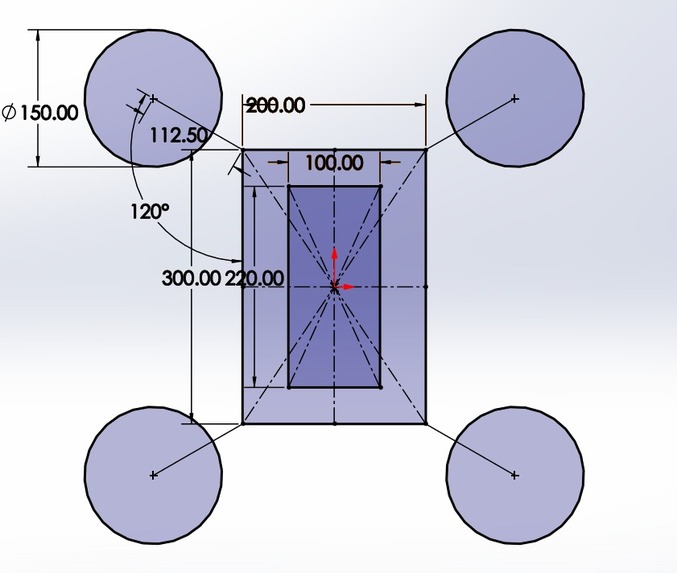
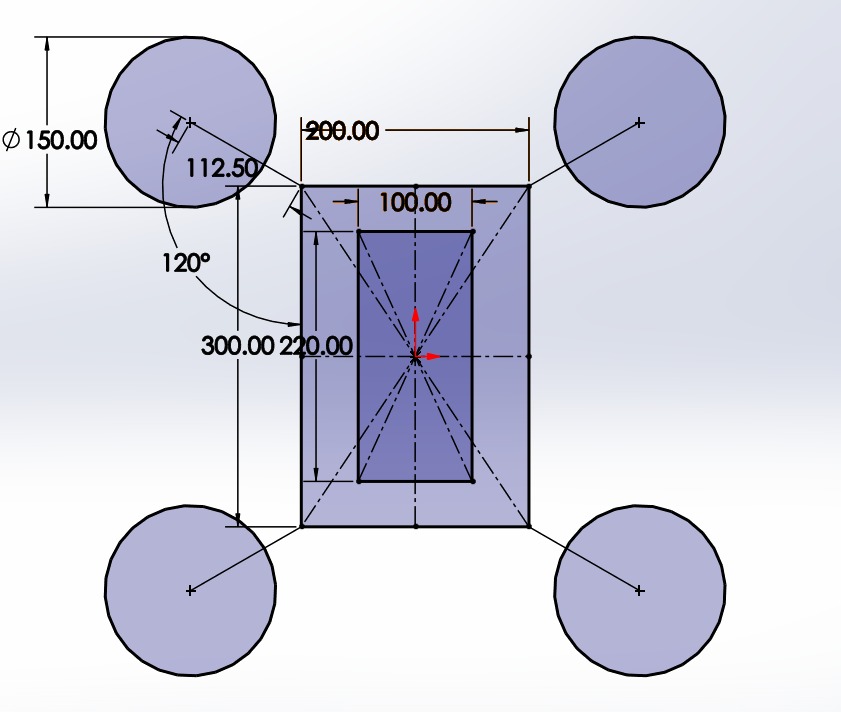
This is the basic sketch using which we are going to develop the CAD Model. The inner rectangle showcases cabin area attached at belly.
-
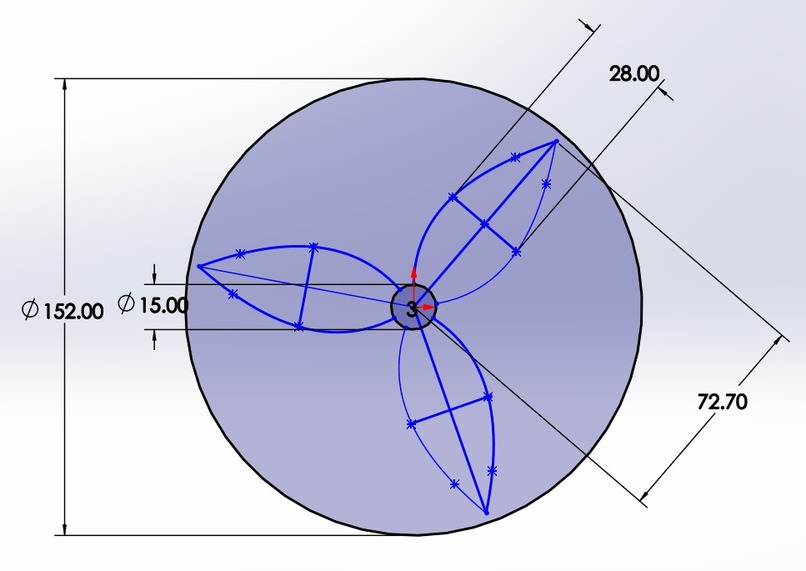
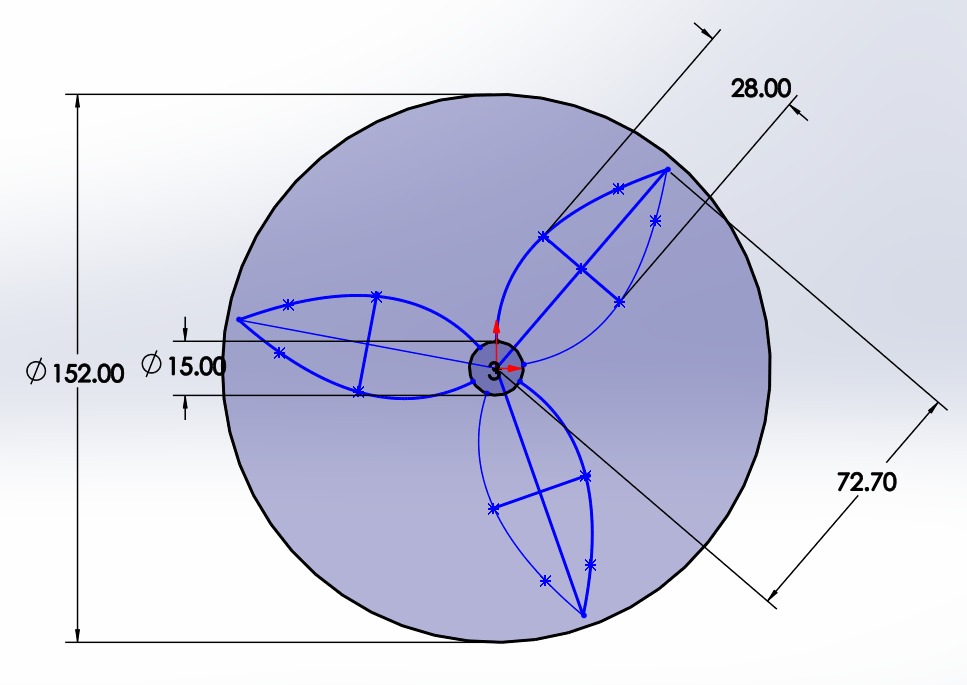
The basic prop and duct design with dimensions.
-
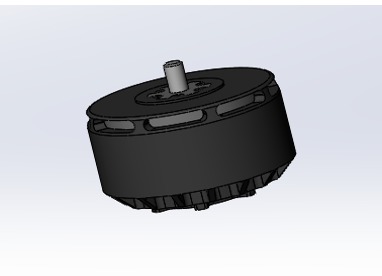
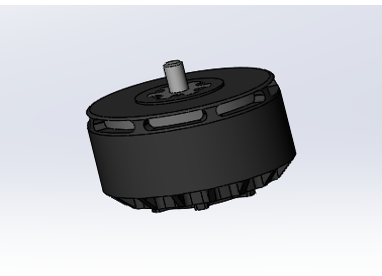
This is the motor assembly.
-
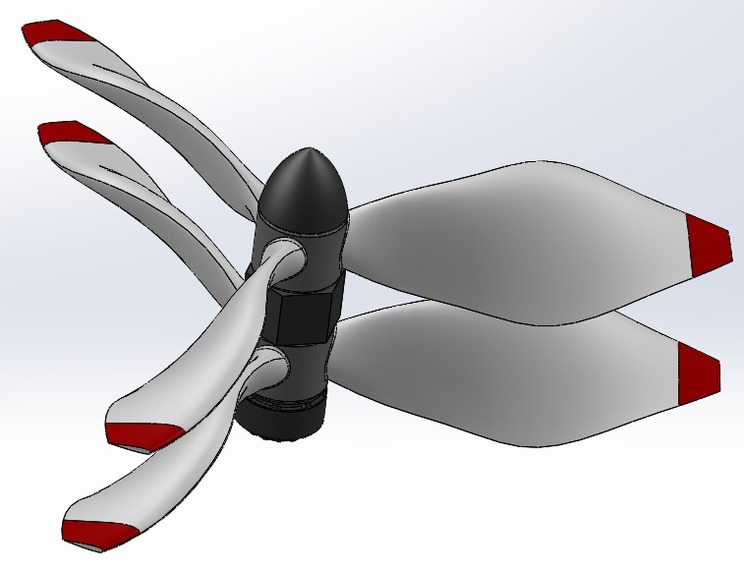
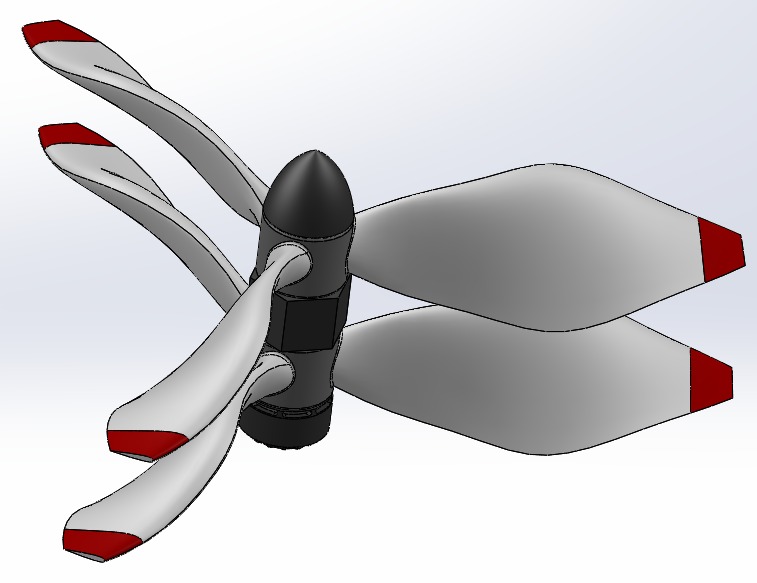
This is the propeller assembly. There are 8 motors & each motor has 2 propellers on it.
-
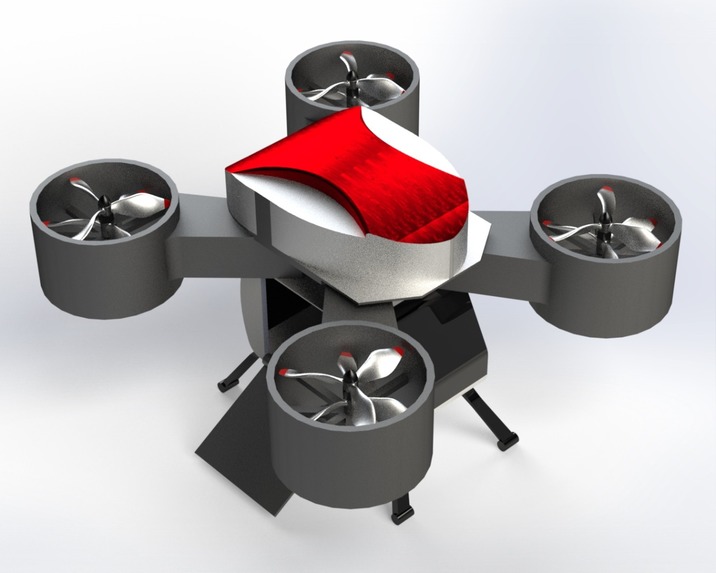
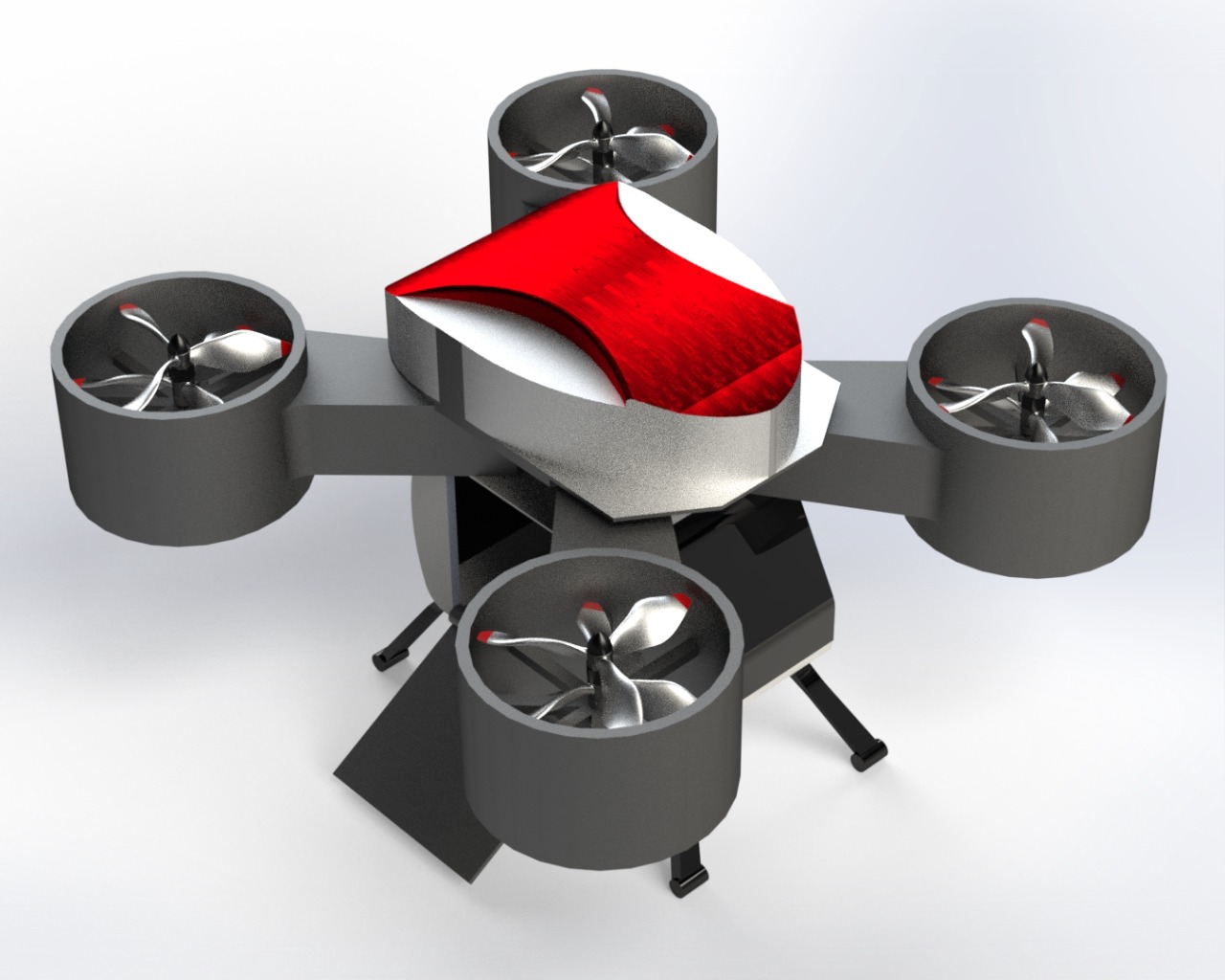
This is the final body assembly CAD.
Inspiration
Since childhood, we all had seen ambulances being stuck in traffic for long while the patient battles for life. This problem statement given by DRDO was quite relatable to all of us and thus it became our inspiration to solve it.
What it does
The planned solution is expected to be able to carry the patient in minimum expected time so as to not miss the golden hour from the location of injury to the appropriate hospital.
How we built it
1) We are building its CAD model using SolidWorks. 2) Its cruising autonomous flight will be achieved by Object Avoidance & SLAM. 3) Its flight time will be achieved through 2 battery packs. 4) Market available components will be used for calculations & predicted prototyping.
Challenges we ran into
1) Designing a CAD model is sometimes too much time taking. 2) A small mistake in code can play with Object Avoidance & SLAM at large scale. 3) It was difficult to obtain some formulas needed for the calculations. 4) Developing a battery management system which automatically switches between battery packs is quite to difficult to make. 5) The calculations when using a pure battery based propulsion system are too tight.
Accomplishments that we're proud of
1) CAD Model Development 2) Working of Code 3) Calculations being precise and accurate. 4) Simulation
What we learned
Non-Technical 1) Project Management 2) Team Work Technical 1) SolidWorks 2) Object Avoidance Techniques & SLAM 3) PID Control 4) Battery Pack & Battery Management System Development 5) Motor Mixing Algorithms
What's next for HW C3
1) Prototyping 2) Implementation of Reinforcement Learning to improve fault tolerance capacity as well as improve the level of output obtained by input from sensors, stereo cams & LiDAR.
Built With
- airsim
- c++
- ecalc
- python
- solidworks
- unreal-engine


Log in or sign up for Devpost to join the conversation.