Inspiration
As a homeowner frustrated by unpredictable HVAC costs and confusing repair advice, I saw a gap: everyday people lack accessible, data-driven tools to understand their HVAC systems. Watching neighbors overspend on unnecessary repairs or ignore energy waste sparked the idea to build a tool that demystifies HVAC care for regular homeowners.
What it does
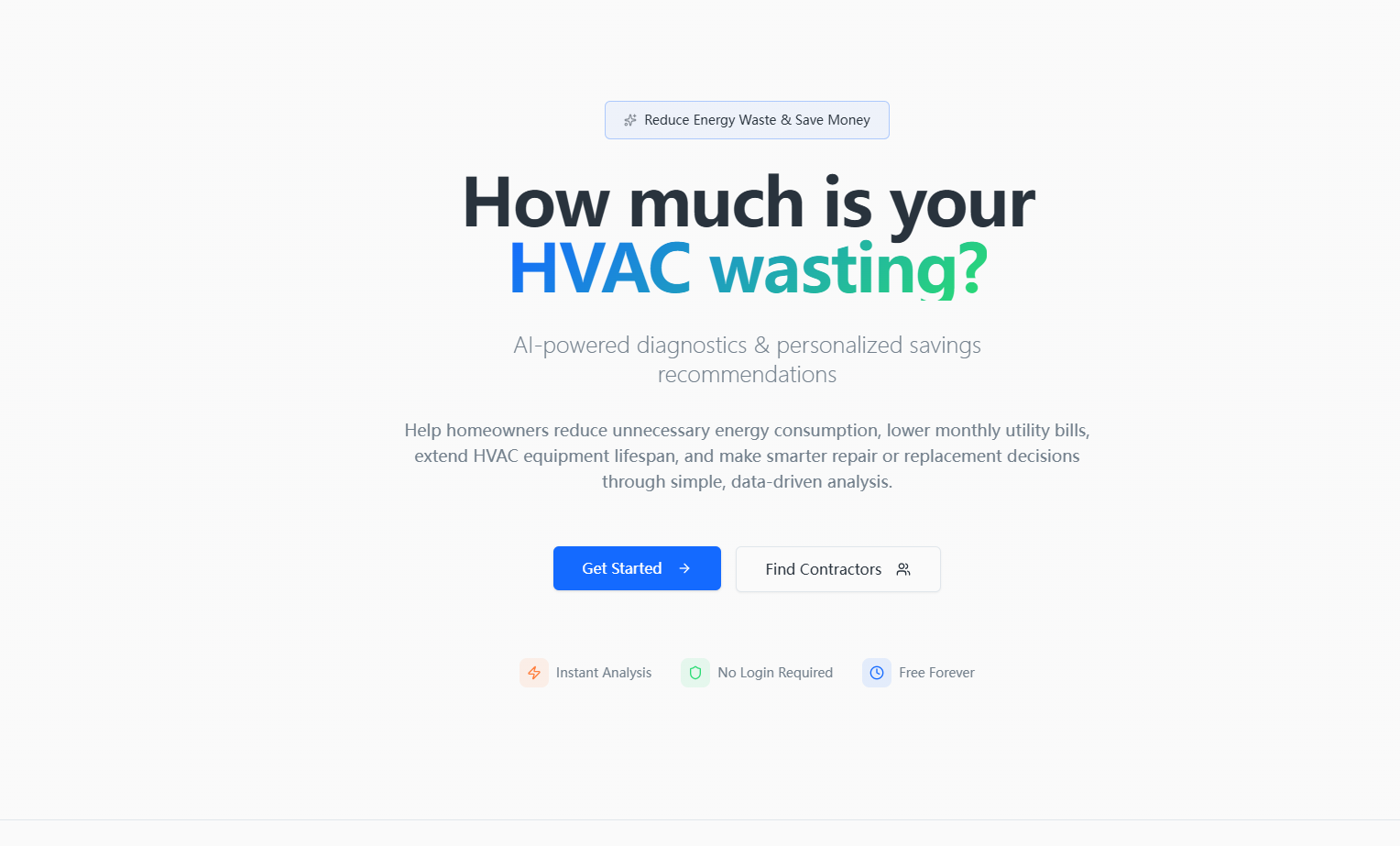
HVAC Optimizer empowers homeowners to assess HVAC efficiency, track filter replacement schedules, optimize thermostat settings, decide between repairs/upgrades, and connect with qualified local contractors—all without professional HVAC expertise. Every feature is designed to turn guesswork into clear, actionable steps to cut energy bills.
How we built it
We started by mapping core homeowner pain points, then built a responsive web stack with React for the frontend and Python/Node.js for backend AI-driven calculations. We integrated weather and location APIs to personalize recommendations, used Chart.js for intuitive data visualizations, and structured PostgreSQL databases to store user inputs and contractor data.
Challenges we ran into
Calibrating the efficiency score algorithm to account for regional climate differences and home variables (size, insulation) was tricky—we tested dozens of data combinations to ensure accuracy. Also, balancing simplicity (no login required) with personalized results required creative frontend design to minimize input fields while maximizing insight.
Accomplishments that we're proud of
We created a tool that’s fully usable on mobile/desktop, delivers efficiency scores and savings estimates in seconds, and translates complex HVAC logic into plain language. Most importantly, beta testers reported feeling confident making repair/upgrade decisions—something they’d struggled with before.
What we learned
We deepened our understanding of HVAC system mechanics and energy efficiency metrics, and learned to prioritize user experience over technical complexity. We also discovered how critical localized data (climate zones, regional contractor availability) is to making the tool truly useful for homeowners across different areas.
What's next for this project
We plan to add smart thermostat integration to auto-deploy optimized schedules, expand contractor vetting with real customer reviews, and incorporate seasonal energy-saving tips tailored to each climate zone. Long-term, we aim to roll out features for rental property owners to manage multiple HVAC systems at once.

Log in or sign up for Devpost to join the conversation.