-
-
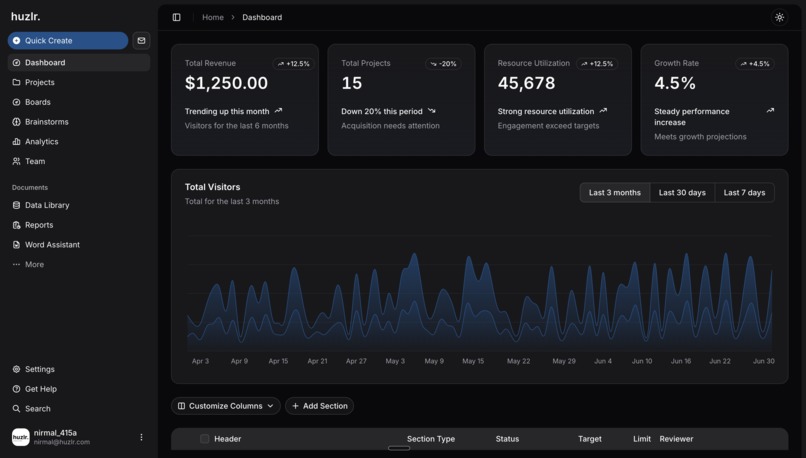
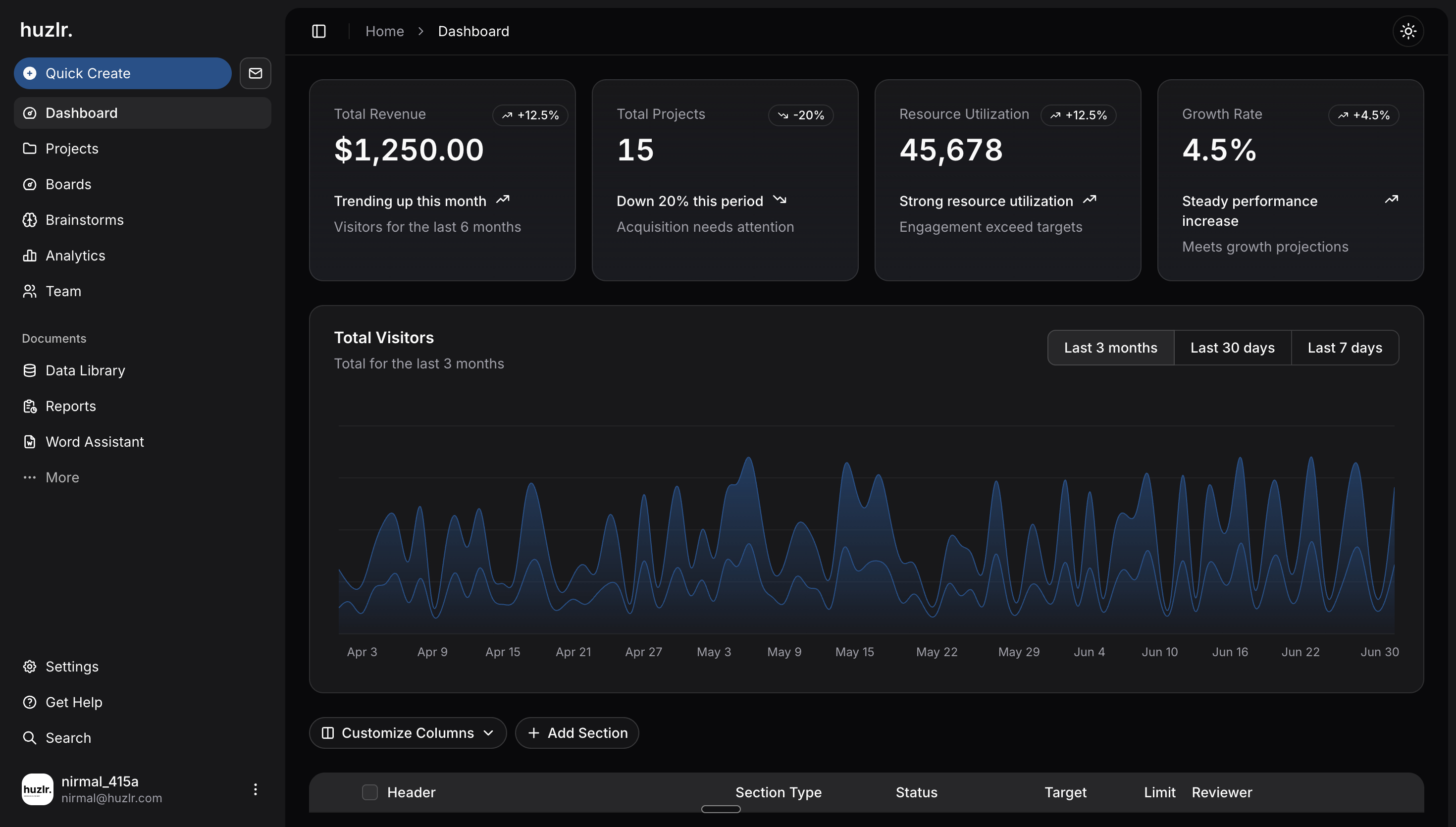
huzlr home dashboard
-
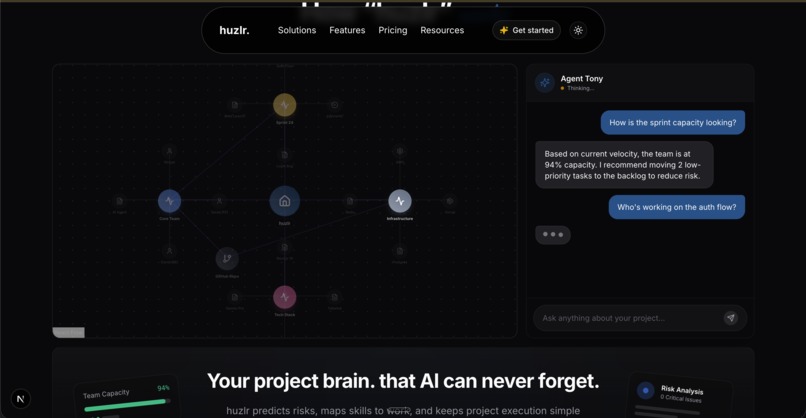
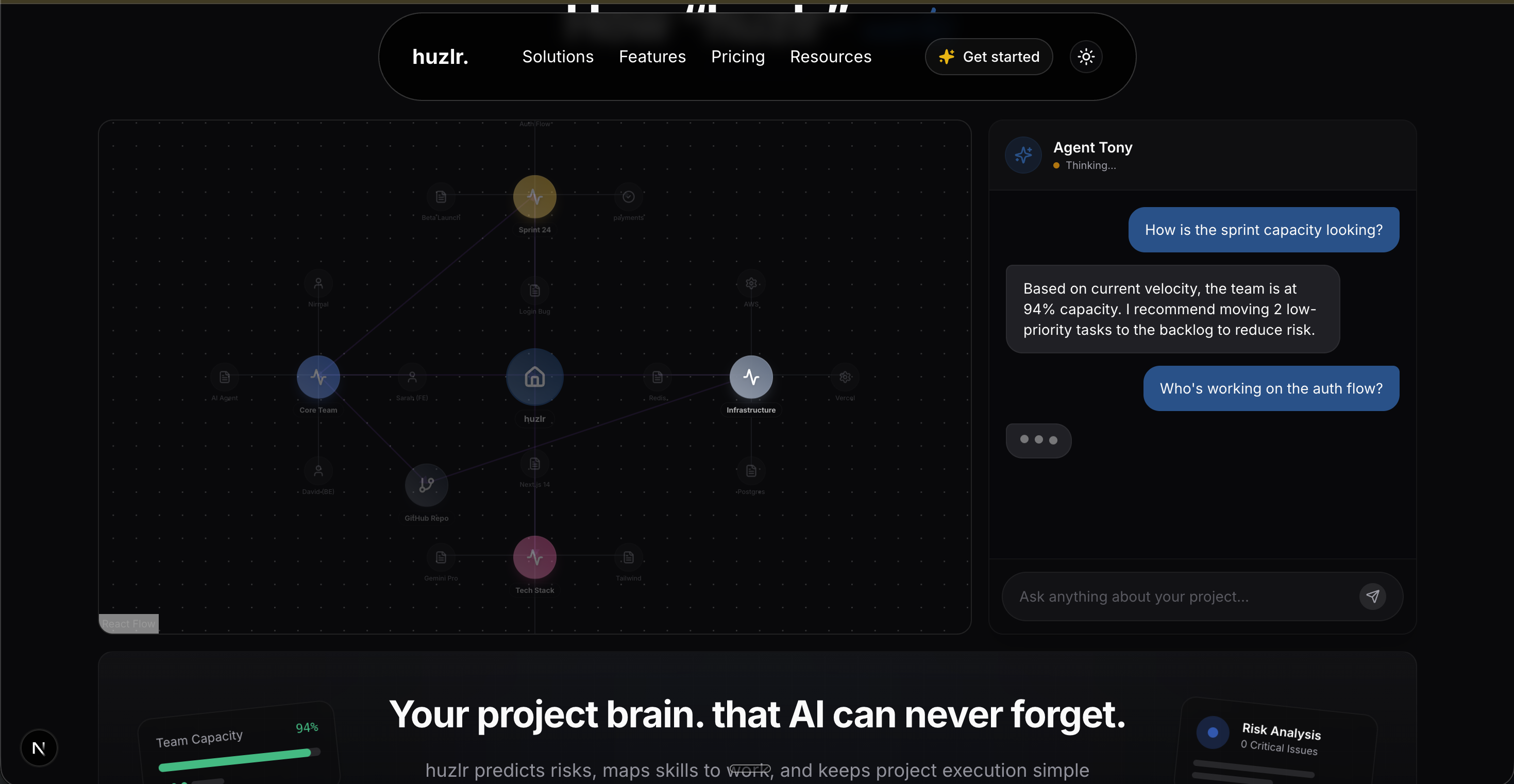
How huzlr works?
Inspiration
huzlr was inspired by a recurring frustration we saw across teams: projects rarely fail because tasks are not tracked. They fail because decisions are made too late.
Project managers are expected to predict risks, balance trade offs, and manage client expectations, but most tools only show what has already happened. We wanted to build something that helps project managers think ahead, not just react.
What it does
huzlr is an AI powered project intelligence layer that sits above existing tools like Jira. It helps teams:
- Map skills to tasks intelligently
- Anticipate delivery risks early
- Understand trade-offs before they become problems
- Move smoothly from planning to execution to delivery
Instead of overwhelming users with dashboards, huzlr provides clear guidance with minimal interaction, so teams can focus on outcomes, not administration.
How we built it
We built huzlr around a core belief: project intelligence must be designed, not bolted on. At the foundation is a knowledge graph driven model that connects people, skills, tasks, dependencies, and risks. On top of this, we layered custom AI processes that continuously reason over the project as it evolves. We deliberately kept integrations light and the UI simple, letting the intelligence operate quietly in the background while users stay in control.
Challenges we ran into
One of the biggest challenges was resisting feature bloat. It was tempting to replicate familiar project management features, but we repeatedly chose to remove complexity instead of adding it. Designing AI guidance that feels helpful and not intrusive was another major challenge.
We also had to clearly position huzlr as a layer above existing tools, not a replacement, which required careful product and messaging decisions.
Accomplishments that we're proud of
- Defined a clear category around project intelligence, not project management
- Designed a lean, intuitive UI with minimal clicks
- Built a reasoning-first architecture that is hard to replicate with simple features
- Established strong design partner interest from delivery-focused teams
- Created a product that prioritizes clarity over control
What we learned
We learned that:
- Simplicity is a competitive advantage
- AI is most powerful when it stays invisible
- Project managers do not want more tools. They want better decisions
- Early problem framing matters more than early feature building
Most importantly, we learned that intelligence, not automation, is what teams value most.
What's next for huzlr
Next, we are focused on:
- Completing the full project lifecycle experience with design partners
- Refining risk prediction and skill to task mapping accuracy
- Onboarding the first 500 customers
- Preparing for a focused pre seed raise to scale responsibly
Our goal is to make huzlr an indispensable thinking layer for every serious delivery team.

Log in or sign up for Devpost to join the conversation.