-
-
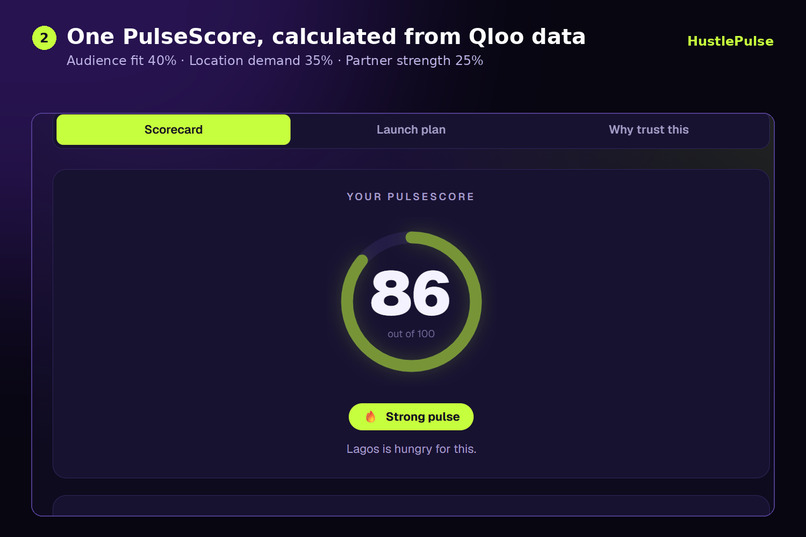
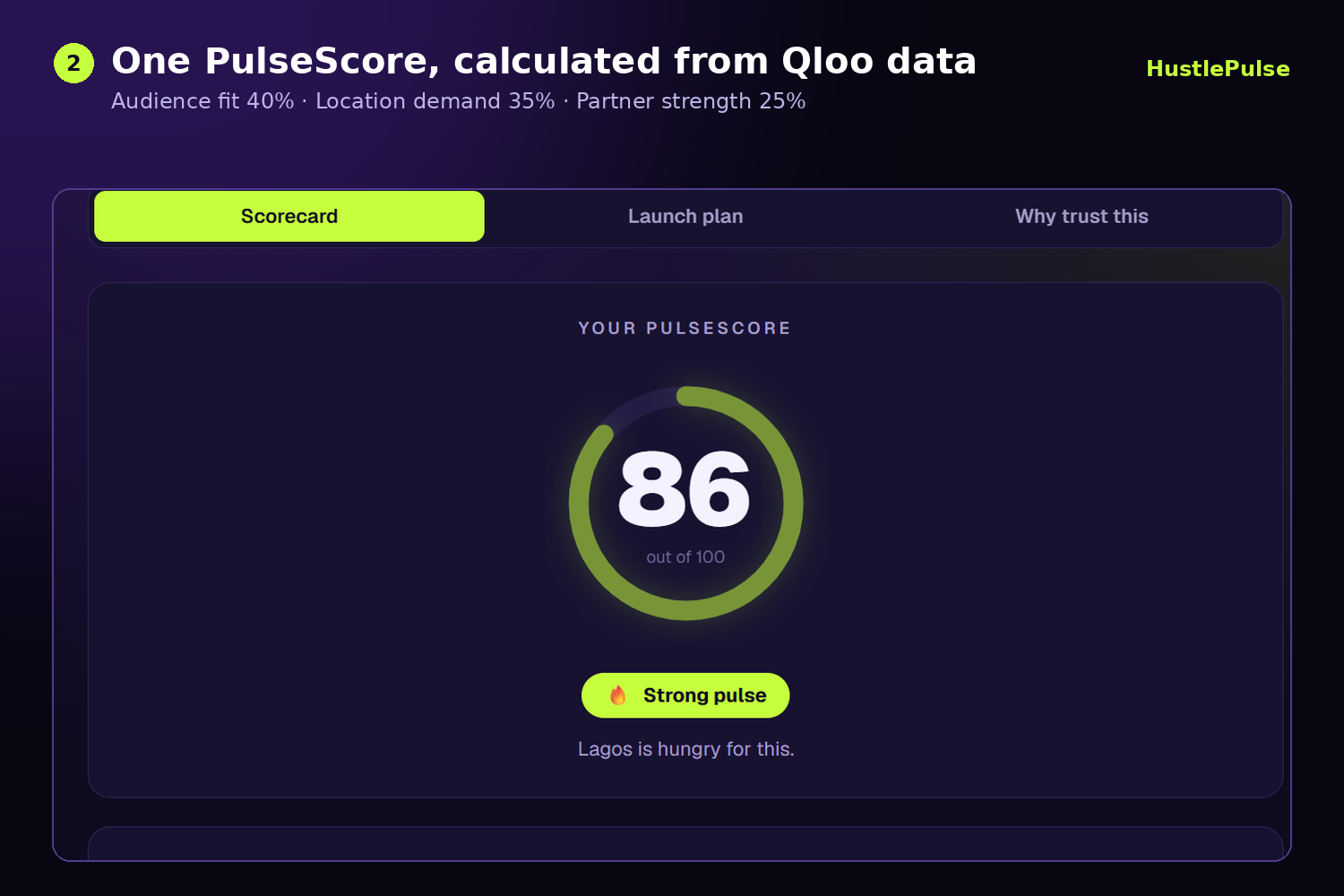
Your PulseScore, calculated in code from Qloo's numbers
-
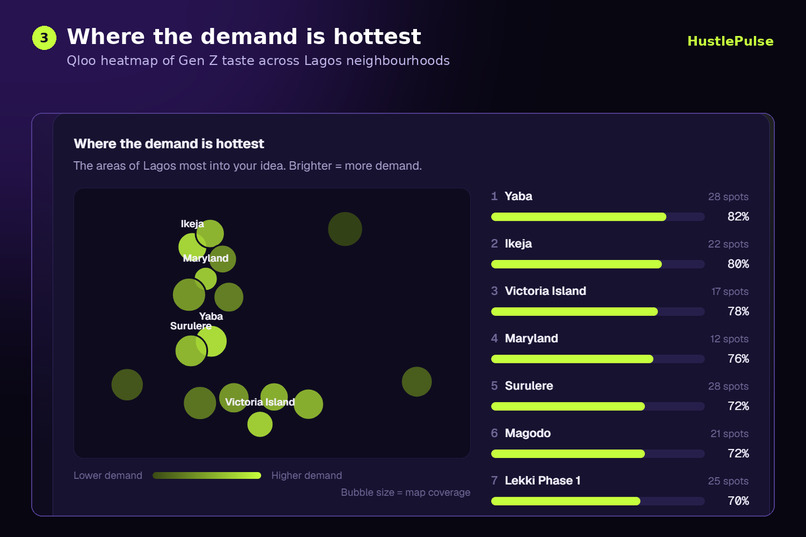
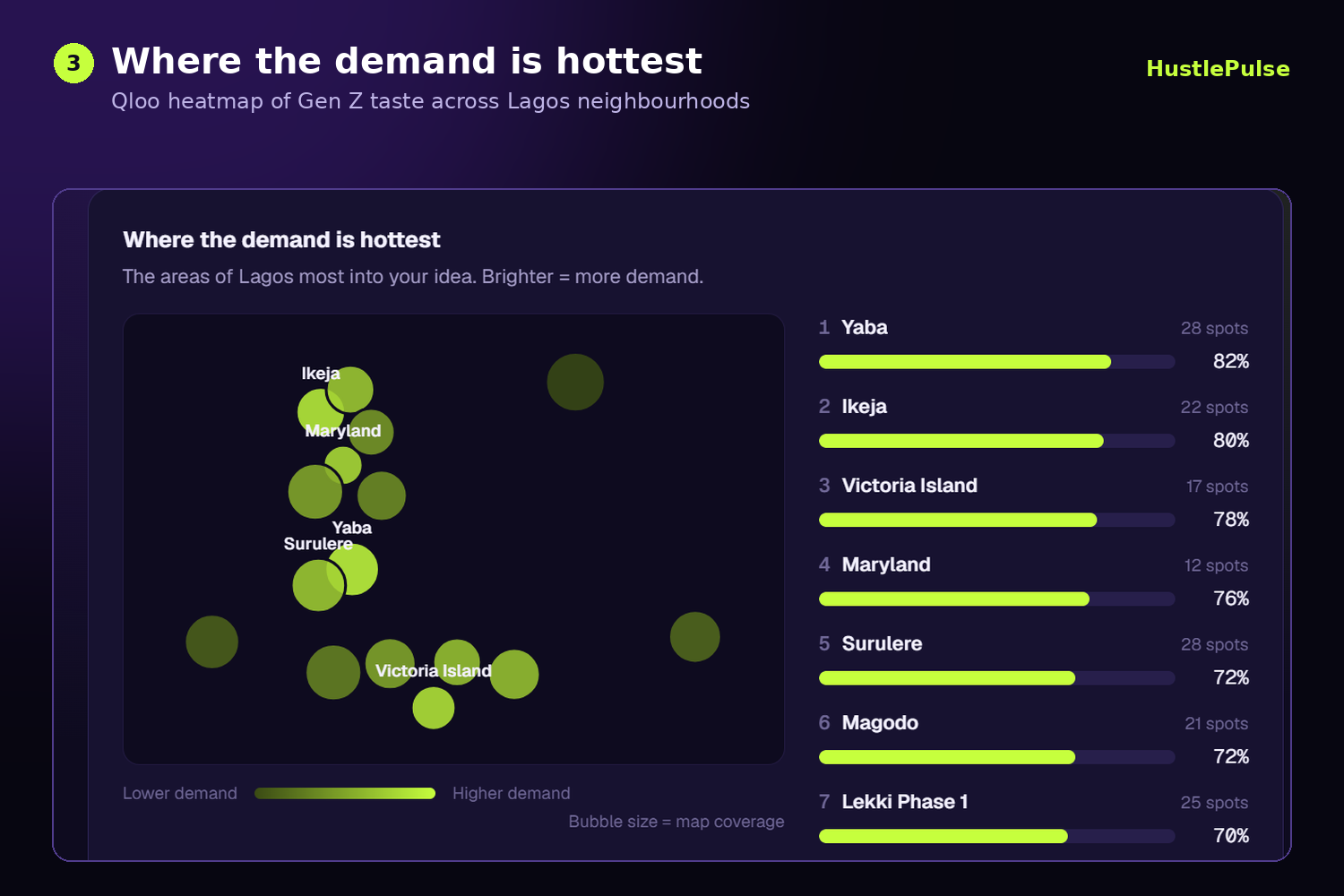
Where the demand is hottest: Qloo heatmap of Lagos neighbourhoods
-
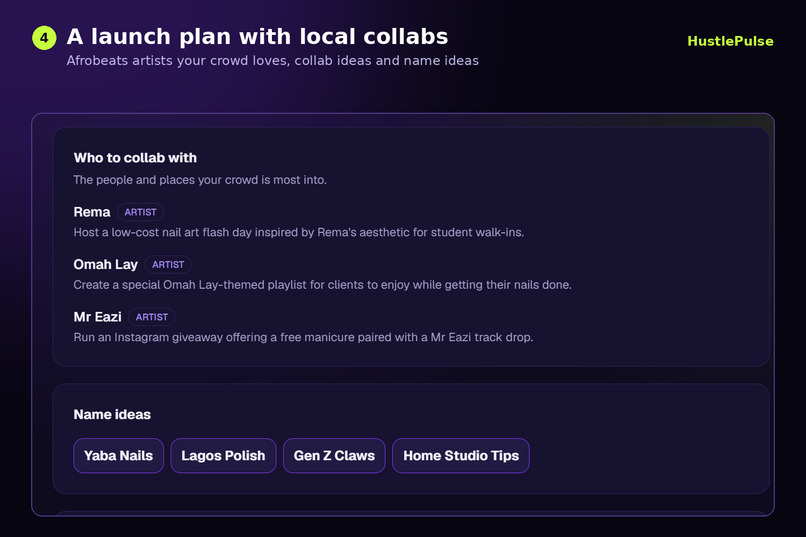
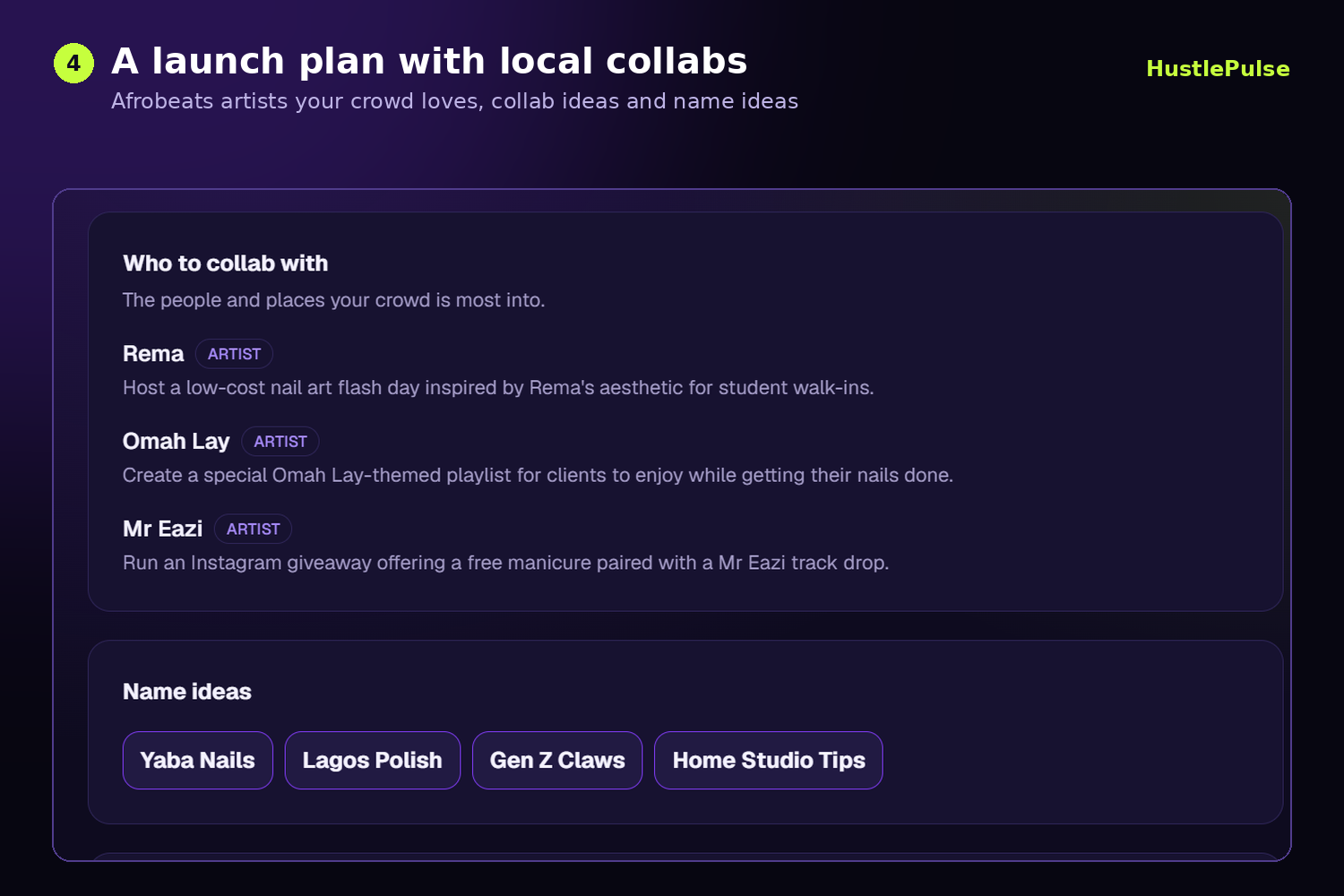
Launch plan with local Afrobeats collabs and name ideas
-
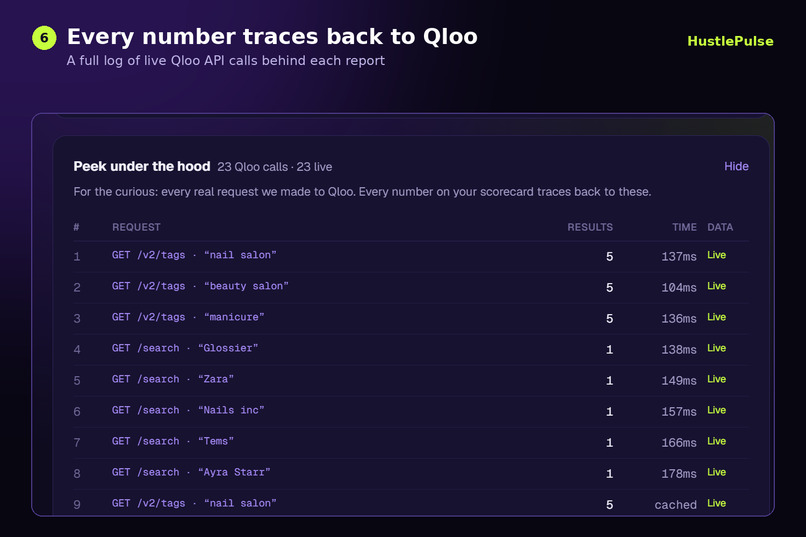
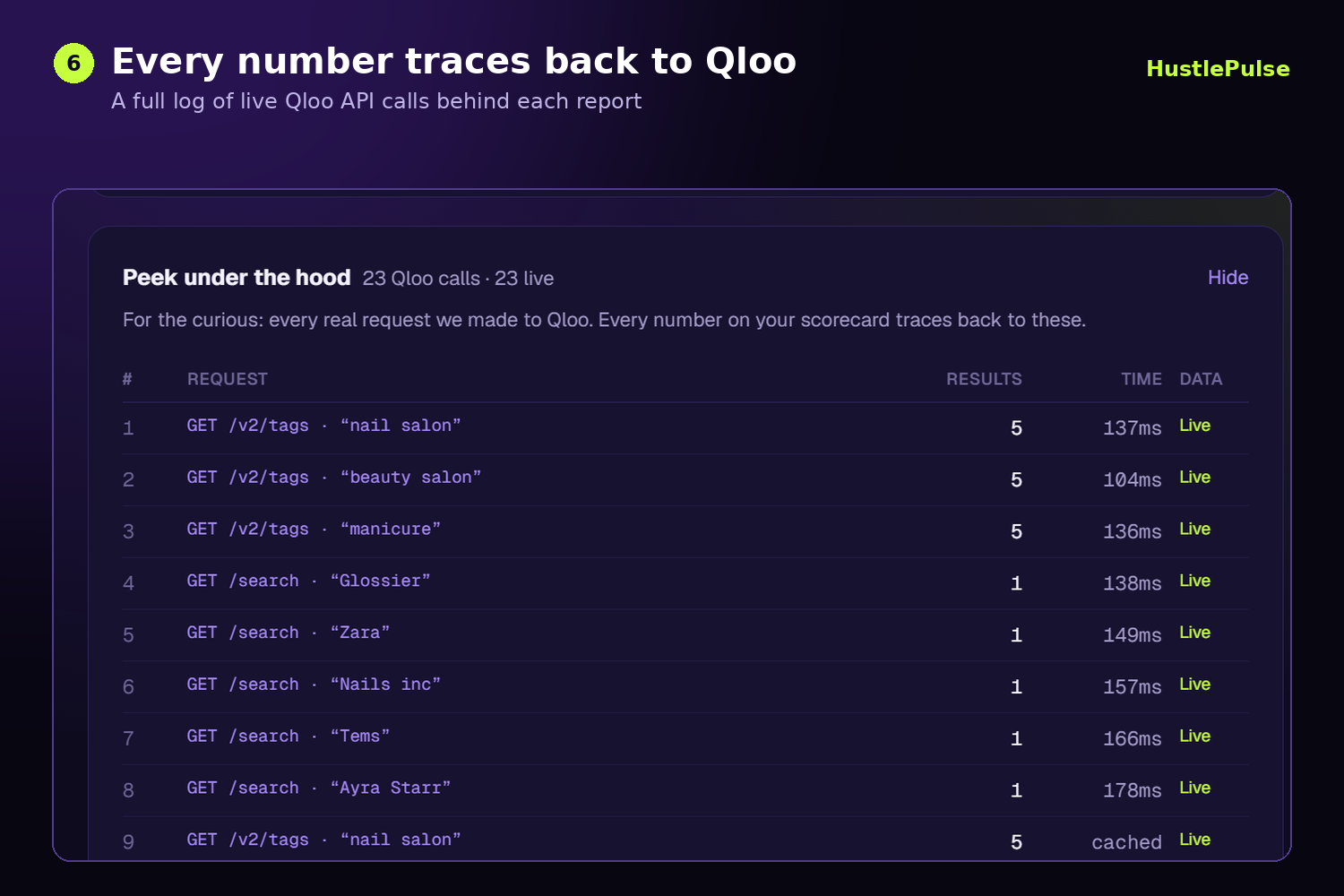
Every number traces back to a live Qloo API call
-
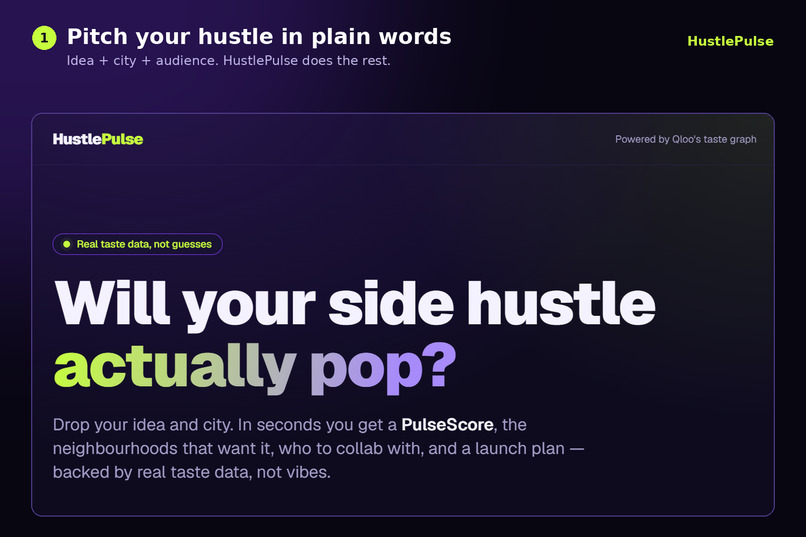
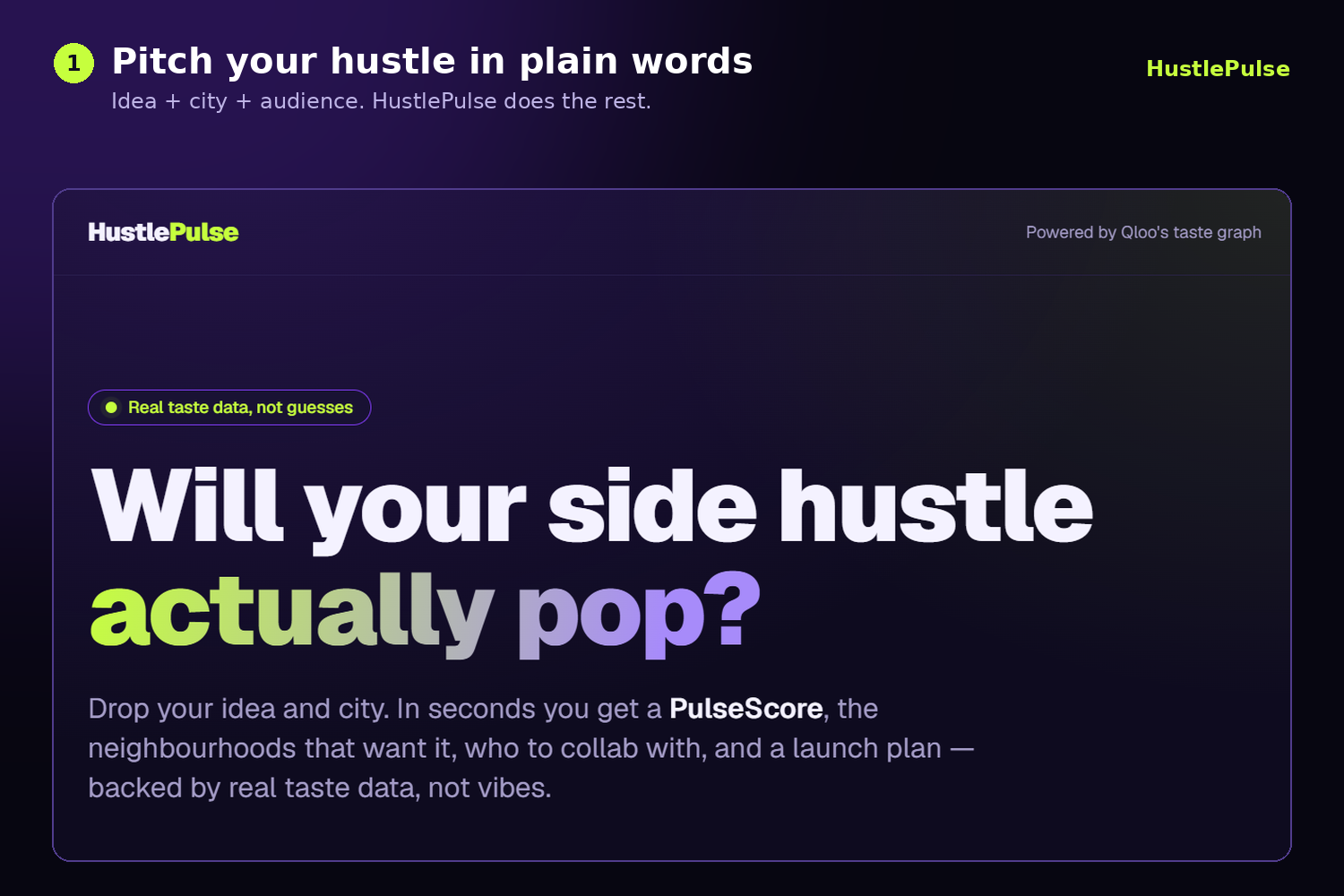
Pitch your hustle: idea, city and audience in plain words
-
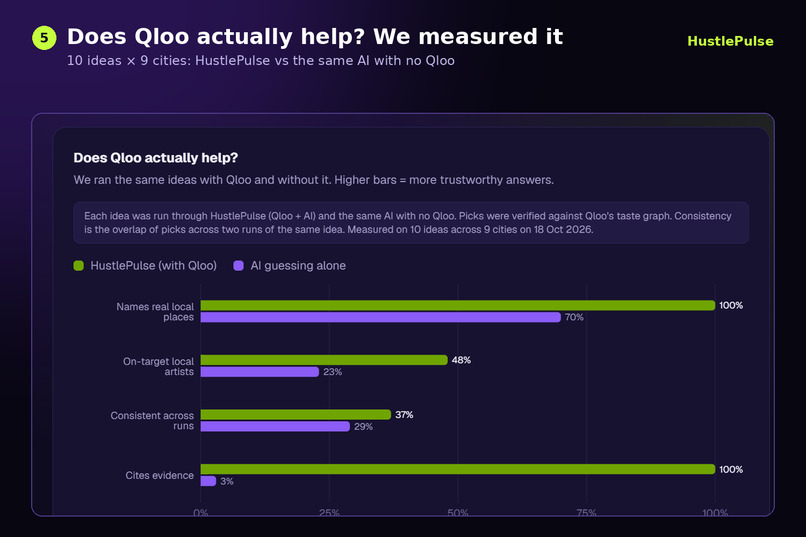
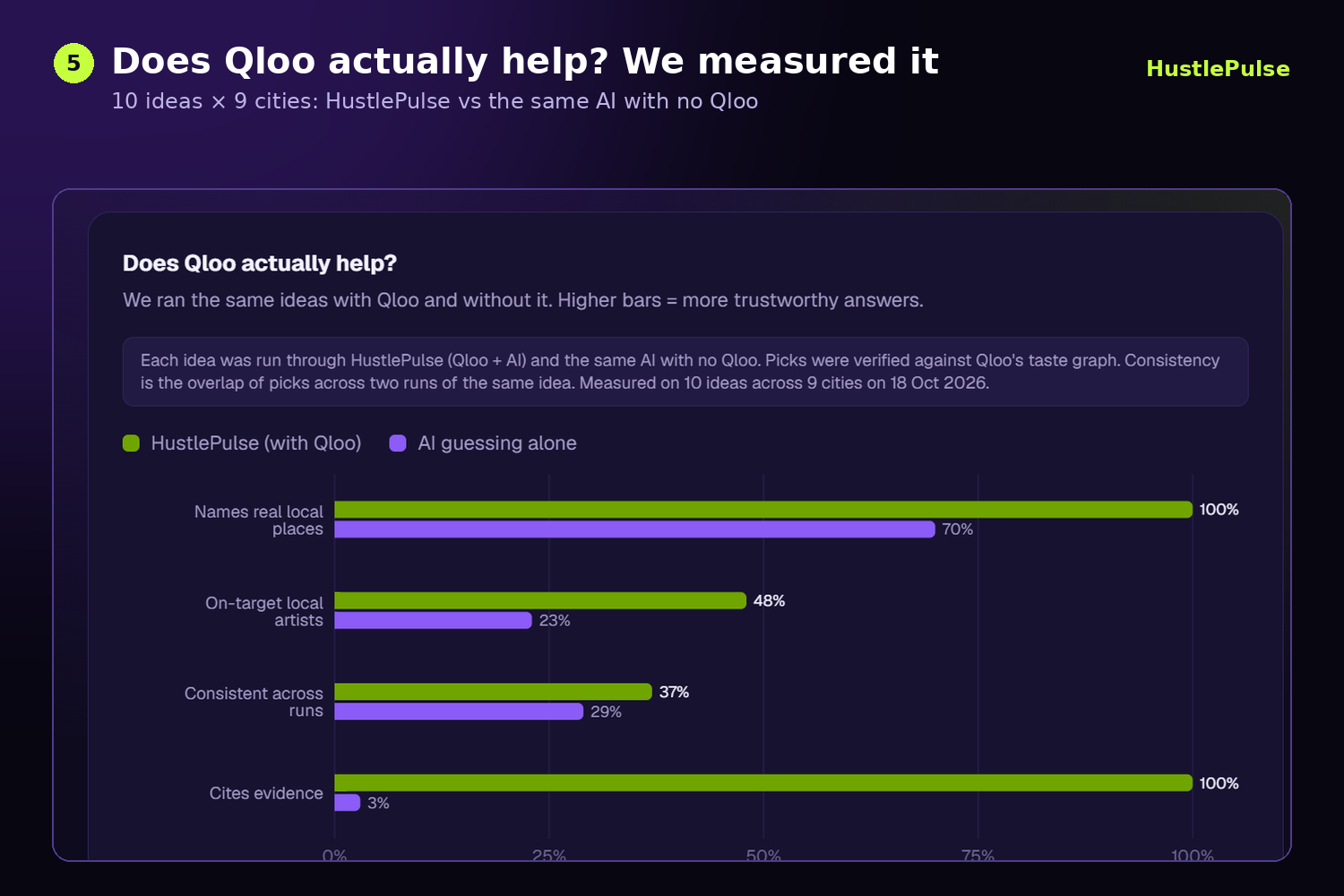
Benchmark: HustlePulse (Qloo + AI) vs the same AI with no Qloo
Inspiration
Gen Z runs on side hustles: thrift drops, merch, food delivery, nail sets, pop-ups. But most of them launch on gut feeling, and a lot of young founders lose money finding out there was never local demand. As a data analyst in Nigeria, I wanted to give them the kind of market evidence big brands pay agencies for, in a few seconds and for free.
What it does
Describe your hustle, pick your city and target audience, and HustlePulse's agent checks the pulse of your idea using Qloo's taste graph:
- Agent at work: a live trace of every Qloo call as it runs, so you can see exactly where each number comes from.
- PulseScore (0–100): 40% audience fit + 35% location demand + 25% partner strength. The score is calculated in code from Qloo's numbers, not invented by the AI.
- Neighbourhood demand: a heatmap of where your audience's taste over-indexes, with the top 5 neighbourhoods ranked.
- Comparable brands and partner picks: brands your future customers already love, plus artists, podcasts and venues to collab with.
- Customer Taste DNA: a cross-domain taste profile of the people you're selling to.
- Launch plan: where to launch first, who to collab with, name ideas and a week-by-week first-month checklist.
- Best-city comparison and shareable report links with social cards, so a founder can send their result to a friend or co-founder.
How I built it
- Next.js + TypeScript + Tailwind, deployed on Vercel.
- Gemini via the Vercel AI SDK as a tool-calling agent: it turns a plain-language idea into Qloo taste tags, comparable brands and local artists, then calls Qloo.
- Qloo APIs:
/v2/tagsand/searchto resolve the idea into Qloo entities, then/v2/insightsfor Gen Z brand, artist, podcast and place affinity and for city heatmaps (urn:heatmap). - Recharts for the scorecard and benchmark charts, Upstash Redis to save reports so share links show the exact same result, and Zod to validate data.
Why Qloo matters
I benchmarked HustlePulse against the same AI model with no Qloo data, across 10 hustle ideas in 9 cities:
| What we measured | HustlePulse (Qloo + AI) | AI only |
|---|---|---|
| Names real local places | 100% | 70% |
| Picks on-target local artists | 48% | 23% |
| Consistent across repeat runs | 37% | 29% |
| Cites evidence (real numbers) | 100% | 3% |
Without Qloo, the AI invents plausible-sounding places and artists and backs nothing with evidence. With Qloo, every recommendation is grounded in real taste data.
Challenges I ran into
- Making the results truly local. My first tests in Lagos returned US podcasts and Western brands. I added location signals to the Qloo queries, then found that Qloo's podcast catalogue is US-centric and that it has no local-brand data for African cities. Instead of faking it, HustlePulse hides podcasts outside the US and labels brands honestly as "Global brands they love" in Lagos and Accra, while London shows truly local streetwear brands. I'd rather be transparently rule-based than silently wrong.
- Keeping artist picks local. In some runs, Accra drifted to US rappers. I anchored the artist query on the city and the target age group, so picks now stay West African (Rema, Omah Lay, Fireboy DML, Mr Eazi).
- Reliability under load. Gemini's free tier sometimes throttled the agent and a check could hang. I added a timeout and retry, with a fallback to the Qloo-backed pipeline, so users always get a result instead of an endless spinner. I also removed unsupported calls and filtered hotels out of the venue picks.
- Trust. It was tempting to let the AI produce the score. I kept the PulseScore in code and showed every Qloo call, so users and judges can check the numbers.
What I learned
How to design an agent around a real data source instead of letting the model guess; how to turn taste and affinity data into a simple score a non-technical founder can understand; and how to measure an AI product honestly with a benchmark.
What's next
More African cities, a WhatsApp version so founders can check an idea in a chat, and tracking how a hustle's pulse changes over time.
Built With
- gemini
- next.js
- qloo
- react
- recharts
- tailwindcss
- typescript
- upstash
- vercel
- vercel-ai-sdk
