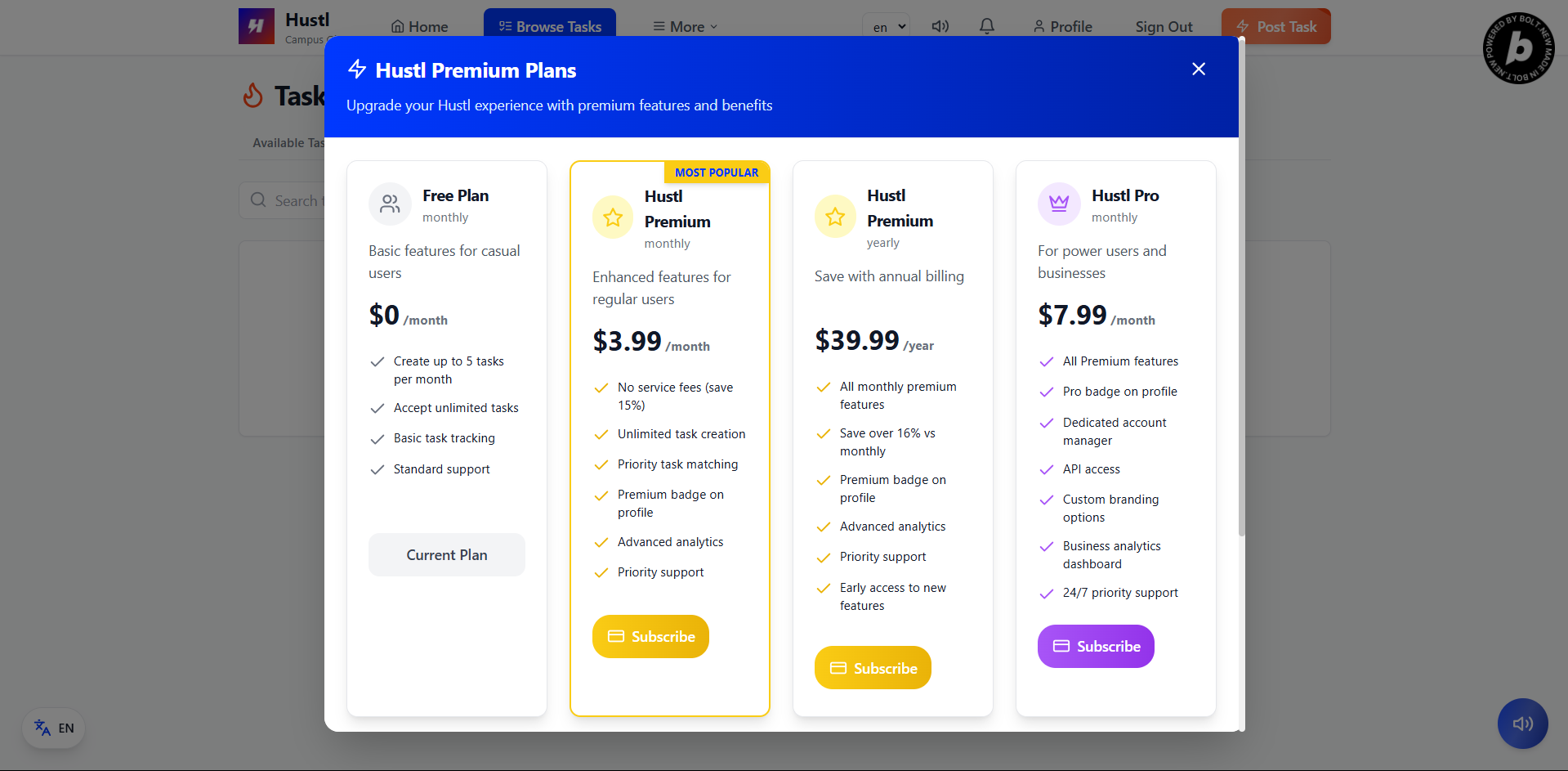
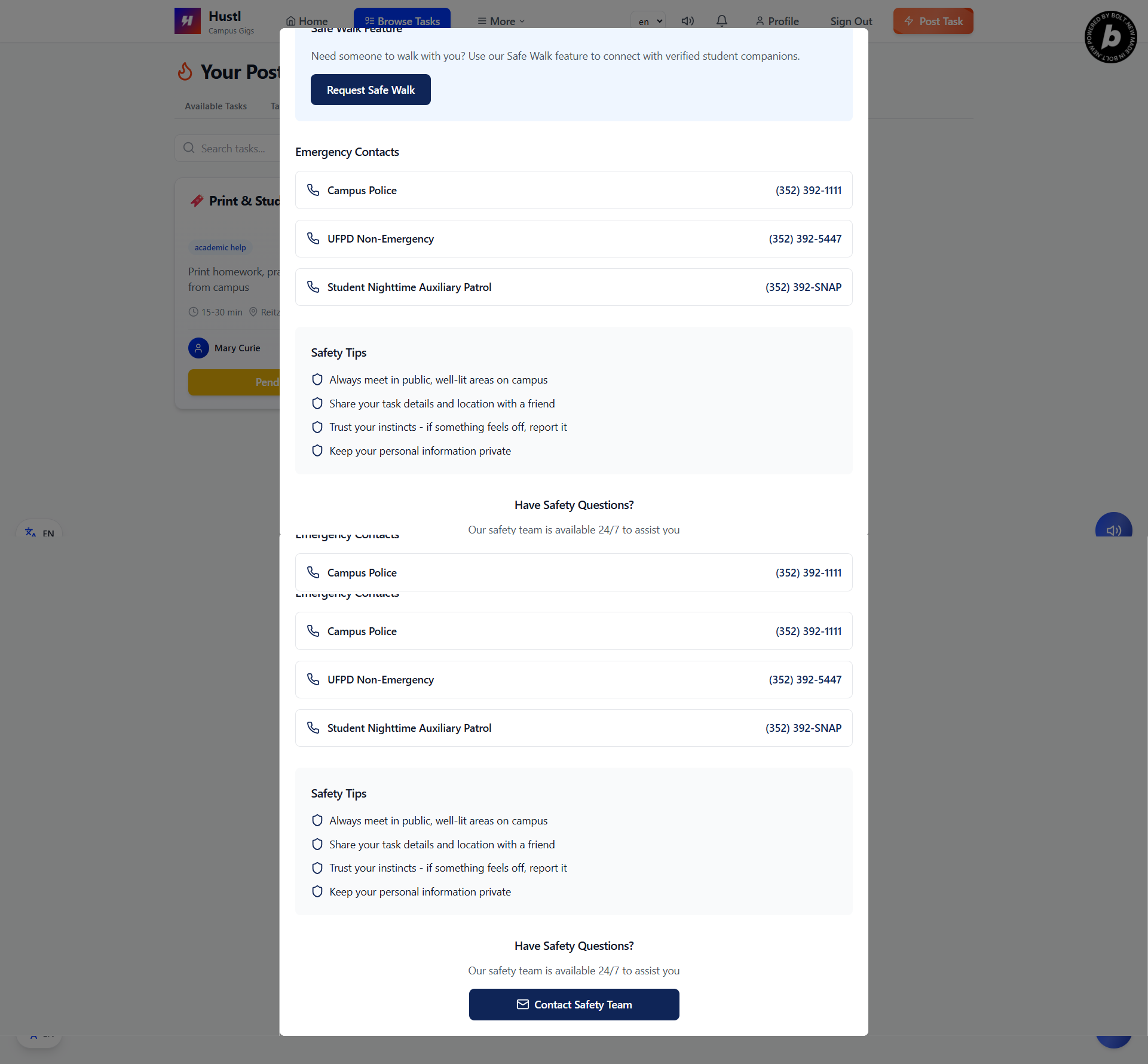
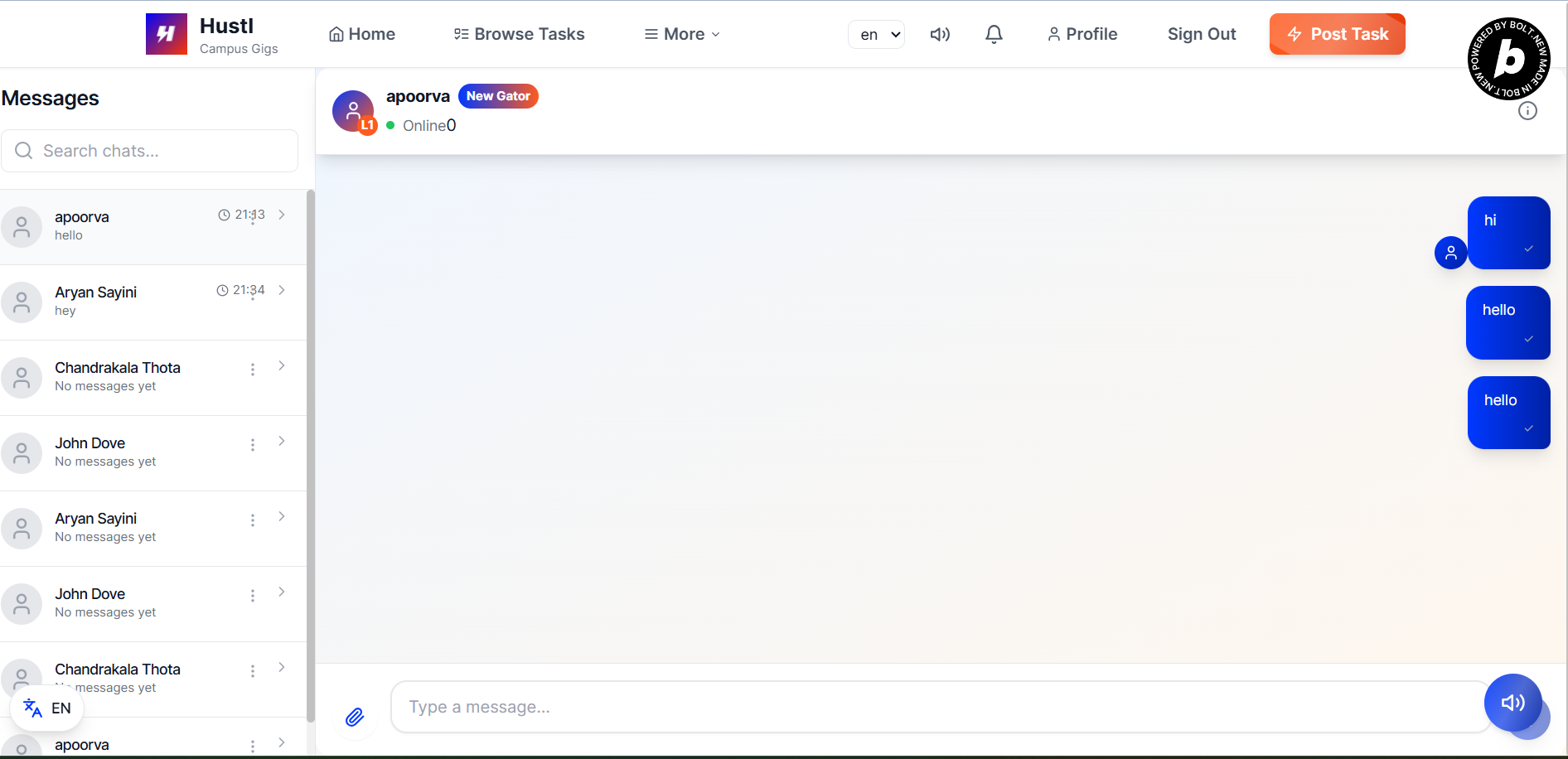
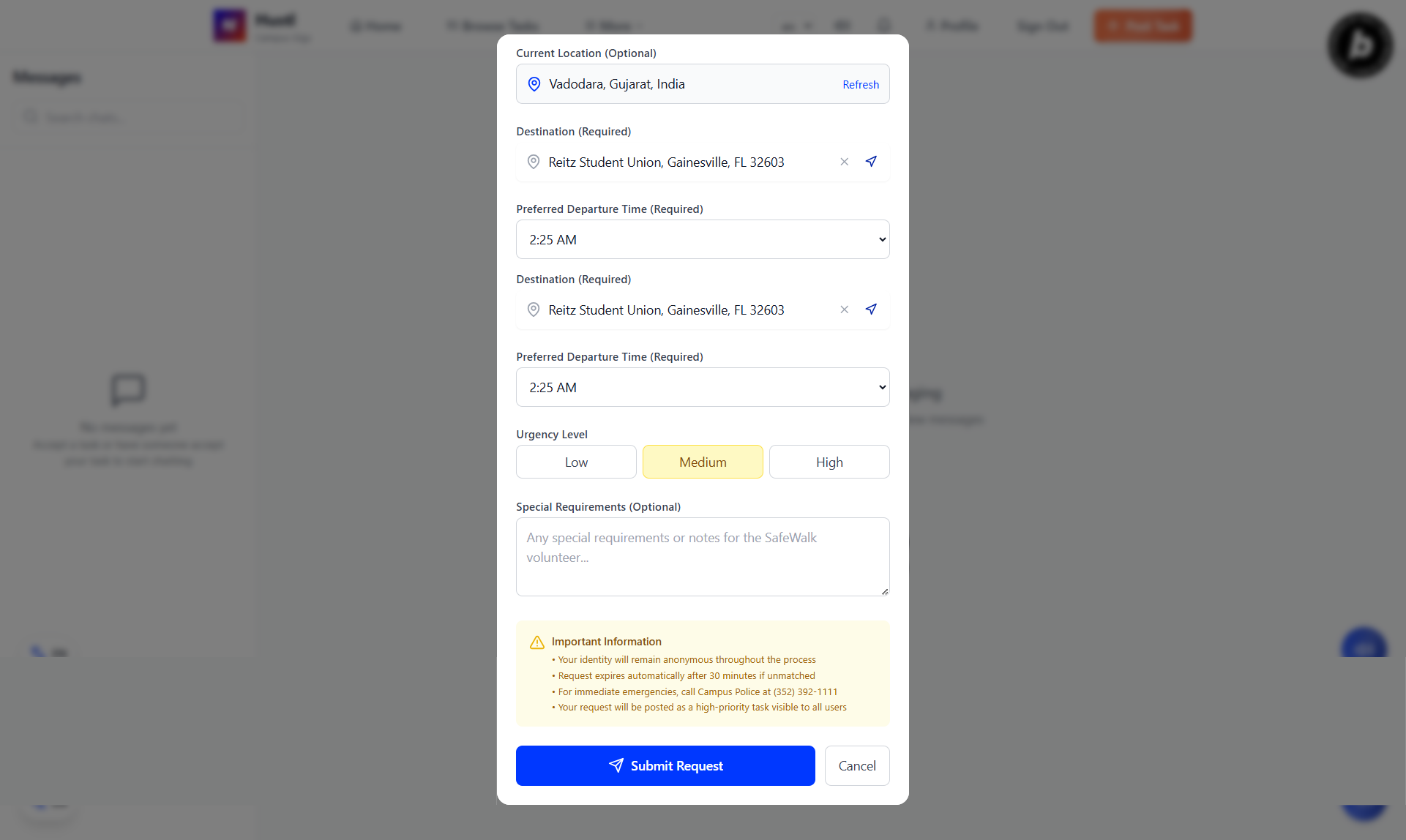
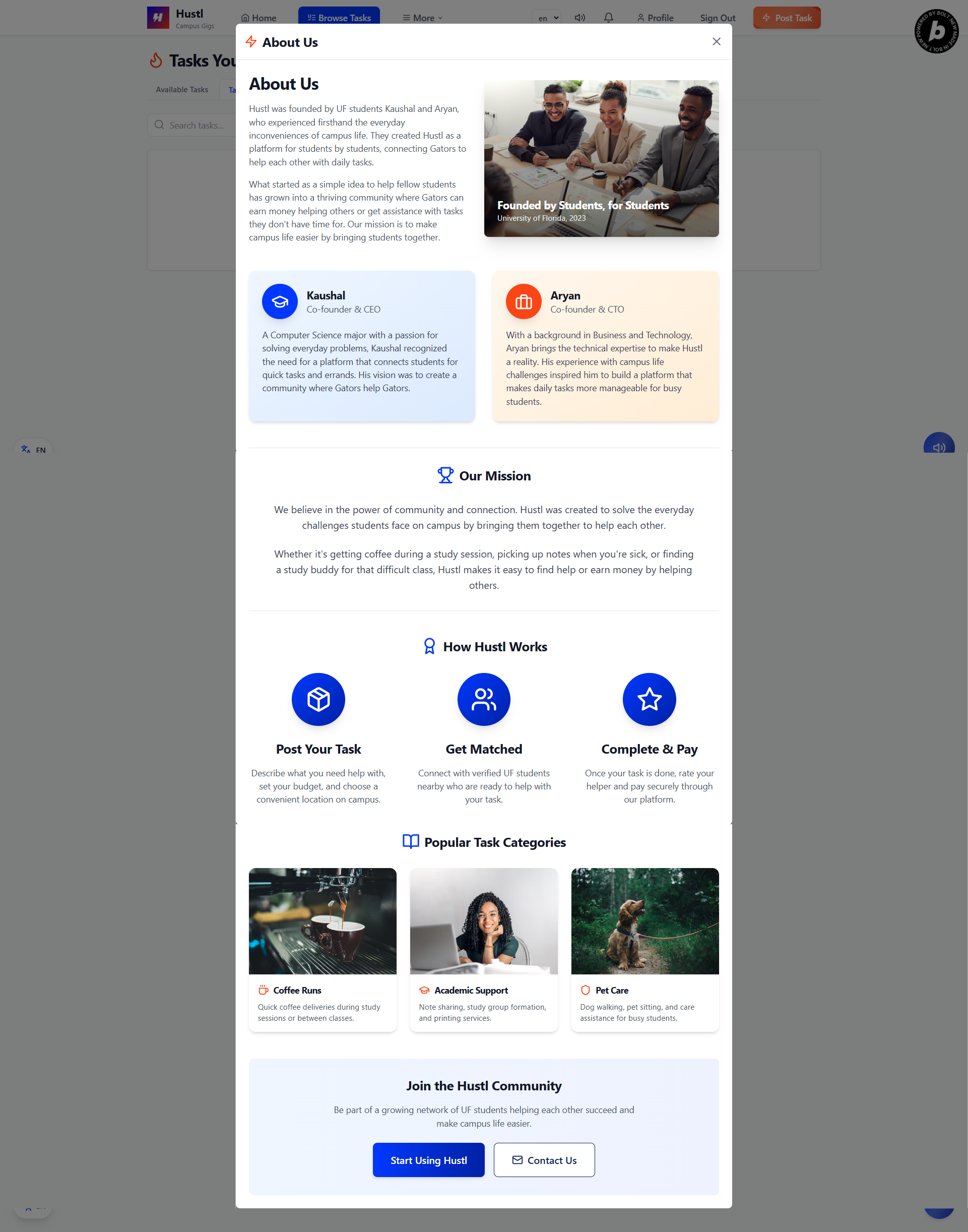
The idea for Hustl was sparked during a casual conversation with my teammate Kaushal, who wished he had someone to motivate him for daily workouts on campus. At the same time, I was struggling to find a Python study buddy to help me scrape data for a side project. We realized many students face similar hyperlocal needs—be it academic, social, or practical—but lack an easy, trusted way to connect with nearby peers.
This got me thinking: what if we could turn the Google Map into a real-time layer for micro-help—where students could ask for or offer assistance, right where they are? That’s how Hustl was born.
While our second teammate Farhaan and our third teammate Samina helped brainstorm and validate early use cases, I independently designed, built, and implemented the full-stack MVP using Google Maps APIs, focusing on making the experience intuitive, secure, and gamified for the students at University of Florida.
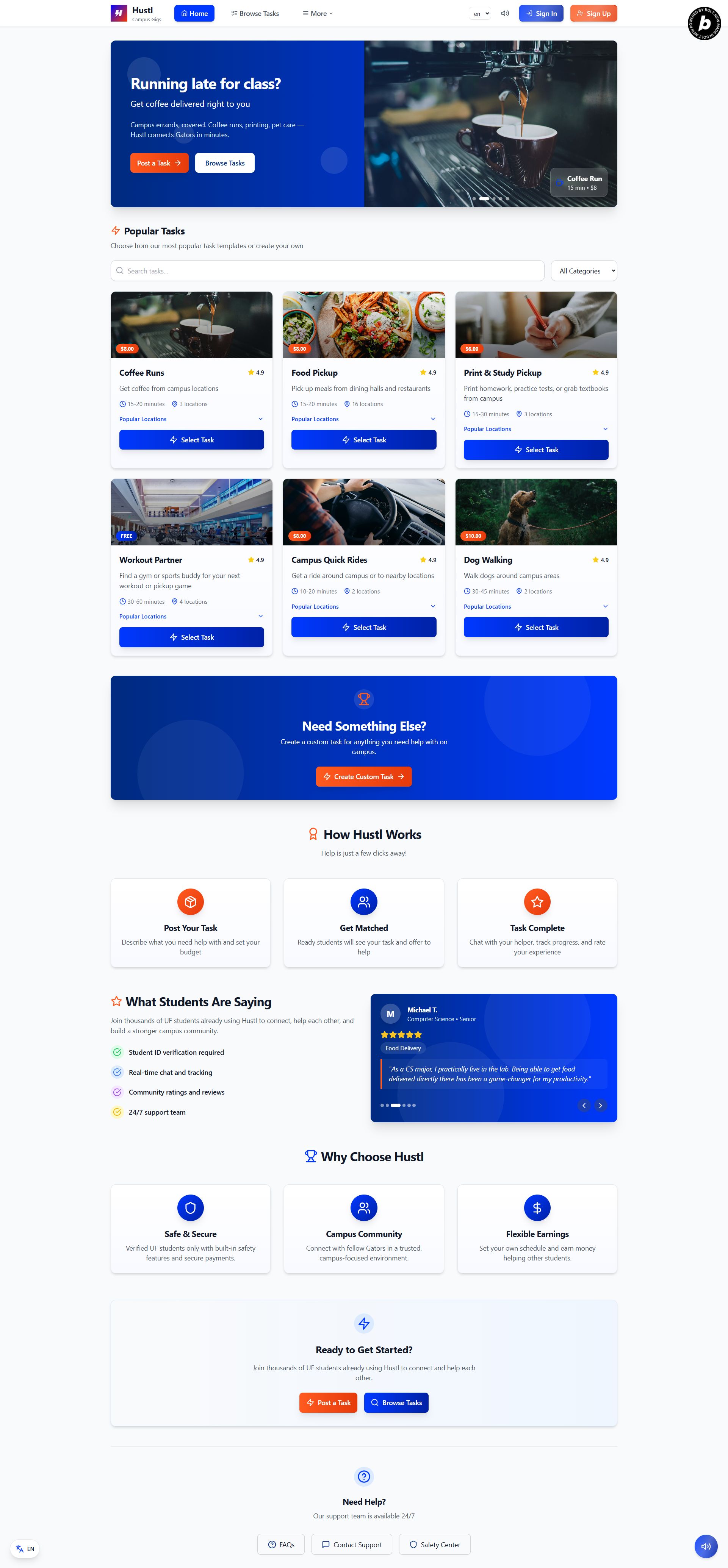
🧭 What it does Hustl is a Google Maps-powered mutual aid app that enables UF students to:
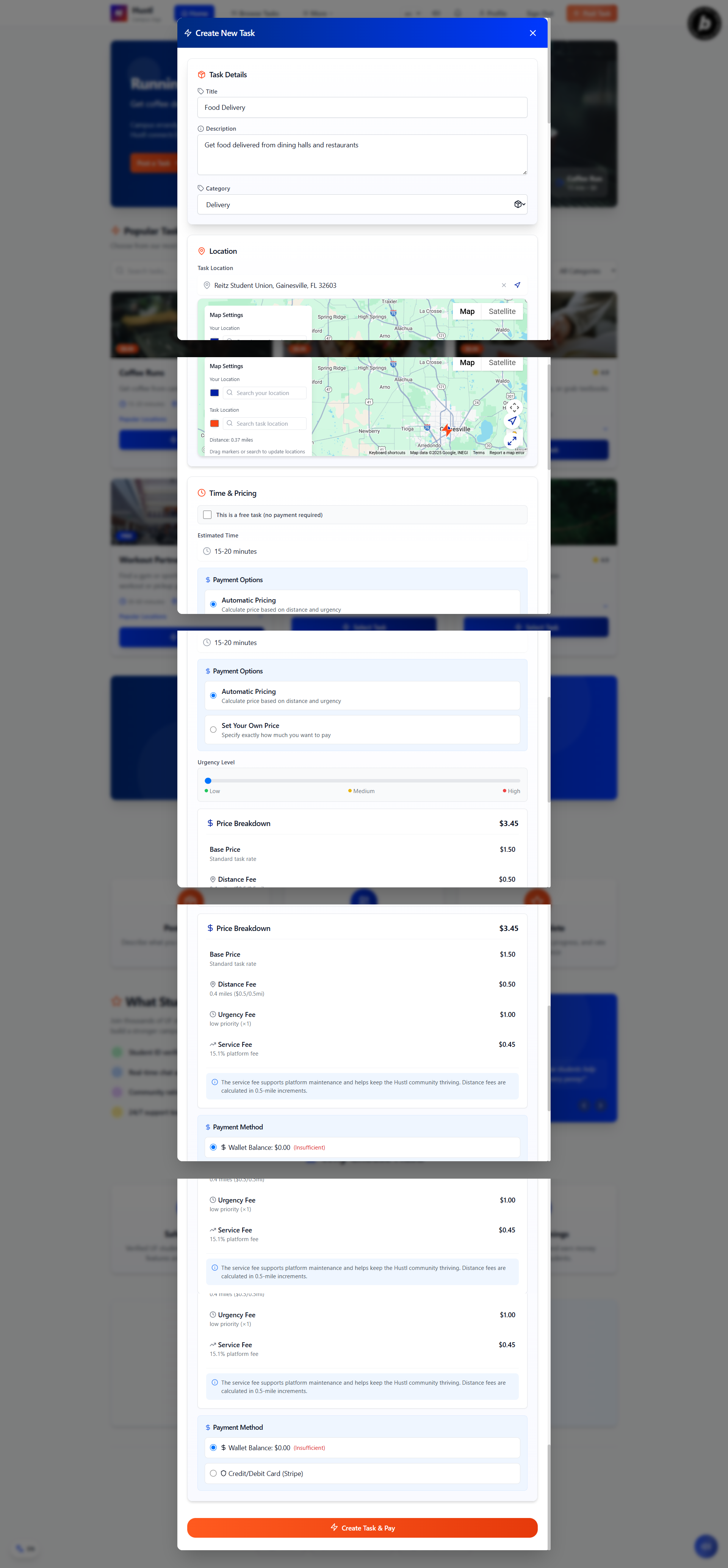
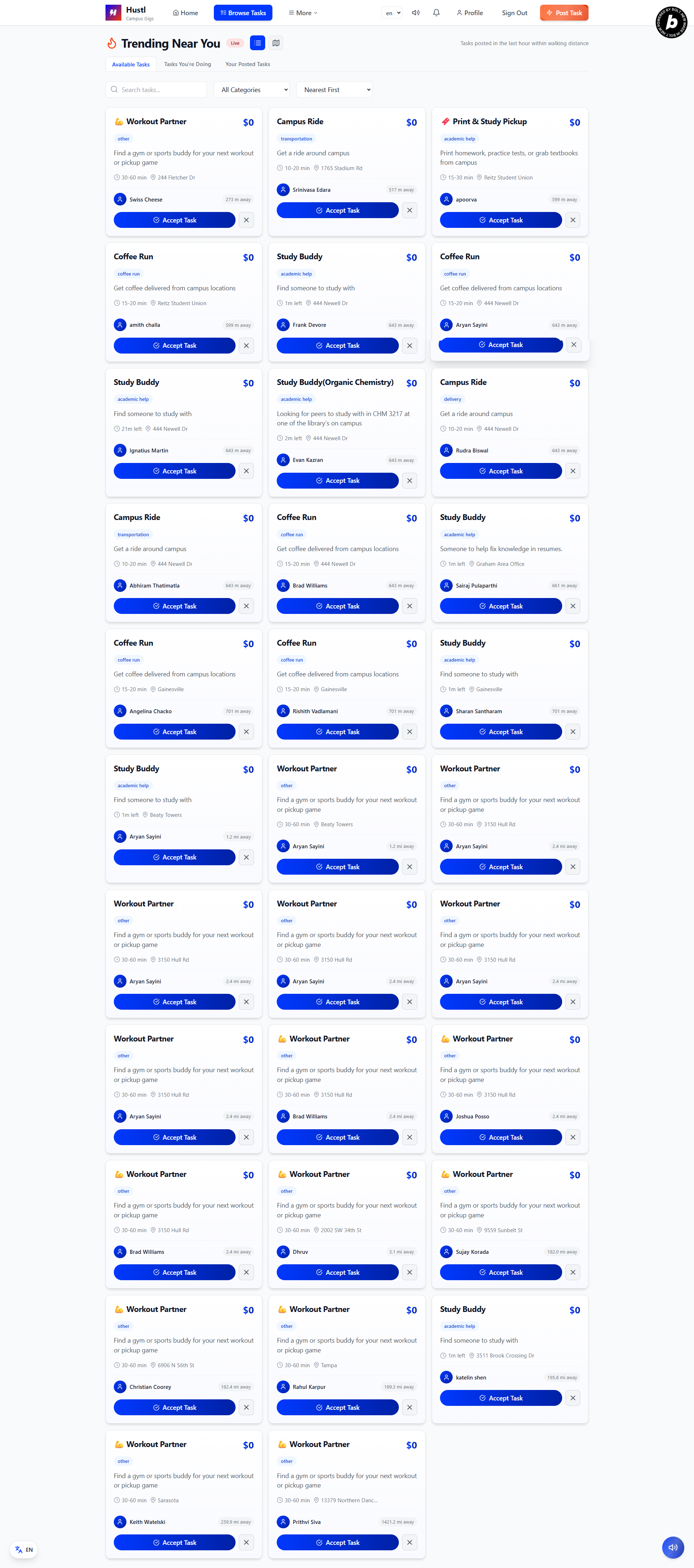
📍 Post and accept hyperlocal tasks on a live campus map.
🔍 Filter tasks by proximity radius to match availability.
🧑🤝🧑 Connect helpers with requesters using a smart match-ranking algorithm.
🗺️ Visualize task density with a heatmap of hourly trends.
🧭 Navigate safely using auto-suggested public meetup points via Google Places API.
🎮 Earn Kindness XP for completed tasks and appear as “Top Helpers” in glowing yellow markers.
🚶 See live route sharing between helper, task, and safe meetup location.
The result is a gamified social impact layer on top of Google Maps—built specifically for student communities.
🛠️ How we built it I built Hustl's Interactive Map function using:
React.js for the frontend interface.
Google Maps JavaScript API to render the task map and custom layers.
Google Places API to suggest trusted public meeting locations like cafés and libraries, calculated from the triangulation of user, task, and helper.
Google Distance Matrix API to rank helper matches by distance and estimated time of arrival.
Maps Visualization API to generate time-based heatmaps that visualize task activity trends.
Firebase for basic auth and backend task management.
The interface includes color-coded pins, toggleable filters, and XP zones to create a clean, intuitive user experience that also promotes altruism and safety.
🧗 Challenges we ran into As the developer for the Interactive Maps feature, I had to balance both technical and product design responsibilities. Key challenges included:
Figuring out how to combine multiple Google Maps APIs and ensure seamless performance on a single layer.
Designing the helper match-ranking algorithm, which had to calculate distance and availability in real time.
Ensuring UX clarity despite multiple visual layers: XP zones, glowing avatars, safe meet spots, and time-based heatmaps.
Creating a gamified experience that felt organic, not forced.
Debugging rate limits and async calls from Google APIs while also designing around real-world use cases.
🏆 Accomplishments that I'm proud of I built and deployed the entire map interface, ranking system, and visualization features leveraging Google Maps API and Bolt.new.
Created a truly unique Google Maps-based experience that’s about connection and community, not just navigation.
Turned a simple idea into an engaging MVP in less than 48 hours, with fully working layers, gamification, and smart suggestions.
Was able to simulate user interactions and route logic, even though real-time task acceptance is still a work in progress.
📚 What I learned How to fully leverage Google Maps APIs beyond basic location rendering.
How to design user interfaces that balance data density with clarity, especially in geospatial apps.
How to structure helper matching algorithms that are both performant and context-aware.
How to independently plan, build, and demo a complex, multi-layered application on a tight deadline.
The power of geo-contextual UI and how gamification can drive positive behavior in shared spaces.
🚀 What's next for Hustl Implement real-time helper matching and notifications so users can pair and chat instantly.
Add a trust and reputation system with reviews and verified badges.
Integrate Campus Admin Dashboard for moderators to oversee task trends and safety incidents.
Extend heatmap features to week-over-week usage trends for institutional insights.
Collaborate with universities across North America or safety orgs to make Hustl part of student onboarding.
Built With
- api
- bolt.new
- distance
- html/css
- javascript
- json
- maps
- matrix
- places
- react.js
- visualization

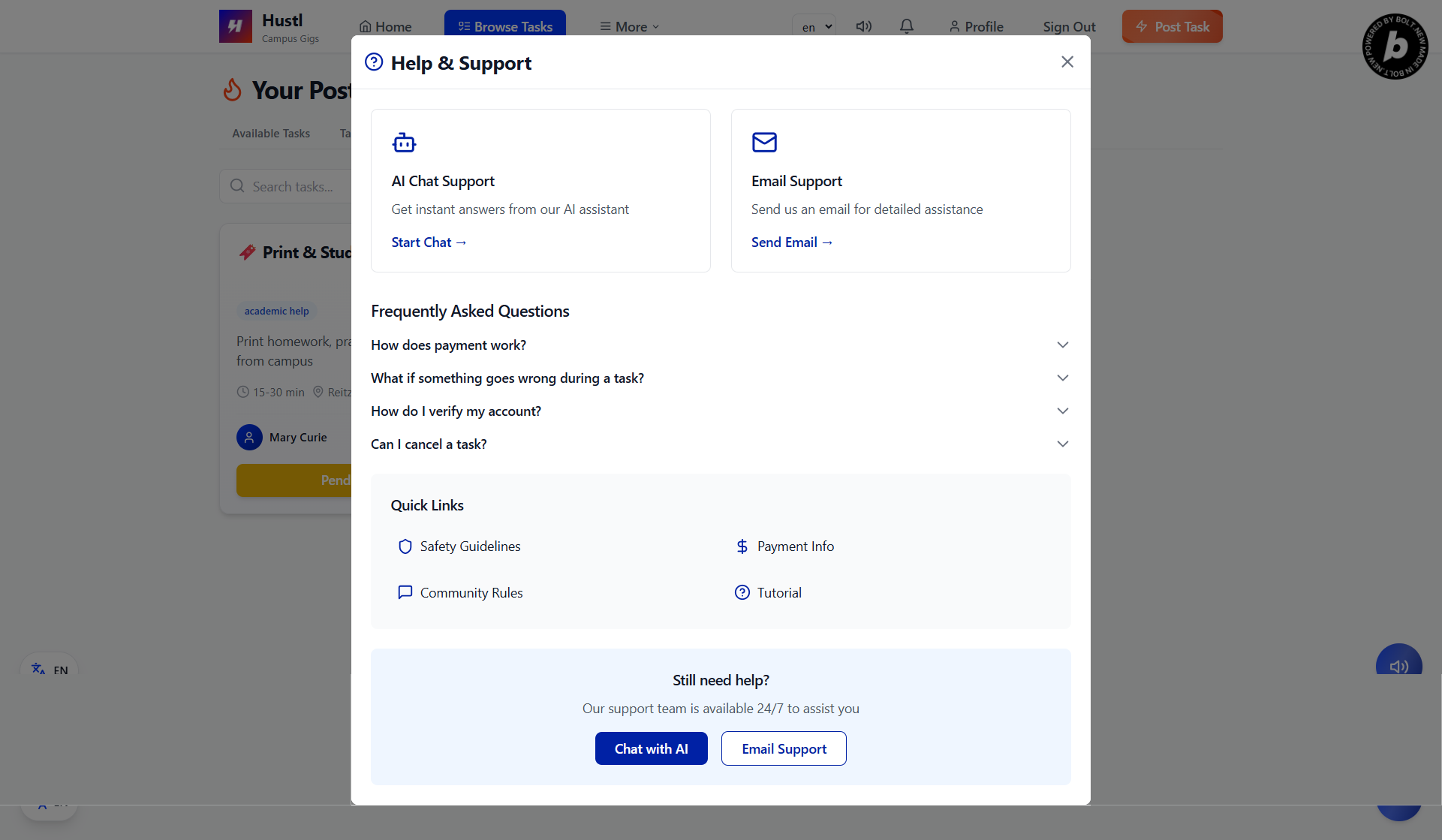
Log in or sign up for Devpost to join the conversation.