Inspiration
Regional institutions like ICPAC already produce excellent hazard and drought monitoring data through platforms like HUSIKA, Hazard Watch, and Drought Watch. But that data is built for technical analysis — indicators like VCI, SPI-3, and WRSI mean little to a farmer in Turkana or a family near the Shabelle river basin who just needs to know: is my area at risk, and what should I do right now? We wanted to build the "last mile" translation layer that turns expert-grade monitoring into something anyone can read and act on in seconds.
What it does
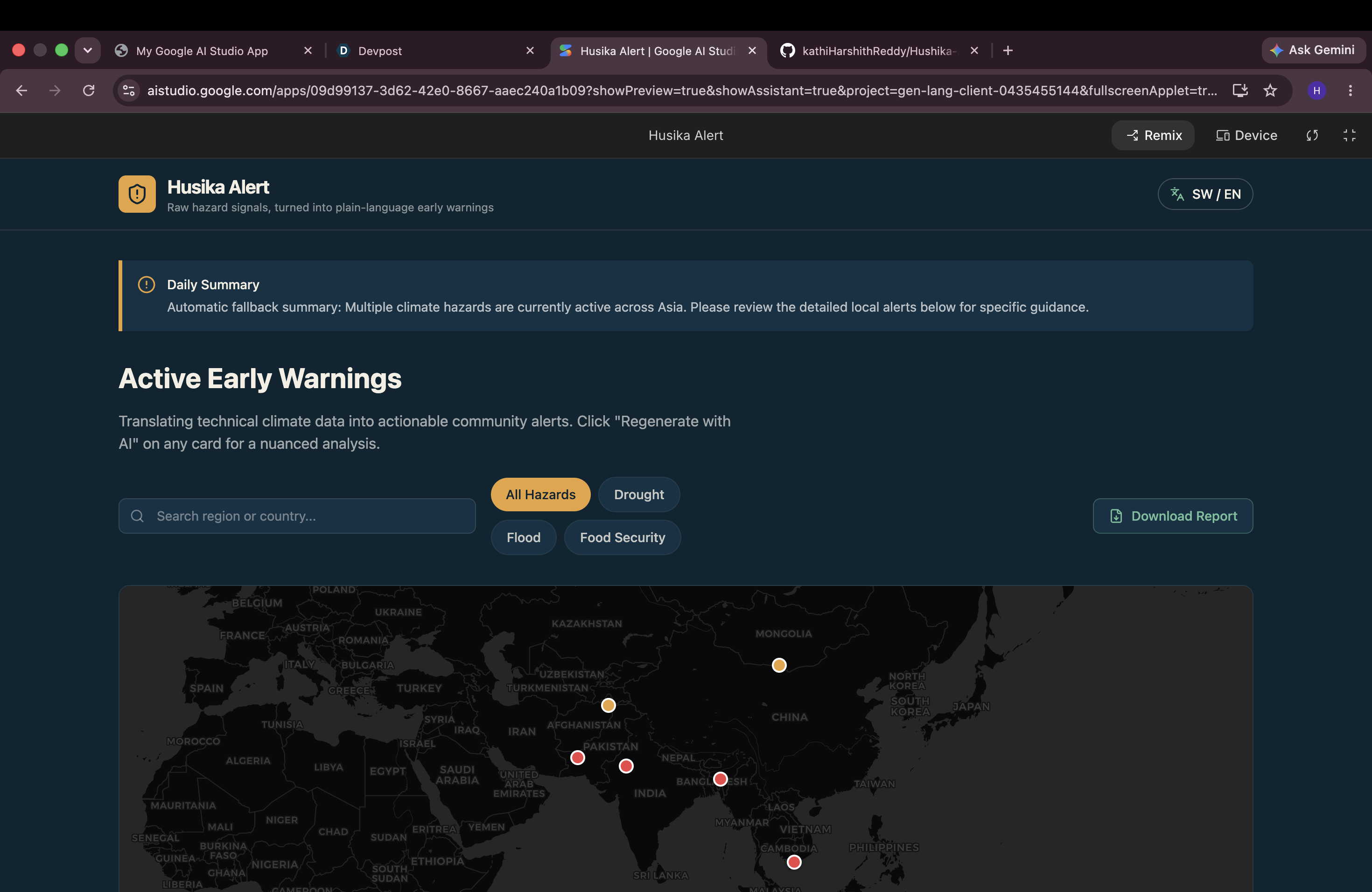
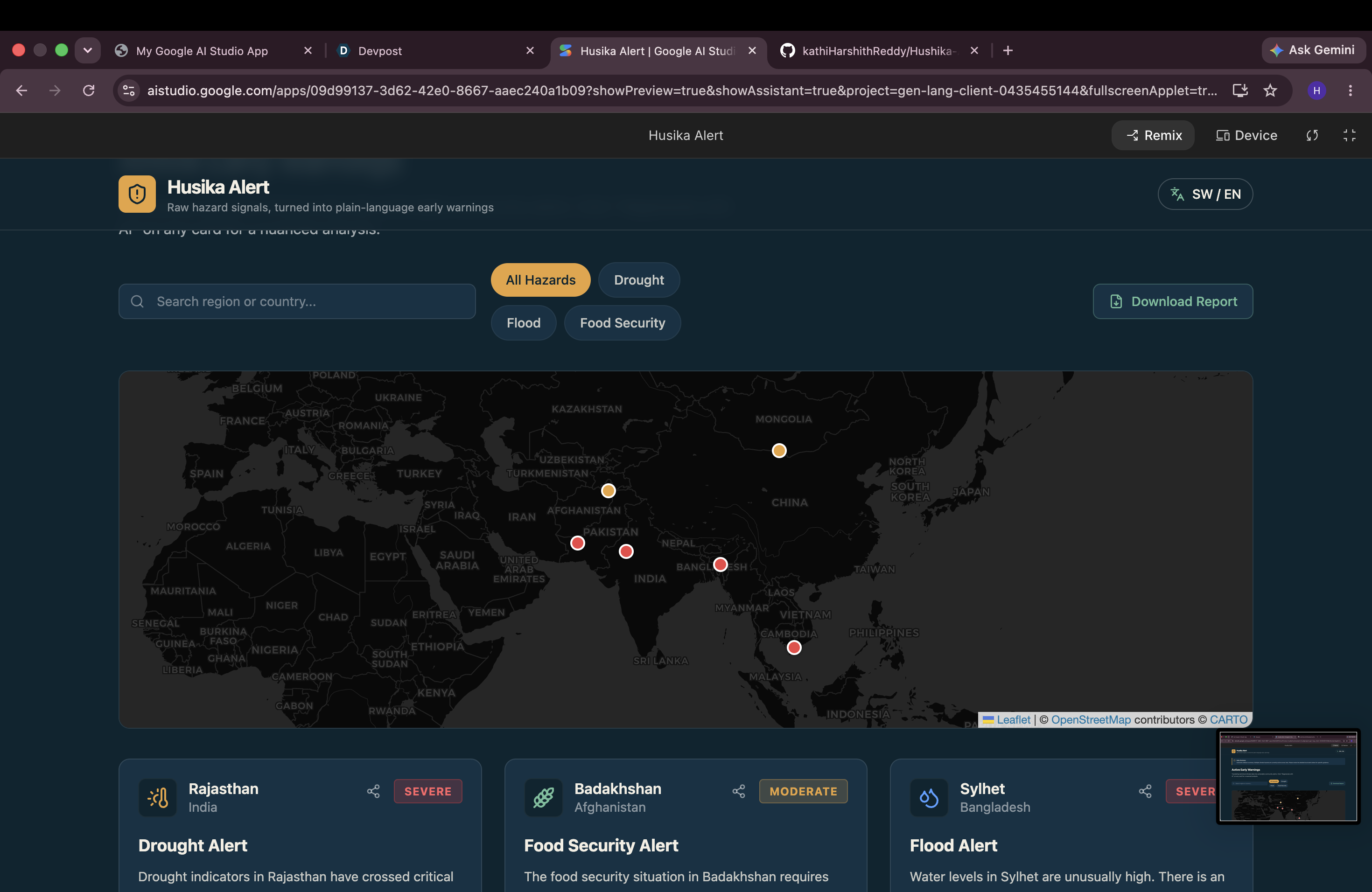
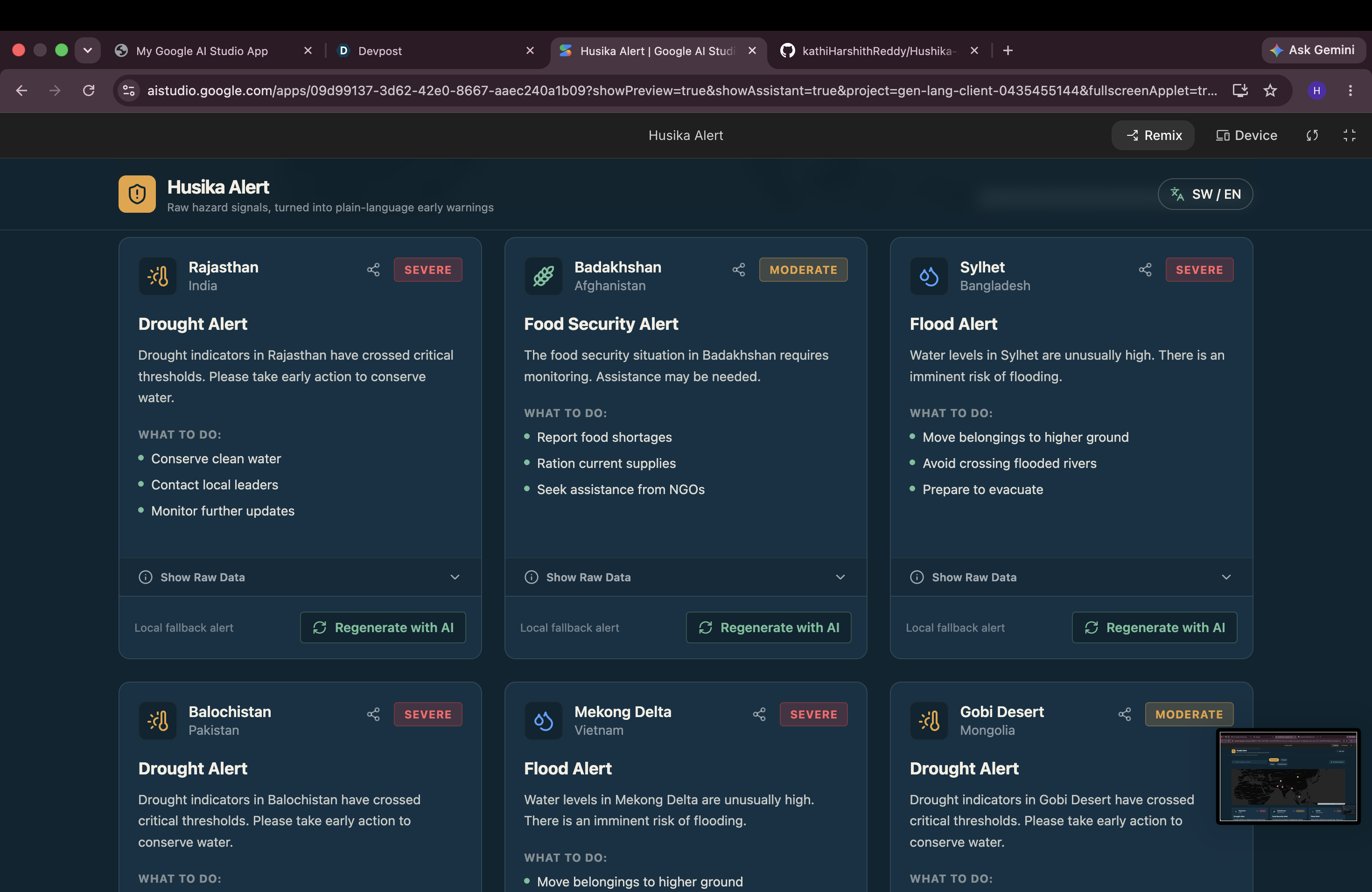
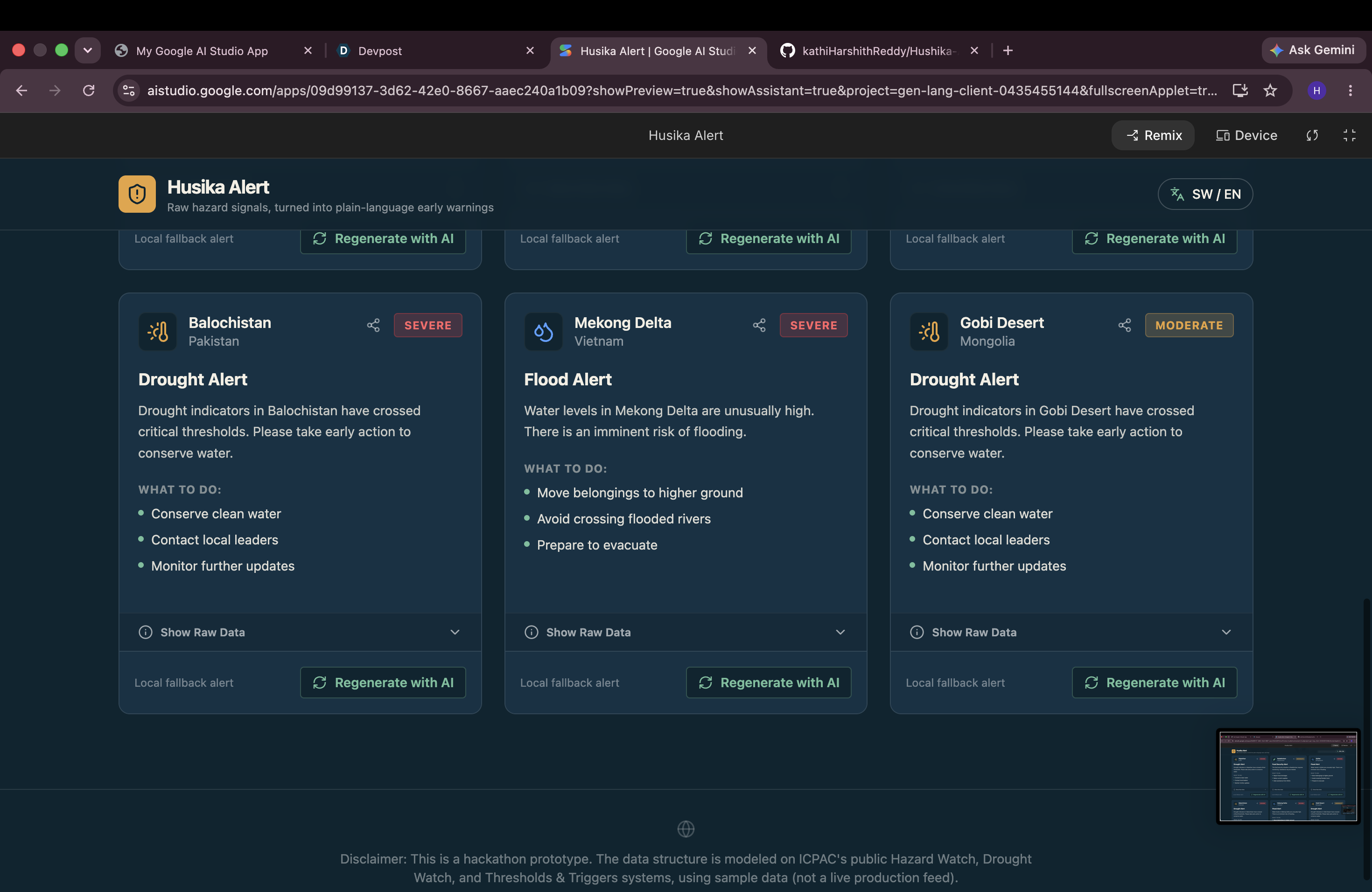
Husika Alert ingests hazard indicator data — drought signals, flood river-stage readings, food security phase classifications — and converts each one into a plain-language alert: a short headline, a 2-3 sentence explanation of the risk, and a concrete list of actions. Alerts are available in English and Swahili, and each one stays linked to the raw indicator it came from, so nothing is a black box.
How we built it
The app is a React single-page interface. Each hazard record is structured the way ICPAC's own indicators are: a value, a trigger threshold, and a status. A local rule-based engine renders instant plain-language alerts so the interface never stalls. Each card also connects live to the Claude API — raw indicator data is sent in a structured prompt, and Claude returns a JSON object with severity, headline, message, and action steps, demonstrating a genuine AI transformation layer rather than a static mockup.
Challenges we ran into
Keeping the demo reliable while still using live AI was the core tension — we solved it by treating the local templates as the dependable baseline and AI generation as a live enhancement layer on top. Getting Swahili translations right also mattered more than we first expected: a wrong word in a warning message isn't just an inconvenience, it could cost someone the time they need to act.
Accomplishments that we're proud of
We built a working demonstration of how AI can bridge the gap between advanced climate monitoring systems and the communities they're meant to protect — showing real, structured hazard data being turned into warnings a non-technical reader can understand and act on immediately.
What we learned
We learned how much design work goes into making "simple" language actually simple without losing the accuracy that makes a warning trustworthy — and how valuable it is to pair AI generation with a reliable fallback so a life-safety tool never goes silent.
What's next for Husika Alert
Connecting to ICPAC's live Hazard Watch, Drought Watch, and Thresholds & Triggers feeds directly, adding SMS/USSD delivery for low-connectivity areas, expanding language coverage across the IGAD region, and working with local disaster response coordinators to validate alert accuracy in the field.
Built With
- anthropic
- claude-api
- climate-data
- disaster
- early-warning-systems
- javascript
- json
- lucide-icons
- natural-language-generation
- react
- risk
- swahili
- tailwind-css


Log in or sign up for Devpost to join the conversation.