-
-

HushMap Icon
-
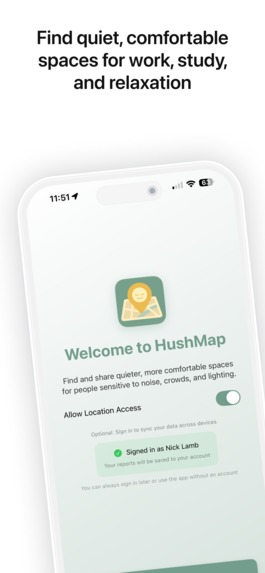
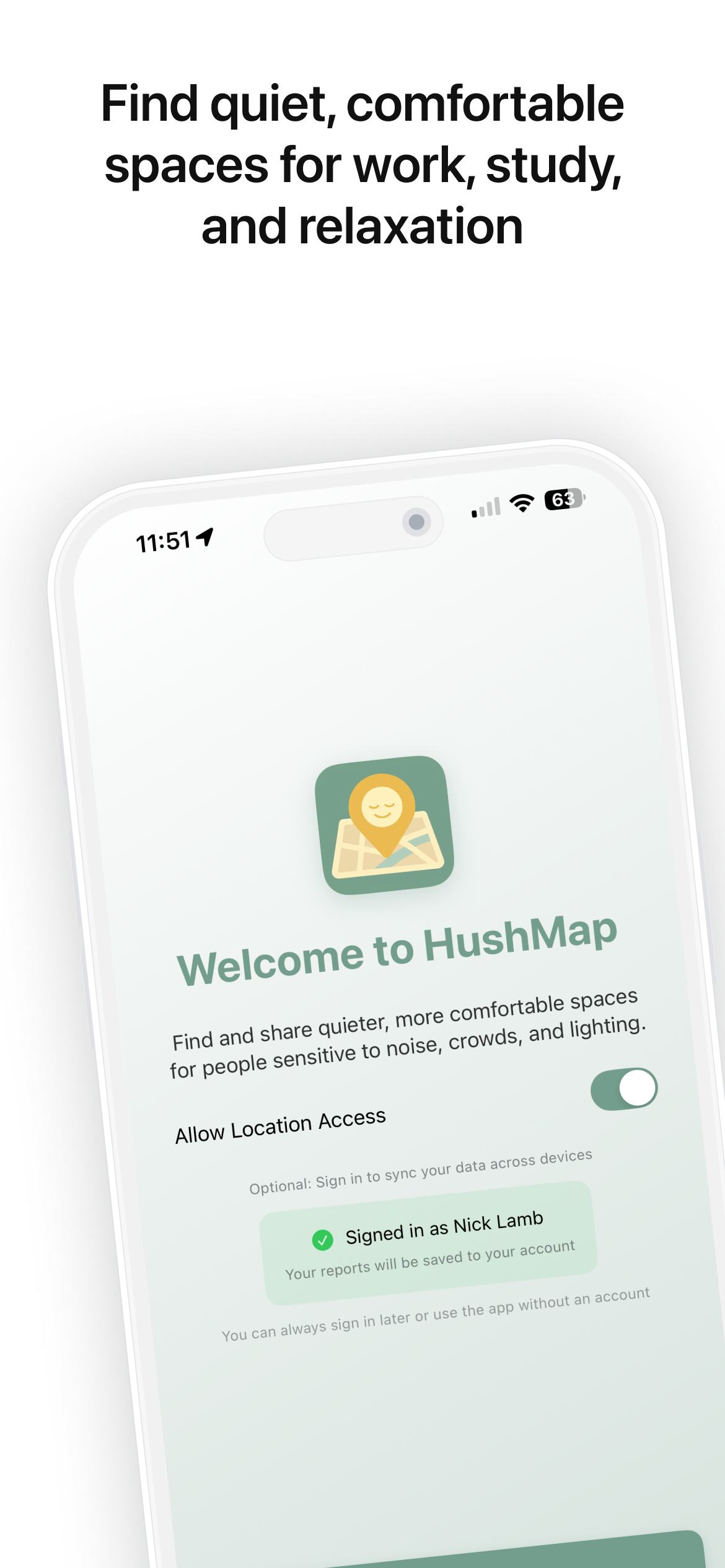
Find quiet, comfortable places for work study and relaxation
-
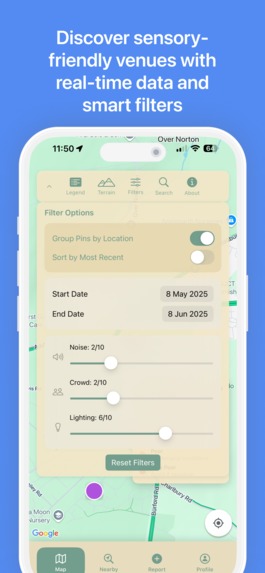
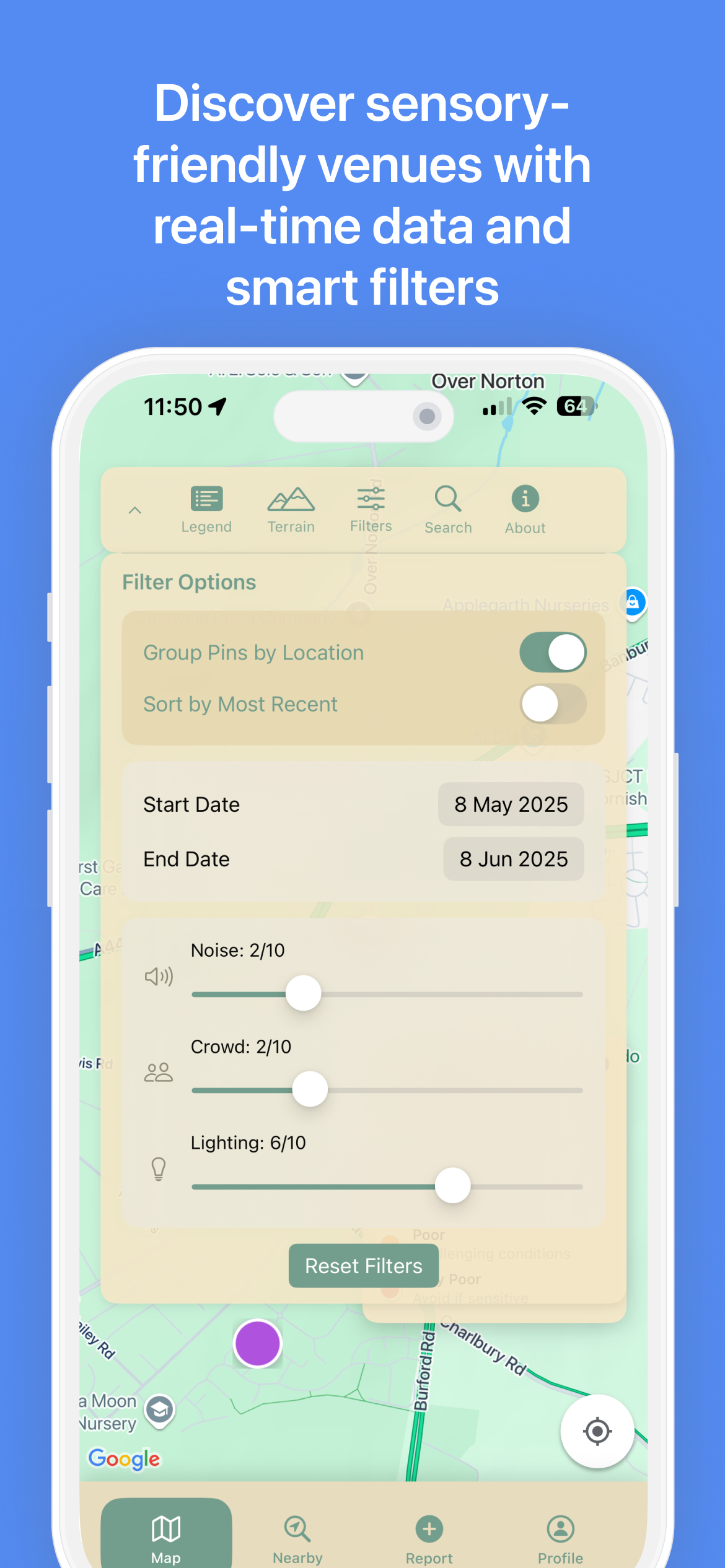
Discover sensory-friendly venues with real-time data and smart filters
-
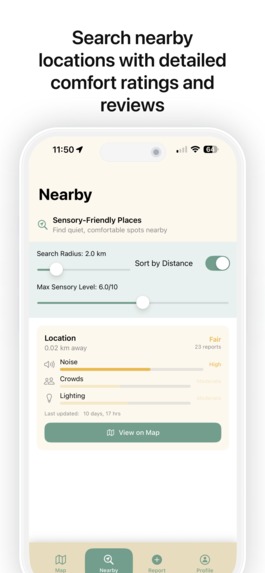
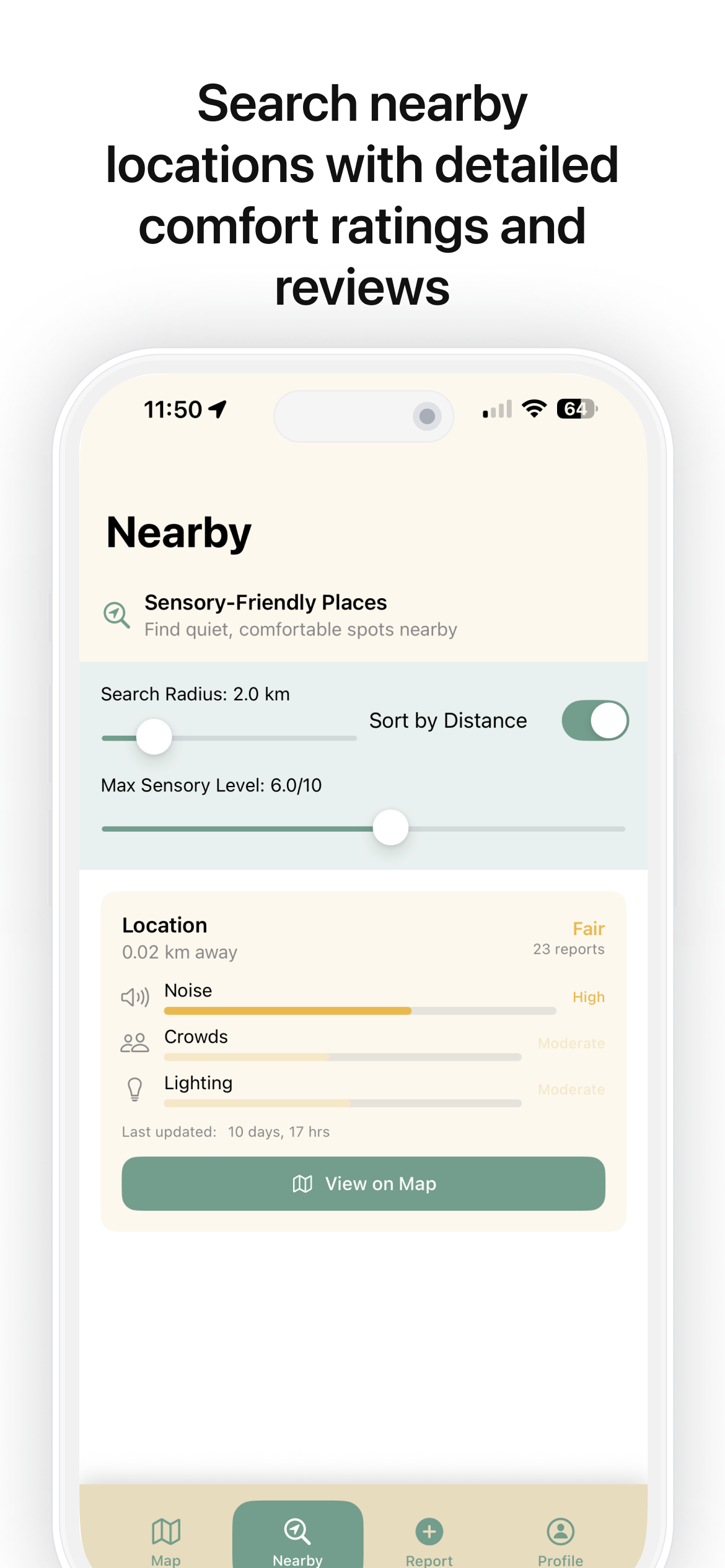
Search nearby locations with detailed comfort ratings and reviews
-
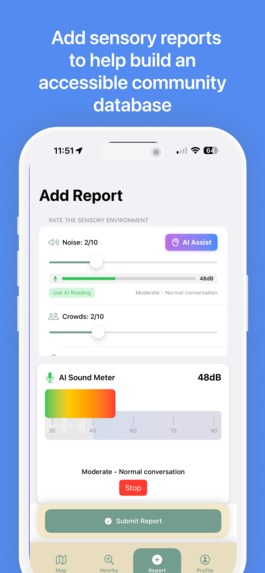
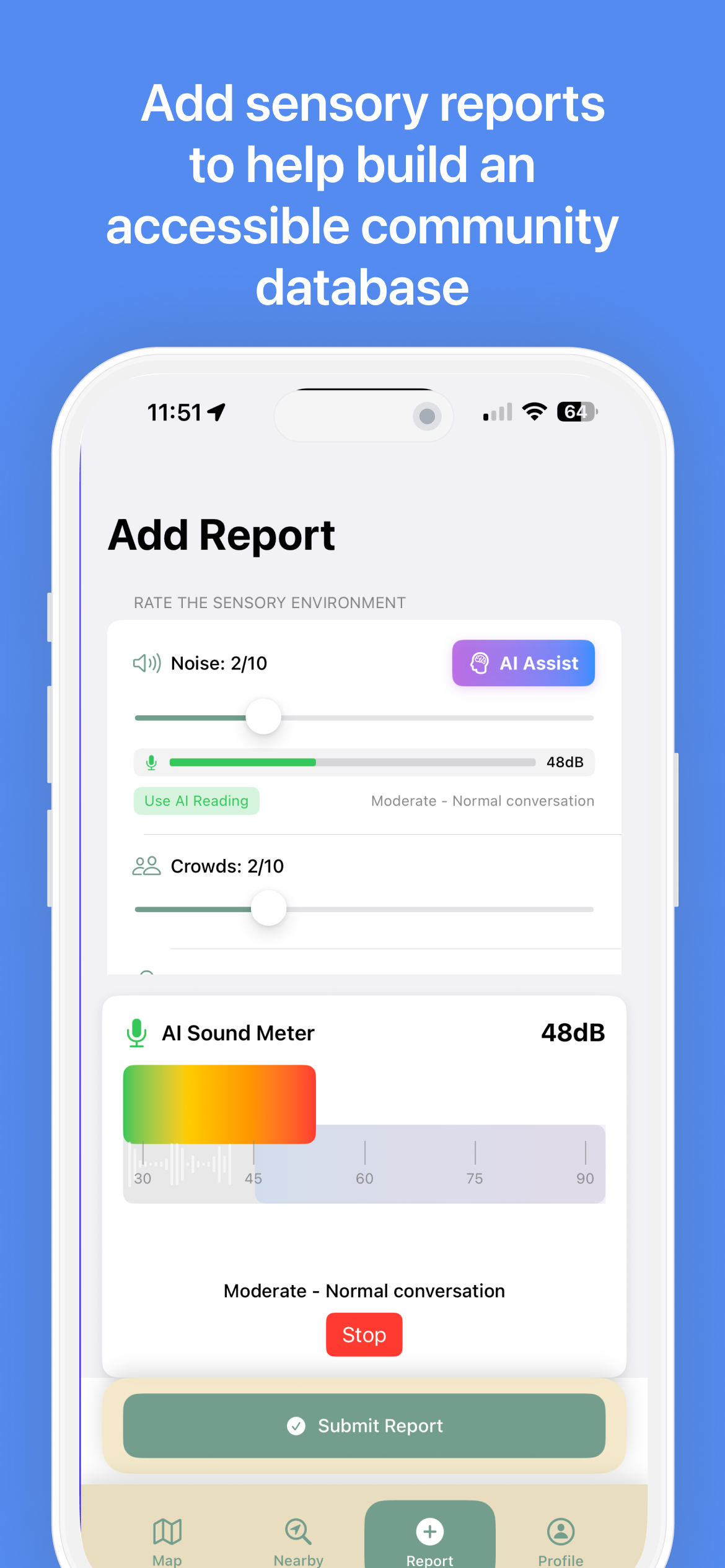
Add sensory reports to help build an accessible community database
-
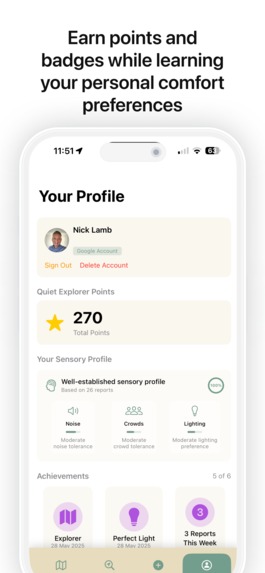
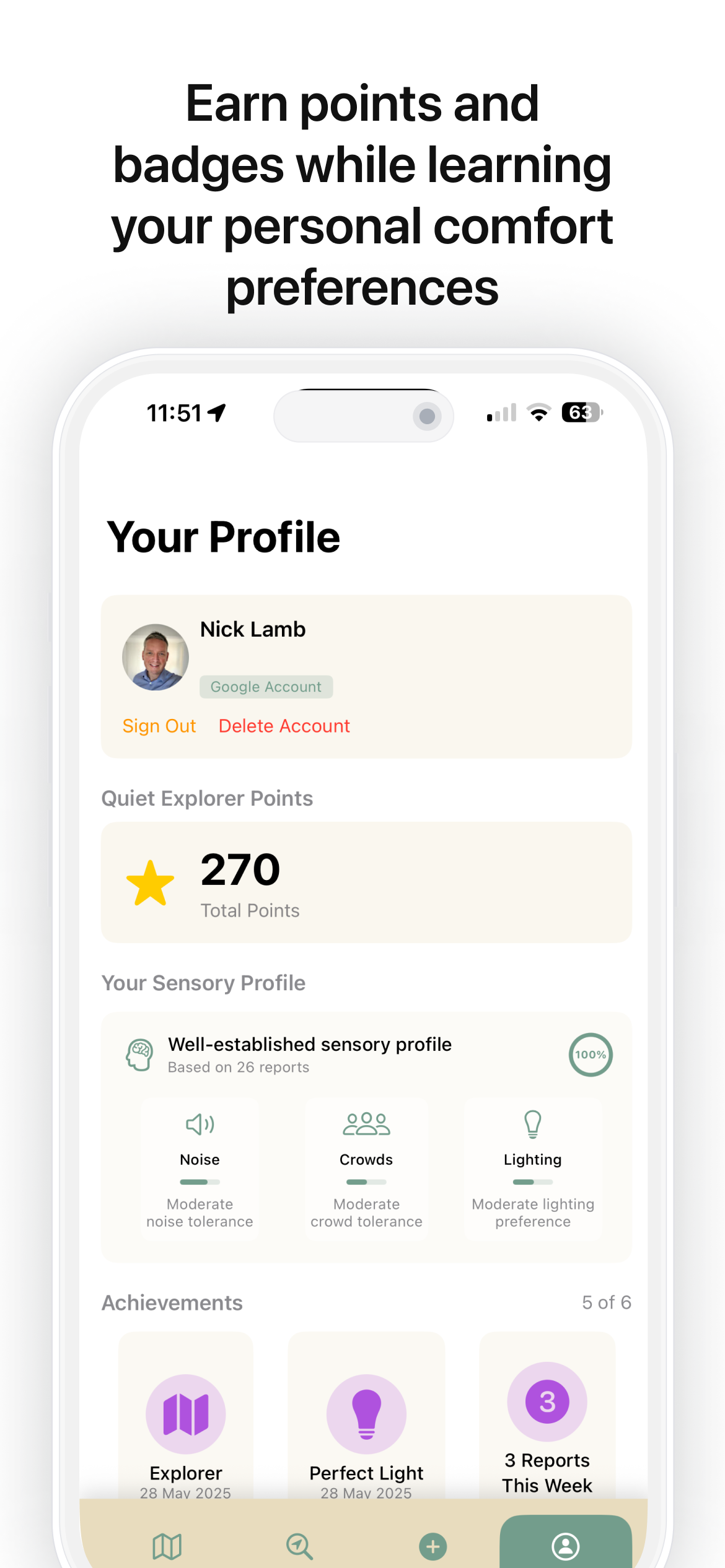
Earn points and badges while learning your personal comfort preferences

HushMap - Google Maps Platform Awards Project Story
🌱 Inspiration
As a parent and digital health innovator, I saw firsthand how overwhelming noisy, crowded, and brightly lit public places can be for people with sensory sensitivities — especially those with autism. While many apps map accessibility for mobility, few consider sensory needs. I built HushMap to help neurodiverse individuals and caregivers make more confident decisions about where to go, when, and why.
🧭 What it does
HushMap is an iOS app that helps users find and report sensory-friendly places based on noise, crowdedness, and lighting. It uses Google Places data, AI-powered predictions, and real-time community reports to guide users to spaces that match their sensory needs.
Think of it as a quiet-friendly companion to Google Maps.
🛠 How we built it
- Frontend: SwiftUI, SwiftData, and MapKit for a fast, accessible iOS experience
- Google Maps Platform: Places API for place autocomplete and details
- AI: Custom sensory risk predictor that factors in time-of-day, crowd trends, venue type, and weather
- User feedback: Community-submitted sensory reports and comments stored locally and synced to Firebase
- Gamification: Users earn badges and Quiet Explorer Points for contributing helpful data
⚠️ Challenges we ran into
- Configuring Google Places API and debugging restrictions during development
- Designing a sensory scoring model that felt simple but informative
- Balancing user-generated content with AI predictions and real-time API data
- Making the interface fully accessible for screen reader users and neurodivergent testers
🏆 Accomplishments that we're proud of
- Created a functional MVP that's already being tested by caregivers and support groups
- Successfully integrated Google Places search into a real-time map experience
- Developed a modular system for scoring, filtering, and pin clustering
- Built a unique sensory prediction engine based on Google context + user feedback
📚 What we learned
- Neurodiverse-first design requires empathy, not assumptions
- Google Maps APIs are incredibly powerful — once they're properly set up
- Real-time context + community data = meaningful accessibility
- Simplicity and clarity are the hardest and most important design goals
🚀 What's next for HushMap
- Integrate Google Popular Times and real-time weather trends into the prediction model
- Expand to Android and create a web-based companion tool
- Partner with autism charities and accessibility networks to roll out community trials
- Add user verification and a reputation layer for crowdsourced data
- Explore B Corp certification to align with digital health ethics and accessibility goals
Built With
- firebase
- google-places
- mapkit
- openai
- swiftui
- with-google-places-api-for-location-intelligence-and-mapkit-for-interactive-maps.-data-is-stored-using-swiftdata-and-geolocation-powered-by-corelocation.-we-use-firebase-for-analytics-and-testing
- xcode


Log in or sign up for Devpost to join the conversation.