-
-
Splash page
-
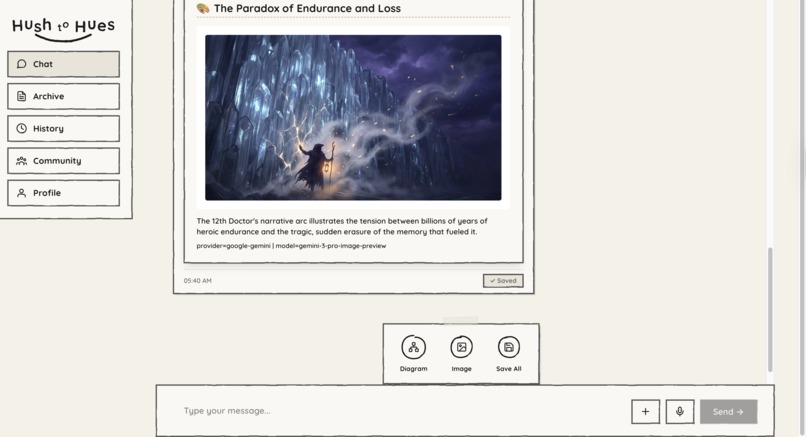
Chat page
-
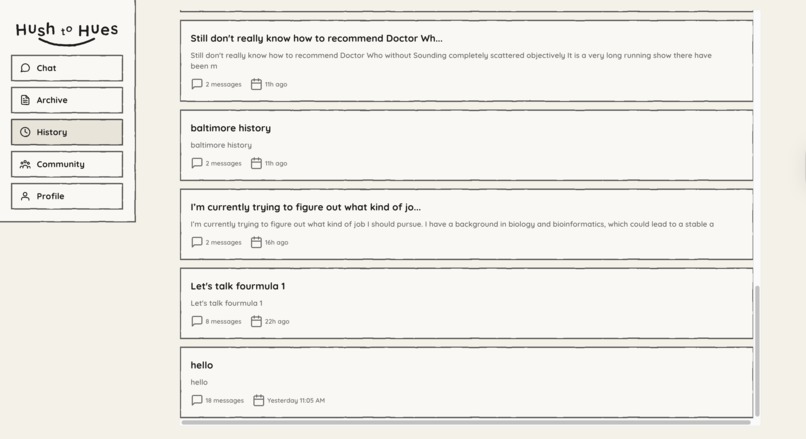
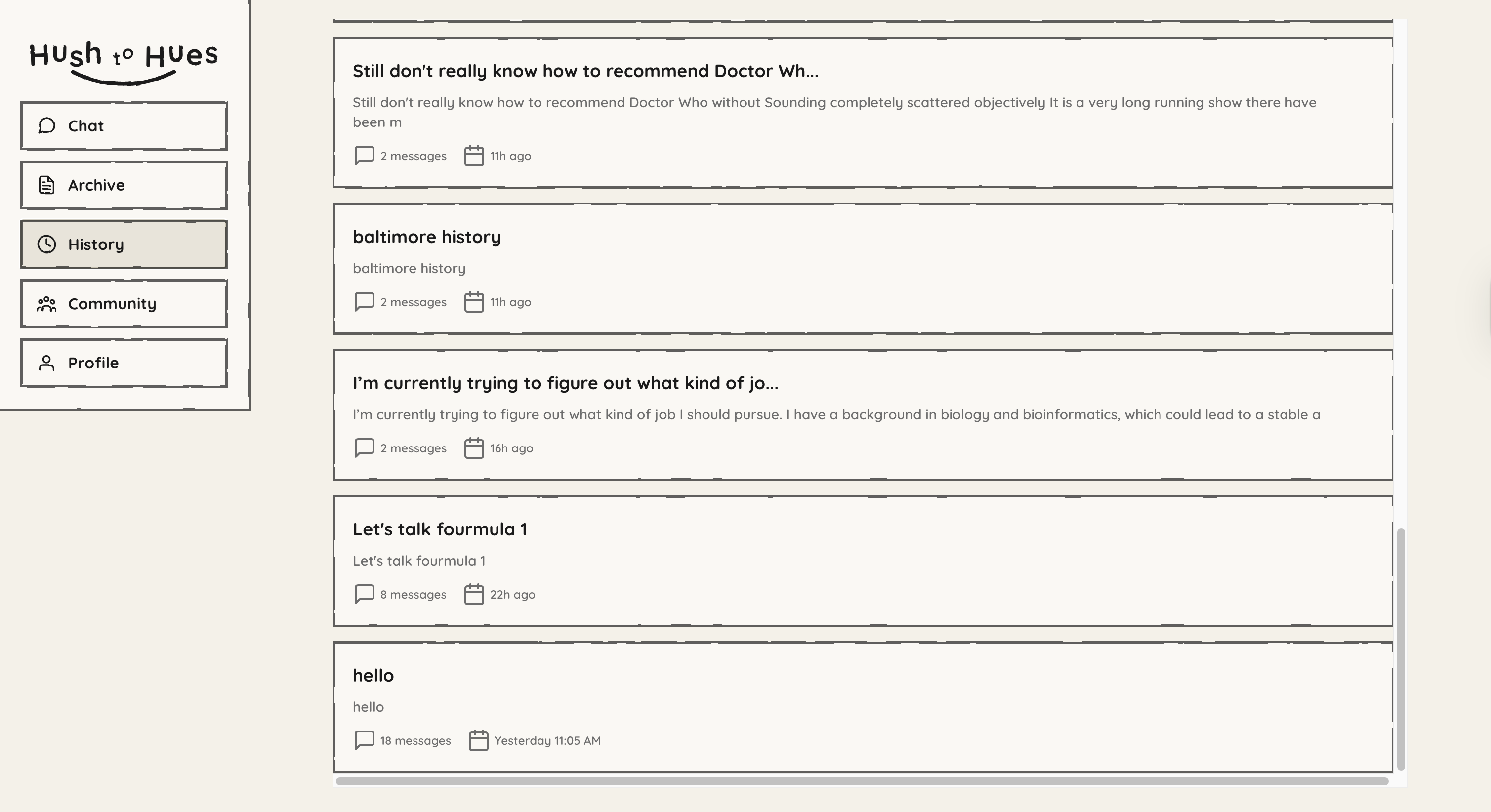
History page
-
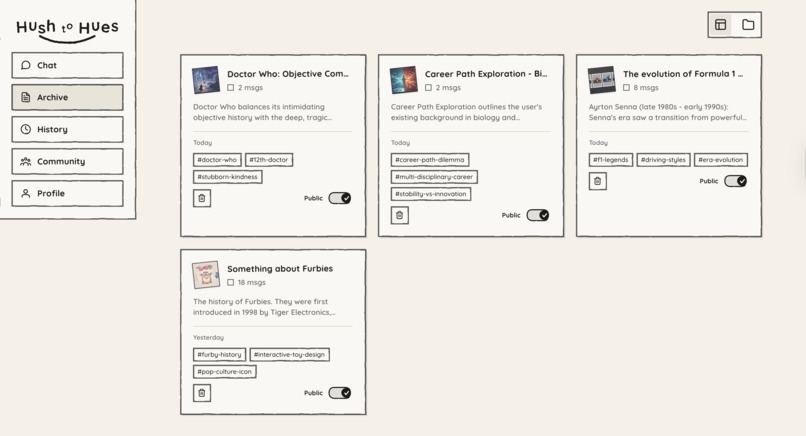
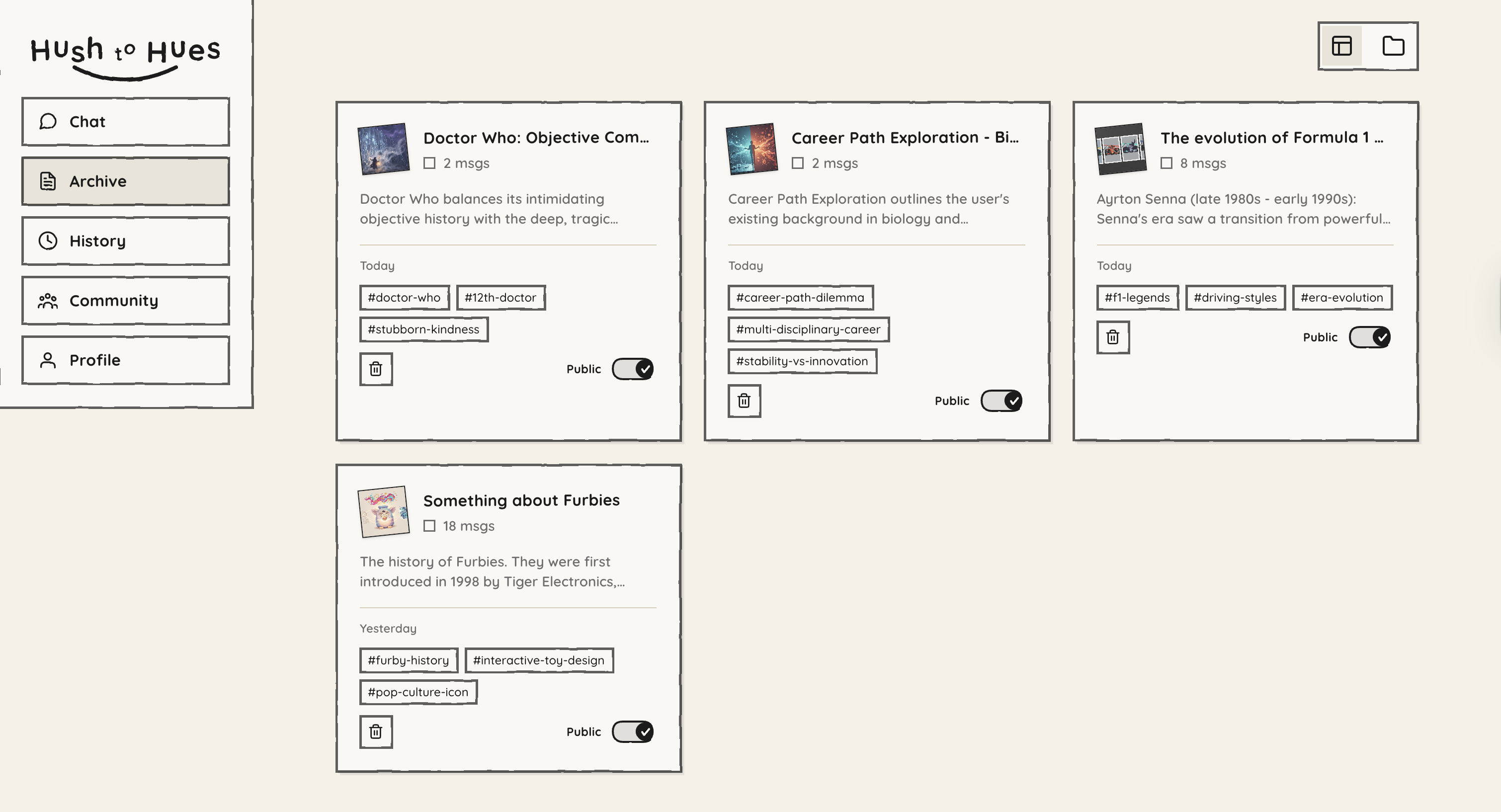
Archive page - Preview mode
-
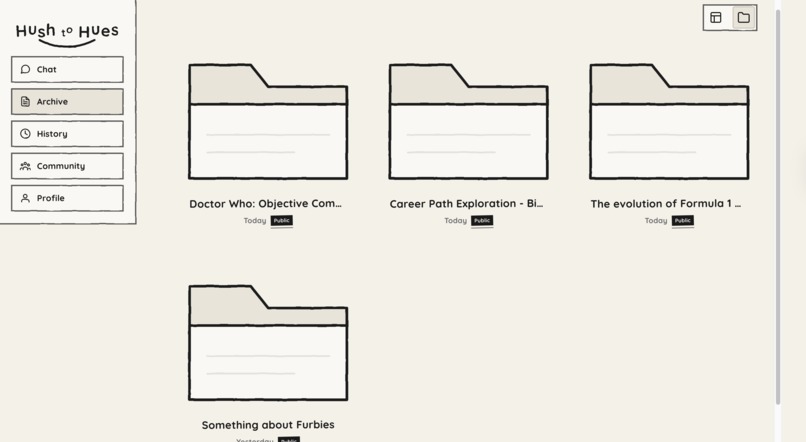
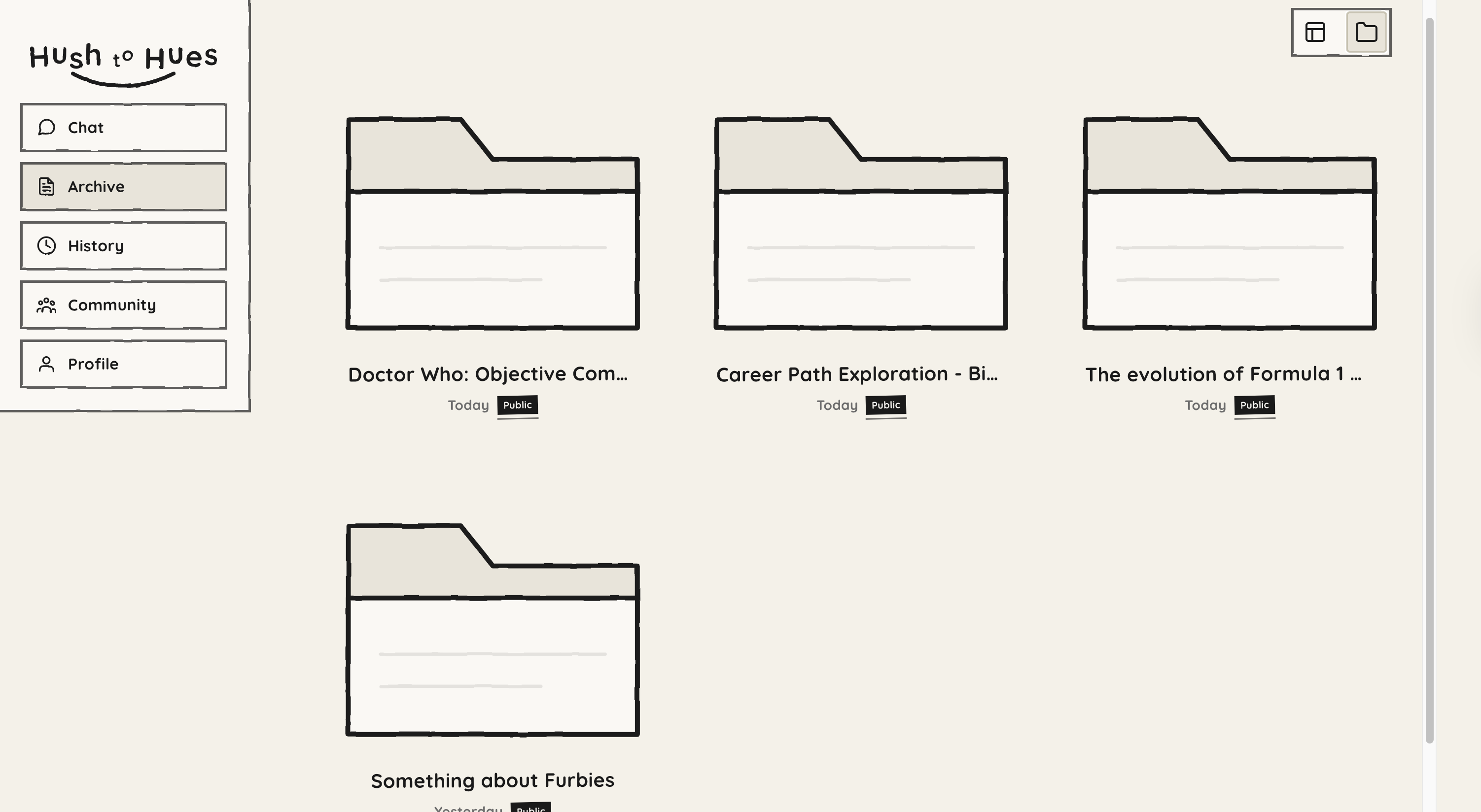
Archive page - Folder mode
-
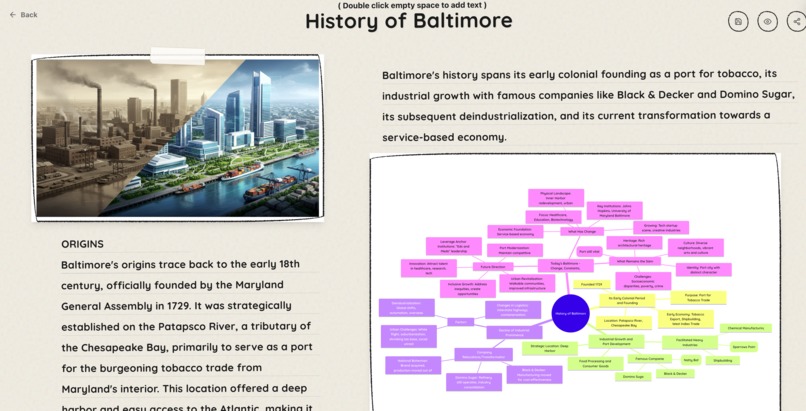
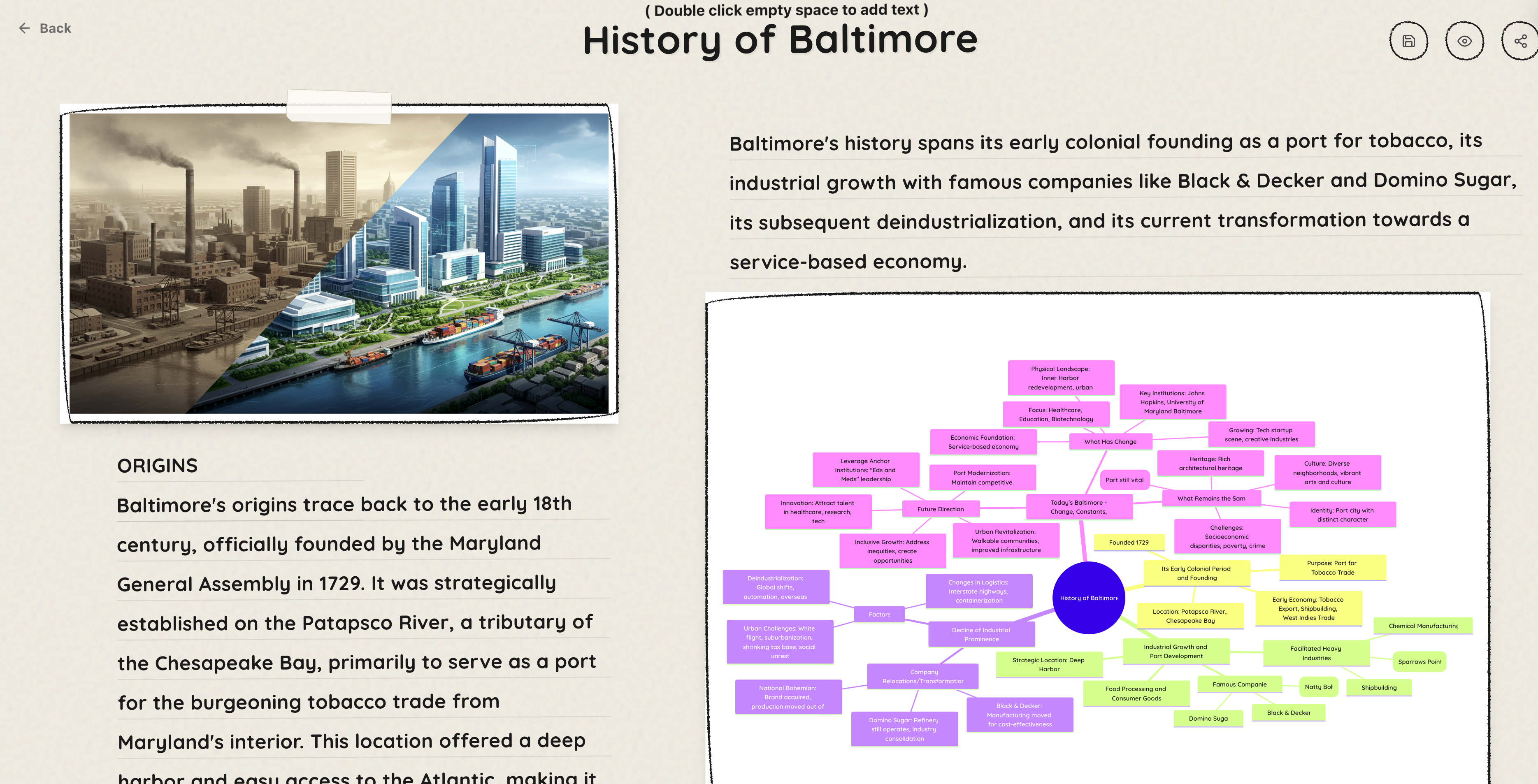
Canvas page - Private/Editing mode
-
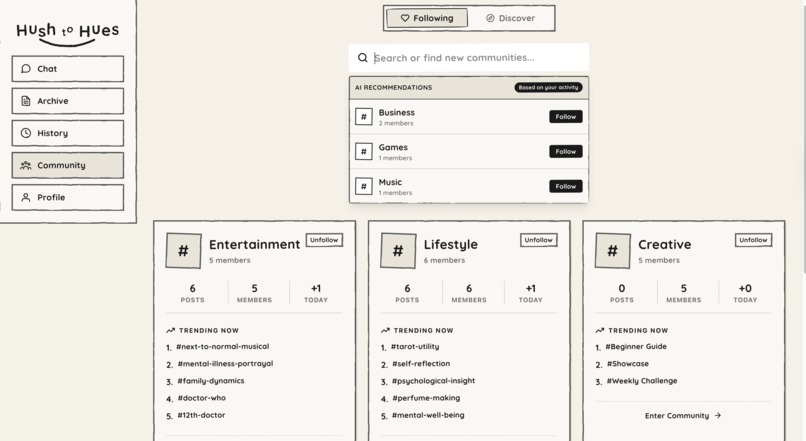
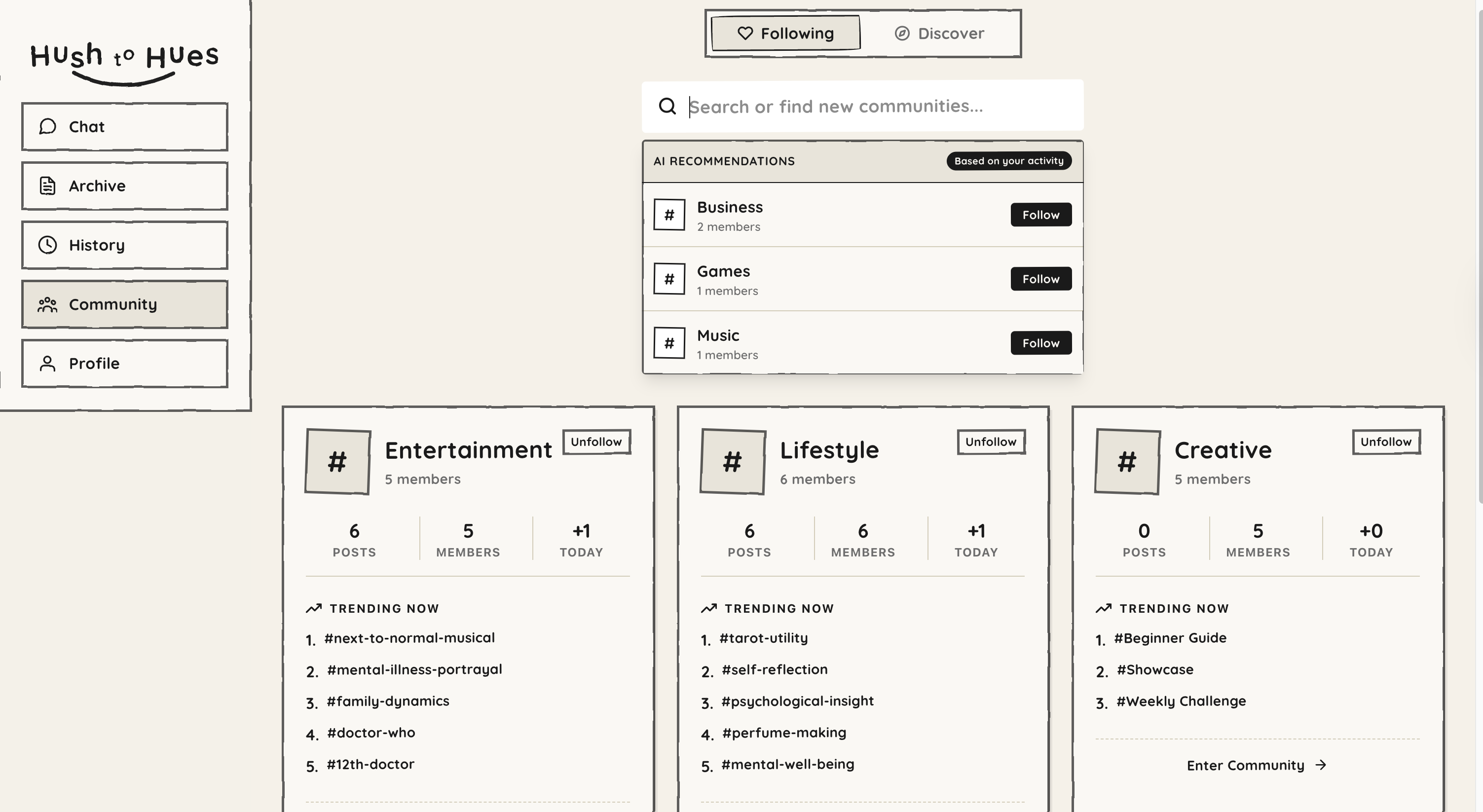
Community page - Following section
-
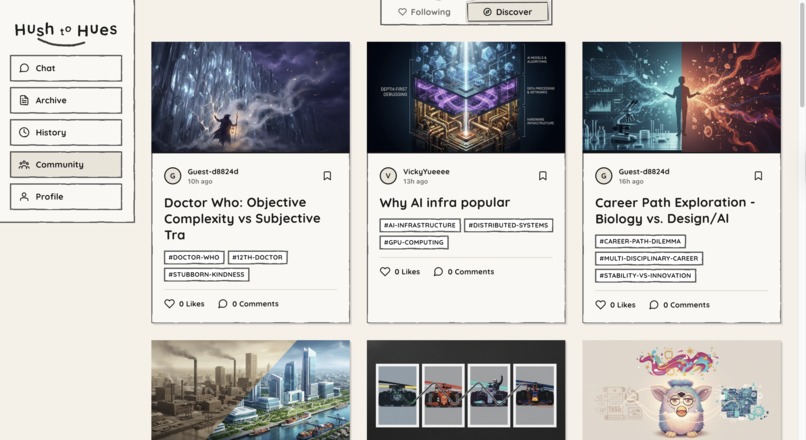
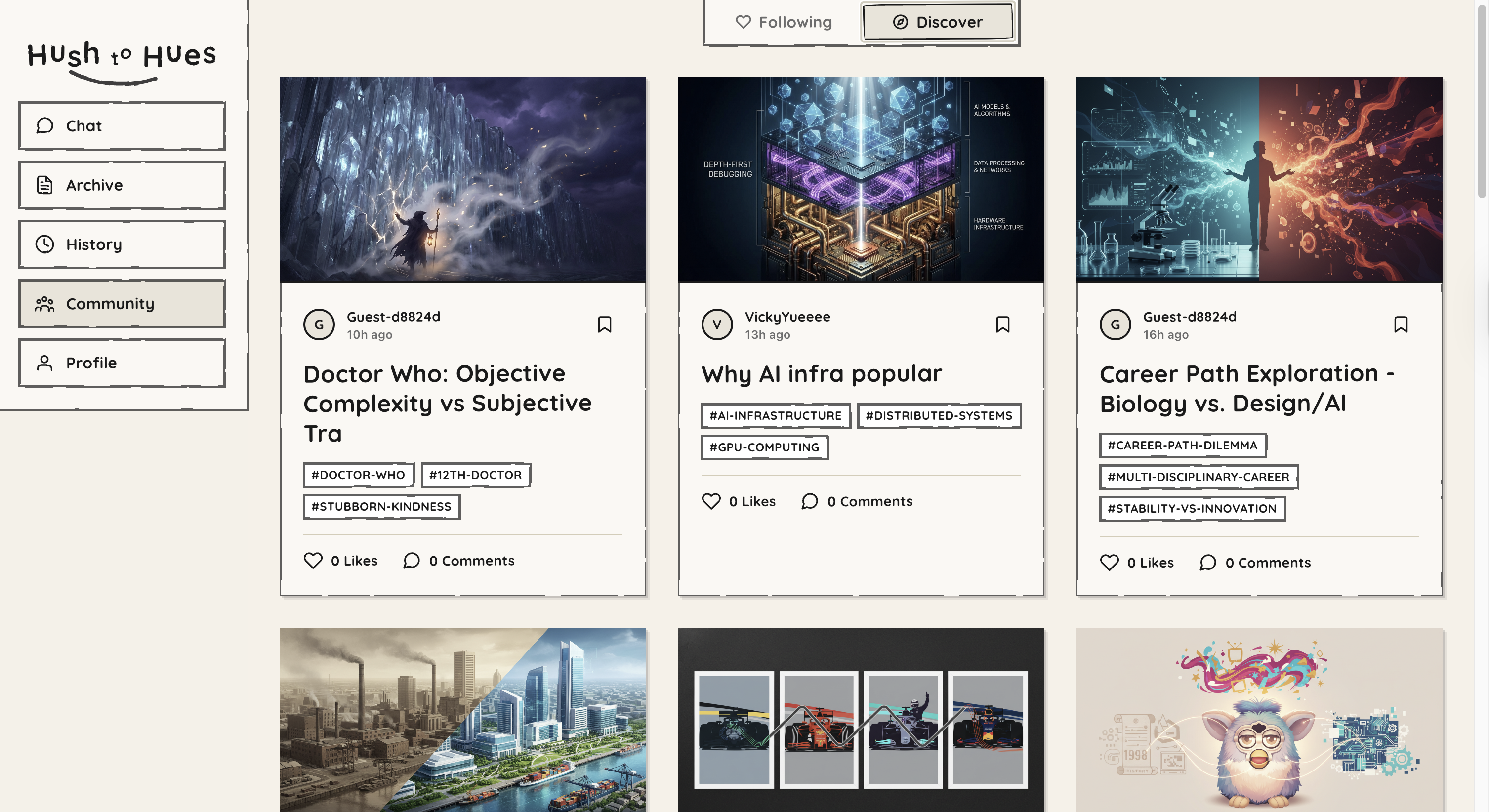
Community page - Discover section
-
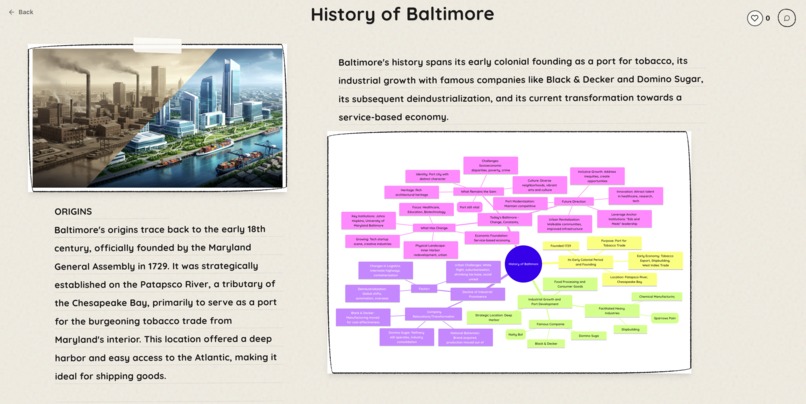
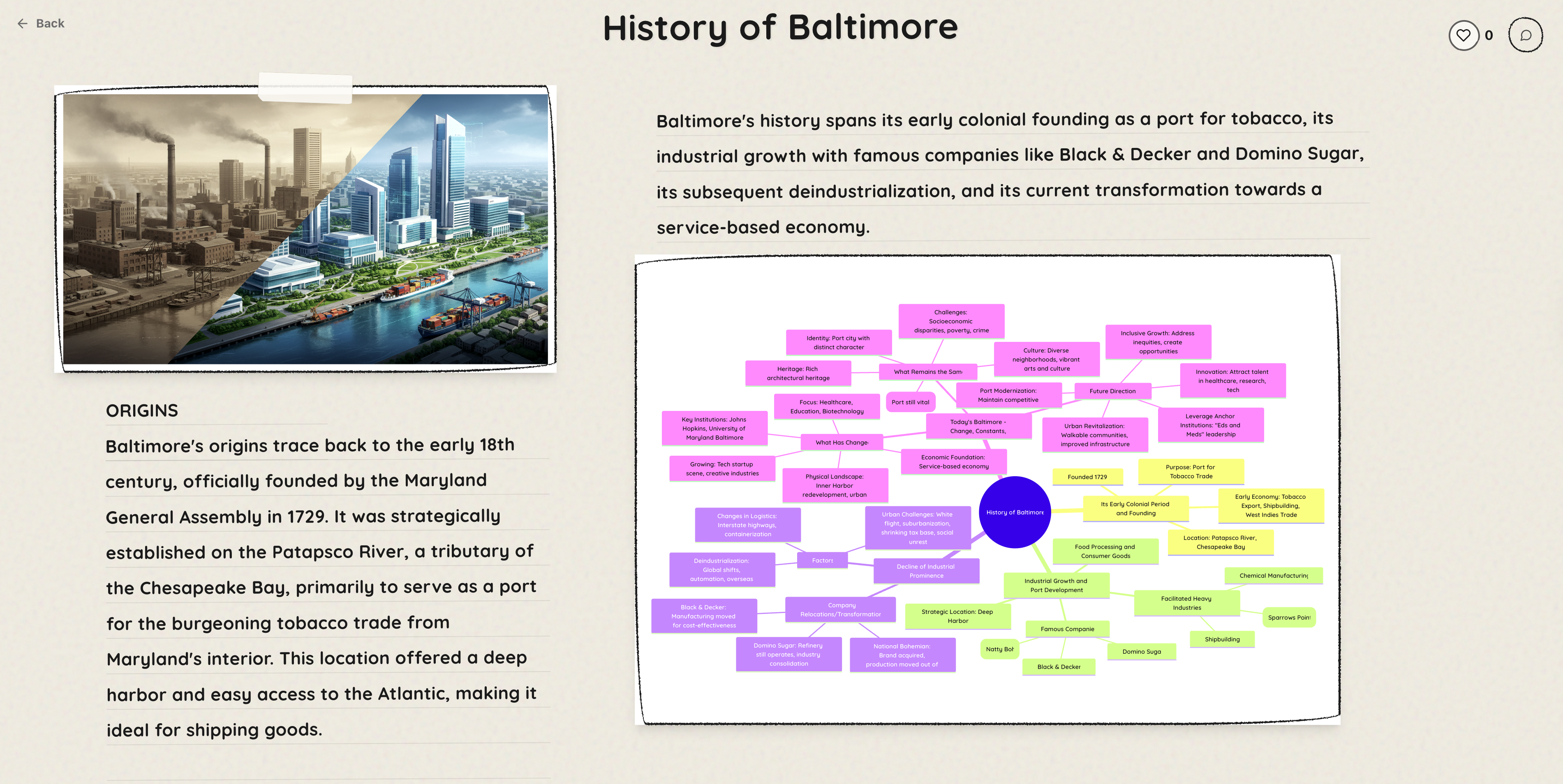
Canvas page - Public mode
-
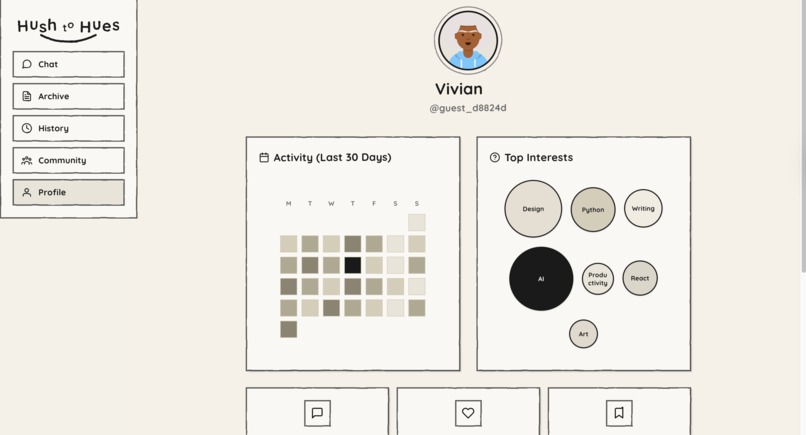
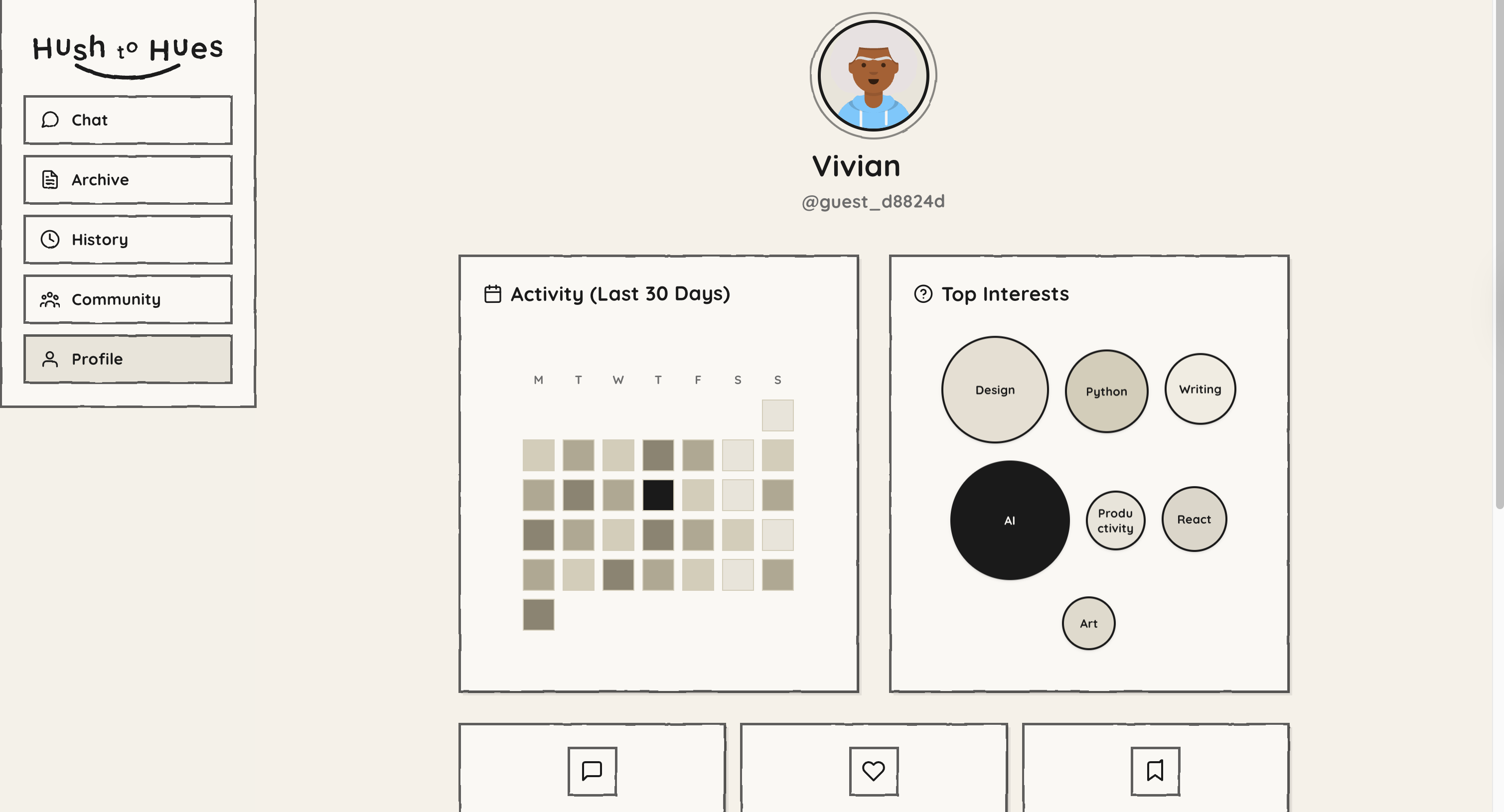
Profile page
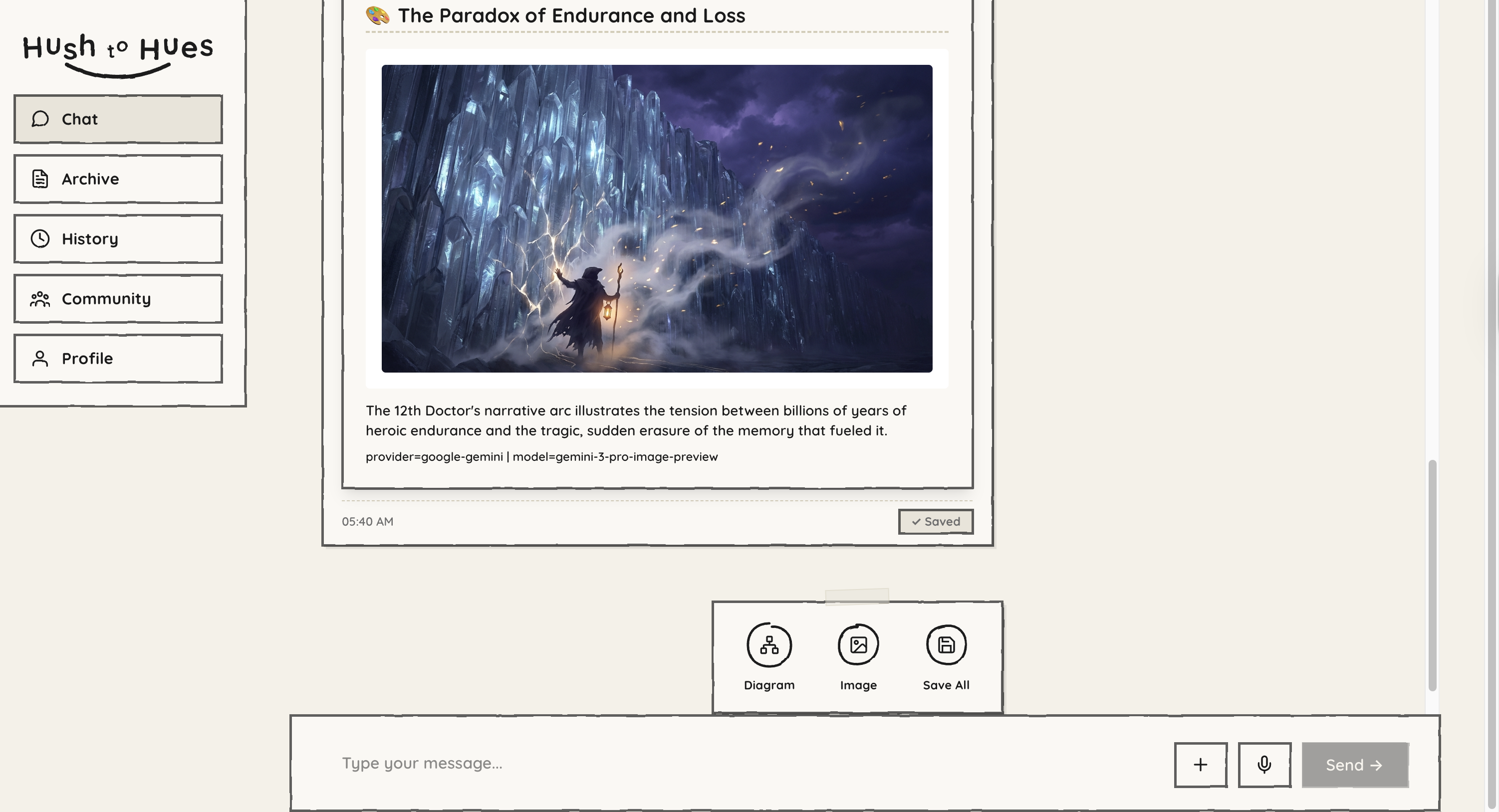
Hush to Hues
Inspiration
In an AI-driven era, we often wonder: what makes humans irreplaceable? We believe the answer lies in thinking itself.
We've all experienced moments of intense desire to share — a mind-bending show, a well-reasoned theory, or a niche idea living quietly in our minds. Yet expression often fails us, not because thoughts are shallow, but because transforming abstract thinking into clear, shareable forms is genuinely difficult.
Interestingly, we've noticed that when people talk to themselves unconsciously, their logic often becomes clearer. This observation inspired us: what if we could capture these raw, unfiltered thoughts and transform them into structured, shareable outputs?
Hush to Hues was born from this question — a tool to bridge the gap between inner monologue and external expression.
Beyond expression, we’re also curious about connection. By observing patterns in how people think, Hush to Hues explores new ways of bringing individuals together through similarity of thought — forming communities and connections grounded not in profiles or labels, but in the resonance of ideas themselves.
What it does
Hush to Hues transforms raw human input (text or spontaneous voice) into clear, structured, and shareable outputs:
- Text/Voice Input: Capture your thoughts through typing or natural speech
- AI-Powered Analysis: Google Gemini processes your input, identifying core concepts, logical relationships, and key themes
- Structured Outputs: Generate visual diagrams (mind maps, flowcharts, and relational diagrams), and organized summaries
- Local Mode: Keep everything private and support local downloads
- Community Mode: Share your thoughts publicly, join communities, and engage with others' thinking
The tool helps users clarify their own thinking while making complex ideas accessible to others.
How we built it
Frontend: React + TypeScript + Vite + Tailwind CSS + shadcn/ui
- Built a clean, sketch-style interface inspired by analog thinking tools
- Implemented real-time chat interface with artifact generation
- Used Mermaid.js for dynamic mind map visualization
Backend: Node.js + Vercel Serverless Functions
- RESTful API architecture for chat, artifacts, and storage
- Implemented retry logic with exponential backoff for API reliability
Database: Supabase (PostgreSQL)
- Structured storage for conversations, artifacts, and user profiles
- Guest mode support for frictionless onboarding
AI Integration: Google Gemini API
gemini-3-pro-preview: process conversations and extract logic, generate diagrams, auto-extract tags from canvas text, and classify content into communitiesgemini-3-pro-preview-image: generate images- Carefully engineered prompts to ensure structured JSON outputs while maintaining natural conversational tone
Key Technical Challenges Solved:
- Designed prompts that distinguish between "output structure" (JSON) and "content format" (natural language)
- Implemented robust JSON parsing with multiple fallback strategies
- Created a seamless workflow from conversation → structured data → visual artifacts
Challenges we ran into
Prompt Engineering Complexity: Finding the right balance between structured outputs and natural conversation was tricky. Initially, the AI would sometimes output JSON structures within the reply field itself, breaking the user experience. We solved this through iterative prompt refinement and clear format specifications.
State Management Across Components: Managing conversation state, artifact generation, and user interactions required careful architecture. We implemented a centralized store pattern to ensure consistency.
Mermaid Syntax Edge Cases: Users' inputs could contain characters that break Mermaid syntax (especially parentheses). We added preprocessing rules to handle these cases gracefully.
Real-time Feedback: Balancing between showing progress (loading states) and maintaining a smooth UX during AI generation required careful UI/UX design.
Semantic Tagging: Built a robust pipeline for extracting, generating, and normalizing semantic tags using AI, ensuring tags are always relevant and language-adaptive.
Accomplishments that we're proud of
- Clean, Intuitive UX: A hand-drawn, sketch-style interface inspired by real-world notebooks — approachable, familiar, and designed to encourage thinking, with minimal friction to get started
- Robust AI Integration: Successfully integrated multiple Gemini 3 models with proper error handling and fallbacks
- Seamless Workflow: Users can go from raw thoughts to shareable visual artifacts in under 30 seconds
- Smart Prompt Design: Achieved natural conversational responses while maintaining structured data output, guiding users through their input
- Privacy-First: Implemented a complete guest mode allowing anyone to try the tool without signup
- Diagram Type Intelligence: The AI automatically chooses between mindmap, flowchart, or graph based on the thinking structure (hierarchical vs relational vs process-oriented)
- Smart Tagging: Content is now automatically labeled with concise, language-adaptive tags, making discovery and organization effortless.
What we learned
Prompt Engineering is an Art: Small wording changes in prompts can dramatically affect AI behavior. Clarity and examples are crucial.
User Mental Models Matter: People think in conversations, not in JSON schemas. The interface needs to hide technical complexity.
Visual Thinking is Powerful: Many users reported that seeing their thoughts visualized helped them understand their own ideas better.
Iteration Speed is Key: Quick deploy cycles (Vercel) enabled rapid testing and refinement based on real user feedback.
Context Matters: The quality of mind map generation improved dramatically when we included conversation history rather than just the latest message.
What's next for Hush to Hues
Near-term
- Animated Explanations: Generate simple animated videos from structured logic
- Export Options: Allow downloading as PNG, or Markdown, as well as a private share link
- Community Launch: Public voting, and community features
- AI Community Assignment: Automatically suggest communities based on post content
- Enhanced Visualization: More diagram types, custom styling in the canvas
Long-term Vision
- Thinking Similarity Algorithm: Compute cognitive alignment between users
- Friend Recommendation Engine: Discover "100-point friends" based on thinking patterns
- Reversed Social Model: Experience similarity first, then choose to connect
- Multi-language Support: Support thinking and sharing in any language
We're building towards a future where quality thinking and authentic connection matter more than follower counts. Where people discover each other through ideas, not through profiles. Where tools amplify human thought rather than replace it.
Hush to Hues is just the beginning of this journey.
Built With
- google-gemini-api
- lucide-icons-backend:-node.js
- mermaid
- node.js
- react
- shadcn/ui
- supabase-(postgresql)
- tailwind-css
- typescript
- vercel
- vercel-serverless-functions-database:-supabase-(postgresql)-ai:-google-gemini-api-(gemini-2.5-flash
- vite


Log in or sign up for Devpost to join the conversation.