Inspiration
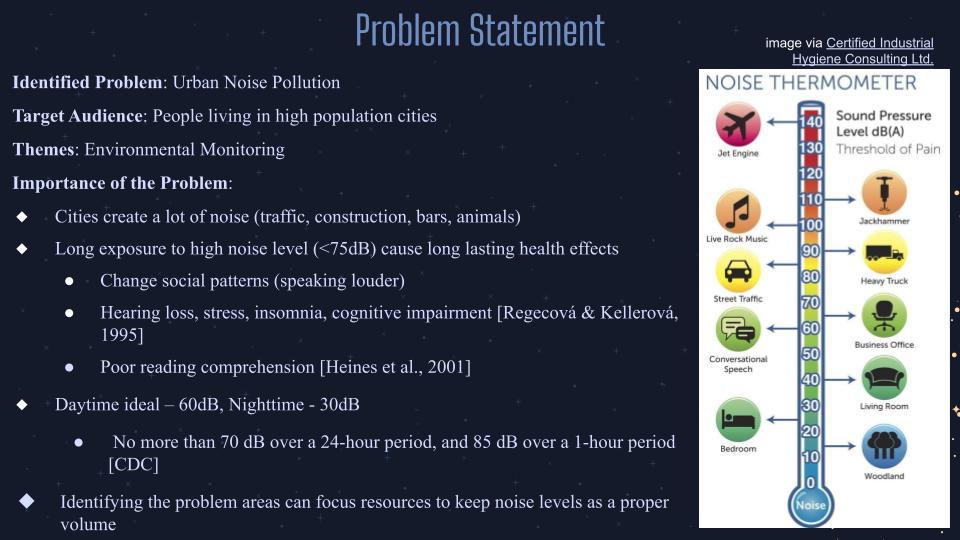
Cities are a busy place, with cars, outdoor activities, construction, and music filling the air. What many people don’t realize is the dangers all this sound can cause. Urban Noise Pollution refers to excess, unwanted noise. The World Health Organization (WHO) classifies sound as noise pollution 65dB, harmful at 75dB, and painful at 120dB. The average city street, with cars and buses passing by and outside seating at restaurants, is at an average of 75dB, and car honks reaching 100dB. Being exposed to this excess noise for long periods of time can cause health problems, like hearing loss, insomnia, and high blood pressure. A study showed that children 8-11 years old had a lower reading comprehension when exposed to louder ambient noise from a nearby airport. The ideal daytime sound levels should sit at around 60dB, and nighttime levels at 30dB. By creating a monitoring device, we can show in real time areas affected with sound pollution, and other dangerous areas.
What it does
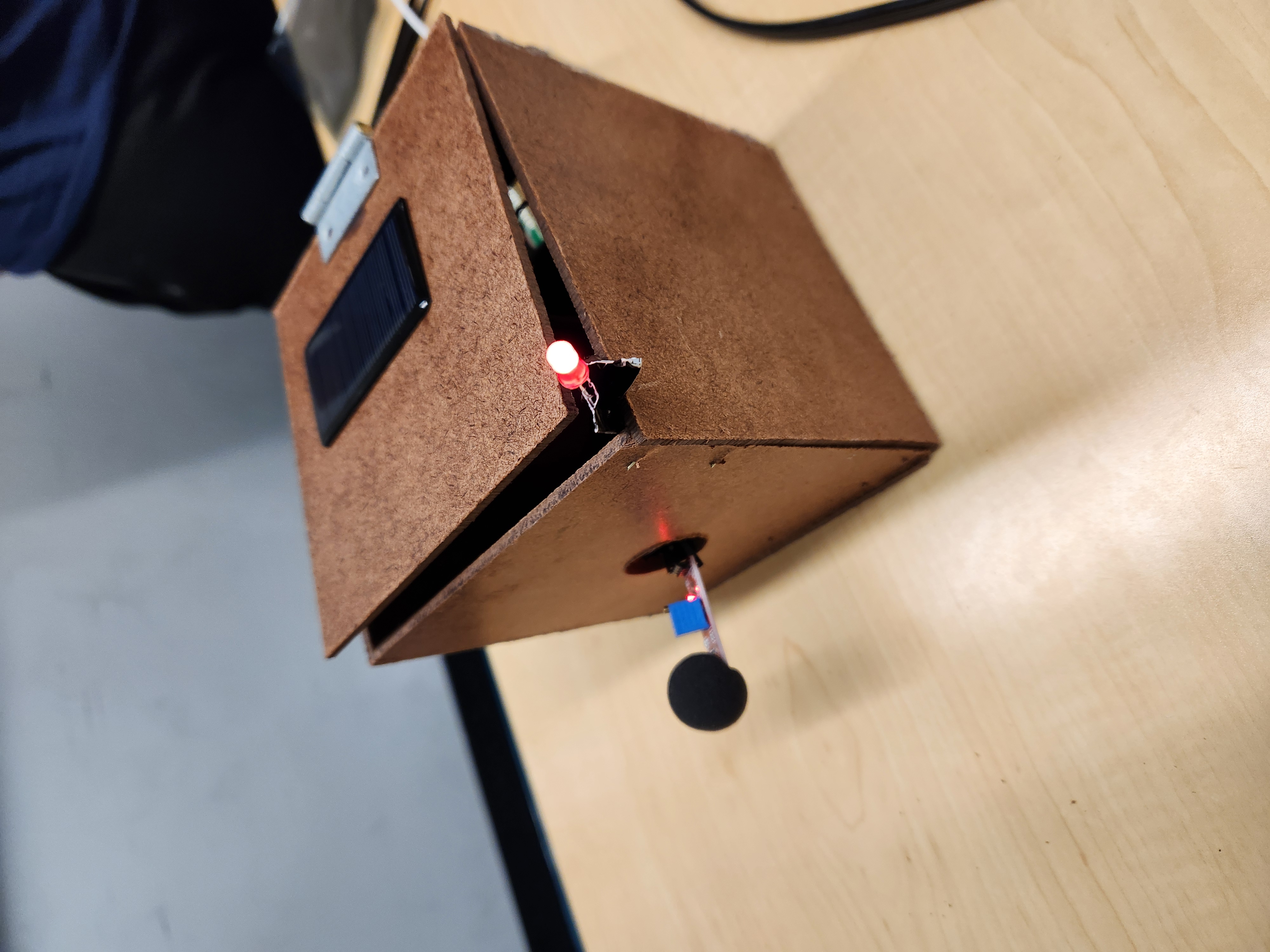
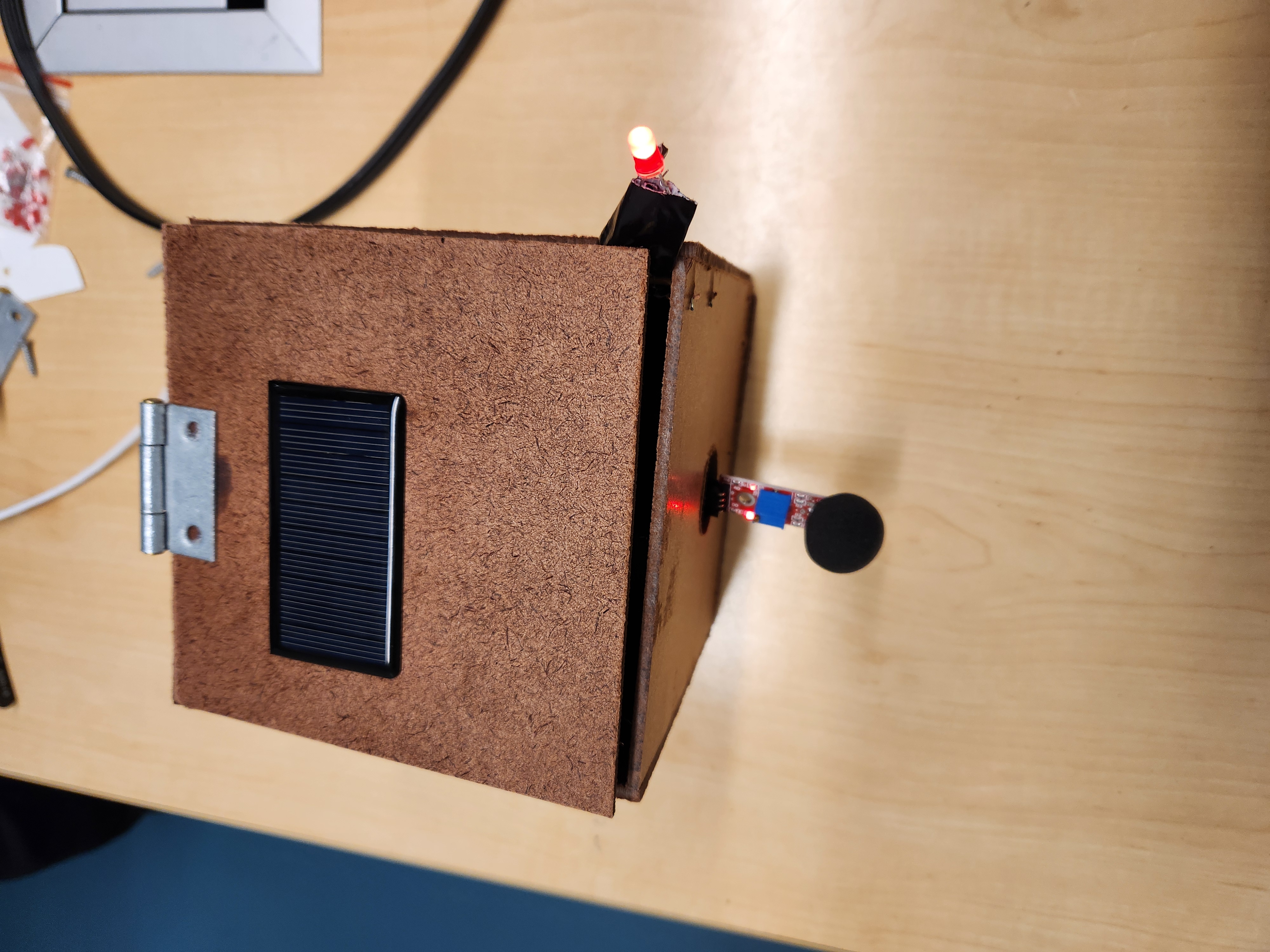
Our device can continually monitor sound levels with a KY-037 High Sensitivity Sound Detection Module. When the module detects sound above a certain decibel level, the led light will turn on. It can be mounted on a telephone post or other permanent structure.
How it was Built
It is powered by a battery or solar panel and an LED screen to display the readout of the sensor. When the microphone sensor detects noise above a certain level, it’s light will go off. We started off with a level of 75dB, and determined what environments set it off. It is housed inside a box, made of wood for the prototype to be light and to easily attach the components.
Challenges we ran into
While testing our original idea of monitoring the exact sound levels, we realized that we didn’t have a proper microphone. We decided to create a slightly simpler device that detects a sound level above or below a certain set decibel level. Powering the components a was bit difficult as well. We decided to use a solar panel, but without a regulator available, we had to decide how to keep the divide from overheating. We went with battery power, but kept the option to connect the solar power at a later stage.
Accomplishments that we're proud of
We ran into quite a few limitations on our hardware because of time and resources, but we never got discouraged. We used what we had and kept our end goals fluid to keep the workflow moving in the positive direction. The 24 hour straight work was a challenge, for most of the team decided to work straight through the night, but it was an unique experience.
What we learned
We learned the difference between the microphone sound sensor and BLANK, that one alerts to the presence of sound and one actively records sound. While researching background in noise levels, a majority of studies have been done outside of the USA.
What's next for Hush - An Urban Noise Monitoring Device
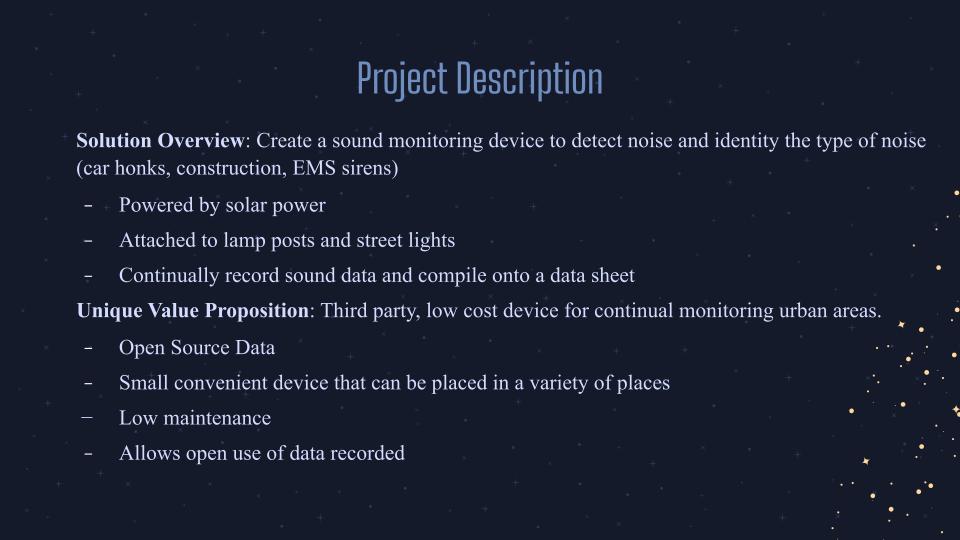
The next steps are to add a way to record and analyze the sound that is detected. Detecting the real time decibel levels at a certain location, and record it to a public database. Moving forward, being able to distinguish between the types of sounds, (i.e. car crashes, loud speaker music, EMS sirens) will allow users to identify problem areas.

Log in or sign up for Devpost to join the conversation.