-
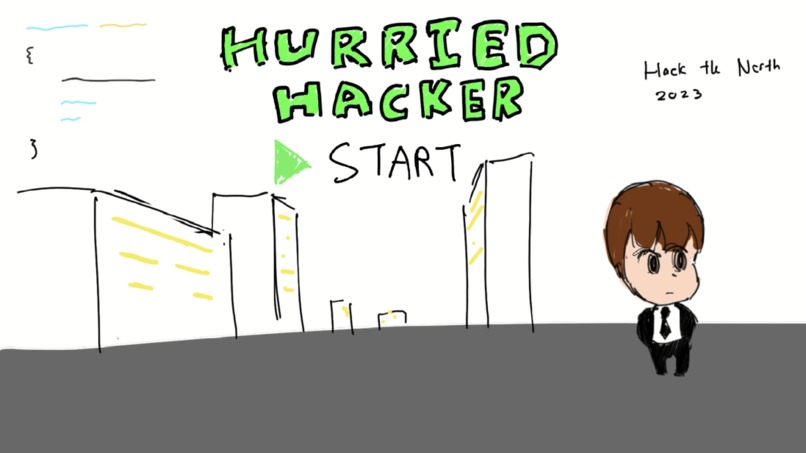
Title Screen
-
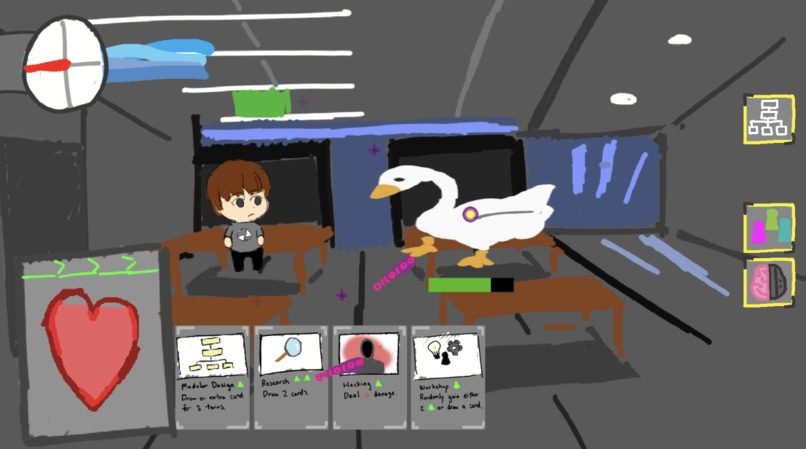
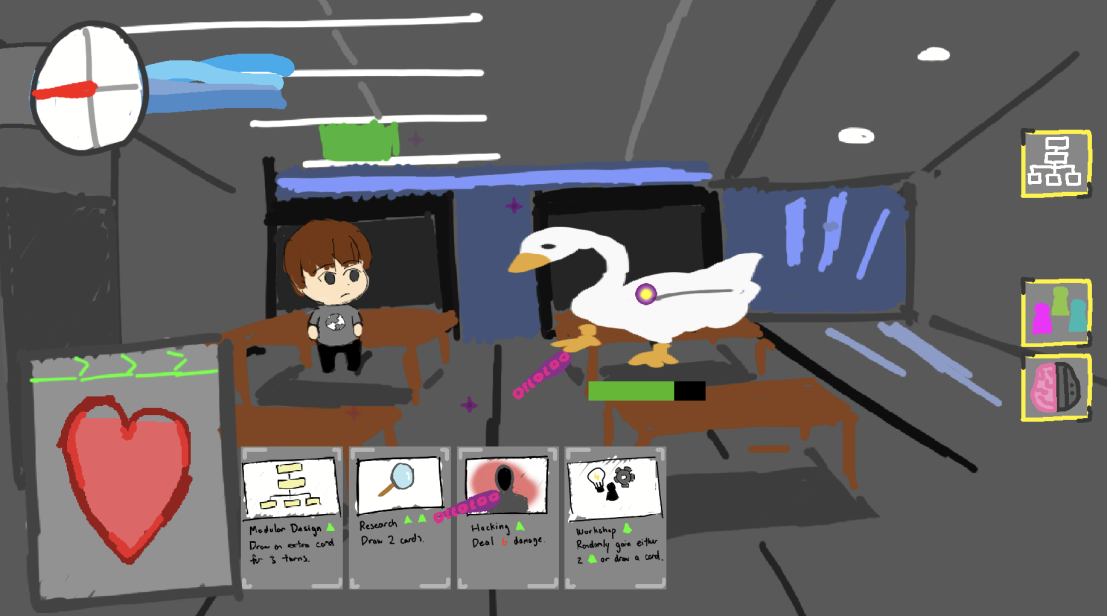
In-Game
-
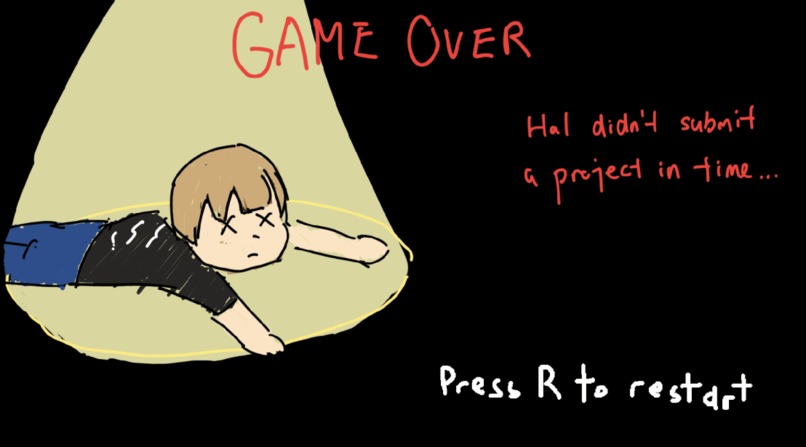
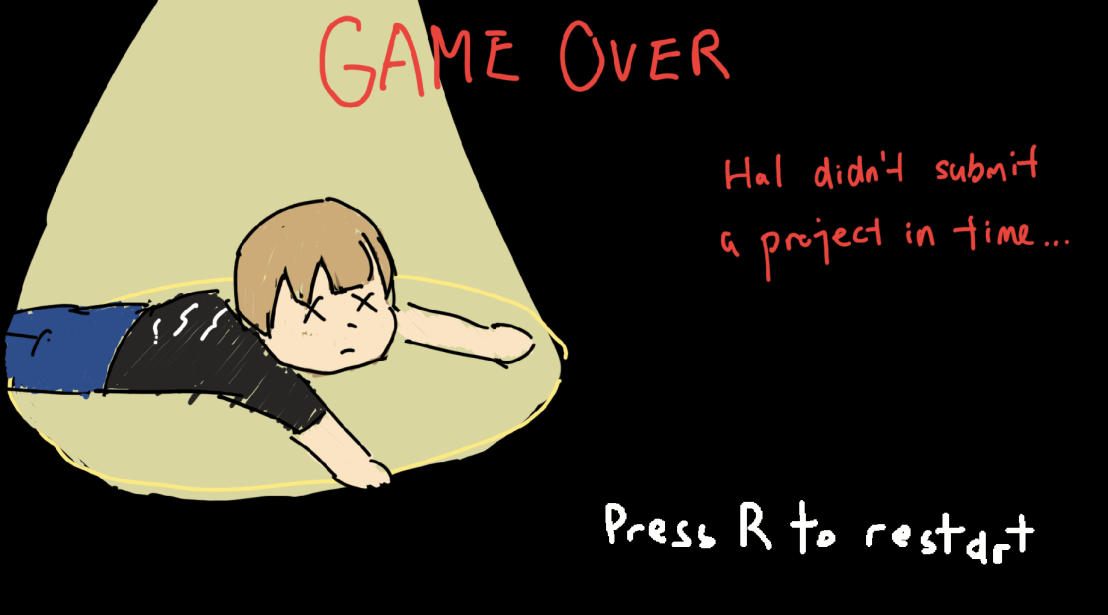
Game Over Screen
Inspiration
We started HackTheNorth without a team. Each one of us knew that we wanted to do game development but not exactly what we wanted to do. Initially, we were thinking about working with platformers since the Intro to Game Dev workshop was largely structured around building a platformer, but we decided it would be difficult to come up with something unique. Then we had the bright idea to build our game around our experience here at HackTheNorth, since this was actually every team member’s first time at a hackathon.
What it does
The project is a fast-paced card strategy game where the player aids the main character Hal, a first-time hacker, in surviving the struggles of HackTheNorth and in submitting their project in time. Hal uses the skills he learned throughout the hackathon (represented by cards), in order to lower the HP of the enemy character (Mr. Goose). Playing cards can consume stamina, or it can use up your timer, which gives the character interesting decisions to make as to how they can optimize their use of resources. Our efforts in balancing the game means that Hal cannot simply drink copious amounts of caffeine and beat the game. Returning Hal’s actions, Mr. Goose hurts and implants bugs in your code (hence the playable card “debugging”), lowering Hal’s HP.
How we built it
We initially tried building in Unity because of the Game Development workshops we attended but switched to GameMaker to capitalize on our team’s skill sets. Illustrations were drawn by one of our members on a tablet before being exported over to GameMaker. We had about three design processes ongoing at the same time: 1) card design/balancing 2) sprite/assets creation and 3) implementation of these ideas into our actual game.
Challenges we ran into
Figuring out source control on other platforms, especially when we have little experience with it, was time-consuming and frustrating. We also probably underestimated the difficulty of making card games. First off, to make a card game interesting, you have to create a wide variety of cards and card effects, which I think we managed to accomplish reasonably well. That being said, implementing interesting card effects also turned out to be more difficult than we expected. For instance, most of our relatively normal card effects only interacted with the player’s health, stamina, and timer. But to implement a card that says “the next card played this turn plays twice”, we would need to add a special buff that disappears upon the next card played, and we would also have to catch unintended interactions with other cards in the game. With more and more unique effects, there’s room for more and more bugs, so it becomes tedious to add interesting card effects.
Accomplishments that we're proud of
For a first hackathon, we’re proud that we actually managed to finish a functional demo of our game, especially since there are so many different aspects of game design that we had to implement and condense down into such a short time. Aspects like art and card implementation also took much longer than we had expected, especially since we wanted to get an indie/rough/hand-drawn feeling from our art style.
What we learned
We learned a lot about game design/development, source control and collaboration.
What's next for Hurried Hacker
We were only able to implement the combat system of our game over the course of the hackathon, but we had plans for a robust card drafting system that would let the player customize their own playstyle. The idea was that the player would begin the game with a basic deck, and through conquering opponents at a hackathon (enemies such as off by “one errors” or procrastination) they would be able to learn valuable skills (read: cards) and become stronger hackers. This would culminate in a proper roguelike experience, and ideally we would’ve been able to create perk trees for each stream at the hackathon.

Log in or sign up for Devpost to join the conversation.