-
-
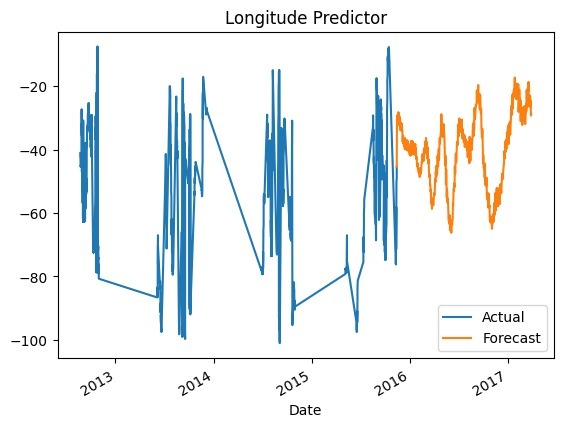
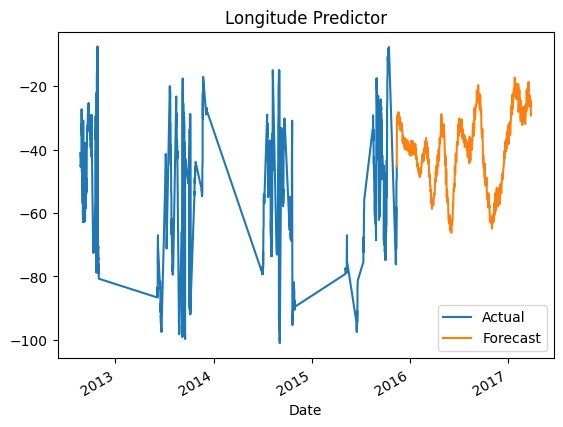
Longitude prediction which is good at capturing previous longitudes to make its predictions
-
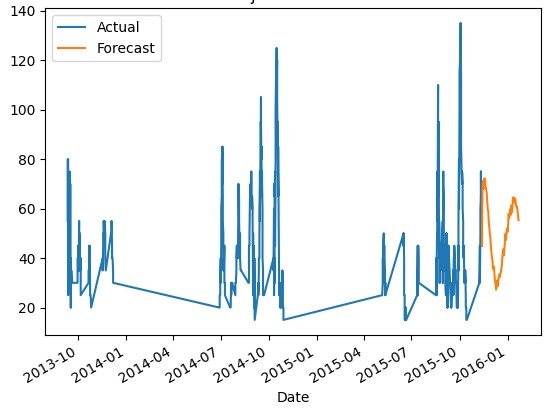
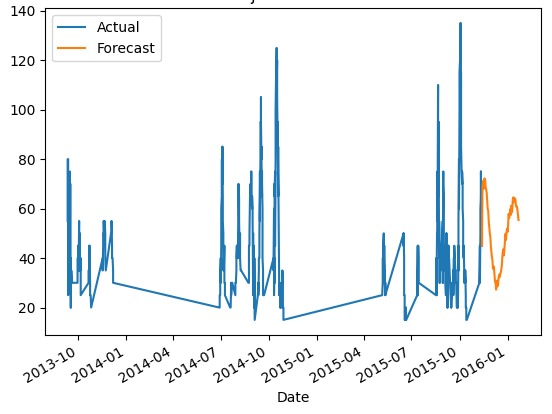
Windspeed prediction, as you can see it's very good at making accurate predictions
In recent years, climate change and global warming have led to an increase in hurricanes and natural disasters. To mitigate the effects of this issue, our AMP will process historical weather data to forecast future hurricanes. Our model will allow emergency responders to arrive at the impacted sites earlier and allow residents in those areas to reach shelter before being caught in the path of the hurricane.
Our AMP will employ a Long Short Term Memory (LSTM) Recurrent Neural Network model to generate time-series predictions for hurricanes. The use of this specific model will allow us to process tens of thousands of data points in an efficient manner by forgetting reoccurring data points (Short Term Memory) and remembering important data points (Long Term Memory). After processing a sufficient amount of data values, it would be able to create its own forecast for hurricane location, time, magnitude, and scope. LSTM models have been proven in the past to be efficient at creating predictions based on sufficient amounts of data, as proven by this paper: https://arxiv.org/abs/2205.04678. Overall, we will be using a hyper-efficient machine learning model for time-series prediction that will then be able to produce accurate predictions.
As hurricanes become increasingly common due to climate change, a machine learning model that could give accurate data within a large timeframe would be indispensable to millions in coastal areas and the general public. Utilizing Long Short Term Memory (LSTM) models, our project will not only detect hurricane trajectory, but it will provide other significant data such as magnitude and time. Additionally, unlike standard prediction techniques (use of satellites, weather balloons, meteorologists), our LSTM machine-learning algorithm would be significantly more accurate and accessible to the public. A future application of this model would be to create a website that records weather data and can make predictions using historical data in real time.
*NOTE: Our dataset started in the 1850s but ended in 2015. As you can imagine, this resulted in a lot of problems, the biggest one being that we could only make our predictions up to early 2017 without spending days training our model.
Built With
- 100hours
- machine-learning
- pleaseletuswinlol
- python
- tensorflow

Log in or sign up for Devpost to join the conversation.