Inspiration
Many commuters travel alone every day while nearby vehicles have empty seats. This leads to higher travel costs, traffic congestion, and increased environmental impact.
Public transport is often unreliable or inconvenient, especially for daily professional commutes.
Humsafar was inspired by the idea that people traveling in the same direction should be able to commute together—safely, affordably, and conveniently.
What it does
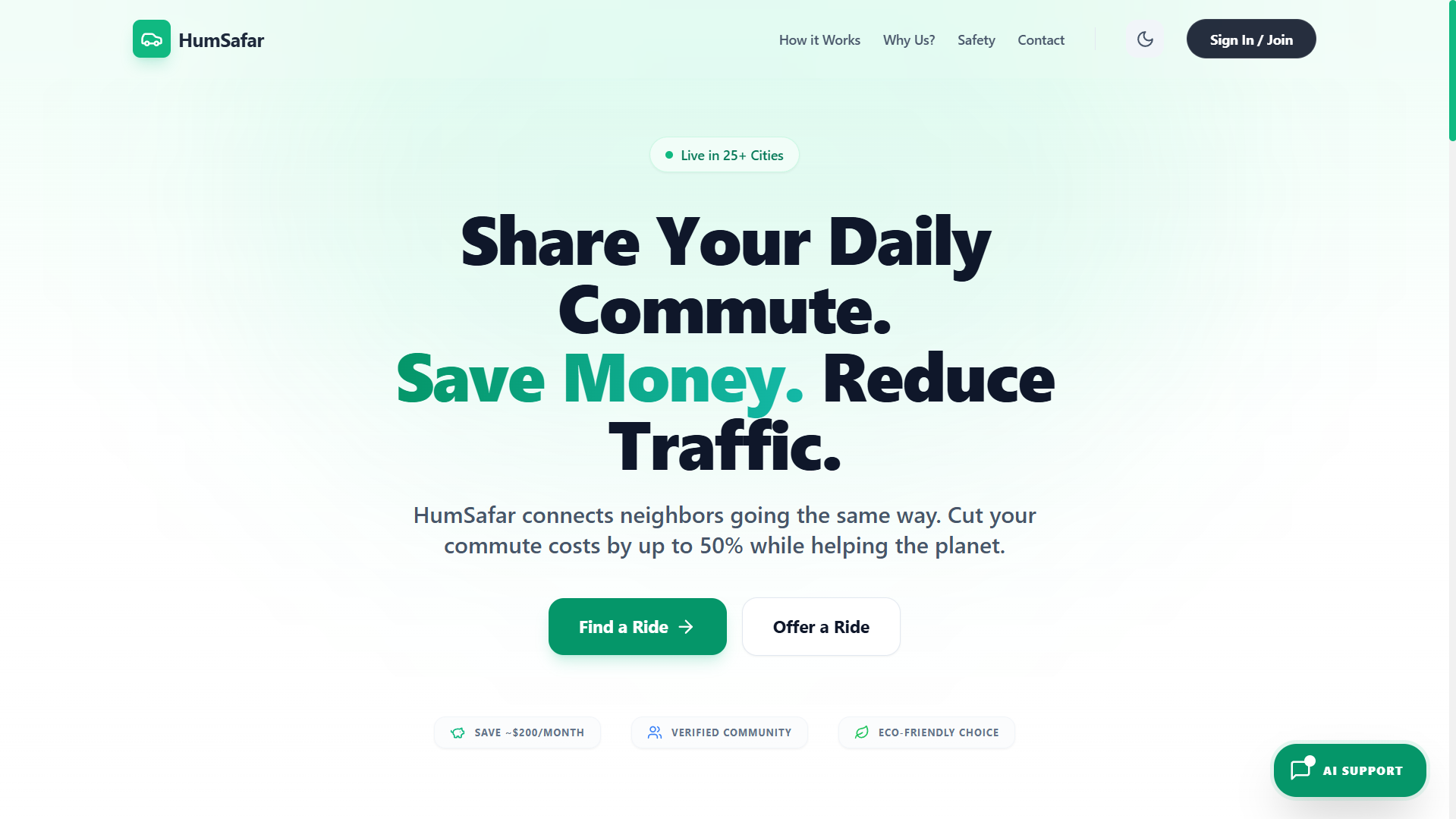
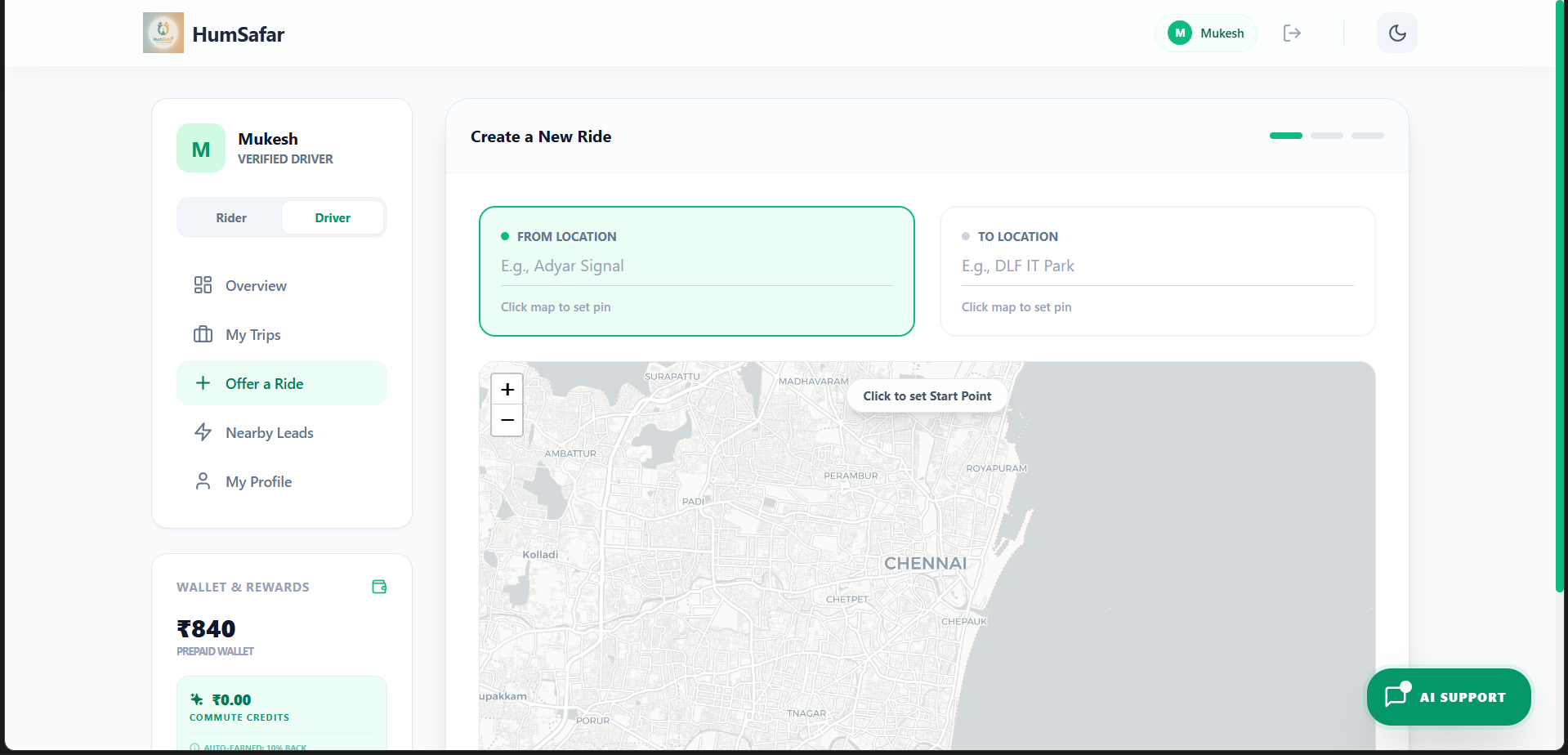
Humsafar is a web-based ride-sharing platform designed for daily commuters.
It allows users to:
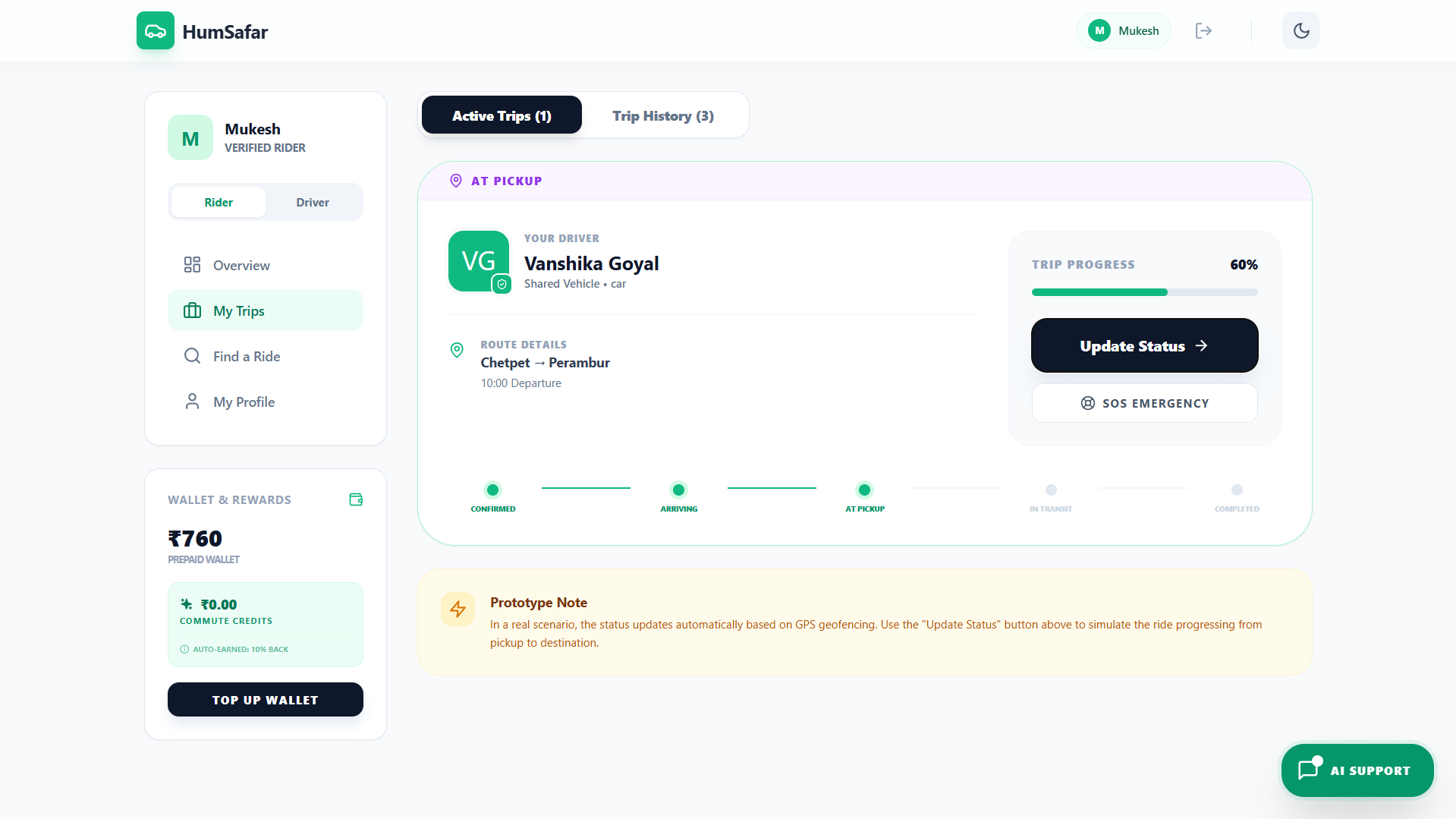
- Switch between Driver and Rider roles
- Create or join one-time or recurring rides
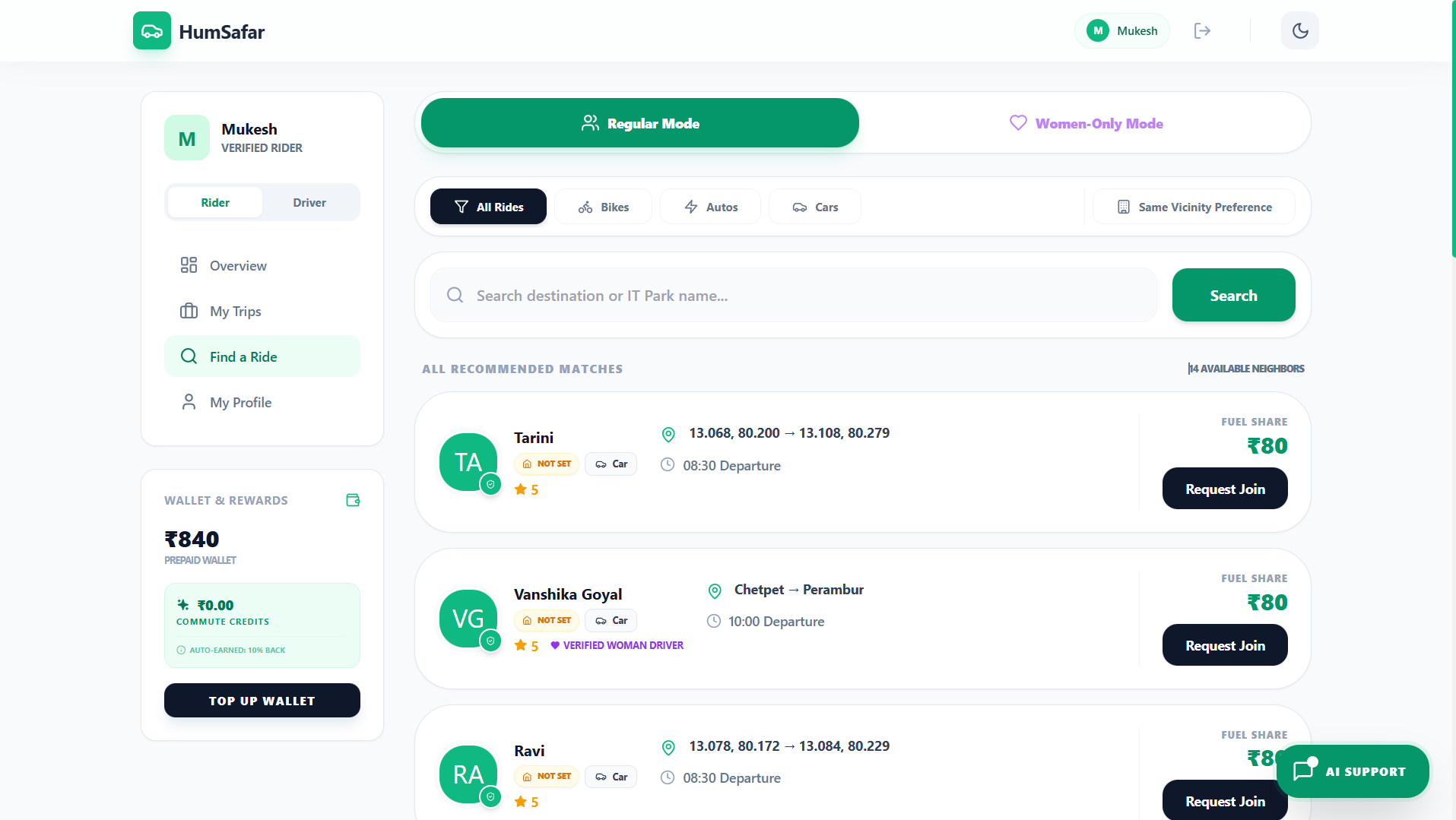
- Share empty seats with nearby commuters going the same direction
- Use map-based route selection
- Choose preferred vehicles
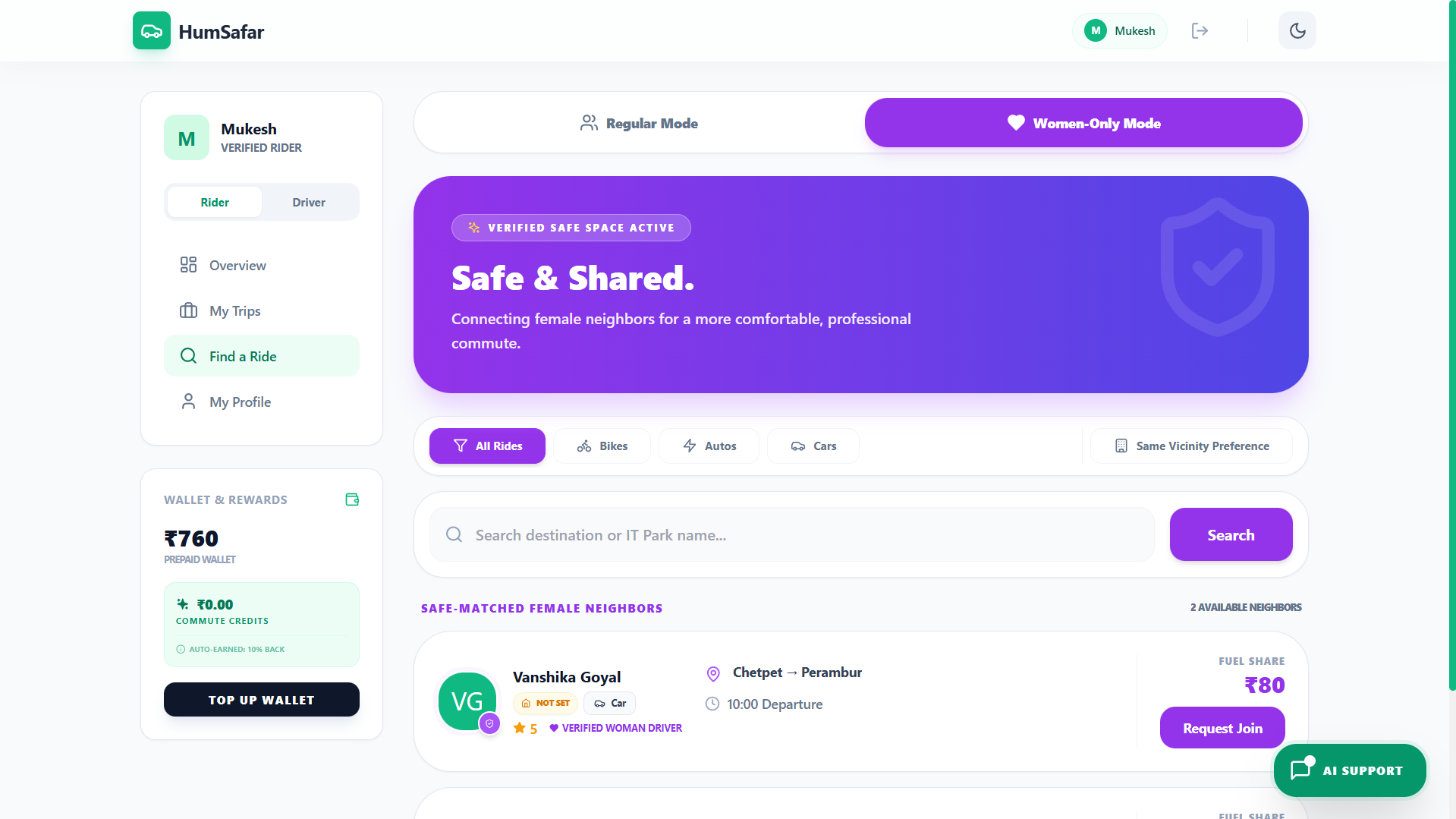
- Access women-only ride options for added safety
- Rely on real-time matching and SOS support
The platform reduces commute costs, saves time, and promotes a more sustainable way to travel.
How we built it
We built Humsafar using a modern web stack:
- Next.js for the frontend
- Supabase for authentication, database, and real-time features
- Leaflet for interactive maps and route visualization
- Role-based access for drivers and riders
- Secure database rules for user safety and data integrity
The system supports ride creation, recurring commute schedules, and real-time seat availability.
Challenges we ran into
One major challenge was managing authentication state and consistent data flow while transitioning from mock data to real backend logic.
We addressed this by:
- Restructuring the data flow
- Implementing Supabase authentication and database rules properly
- Improving state management across components
- Gradually replacing mock data with real backend logic
- Thorough testing during integration
This helped stabilize the application and improve overall reliability.
Accomplishments that we're proud of
- Built a complete role-based ride-sharing system
- Implemented map-based ride creation and discovery
- Enabled recurring daily commute rides
- Added women-only ride options and safety-focused features
- Created a scalable backend using Supabase
What we learned
- Designing reliable authentication and session management is critical
- Real-time features require careful state handling
- Building with a clear MVP scope helps ship faster
- User safety and trust must be considered from day one
What's next for Humsafar
- Payment and wallet integration
- Advanced AI-powered ride matching
- Push notifications for ride updates
- Expanded safety features and verification
- Mobile app version of the platform
Built With
- gemini
- react
- supabase
- typescript
- vercel

Log in or sign up for Devpost to join the conversation.