-
-
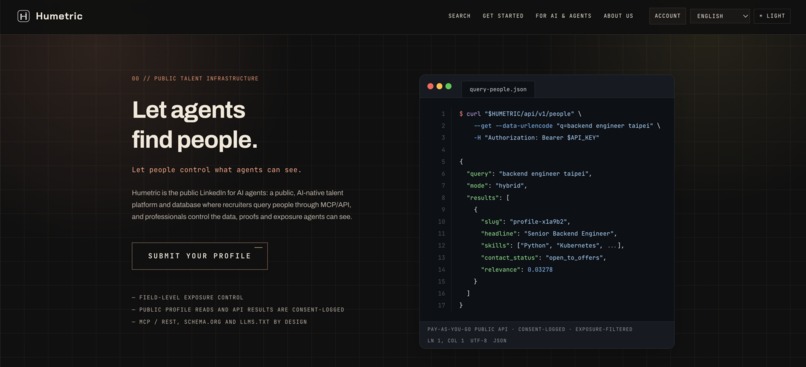
Homepage
-
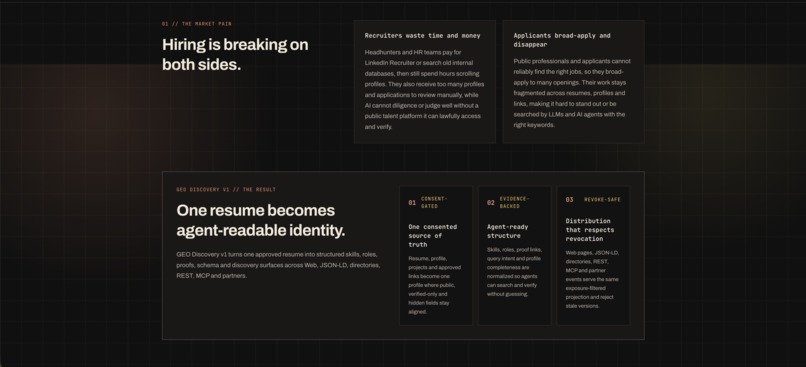
Painpoint / Problem
-
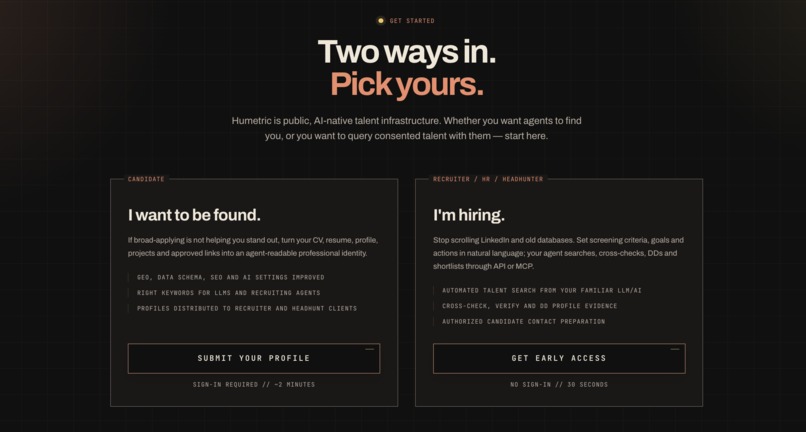
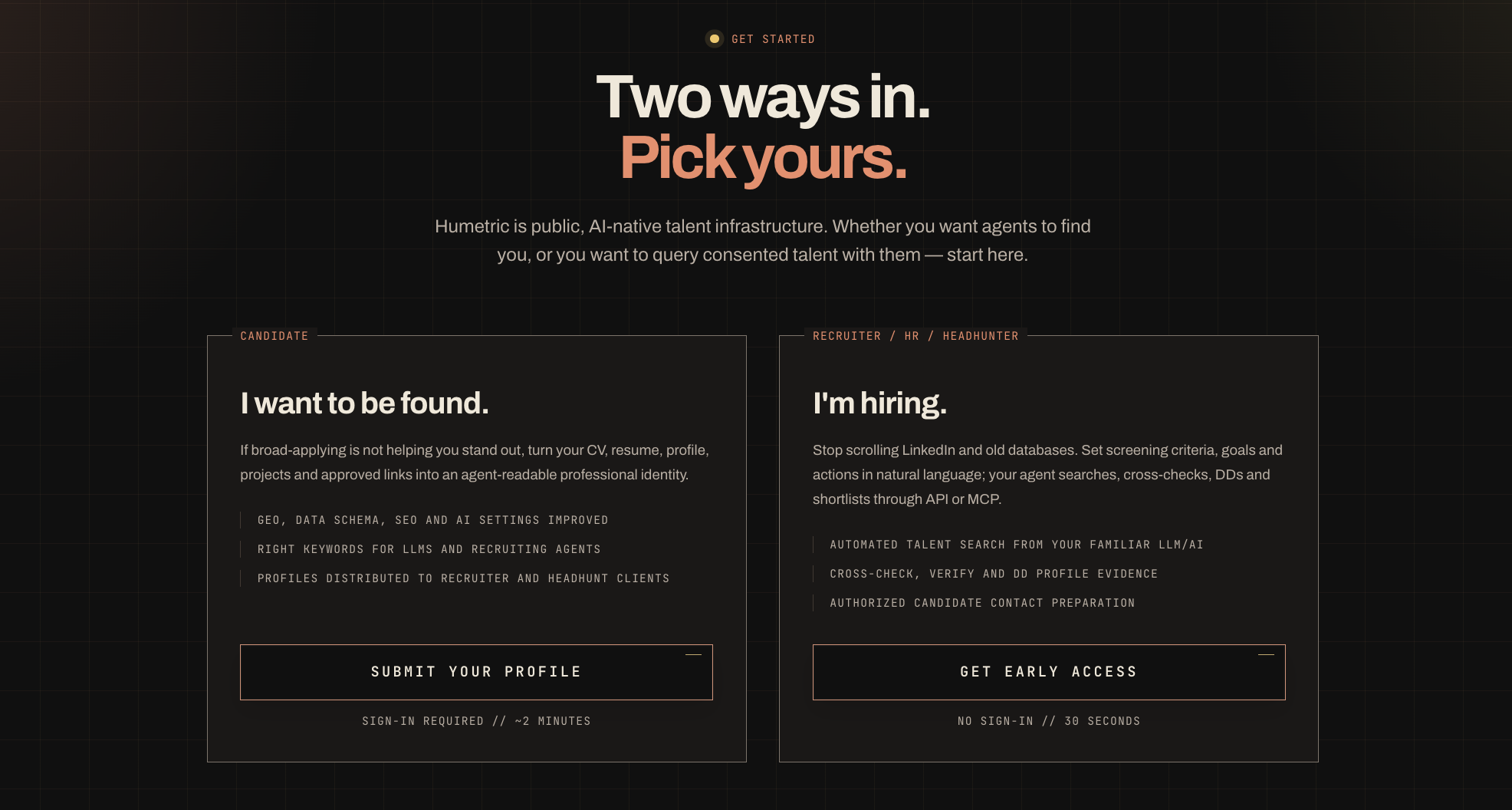
user entry lobby
-
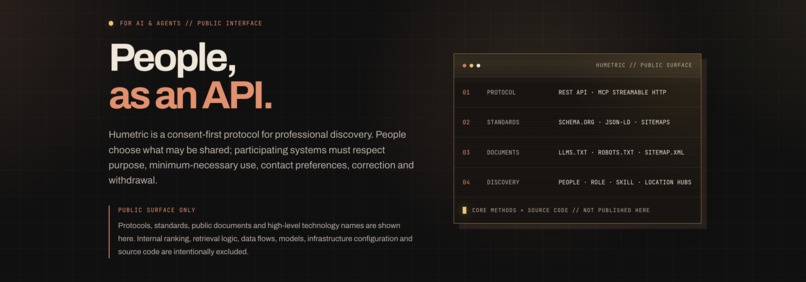
Recruiters' page
-
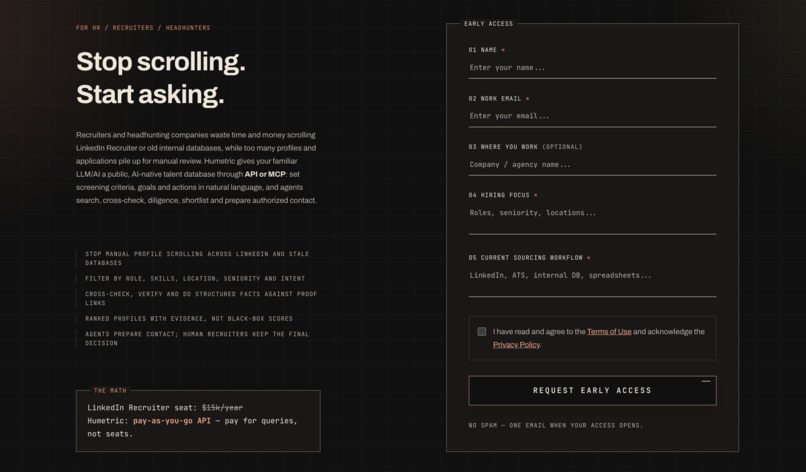
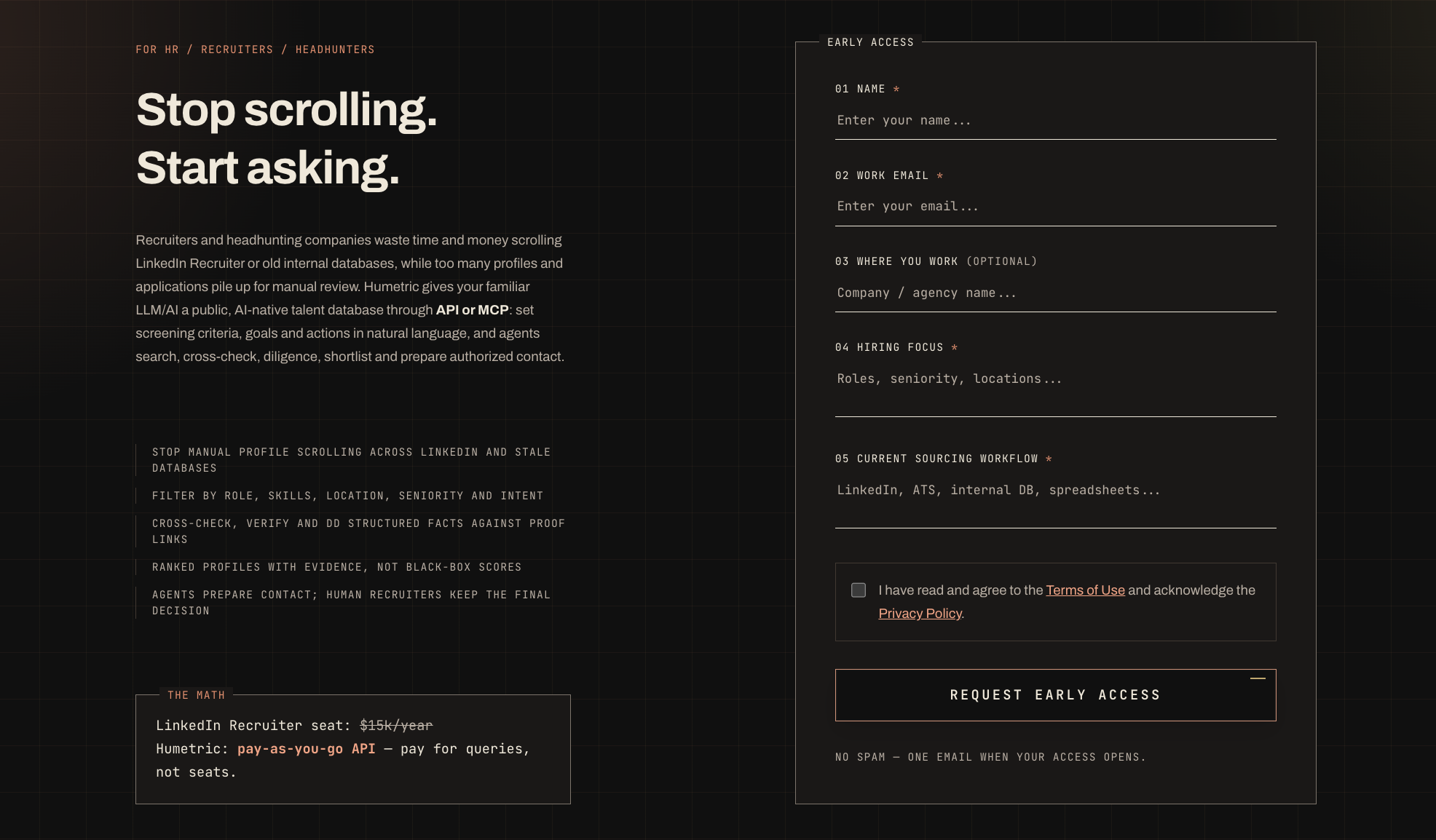
Early Access for recruiters
-
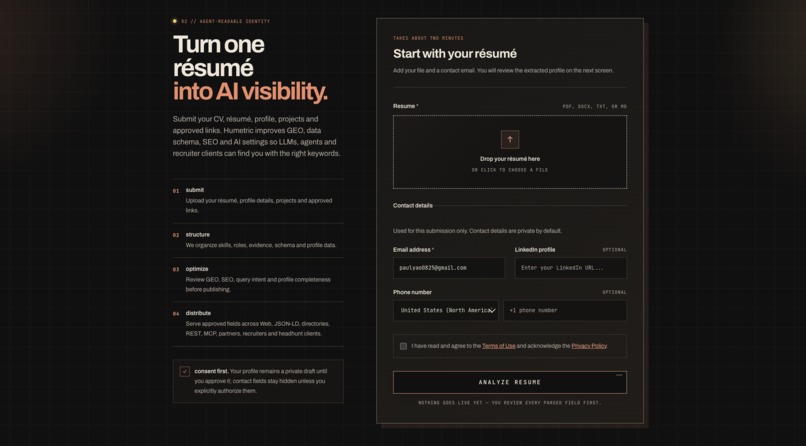
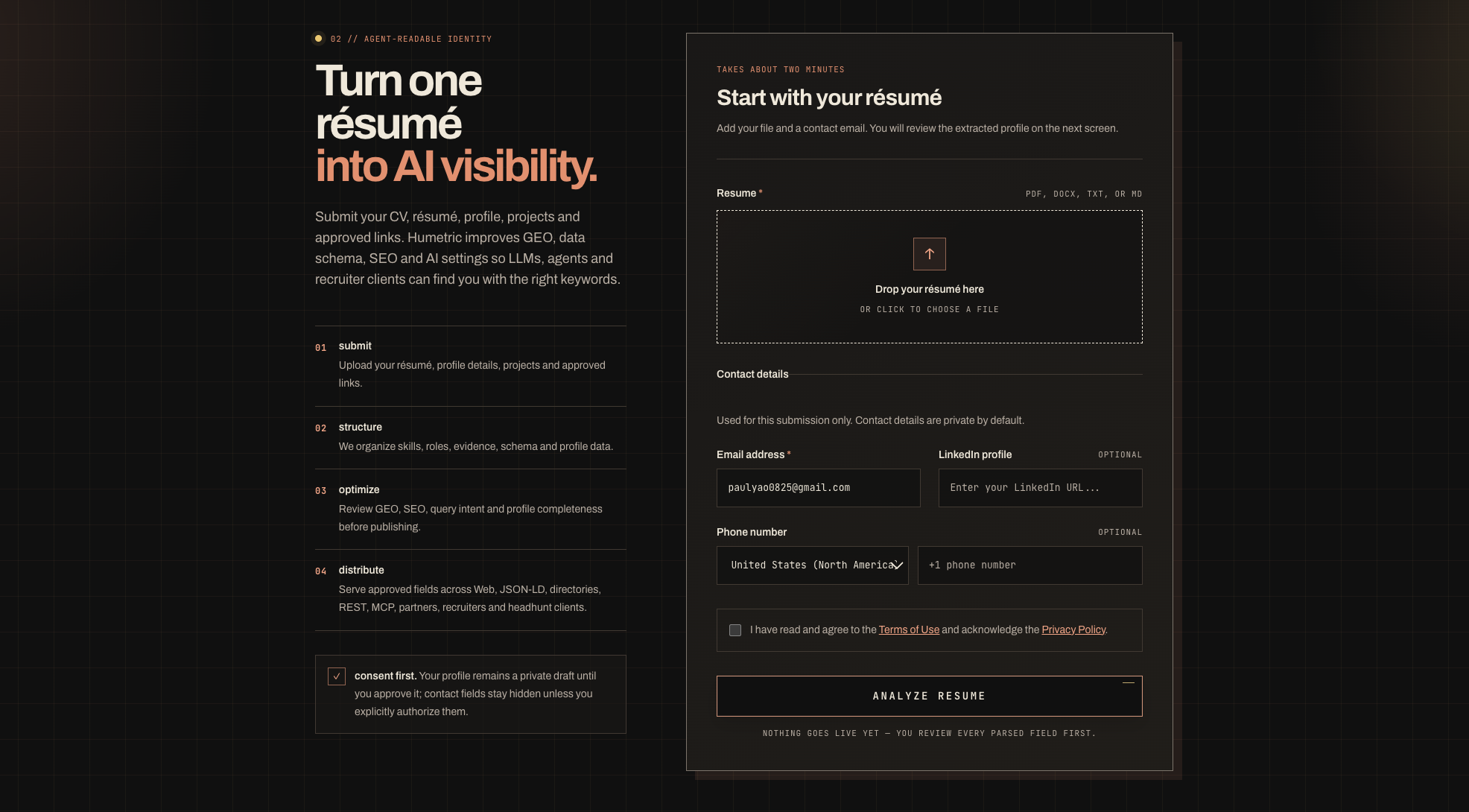
Submit Profile
-
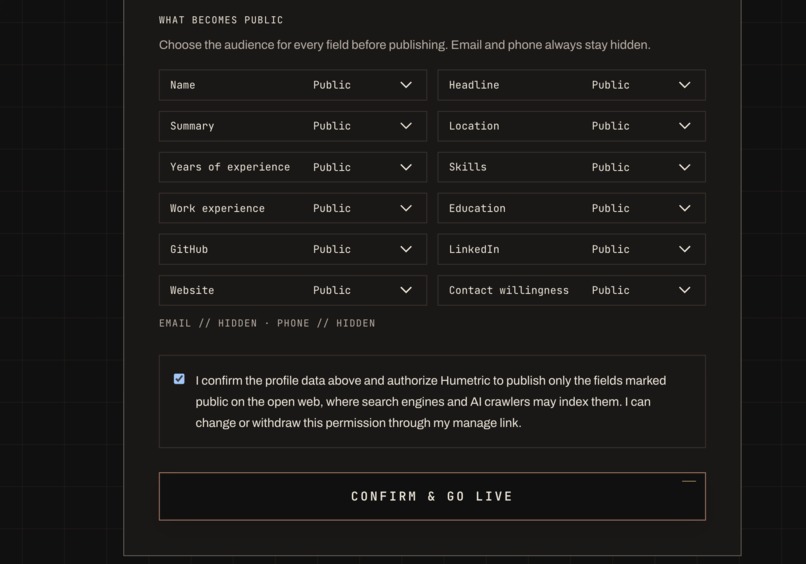
User's Data Customization
-
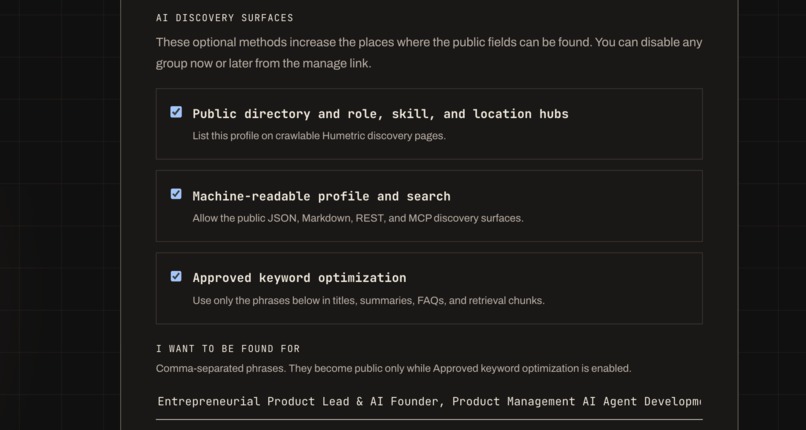
Settings
-
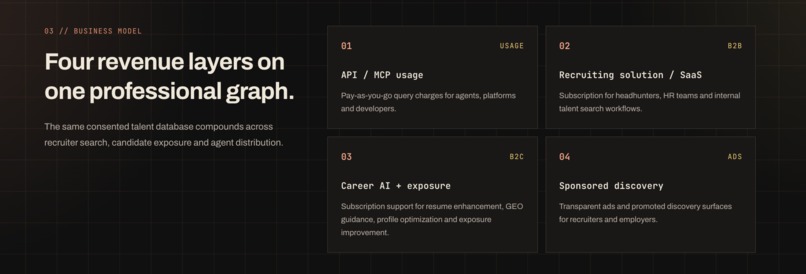
Business Model / Charging Plans
-
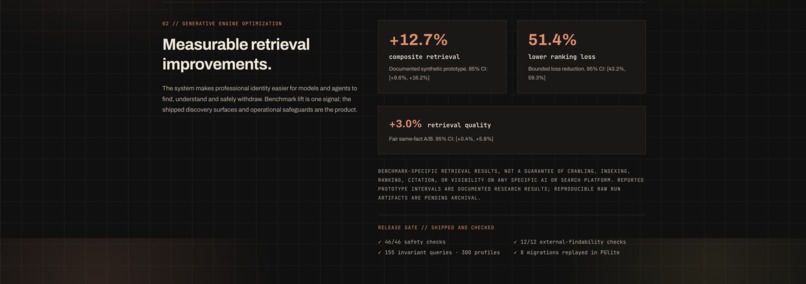
Stats
-
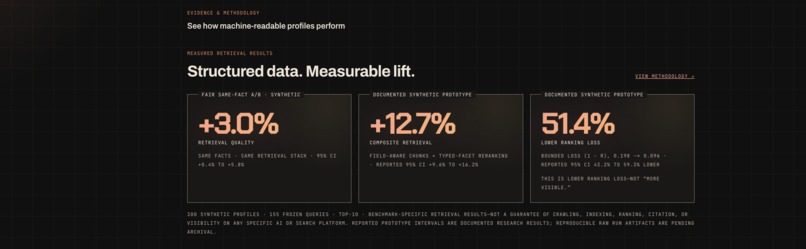
Stats 2
-
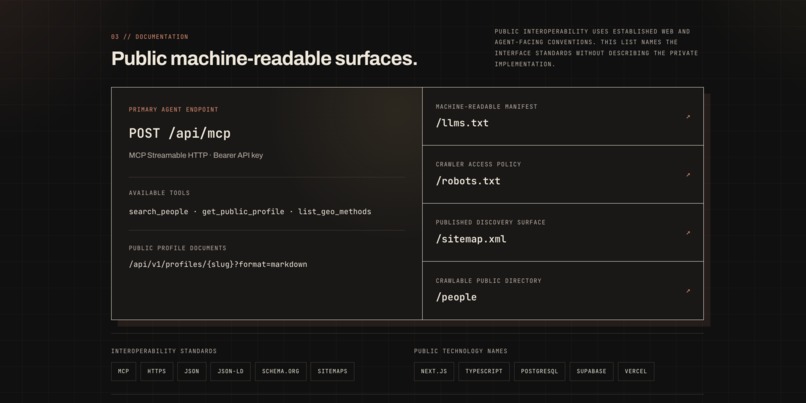
Frameworks
-
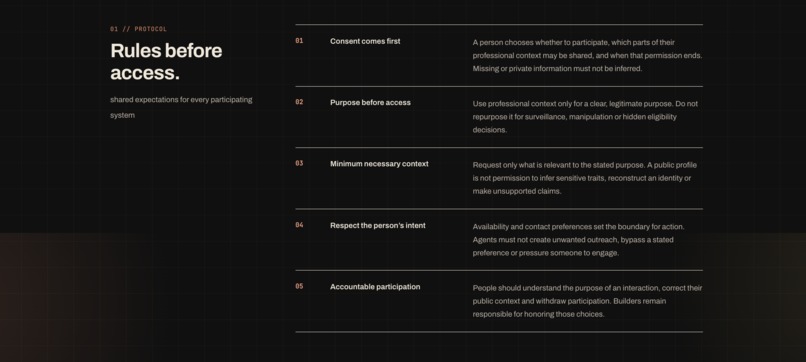
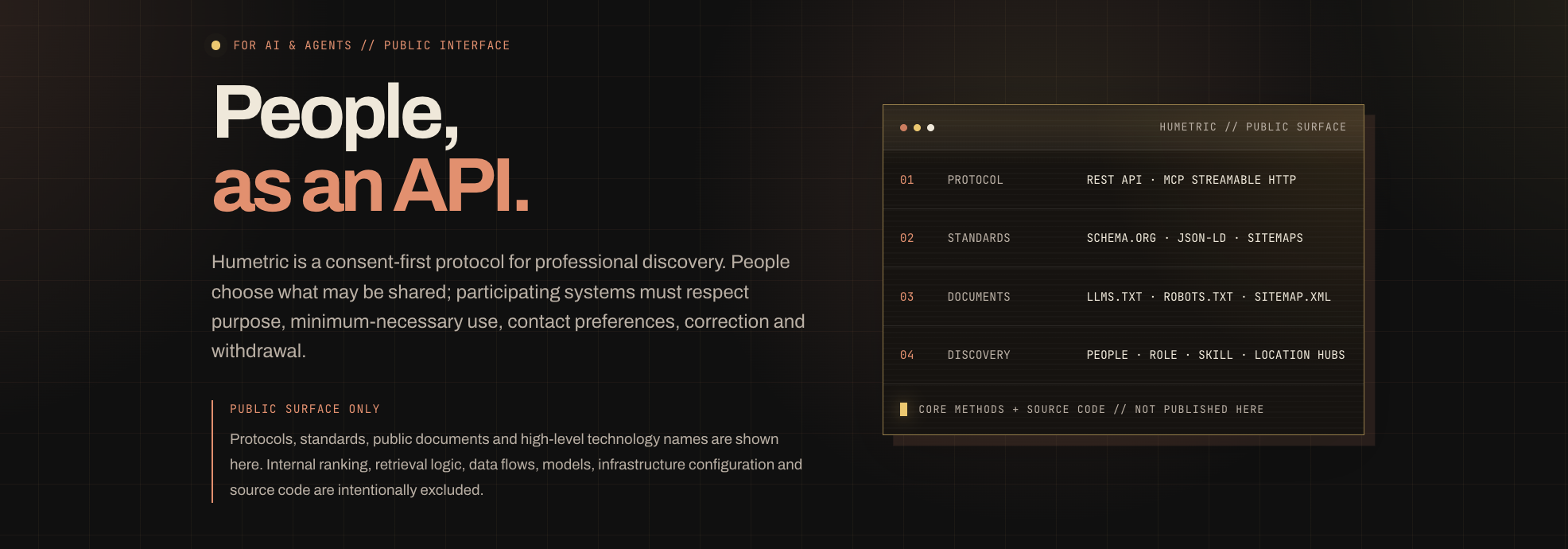
Protocols
-
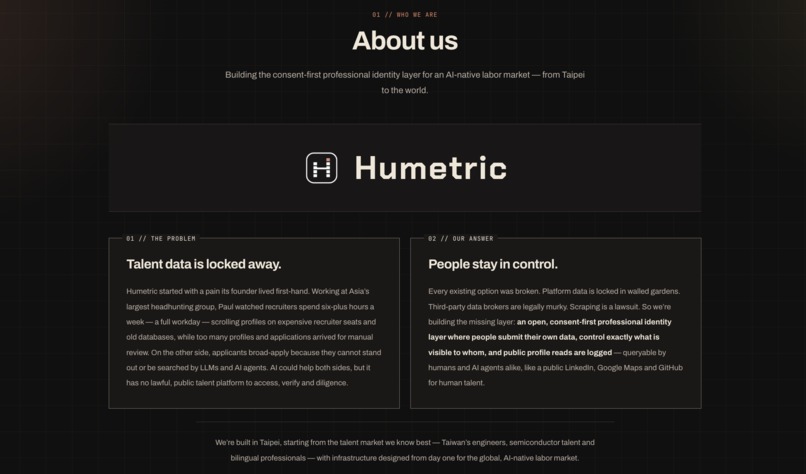
Team info
Inspiration
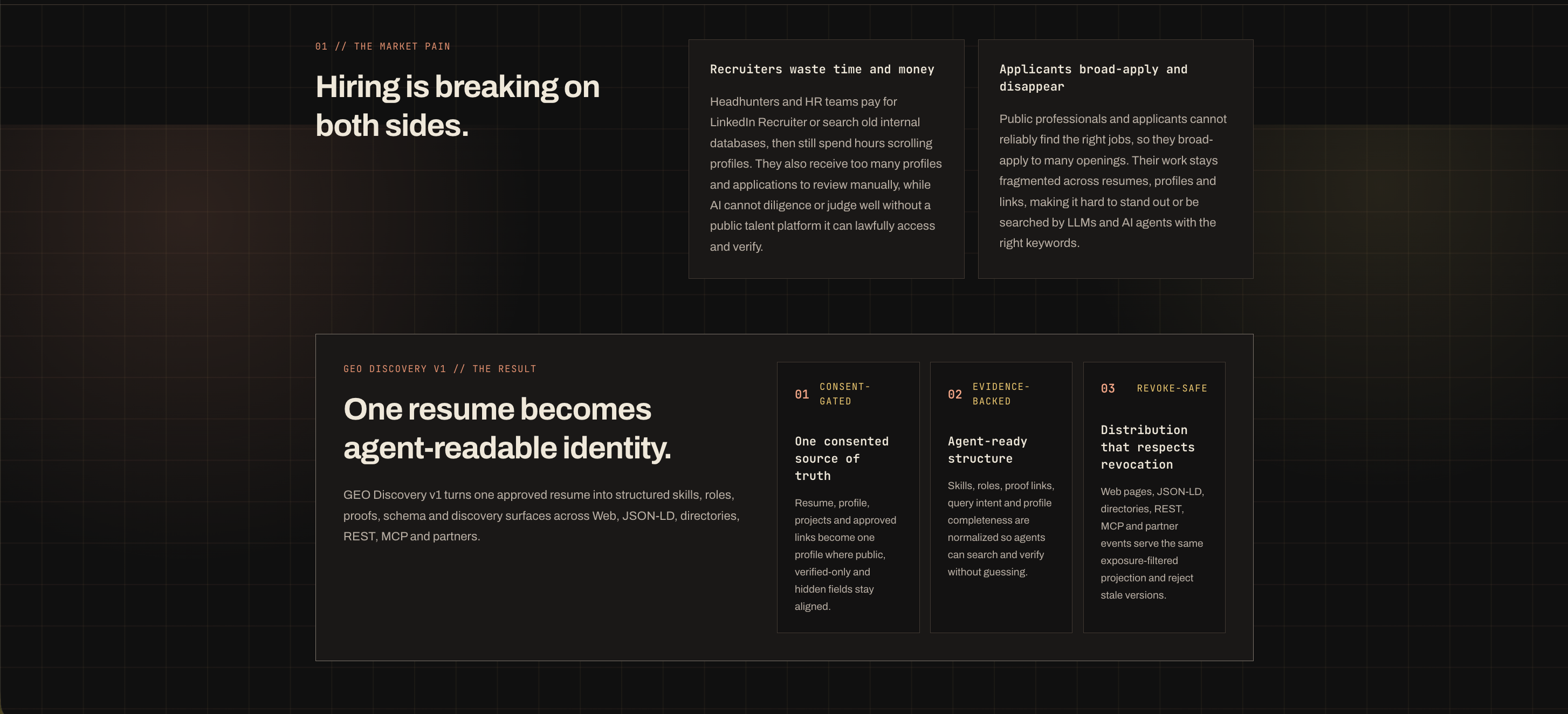
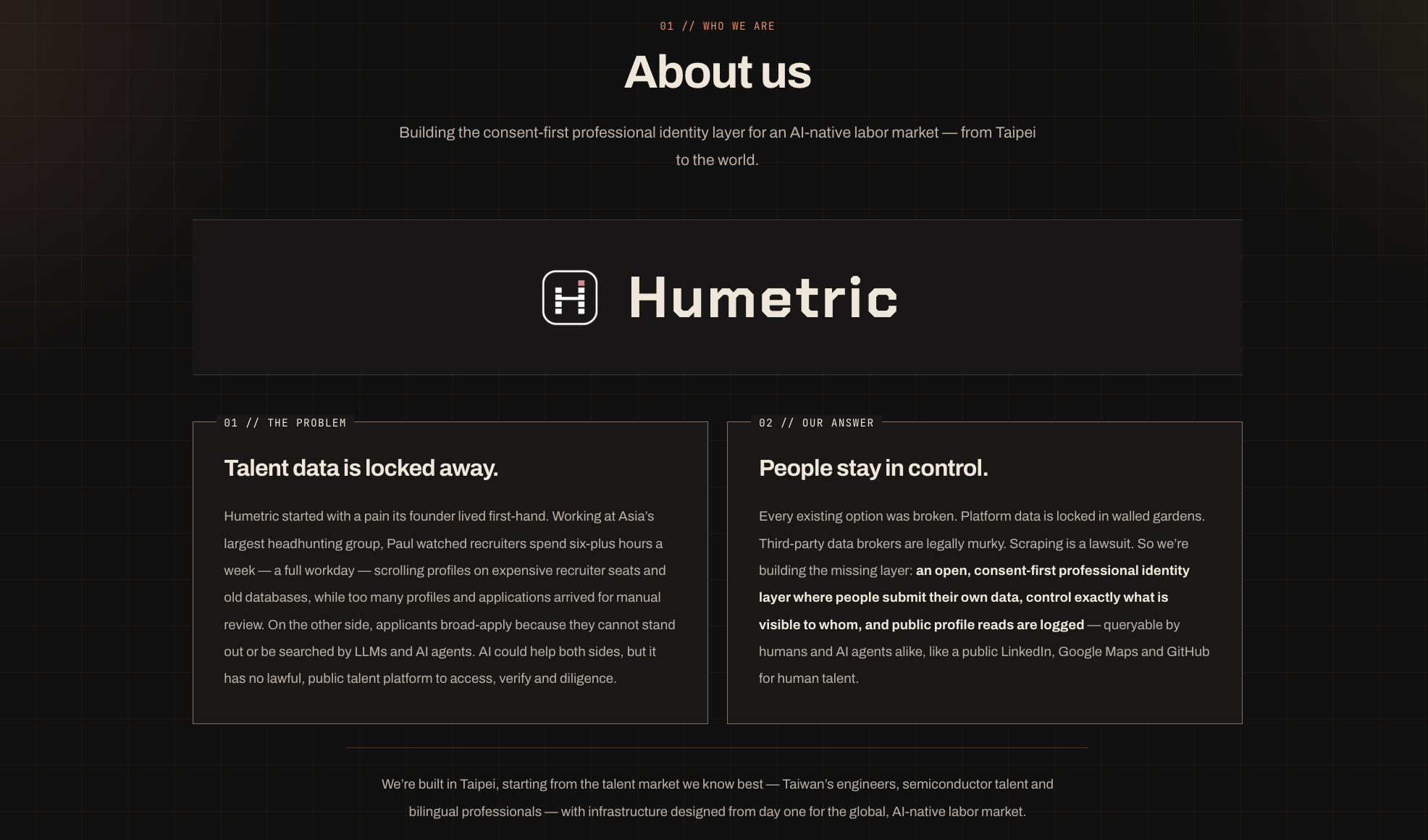
I used to work in the largest headhunting company in Asia. Recruiting is still trapped inside expensive, closed databases. Recruiters spend hours browsing profiles manually, while AI agents could search much faster if talent data were structured, lawful, and machine-readable. At the same time, applicants need a way to become discoverable by AI without losing control of what is public.
What it does
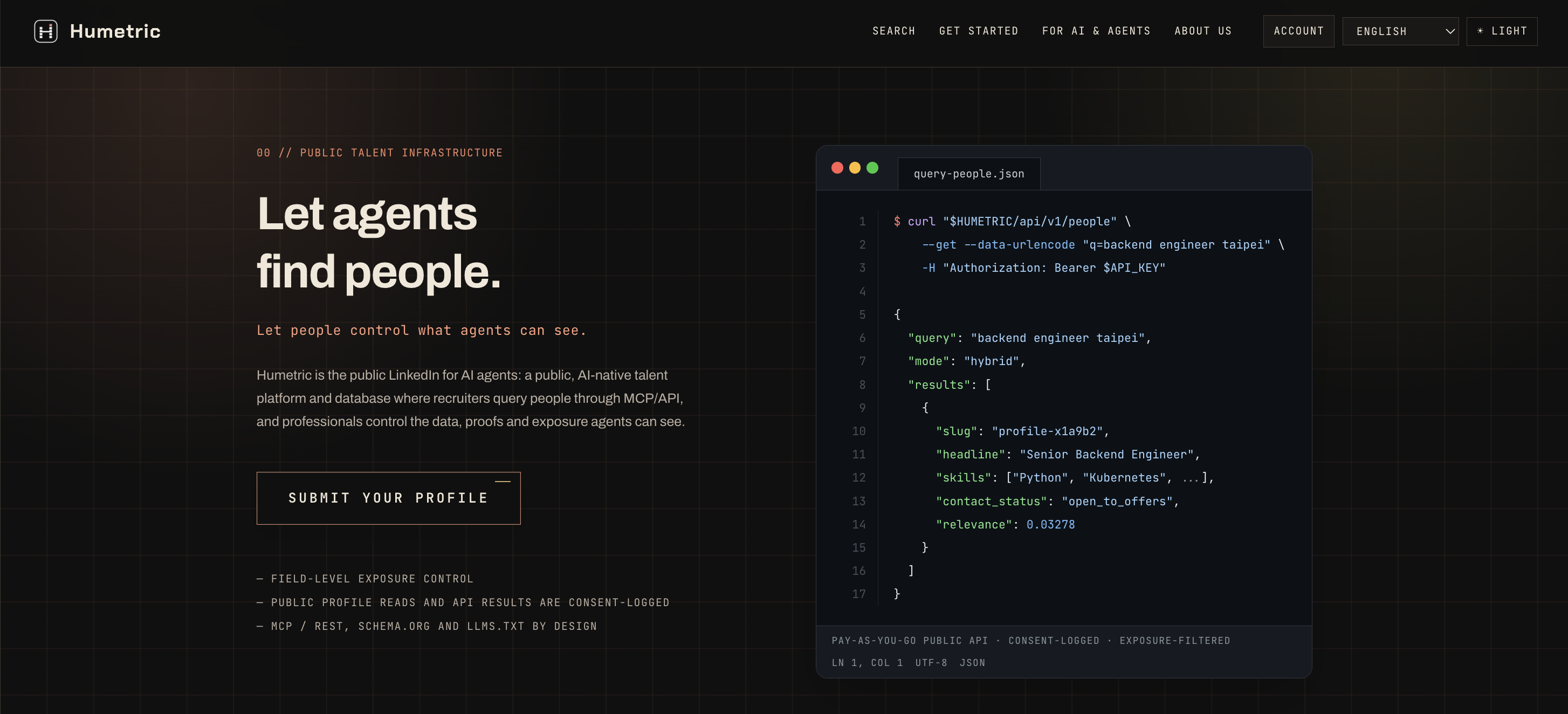
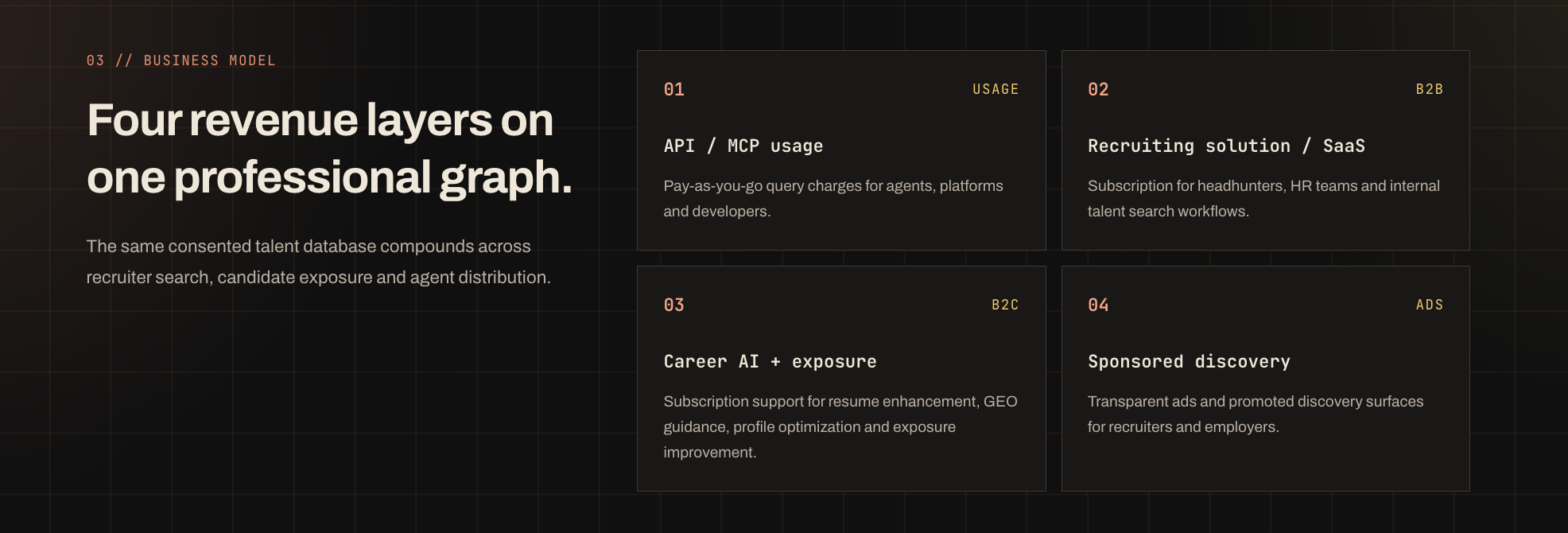
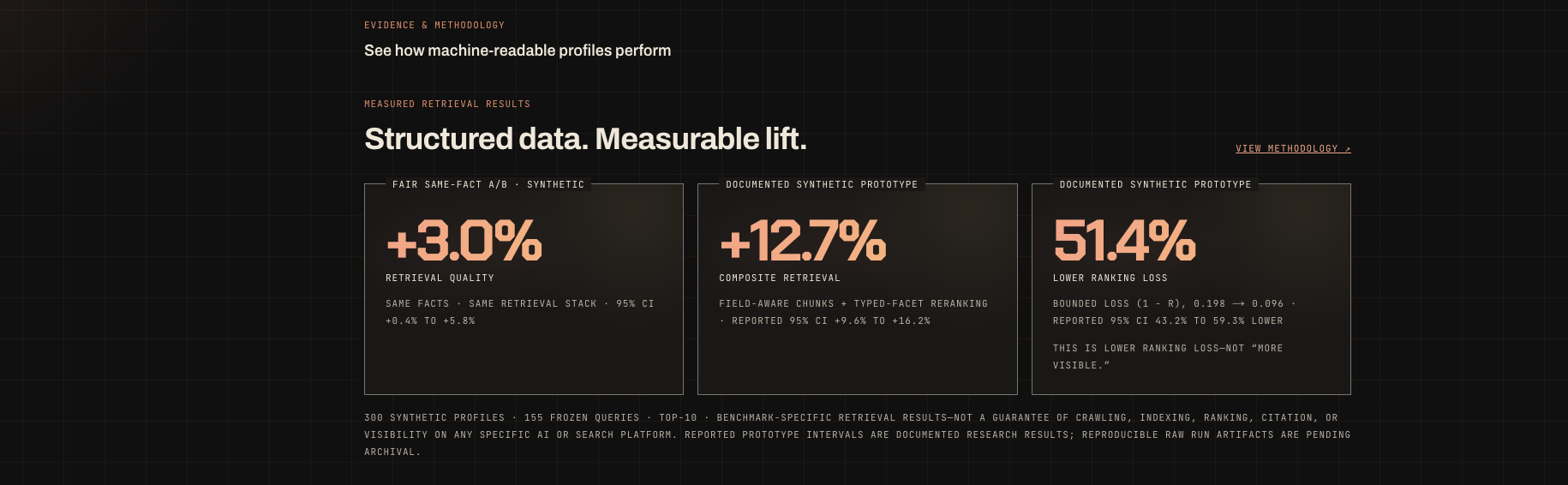
Humetric is a public, AI-native talent platform: recruiters find people faster and cheaper via our database API/MCP, while applicants become AI-searchable and control their own profile publicity.
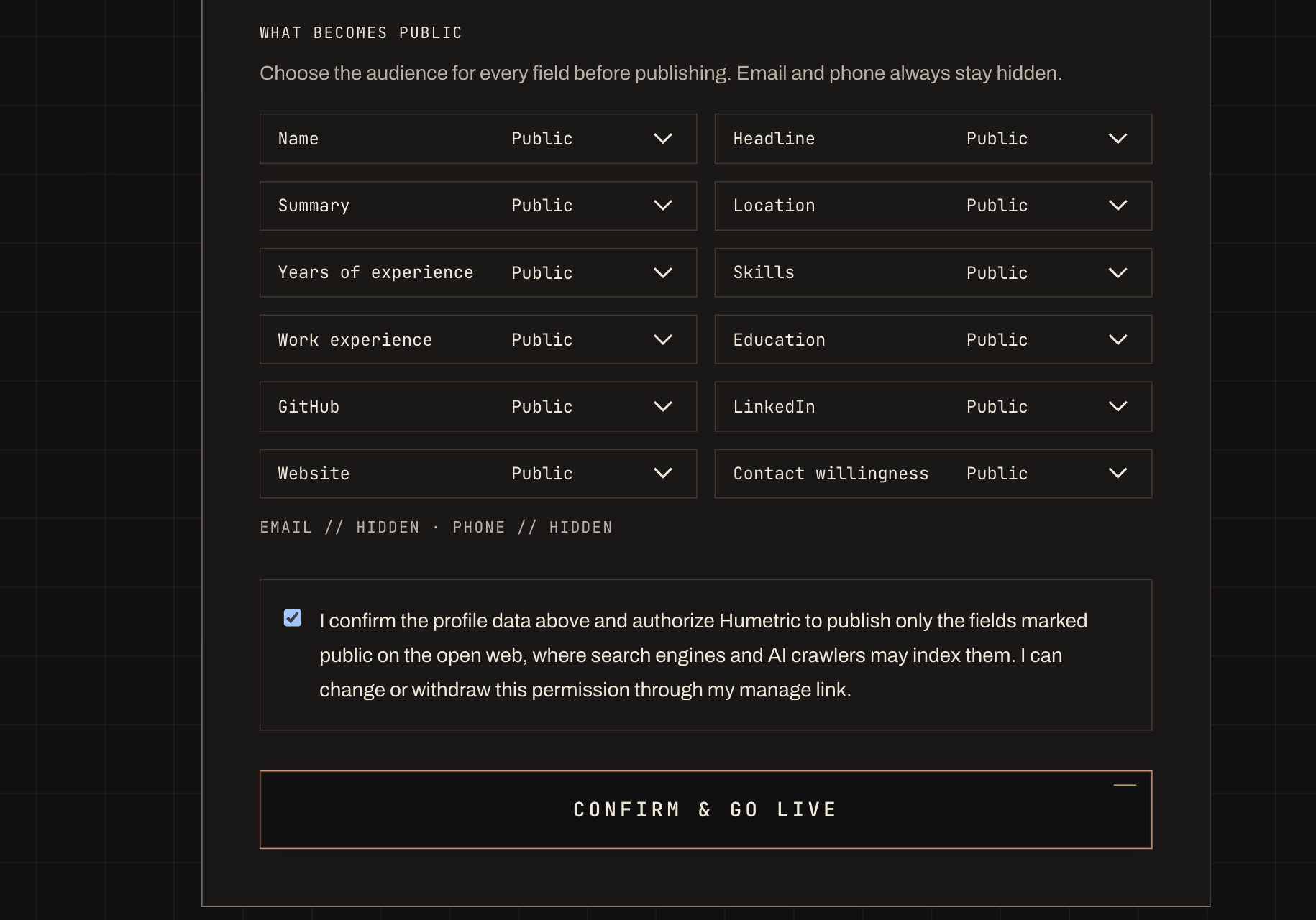
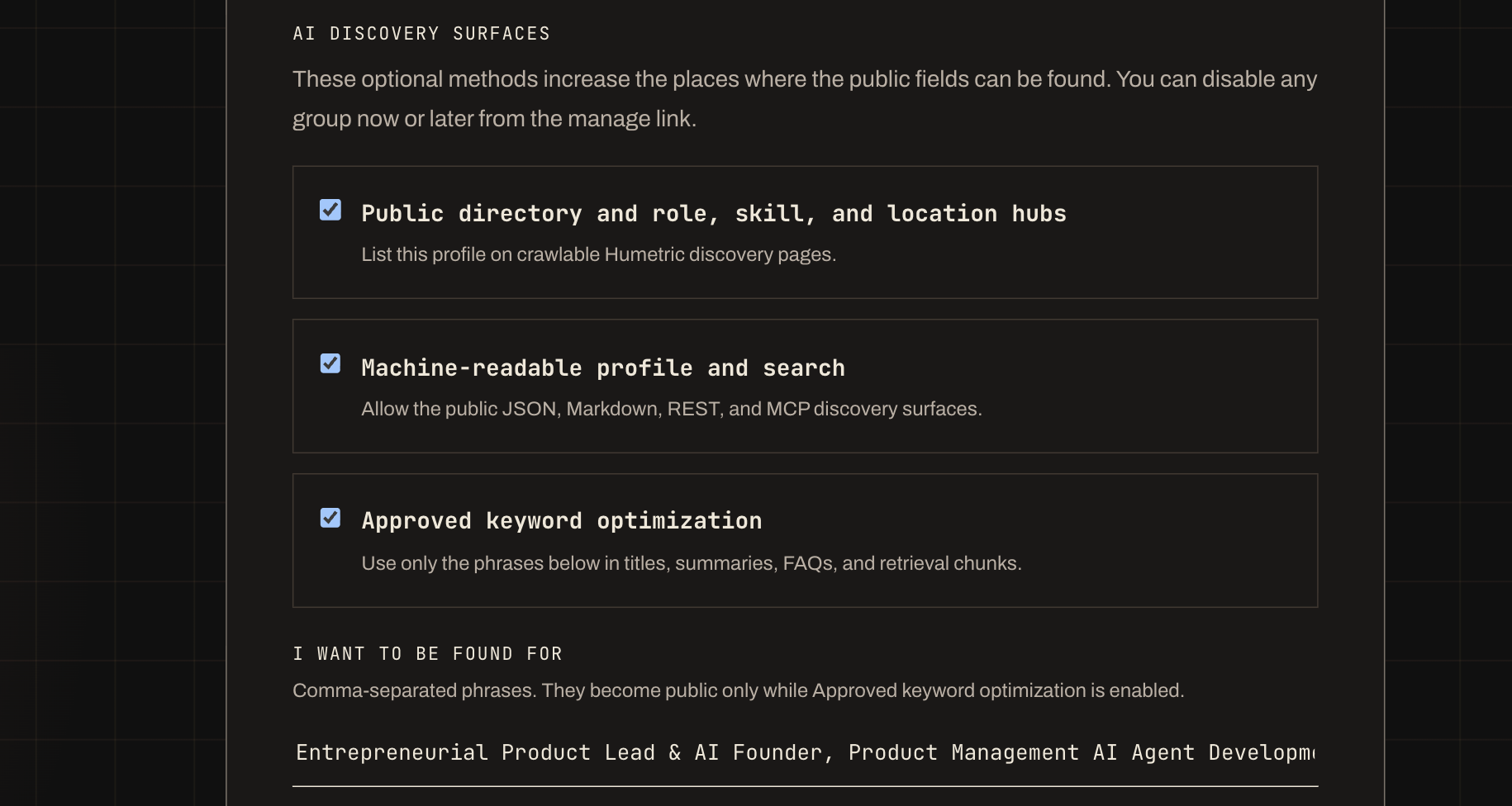
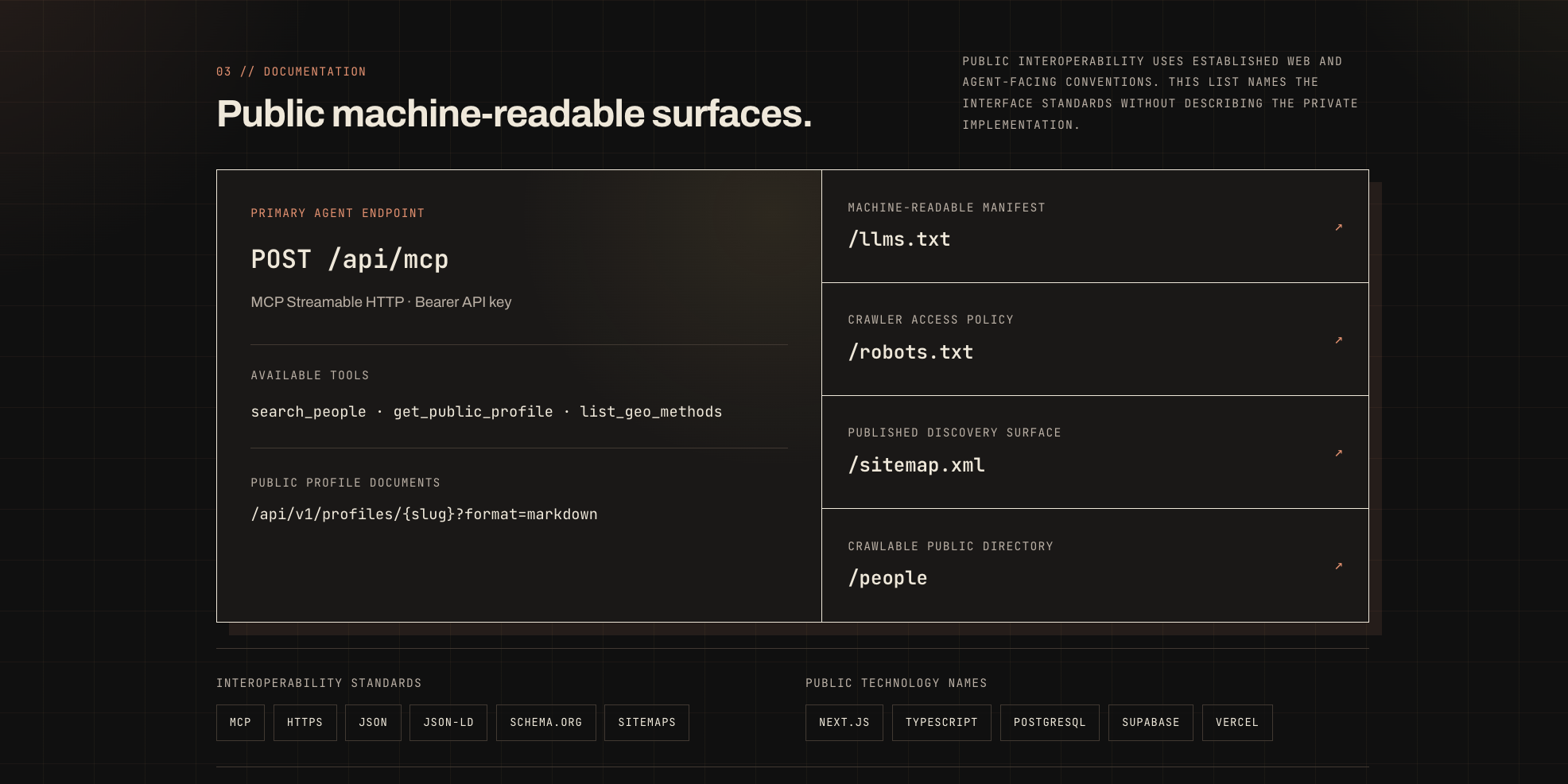
Applicants can turn their professional information into structured profiles, choose which fields are public, and publish AI-readable profile pages. Recruiters and agents can search talent by role, skill, location, and natural-language intent through the web app, API, or MCP endpoint.
How we built it
Humetric is built with Next.js, TypeScript, Supabase, Postgres full-text search, pgvector, API routes, public profile pages, and an MCP endpoint for agent access. The product includes resume/profile ingestion, field-level publicity controls, public directory pages, machine-readable profile APIs, and consent-aware access logging.
Codex helped accelerate the build by inspecting the codebase, implementing and debugging product flows, reviewing architecture decisions, improving safety boundaries, and preparing submission materials. GPT-5.6 was used with Codex to reason through product positioning, recruiter/applicant workflows, AI-native discovery, API/MCP documentation, and demo storytelling.
Challenges we ran into
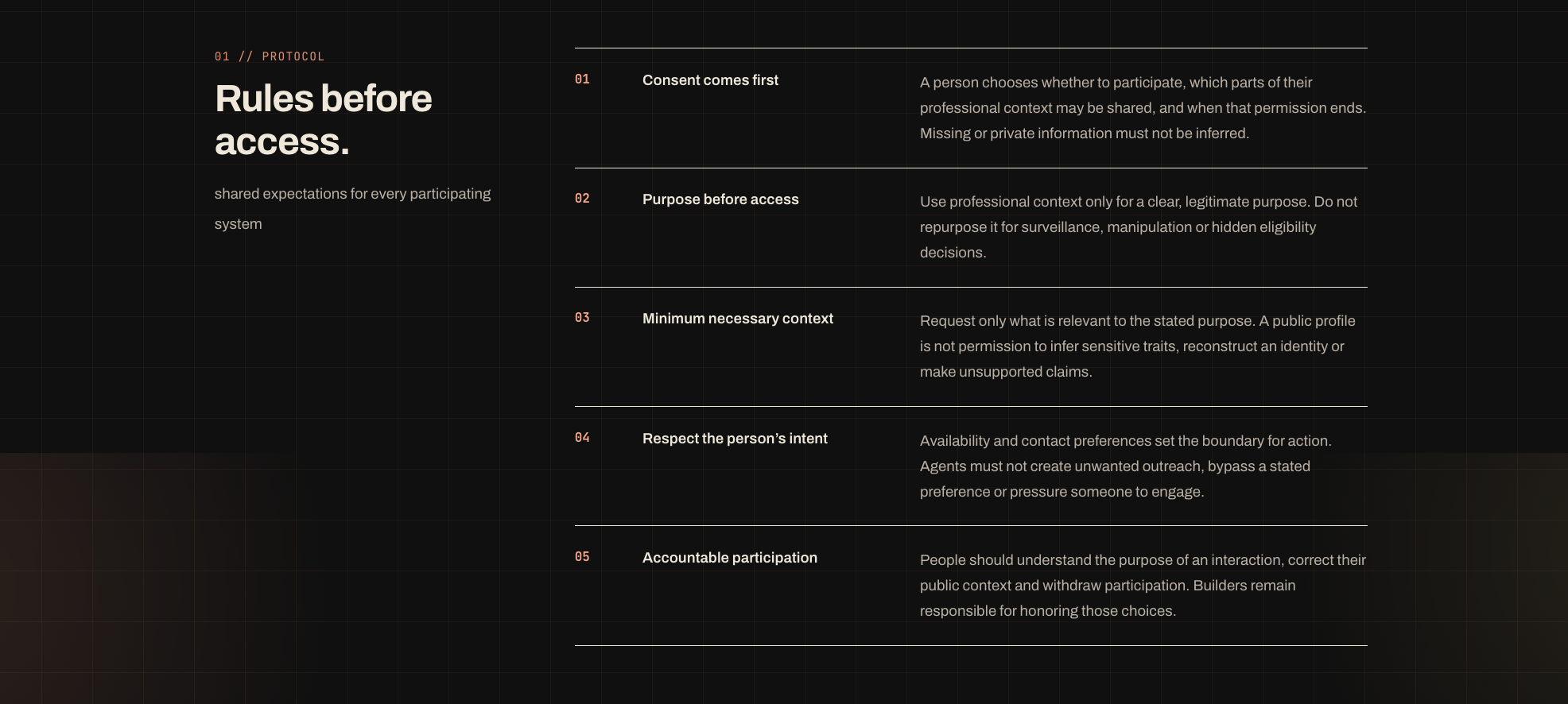
The hardest part was balancing discoverability with control. Talent platforms usually optimize for recruiter access, but Humetric needed to make applicants AI-searchable without turning their private data into scrapeable public data. That meant designing around field-level publicity, consent-filtered profile output, and machine-readable APIs that expose only what the person has chosen to make public.
Accomplishments
We built a working AI-native recruiting platform with public profiles, structured talent search, API/MCP access, and a clear consent-first product model. The project is not just a landing page: it has a real web app, database-backed architecture, and agent-facing interfaces judges can inspect.
What we learned
AI agents make recruiting workflows much more powerful, but only if the data layer is trustworthy. The key product insight is that AI-searchable talent data should come from people who control their own profiles, not from scraping closed platforms.
What's next
Next steps are improving recruiter onboarding, expanding verified profile ownership, adding more test data and demo accounts for judges, and refining the MCP/API experience so AI agents can search talent with clearer evidence and safer access controls.
Built With
- api
- codex
- css
- gpt-5.6
- mcp
- next.js
- pgvector
- postgresql
- react
- supabase
- tailwind
- typescript
- vercel


Log in or sign up for Devpost to join the conversation.