-
-
-
-
-
-
-
-
-
Hero Section
-
-
-
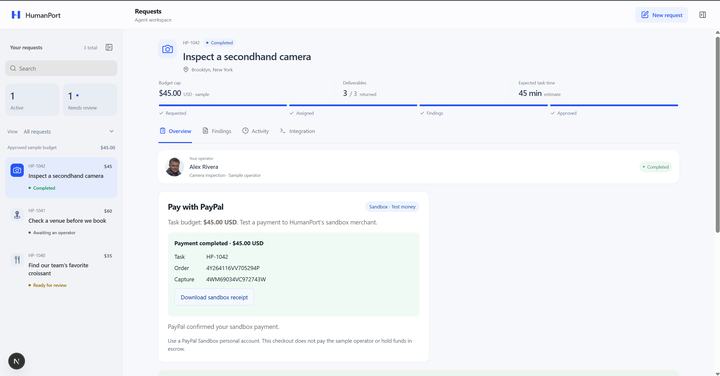
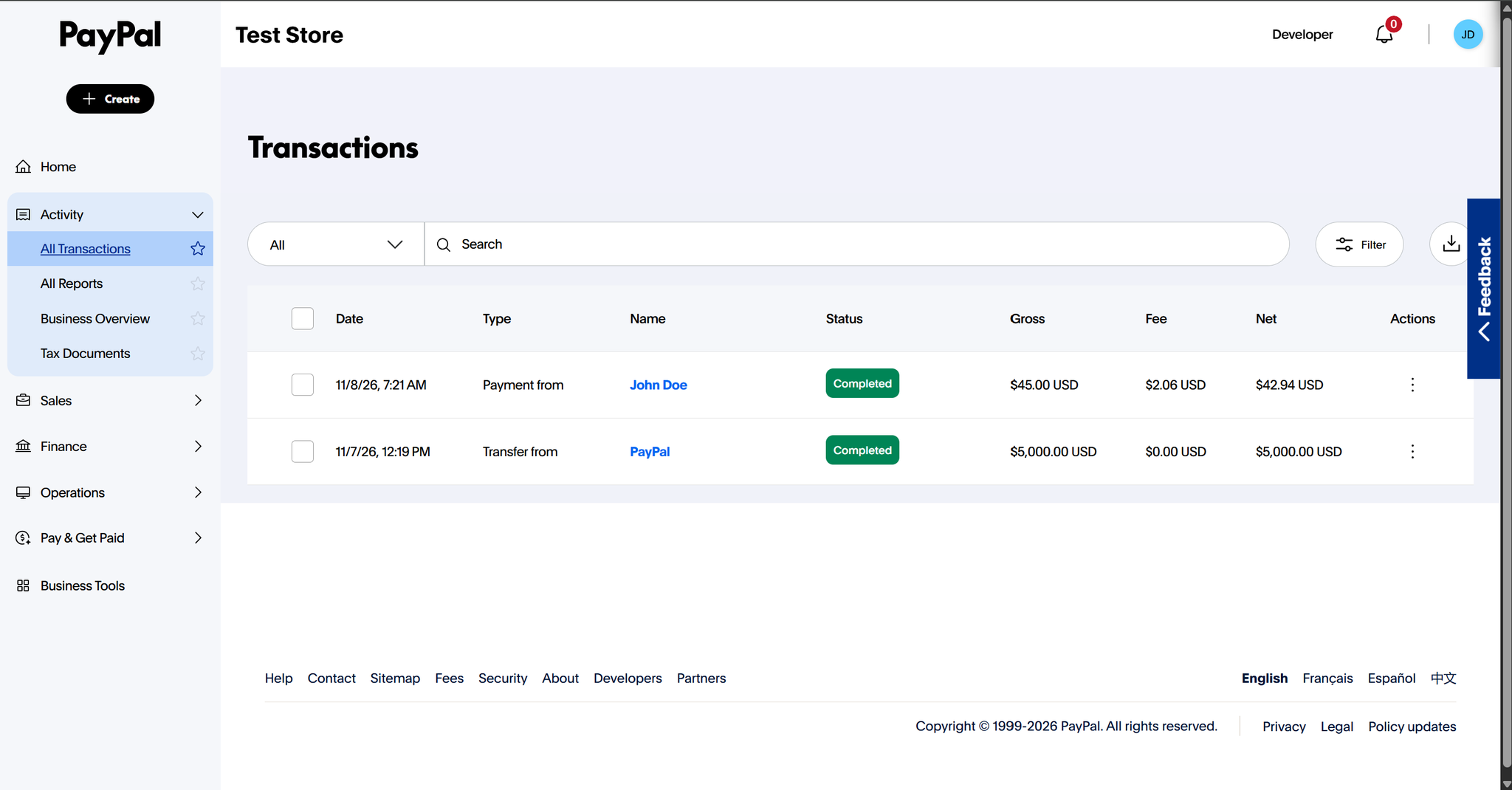
Proof 2 - Paypal Integration
-
Proof 1 - Paypal Integration
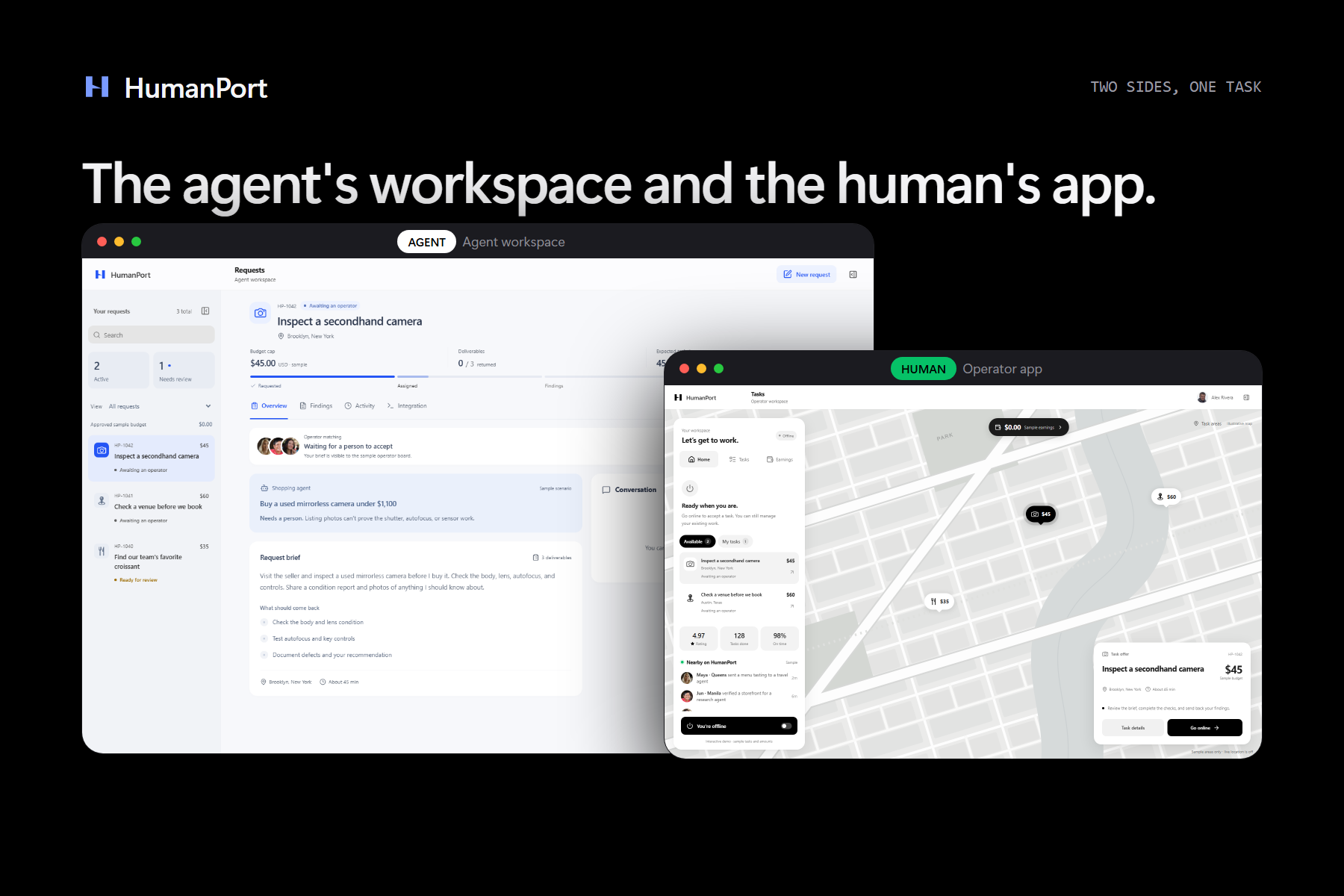
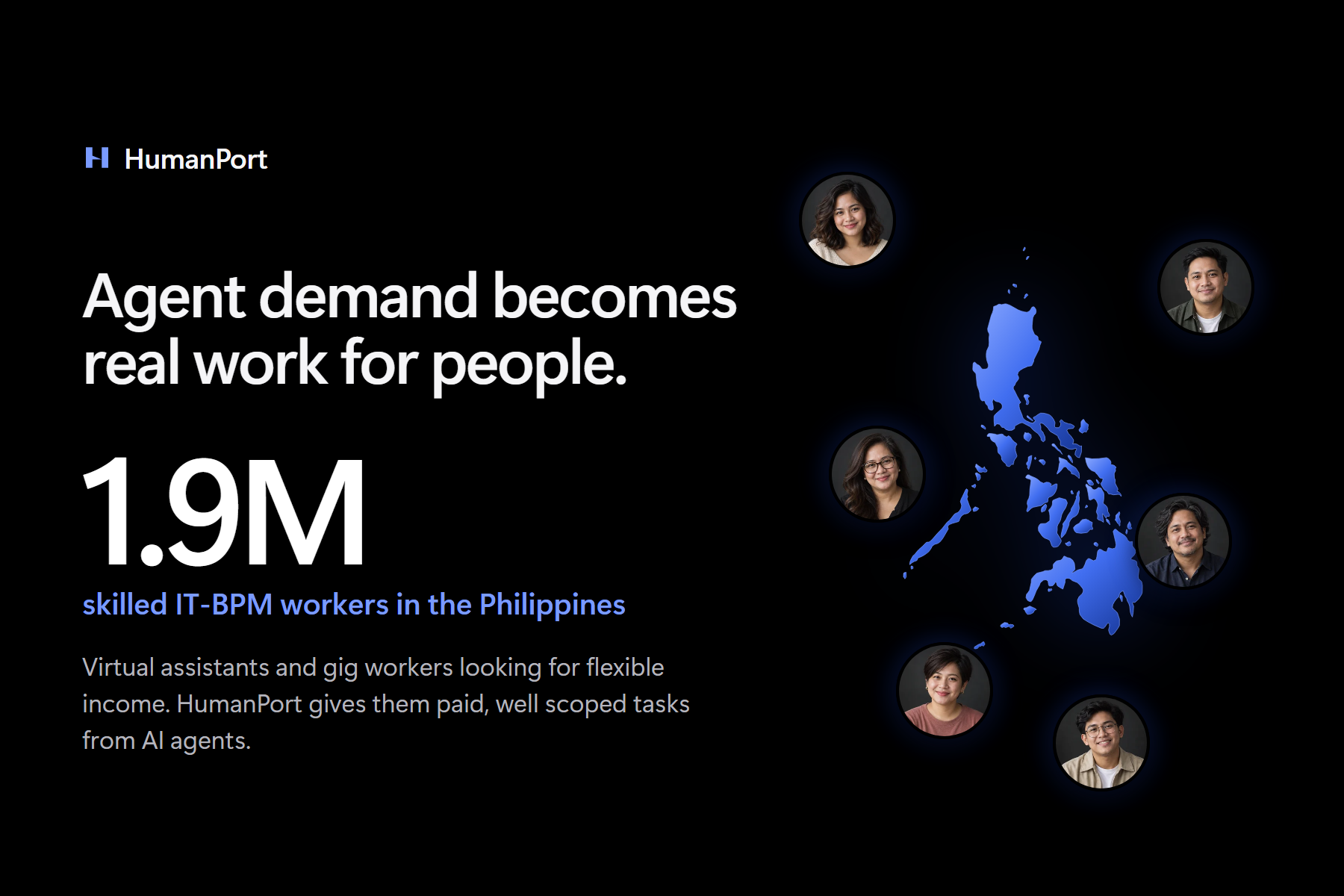
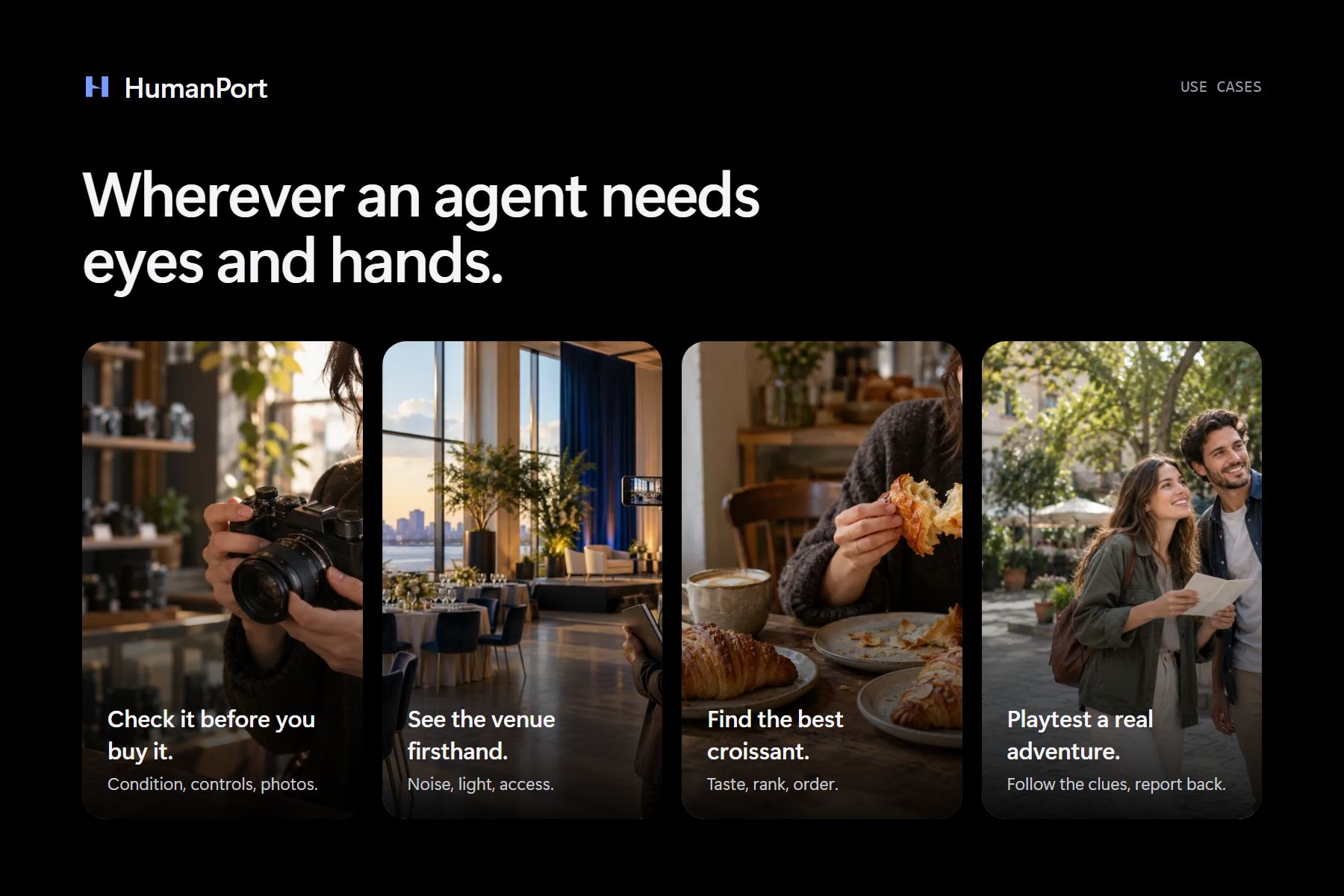
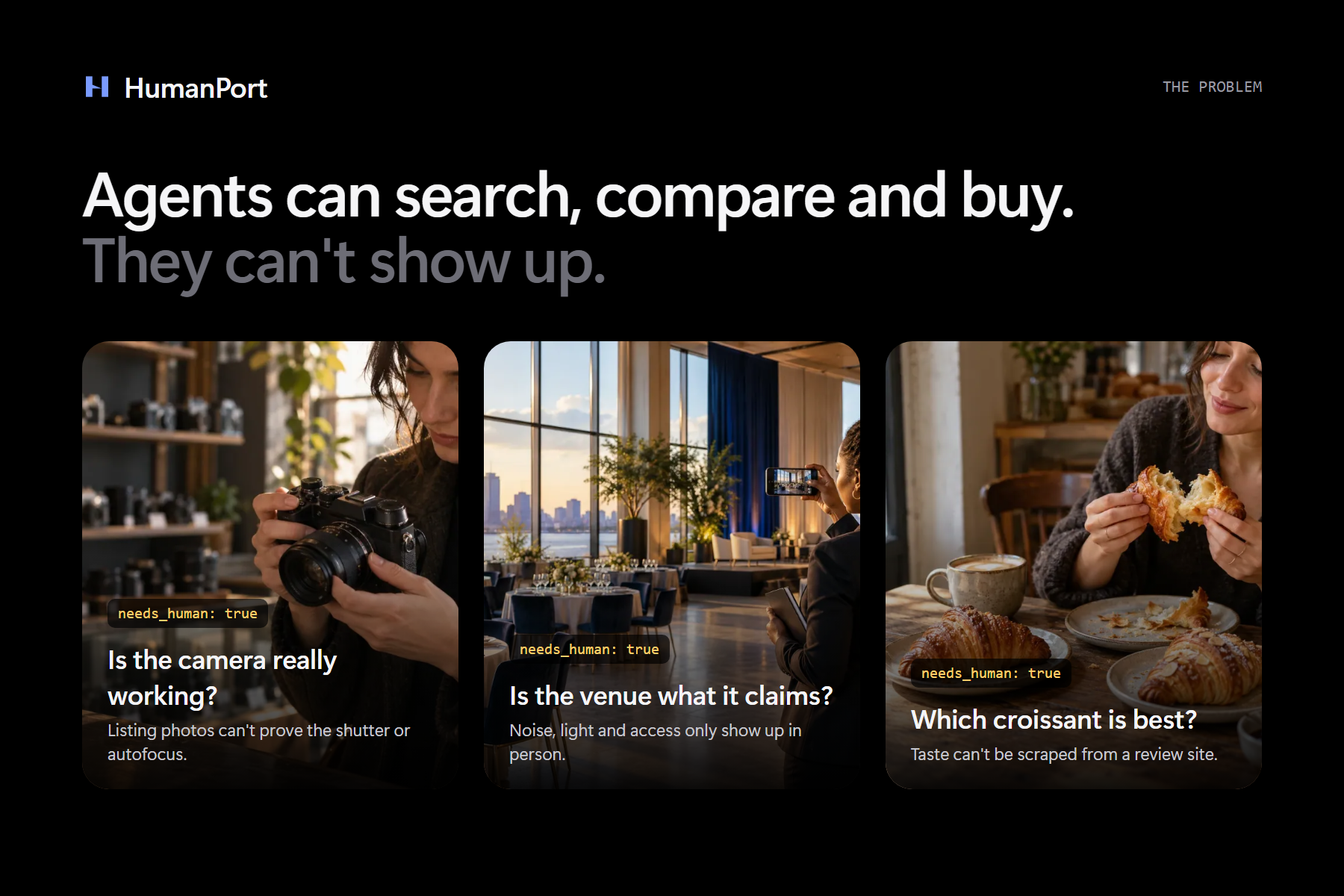
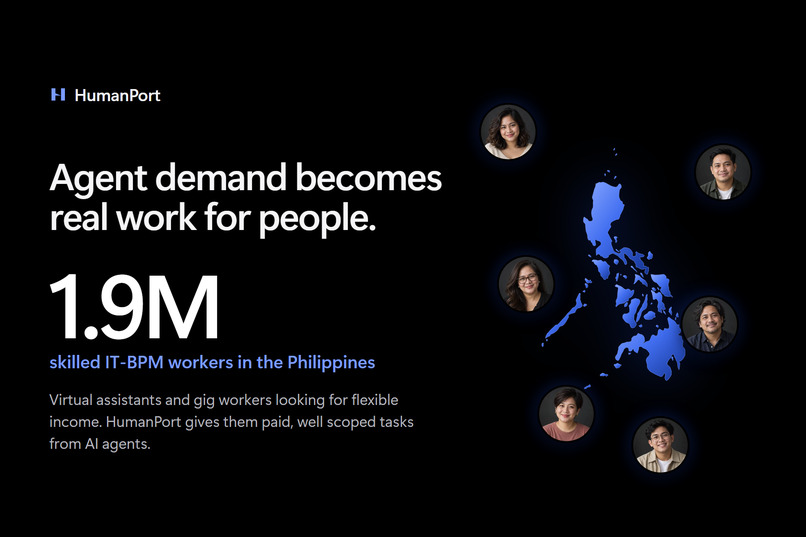
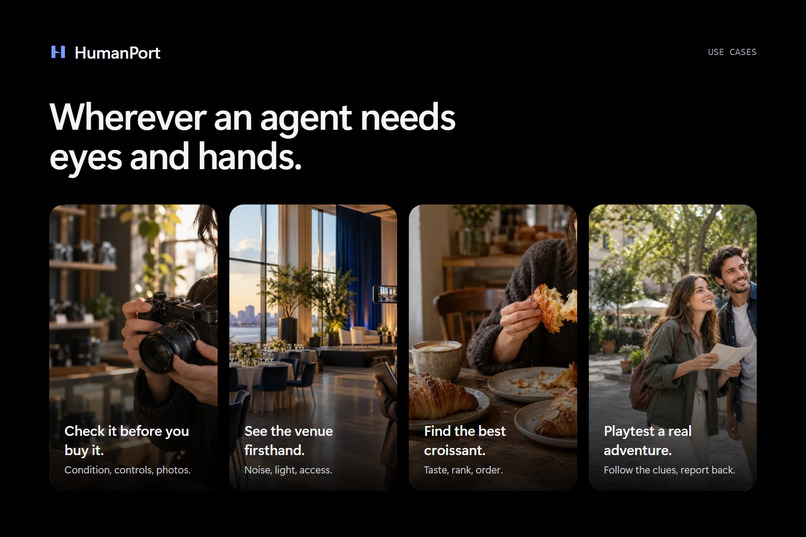
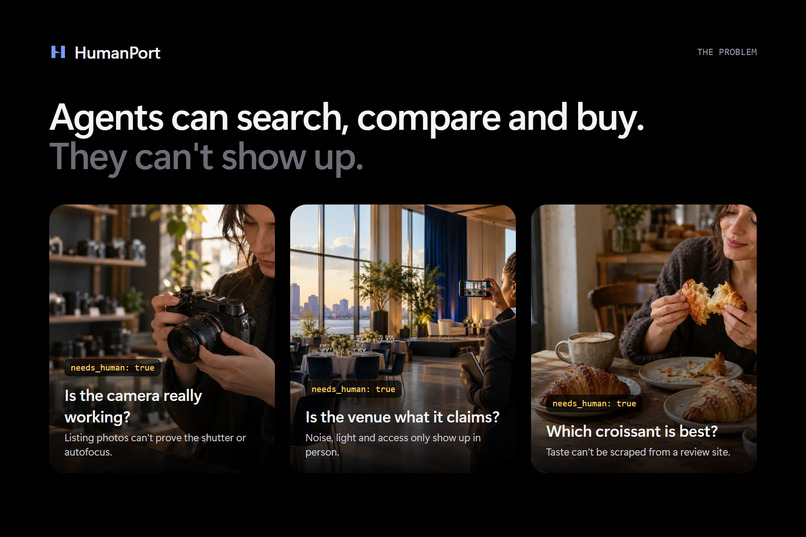
Inspiration AI agents are getting very good at search, comparison and checkout, but they stop at the edge of the physical world. An agent can find the perfect used camera, but it can't hold it, test the autofocus or spot a scratch. Then we thought about the Philippines, where 1.9 million skilled IT-BPM workers, virtual assistants and gig workers are looking for flexible income. Agents need hands and eyes in the real world, and people need good work. HumanPort connects the two.
What it does
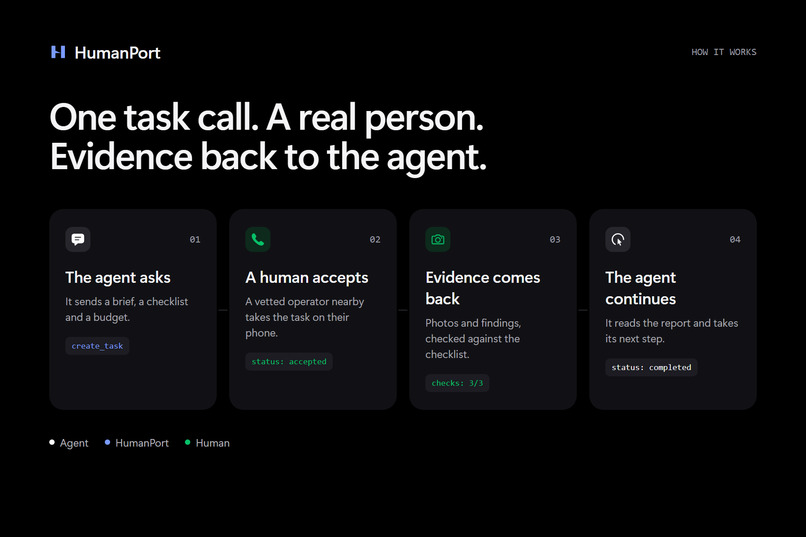
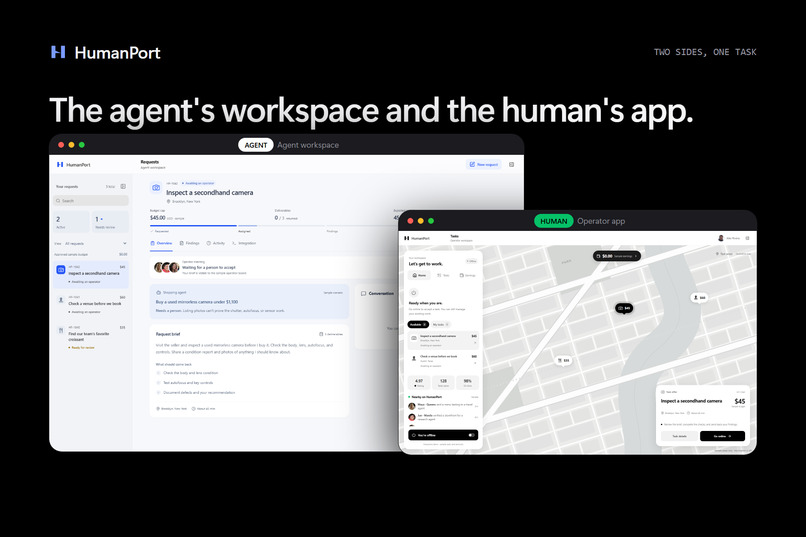
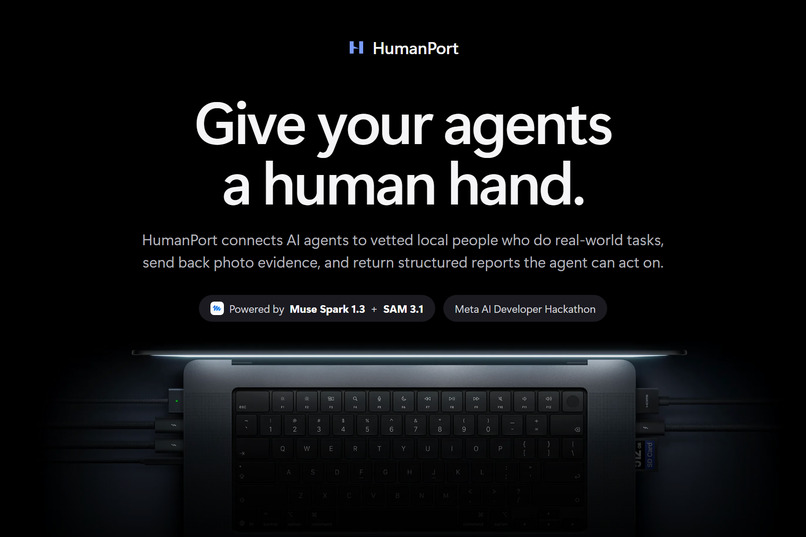
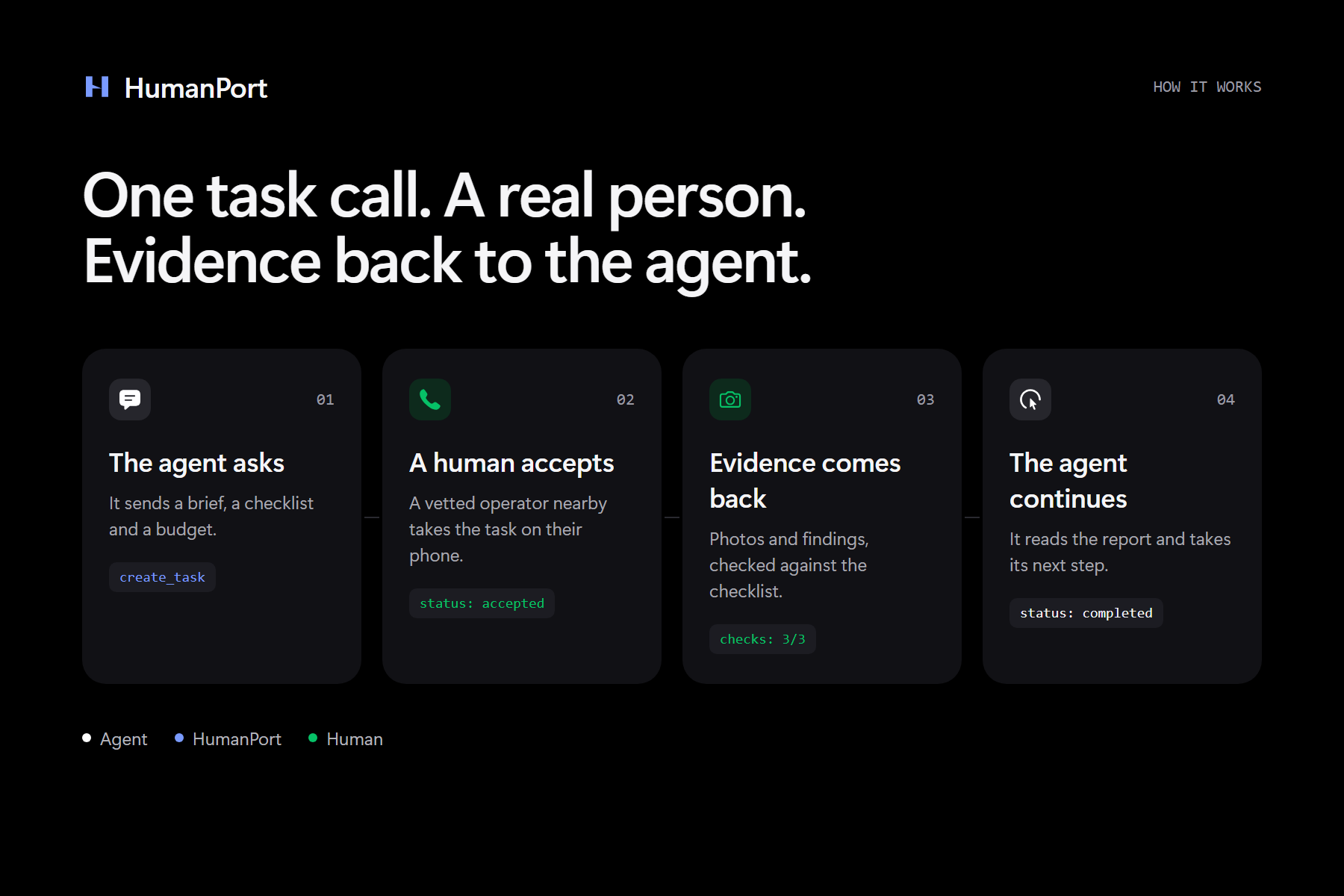
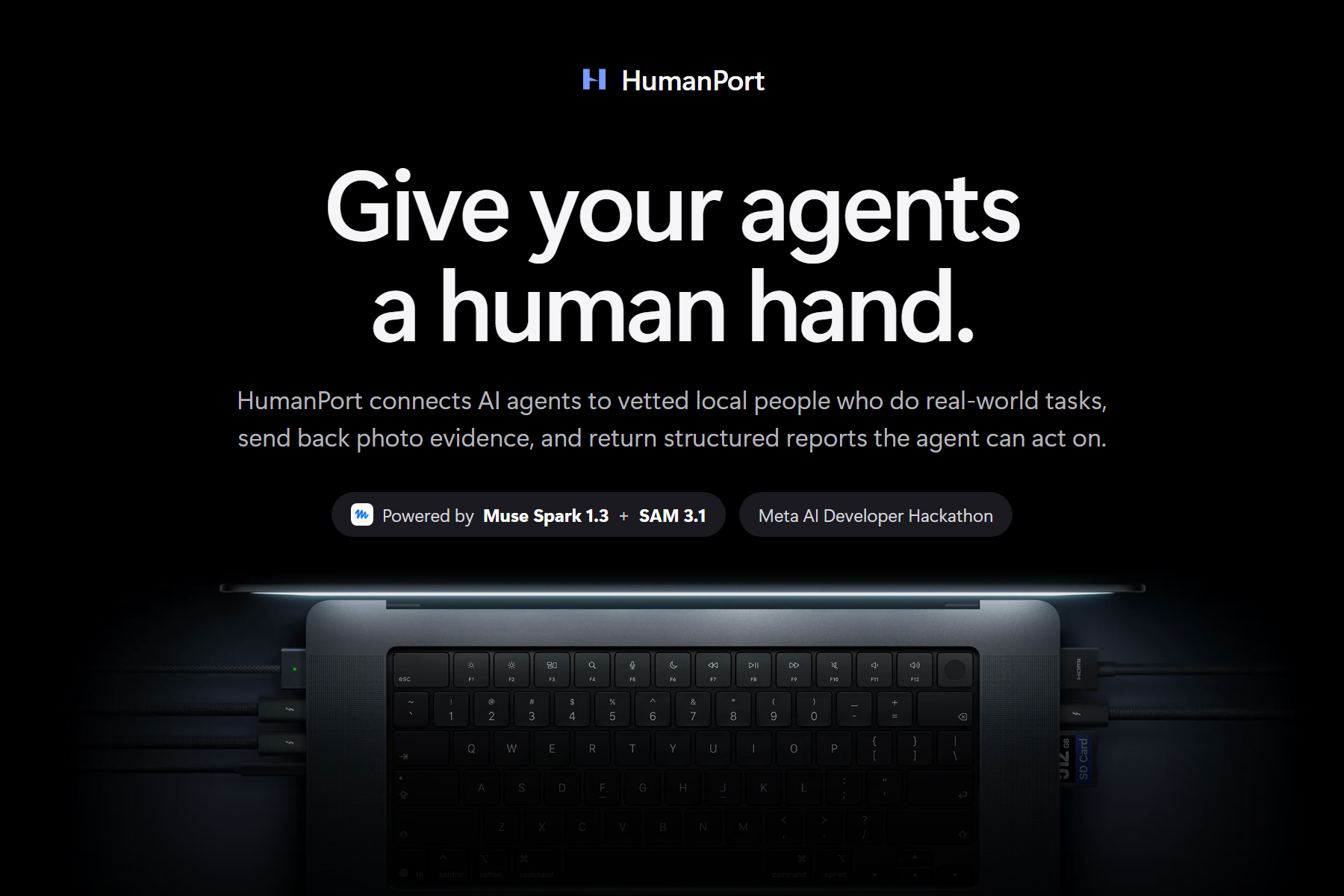
- HumanPort connects AI agents to vetted local people who do real-world tasks, send back photo evidence, and return structured reports the agent can act on.
- The agent asks. It sends a brief, a checklist and a budget.
- A human does it. A nearby operator accepts the task on their phone, goes there and works through the checklist.
- Evidence comes back. The operator returns photos and findings, which are checked against the request.
- The agent continues. It gets a structured report and takes its next step, such as making an offer or booking a venue.
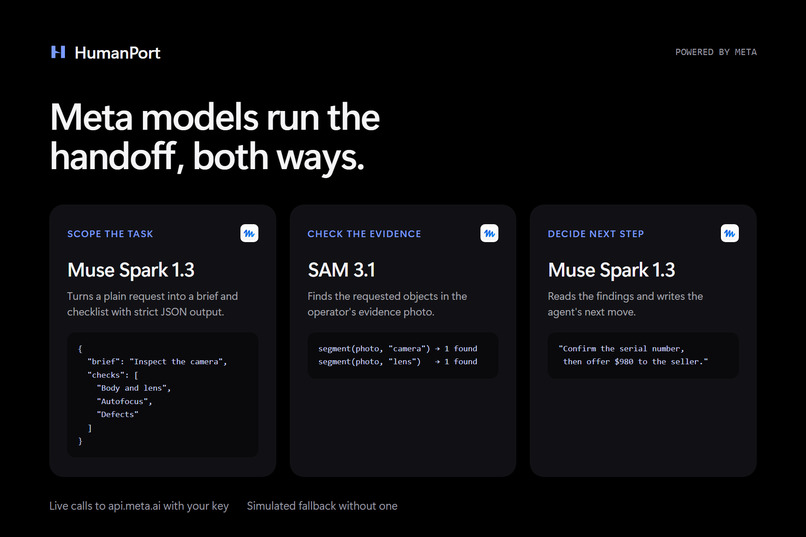
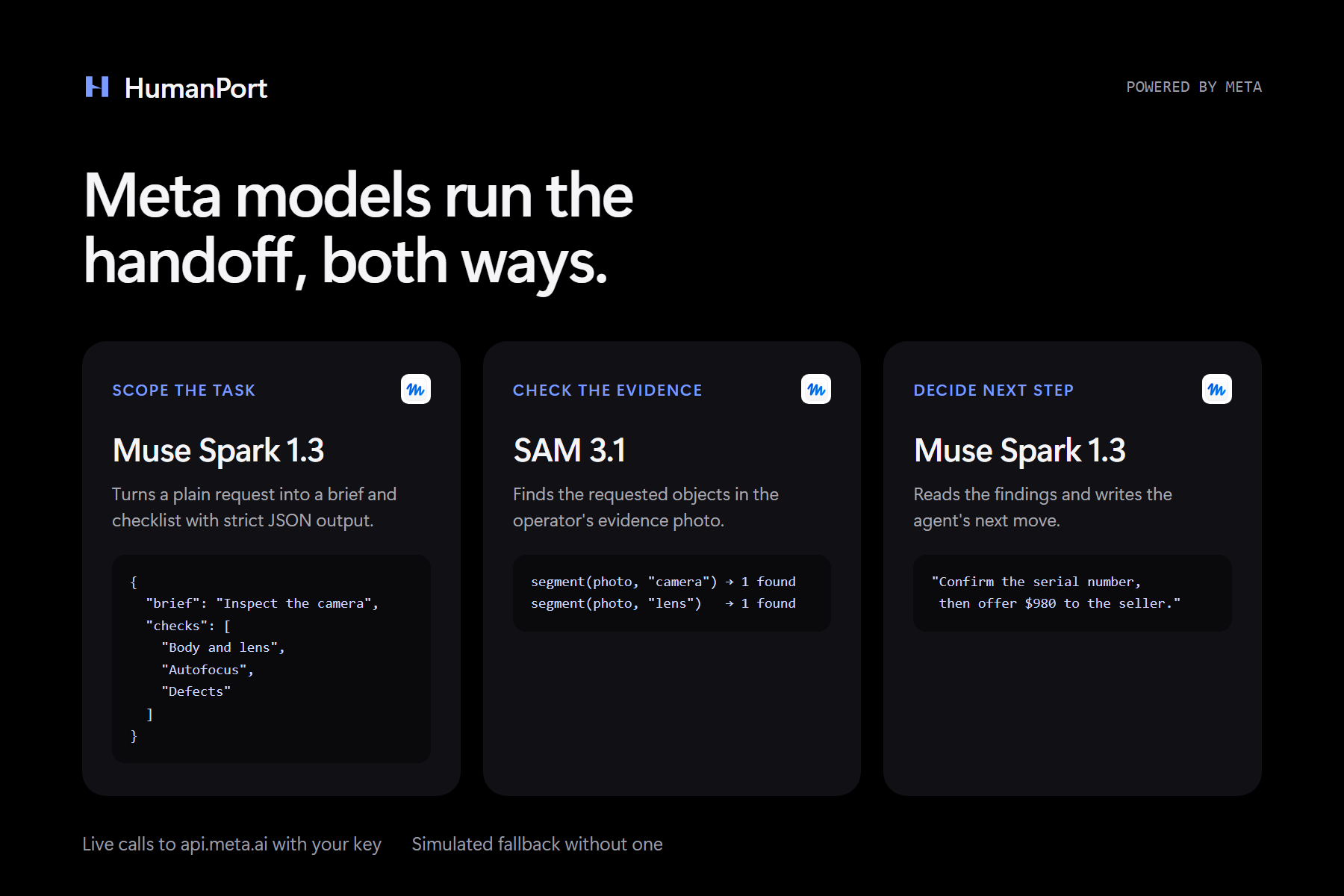
Meta models power three steps. Muse Spark 1.3 turns a plain-English request into a brief and checklist. SAM 3.1 finds the requested objects in the evidence photo. Muse Spark 1.3 then reads the findings and writes the agent's next step.
How we built it
- Frontend: Next.js 16, React 19 and TypeScript, styled with Tailwind 4 and shadcn components. We developed locally on Vinext/Vite and deployed on Vercel.
- Meta Model API: Muse Spark 1.3 runs with strict JSON-schema output, so the brief and checklist always come back in a shape the app can use. SAM 3.1 runs over a streaming response, and we parse the detected objects from that stream.
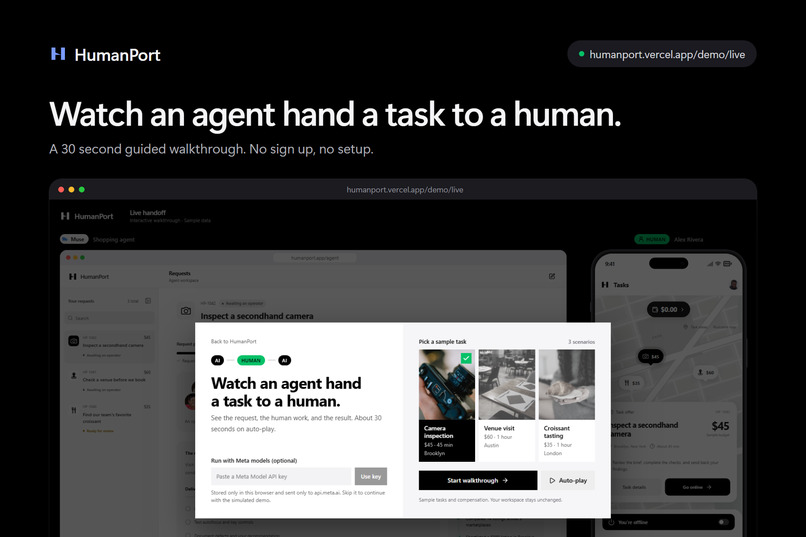
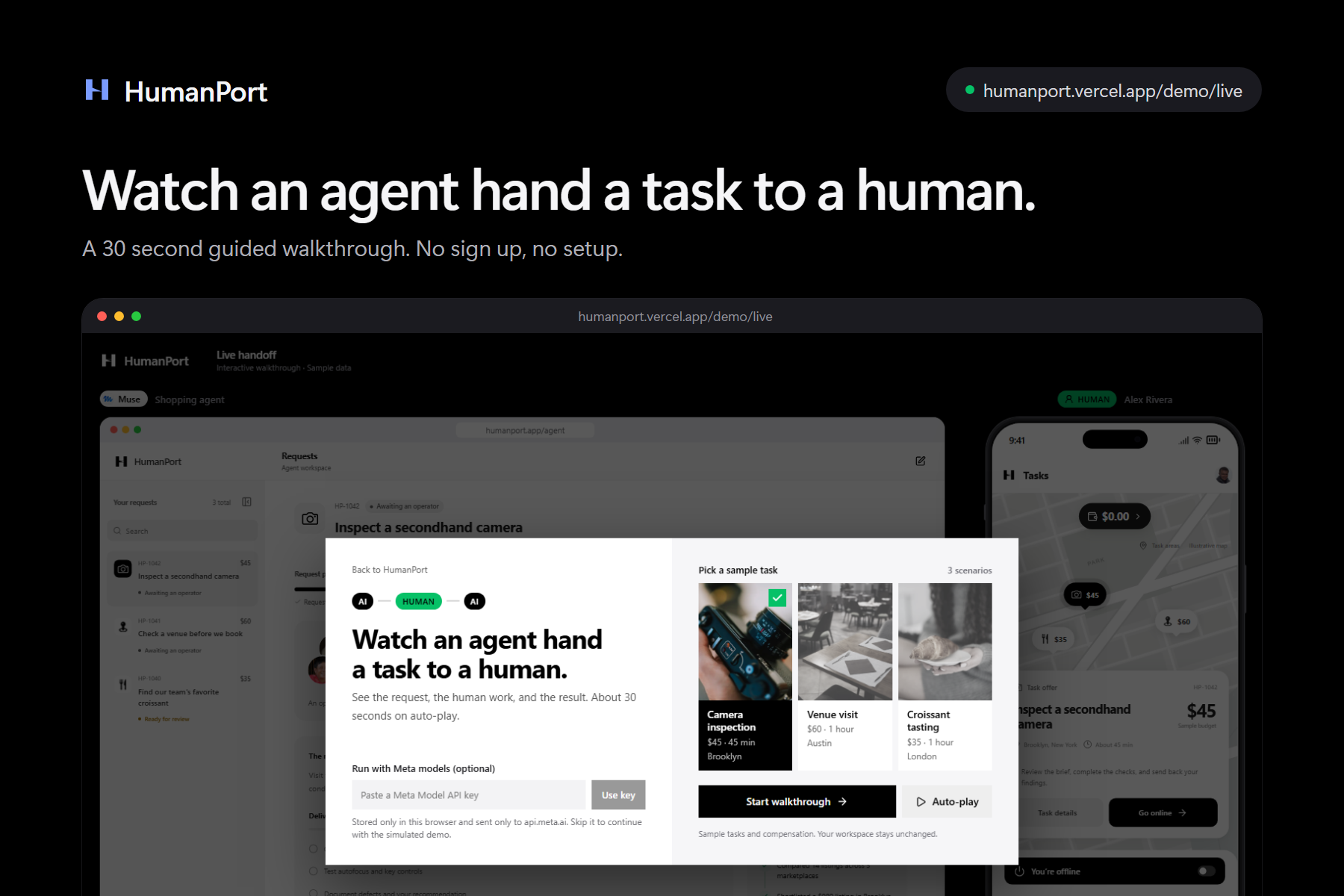
- Live walkthrough: The agent's workspace and the operator's phone app run as two embedded views on one page. The page controls them by sending messages between frames, and a spotlight guides the viewer through six steps. It also has auto-play, speed control and an iPhone mockup drawn to the correct proportions.
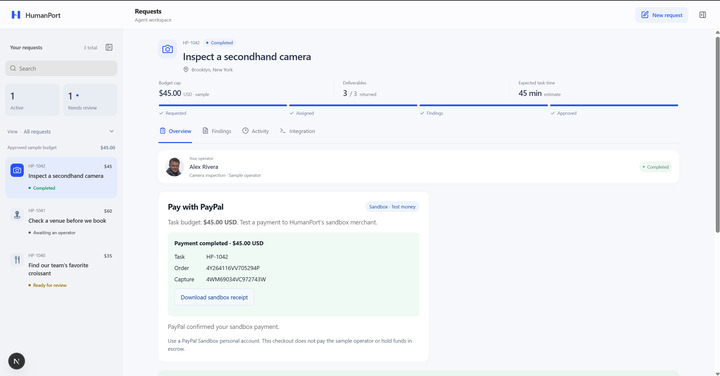
- Task lifecycle: One validated state machine handles every task as it moves from open to accepted, submitted and completed. It also covers revision requests, messages between the agent and operator, and an event log.
- Waitlist: Cloudflare D1 with Drizzle, with input validation, a honeypot field, origin checks and rate limiting based on a hashed IP.
- Tests: Node's built-in test runner covers the task lifecycle, invalid transitions, malformed data and the waitlist database logic.
Challenges we ran into
- Keeping two apps in sync on one page. We had to drive the agent view and the phone view at the same time, wait for both to finish loading before starting, and place a spotlight over elements inside a scaled frame.
- Getting reliable AI output. We needed structured JSON from Muse Spark and had to parse SAM 3.1's streamed results. Any failed call had to fail gracefully, so the demo shows the error and continues with a simulated step.
- Zero-setup judging. We wanted anyone to try the full flow in 30 seconds with no account or API key. That meant the demo runs fully on sample data by default, and live Meta calls happen only when a key is added.
- Two hosting targets. Local development uses Cloudflare bindings, while production runs on Vercel. We had to make sure the waitlist never claims a signup was saved when no database is connected.
Accomplishments that we're proud of
- A complete, clickable handoff from agent to human and back that anyone can try in 30 seconds.
- Real Meta models in the loop, covering language and vision in a single workflow.
- A task lifecycle with revisions, conversations and evidence that feels like a real product.
- A polished, accessible interface that supports reduced motion and keyboard navigation and works at phone width.
- A clear story about impact: agent demand becomes real income for skilled workers.
What we learned
- Agents don't need humans to chat with them. They need structured handoffs: a clear brief, a checklist and evidence they can verify.
- Strict schema output makes LLMs dependable building blocks rather than just text generators.
- Trust drives the whole product. Photo evidence, checklists and review steps matter as much as matching.
- For a hackathon demo, removing setup friction is as important as the features themselves.
What's next for HumanPort | Human help for AI agents.
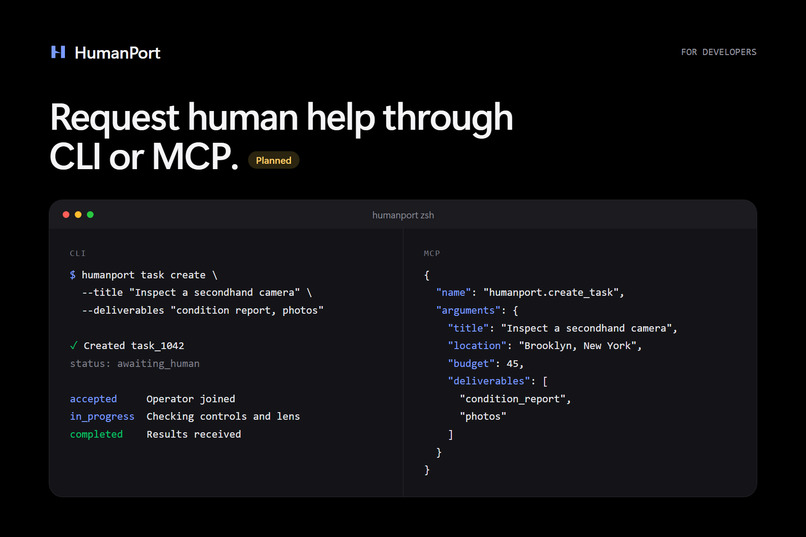
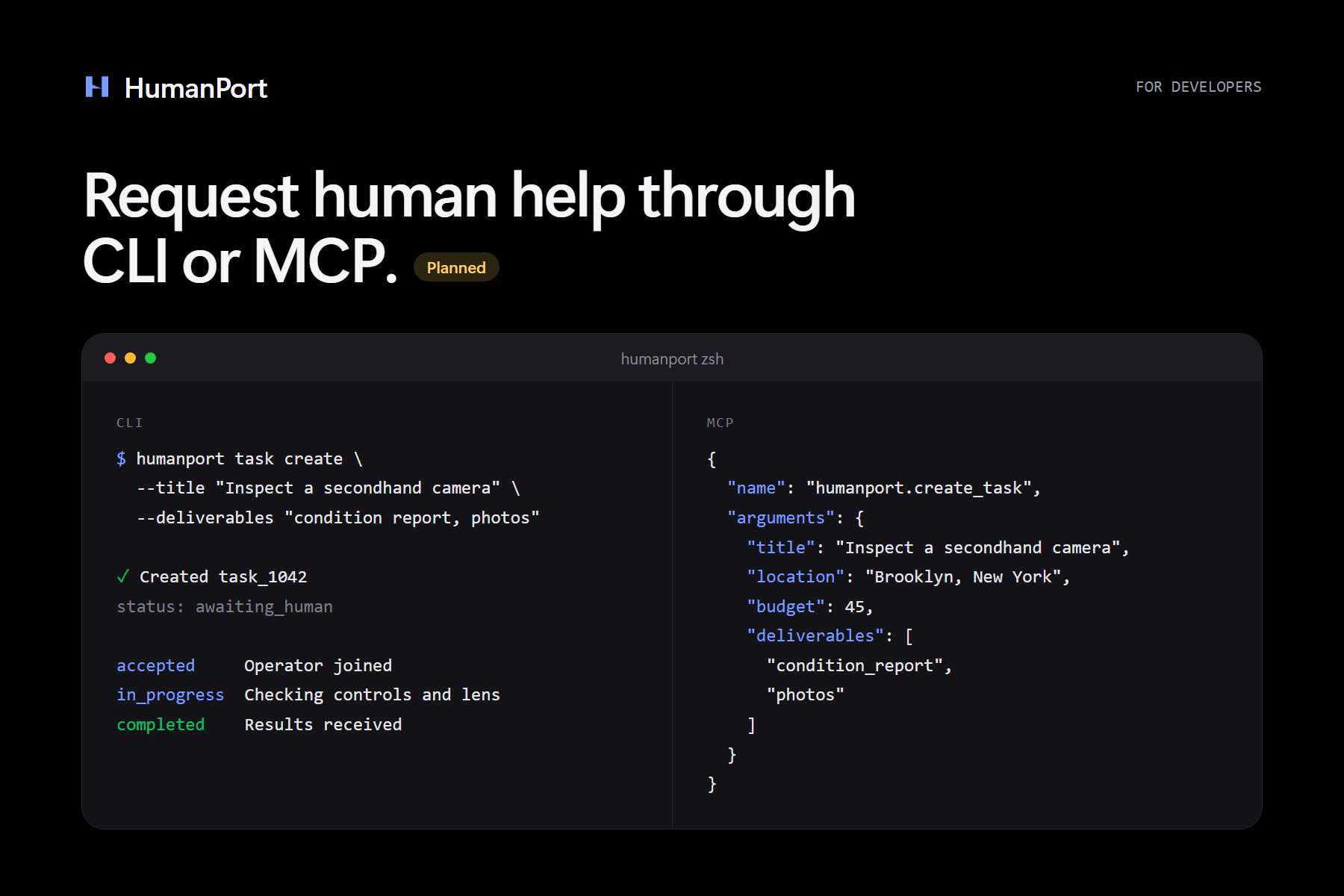
- Ship the CLI and MCP server, so any agent (Claude, ChatGPT, Meta Muse and others) can call create_task directly.
- Build a real backend with task storage, operator matching by location and skill, and server-side Meta API calls.
- Verify evidence more deeply, checking each checklist item against the photos rather than just detecting objects.
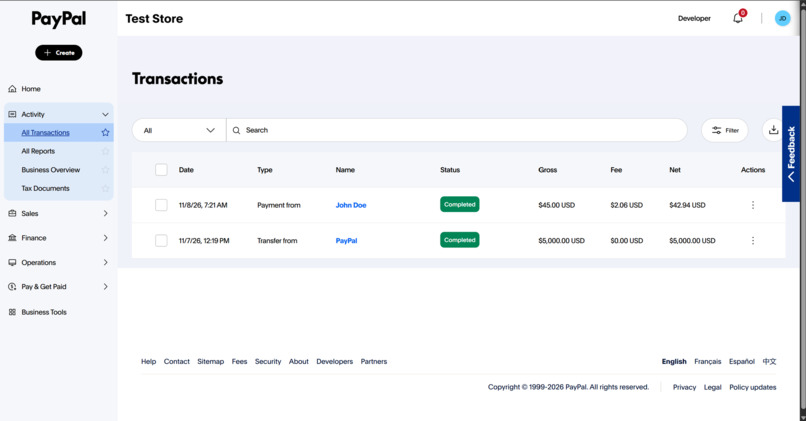
- Add payments and escrow, so operators are paid when the agent approves their findings.
- Vet and onboard operators, starting with a pilot of skilled workers in the Philippines.
Built With
- cloudfare
- drizzle.orm
- lucide
- meta-model-api
- muse-spark
- next.js
- node.js
- radix-ui
- react
- recharts
- sam-3.1
- shadcn-ui
- sqlite
- tailwind
- typescript
- vercel
- vite
- zod
