-
-

Project H.E.M.A.
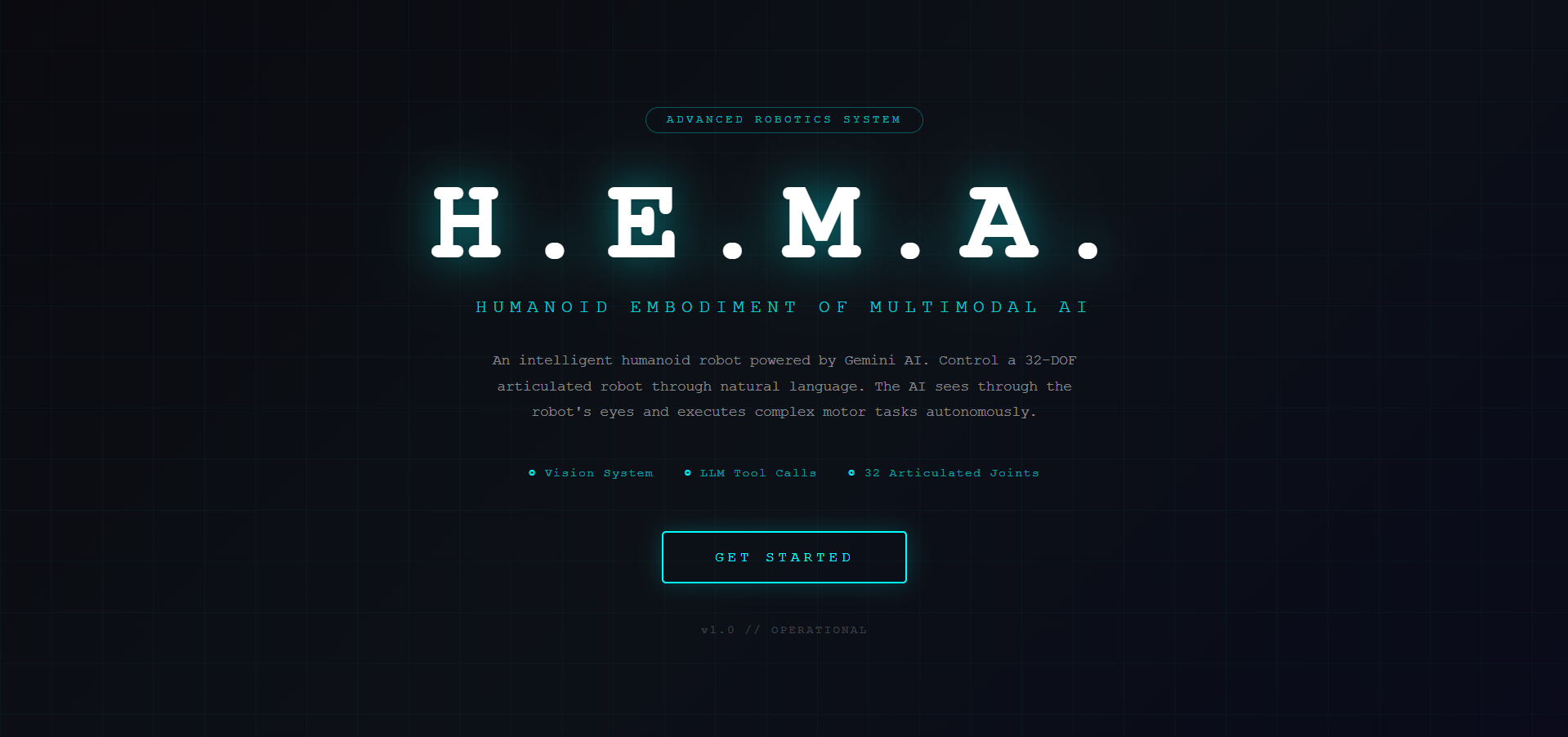
About H.E.M.A. - Humanoid Embodiment of Multimodal AI
Inspiration
Growing up, my father managed an air conditioning factory that manufactured AC ducts. I vividly remember visiting the facility and watching the entire factory floor from an elevated corridor—a bird's-eye view of workers, machines, and the manufacturing process in motion. One incident, however, left an indelible mark on me: a worker lost his finger while operating a shearing machine. As a child, witnessing this accident had a profound impact on how I viewed industrial work and human safety. Beyond the tragedy, I observed something fascinating: duct requirements and designs varied dramatically based on different building specifications. Each construction project demanded custom configurations—different lengths, diameters, and shapes—yet the factory used the same equipment for every job. This meant the process couldn't be fully automated. Workers had to manually adjust machines, measure materials, and adapt workflows for each order. The potential for human error and injury remained constant.
The Vision
This childhood experience made me think: What if robots could use the same tools adaptively to create different outcomes, eliminating the need for tightly controlled, pre-programmed manufacturing?
My solution became H.E.M.A., powered by Gemini 3.0 Flash's advanced capabilities:
- Agentic Vision: Robots analyze their environment in real-time through first-person cameras
- Long Context Windows: Maintain awareness of complex, multi-step manufacturing processes
- Tool Calling: Execute precise, sustained sequences of robotic movements and machine operations
The architecture features vision-based humanoid robots that perform prolonged tool call chains to operate factory equipment. Vision serves dual purposes which are analyzing the surrounding environment to inform decisions and providing visual feedback as tool call outputs. An orchestrator agent coordinates multiple worker robots, determining which robot should perform specific tasks, when to activate them, and how to sequence operations for optimal efficiency.
How I Built It
H.E.M.A. combines cutting-edge web technologies with AI:
- Bun + React 19 + TypeScript: Fast, type-safe development
- Three.js: Real-time 3D visualization of robots and factory environments
- Gemini 3.0 Flash API: Server-side AI control with tool-based execution
- Dual Operating Modes:
- Chat Mode: Natural language control of a single humanoid robot with 32 degrees of freedom
- Orchestrator Mode: Multi-agent factory simulation with 5 specialized worker robots manufacturing custom pipes of different dimensions and connect them.
Challenges & Learnings
While this project provided invaluable insights, there were some challenges and limitations I faced:
1. Inference Speed Limitations Current LLM inference speeds are too slow for real-time robotic control. Manufacturing actions that should take seconds require minutes due to this latency. Achieving practical deployment will require:
- Faster models (optimized for edge deployment)
- Reduced token consumption per action
2. Precision Requirements Robotic tasks demand hundreds of highly precise, sustained tool calls. A single pipe manufacturing sequence might require:
- Navigation commands:
walkTo(x, y, z) - Machine operations:
operateCutter(length),operateRoller(diameter, height) - Material handling:
pickUp(),place(),attachWorkpiece()
Each call must execute with millimeter precision. Current LLMs occasionally "drift" in long chains, requiring error correction mechanisms and avoiding context rot over prolonged actions. One possible way cloud be to finetune the models specifically for robots based on datasets that have a robotic chain of thought with multiple tool calls over a prolonged chain of thought.
3. Robotic Guardrails Due to hallucinations occasionally the robots tend to perform in appropriate actions, which can potentially lead to wastage of time or industrial material.
Future Vision
Despite these challenges, H.E.M.A. demonstrates that AI-driven adaptive manufacturing is achievable. The next generation will feature faster inference, physics simulation, and potentially integration with real robotic hardware—bringing safer, smarter factories to life.
Built With
- google-cloud-run
- google-gemini-3-flash-api
- node.js
- three.js
- typescript


Log in or sign up for Devpost to join the conversation.