Inspiration
Modern productivity tools are good at storing tasks, tracking deadlines, and measuring activity. But they often fail at the hardest part: helping people figure out what to do when everything feels urgent, plans fall apart, and distractions take over.
HumanLoop was inspired by this gap. I wanted to build something that doesn't just organize work, but helps people regain clarity, adapt to changing circumstances, and take the next meaningful action.
What it does
HumanLoop is an AI-powered productivity workspace that turns unstructured situations into actionable plans.
Its core features include:
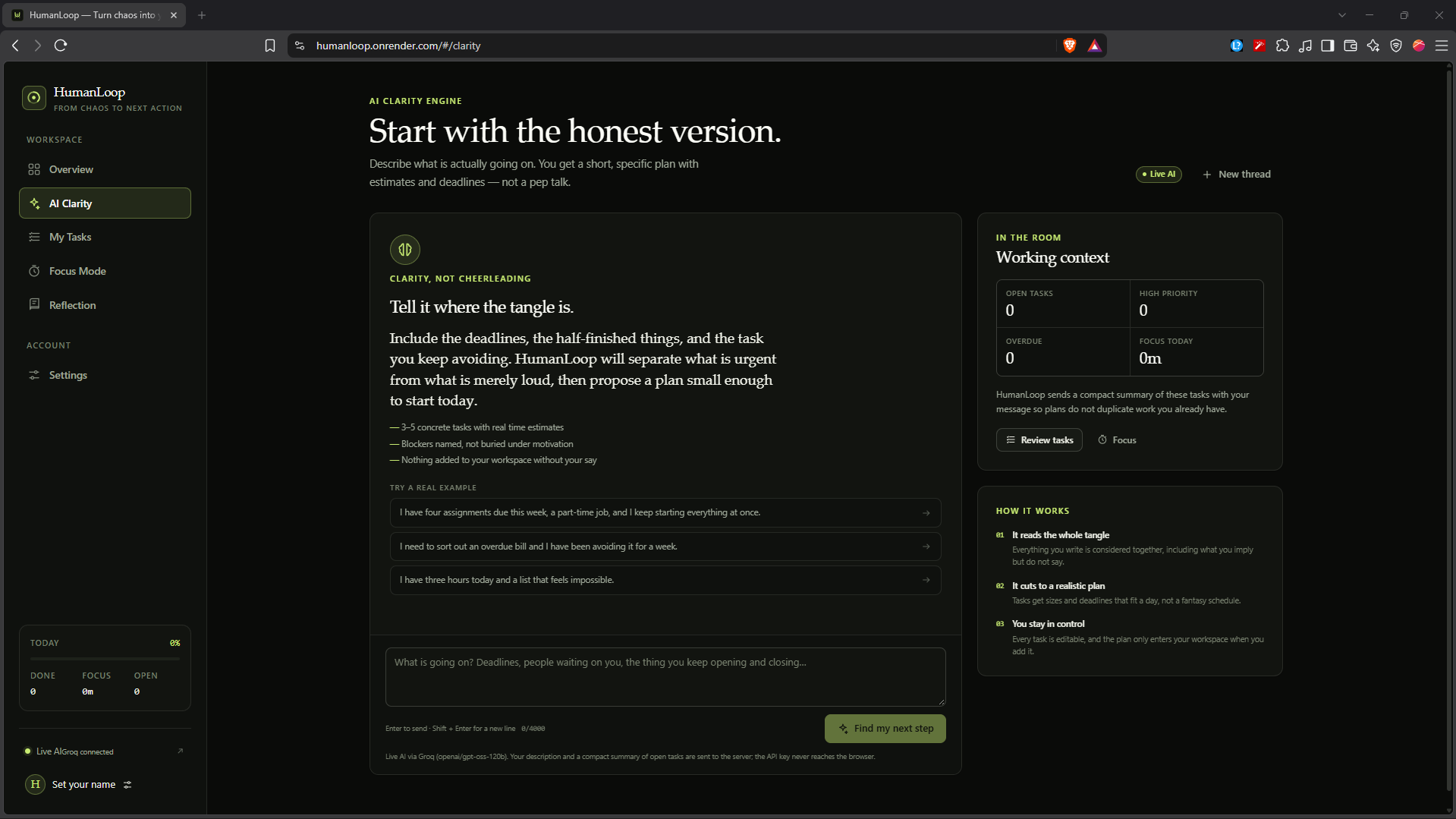
- AI Clarity Engine: Describe your situation in plain language and get an organized plan with priorities, blockers, estimated durations, and actionable tasks.
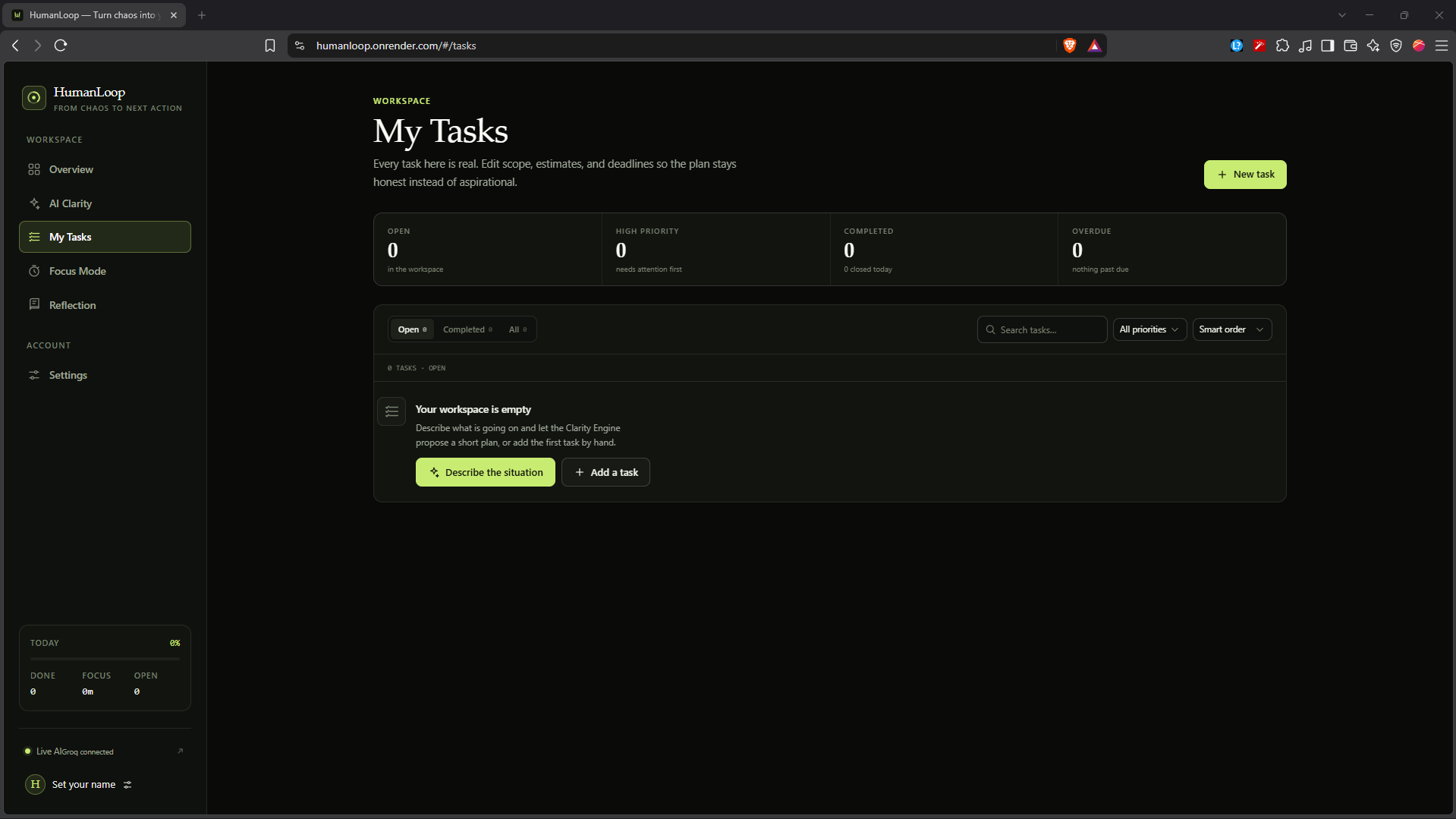
- Task Workspace: Create, edit, complete, reopen, search, filter, and organize tasks.
- Adaptive Replanning: When circumstances change, explain what happened and let AI suggest practical adjustments to your existing plan.
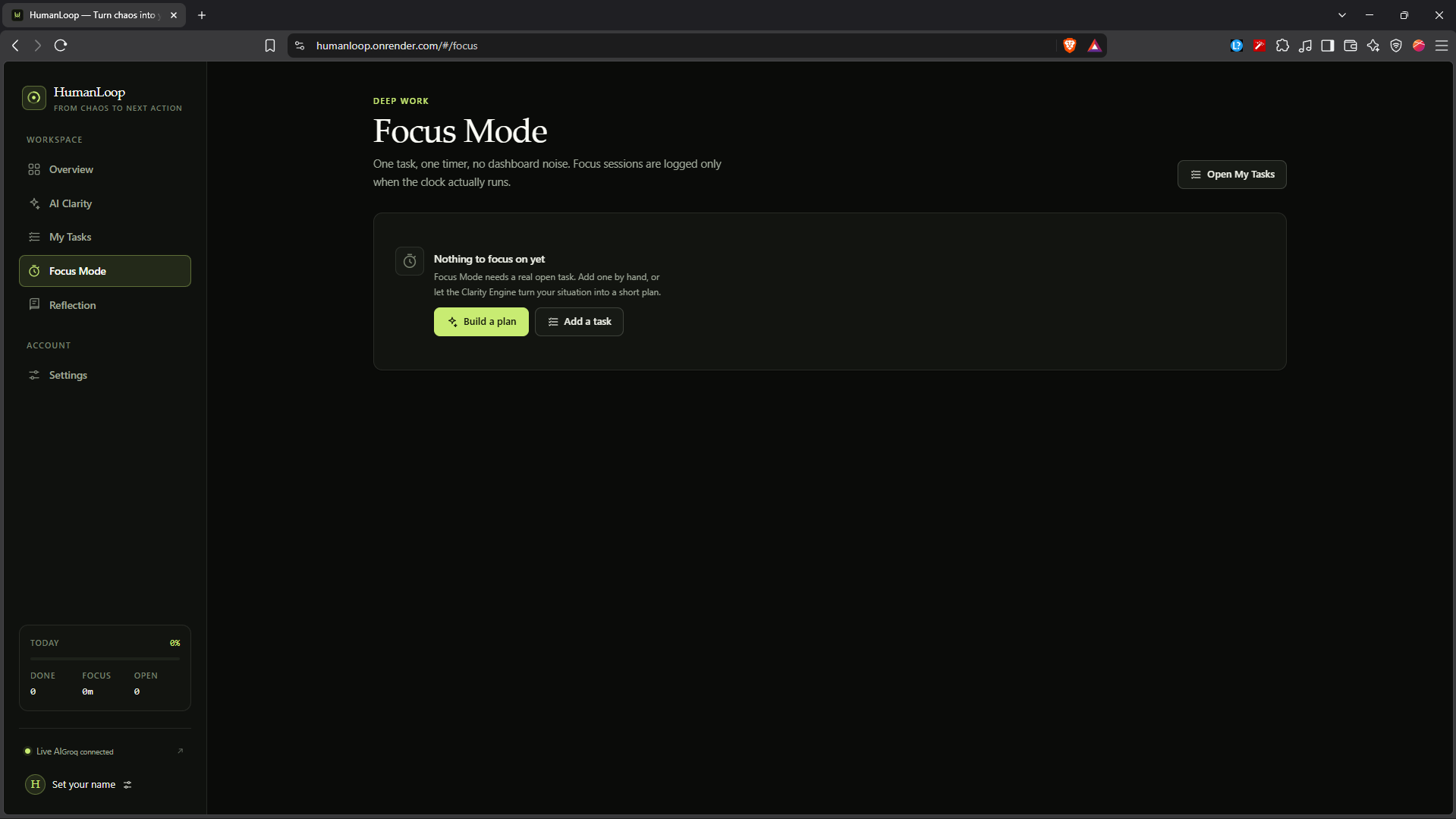
- Focus Mode: Use a built-in focus timer and track completed sessions.
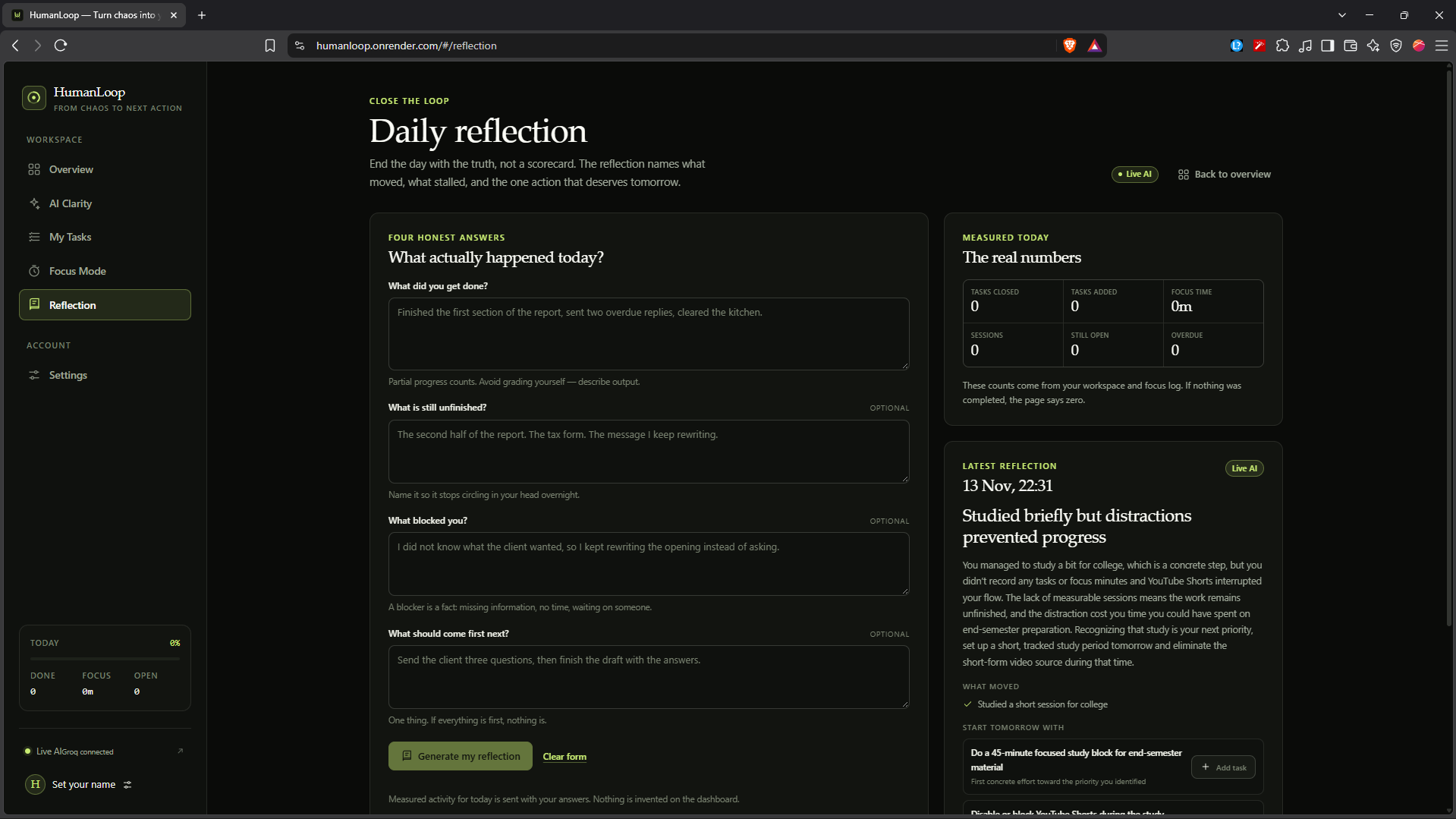
- Daily Reflection: Reflect on what happened, identify blockers, recognize progress, and generate concrete next steps.
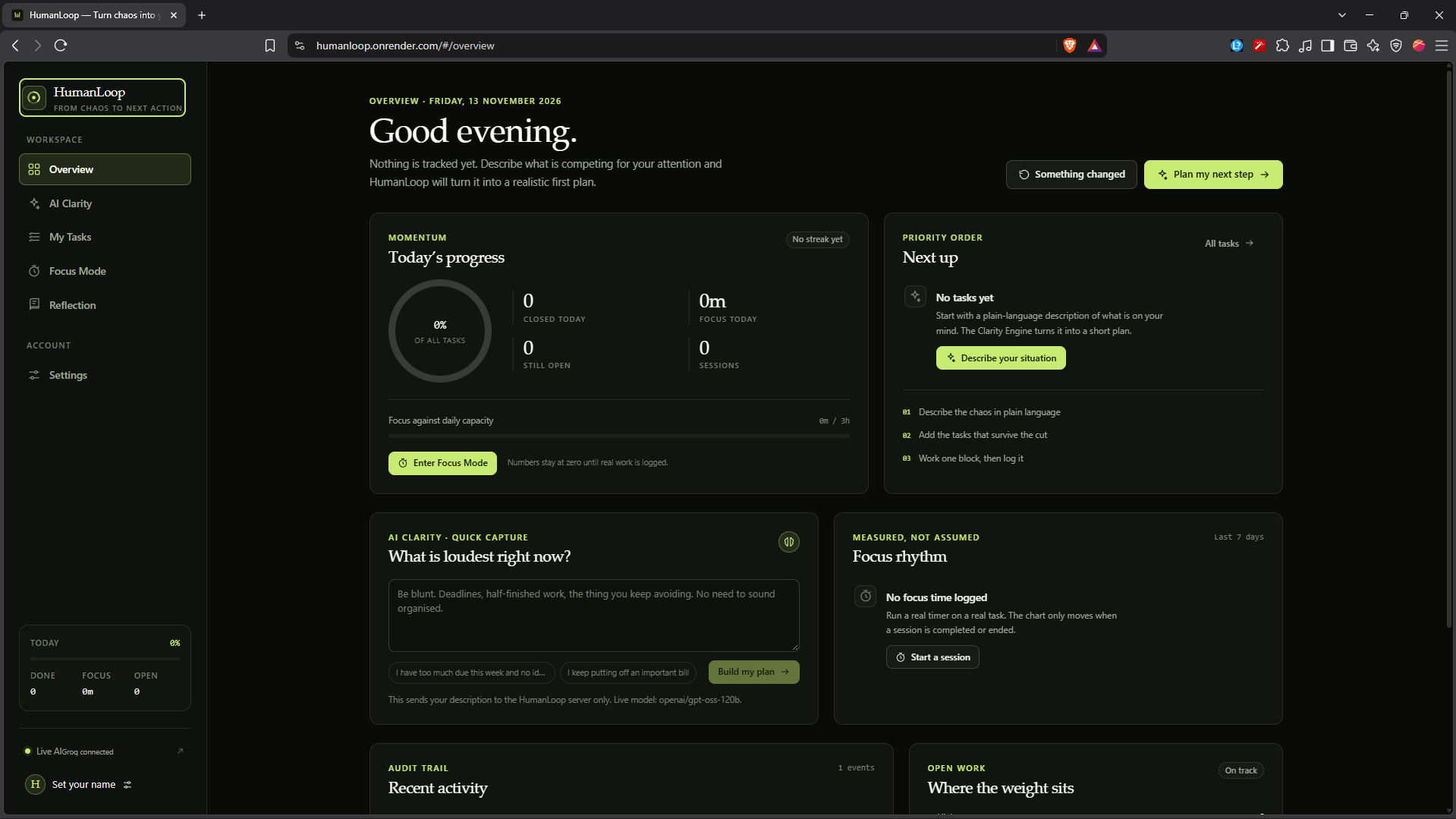
- Progress Dashboard: View tasks, focus activity, and daily progress in one place.
How I built it
HumanLoop uses React and Vite for the frontend, with an Express.js backend handling API requests. Groq provides the live AI capabilities using the openai/gpt-oss-120b model.
The application follows a local-first approach. Workspace data is stored in browser localStorage, while AI requests are handled securely through the backend so API credentials are never exposed to the frontend.
I also implemented a clearly labelled demo mode for situations where a live AI API key is unavailable.
The application is deployed on Render.
Challenges I ran into
One of the biggest challenges was making AI outputs useful rather than simply generating generic advice. The AI responses needed to follow a predictable structure that could be validated and converted into editable tasks.
Another challenge was adaptive replanning. Instead of generating an entirely new plan every time, the system needed to understand the user's situation and suggest targeted changes to existing tasks.
I also had to ensure that the application worked reliably in production, including API validation, error handling, responsive layouts, and persistence across page reloads.
What I learned
Building HumanLoop helped me understand how to integrate LLMs into a practical application, validate structured AI outputs, design full-stack workflows, and test a deployed product using automated browser testing.
Most importantly, I learned that useful AI isn't just about generating answers. It's about helping people move from uncertainty to action.
What's next
Future improvements could include calendar integration, reminders, collaborative workspaces, and more personalized planning based on long-term productivity patterns.
Built With
- artificial-intelligence
- css
- express.js
- groq
- javascript
- llm
- node.js
- productivity
- react
- render
- rest-api
- vite

