-
-
-
-
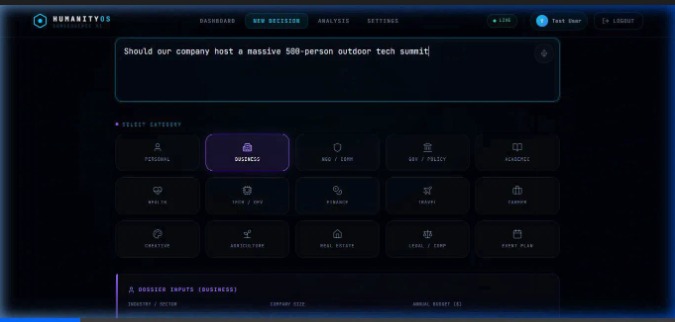
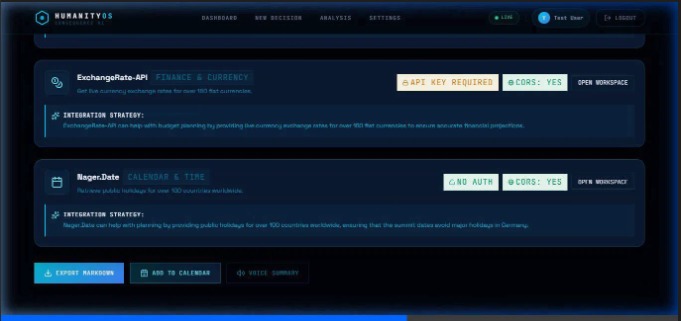
Data Acquiring
-
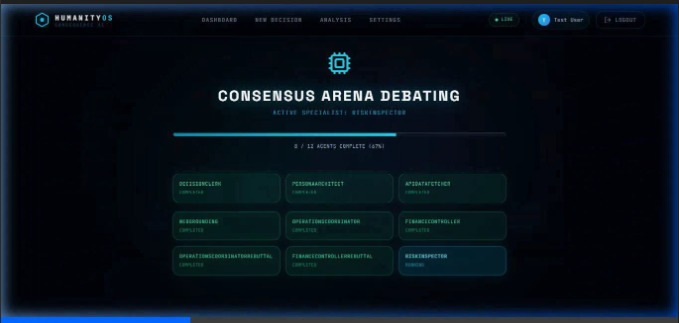
Agents Consensus Arena
-
-
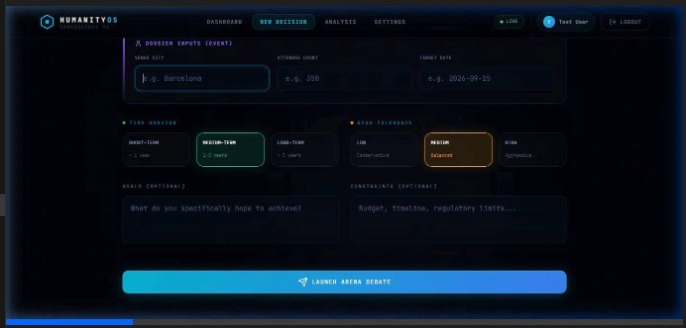
Data Acquiring
-
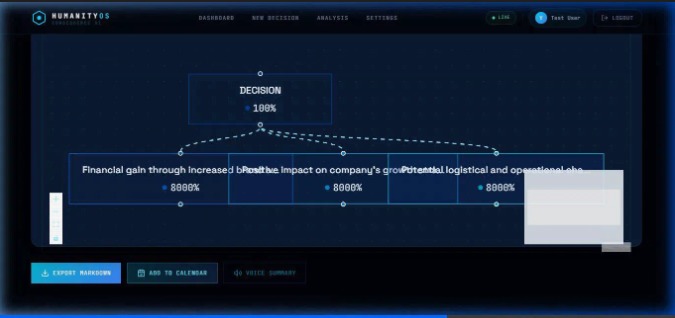
Map
-
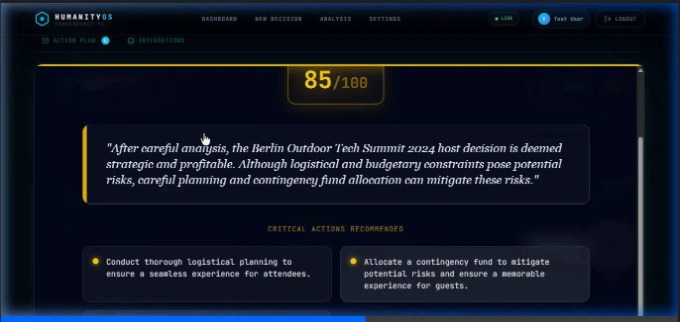
Result
-
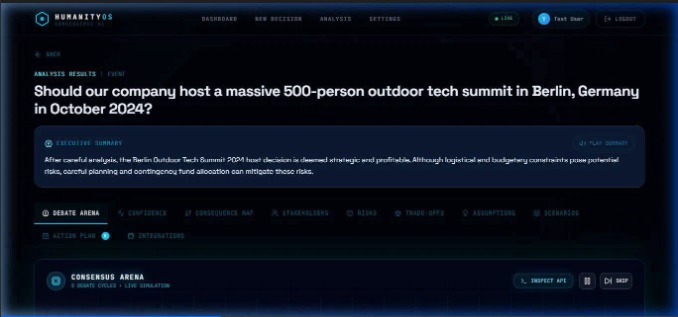
Agents Consensus Arena work
-
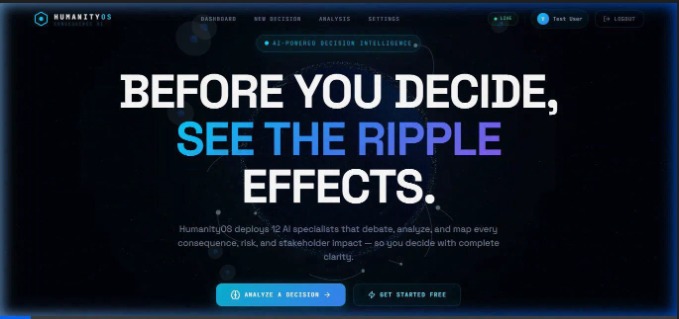
Landing Page
Inspiration:
In our fast-paced world, critical decisions—whether planting crops, migrating tech stacks, or planning global events—are often plagued by human bias and blind spots. Asking a single AI "what should I do?" isn't enough; single-shot models hallucinate and lack domain-specific nuance. We were inspired to build a highly visual "war room" where a committee of AI specialists aggressively debate each other, grounded by real-world API data, to eliminate blind spots and map out cascading risks.
What it does:
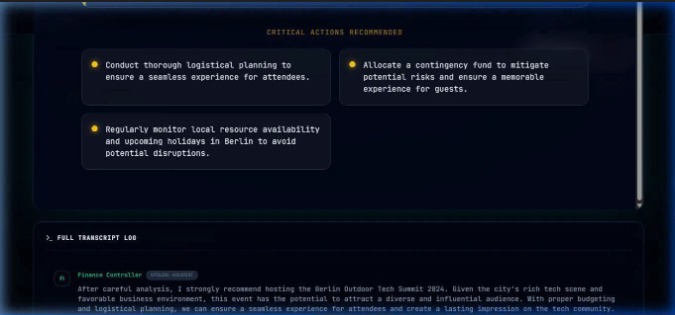
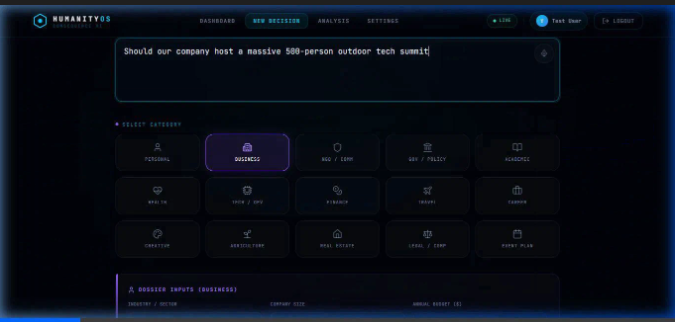
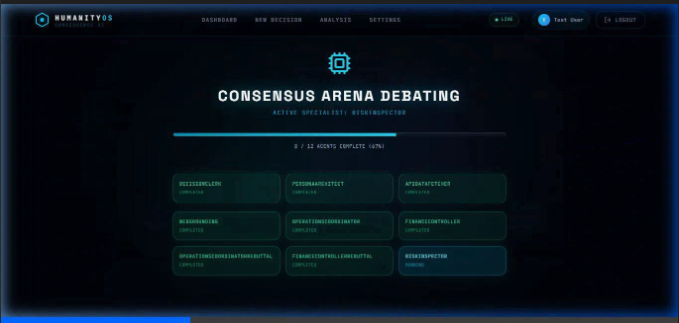
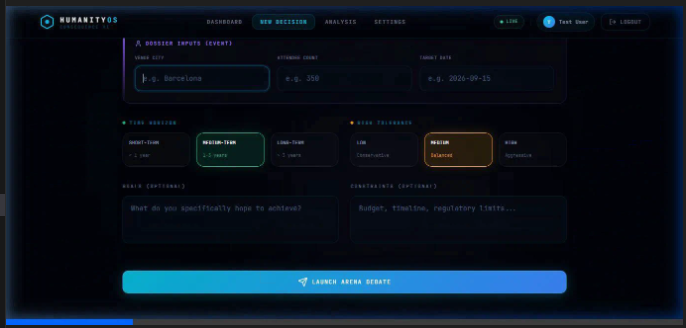
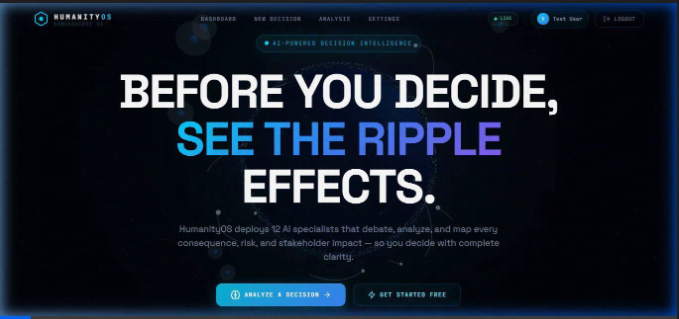
HumanityOS is a cinematic, full-stack decision orchestration platform. Users define a complex decision scenario (e.g., Agriculture, Finance, Tech). The system then spins up a 12-agent AI specialist committee (including a Risk Inspector, Finance Controller, Geo-Logistics Expert, etc.).
Live Grounding:
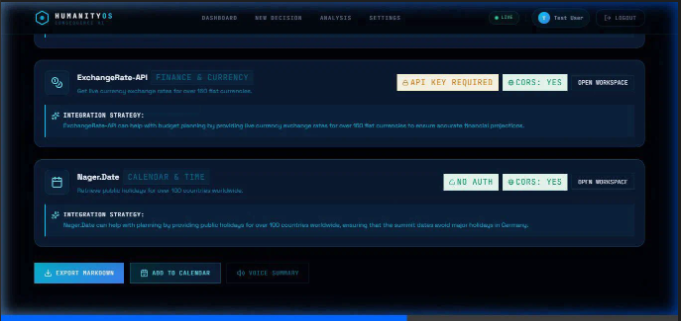
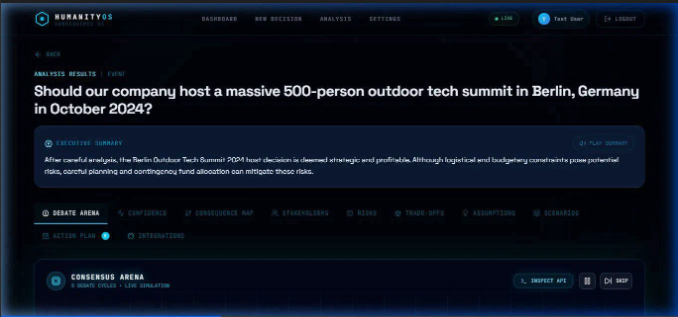
The orchestrator fetches real-time data from external APIs (like Open-Meteo for weather and Nager.Date for public holidays) and injects it into the agents' context. The Arena: The agents debate the decision in a stunning, animated UI, offering opening arguments and targeted rebuttals.
Synthesis:
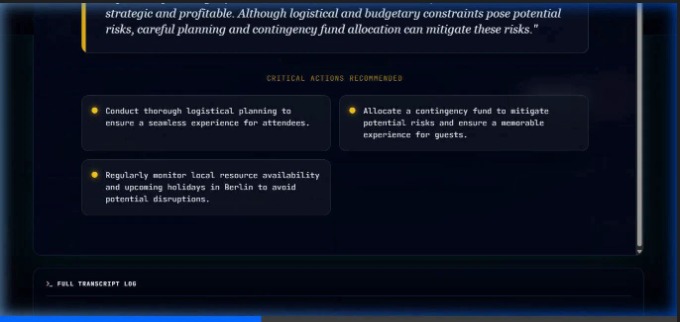
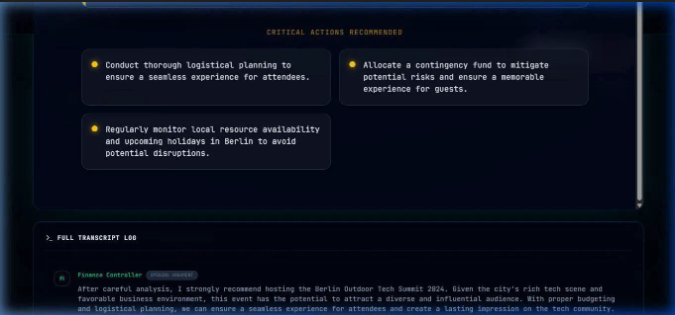
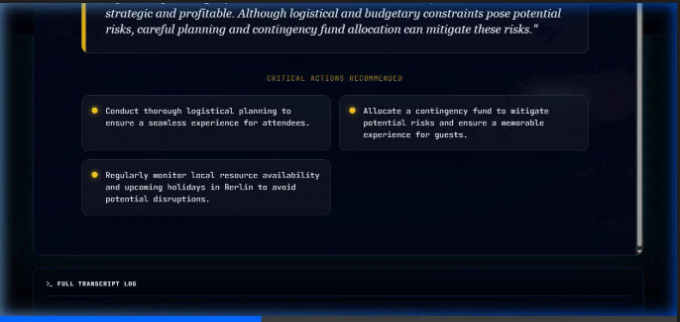
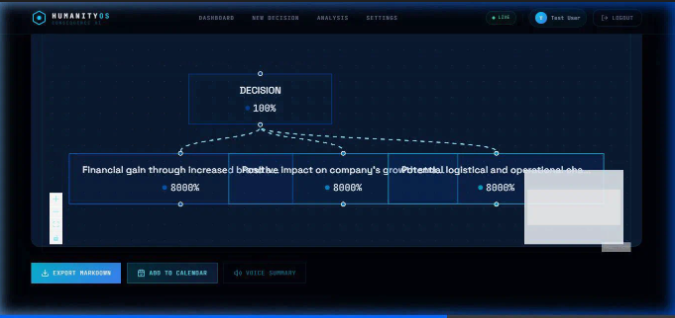
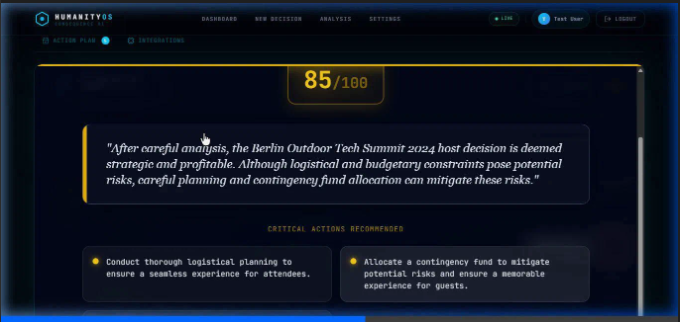
An Executive Judge agent analyzes the transcript to generate a final verdict, an interactive node-based Consequence Map, and a concrete 30-day Action Plan. How we built it:
Frontend:
Built with React, TypeScript, and Vite. We engineered a premium "cinematic dark mode" aesthetic using Tailwind CSS and glassmorphism. Animations are powered by Framer Motion, and the dynamic Consequence Map is rendered using ReactFlow. Backend: A Node.js/Express server utilizing Prisma (SQLite) for state management. AI Orchestration: We utilized the OpenAI Node SDK to build a custom parallel-orchestration engine. To ensure blazing fast JSON generation across 12 simultaneous agents, we routed our inference through Groq (Llama-3.1-8b), with OpenAI fallbacks.
Challenges:
Our biggest hurdle was enforcing a strict "Zero-Mock Data Policy". Early iterations relied on placeholder data when JSON payloads failed or API rate limits were hit. Purging this forced us to engineer a highly resilient orchestration pipeline that dynamically handles LLM timeouts, gracefully propagates agent disconnection states to the UI, and streams live progress without breaking the React lifecycle.
Accomplishments:
We are incredibly proud of the user interface—it truly feels like operating a futuristic command center. From an engineering standpoint, successfully coordinating 12 parallel AI agents to ingest live meteorological and chronological API data, debate each other, and output a strictly typed JSON synthesis within seconds is a massive technical win.
Learnings:
Multi-agent orchestration requires aggressive fail-fast timeouts and robust error state propagation. "Failing gracefully" (showing an agent disconnected) is always better than letting an AI hallucinate fake data. We also learned the immense value of using high-speed inference (Groq) for heavy JSON tasks.
Next Steps:
We plan to integrate deeper real-time APIs (live financial markets, global news scrapers) to give the agents more context. We also want to upgrade the Consequence Map to a 3D topological graph and introduce a "Multiplayer Mode," where a human user can step into the arena and directly interrogate an individual AI specialist during the debate.
Built With
- express.js
- framer-motion
- groq-cloud
- javascript
- nager.date
- node.js
- open-meteo-api
- openai-api
- prisma
- react
- sqlite
- tailwind-css
- typescript
- vite


Log in or sign up for Devpost to join the conversation.