Inspiration
In "A Thousand Splendid Suns," there is a scene in the book where Laila's home is bombed, and her parents die. Tragedies like this happen every day, whether they're human-caused or natural disasters. We can be a human force of good, using the same technology to bomb and destroy lives to save them instead.
What it does
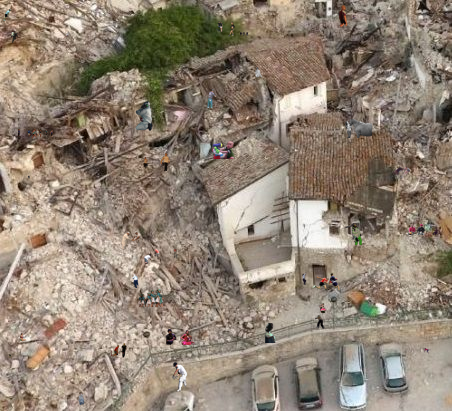
We created an AI pipeline that detects humans in disaster imagery, flood, fire, collapsed buildings, trained specifically on drone/aerial-perspective footage, so it's built for the vantage point a real search-and-rescue drone would have. A voice alert summarizes what was detected: how many people, how confident the model is, and the surrounding environment or disaster itself.
How we built it
We used the C2A Dataset, an annotated set of human-detection imagery across disaster scenarios, to fine-tune a YOLO11 object detection model. After verifying the dataset's integrity, we trained the model on a cloud GPU, reaching a final mAP50 of 0.774 and precision of 0.839 across 50 epochs. On top of the trained detector, we built a Streamlit interface where a user uploads footage, the model runs detection and draws bounding boxes, ElevenLabs reads the results aloud, and Gemini provides a plain-language scene analysis of the disaster itself.
Challenges we ran into
The biggest challenge was access to free-tier cloud GPU access. Our Colab session unexpectedly lacked GPU access partway through, and when we tried switching to Kaggle as a backup, we had to closely monitor the training so the runtime didn't quit over a few hours. We also worked through several failed data-transfer attempts, permission errors pulling our dataset from Google Drive, a broken download feature in Colab's interface, and a GPU-runtime switch that wiped our already-downloaded dataset and forced us to restart that step. Getting a clean, verified, end-to-end pipeline working took real persistence.
Acomplishments
We're proud of our persistence and our ability to pivot when something didn't work. When our Colab GPU access became unreliable, we worked through an entirely different cloud platform (Kaggle) rather than giving up on training altogether, and when that hit its own obstacles, we found our way back to a working setup. We're also proud that we didn't just trust our pipeline blindly — we verified our dataset's integrity as we had a big pool of data to choose from and had to evaluate what fit our vision best.
What we learned
We learned that the most important part of implementing AI is having good domain-specific data, without it, accuracy would be far worse, regardless of model choice. We also learned how unpredictable free-tier cloud GPU access can be, and how important it is to have a backup plan (and a backup to that backup) when your timeline is fixed. Lastly, we learned to be realistic about our goals, prioritizing a working core pipeline before getting carried away with other luxurious features.
What's next for Humanitarian Drone Detection System
We plan to expand the drone's capabilities, such as detecting different types of crises and intelligence gathering of dangerous situations (school shootings, hostage situations, etc.). We'd also like to add real location/positioning data to detections, so responders know not just how many people were found but roughly where and explore live video feed support rather than uploaded files, to move closer to real-time field deployment.

Log in or sign up for Devpost to join the conversation.