-
-
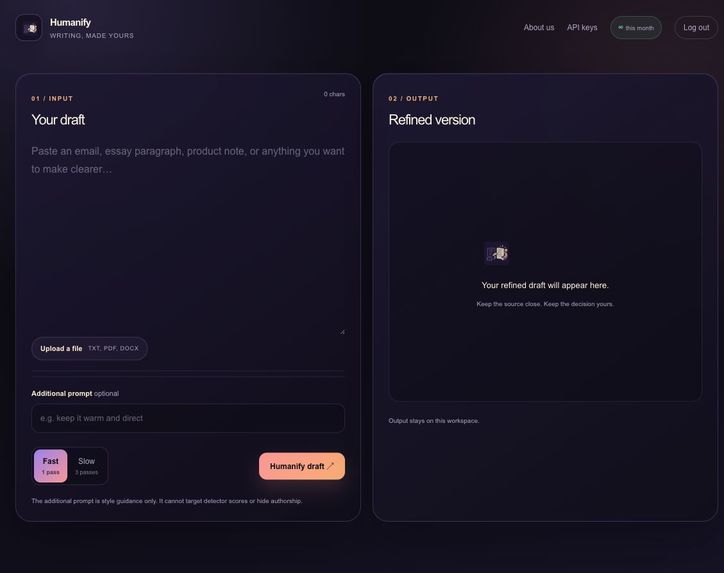
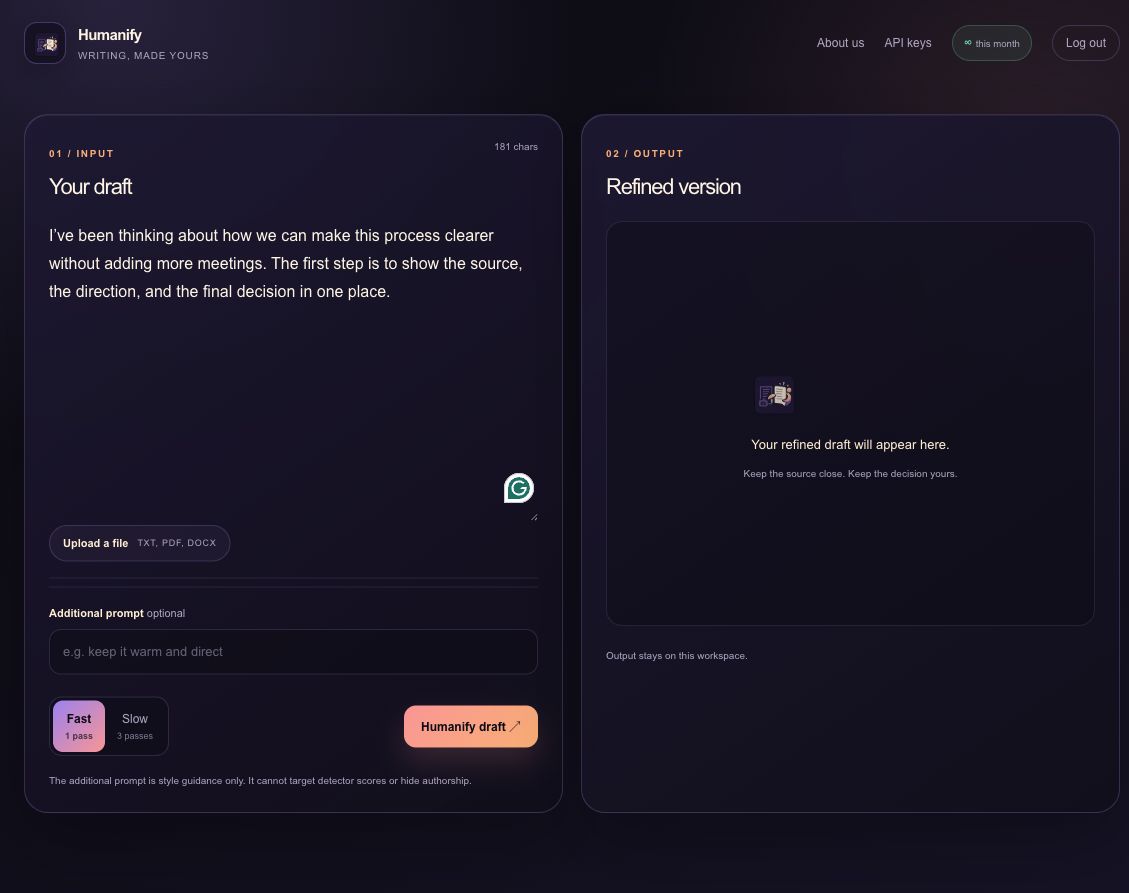
Home Page
-
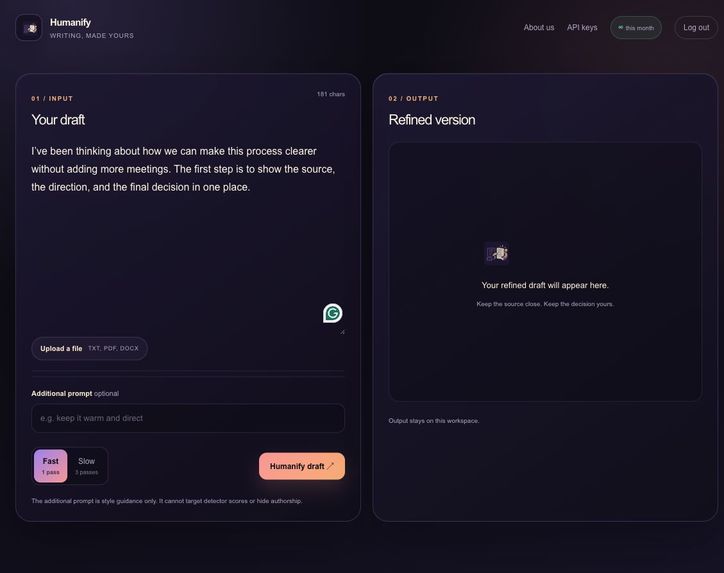
Example Input
-
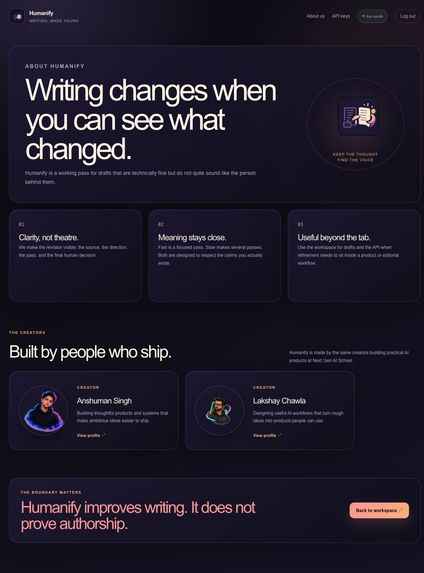
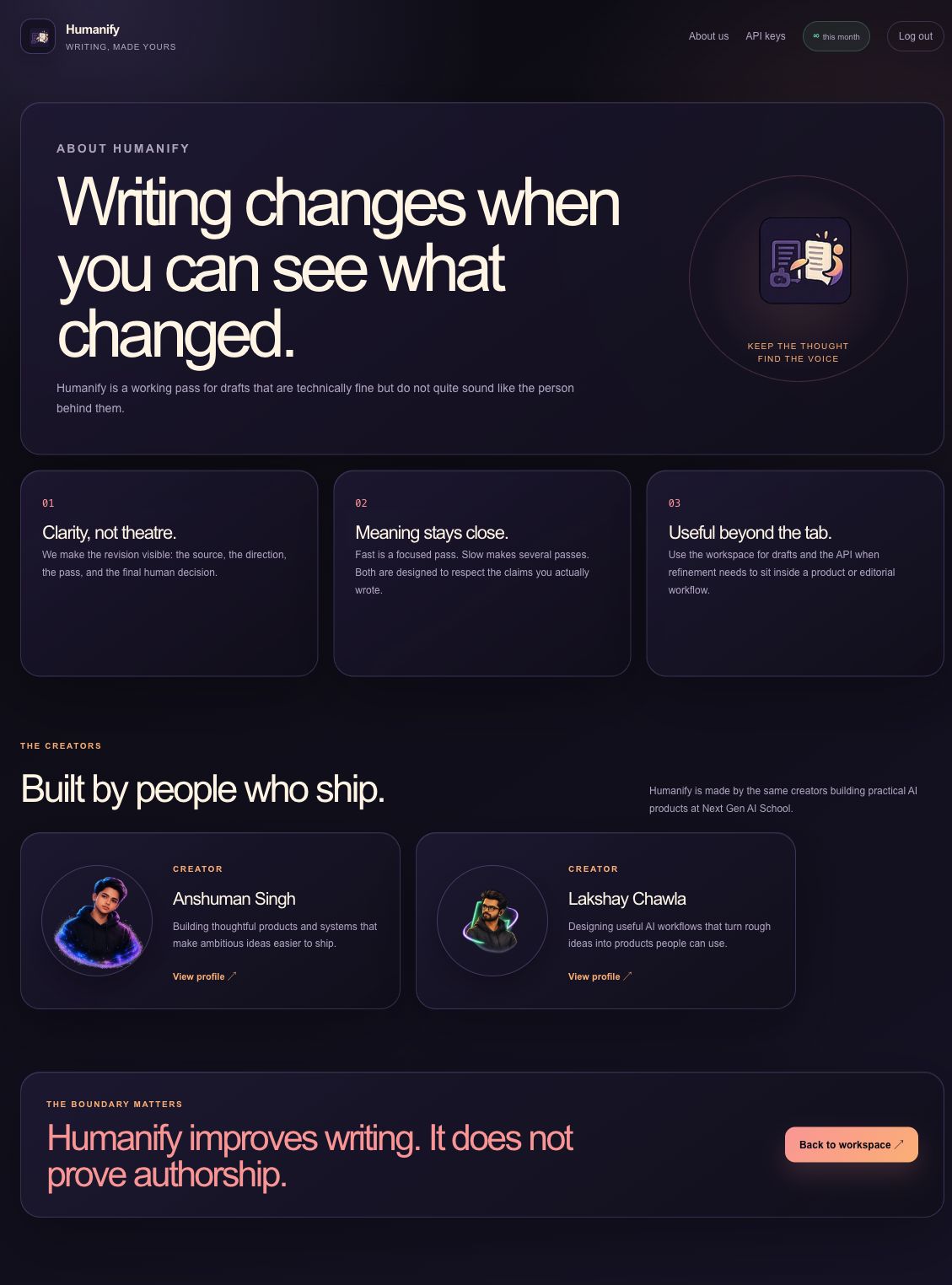
About us
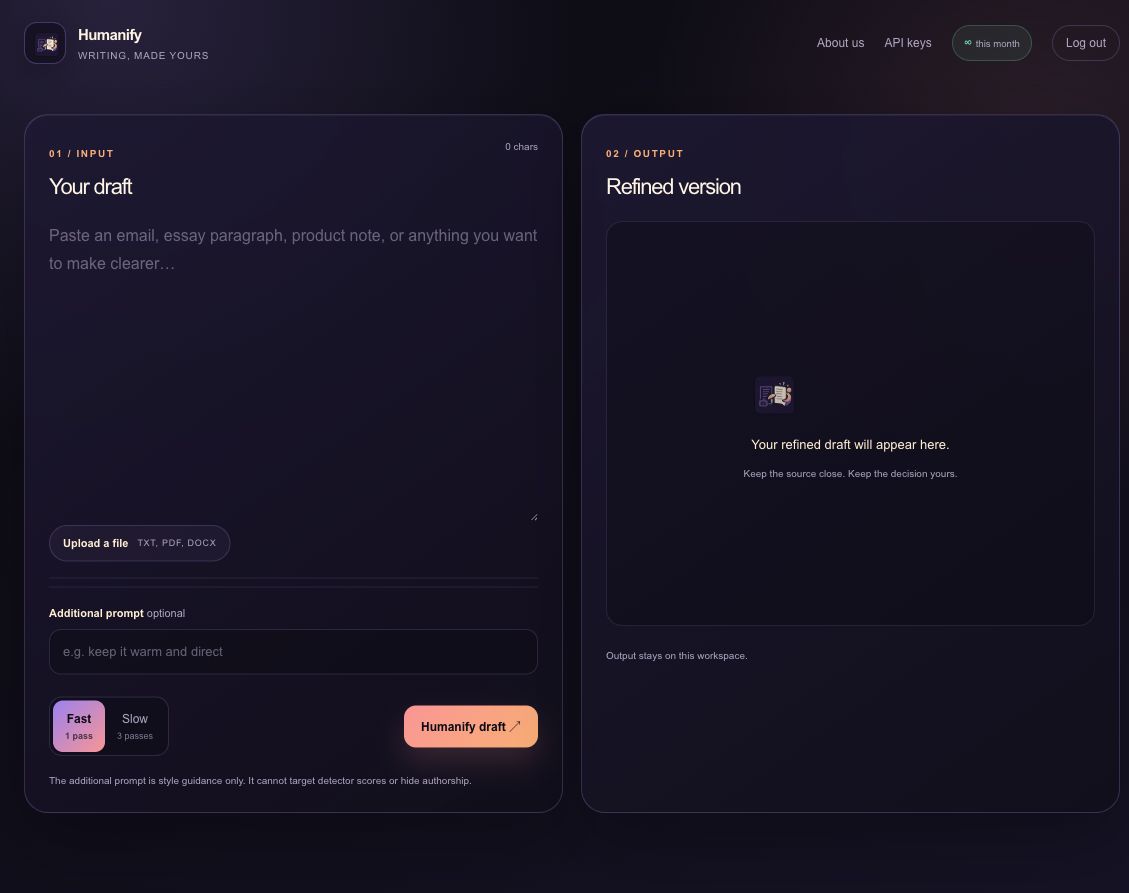
Inspiration
I noticed that some of my own writing, including text I had written myself, was unnecessarily being identified as AI-generated. That made me curious about what these detectors were actually looking for. I explored different LLM-based approaches and used those insights to build Humanify.
What it does
Humanify takes any piece of text and refines it to make it sound more natural and human-written, while preserving the original meaning and intent.
How we built it
We built Humanify as a web app using a prompt-engineered text-to-text pipeline. I experimented with different prompts and rewriting strategies based on patterns that commonly make text appear AI-generated, then iteratively tested and refined the outputs.
Challenges we ran into
The biggest challenge was improving the naturalness of the text without changing its meaning. It was also difficult to find the right balance between making text less predictable while keeping it clear, coherent, and faithful to the original draft.
Accomplishments that we're proud of
I'm proud that Humanify turned a simple observation into a working tool. The project also gave me a practical way to experiment with prompt engineering, LLM behavior, and iterative evaluation rather than just using an LLM as a black box.
What we learned
We learned that relatively small changes in phrasing, sentence structure, rhythm, and word choice can significantly change how text is perceived. More importantly, we learned that building reliable LLM applications requires continuous testing and prompt refinement.
What's next for Humanify
The next step is to make Humanify more robust across different writing styles and types of text, improve consistency, and build better evaluation methods for measuring how natural the rewritten output actually is.
Built With
- css
- gemini-api
- html
- javascript
- llms
- next.js
- openai-api
- prompt-engineering
- python
- react
- rest-api
- tailwind-css

Log in or sign up for Devpost to join the conversation.