Inspiration
Even Google weather and other big names are not reliable for the local weather especially in the region in your close proximity. For example, during rainy weather, Google keeps predicting heavy rain for the day, but it turns out sunny and many people cancel plans and outdoor activities based on this. One of the main reasons is because these apps are usually predicting the weather of a large area/city as a whole and not each individual suburb. And they are also using parameters recorded by devices- like wind speed, temperature, humidity etc and not by people who can actually see and feel the live conditions in real time.
What it does
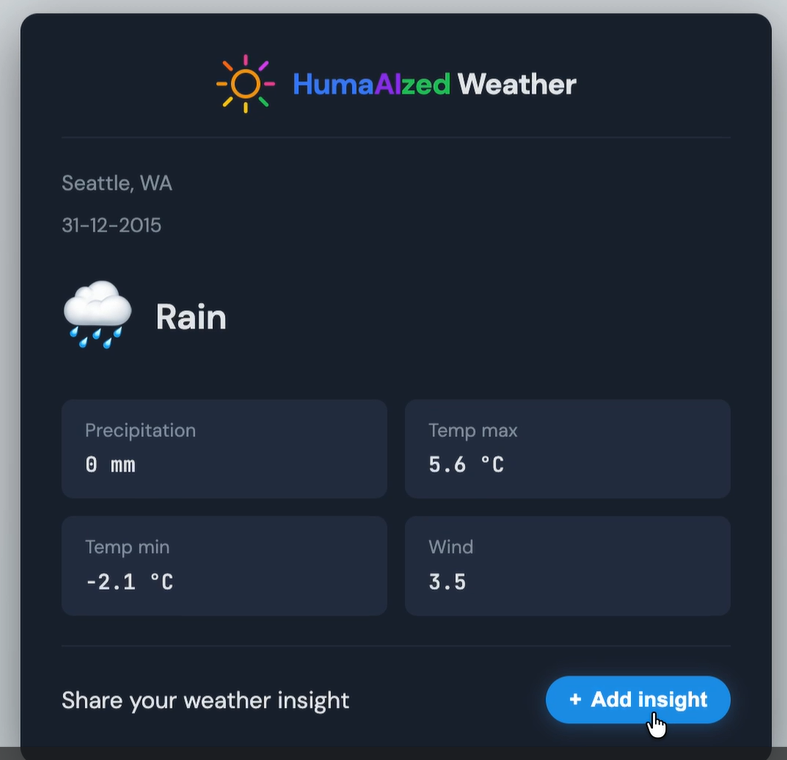
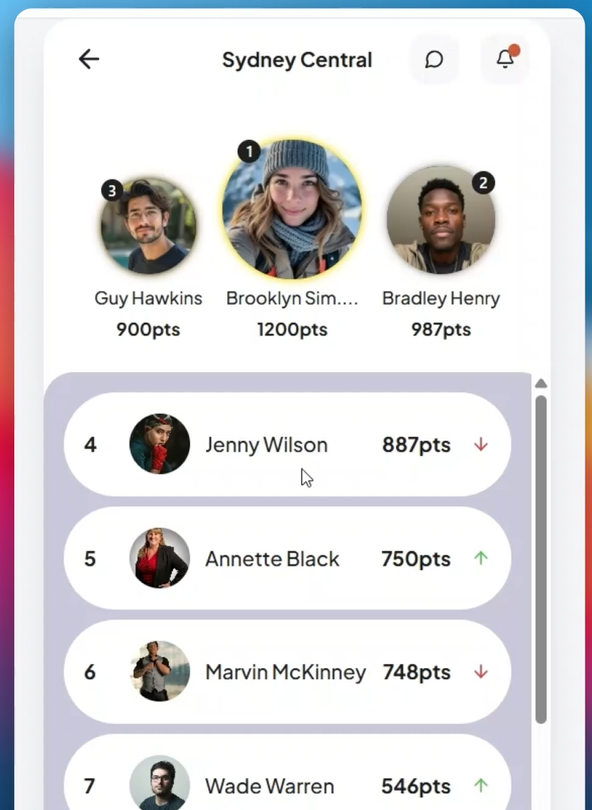
Users from each local area keep sending their updates and insights(params) on the weather(skies, wind, temperature, their prediction etc) and the accurate weather is determined every 15 mins based on these inputs by running an ML model. Inputs from users with better rank will be given more weight. Rank/scores will be determined based on the accuracy of their past predictions. Based on the accuracy of their predictions, they'll be given points which can be redeemed for discounts at online stores that sponsor the app.
How we built it
The datasets we have used are a hybrid version of a dataset from Kaggle and we also add a feature that our BERT based CNN model predicts from user inputs. Due to the time constraints we have currently trained our models with 3 months of data from a single region but we plan to train our models on larger datasets and transformer based models built upon huge amounts of data as the future scope of our project. The ML side of our project was built using python, tensorflow, pytorch and other ML/Data Science libraries. For the model that converts user inputs to predictions for the scondary model we have referred to the research paper of one of our own members to integrate BERT Embeddings with CNNs: https://www.sciencedirect.com/science/article/pii/S2215016124002966 . The functionality was created with Node and React Js, and we used Elastic search to store and access user input data.
Challenges we ran into - Due to the time constraints we have currently trained our models with 3 months of data from a single region but we plan to train our models on larger datasets and transformer based models built upon huge amounts of data as the future scope of our project.
Accomplishments that we're proud of - The fact that we are taking on giants that predict weather using only sensor based data.
What we learned - We have understood the great importance of large amounts of data in order to get better predictions.
What's next for HumanAIzed Weather - To convert the app into a mobile application and deploy it! Also train better and larger models on a lot more data and also from data that is collected by the app once it gains a larger userbase.
Built With
- bert
- elasticsearch
- node.js
- python
- pytorch
- react
- tensorflow


Log in or sign up for Devpost to join the conversation.