Inspiration
I've been building Alexa skills for years, and games have always been one of the areas I've enjoyed experimenting with the most. Before Human vs AI, I had already developed standalone Alexa game experiences, including some of the games that eventually became part of this project. The traditional model was always similar: one skill, one game, one interaction model. When Alexa+ introduced a more agentic approach to Alexa, I immediately started thinking about how AI could change that model and make games more dynamic, connected, and intelligent. That idea became Human vs AI.
What it does
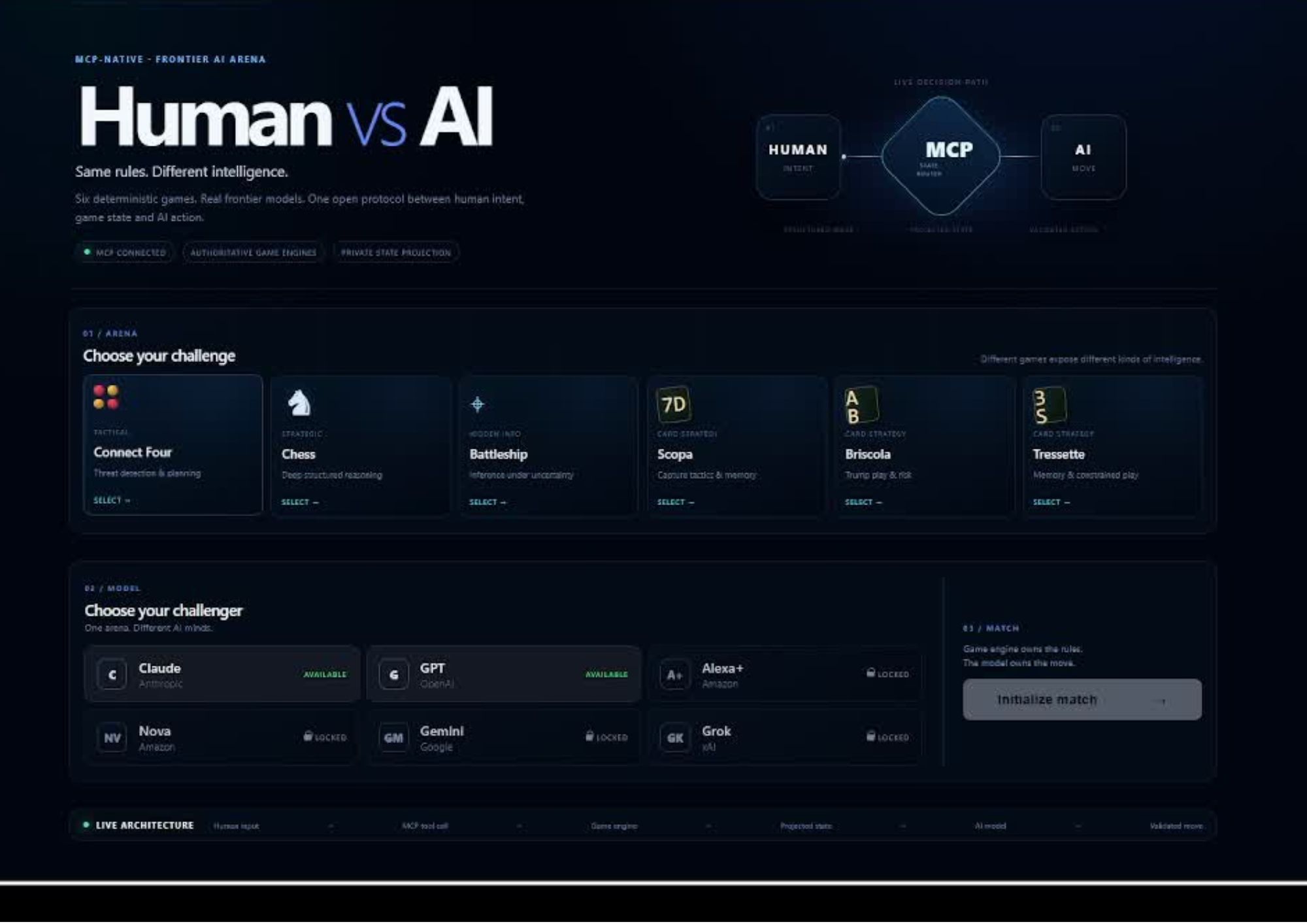
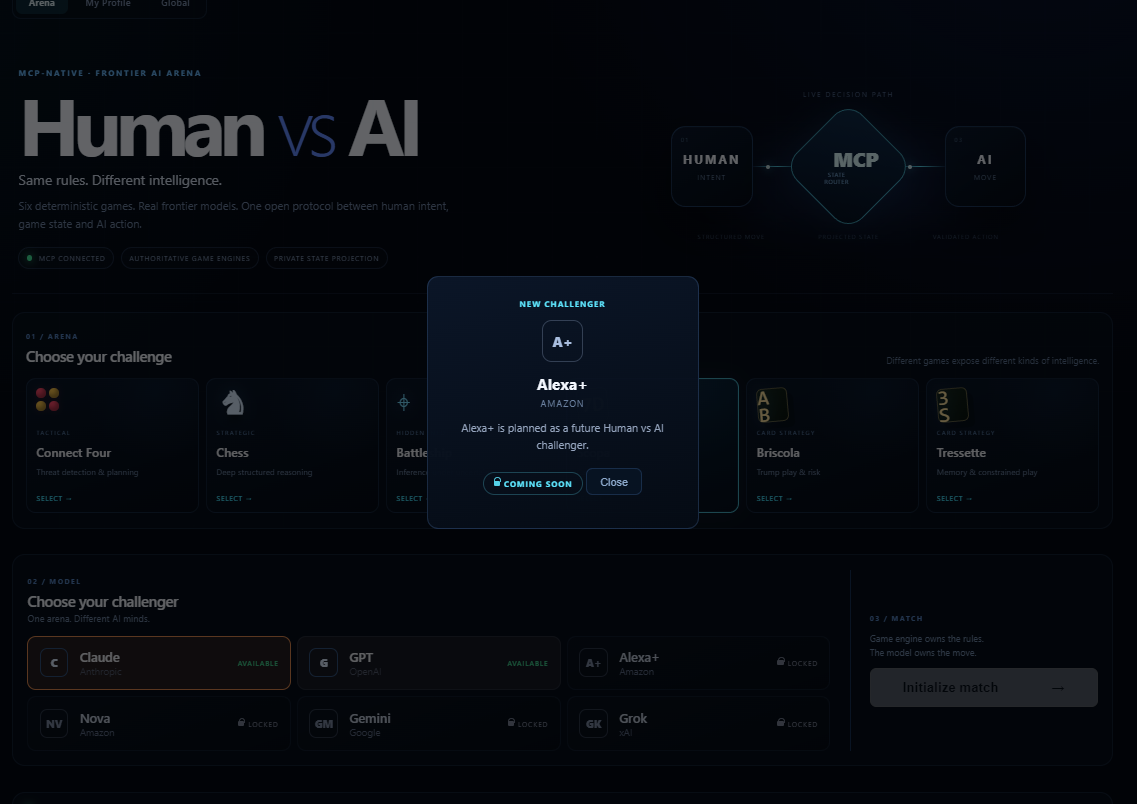
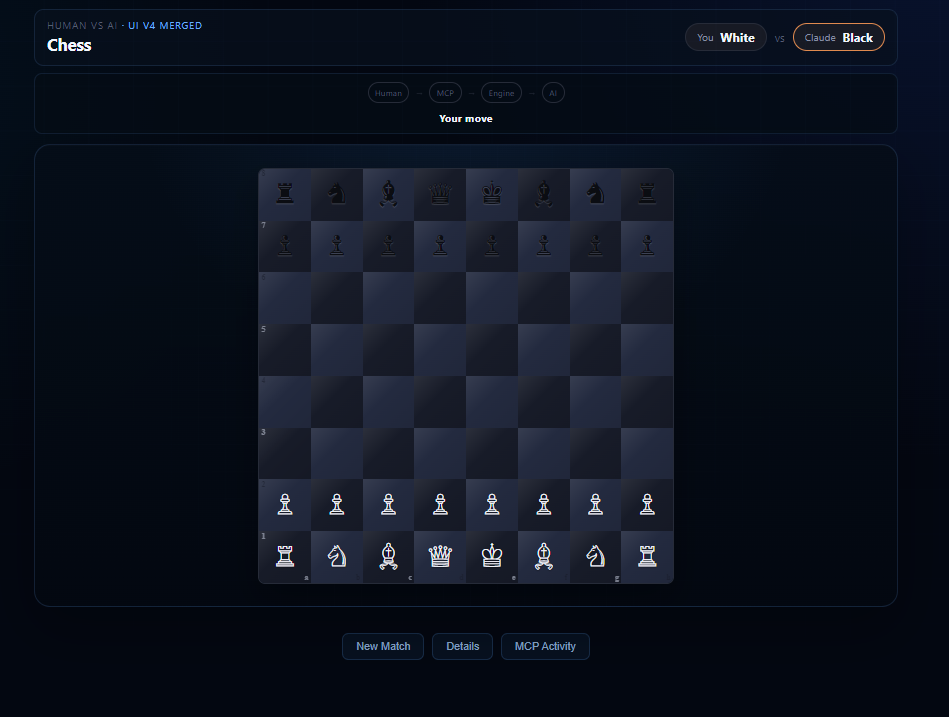
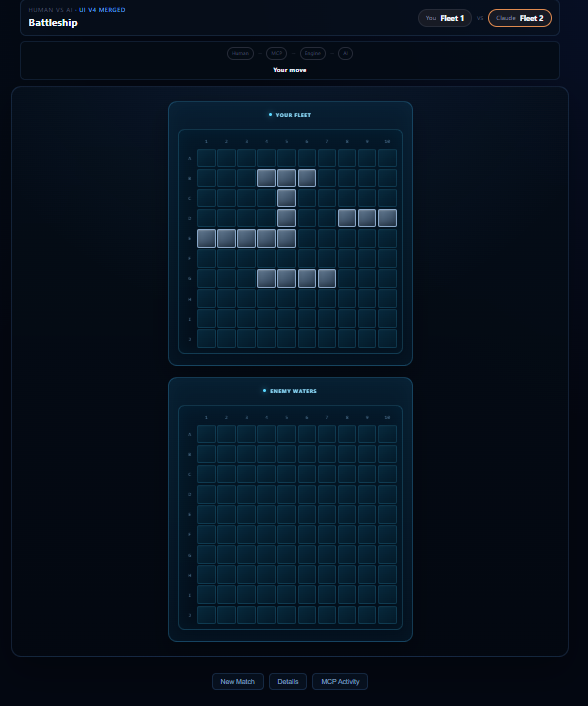
Human vs AI is a multimodal gaming arena for Alexa+ where players can challenge Alexa itself or other AI models such as Claude and GPT. The current Arena supports six Logic games across different types of gameplay:
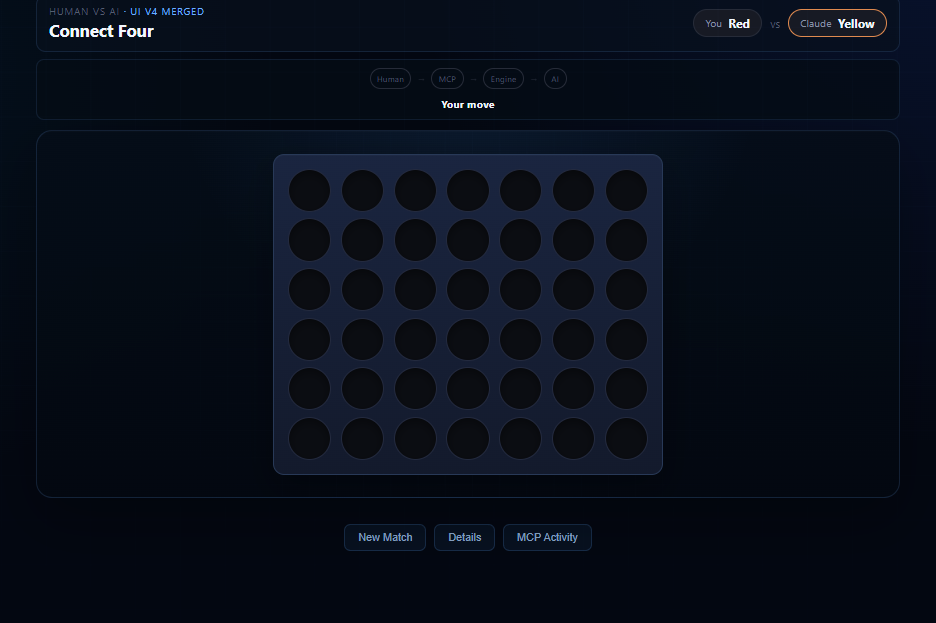
- Connect Four
- Chess
- Battleship
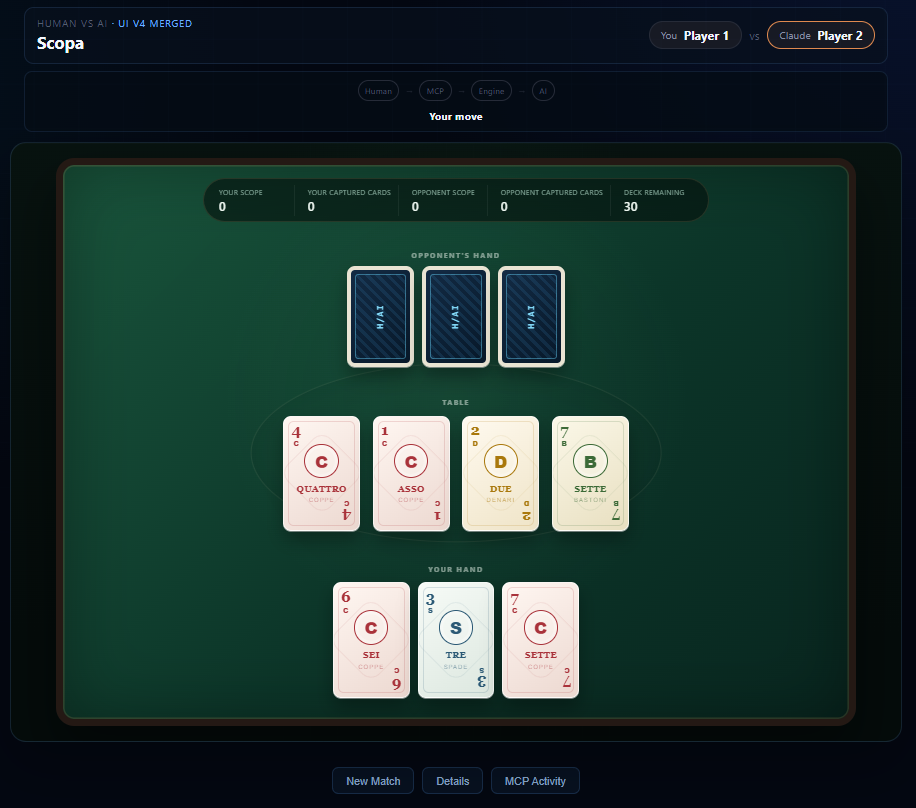
- Italian Cards Game (Scopa-briscola-tresette) Players can interact through voice and touch, while the authoritative match state remains on the server. Alexa can take two different roles depending on the opponent.
As a Challenger, Alexa competes directly against the human.
As a Host, Alexa remains the conversational interface while Human vs AI orchestrates a match against another AI such as Claude or GPT. In this role, Alexa can manage and comment on the experience without becoming a game-solving assistant or revealing hidden information. The Arena tracks match history, wins and losses, player statistics, global statistics, leaderboards, and an Elo-inspired Arena Rating. The result is one competitive environment where different games and different AI challengers share the same experience.
How we built it
At the center of Human vs AI is a stateful Model Context Protocol (MCP) server implementing MCP specification 2025-11-25 over Streamable HTTP. The high-level architecture is: Alexa+ / Multimodal UI → MCP Server → Game Engines → AI Providers → Arena Analytics
The MCP server exposes capabilities for discovering available games and AI providers, starting matches, making moves, retrieving match state, retrying AI turns, and accessing Arena statistics and leaderboards. The game engines remain independent from the selected AI provider. This means the same game architecture can support different AI challengers without changing the underlying game rules or MCP gameplay interface. The system currently integrates Alexa, Anthropic Claude, and OpenAI GPT as challengers. For the Alexa+ experience, I built a simulated conversational client that acts as a real MCP client rather than bypassing the protocol and calling the game logic directly. The visual Arena and conversational experience therefore converge on the same server-side matches. I also integrated MCP Apps. Connect Four can expose an interactive board directly through MCP, and interactions with that board call the same MCP gameplay tools used by the rest of the system. During development, I used ChatGPT and Claude Code as coding collaborators for architecture discussions, implementation, code review, debugging, and testing.
Challenges we ran into
One of the biggest challenges was making the AI opponents feel like real players rather than random move generators. The goal of Human vs AI is to create a genuine competition between a human and different AI models. That meant each AI needed to understand the game it was playing, receive the right representation of the current state, know the rules and available actions, and reason independently about which move to make. This became especially challenging because the Arena contains very different kinds of games. Playing Chess requires a completely different decision process from Connect Four, while games such as Battleship, Scopa, Briscola, and Tressette introduce hidden information and game-specific rules. A large part of the work therefore involved designing the context given to each AI so that models such as Claude and GPT could make their own strategic decisions while correctly understanding the rules of each game. At the same time, I deliberately kept the game engine authoritative. The AI is responsible for deciding what it wants to do, but it is never trusted to decide whether its own move is legal. Every AI move is validated by the game engine before it can affect the match. This separation was essential to the idea behind Human vs AI: I wanted each match to reflect the actual decisions made by the AI model, while ensuring that humans and AI always compete under the same deterministic game rules. Another important challenge appeared while testing real AI providers. During more complex Connect Four positions, Claude's extended reasoning could consume the available output-token budget before producing its actual move. The model could spend the entire budget reasoning about the position and return without a usable action. Investigating the raw provider response revealed that reasoning tokens and the final response were sharing the available token budget. I addressed this with better token budgeting, explicit truncation handling, controlled retries, and safeguards against duplicate AI moves. Finally, all of this had to work as one coherent system. Voice, touch, MCP, six different games, and multiple AI providers all needed to interact with the same authoritative match state while preserving turn ownership and, in hidden-information games, ensuring that each player only receives the information they are allowed to see. These challenges transformed Human vs AI from simply connecting an LLM to a game into building a reliable environment where different artificial intelligences can genuinely compete against a human under the same rules.
Accomplishments that we're proud of
The accomplishment I'm most proud of is that Human vs AI evolved from several individual game concepts into a single extensible AI gaming architecture. Some of the technical milestones I'm particularly proud of include:
- A real MCP 2025-11-25 implementation using Streamable HTTP
- A stateful match architecture shared across the experience
- Interchangeable Alexa, Claude, and GPT challengers
- Voice and touch operating around the same authoritative match stat
- An interactive Connect Four MCP App
- Architectural tests that ensure the bundled clients do not bypass the MCP gameplay boundary
The final automated test suite contains 1,246 passing tests, covering not only game rules but also MCP transport and protocol negotiation, architectural boundaries, hidden-information behavior, turn ownership, match isolation, voice/touch state consistency, analytics, and MCP App integration.
What we learned
The biggest learning experience from Human vs AI was understanding how to design and build around the Model Context Protocol (MCP). Having developed Alexa skills for years, I was already familiar with building voice experiences and game logic. What was new was learning how MCP can expose those capabilities in a standardized way, allowing an agent to discover and use them dynamically. Through this project, I learned how to implement a stateful MCP server, work with Streamable HTTP, manage MCP sessions and tools, and connect game engines, AI providers, and application state behind a common protocol. Most importantly, I learned how MCP changes the way I think about building for Alexa+: instead of creating a separate predefined experience for every game, I can expose reusable capabilities that an agent can orchestrate depending on what the user wants to do. That was the key technical learning behind Human vs AI.
What's next for Human vs Ai
Human vs AI is designed to keep growing beyond the games and AI challengers currently available. The next step is to expand the Arena with new games, new AI opponents, and more interactive MCP Apps, while continuing to improve the competitive experience with richer player statistics, rankings, and progression. Thanks to the MCP-based architecture, these new capabilities can be added without redesigning the entire Alexa+ experience: new games and services can simply become new capabilities available to the agent. The long-term vision is to turn Human vs AI into an evolving arena where players can challenge different artificial intelligences across an increasingly diverse range of games.
More games. More AI challengers. One Arena.
Built With
- agentic
- agents
- ai
- alexa+
- anthropic
- apps
- artificial
- claude
- context
- express.js
- game
- generative
- gpt
- http
- intelligence
- javascript
- llm
- mcp
- model
- multimodal
- node.js
- openai
- protocol
- streamable
- voice

Log in or sign up for Devpost to join the conversation.