-
-
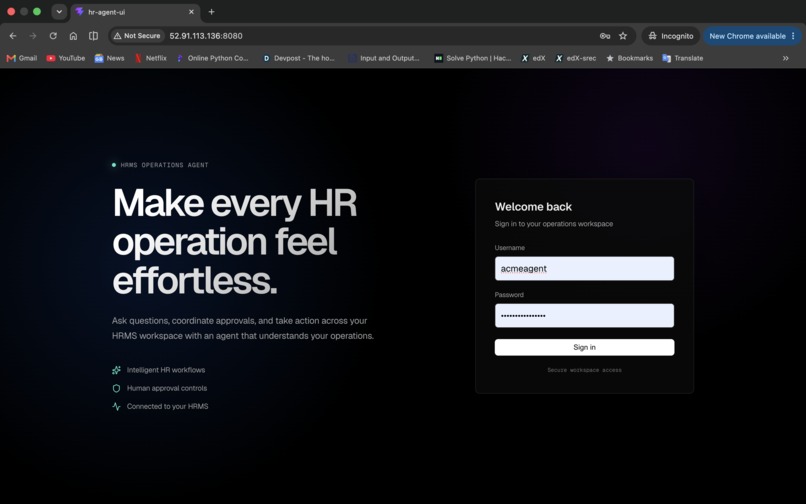
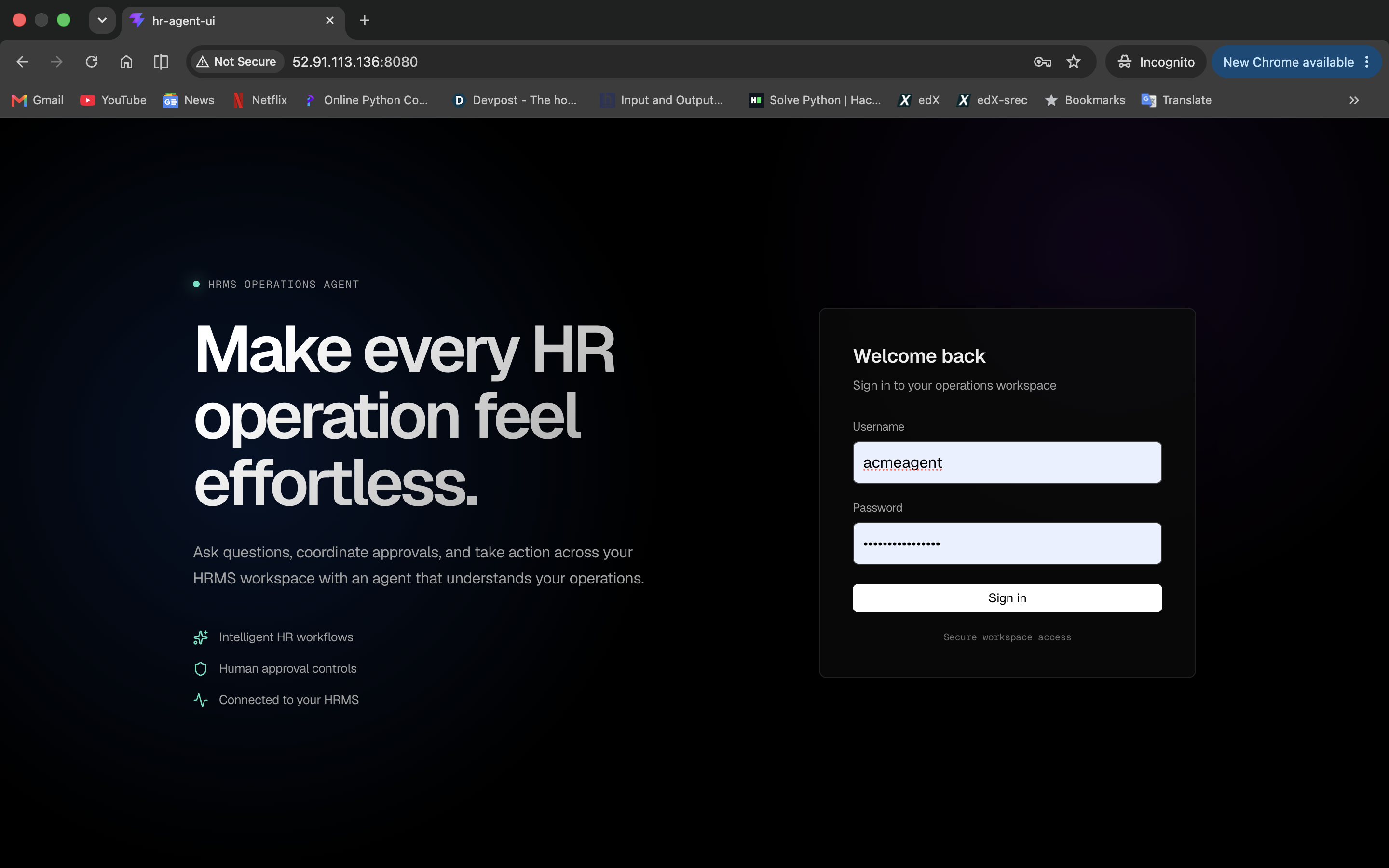
HR Automation Login page
-
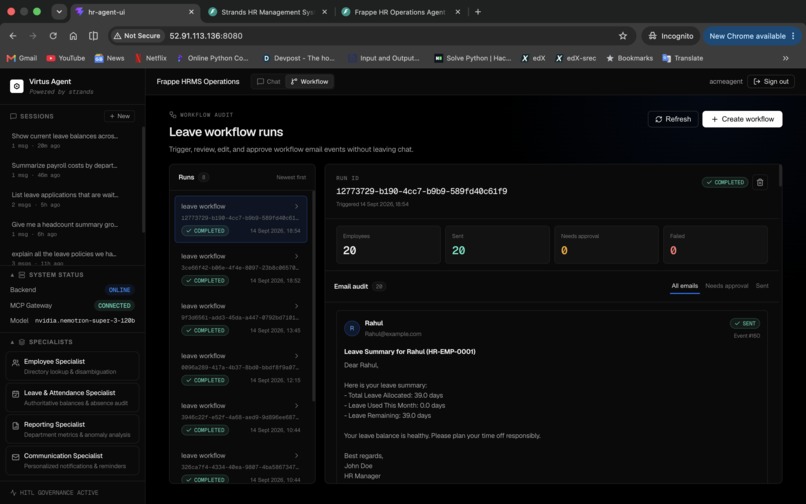
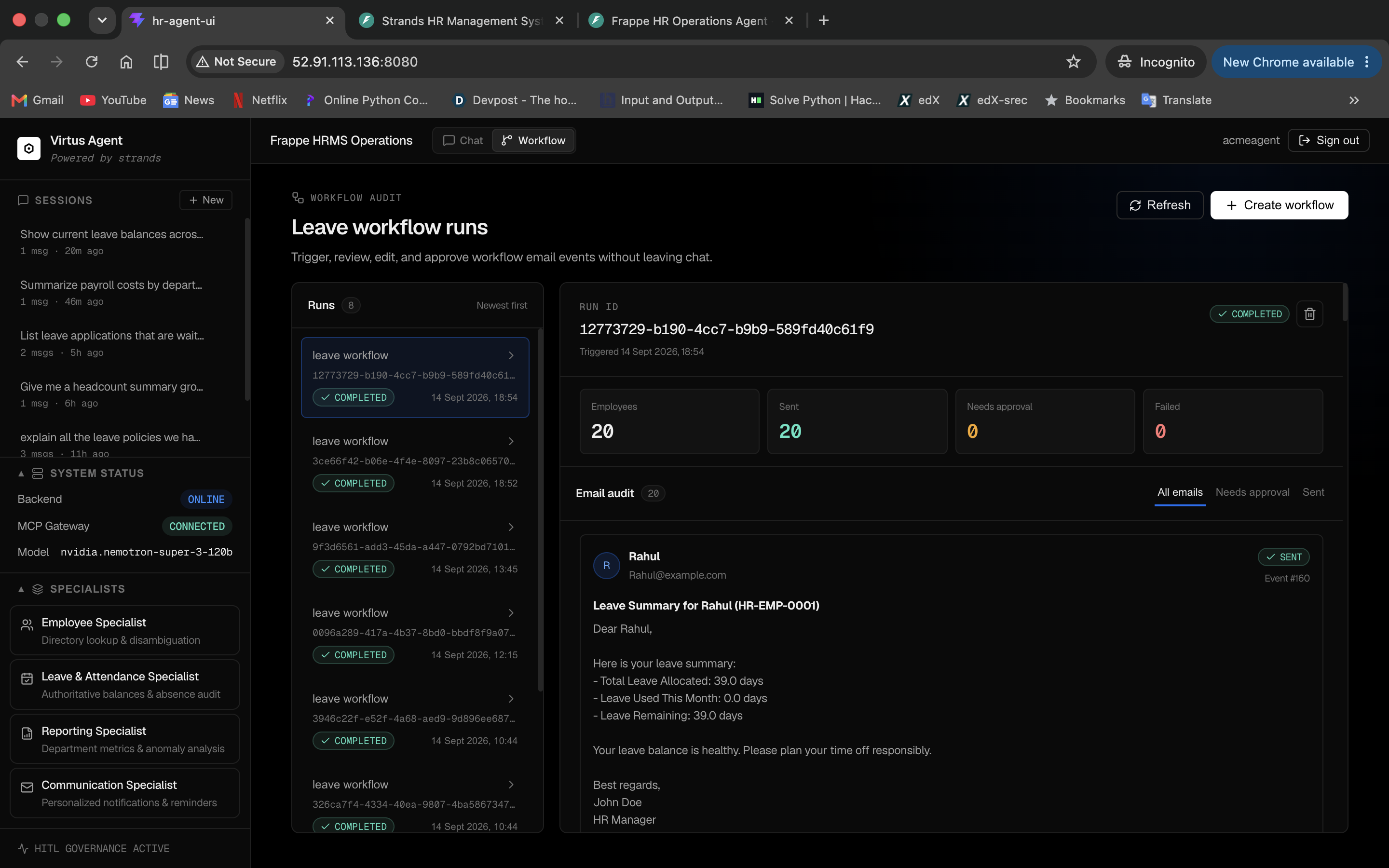
Workflow page showing leave workflow runs, status, metadata, and email activity such as sent and received messages.
-
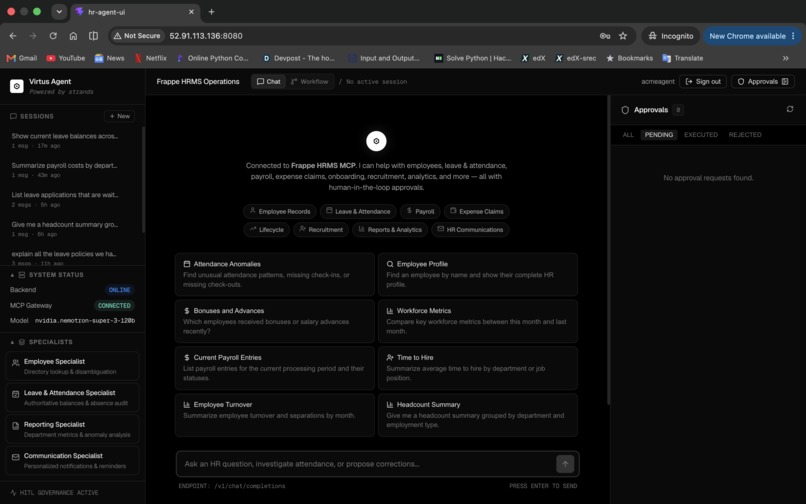
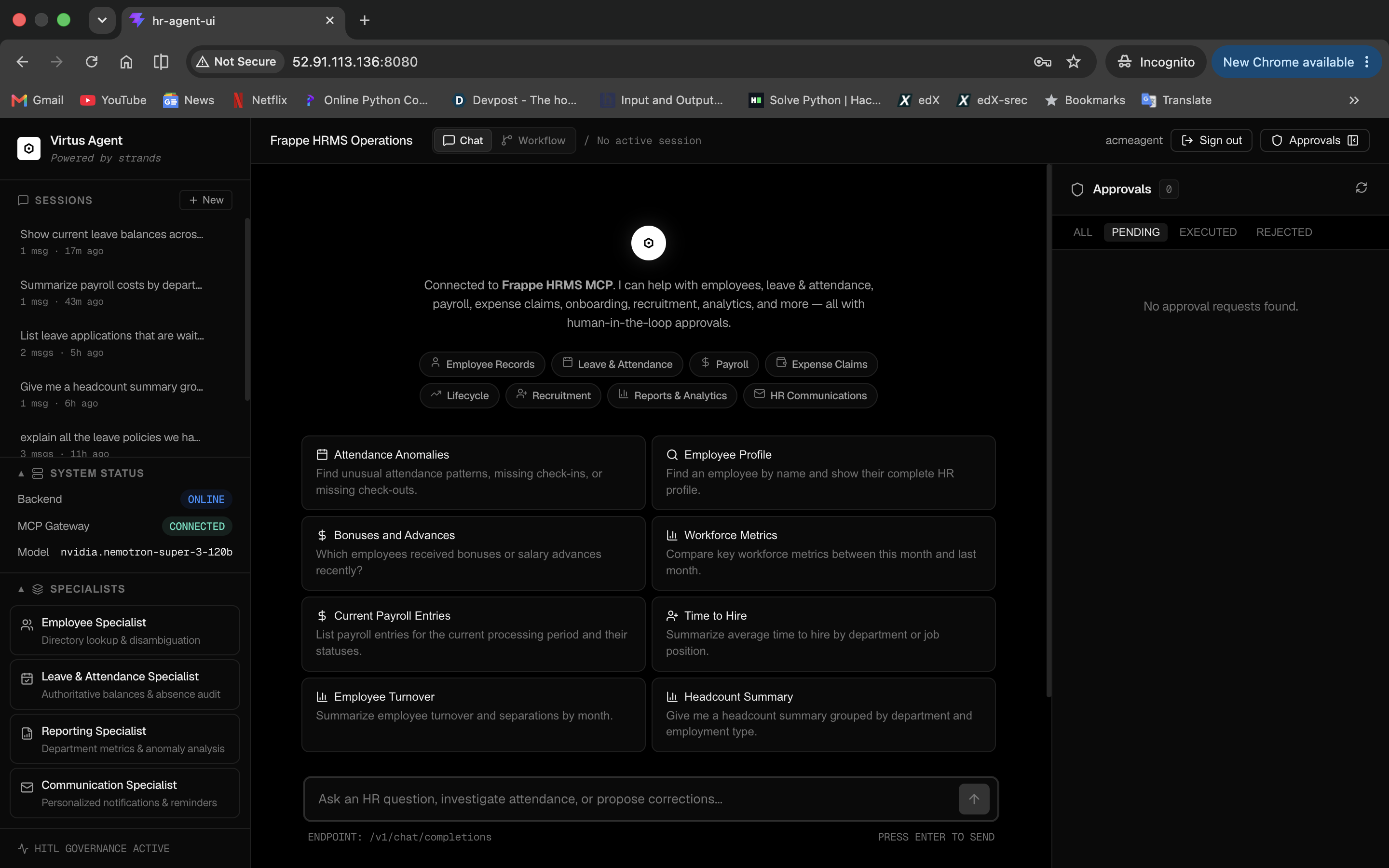
HR dashboard with AI chat and actions, session history, employee search/list, and an approvals panel on the right.
-
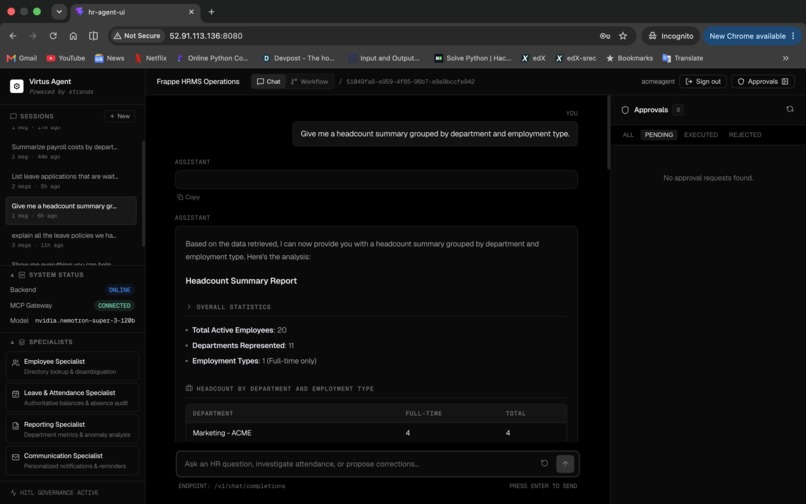
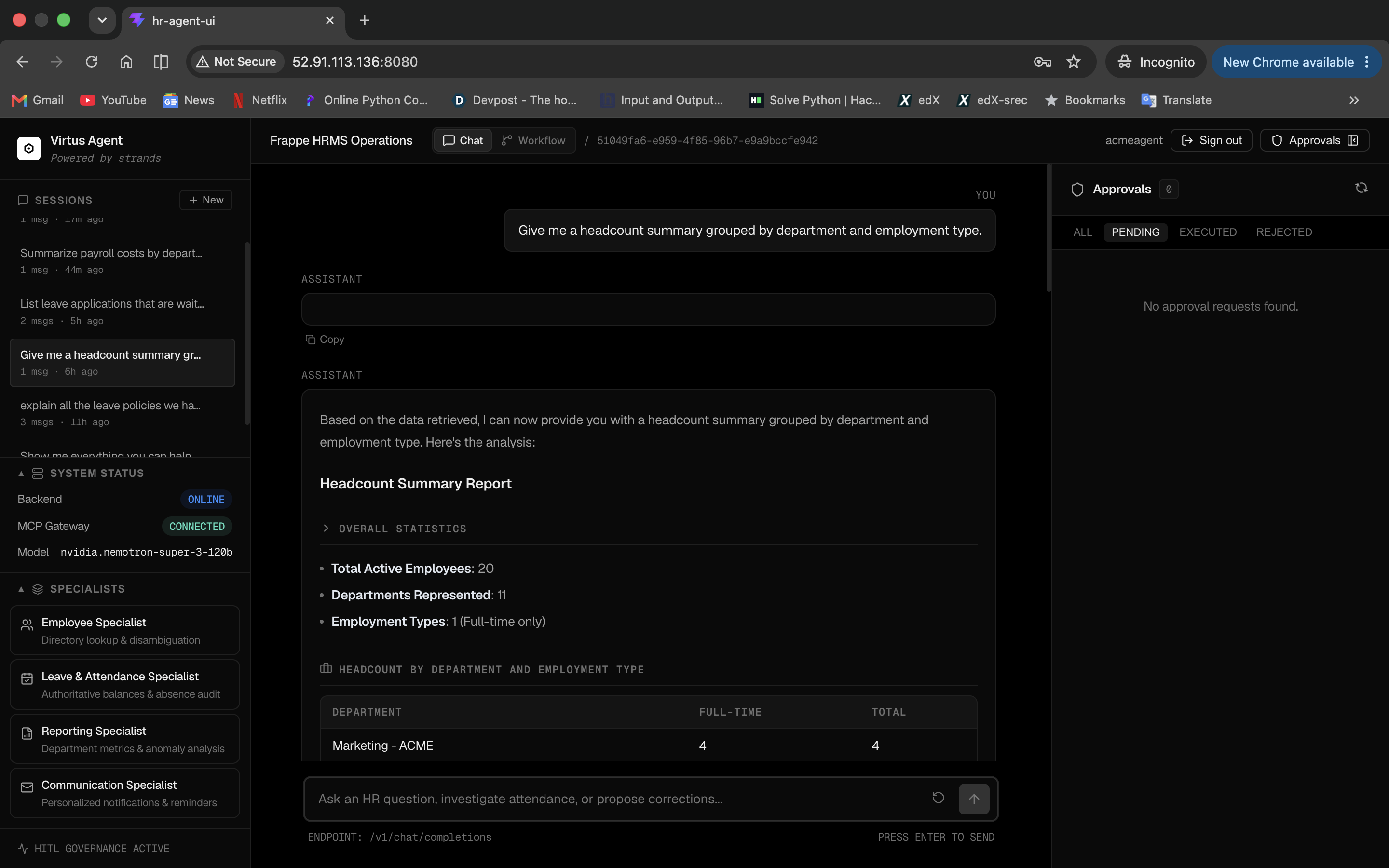
Sample HR automation chat interface showing employee queries, AI-generated answers, and automated actions.
-
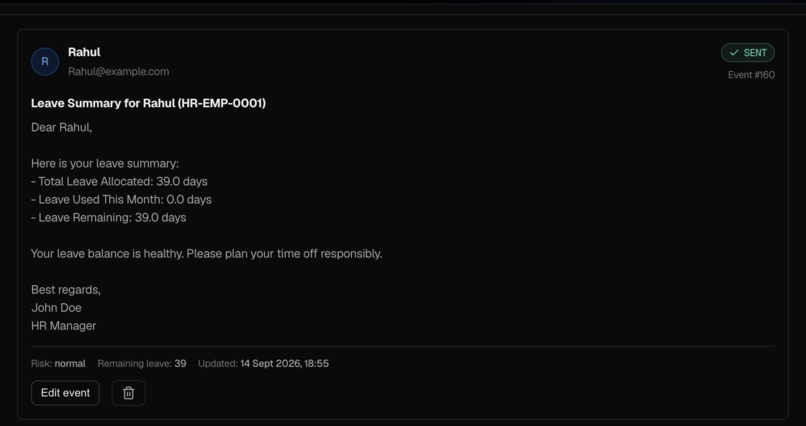
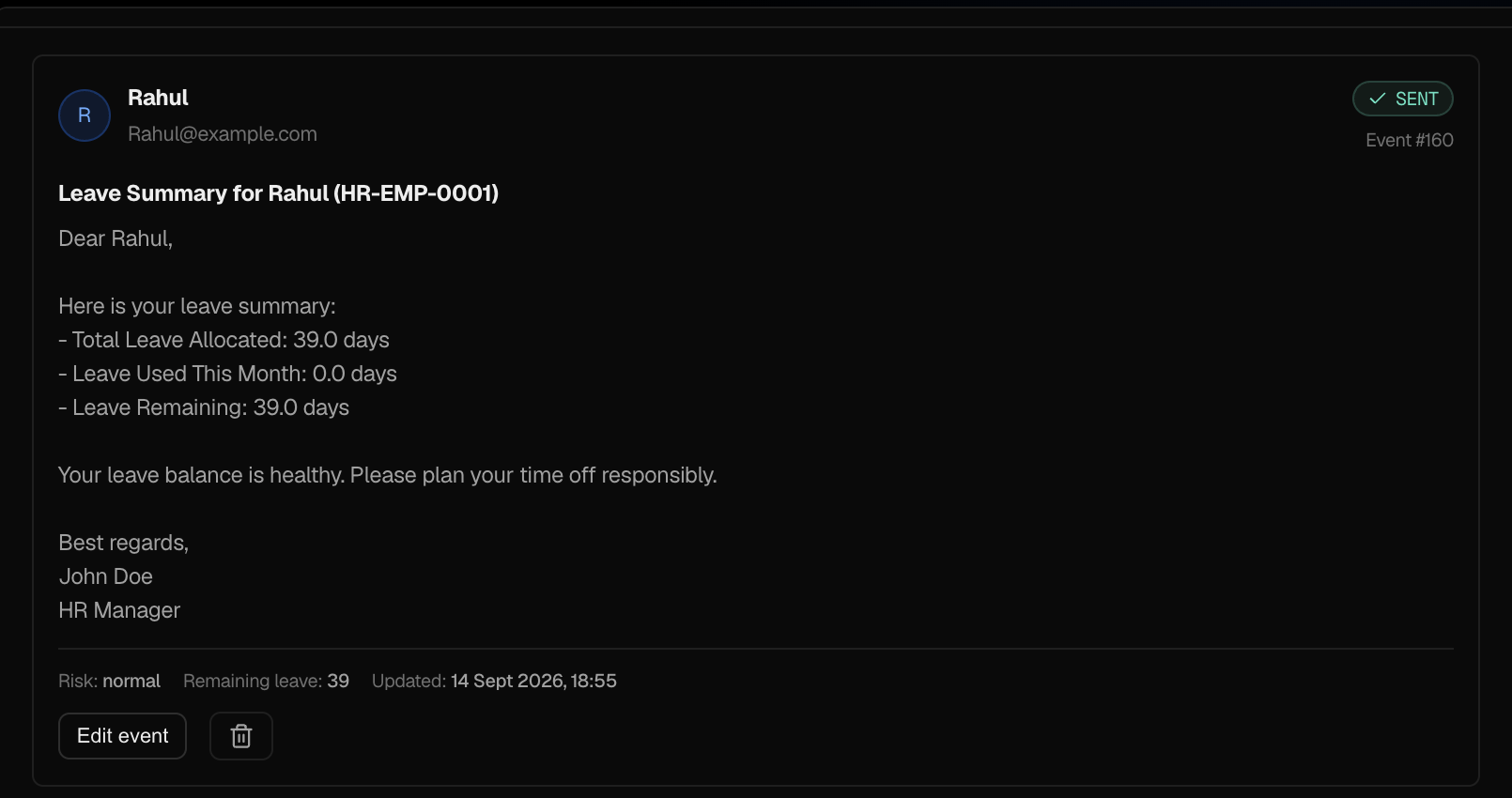
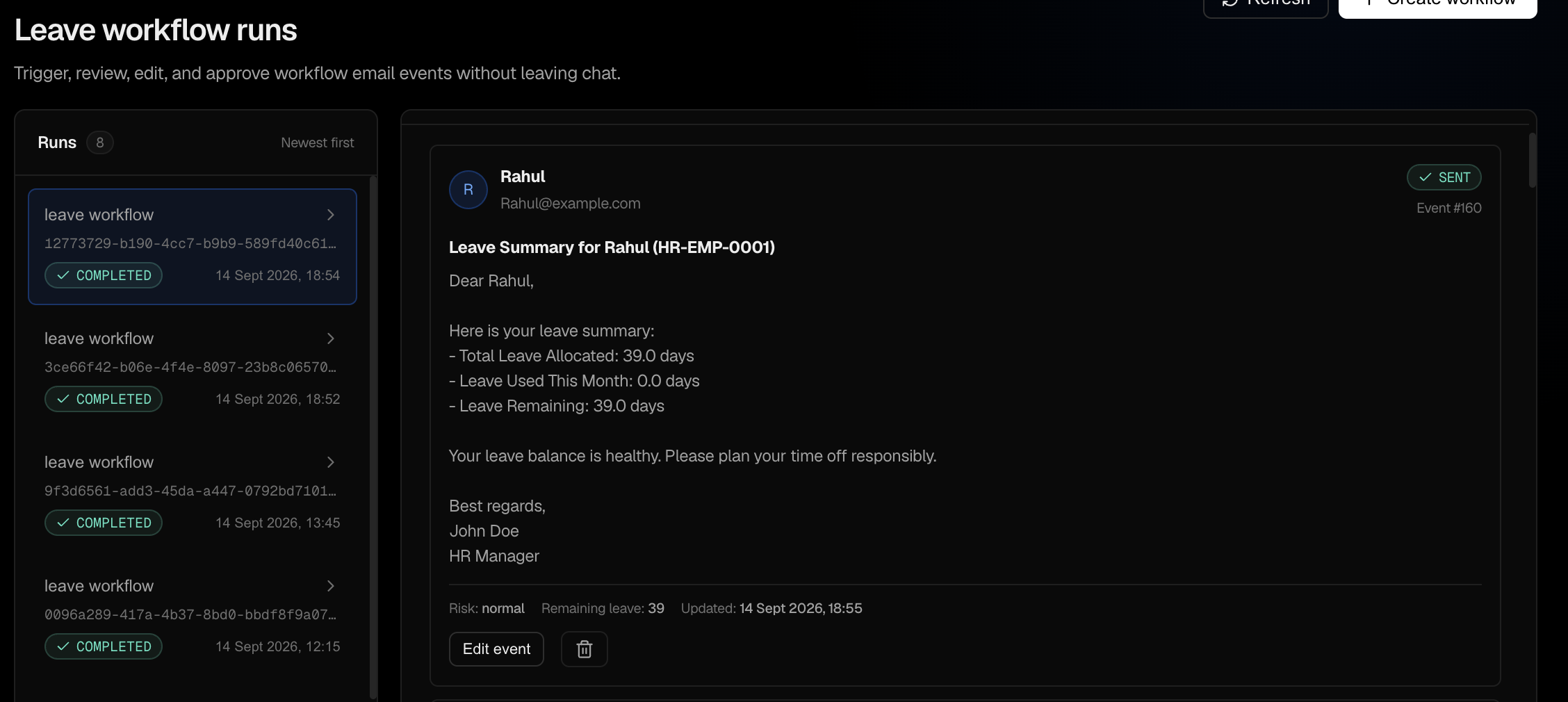
Sample leave-workflow email sent to an employee, showing leave details, approval status, and relevant HR information.
-
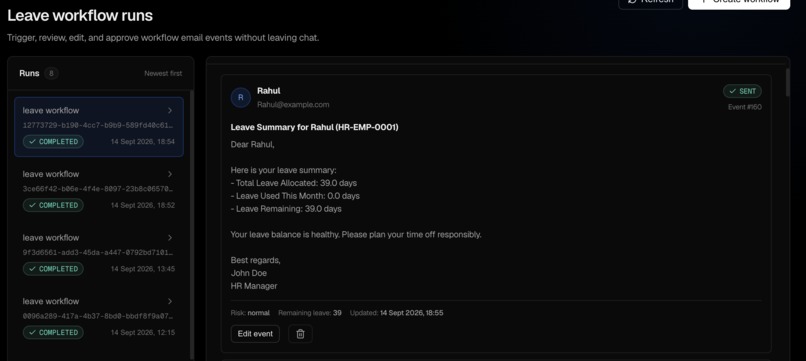
Completed workflow showing all relevant metadata, execution status, timestamps, actions, and email activity.
-
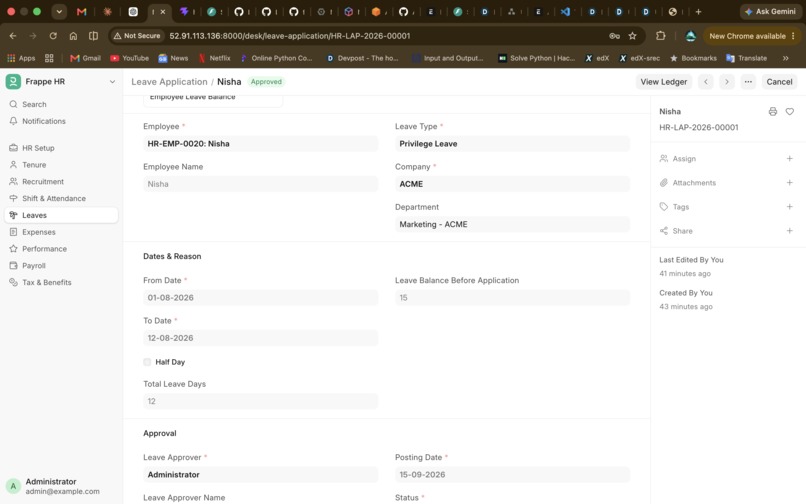
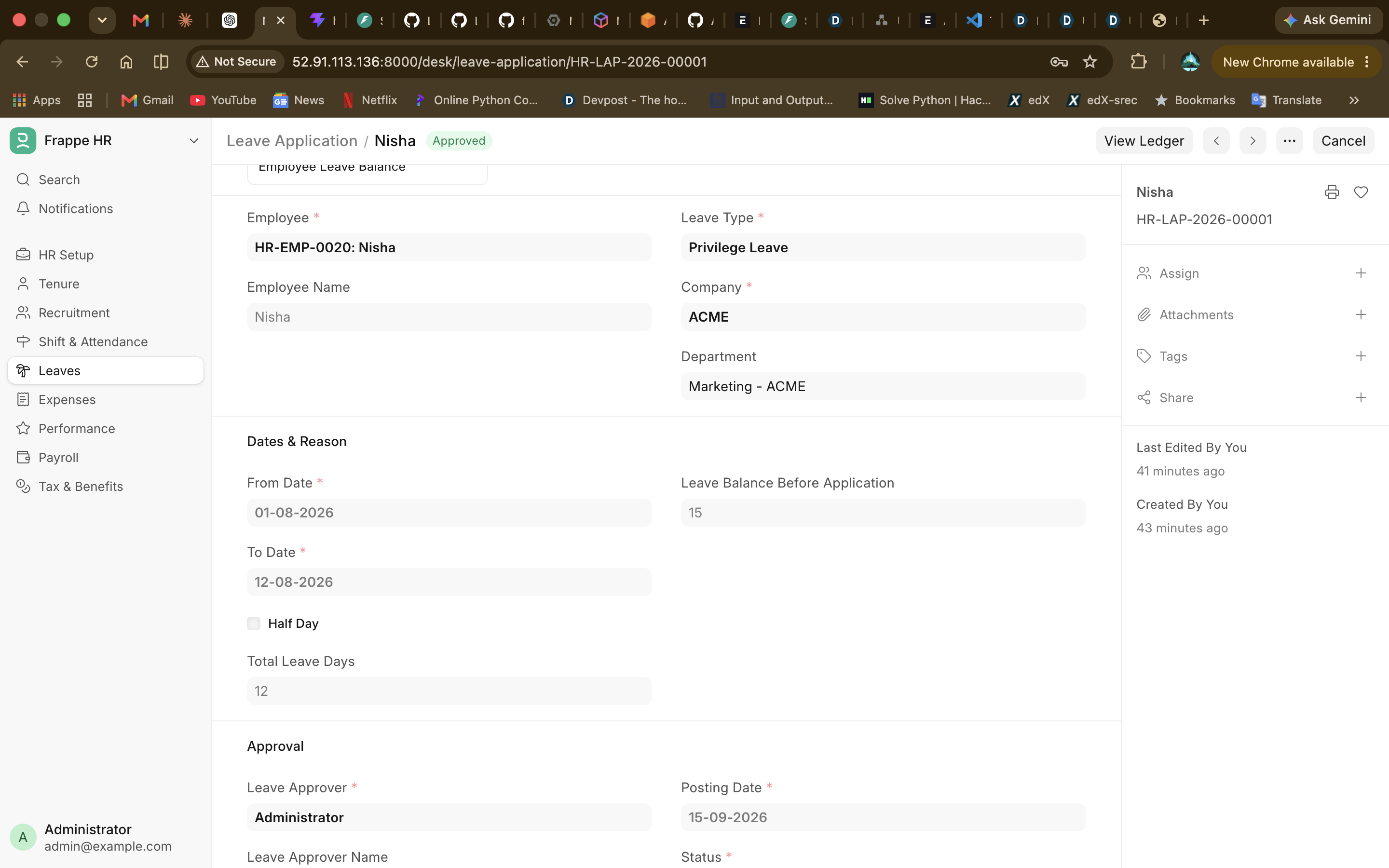
Frappe HR UI page serving as the source of truth for employee and HR information.
Inspiration
HR is becoming more than just taking care of people. With growing operations, policies, finance, and systems, HR teams have a lot of repetitive operational work to handle.
We wanted to use agents to take some of that weight off HR, so humans can focus on what humans do best — communicating with employees, understanding their problems, and taking care of people.
We also felt HR systems can be quite technical, so we wanted to make them easier to use through simple conversations and guided workflows.
What it does
We built a multi-agent HR automation system connecting with the open-source Frappe HRMS platform.
It supports both chat-based interactions and workflow-based operations, allowing users and HR teams to perform and get guided through HR processes such as employee leave management.
Our goal was to demonstrate a real operational system rather than just a chatbot.
How we built it
Our approach was to build a system made of multiple systems working together instead of building everything from scratch.
We used open-source frameworks and separated the different components so they could work and fail independently. Strands Agents helped us a lot with building and orchestrating the agent workflows. Without Strands, implementing many of these agent-related tasks ourselves would have taken significantly more time.
We focused on getting a working system together within the hackathon rather than making everything fully production-ready.
Challenges We Ran Into
The HR domain and agentic systems were both new to us. We had to learn MCP, agents, sessions, tool calling, LLM hallucinations, service communication, and deployment while building the project.
AI coding agents also played a major role in building the system — so in a way, it was agents building agents.
Managing all of this with our personal timelines and a fixed hackathon deadline was another big challenge.
What We're Proud Of
This was our first hackathon, and we are happy that we were able to turn the idea into a working multi-agent system and submit it on time.
What We Learned
We learned a lot about MCP, multi-agent systems, LLMs, tool calling, system integration, deployment, and the challenges of making agents work with real business systems.
What's Next
More workflows, more features, fewer hallucinations, better reliability, and stronger human-in-the-loop controls.
Thanks to all the open-source projects, especially Strands Agents, that helped us build this.


Log in or sign up for Devpost to join the conversation.