-
-
-
Question about mind health
-
What they decide from today
-
Question about daily routine
-
ANSWER
-
ANSWER
-
ANSWER
Inspiration
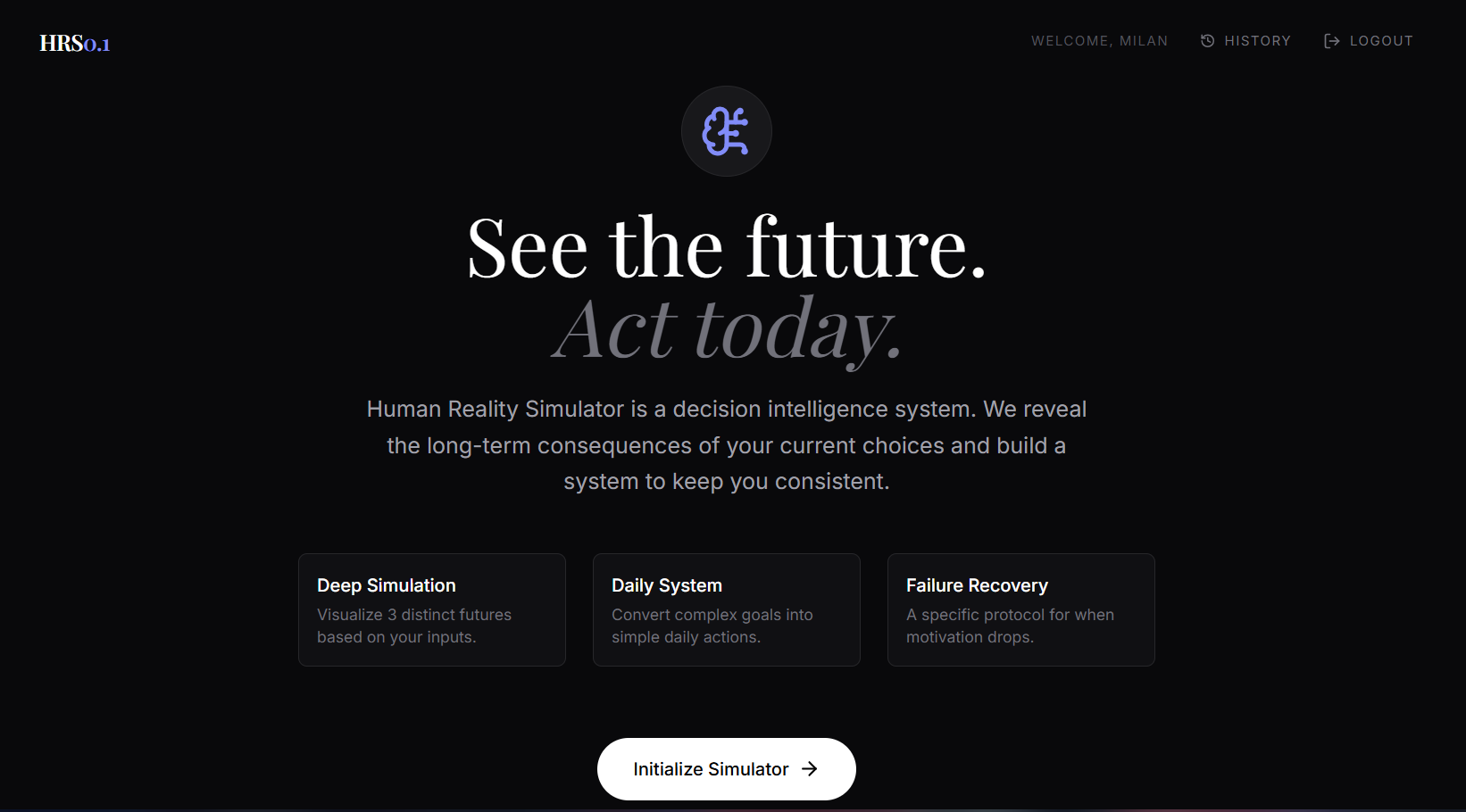
In today’s fast-paced digital era, people make important life decisions very quickly — such as choosing careers, habits, education paths, and lifestyles — often without understanding their long-term consequences. While technology has grown rapidly, human decision-making still lacks future visibility. Life results do not appear instantly; they develop slowly through compounding effects over time. This raised one powerful question: What if people could see the future consequences of today’s choices before making them? This idea became the foundation of Human Reality Simulator.
What it does
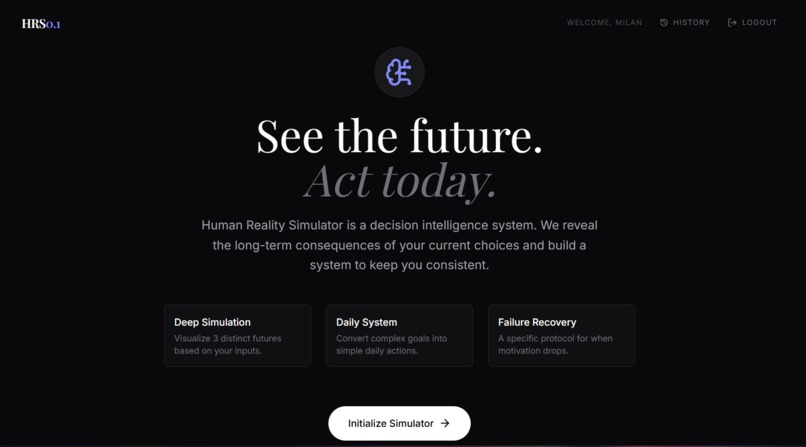
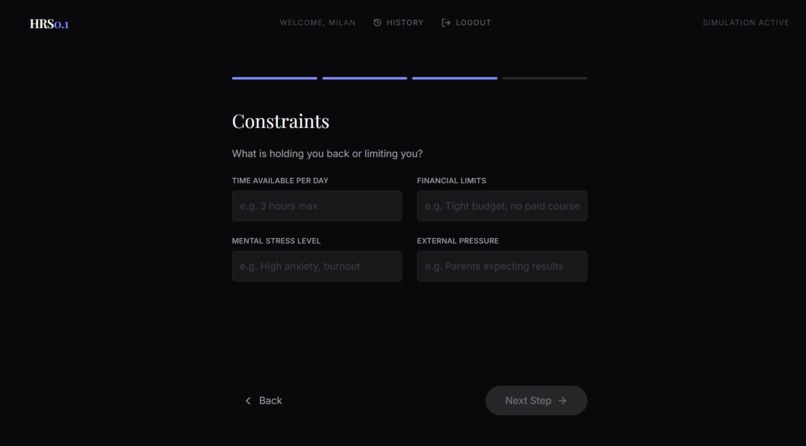
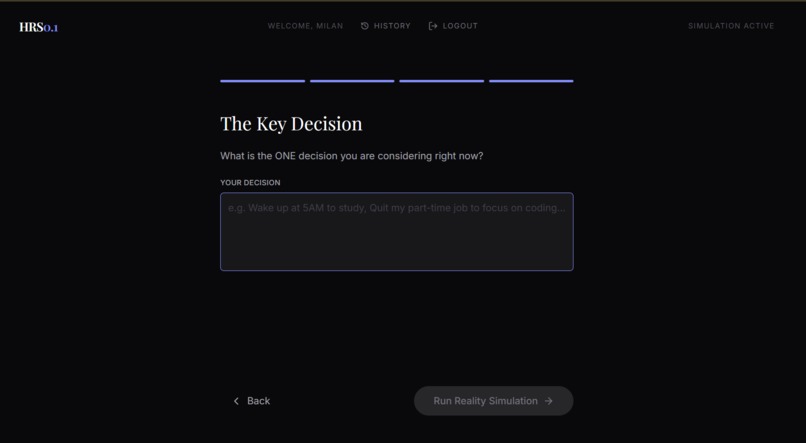
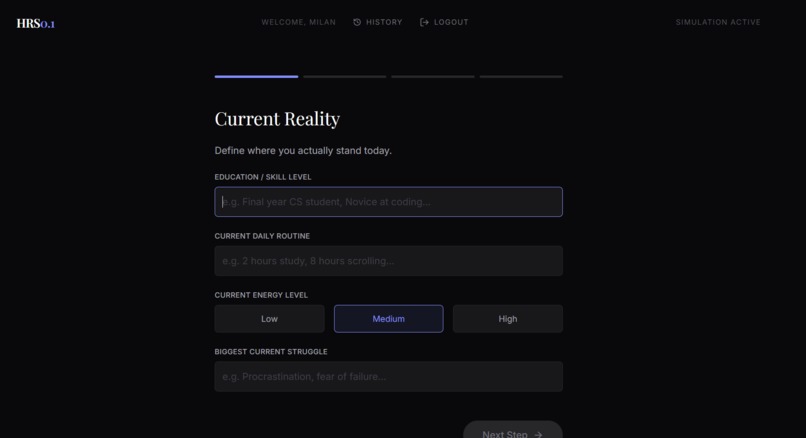
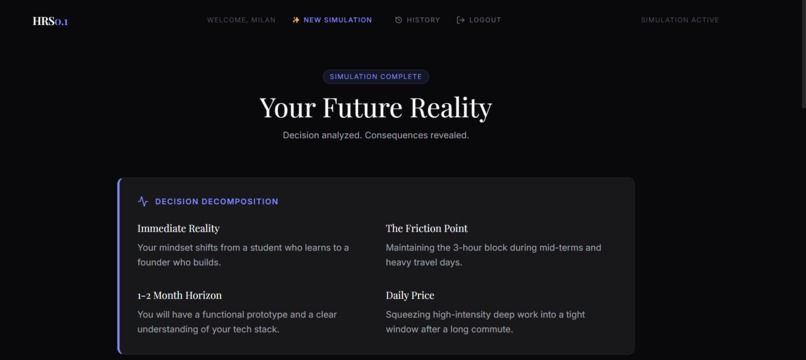
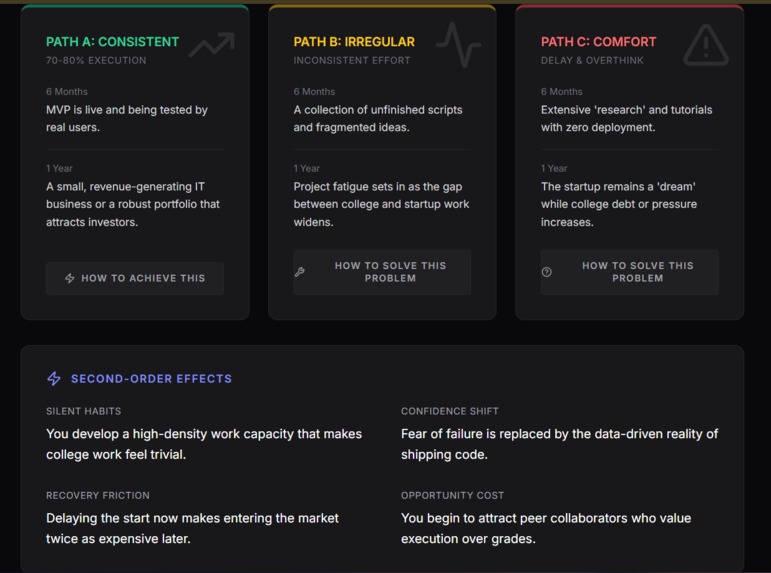
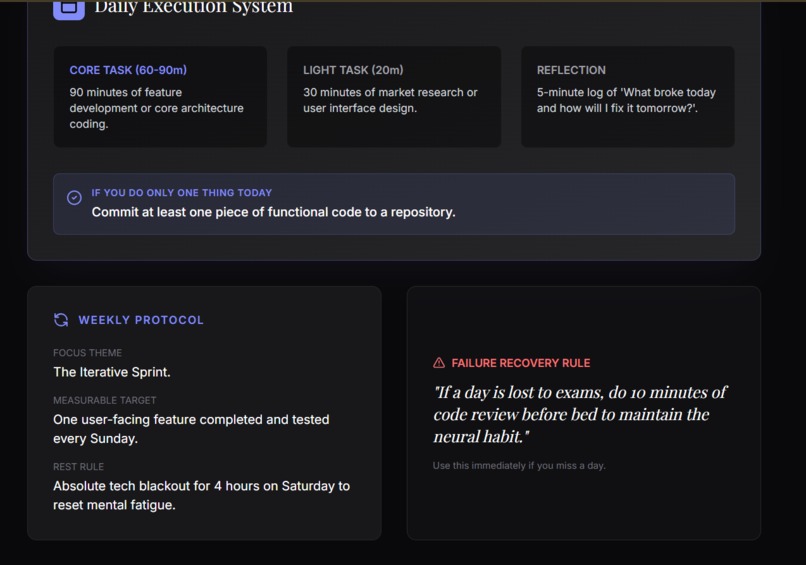
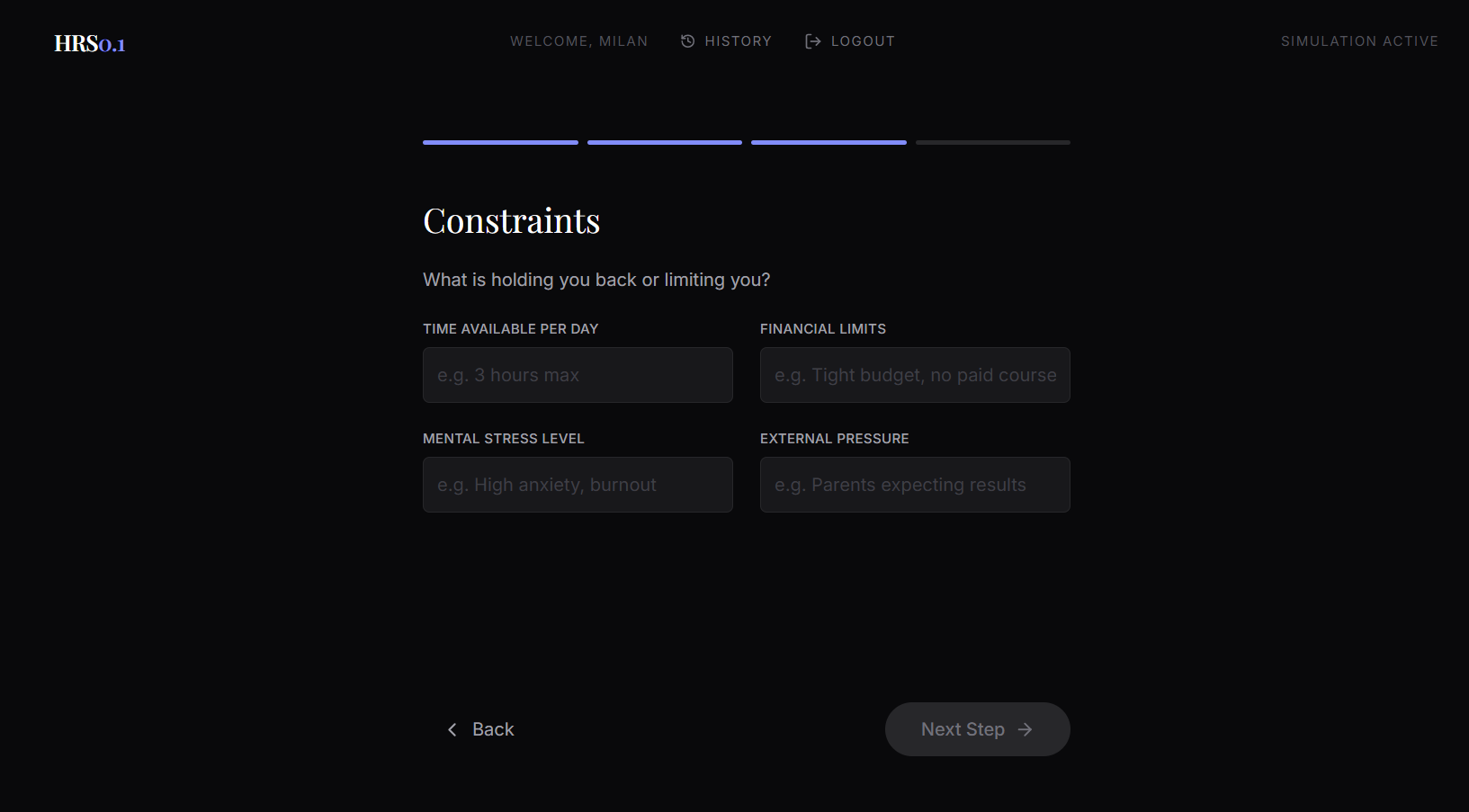
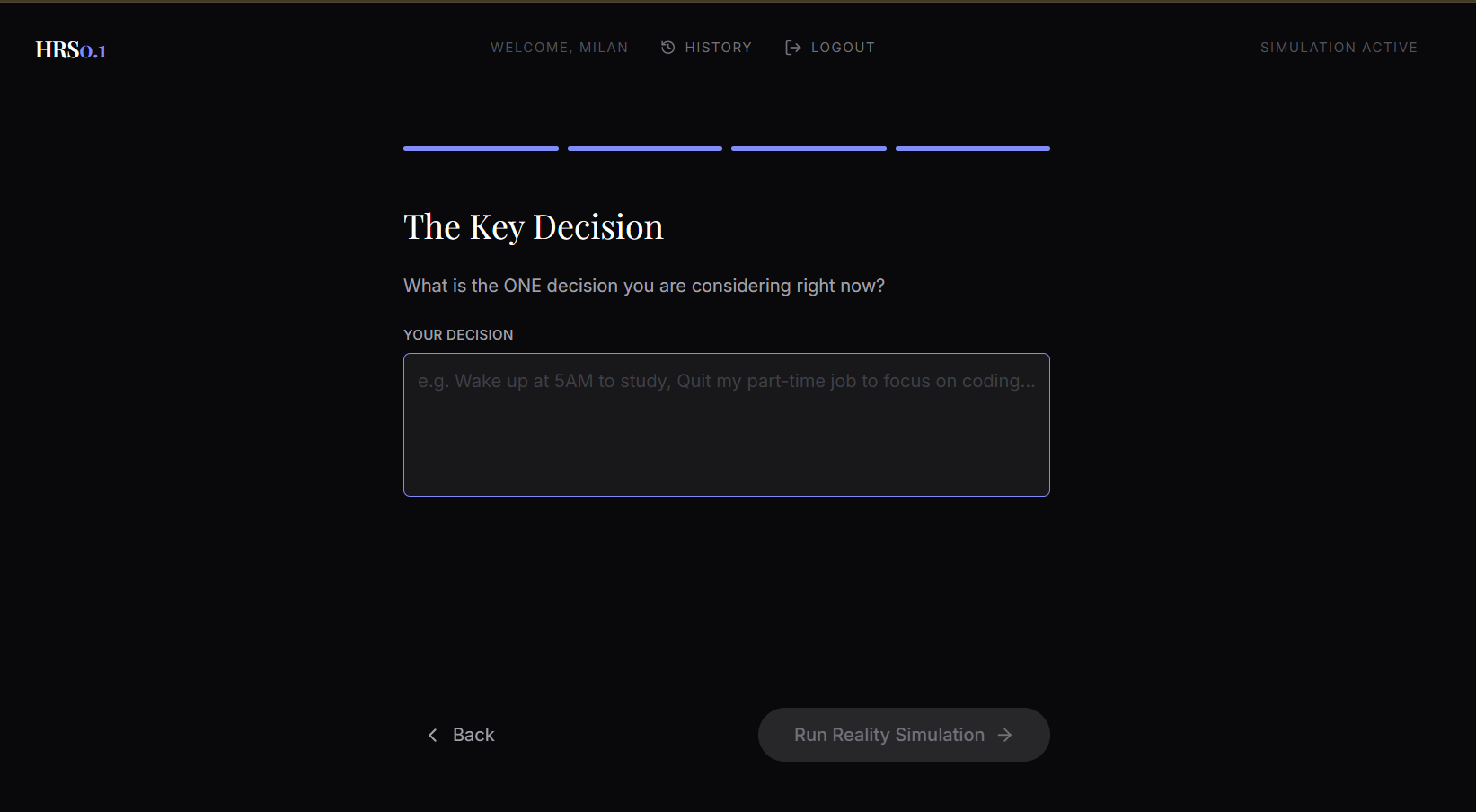
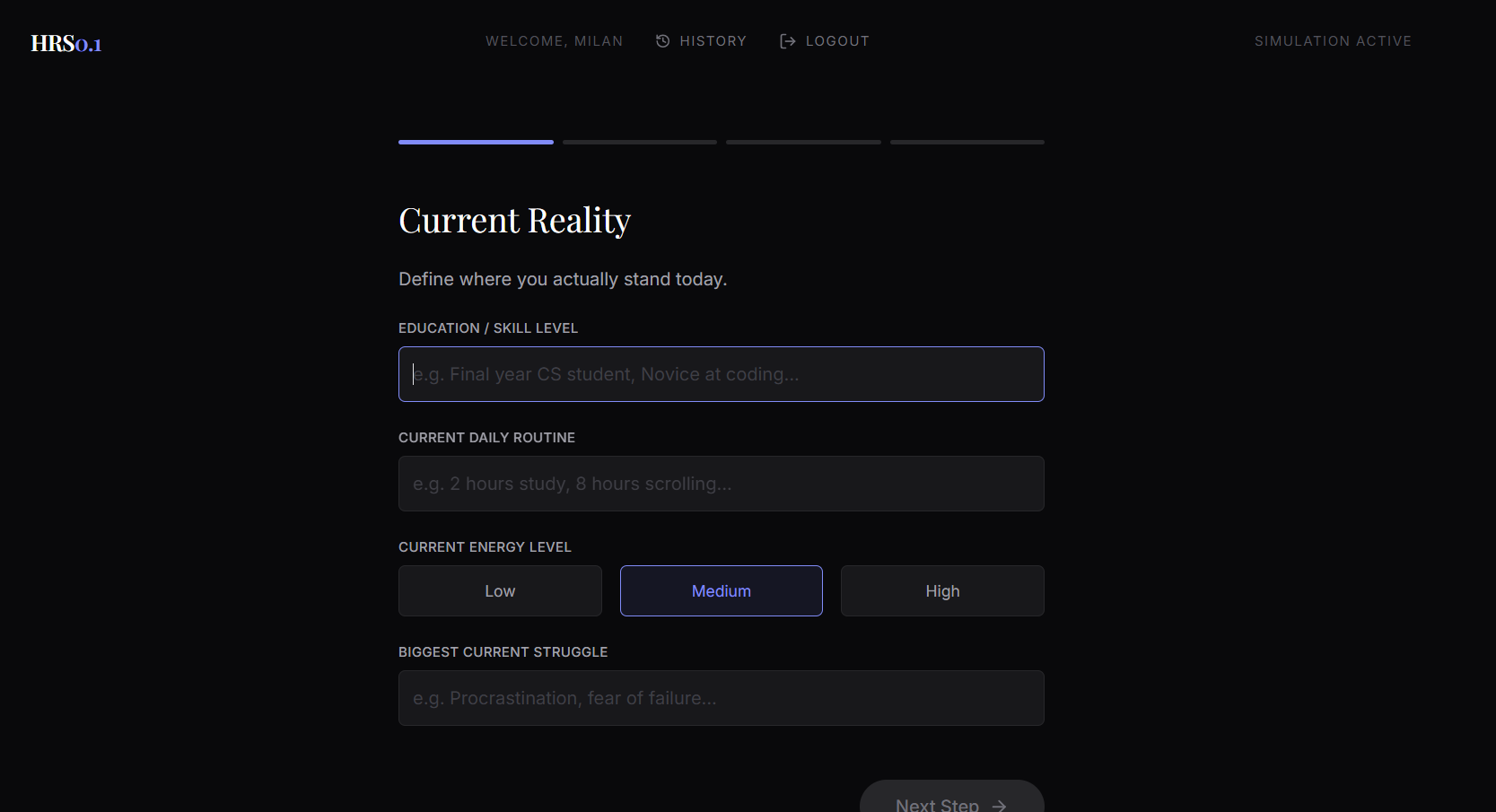
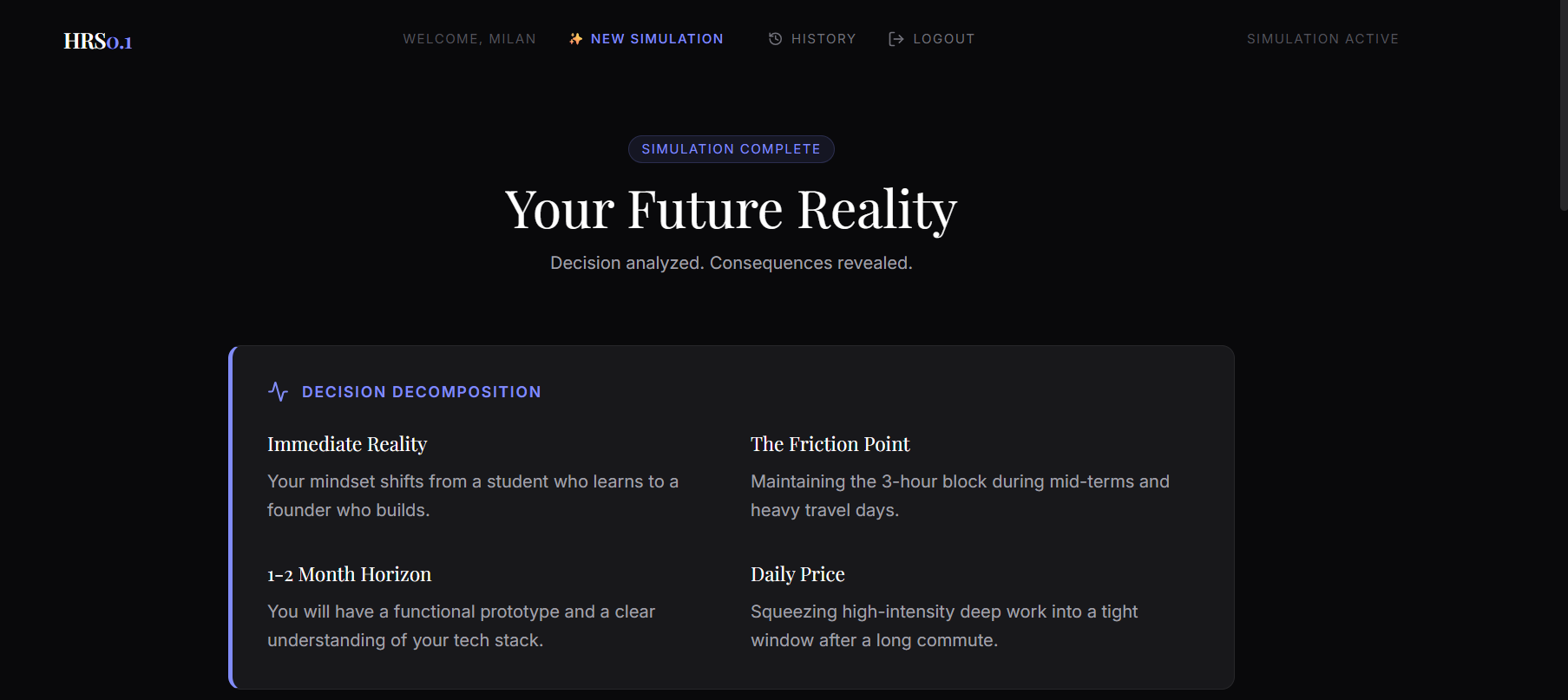
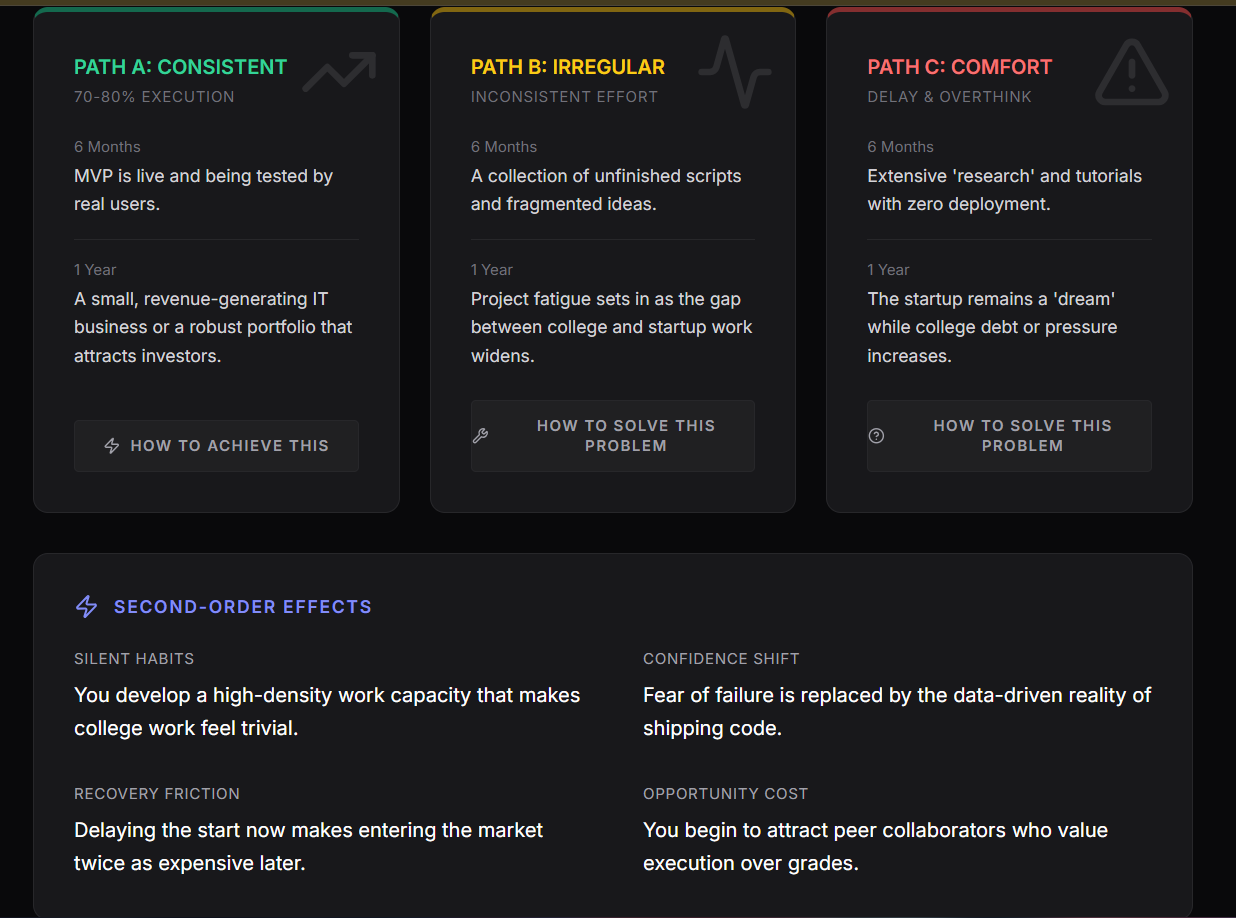
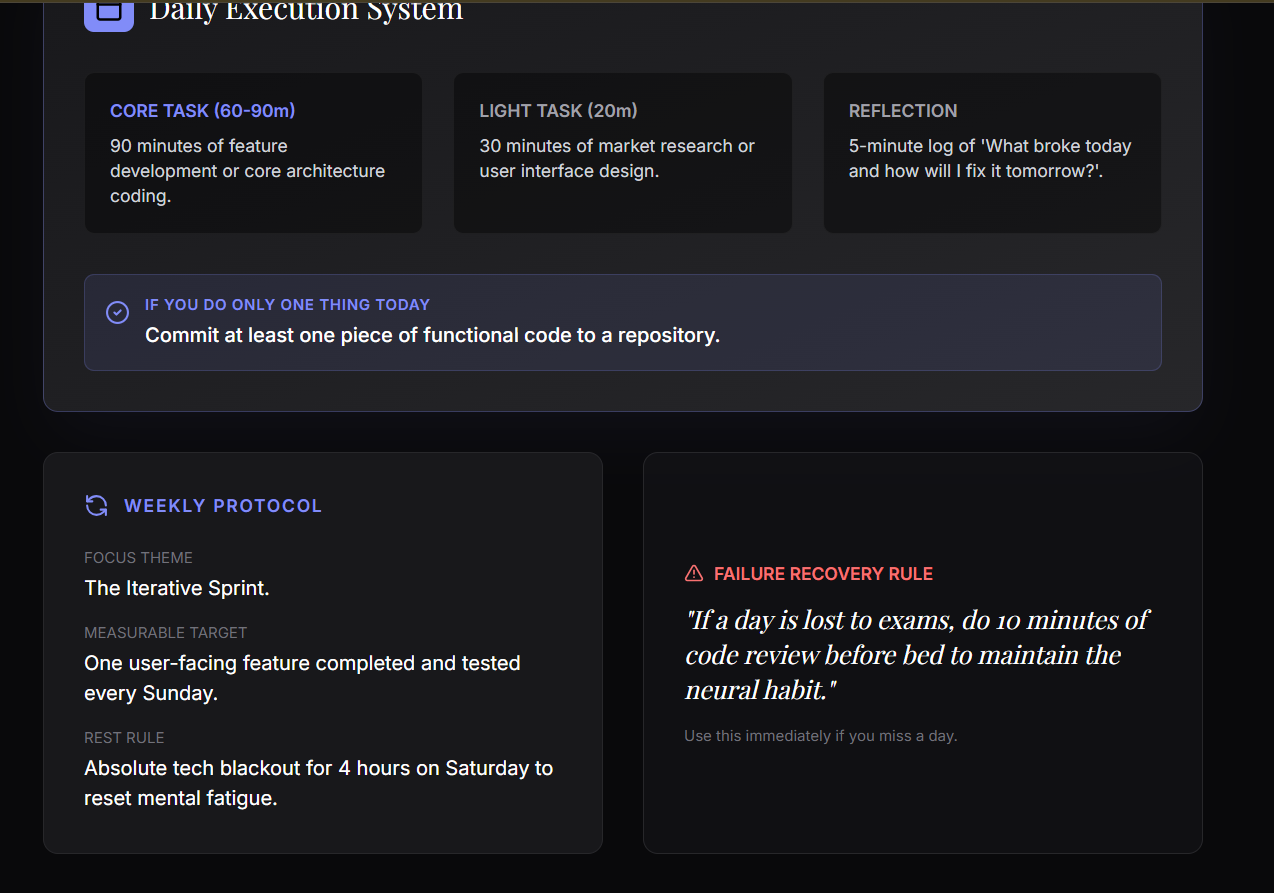
Human Reality Simulator is an AI-driven decision-simulation concept designed to visualize possible future outcomes of present-day choices. The system allows users to: • Input real-life decisions • Explore multiple future paths labeled A, B, and C • View outcomes across short-term, mid-term, and long-term timelines • Compare consequences instead of receiving instructions The platform does not decide for the user. Instead, it creates awareness by showing possible realities.
How we built it
We built the project using a structured and logical approach: • Identified modern decision-making problems caused by speed and pressure • Designed branching decision paths for each choice • Created timeline-based outcome visualization • Applied cause-and-effect reasoning • Designed a clean, futuristic, minimal UI The focus was on clarity, realism, and scalability, not just complexity.
Challenges we ran into
• Modeling real-life decisions without oversimplifying human behavior • Avoiding fixed predictions and presenting only possible outcomes • Maintaining simplicity while keeping the system meaningful • Completing design and logic within hackathon time limits These challenges required careful balance between realism and usability.
Accomplishments that we're proud of
• Built a unique and original hackathon concept • Designed a future-focused decision simulation model • Created a professional, startup-level project presentation • Delivered a system focused on thinking enhancement rather than automation • Developed a strong and clear product story
What we learned
Through this project, we learned that: • Technology should enhance human awareness, not replace judgment • Visualizing consequences improves decision quality • Simplicity increases impact • Strong storytelling is essential for complex ideas • Long-term thinking can be designed into digital tools
What's next for Human Reality Simulator
Planned future improvements include: • Personalized decision modeling • Adaptive learning based on user behavior • Advanced timeline visualization • Integration with education, career, and lifestyle planning • Web and mobile platform expansion Our long-term vision is to build Human Reality Simulator into a decision-intelligence platform that helps people understand how today’s actions shape tomorrow’s reality.
Built With
- ai-based
- concepts
- css
- css3
- decision
- figma
- html5
- javascript
- logic
- modeling
- node.js
- react.js
- tailwind
- timeline
- visualization
- vite

Log in or sign up for Devpost to join the conversation.