-
-
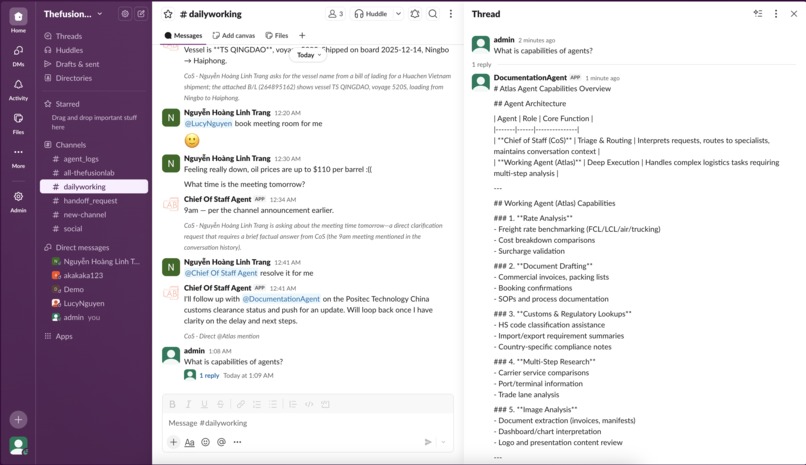
Human works together with multi-agents right on slack
-
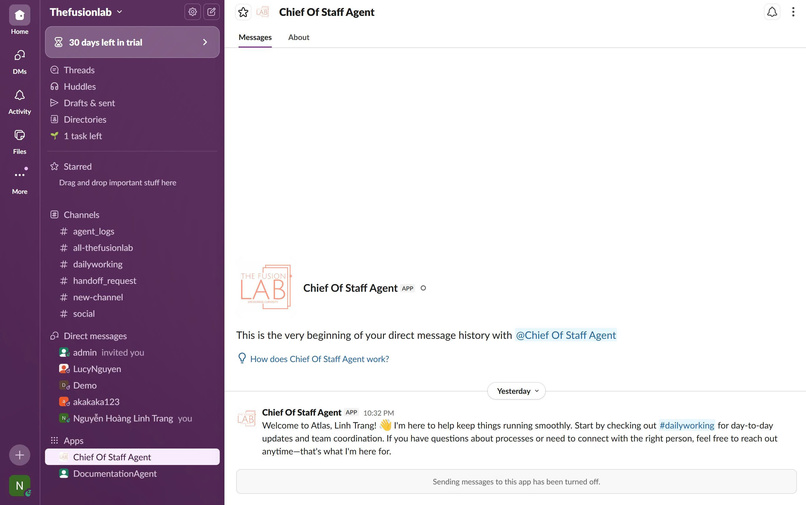
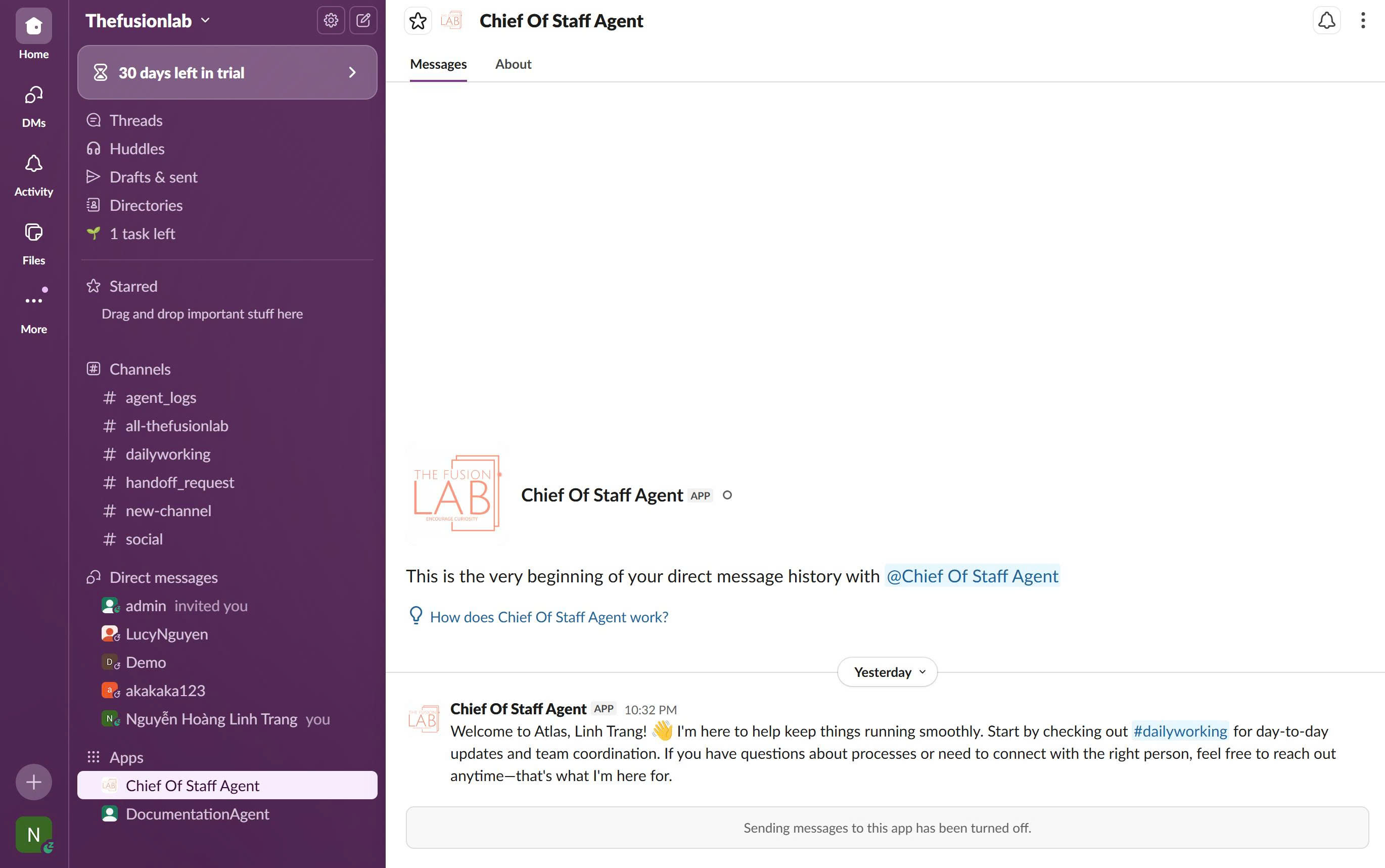
Everyone is walked through from day 1 by Chief Of Staff
-
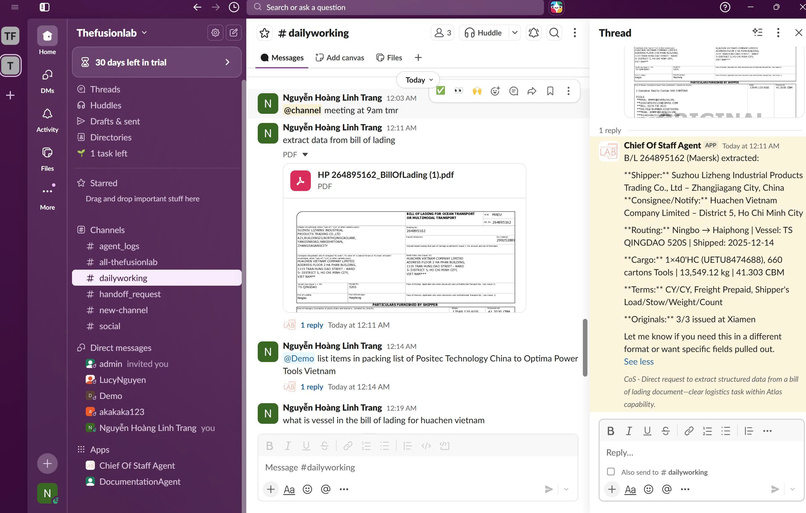
Handoff behavior
-
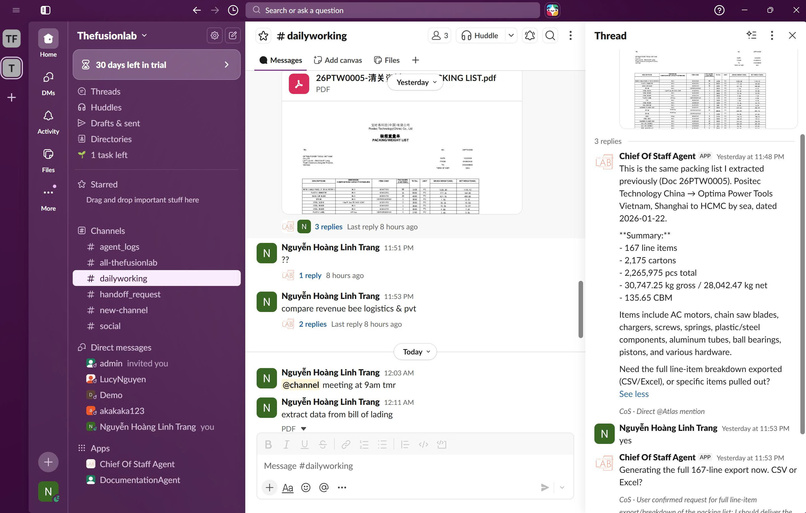
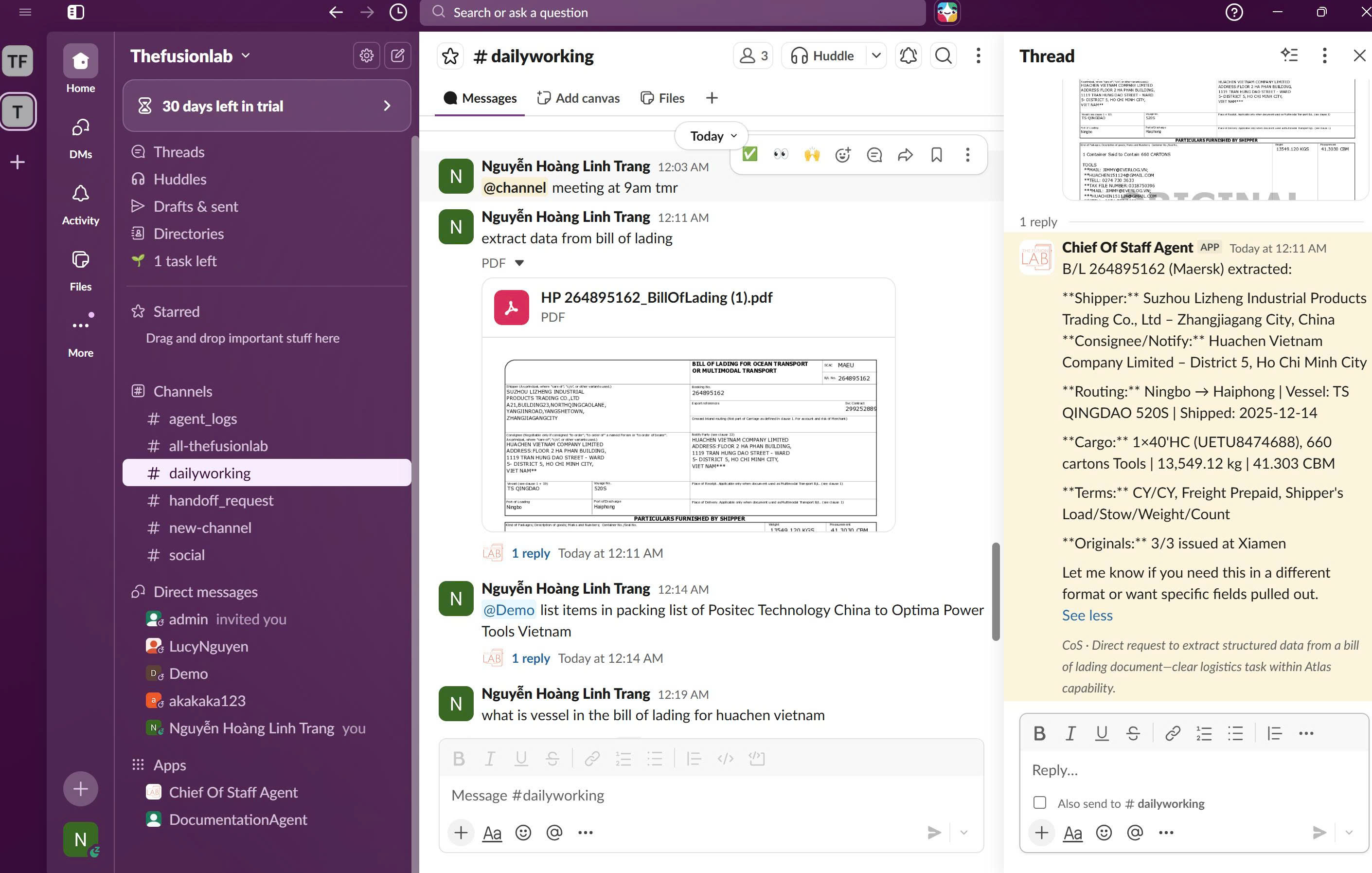
Reply in threads
-
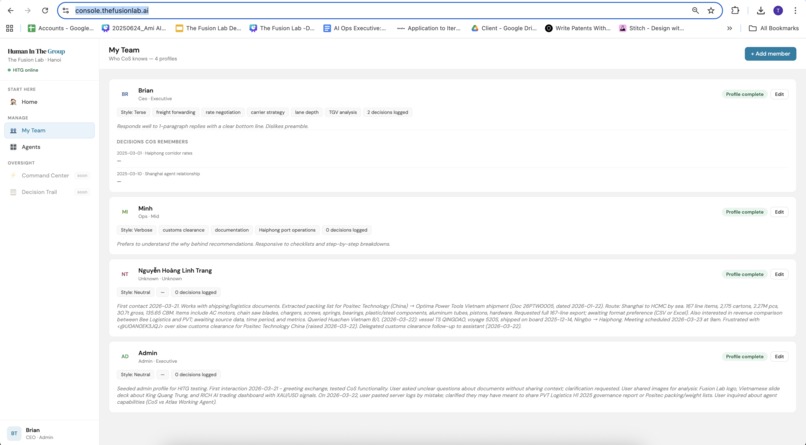
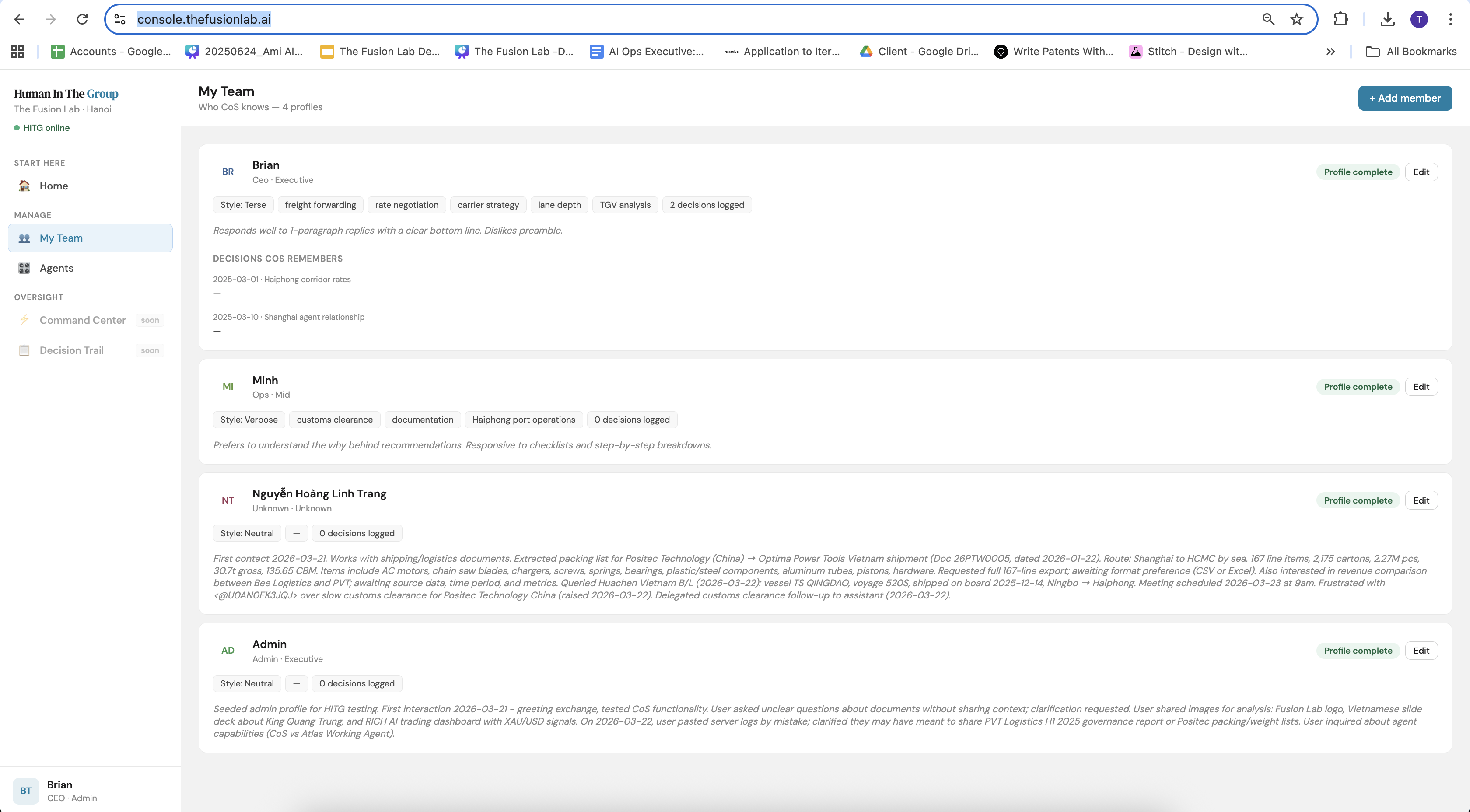
Human's profiling by CoS
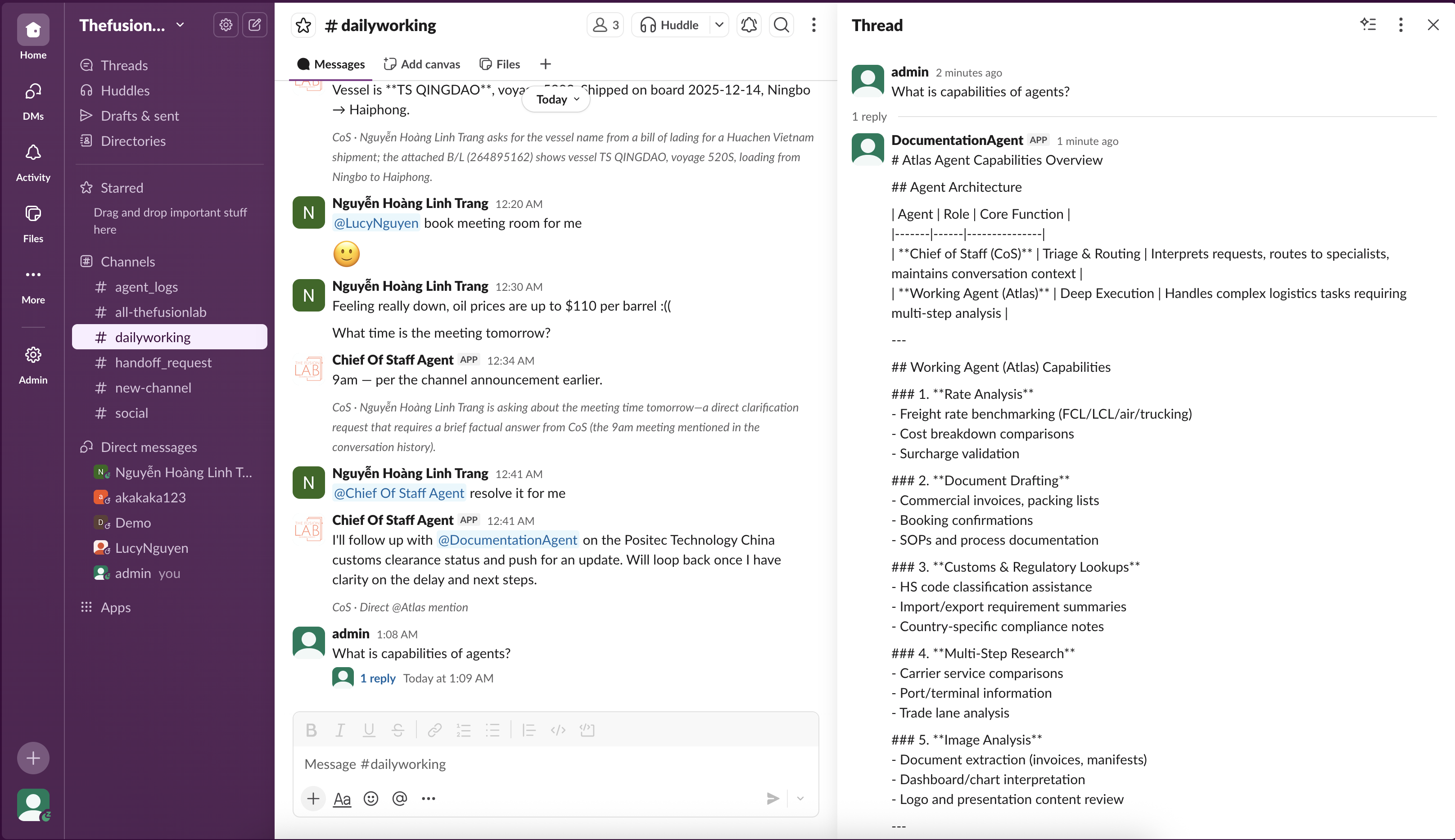

AI Agent adoption failed in most companies.
AI Agents promise to elevate human productivity, but enterprise adoption keeps breaking down at the same point: the human side. Agents demand new workflows, new interfaces, new mental models. Teams are asked to learn how to prompt, how to structure requests, how to interpret outputs. That's a skillset shift most organizations can't absorb. So agents get piloted, celebrated, and quietly abandoned. Human In The Group wants to remove those frictions entirely.
HITG makes working with AI agents feel like welcoming a new team member
When a great new colleague joins a team, they don't demand you change how you work. They show up where the work already happens, they listen before they speak, they learn who everyone is and how they communicate, and they know when to act and when to stay out of the way. HITG brings that experience to AI agents. The first agent - the Chief of Staff -lives directly inside your team's Slack channels. It reads every message. It decides whether to respond, stay silent, escalate, or route calibrated to each person's communication style, seniority, and decision history. It surfaces past decisions naturally in replies without being asked. When it can't determine what someone wants, it doesn't guess, it creates a structured handoff card and defers to a human. When a query requires specialist capability, it routes to the right agent with full conversation context intact. The intelligence is not in speaking more. It's in knowing when not to speak and when it does, saying exactly the right thing to exactly the right person. HITG also ships with a Documentation Agent that handles freight document generation, extraction, and formatting routed automatically by the Chief of Staff when the task demands it.
How we built it
HITG is built on three architectural decisions that separate it from a standard Slack bot.
Two-memory model Every LLM call receives both ephemeral memory live conversation history fetched from Slack per message and persistent memory user profiles stored in DB and updated after every interaction. No call starts from zero. The system gets measurably smarter the longer it runs, not because the model changes, but because the organizational context deepens.
Accountability-first design. Every CoS decision: respond, stay silent, escalate, route, is written to a decision trail with a profile snapshot at decision time. The classification reason appears in a context block below every reply, visible to the user at the moment of interaction. Scope boundaries are stored in Supabase and surfaced as plain-language settings in the admin console. The agent's behavior is legible, not opaque. Structured handoff protocol. UNCERTAIN is not a failure state. It is the agent correctly identifying the boundary of its own authority. When intent is ambiguous, CoS creates a handoff card with a specific assessment of what it understood, exactly what it cannot determine, and structured resolution options. A human clicks one button. CoS resumes in the original thread with the human's directive as explicit context, re-fetching live conversation history at resumption time so nothing is lost. The stack: Python Bolt SDK with Socket Mode (no public URL required), Anthropic API with schema-enforced tool_use classification, Supabase for profile persistence and decision trail, Block Kit for all agent outputs, and a FastAPI wrapper enabling Claude Code CLI as a specialist agent on the same server receiving full conversation history and user context packaged by CoS before every call.
Challenges we ran into
The hardest problem was the seam between agent and human. Most systems treat escalation as failure the agent couldn't handle it, so it punts. We had to reframe escalation as an accountability moment: the agent declaring what it knows, what it doesn't, and what it needs. Building a handoff protocol that preserves state, names a resolver, re-fetches live context at resumption, and expires gracefully when nobody responds that required getting every detail right or the seam would be the worst part of the experience. The second challenge was making silence feel intentional. An agent that says nothing to 40% of messages will be suspected of being broken. We had to surface the SKIP decisions visibly in #cos-internal with specific reasons, and demonstrate in the demo that absence of response is a deliberate classification, not a failure.
Accomplishments that we're proud of
The profile update loop producing genuinely surprising callbacks. When a user raises a topic they discussed two weeks ago and CoS replies "last time you raised this, you decided X worth noting that Y has shifted since then" without being prompted that moment of felt intelligence is what HITG is built for. Getting it to happen reliably, not just occasionally, required disciplined prompt engineering and real testing with actual conversation data. The admin console written entirely in CEO language. No technical jargon reaches the end user. "Agent scope" becomes "what CoS is allowed to do." "UNCERTAIN/intent" becomes "escalates to you." The accountability layer which is genuinely complex engineering surfaces as readable toggles and plain-language audit entries.
What we learned
Restraint is harder to build than capability. Every instinct in agent development pushes toward doing more, responding more, showing off more. HITG required us to engineer the opposite: a system that earns trust by knowing when to stay quiet, and that makes its judgment visible rather than impressive. We also learned that the context architecture matters more than the model. The same Claude model, called with a rich profile snapshot and full conversation history, produces replies that feel unnervingly well-calibrated. Called without that context, it produces generic output. The moat is not which model you use. It's what you know about the person before you speak to them.
What's next for Human In The Group
HITG is starting with Slack and freight forwarding. The roadmap extends in two directions simultaneously. Platform expansion: Telegram and Zalo for Southeast Asian logistics operators who don't run on Slack. Odoo integration for companies where the work happens in ERP, not chat. Discord for technical and distributed teams. Agent ecosystem: The Chief of Staff and Documentation Agent are the first two agents in an AgentMesh. Rate Intelligence, Customs Classification, Carrier Relationship, and Shipment Tracking agents are designed and ready to build each receivable as a routing target from CoS with full context handoff. The architecture scales to any number of specialist agents without touching the coordination layer. Compliance infrastructure: The decision trail with profile snapshots, named resolvers, and structured handoff records is the answer to Article 29 of Vietnam AI Law 134/2025/QH15 which places liability on the deploying organization. HITG doesn't bolt on compliance. It ships with it. The long-term bet: every organization that uses HITG for six months has built something competitors can't replicate an institutional memory of how their team works, what they've decided, and how each person prefers to be spoken to. That memory compounds. It doesn't migrate.
Built With
- anthropic
- python
- supabase

Log in or sign up for Devpost to join the conversation.