Inspiration
We wondered whether reinforcement learning’s cycle of practice, feedback, and adaptation could help people develop reasoning strategies. Human Fluid explores that idea without assuming puzzle improvement means increased intelligence.
What it does
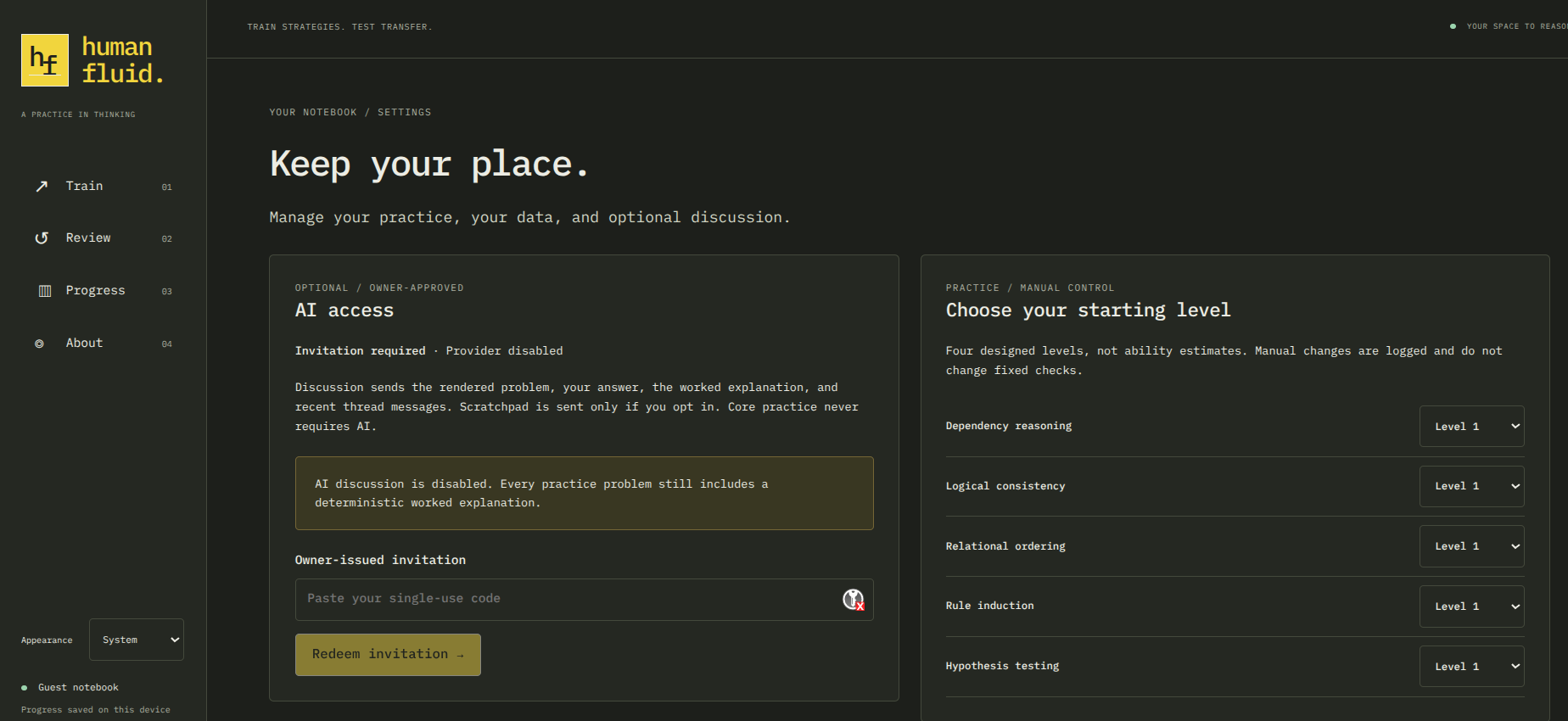
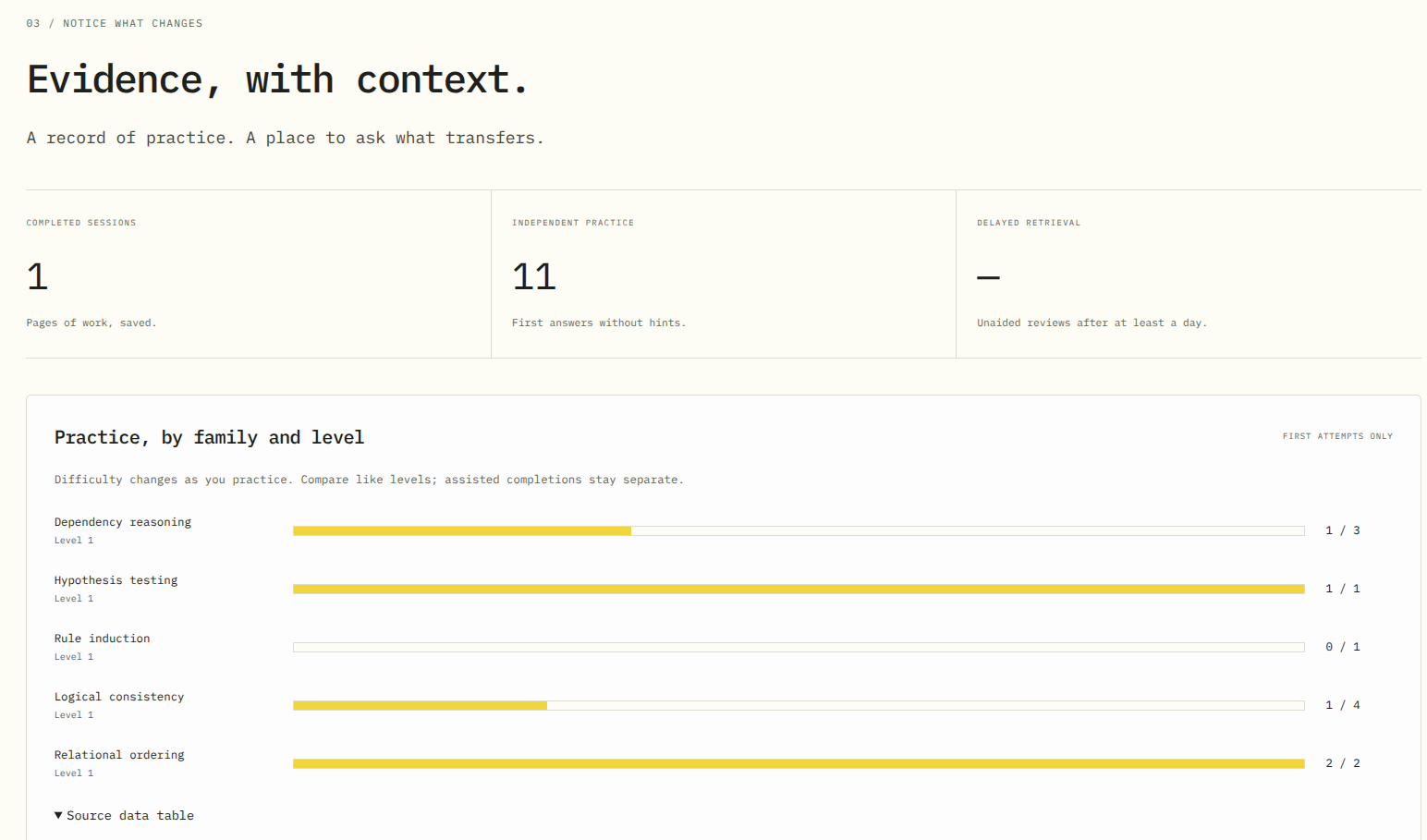
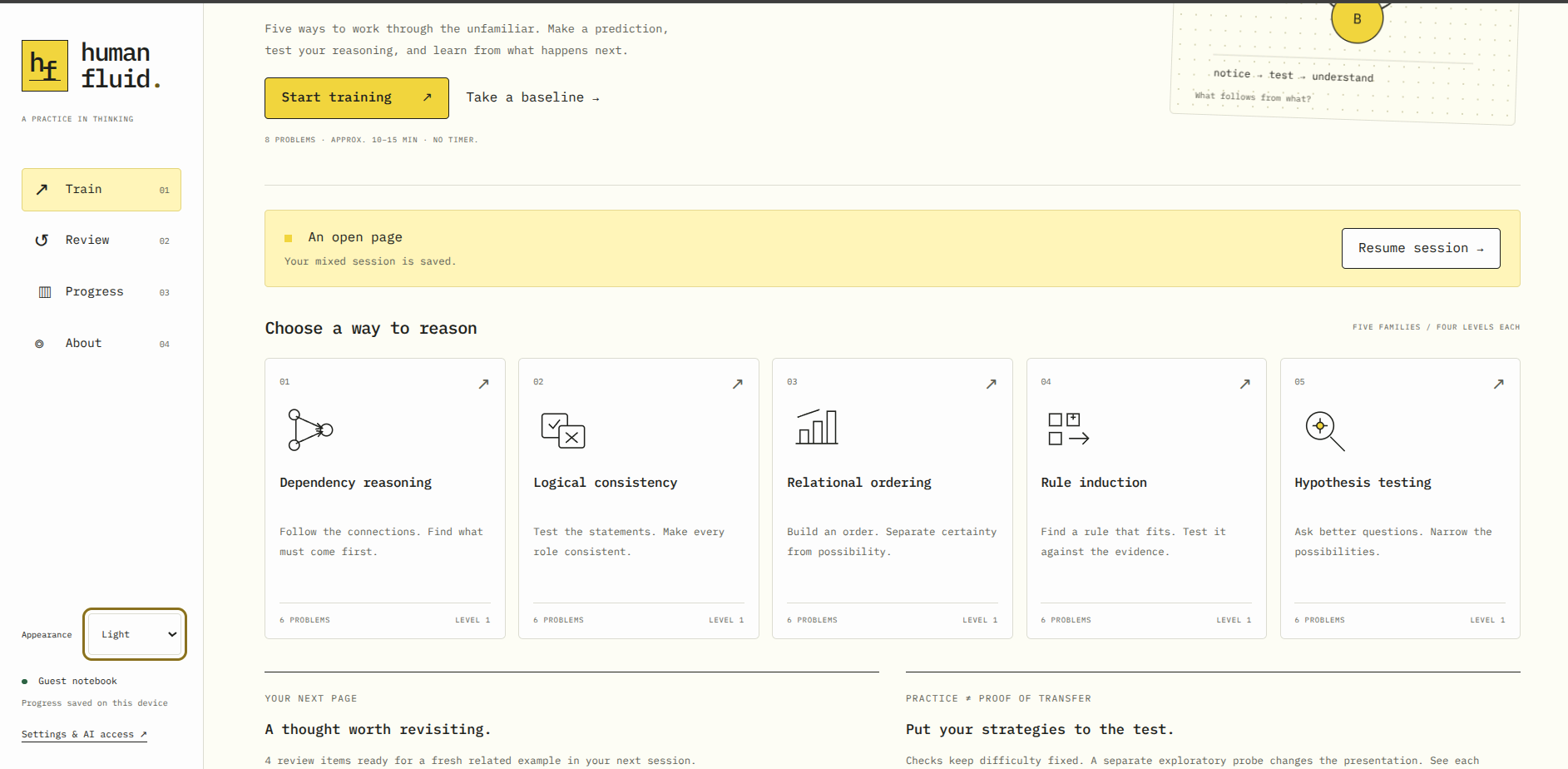
Human Fluid offers five reasoning task families with interactive problems, hints, scratchpads, and worked explanations. Learners can practice, review mistakes, track progress, and take separate checks to explore what transfers.
How we built it
We used Python and FastAPI for server-side generation and grading, with Vue 3 and TypeScript for the interface. Reasoning Gym and native generators provide verified exercises, while SQLite stores progress and a transparent rule-based scheduler adapts practice.
Challenges we ran into
We had to verify problem correctness, reject ambiguous exercises, and keep answers private before submission. Resumable sessions, assessment privacy, and readable mobile diagrams also required careful implementation.
Accomplishments that we're proud of
We built a complete learning loop with five task families, 520 verified imported exercises, persistent progress, and light/dark modes. Automated backend, frontend, and browser tests verify core behavior.
What we learned
Useful reasoning practice needs more than puzzles. It needs clear instructions, meaningful feedback, and opportunities to revisit mistakes. Assisted success, independent understanding, and broader transfer must be measured separately.
What's next for Human Fluid
We plan to expand task variety, improve optional AI discussion, and refine delayed review. Longer term, we want controlled evaluations of learning and transfer, followed by comparisons between learned teaching policies and our rule-based baseline.
Built With
- codex
- fastapi
- python
- reasoning-gym
- uv
- vue


Log in or sign up for Devpost to join the conversation.