Inspiration
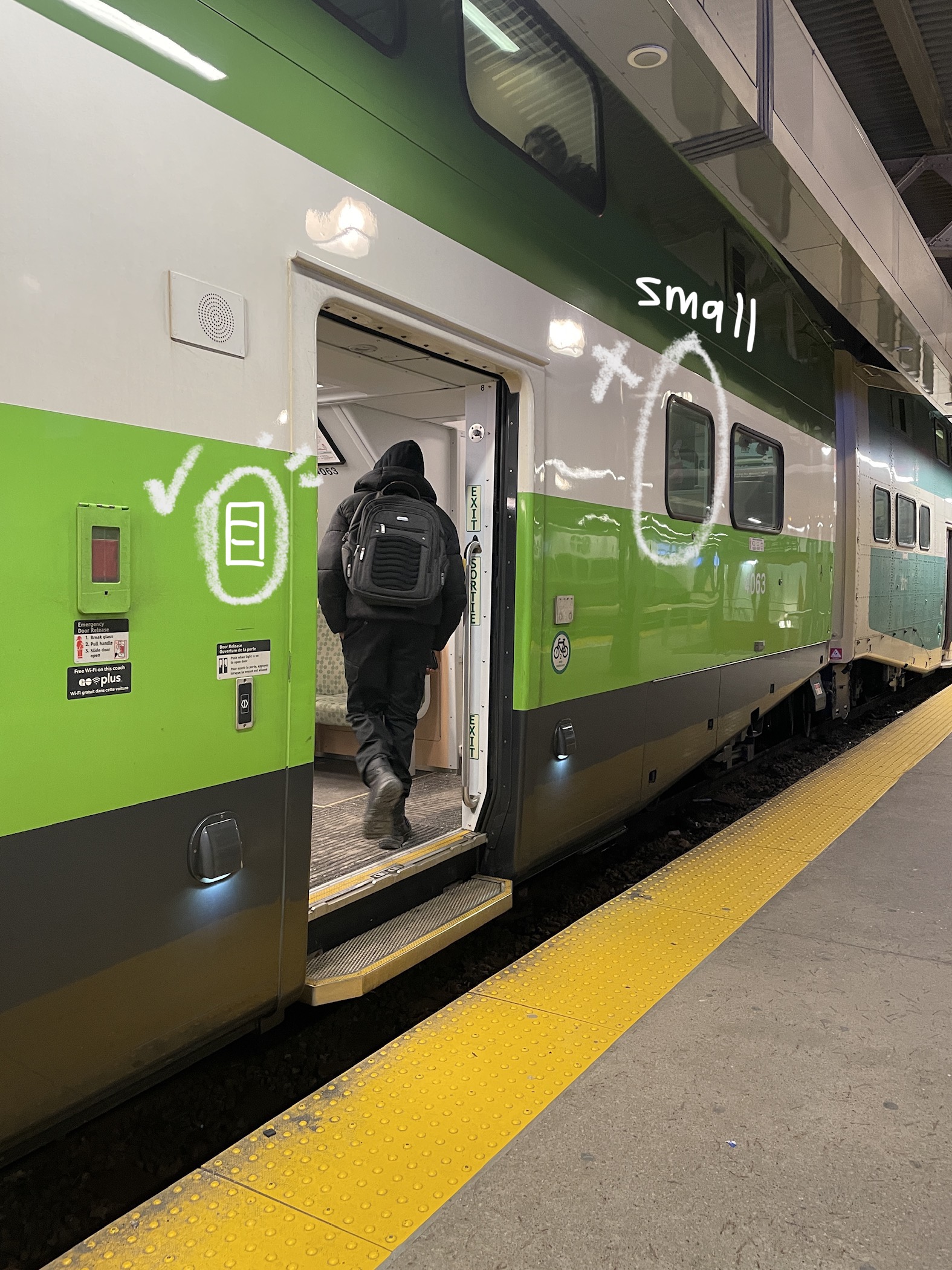
As student commuters, we often face the harsh reality of congested rides, especially during peak hours. This frustration is made all the more biting when we notice barely-filled carts on the other side of the train, only as we exit. This sparked a desire for a more accessible way to estimate cart capacities before boarding and ensure a more even distribution of passengers across all carts.
What it does
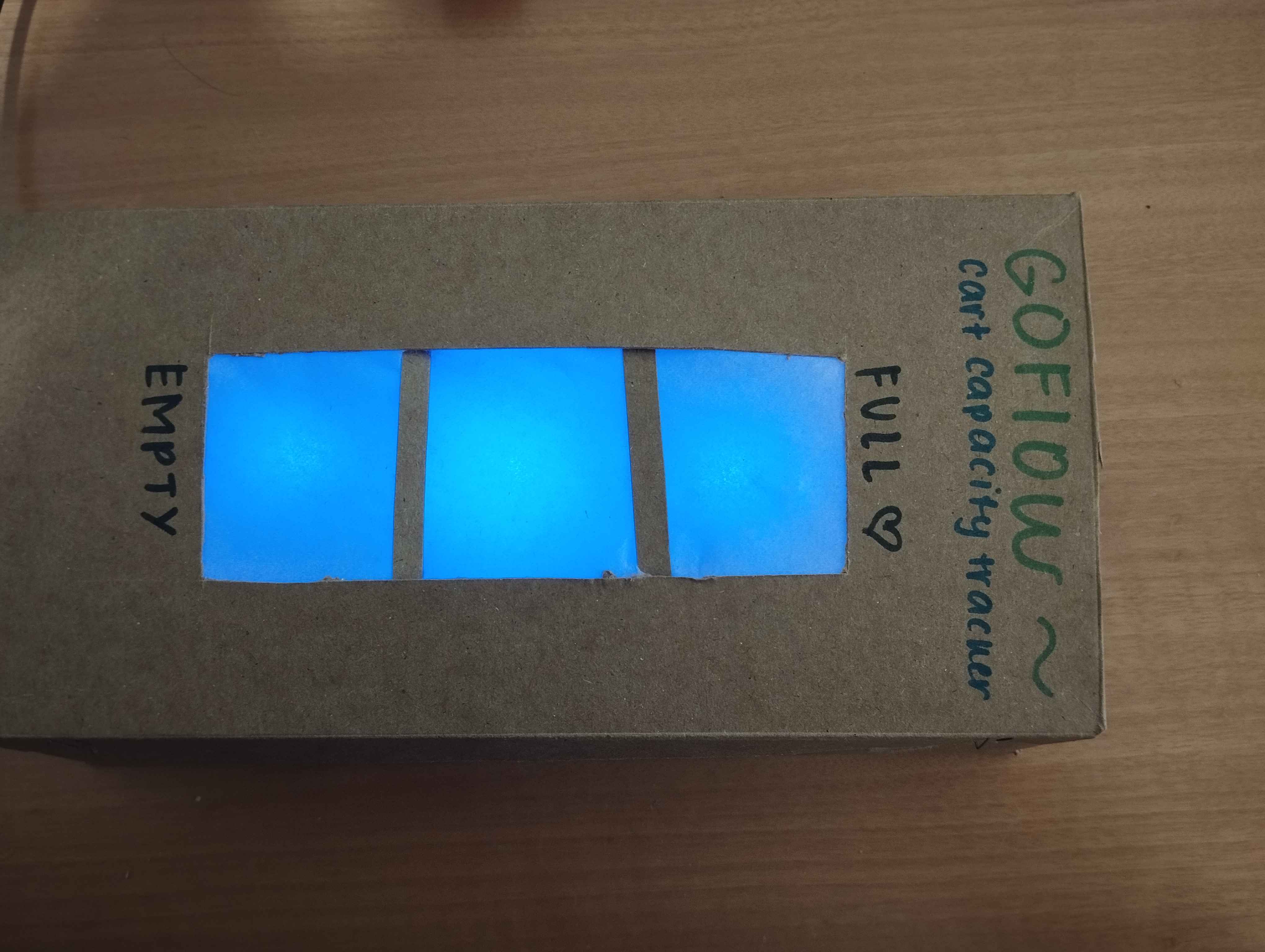
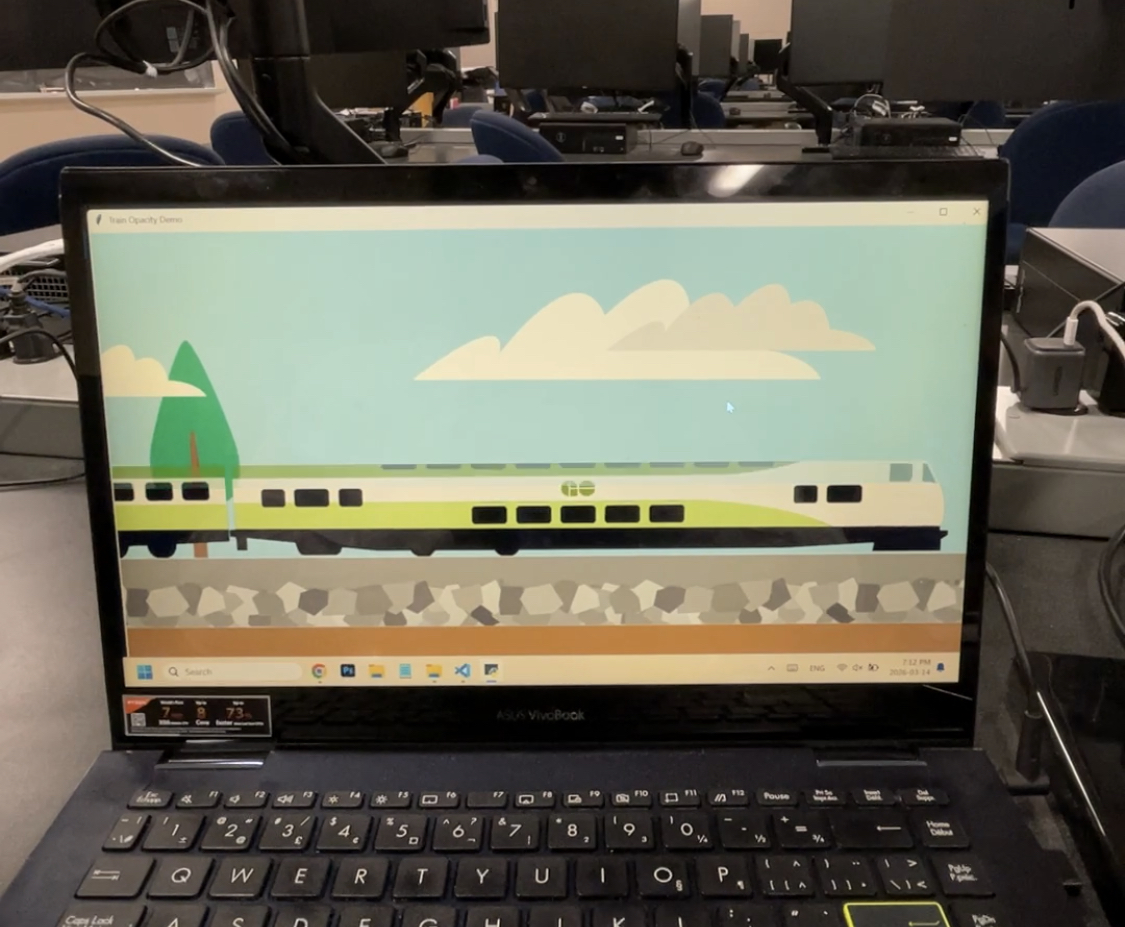
GOFlow is an AI-powered tracker that enables GO Transit passengers to better gauge the capacity of train carts before boarding. Through light hardware and GUI visual representation that reflect the fullness of the cart, the GOFlow leads to safer, less crowded rides, reduced risk of incidents, and lower impedance to medical emergency services.
How we built it
We first prioritized building our Minimum Viable Product (MVP), which accounted for the fundamental functions of the GOFlow: connecting a webcam, extracting a frame from it to an AI counter, and returning the head count. Once our MVP was operating, we evolved it to be live, by continuously exporting frames and updating the head count. We then focused on constructing the GOFlow’s additions: the LED light mechanism and the GUI visual representation. Finally, we integrated all components together in a main file, ensuring to test throughout.
Challenges we ran into
We worked through two main challenges: our lack of experience and material constraints. As first years with little experience in YOLOv8, Pico boards, or GUI, we had to acquire skills across all fields in real time. By embracing the mentors and AI resources around us, we were able to push ourselves well beyond our comfort zones, enjoy our time there, and discover how much we could achieve despite being beginners. Regarding hardware, we quickly adapted to our constraints; we employed a Pico board and designed resistors in parallel to compensate for the lack of Raspberry Pi 5s and 220 ohm resistors.
Accomplishments that we're proud of
We are excited that we were able to develop a meaningful, specific improvement to the transit system through AI, despite our limited prior experience. We are so proud to have developed complimentary hardware and software components, as combining both aspects not only challenged us technically, but allowed for a more creative and impactful end product. Additionally, we take pride in how quickly we distilled and built our MVP, through clear prioritization and decomposition of what must be completed with our given timeline. Finally, we are proud of how we worked together as a team, learning from each others’ strengths, building on each others’ ideas, and creating lasting memories of GenAI Genesis.
What we learned
Imperfect action triumphs perfect hesitation. Although planning provided a helpful blueprint, we found time and time again that we learnt best simply by rapidly prototyping, testing, and adjusting. This iterative process allowed us to move forward and make the most out of our limited time.
Do not be afraid to reach out for help! Be it mentors for advice, teammates for debugging, or executives for spare resistors, we learned that everyone in AI Genesis is willing to help those with a vision bring it to life.
Teamwork and communication are gold. From conversations to sketches, proper communication of ideas ensures a clear, shared vision among team members from the start and prevents any confusion, rescoping, or inefficiencies down the line.
What's next for GOFlow - Cart Capacity Tracker
Moving forward, expanding GOFlow’s GUI to reflect all GO train carts and adding a method to situate the user relative to the cart they are standing in front of would help bolster the user experience and functionality of GOFlow. On the hardware side, improving the durability against weather and formalizing the design for the LEDs component is essential. While GOFlow focuses on GO transit crowd tracking applications, its broader technology and logic can be implemented in various other public spaces, to help students locate uncrowded study areas, help medical emergency services navigate crowds quicker during concerts and games, or improve the crowd management of large venues.
Built With
- pico
- python
- yolo

Log in or sign up for Devpost to join the conversation.