-
-
Human Decision Intelligence: evidence-led tools for measuring, interpreting and improving digital decisions.
-
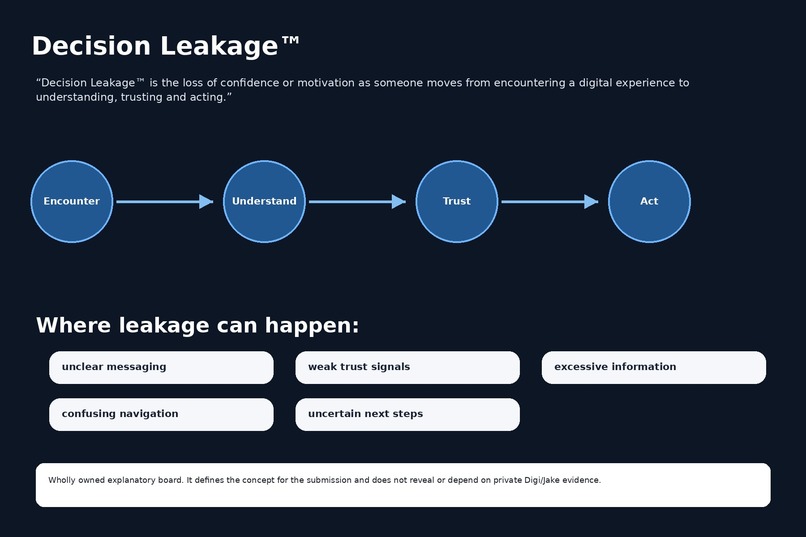
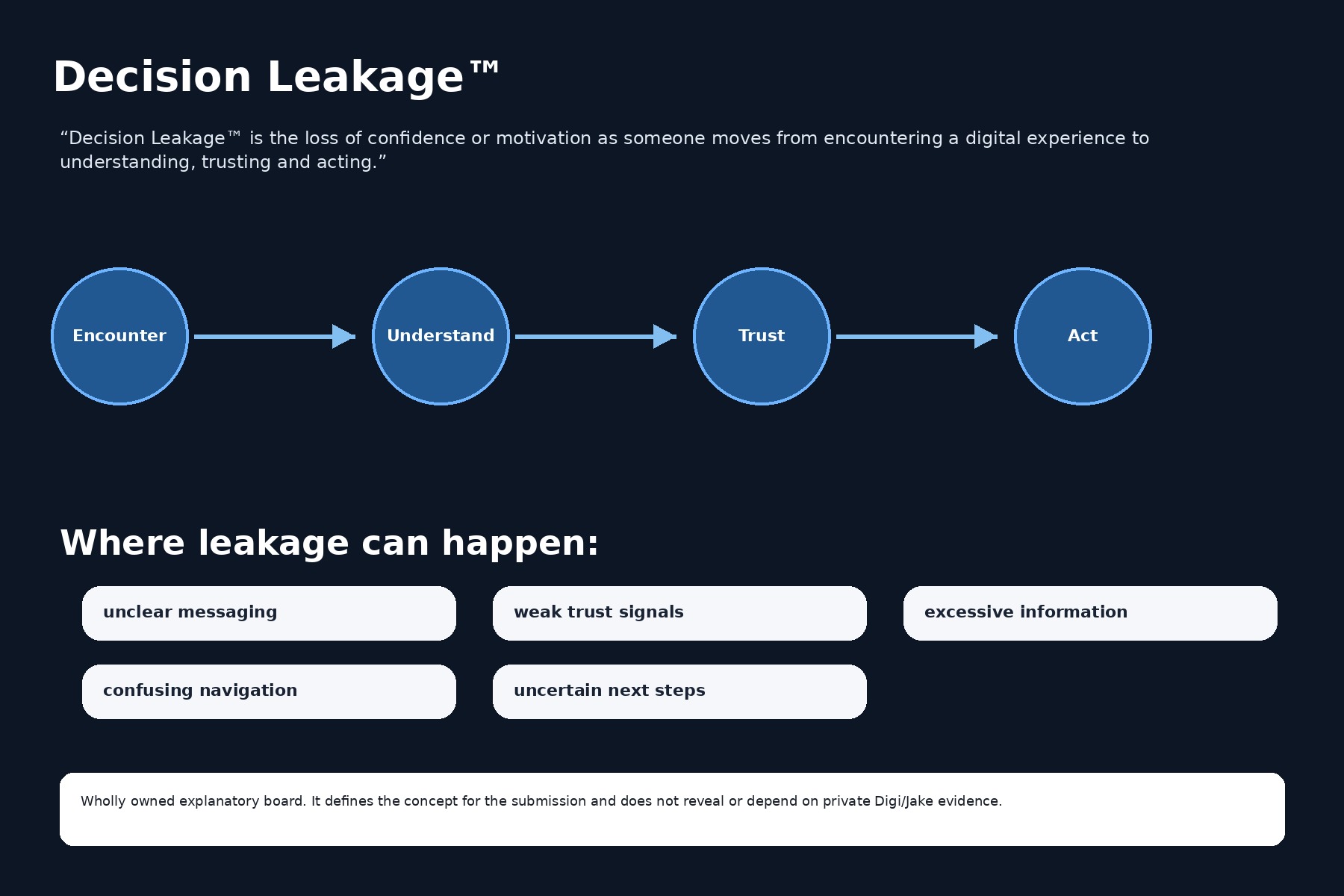
Decision Leakage™ identifies where understanding, confidence or motivation may be lost before someone acts.
-
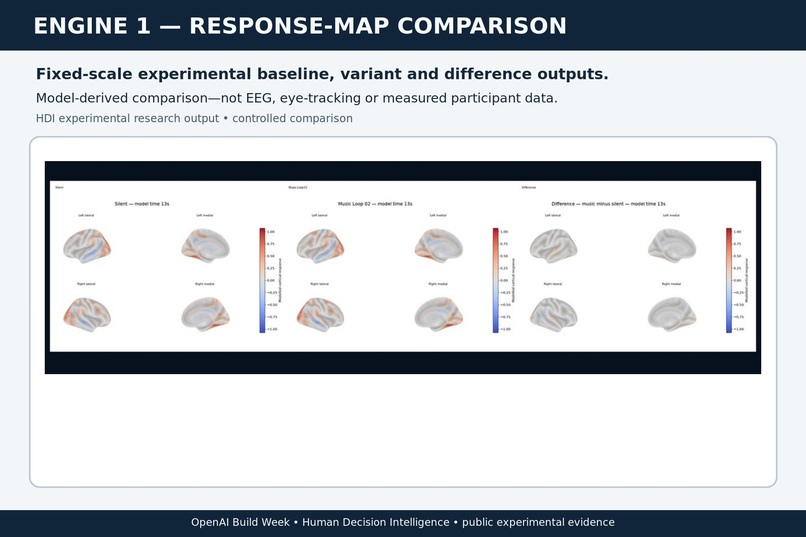
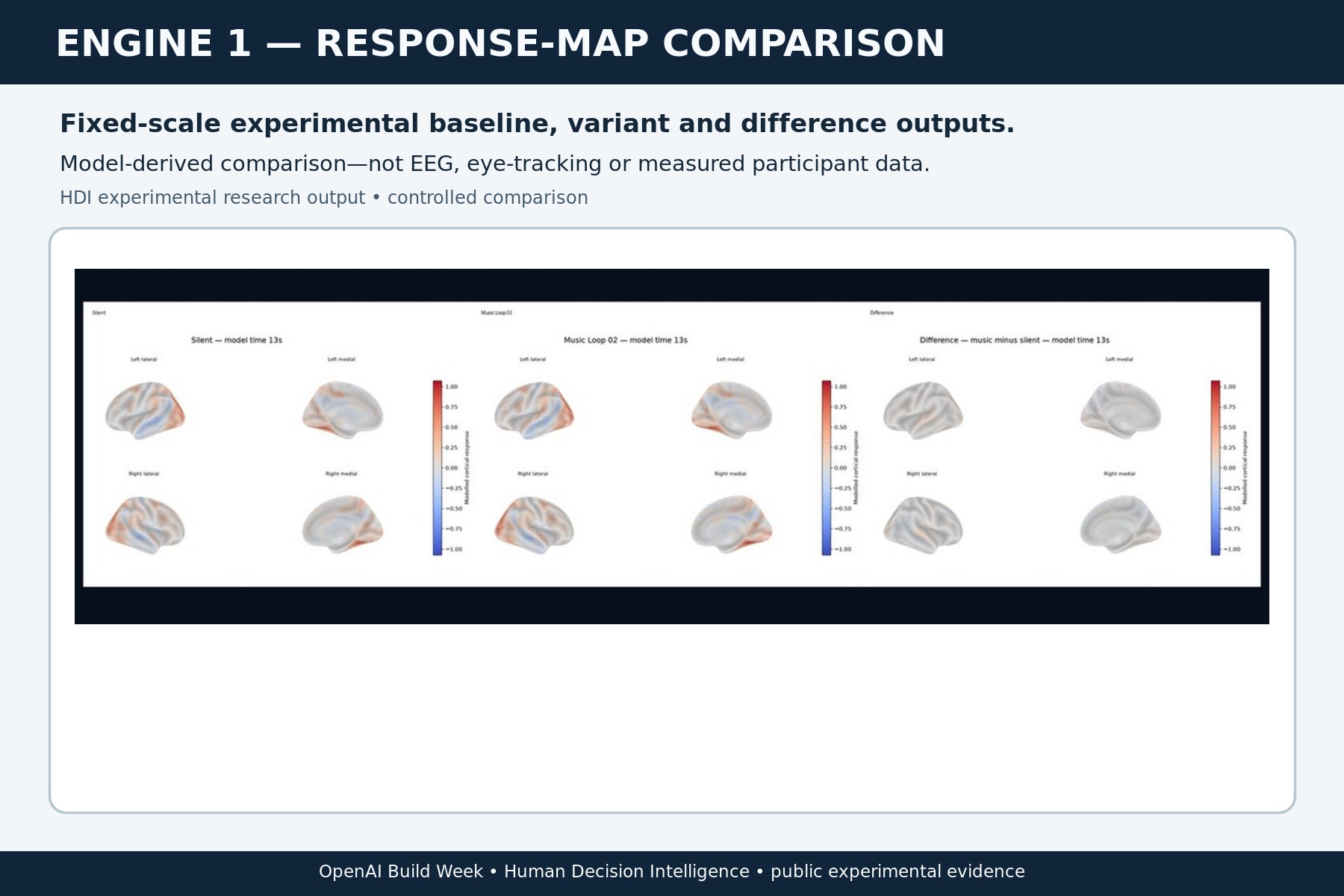
Engine 1 compares experimental model-derived response maps across controlled media alternatives. no3
-
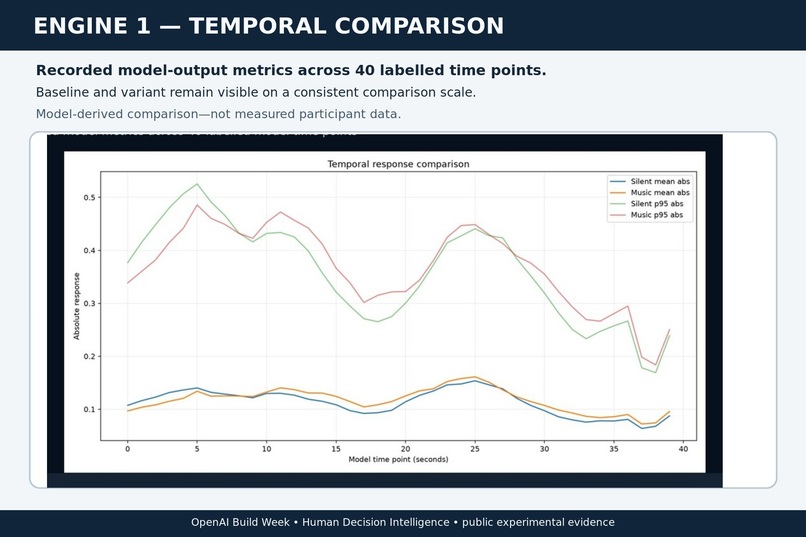
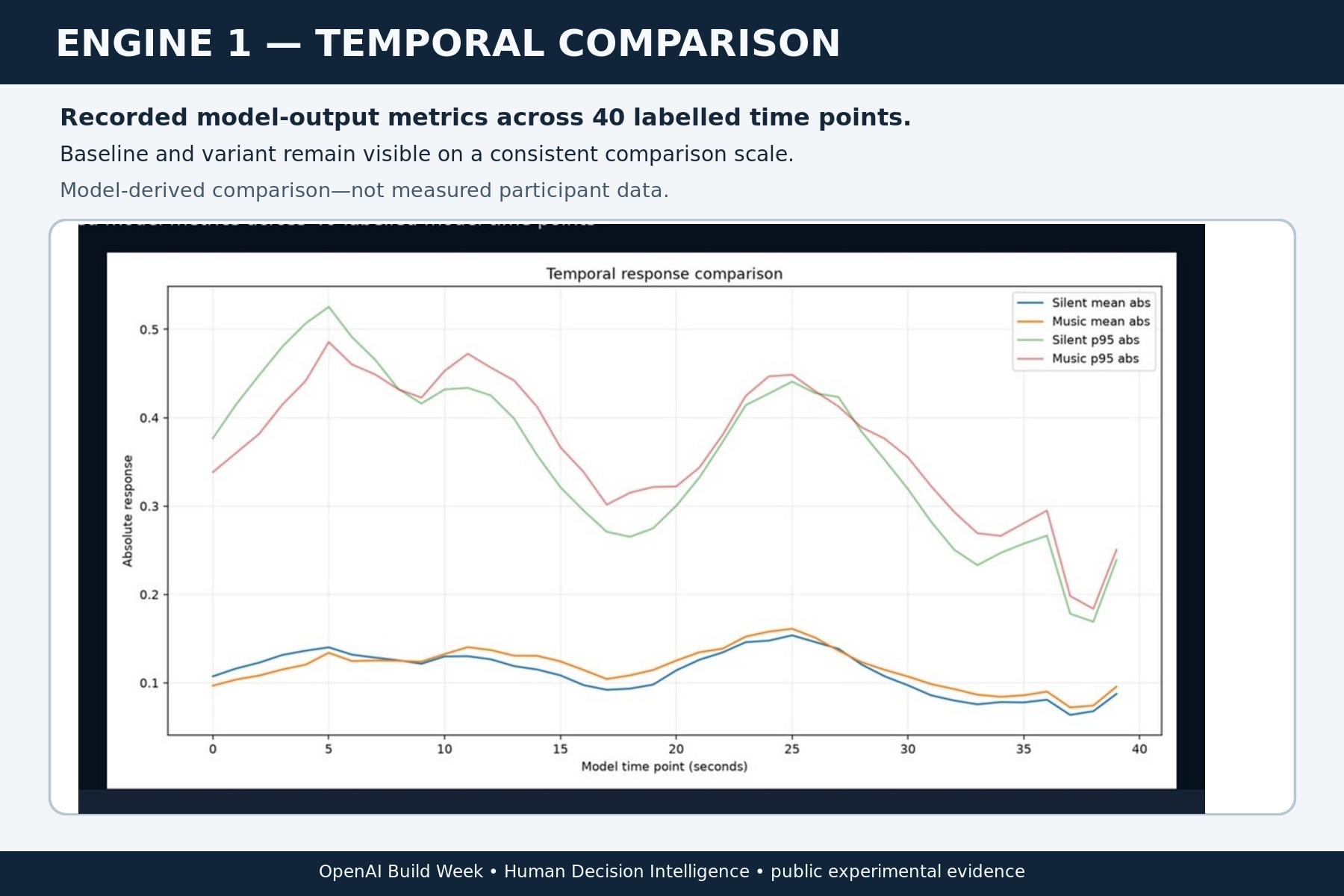
Temporal comparison shows how model-derived response patterns vary across labelled time points.
-
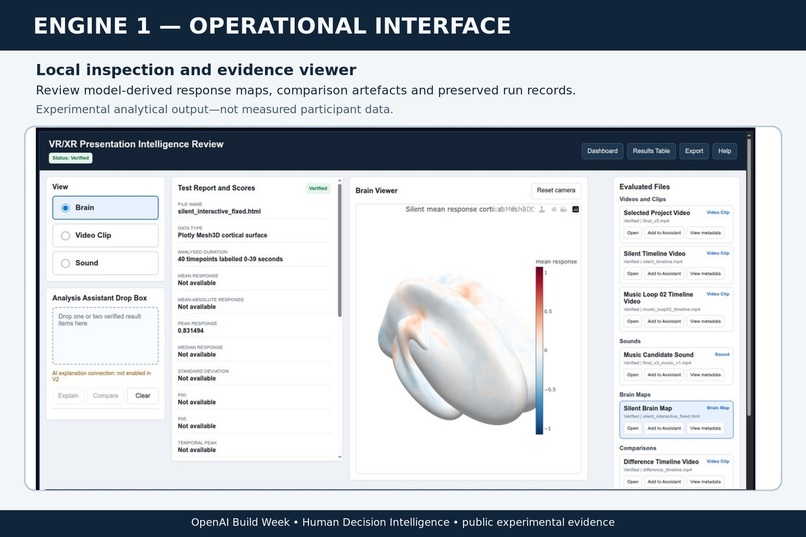
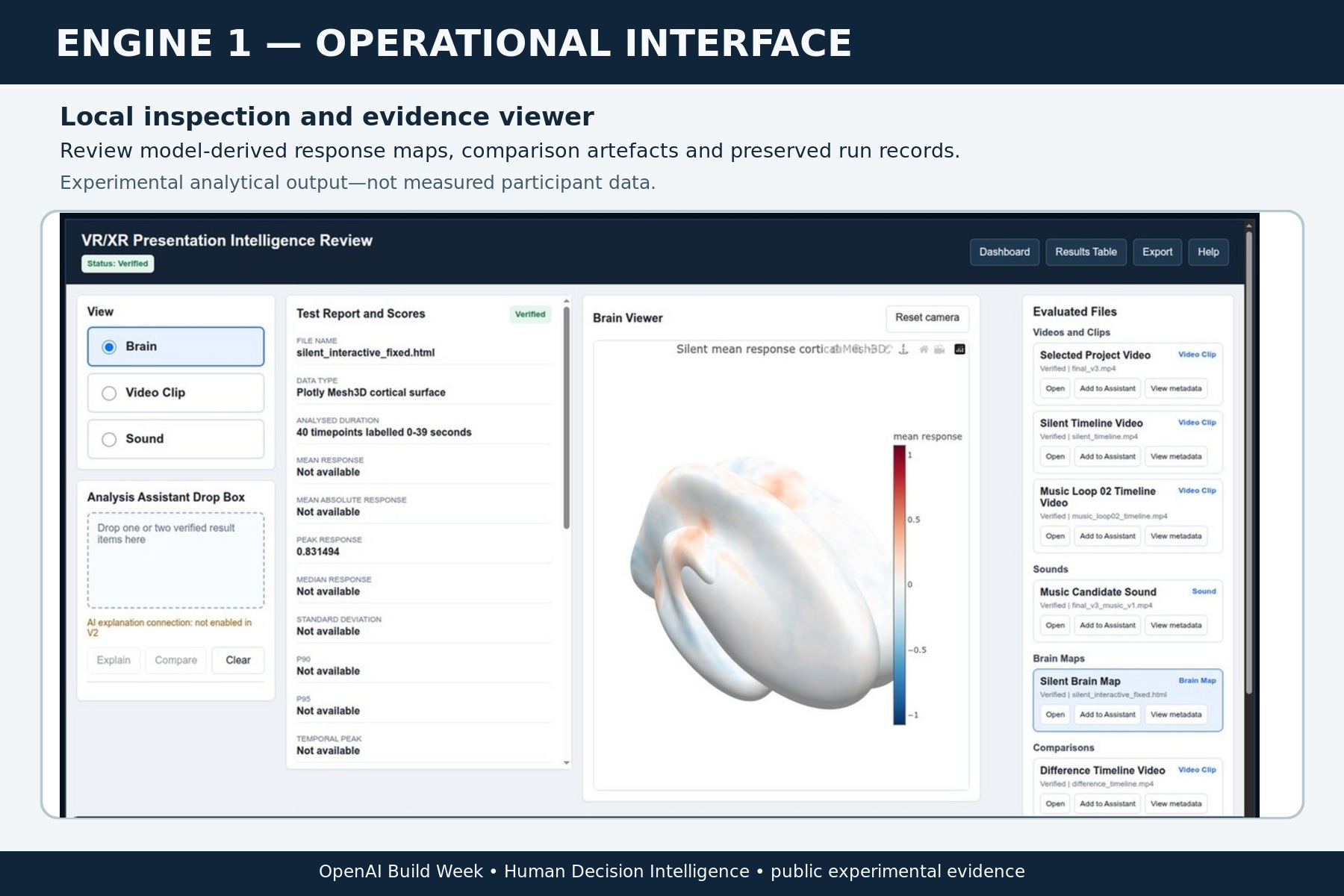
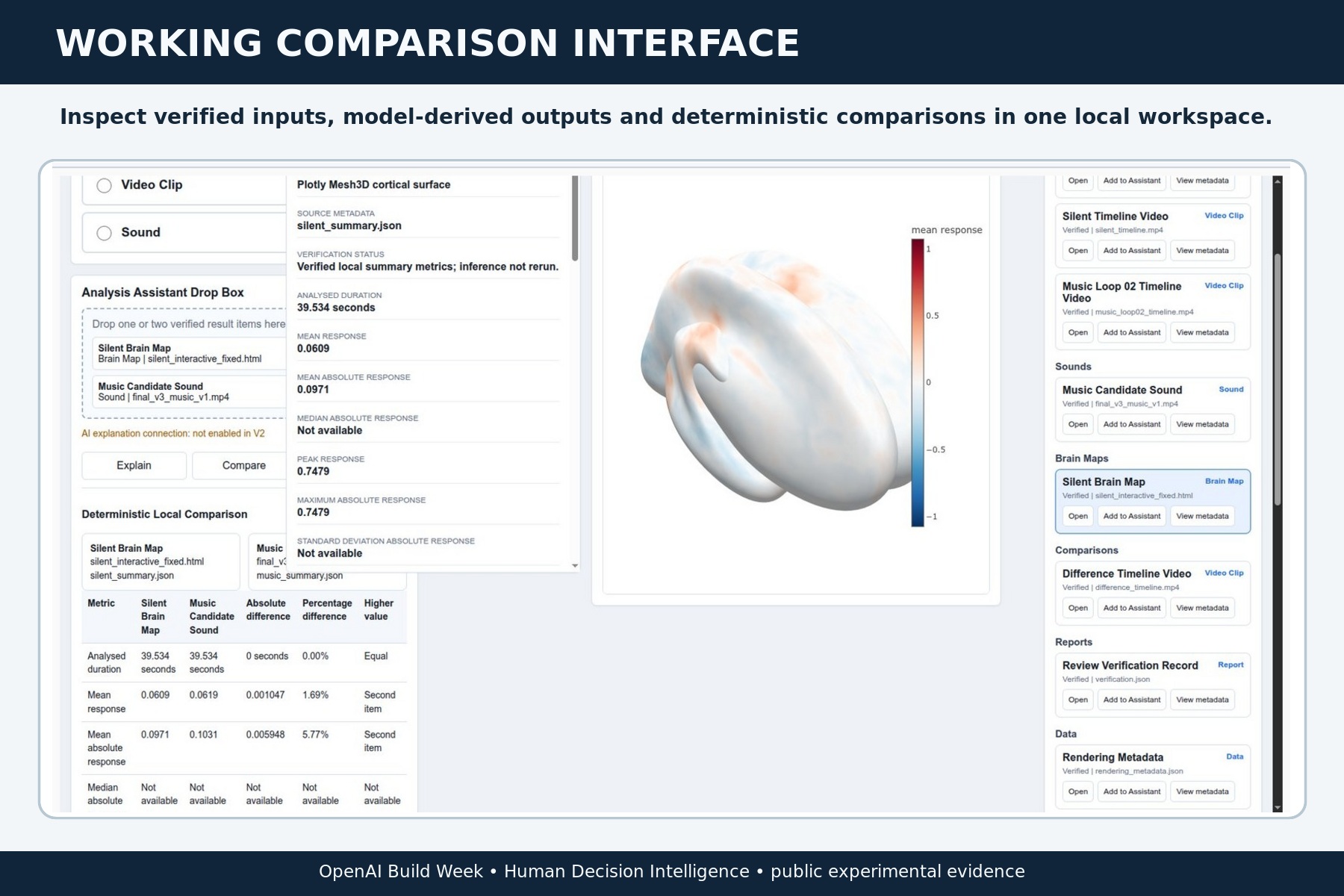
A working local interface for inspecting response maps, source evidence, metrics and comparison artefacts.
-
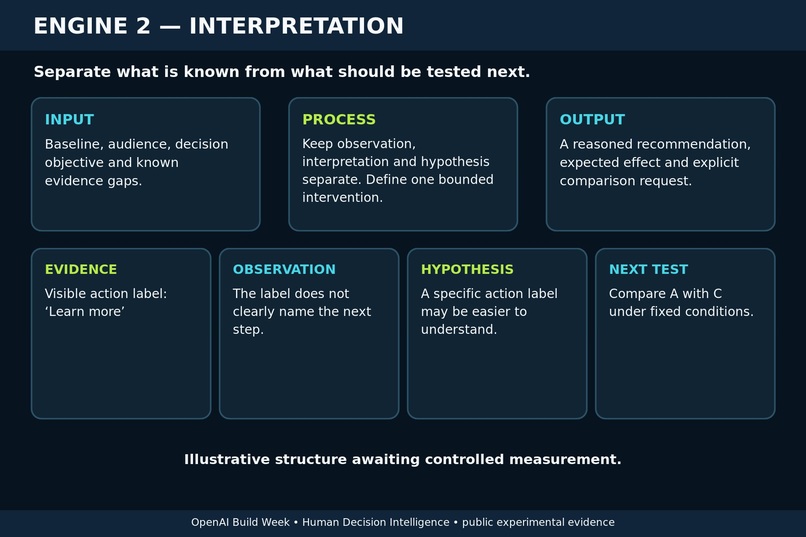
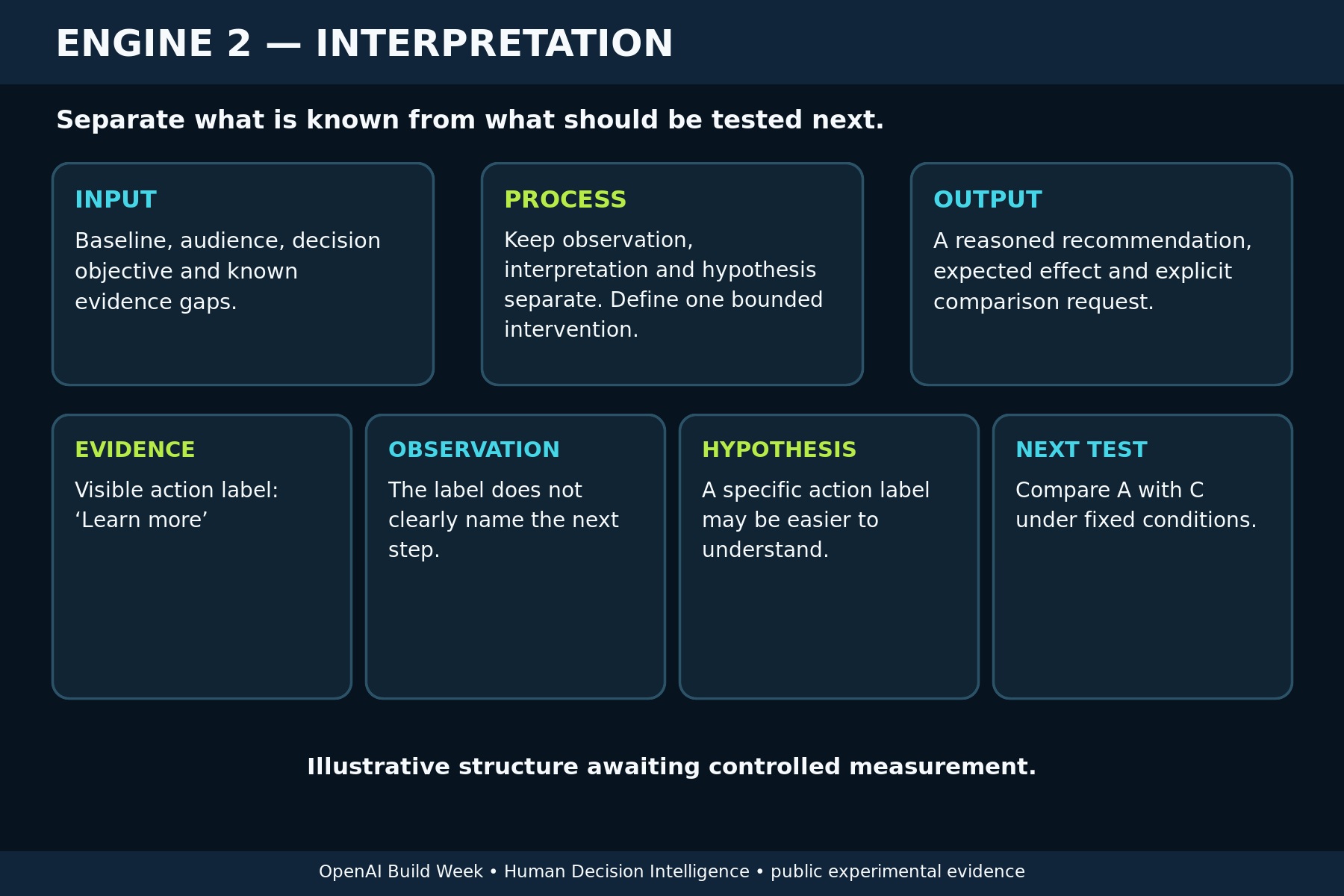
Engine 2 separates evidence, observation and hypothesis before proposing one controlled intervention.
-
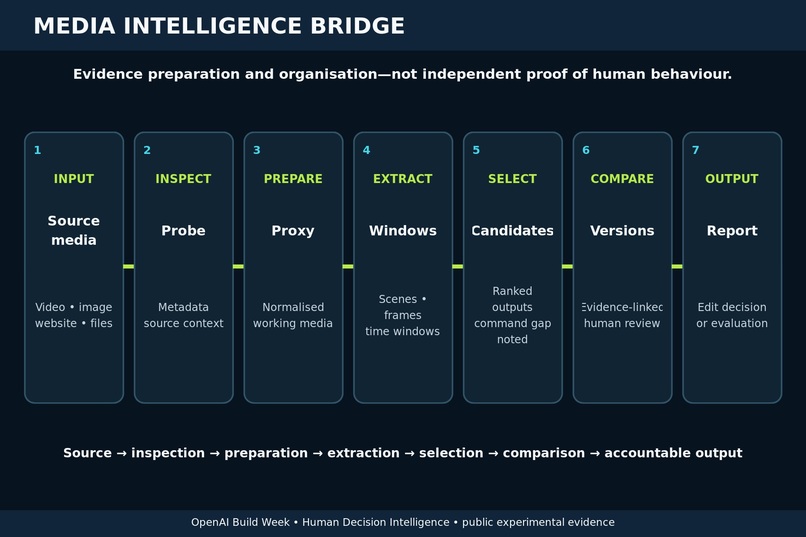
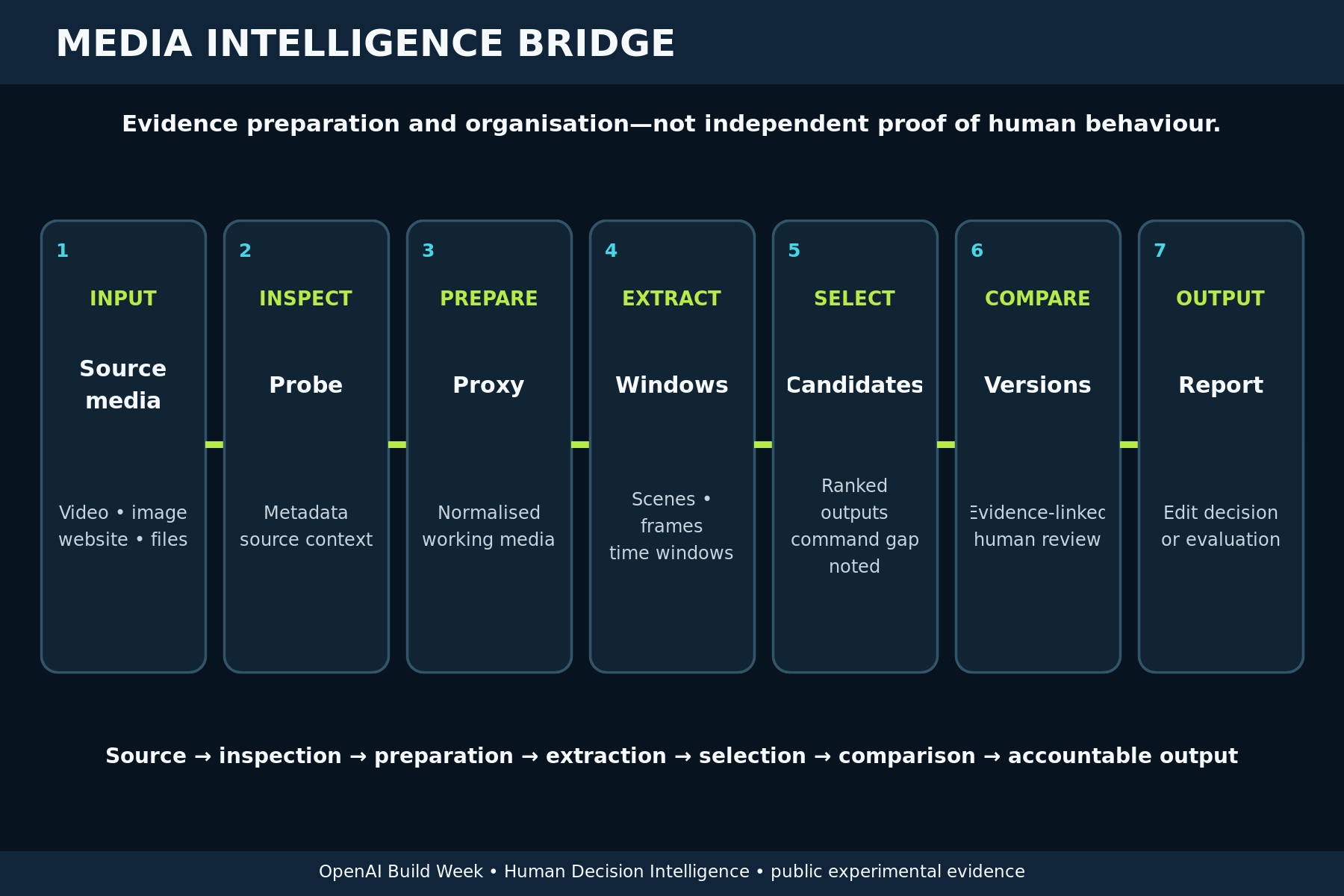
The Media Intelligence Bridge prepares, inspects, compares and preserves evidence for human review.
-
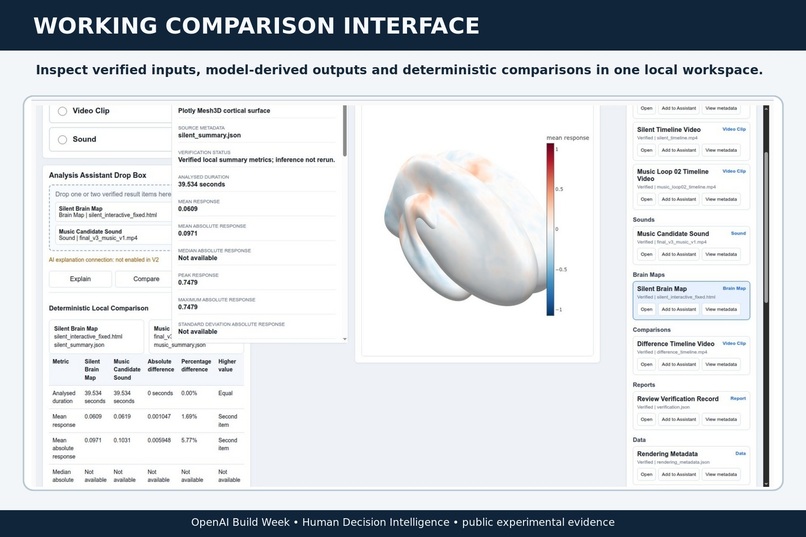
The operational comparison interface examines matched outputs without hiding missing or unavailable values.
-
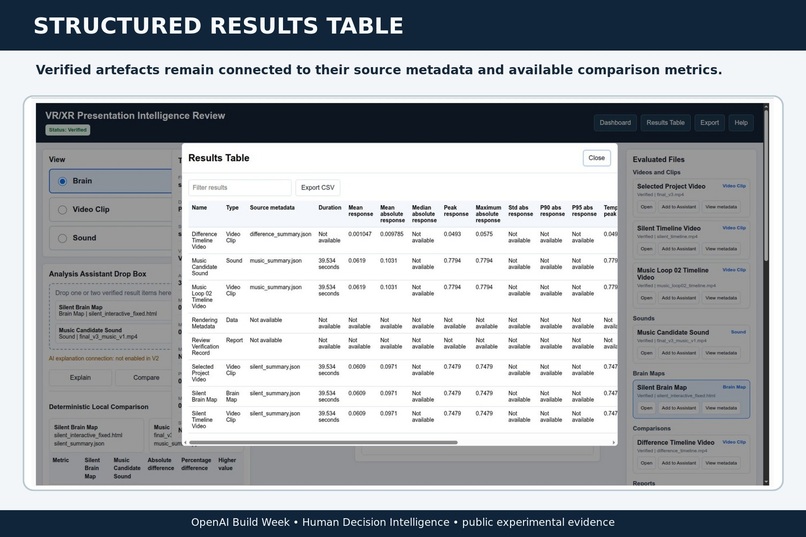
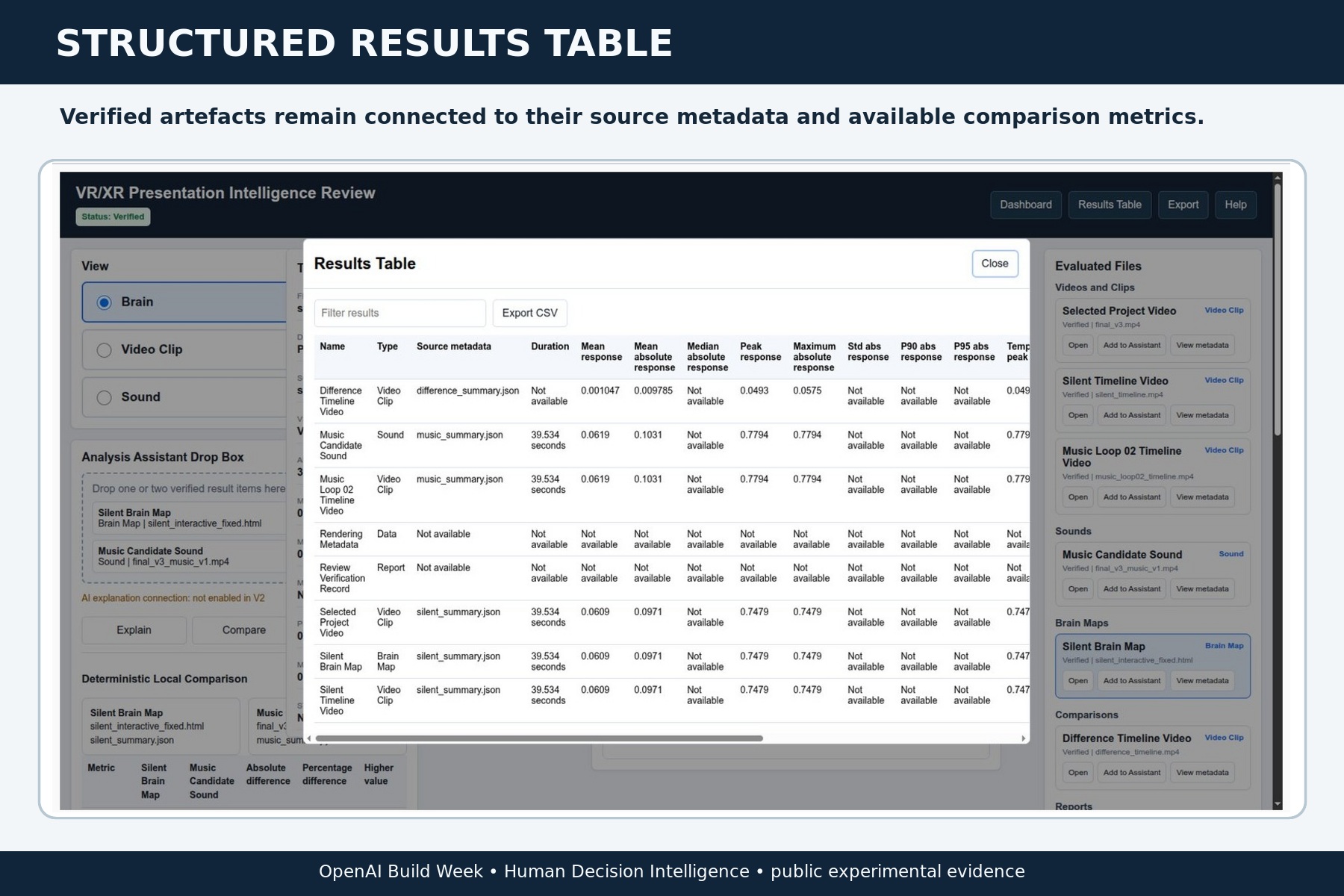
Structured results remain inspectable and exportable, including unavailable fields and uncertainty.
-
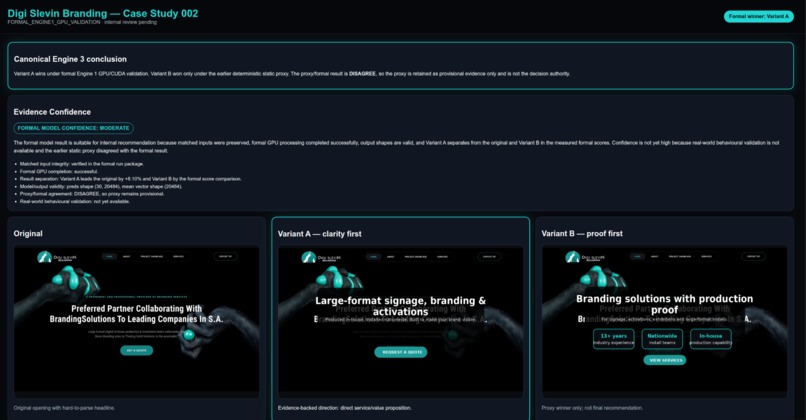
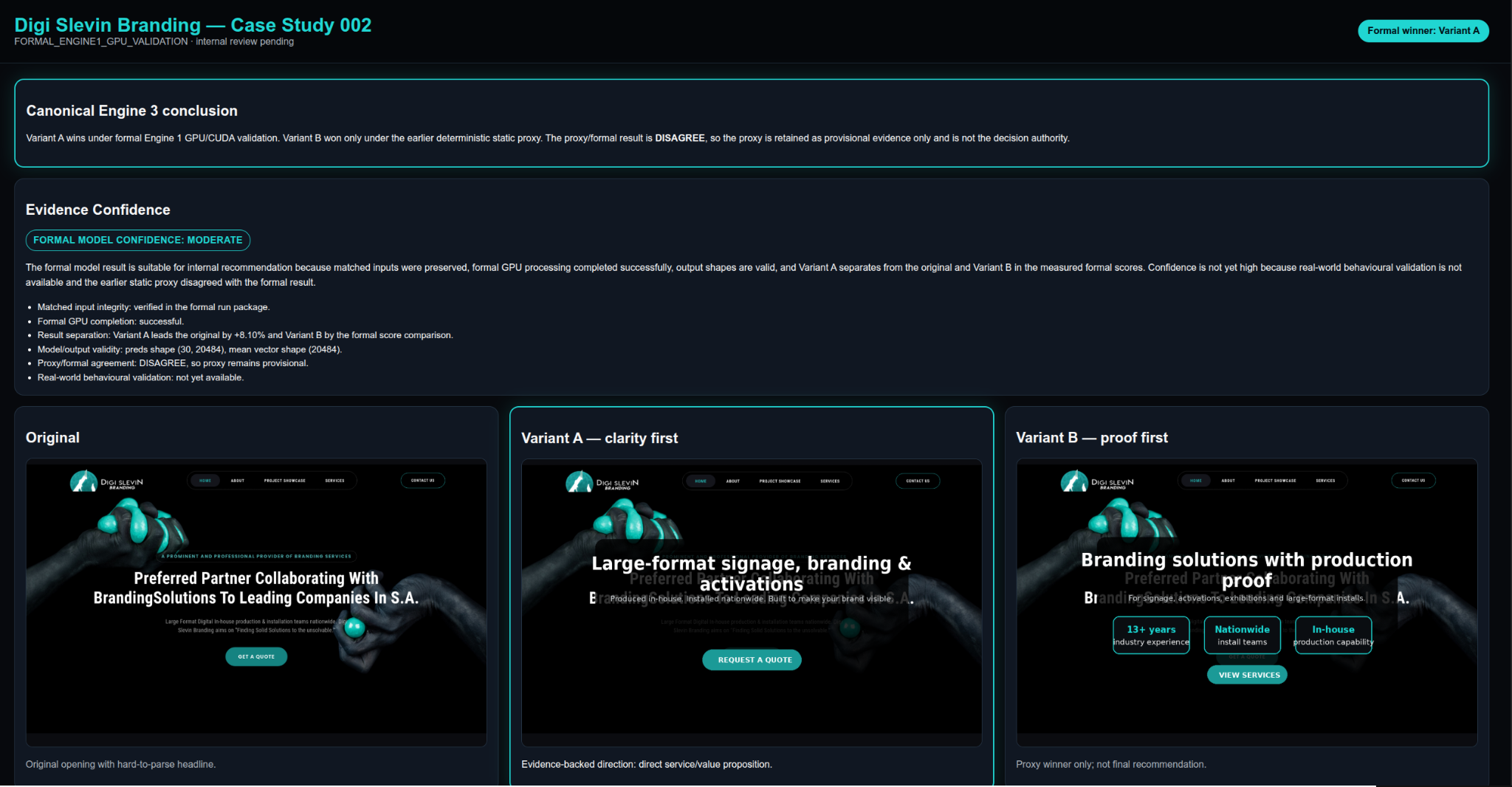
Engine 3 compares the original with two controlled variants and records where analytical methods disagree.
-
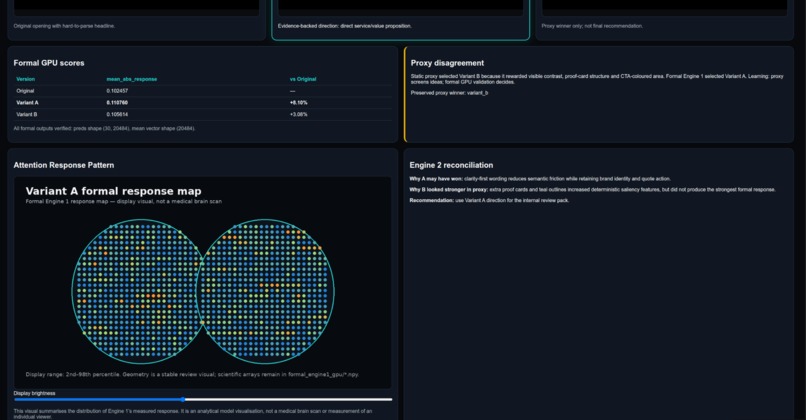
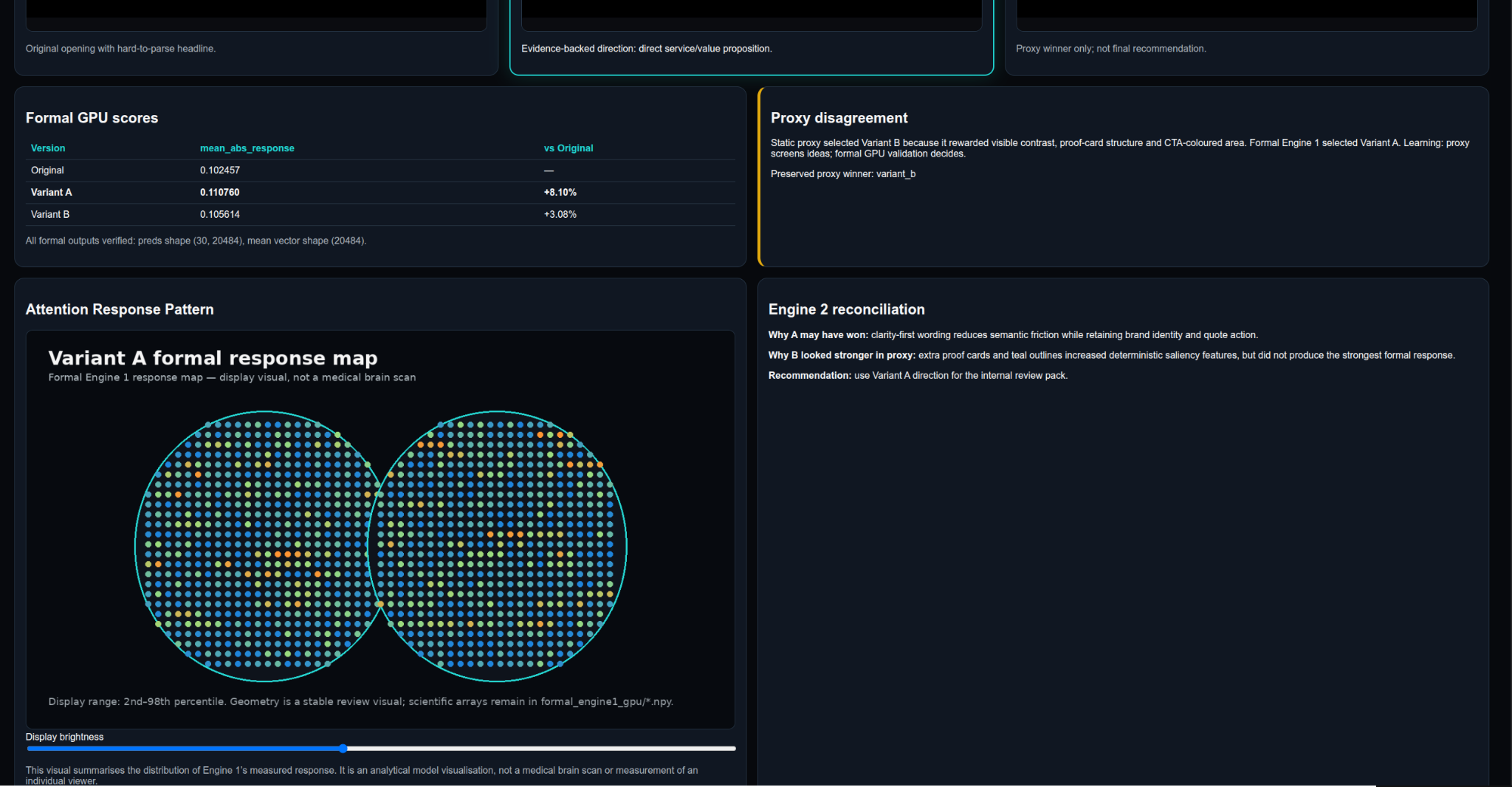
Formal GPU scores, response-map output and Engine 2 reconciliation preserve the reasoning behind the recommendation.
-
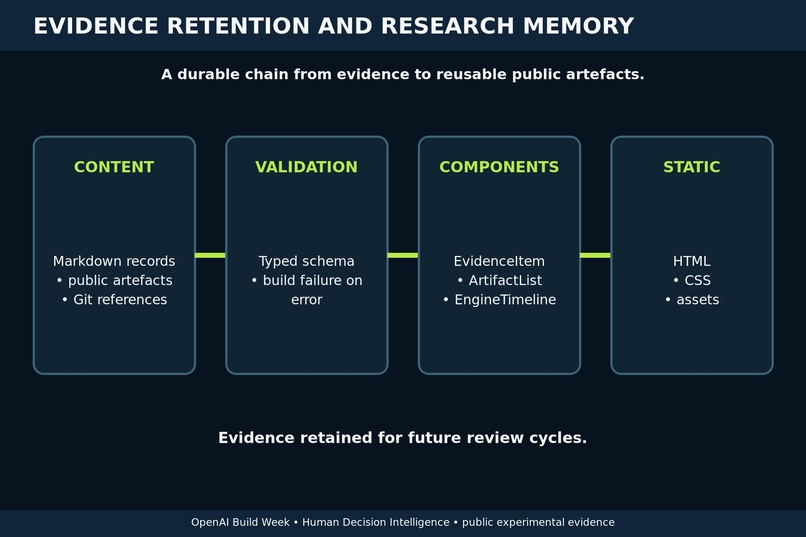
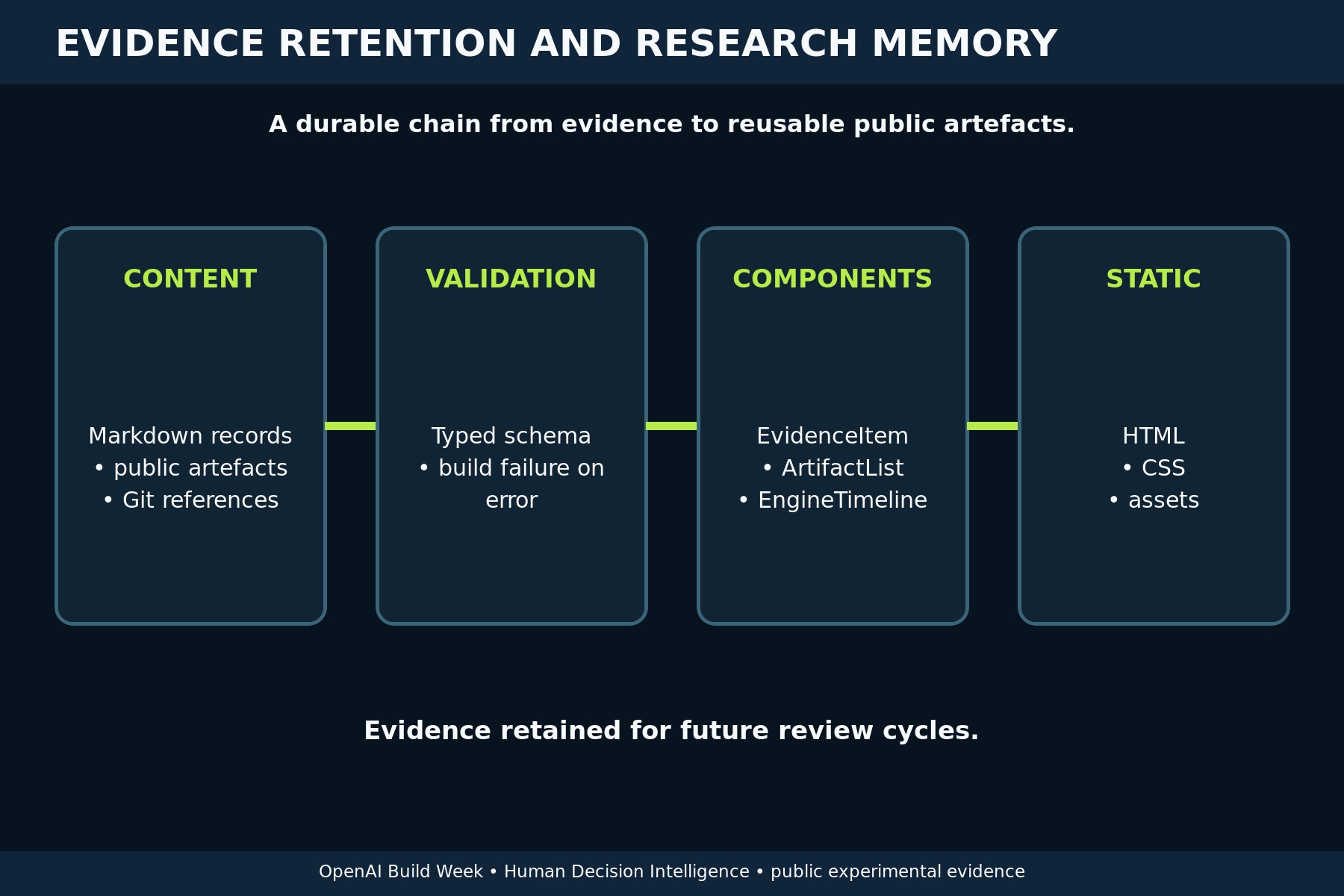
Evidence, validation records and project artefacts are retained as research memory for future cycles.
-
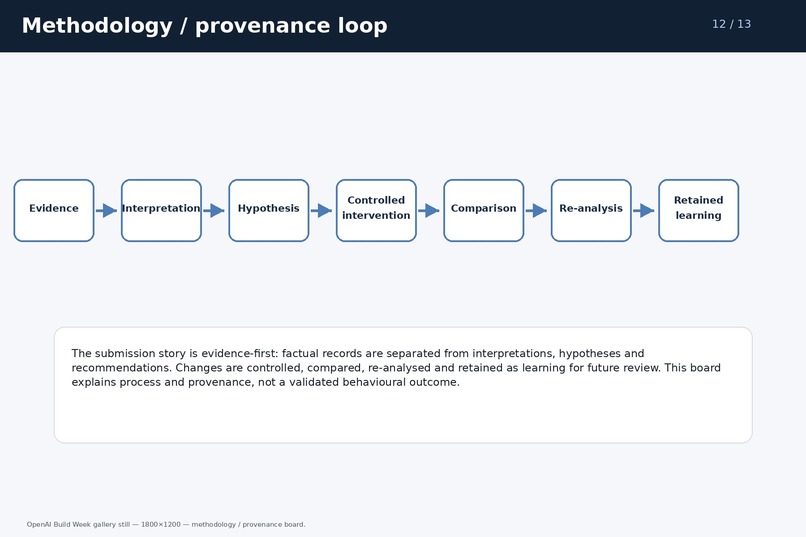
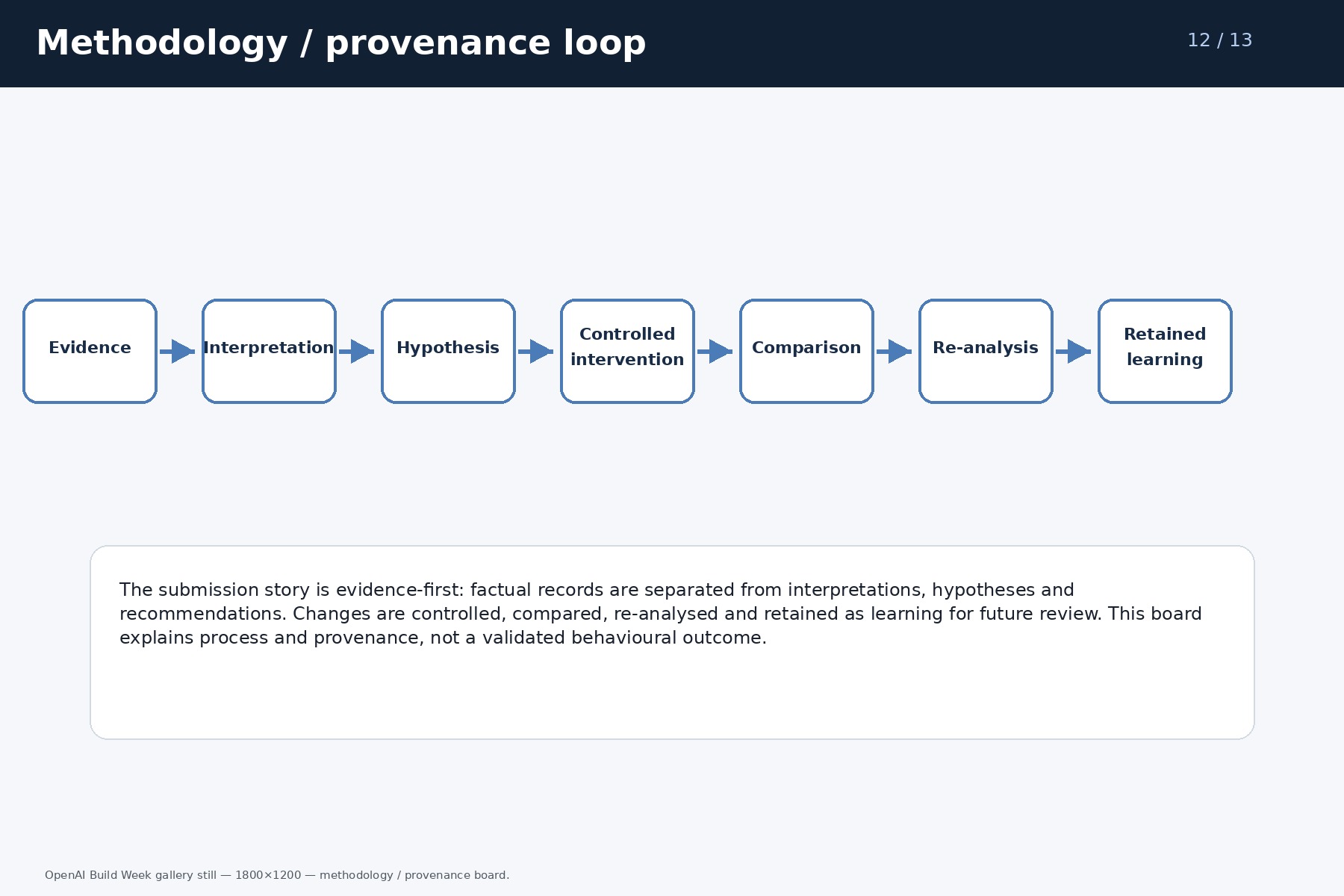
The HDI loop: evidence, interpretation, hypothesis, intervention, comparison, re-analysis and retained learning.
Inspiration
Digital experiences rarely fail at one obvious point. People can arrive interested, then gradually lose confidence because the message is unclear, trust signals are weak, information is overwhelming, navigation is confusing or the next action feels uncertain.
We call this loss of decision momentum Decision Leakage™.
Most analytics show where someone stopped or clicked. They do not reliably explain why confidence was lost, distinguish evidence from interpretation or preserve what was learned from each attempted improvement.
Human Decision Intelligence (HDI) was created to address that gap. It combines human judgement, structured evidence and AI-assisted analysis while keeping people accountable for the final decisions.
What it does
HDI is an evidence-driven decision intelligence platform designed to:
- detect where Decision Leakage™ may be occurring;
- separate observed evidence from hypotheses and recommendations;
- interpret likely technical, behavioural, psychological and business causes;
- propose controlled alternatives instead of changing everything at once;
- compare first impressions and user understanding;
- measure the revised experience;
- preserve an auditable record of what changed, why it changed and what was learned.
The wider HDI architecture follows a repeatable evidence loop:
- Measure the existing experience using public or client-authorised evidence.
- Interpret the signals and identify likely causes of friction.
- Generate and compare controlled alternatives.
- Retain the evidence as research memory for future decisions.
- Measure again to determine what changed and whether further investigation is required.
AI supports the process, but it does not replace human judgement or present inference as fact.
The Build Week prototype
For Build Week, I brought the HDI evidence loop together through three connected engines and a retained-learning layer:
- Engine 1 — Measure: prepares media evidence and produces experimental model-derived response predictions for inspection.
- Engine 2 — Interpret: separates observations, interpretations, hypotheses, objectives and proposed interventions.
- Engine 3 — Improve: creates controlled alternatives and compares only the intended changes.
- Evidence and research memory: preserves sources, outputs, decisions, limitations and lessons for later review.
I also created a controlled Engine 3 comprehension pilot using a wholly owned demonstration website.
The pilot includes:
- consent before exposure;
- random assignment to controlled variants;
- randomised presentation order;
- five fixed first-exposure questions;
- immutable first-response locking;
- separate comparative feedback;
- structured local JSON export;
- a qualitative coding rubric;
- empty reviewer fields for later human assessment;
- no external tracking or third-party data transmission.
The A/B comparison changes only the main headline and its explanation. The A/C comparison changes only the action label. Shared structure, styling, trust statements and presentation boundaries remain mechanically consistent.
This isolates the decision variable and makes the resulting evidence more defensible than an uncontrolled redesign.
How I built it
Codex and GPT-5.6 were used throughout the engineering workflow to help:
- inspect and structure the project;
- implement the local participant harness;
- create controlled variants;
- build manifests and verification checks;
- test presentation boundaries;
- identify inconsistencies;
- document the protocol and coding rubric;
- review and repair the implementation until validation passed.
The prototype uses local HTML, CSS and JavaScript with structured JSON outputs, supporting documentation, Git version control, fixture tests and checksum verification.
The controlled participant pilot itself is intentionally private and local at this stage. It contains no advertising trackers or third-party data transmission. No participant collection has yet taken place, and unassessed reviewer fields remain explicitly marked as not assessed.
Challenges
The main challenge was preventing the AI-assisted workflow from changing too many variables simultaneously.
A visually stronger version is not automatically a scientifically useful comparison. To generate credible evidence, each test needed strict boundaries, reproducible fixtures and verification that only the intended variable had changed.
A second challenge was separating:
- direct observation;
- participant response;
- technical measurement;
- human interpretation;
- AI-supported hypotheses;
- final recommendations.
That separation is central to HDI because an explanation should never be presented as proven merely because an AI system generated it.
A third challenge was preserving mixed, incomplete and unsuccessful results rather than selecting only the outputs that supported the original idea. HDI treats uncertainty and failed reproductions as part of the evidence.
Accomplishments
The current prototype demonstrates how HDI can turn a subjective design discussion into a controlled, inspectable and repeatable decision process.
Key accomplishments include:
- a connected Measure → Interpret → Improve workflow;
- mechanically constrained A/B and A/C comparisons;
- immutable first-exposure responses;
- privacy-preserving local evidence capture;
- structured exports for later review;
- traceable manifests and checksum verification;
- a documented participant protocol;
- a reusable qualitative coding framework;
- retained mixed and failed reproduction records;
- a clear boundary between evidence, inference and human judgement.
What I learned
The most important lesson was that evidence quality depends as much on restraint as capability.
AI can generate many alternatives quickly, but meaningful decision intelligence requires controlled variables, preserved provenance and explicit uncertainty. Human expertise becomes more valuable when the system can show which evidence informed a decision and what happened afterward.
I also learned that preserving an unsuccessful result can be more valuable than presenting a convenient success. It creates a more reliable foundation for the next controlled test.
What's next
The next stage is to run the controlled participant pilot, code the responses using the documented rubric and compare comprehension outcomes without overstating statistical confidence.
Future development will connect the complete HDI evidence loop to authorised analytics, technical performance, accessibility, behavioural signals, business outcomes and longitudinal research memory.
The goal is not autonomous decision-making. The goal is a system that helps people make better decisions, understand the evidence behind them and retain what their organisation learns.

Log in or sign up for Devpost to join the conversation.