-
-
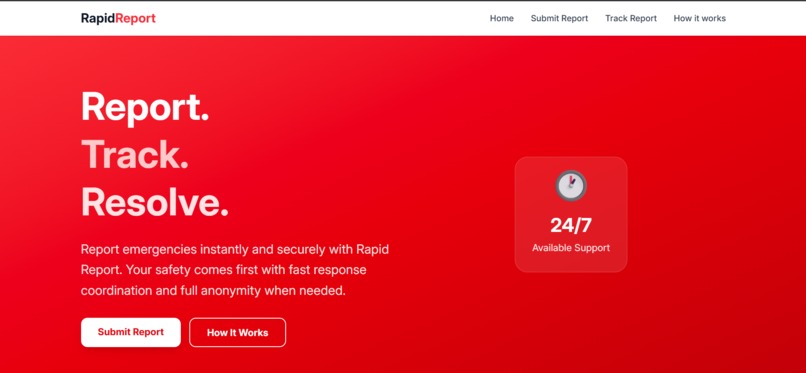
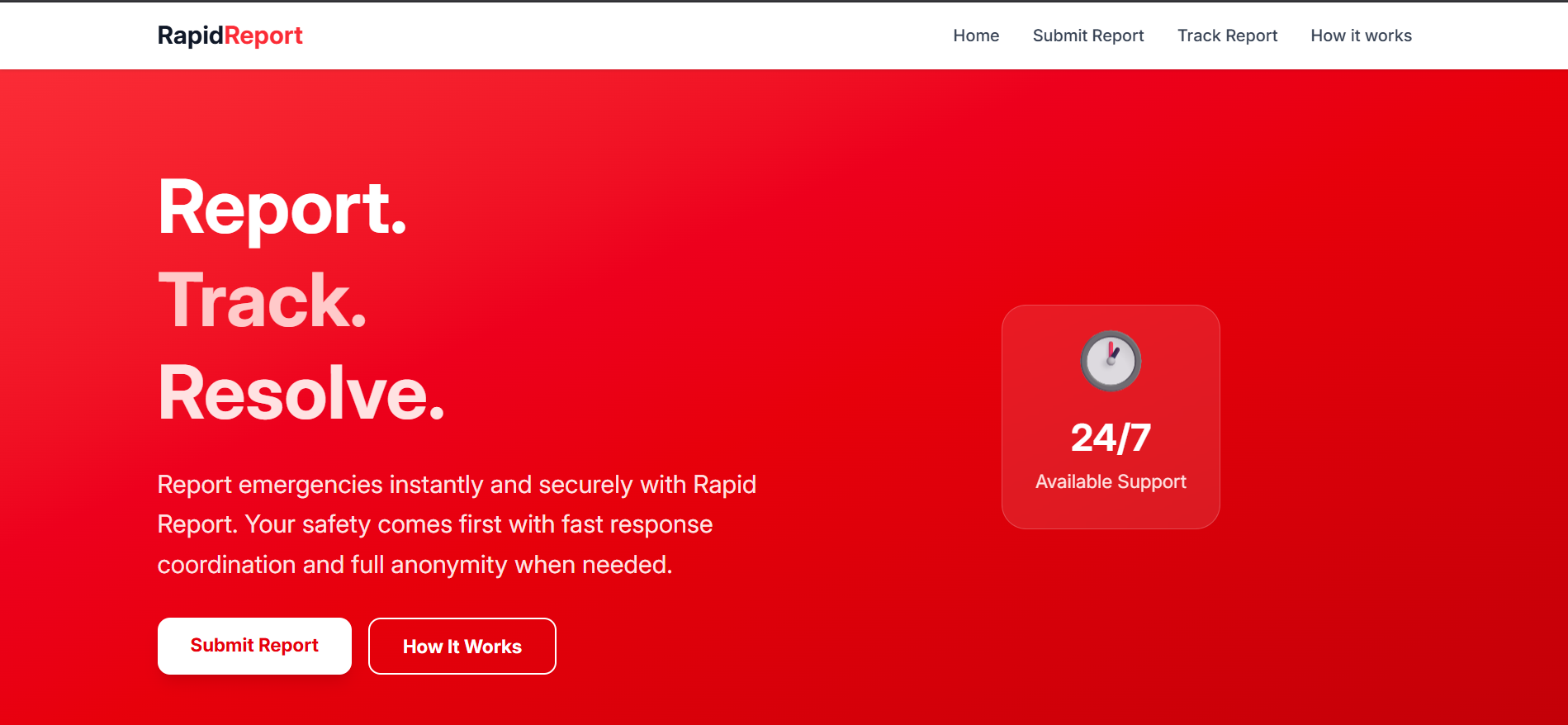
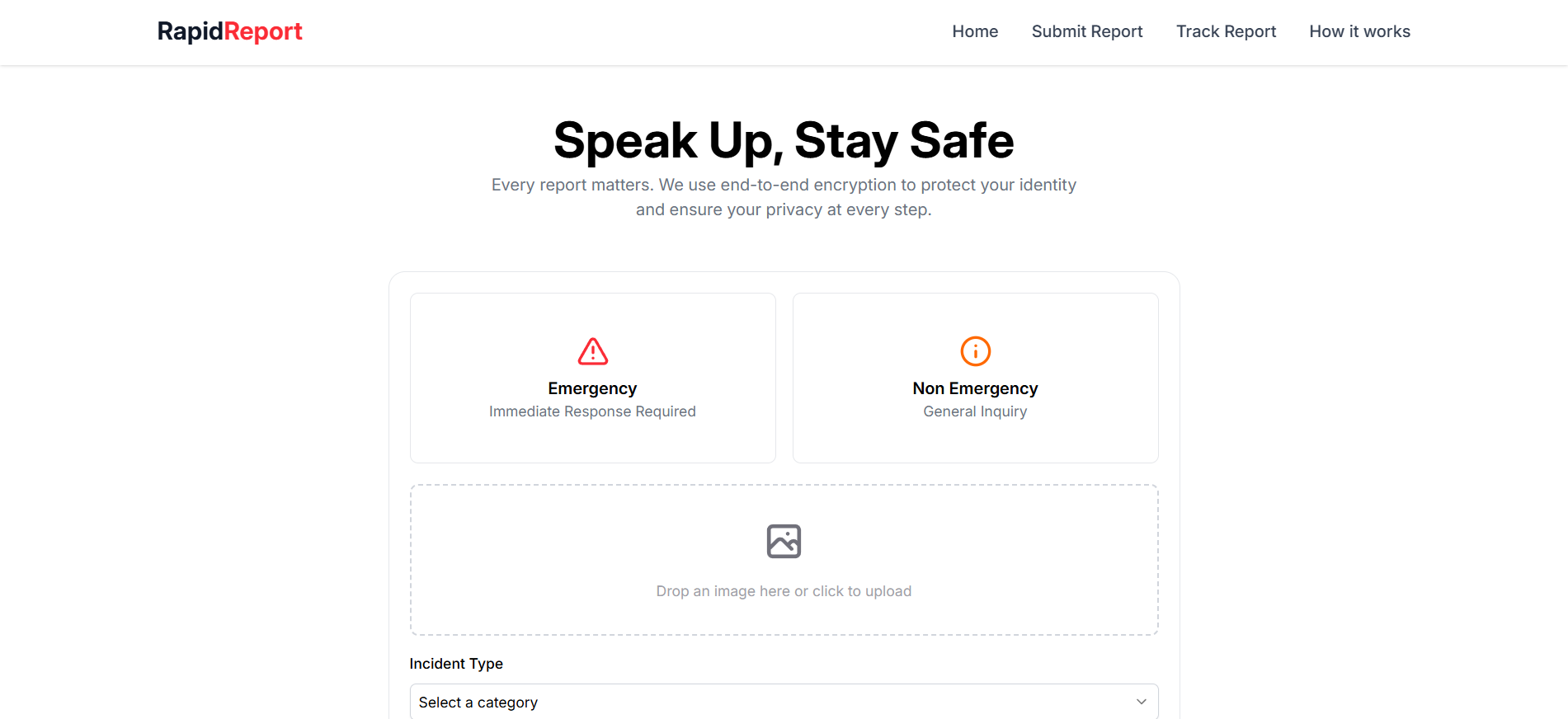
Home Page
-
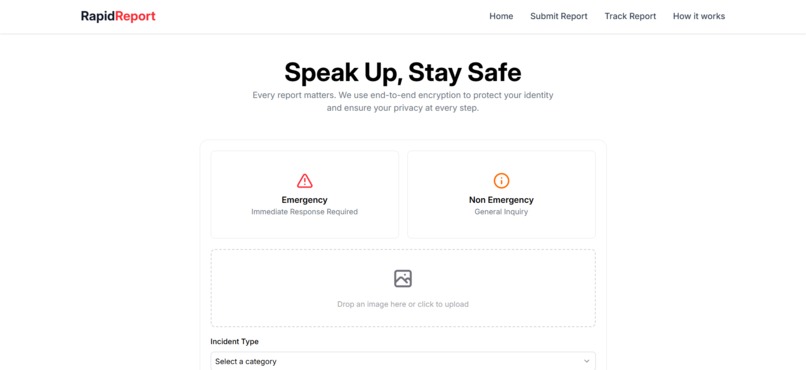
Report Page
-
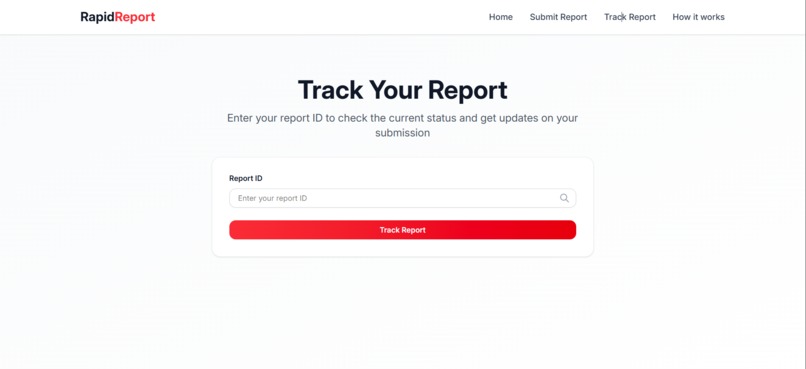
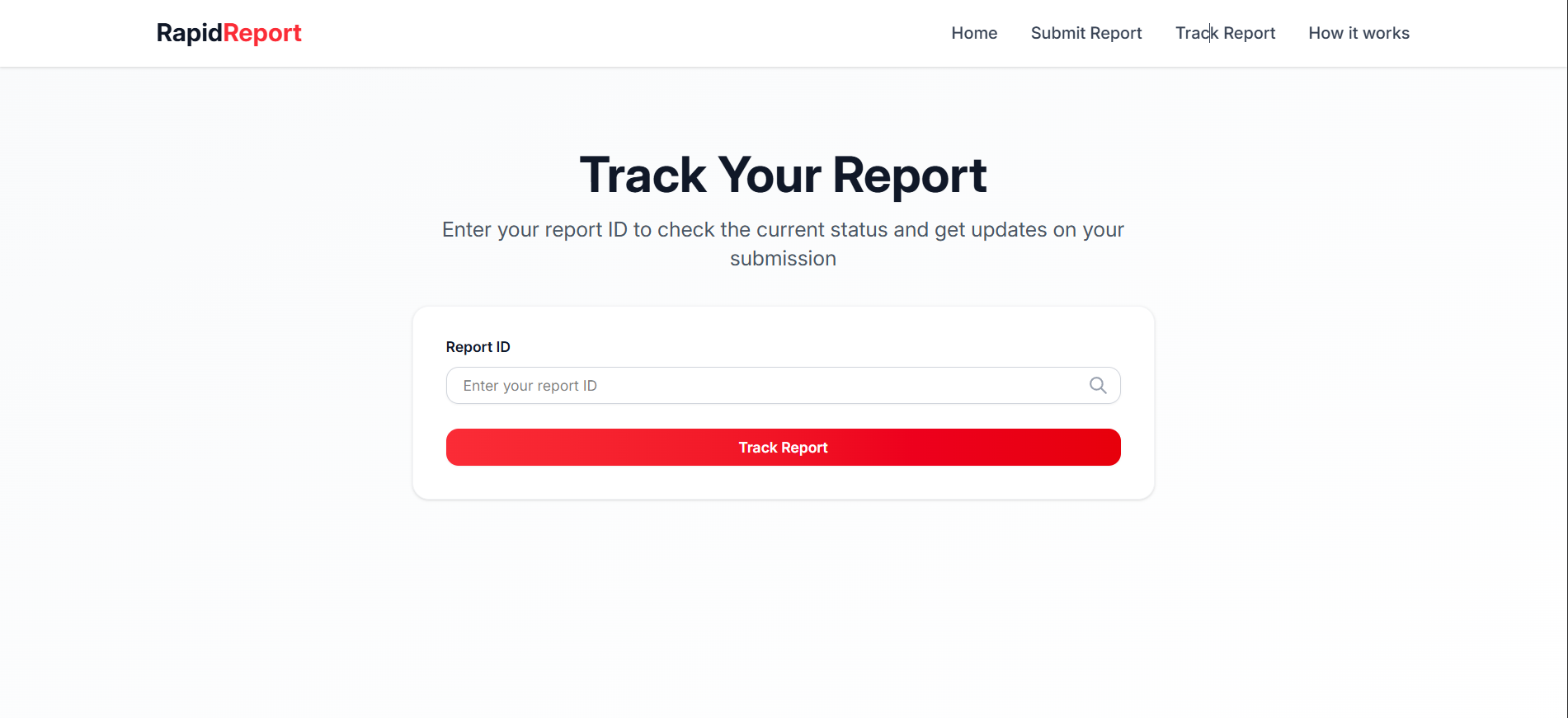
Track Report Page
-
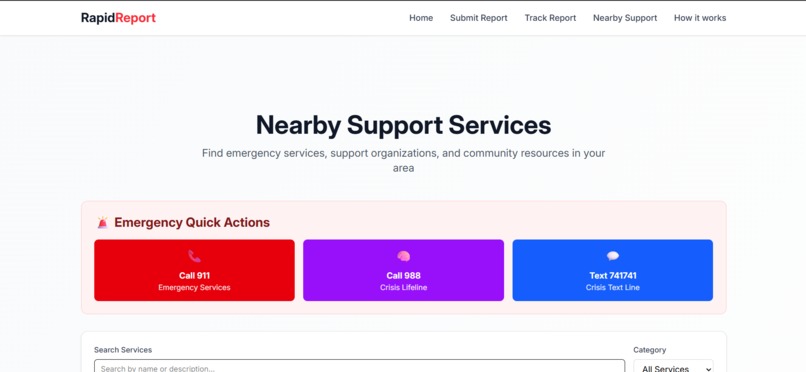
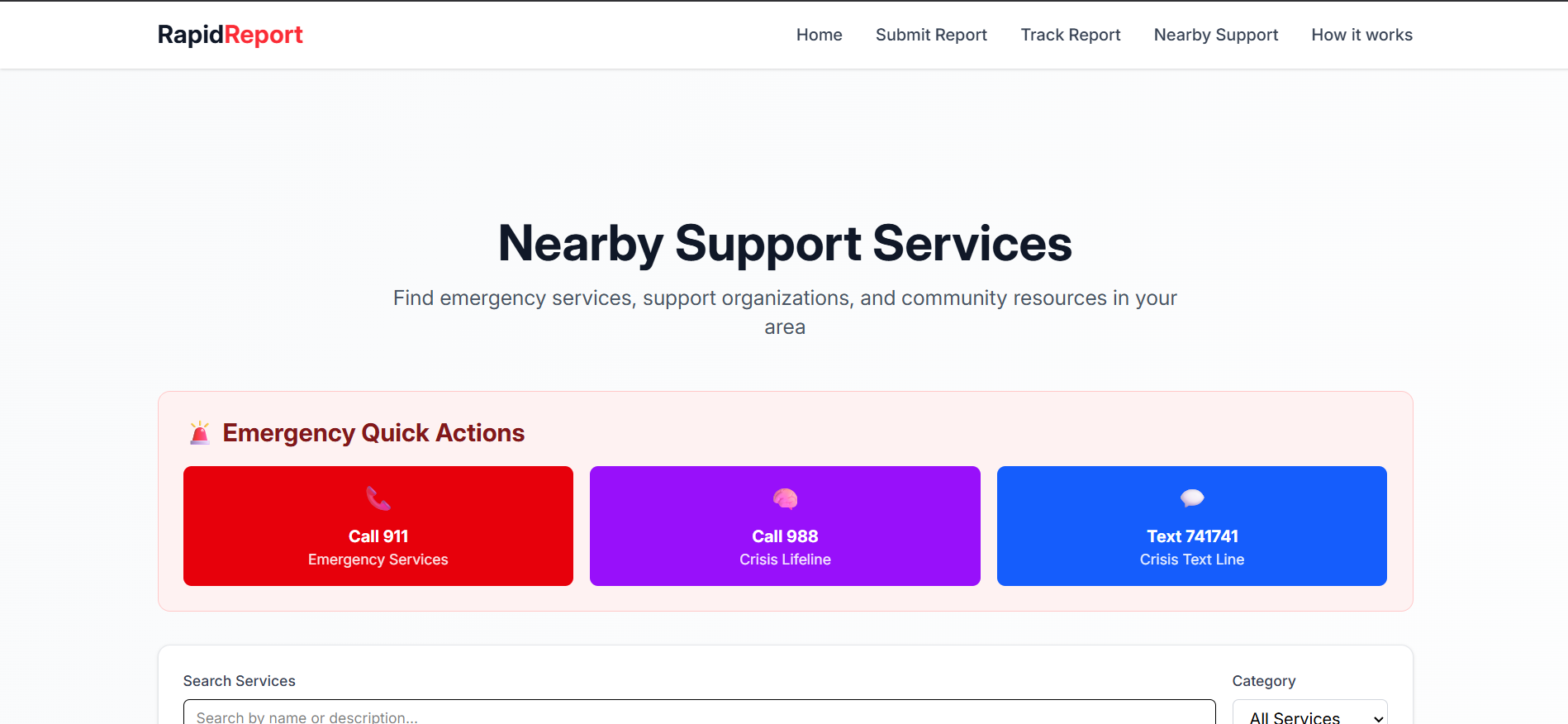
NearBySupport Page
-
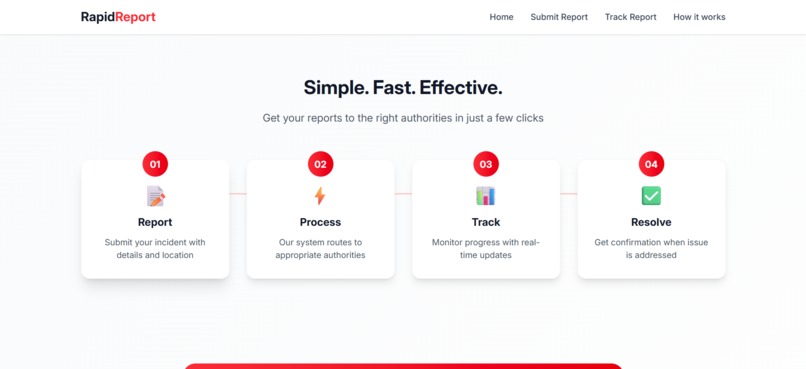
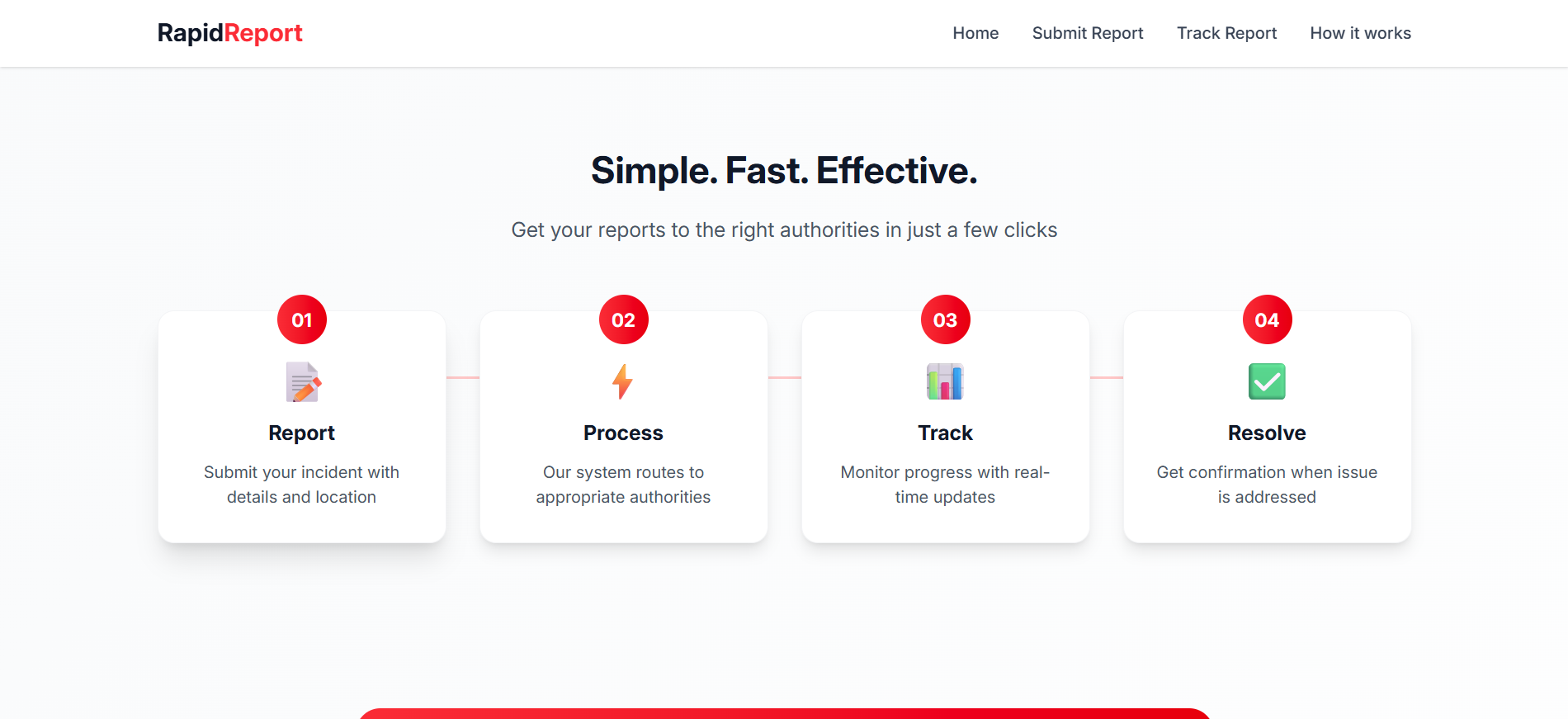
How its work Page, tells about platform.
-
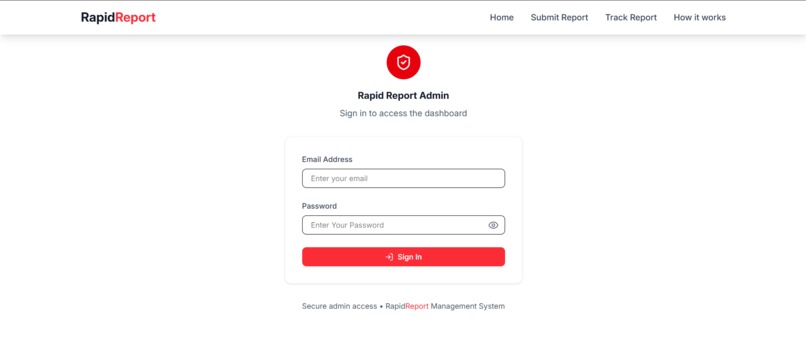
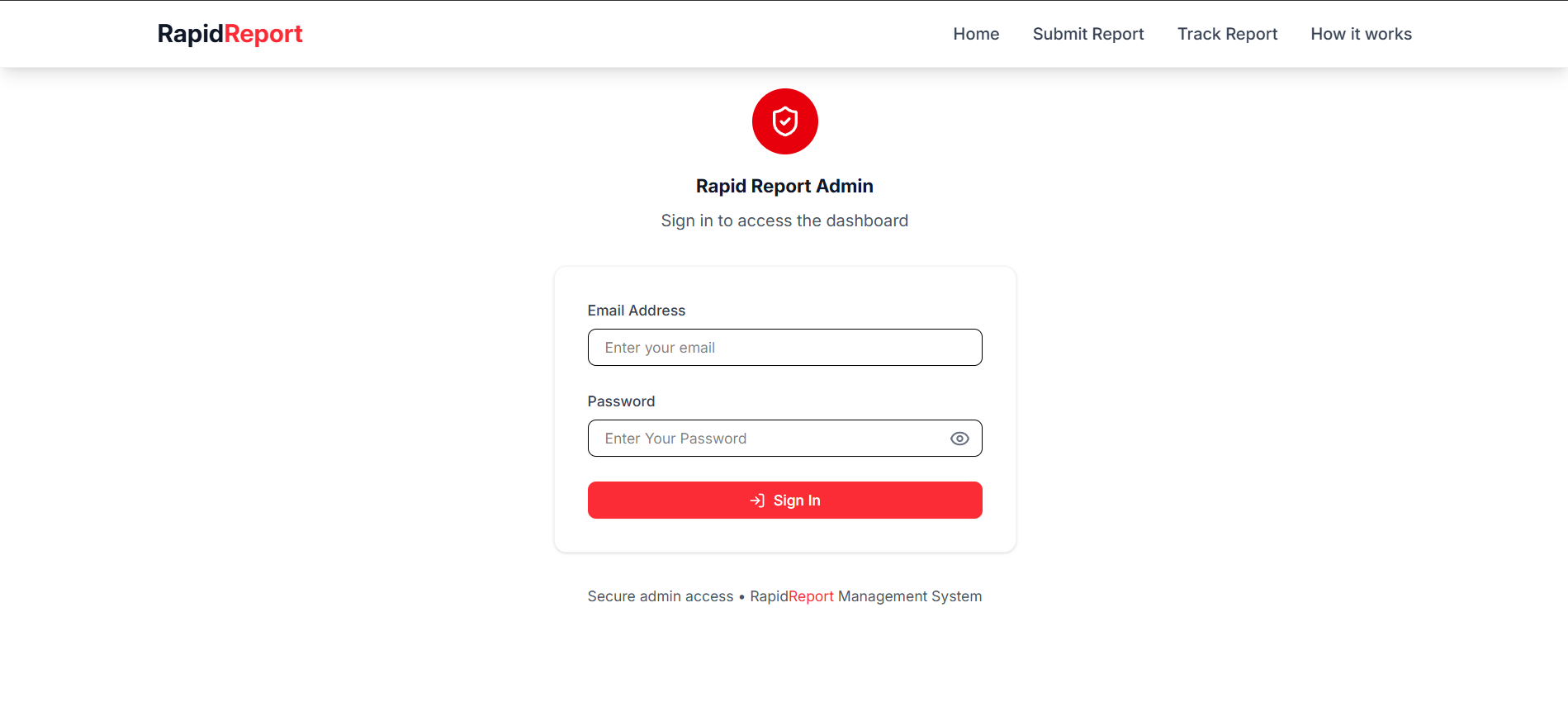
Admin Dashboard Access Login Page
-
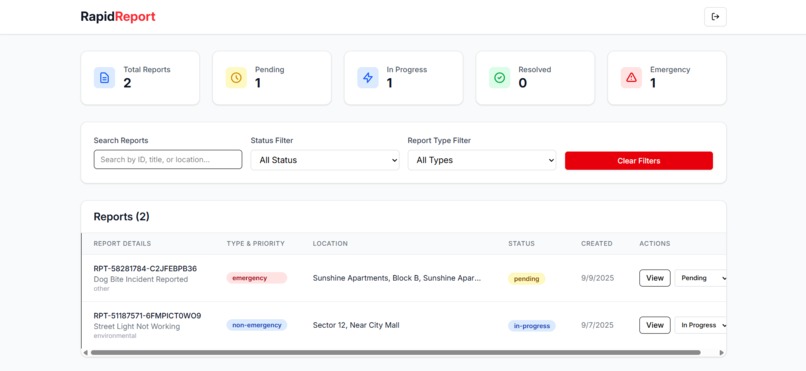
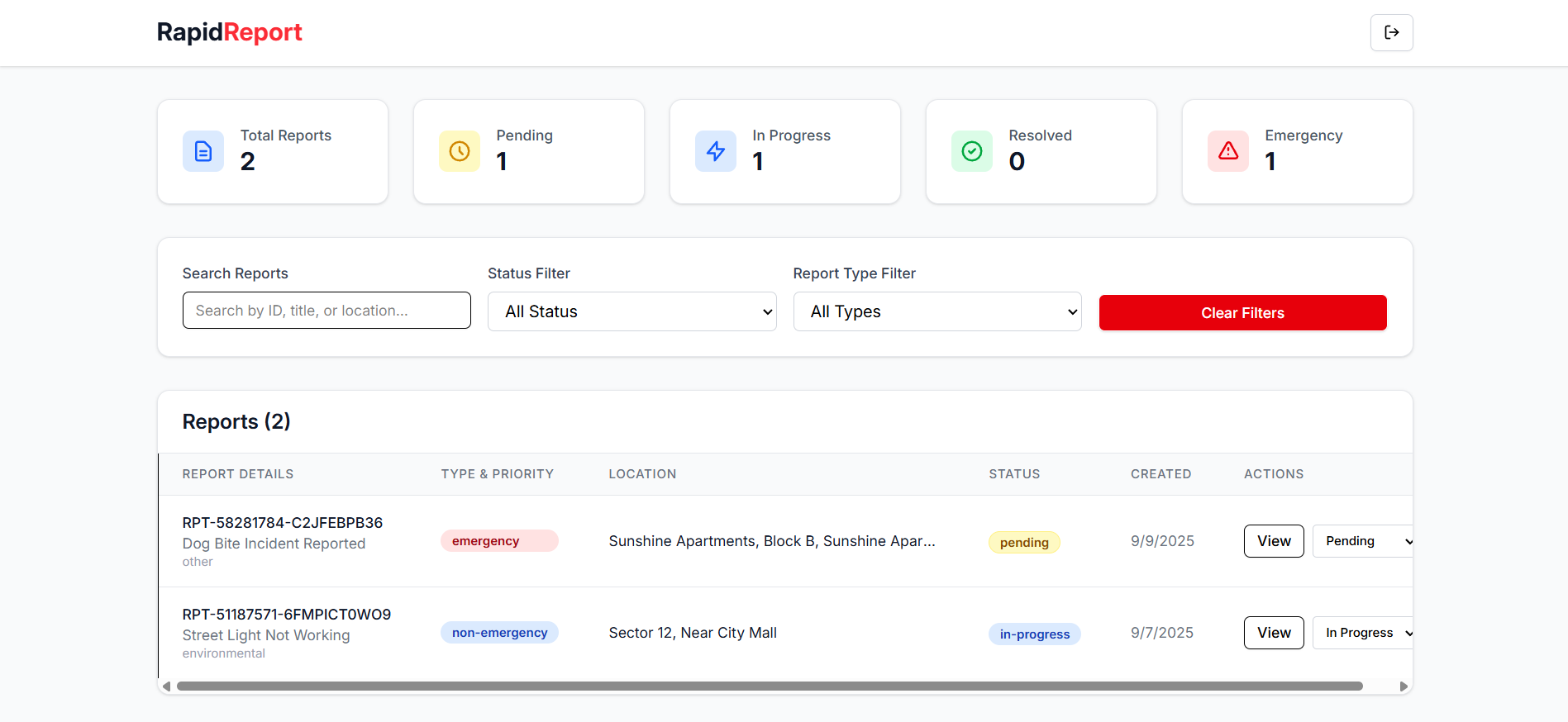
Admin Dashboard Page
Inspiration
Emergencies can happen anywhere, anytime but reporting them is often slow, confusing, or unsafe. We wanted to build a solution where anyone can instantly report incidents, stay anonymous if needed, and get quick help without going through lengthy processes. Our goal was simple: make emergency reporting faster, smarter, and safer.
What it does
Rapid Report is a real-time emergency reporting platform that allows users to:
Incident Reporting: Submit detailed reports with images, location, and incident categorization Location Services: Automatic location detection with multiple fallback methods Report Tracking: Track report status with unique report IDs Admin Dashboard: Comprehensive admin panel for report management Emergency Support: Quick access to emergency services and support resources Responsive Design: Fully responsive across all devices
How we built it
Frontend: Built using React + Tailwind CSS, shadcn for a clean, mobile-first UI. Backend: Powered by Node.js and Express for handling requests efficiently. Database: Uses MongoDB to store reports securely. Authentication & Security: Implemented JWT-based auth and end-to-end encryption for secure communication. Hosting: Deployed on Vercel for frontend and Render for backend services.
Challenges we ran into
Designing a seamless UX that allows users to report emergencies in under 10 seconds. Ensuring data privacy and encryption while keeping the app lightweight and fast. Handling location-based report routing so the right responders are alerted instantly. Balancing performance, security, and scalability during deployment.
Accomplishments that we're proud of
- Built a fully functional emergency reporting platform in a short time.
- Achieved secure, encrypted communication between reporters and responders.
- Implemented optional anonymity, giving users control over their identity.
- Designed a simple, fast, and mobile-friendly interface for quick reporting.
- Successfully integrated real-time notifications for emergency teams.
What we learned
- The importance of UX simplicity in critical situations — every second matters.
- Best practices for data encryption and secure authentication.
- Handling scalable architectures for high-traffic emergency scenarios.
- How collaboration, rapid prototyping, and testing improve reliability.
What's next for Rapid Report
- AI-powered Incident Classification — Automatically categorize reports based on severity.
- Integration with Local Authorities — Enable direct connections with hospitals, police, and fire departments.
- Multi-language Support — Make reporting accessible to everyone, everywhere.
- Offline Reporting — Allow users to submit reports even without internet, syncing when online.
Built With
- axios
- express.js
- jwt
- mongodb
- node.js
- react
- shadcn
- tailwind
- typescript
- zustand

Log in or sign up for Devpost to join the conversation.