-
-
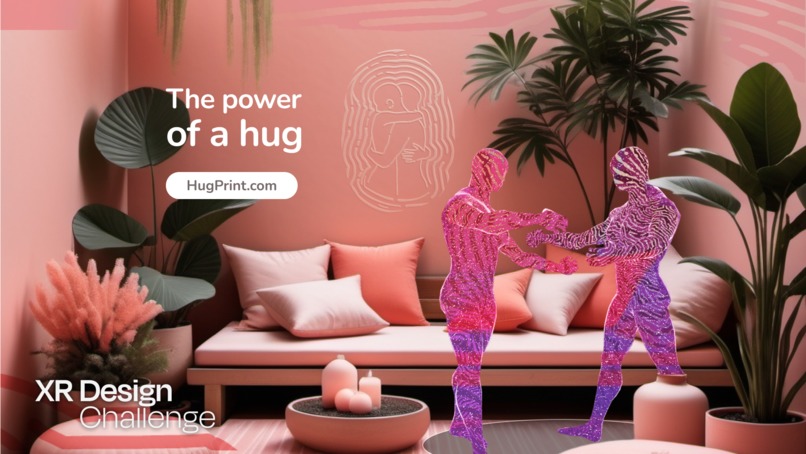
find your Companion
-
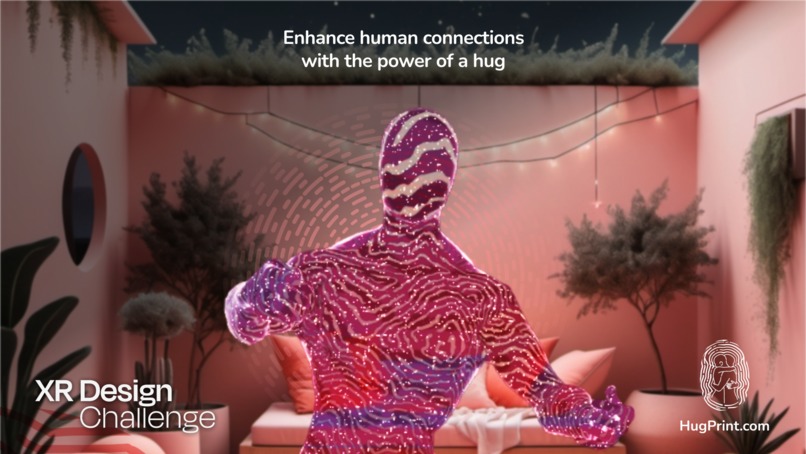
Embarce your companion
-
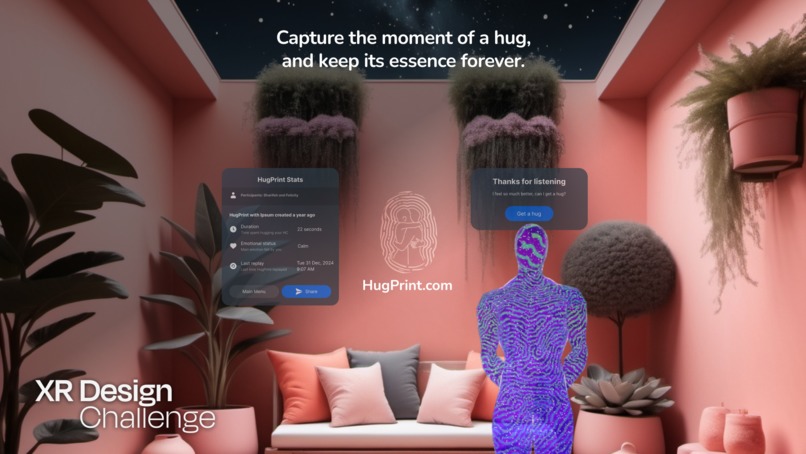
Save the essence of your hug and receive your award
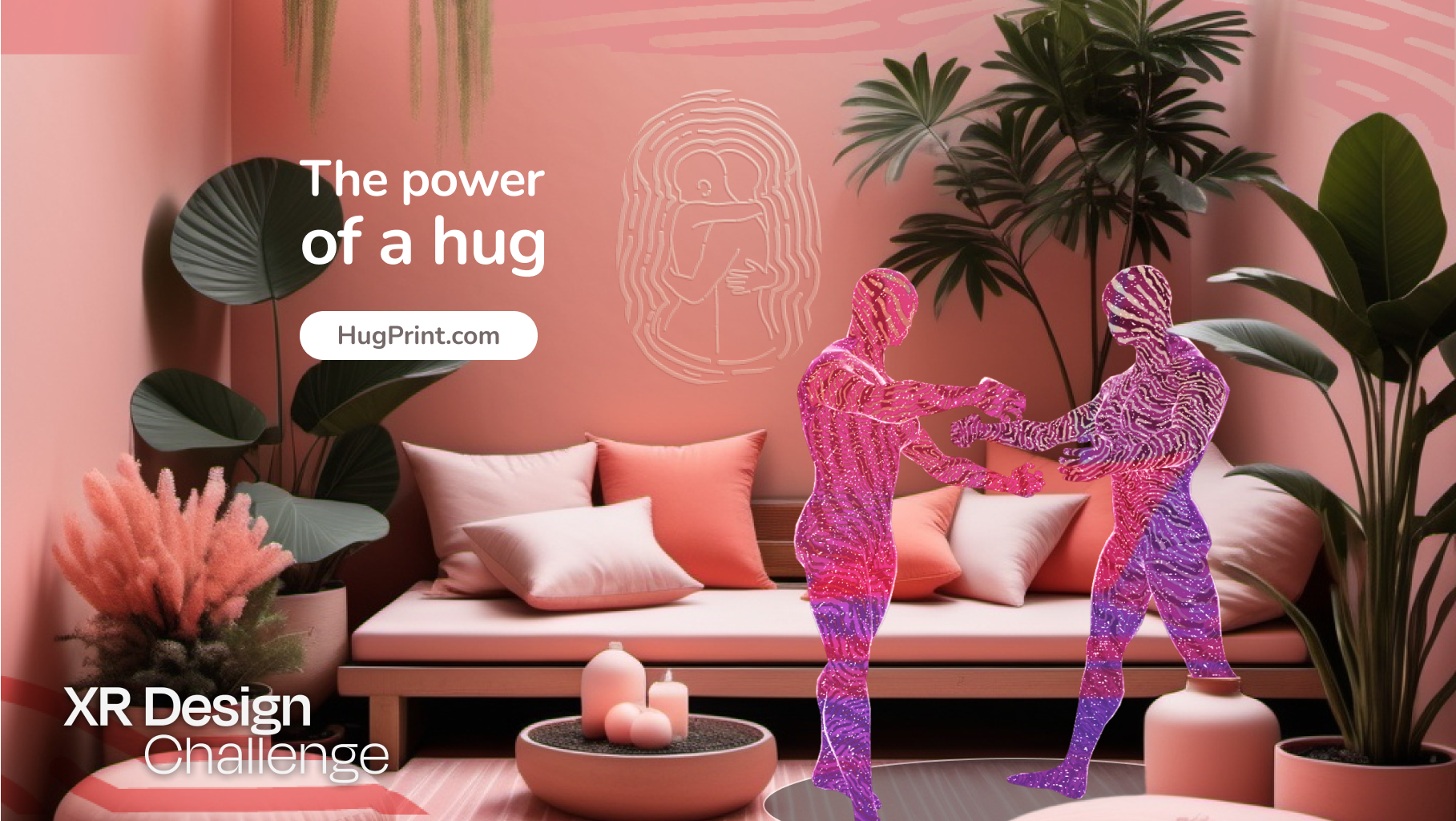
Inspiration
The COVID-19 pandemic amplified feelings of loneliness and isolation, which continue to affect people worldwide. Research highlights the profound psychological and emotional benefits of human touch, particularly hugs, as a powerful way to foster connection and improve mental health. However, modern lifestyles, reliant on virtual interactions, often make such physical connections unattainable. We created HugPrint to help people feel close to each other even when they’re far apart, using XR technology.
What it does
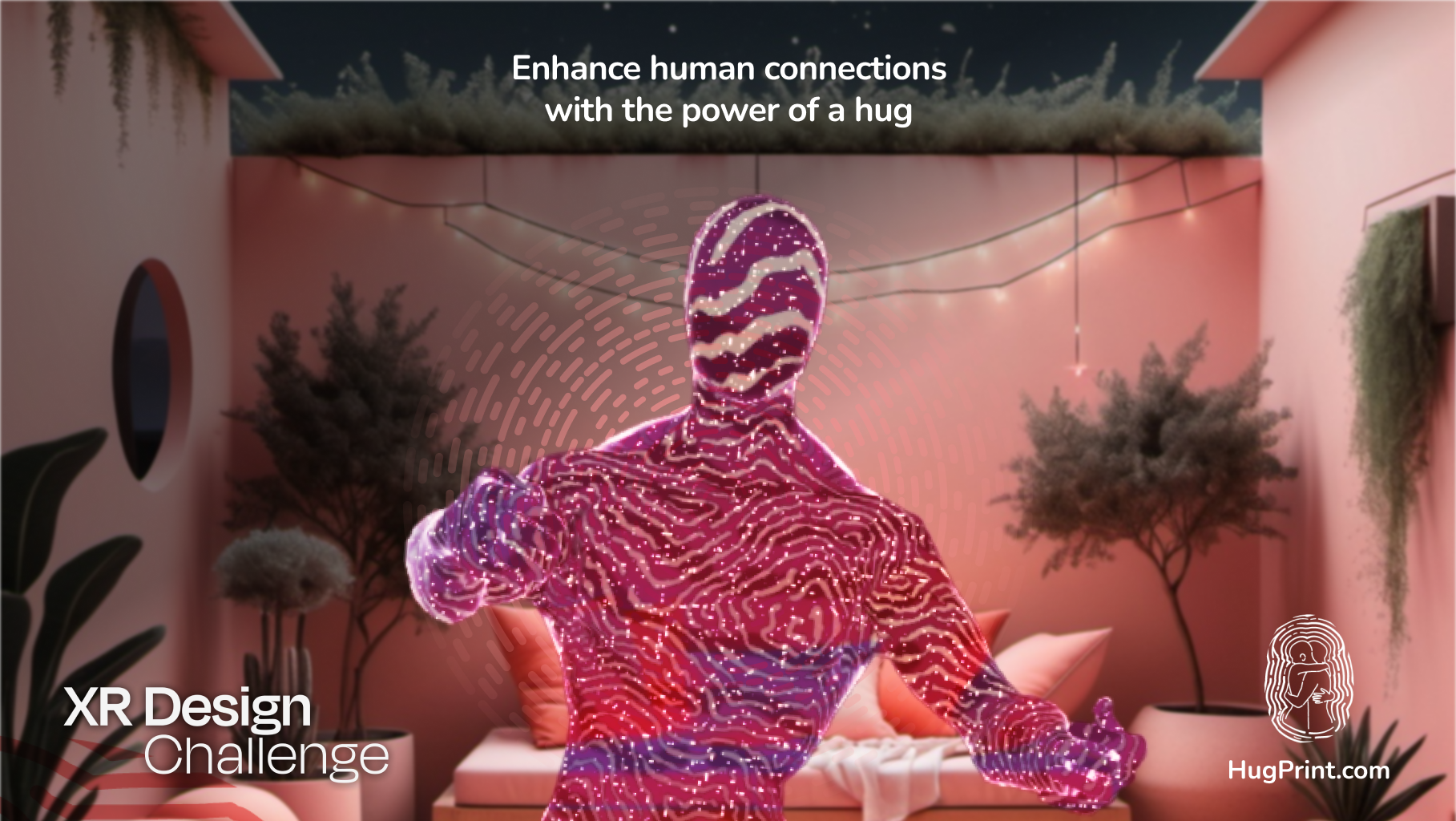
HugPrint is a mixed reality (MR) experience that makes you feel like you're getting a real hug. It uses touch feedback, realistic settings, and emotional stories to create this feeling. With HugPrint, you can make a special keepsake called a "HugPrint" that captures the emotional and physical feeling of a hug, just for you.
How we built it
First, we relied on Figma. The user flow and user story were carefully designed on Figma. Additionally, all the necessary artifacts were gathered and categorized precisely on different boards as well as 2D-phantom touch simulation as a key concept within Figma. Next, we used ShapeXR for rapid prototyping of XR environments and interactions, enabling interaction testing and concept validation, which allowed for quick iteration on the hug experiences and user flow. Meanwhile, the technical team began designing avatars, VFX, environments, and statues using Blender. They also used Unity to build engaging and interactive XR environments. These environments can activate visual effects (VFX) particles, toggle objects on or off, start and stop animations, and adjust shader settings. The project is designed for the Meta Quest 3S, which is wireless and user-friendly. Currently, the experience is available in single-player mode.
User Experience
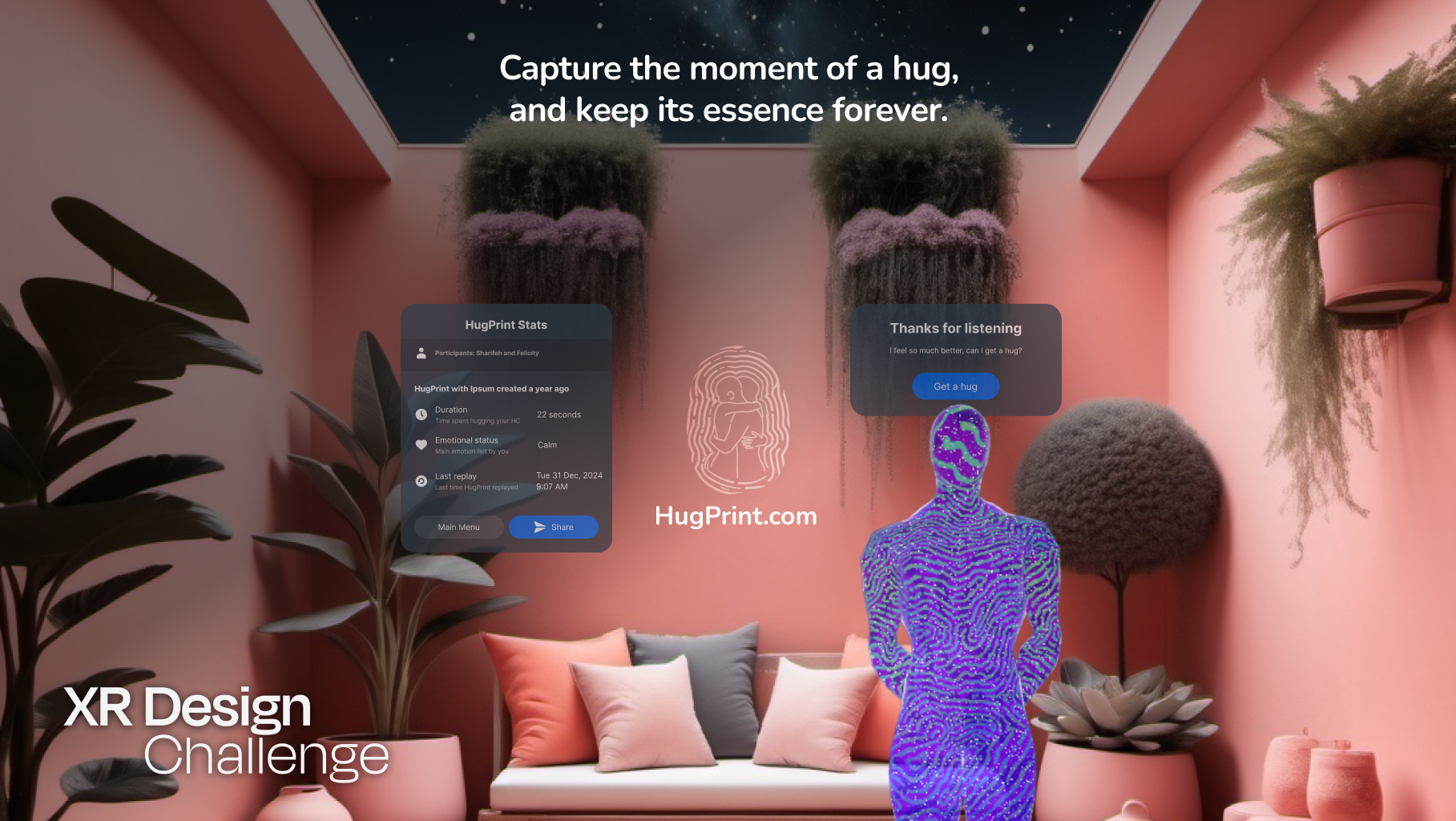
Users wear a VR headset and find themselves in a MR environment, dim light and calm audio creates a safe environment to immerse. Users will first learn to control their body by interacting with the environment, changes created by their body movements will lead them to find where their hugging companion is hiding. More touching stories around hugs unfold as the users hug the genderless and transparent avatar. Seeing the model they are hugging gradually lightened up, users will experience the feeling of hug through a combination of haptic feedback, immersive sounds and touching stories around how touch plays a significant part in social interaction. As the companion fades away after a hug, users see an artifact of their hug at the final hugging position. When the user points their hand at the artifact, it comes closer to them. Each hug leaves a unique mark and tells a story, allowing users to save their own hug as an artifact and revisit the moment whenever they wish.
P.S. Self-hugging is one of the most significant types of hug that we strived to develop through XR technology. HugPrint's single-player mode extends this concept through XR technology. We use a companion to help people see themselves more clearly and feel a stronger connection with it.
*for further information, Click here
Challenges we ran into
- Designing and presenting an engaging user story around hugging that keeps users curious, eager, and motivated to find their HC and continue interacting with it.
- Refining Phantom touch simulations to ensure realistic and impactful tactile feedback.
- Ensuring accessibility while leveraging advanced hardware features.
- Designing a more humanoid avatar.
- Creating an environment that evokes feelings of connection and belonging.
- Guiding users in a way that tracks their body and hand movements.
Accomplishments that we're proud of
The integration of Phantom touch technology has allowed users to experience a deeply immersive and emotionally engaging hug. We are proud of the ability to personalize each user's interaction, creating a meaningful experience that transcends typical virtual communication. This is the next level of video calls : Feel the presence
What we learned
While working on HugPrint, we discovered important lessons about how technology and emotions can come together. We realized how crucial it is to create a user experience that feels both emotionally meaningful and easy to use. Designing avatars and virtual spaces that connect with people’s need for closeness was harder than we thought. It required a strong understanding of human feelings and how to recreate them in a virtual world. We also saw how important it is to quickly test and improve ideas, especially when using tools like ShapeXR, to make interactions better. Working closely with both the technical and design teams was key, as it helped us match the visuals and interactions with the emotional goals of the project.
What's next for HugPrint
Next, we plan to improve the single-player by adding more Phantom touch features as well as start multi-player mode prototyping . We will also test these with users to make sure they create strong emotional connections. Additionally, we will look for opportunities to work with XR hardware companies and experts in emotional intelligence. We will also use AI to make the experience better by understanding users' emotions and adjusting the game to fit their feelings.
Checkout some of these photos of our hack in action!!
Click Here to find all supplementary files
ShapesXR prototyping dashboard
Click here
Landing page
Click here to go to landing page


Log in or sign up for Devpost to join the conversation.