-
-
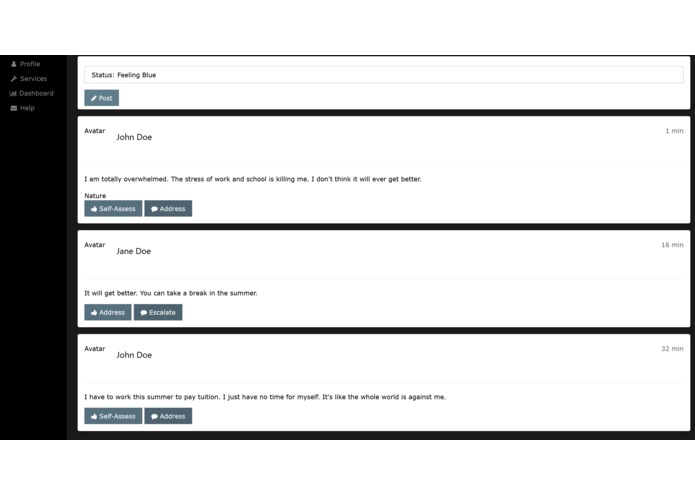
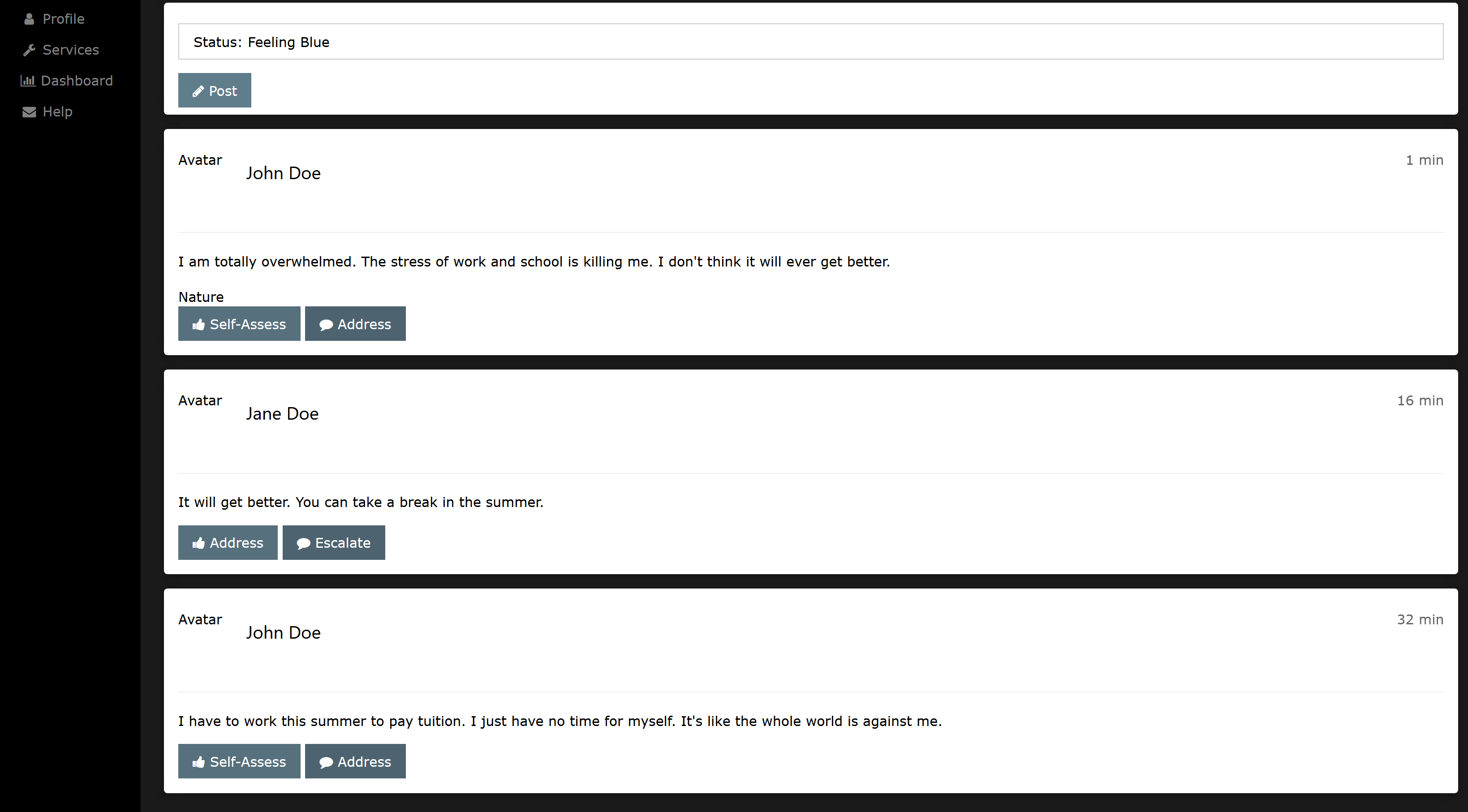
HUE UI Messaging concept
-
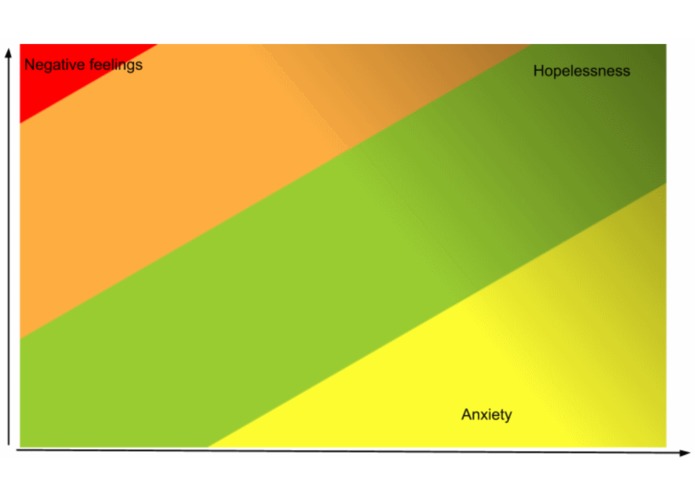
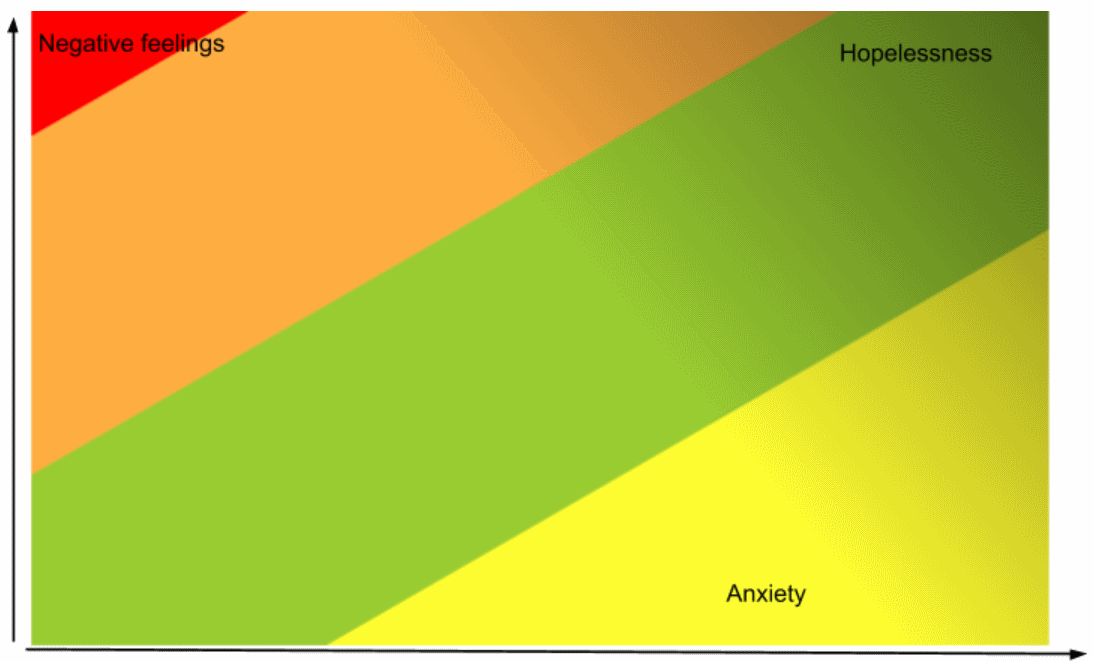
Color mapping where hue & tone would indicate levels of negative sentiments, anxiety, and depression
-
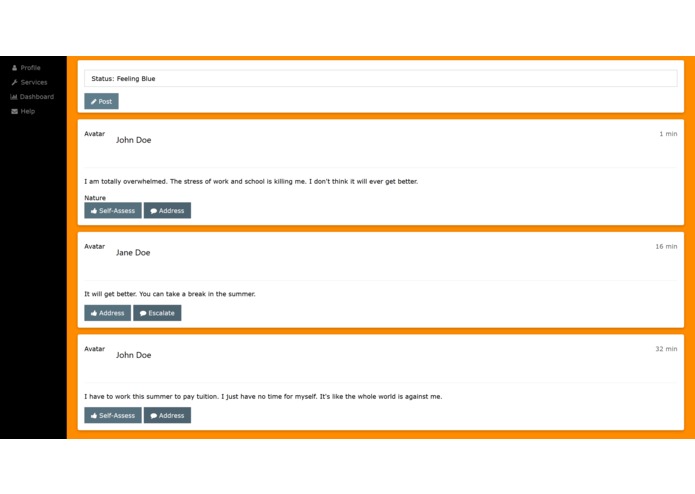
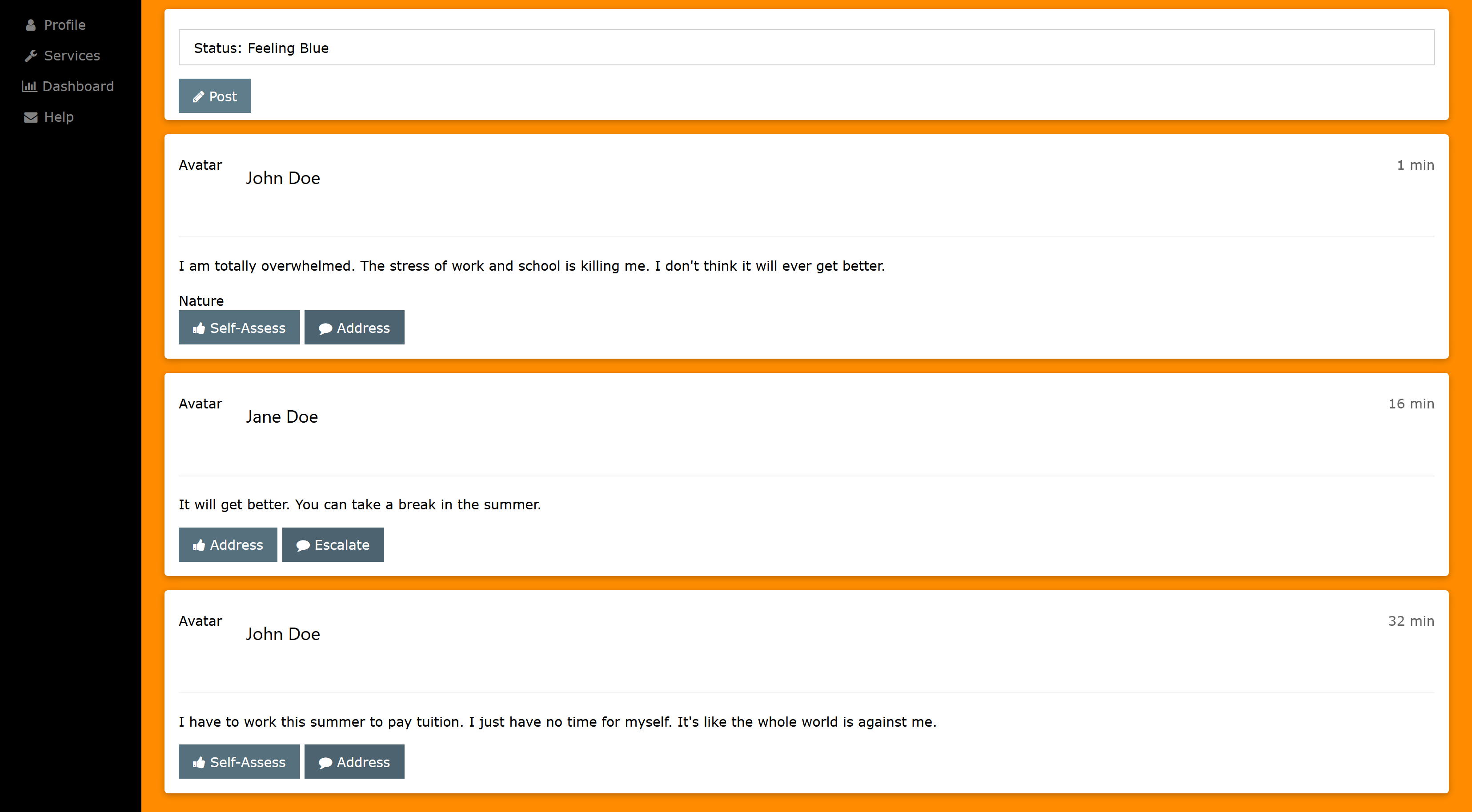
HUE UI after transition based on Tone of Conversation
-
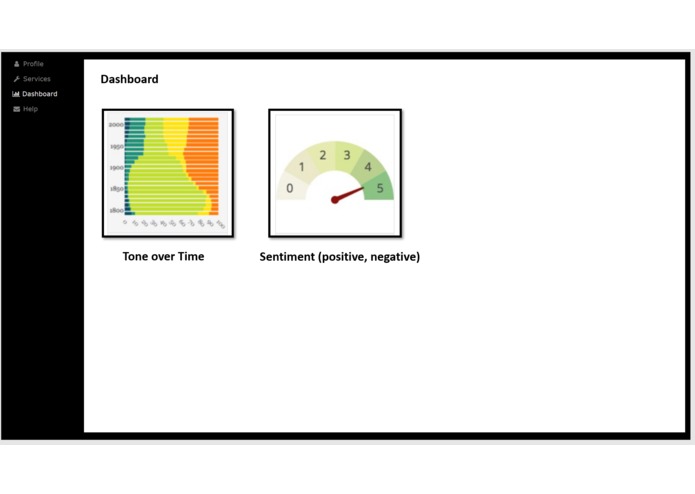
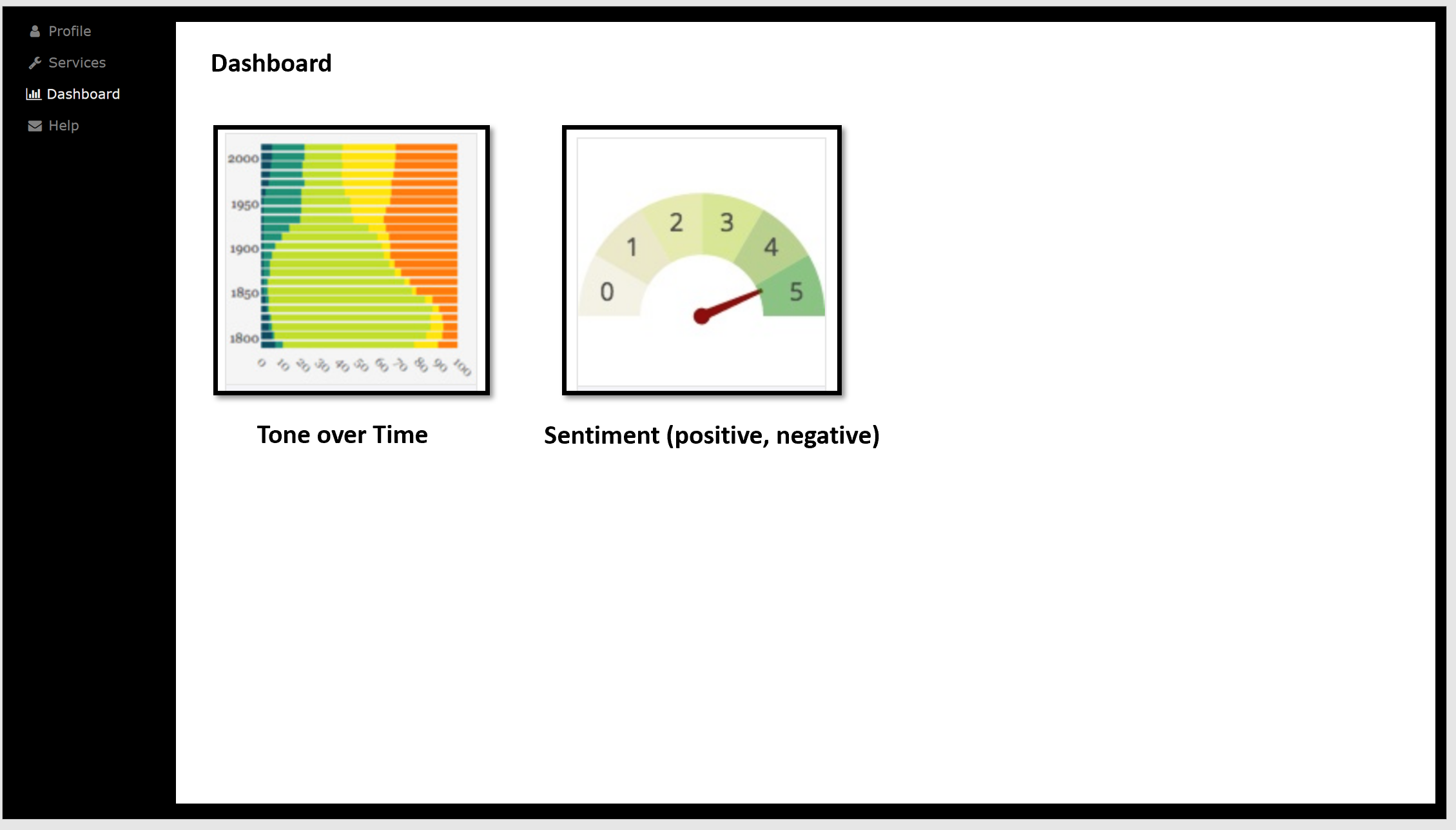
Dashboard
Inspiration
Our goal was to tackle the difficult issue of suicide and self-harm. Many online users are more willing to intimate their emotions in online than in person. This includes online forums, social media, and messaging systems. The sense of anonymity of online communication allows people to freely express their thoughts, real world pressures and anxieties. We believe that any loss is one too many, and felt the availability and accessibility to digitized information provides a possible way for early suicide detection and prevention.
What it does
The goal of text-based suicide detection is to determine the emotional state of a person. The application analyzes posts and message exchanges to assess whether they have serious suicidal ideations. With respect to this, we wanted to empower people and their loved ones to self-assess, address, and escalate issues well before they become another statistic.
How We built it
We envisioned project as an application that would wraps around messaging platforms and users' online posts (such as Twitter and Reddit). We used Google Cloud Platform's natural language API to quantify the sentiment and category of textual information (the data used in analysis is an opt-in process for all involved participants). We would augment the quantity with our own machine learning model trained with data following the research at [1]. This stand-in model would be deployed to live conversations.
Challenges We ran into
Ingestion of data, both to train and live-analyzed, given that there is a lot of "false-positives". This was also one of our first times building a full stack web application for demo. APIs and frameworks lend a hand but they still require a lot of configuration that isn't straightforward.
Accomplishments that We're proud of
We worked as a cohesive team and were able to identify the major parts of the project to work on. We practiced Scrum and adapted and communicated smoothly (even through the cloudiness of sleep deprivation).
What We learned
We learned that people have the ability to encode many possible sentiments that machines running natural language processing still have trouble identifying. The collection human our experience, cultural zeitgeists, and social trends are things that are too fuzzy for machines to categorize (for now).
What's next for Hue
(The sentiment analysis and messaging demo are not complete as we still need to work on the backend and model deployment.)
We had the concept of representing a person's mental state with a hue and tone. This would be a visual "scoring" that they could refer to and also be notified of if their condition was critical (e.g. they had the intent of harming themselves or others). We felt that arbitrating this score ourselves wouldn't best serve the community (if the application were in production), and so we would have to consult mental health professionals about how best to convey this information.
References
Shaoxiong Ji, Celina Ping Yu, Sai-fu Fung, Shirui Pan, and Guodong Long, “Supervised Learning for Suicidal Ideation Detection in Online User Content,” Complexity, vol. 2018, Article ID 6157249, 10 pages, 2018. https://doi.org/10.1155/2018/6157249.

Log in or sign up for Devpost to join the conversation.