-
-
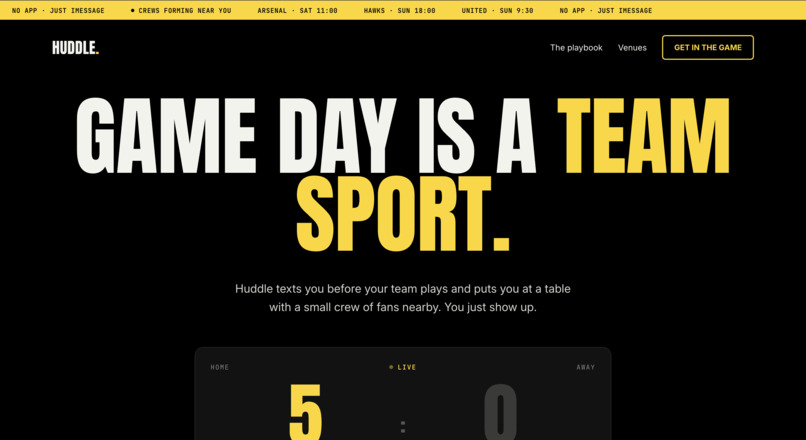
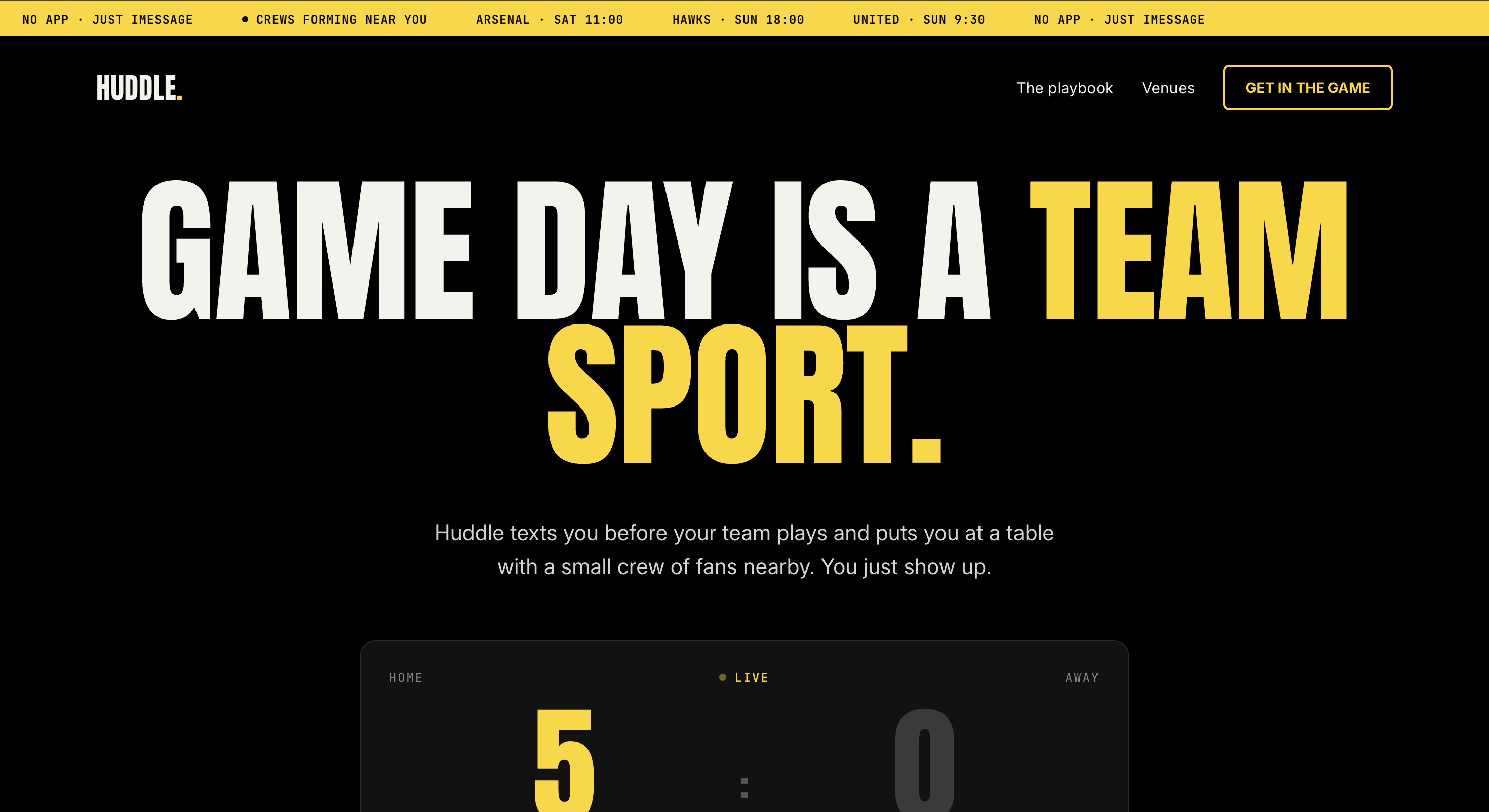
landing page
-
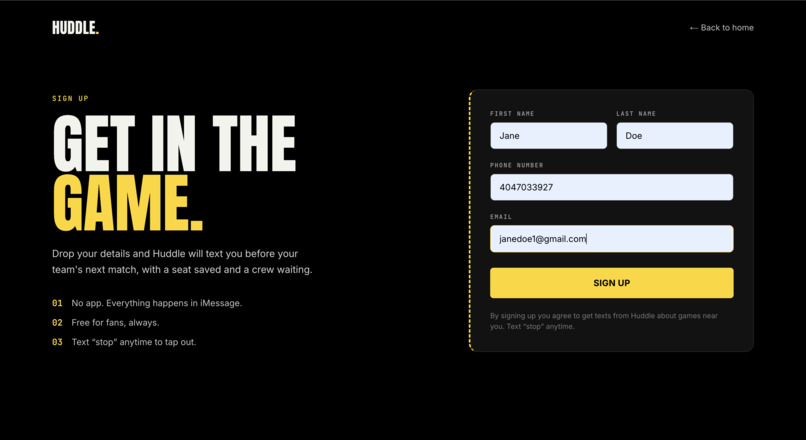
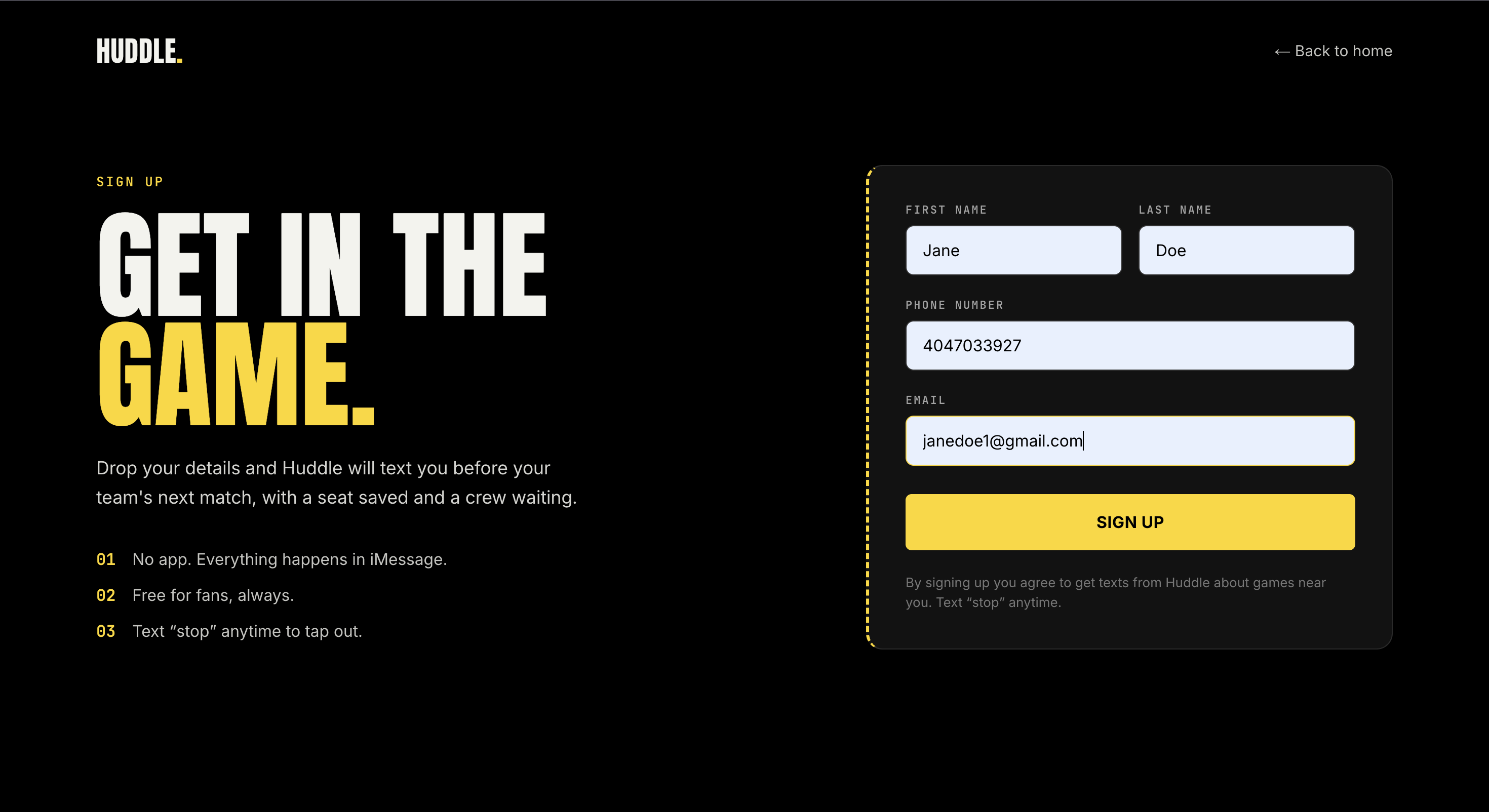
sign up page
-
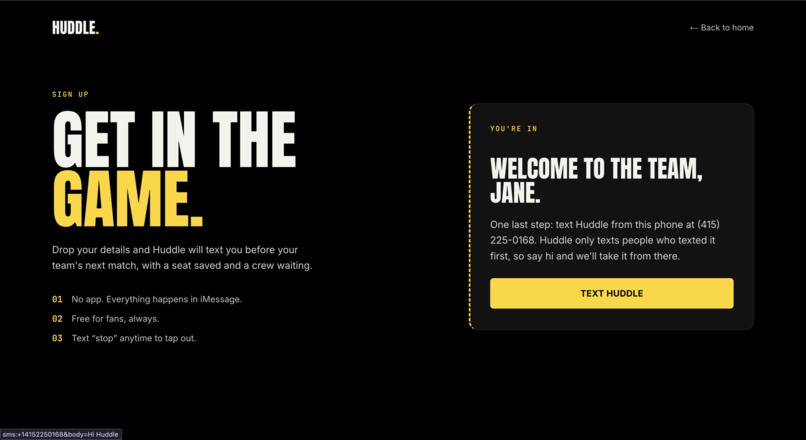
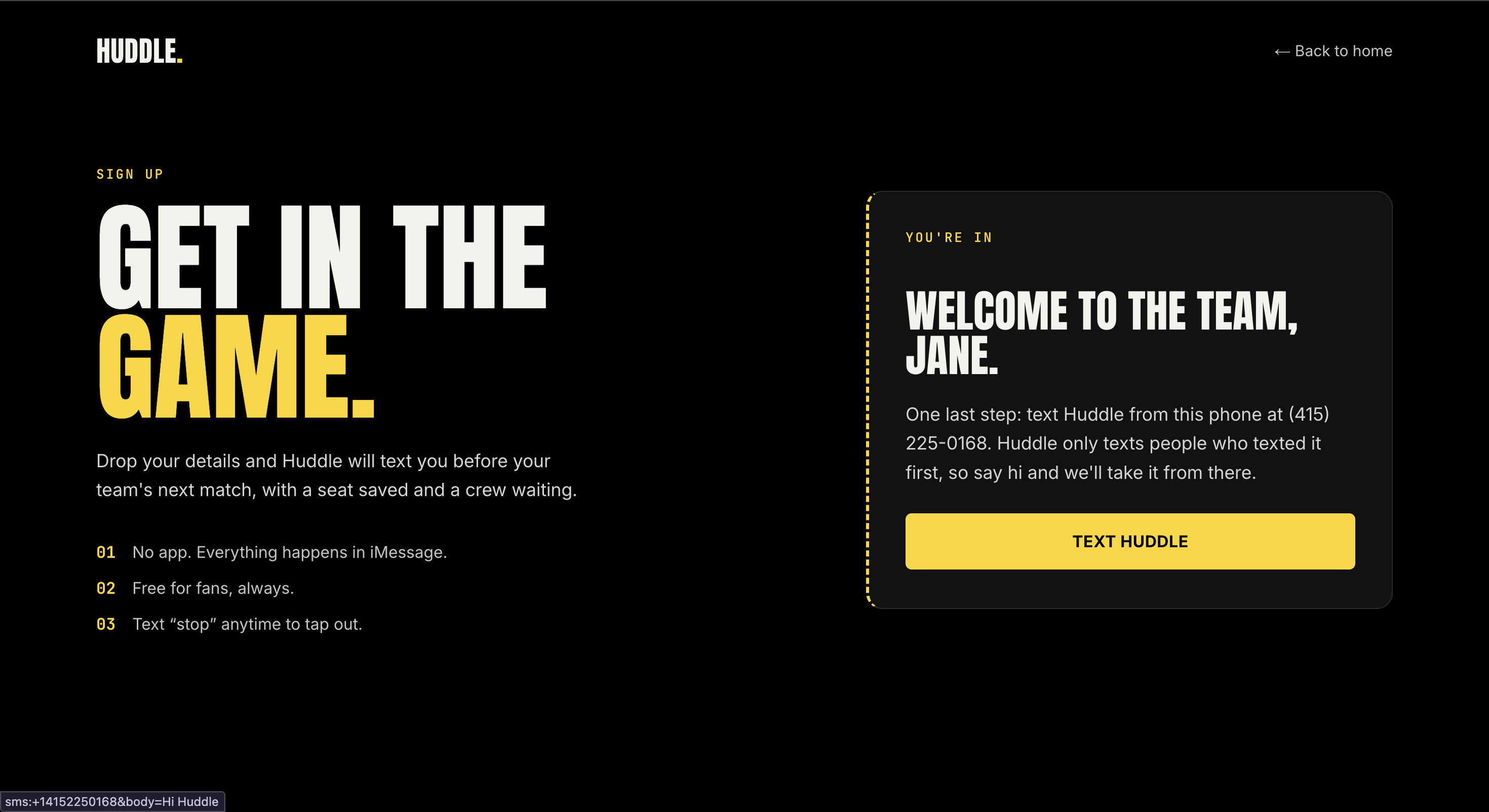
confirmation message
-
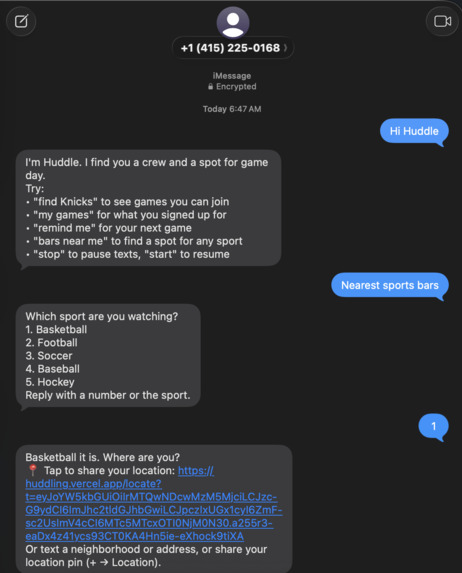
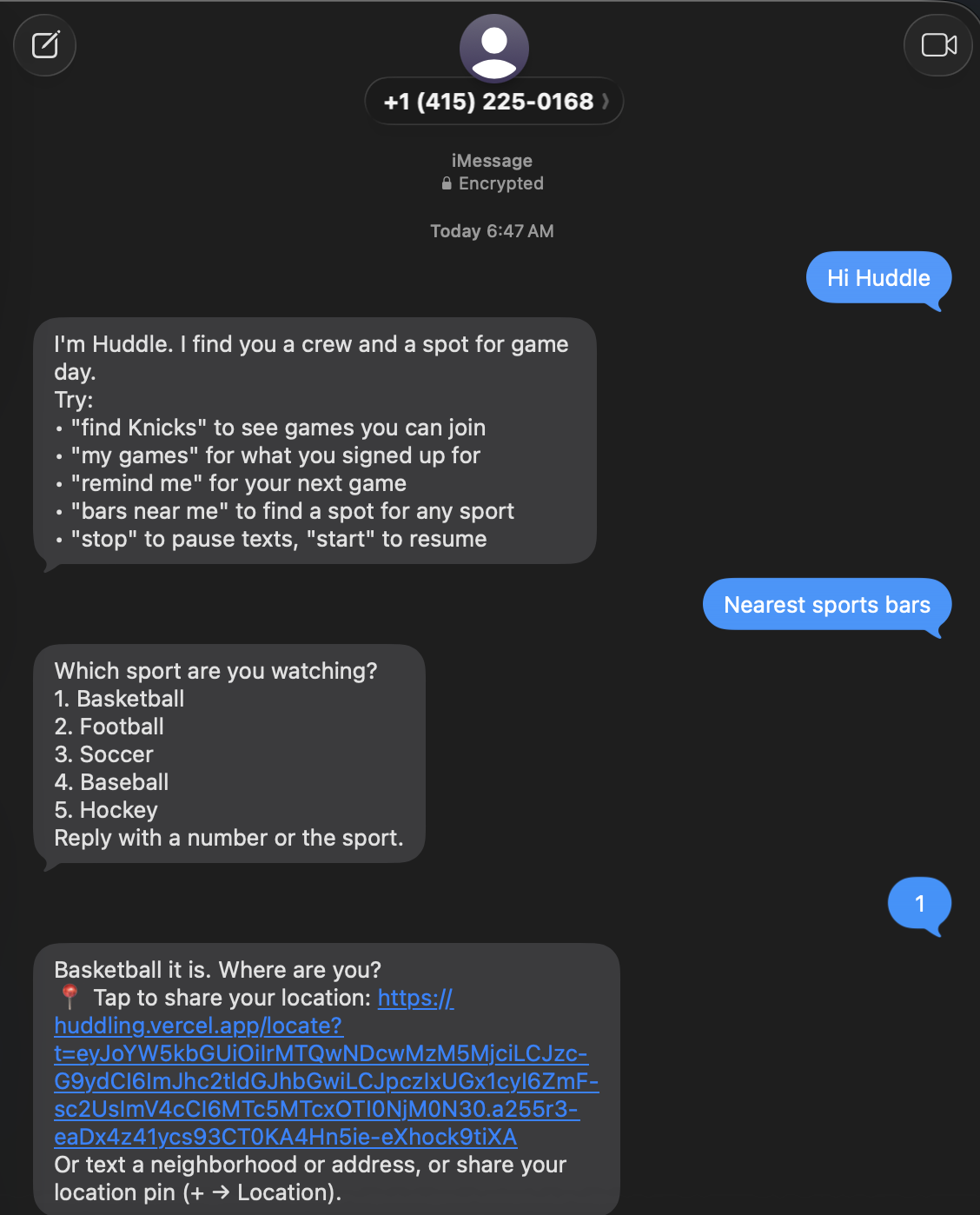
chat with photon
Inspiration
Sports have always had the power to bring people together. But what happens when you love a team and have nobody to watch the game with?
For students arriving on a new campus, people moving to unfamiliar cities, and fans whose friends don't share their passion, game day can become an unexpectedly isolating experience.
And this problem extends far beyond sports.
In 2023, the U.S. Surgeon General declared loneliness and social isolation a major public-health concern. The advisory highlighted that approximately half of U.S. adults reported experiencing loneliness, while Americans' time spent with friends has declined significantly over the past two decades.
At the same time, watching sports has become increasingly fragmented. Following your favorite teams can require multiple streaming subscriptions, making the experience expensive and inaccessible for some fans.
We saw an opportunity to address both challenges through something people already love: sports.
Existing platforms can help fans discover where games are being shown. But finding a sports bar doesn't necessarily mean finding someone to watch with.
That's why we built Huddle: a platform that helps fans find not just the game, but their people.
Our vision is to turn strangers into communities, one game at a time.
What it does
Huddle is a location-based sports community platform that helps fans discover nearby watch parties, connect with fellow supporters, and organize shared game-day experiences.
Instead of spending hours searching for a venue or hoping to meet another fan, users can interact with Huddle through a web application and an iMessage-based assistant.
Huddle brings together several capabilities:
Personalized fan onboarding: Fans can register, select their favorite teams, and provide preferences that help personalize their experience.
Conversational assistance: An iMessage agent responds to fan requests, helps users explore games, and guides them through available options.
Location-based venue discovery: Google Places helps surface nearby restaurants and sports venues, with Google Maps links for directions.
AI-assisted recommendations: Google's Gemini API helps rank potential venues according to preferences and context.
Crew matching: Our matching logic is designed to bring together small groups of approximately 4–6 fans, considering location, game preferences, travel distance, and age eligibility.
Crew and hosting experiences: Web interfaces demonstrate how fans can view watch-party groups and explore organizing gatherings.
The idea is simple: Why watch your team alone when you could celebrate with people who love them just as much as you do?
Huddle is designed to make those connections easier, without requiring users to download another dedicated messaging app.
How we built it
We developed Huddle as a full-stack web application, combining modern web technologies, AI-powered recommendations, location services, and conversational messaging.
Our frontend uses Next.js, React, and TypeScript to provide a responsive experience for discovering games, registering as a fan, exploring venues, and viewing crew and hosting pages.
The backend uses Node.js, Express, and TypeScript, exposing API endpoints for fan registration, game information, venue discovery, and other application functionality.
For conversational messaging, we integrated Photon Spectrum, allowing Huddle's agent to interact with users through iMessage. The agent processes incoming messages, recognizes user intentions, retrieves relevant information, and generates conversational responses.
We used Google Maps Platform and Google Places API to discover nearby venues and generate directions, while Google's Gemini API assists in ranking recommendations based on user preferences.
Our crew-matching logic considers geographical proximity, travel-radius constraints, and venue eligibility to identify potential groups.
We also implemented a storage layer supporting local development and Redis-backed persistence, and used Vercel to deploy the web application and Express API.
Throughout development, we collaborated using Git and GitHub, worked across frontend and backend branches, and validated core functionality using automated tests.
Challenges we ran into
Building Huddle meant connecting several systems that weren't originally designed to work together, all within the time constraints of a hackathon.
a. Integrating iMessage with a full-stack application
One of our biggest challenges was integrating Photon Spectrum into Huddle's messaging experience.
We discovered that our iMessage agent requires a continuously running process to maintain its connection, while our Next.js frontend and Express API run on Vercel's serverless infrastructure.
This required us to separate the conversational agent from the deployed web API and understand how messages travel through the system.
b. Group messaging limitations
Our original vision included automatically creating iMessage group chats for matched fans.
However, native group creation required Photon capabilities outside our available plan. We had to rethink the experience and explore crew pages and alternative ways for fans to connect without compromising the core idea.
c. Matching people safely and meaningfully
Finding nearby venues is only part of the challenge. We also needed to consider whether fans were close enough to meet, whether venues were age-appropriate, and how to avoid suggesting unsuitable locations.
We developed matching rules that account for travel distance and age eligibility rather than simply grouping everyone who supports the same team.
d. Debugging multiple integrations
Working with external APIs, environment variables, persistent storage, and deployment configurations introduced challenges that weren't always visible through the frontend.
We learned to isolate components, reproduce behavior locally, and use automated tests to distinguish application bugs from infrastructure issues.
Accomplishments that we're proud of
We're especially proud that Huddle grew from a simple idea about watching sports together into a full-stack product prototype combining multiple technologies.
Some of our biggest accomplishments include:
Building a responsive web experience for fan onboarding, game discovery, and watch-party exploration.
Integrating Photon Spectrum into an iMessage-based conversational agent.
Developing a Gemini-assisted recommendation system using real Google Places results.
Implementing location-aware crew-matching logic with travel-distance and age-eligibility constraints.
Creating crew and hosting interfaces that communicate our broader product vision.
Building and validating our backend with 55 passing automated tests and a clean TypeScript typecheck.
Beyond the technical implementation, we're proud of the problem we chose to address.
Huddle isn't just about helping people find a television showing their favorite team. It's about creating opportunities for people to meet, build friendships, and feel part of a community.
Our biggest accomplishment is building a foundation for turning shared sports fandom into real-world human connection.
What we learned
This hackathon pushed us to grow as developers, collaborators, and problem-solvers.
We learned how to integrate multiple APIs into one application, design backend services that support a modern frontend, and build conversational experiences using an external messaging platform.
We also learned that developing a feature and deploying it reliably are two different challenges.
Working with Photon Spectrum and Vercel helped us understand persistent connections, serverless infrastructure, environment configuration, and the importance of observability.
Our experience with crew matching taught us to think beyond algorithms and consider practical constraints such as travel distance, privacy, and venue eligibility.
Most importantly, we learned the value of adapting quickly. When technical limitations challenged our original vision, we explored alternative approaches that preserved the purpose of the product.
We came away with a better understanding of how to turn an ambitious concept into a testable, working prototype through teamwork and iteration.
What's next for Huddle
Our long-term goal is to make Huddle a platform where sports fans don't just meet once—they build communities that keep coming back together.
We're exploring several improvements:
A. Persistent crews and real-time RSVPs
Allow fans to join saved crews, confirm attendance, and see updated group information before game day.
B. Smarter AI-powered matchmaking
Expand matching beyond location and team preferences to include atmosphere, accessibility, budget, and previous watch-party experiences.
C. Proactive game-day invitations
Notify opted-in fans when their favorite teams are playing and invite them to join nearby watch parties.
D. Venue partnerships and hosting
Enable restaurants, sports bars, and other public venues to list games they're showing, welcome fan groups, and manage watch-party opportunities.
E. Repeat meetups and community growth
Introduce post-game invitations such as "Same crew next week?" to help turn one-time gatherings into lasting friendships.
Our long-term success metric isn't simply how many venues people discover. It's how many strangers become friends and continue showing up for one another.
Because the future of Huddle isn't just about watching sports.
It's about finding your people.
Built With
- express.js
- gemini-api
- github
- google-maps-platform
- google-places
- next.js
- node.js
- photon-spectrum
- react
- typescript
- vercel


Log in or sign up for Devpost to join the conversation.