Inspiration
We talked to the Chief Race Engineer, Paul Williams and he mentioned all his pain points in his daily life at Atlassian Williams!
The rules for F1 are changing dramatically from 2026, and it is a significant shift towards more electric power used in racing.
All race engineers from 1950-2014, have never worked with these rules and have no simulations nor training to predict the right moves during the race, and the usage of 320 kw makes it even harder for them
Paul also said how electric motors will also add additional complexity in-terms of regenerative braking, Drag, acceleration and overall race dynamics
Already insanely high amount of variables in f1 doubles because of these rules, while it does make the race even more fun to watch throughout the race, but also makes predicting outcomes and making realtime decision extremely difficult.
No race simulations or predictions exists yet about the huge changes coming, so we built Guido!
What it does
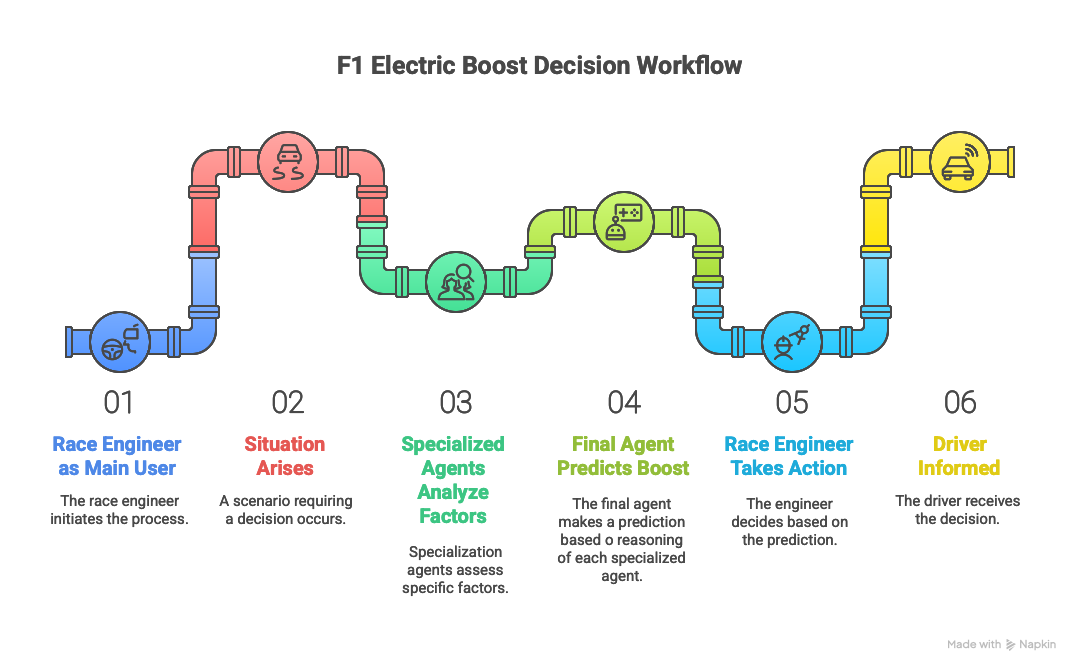
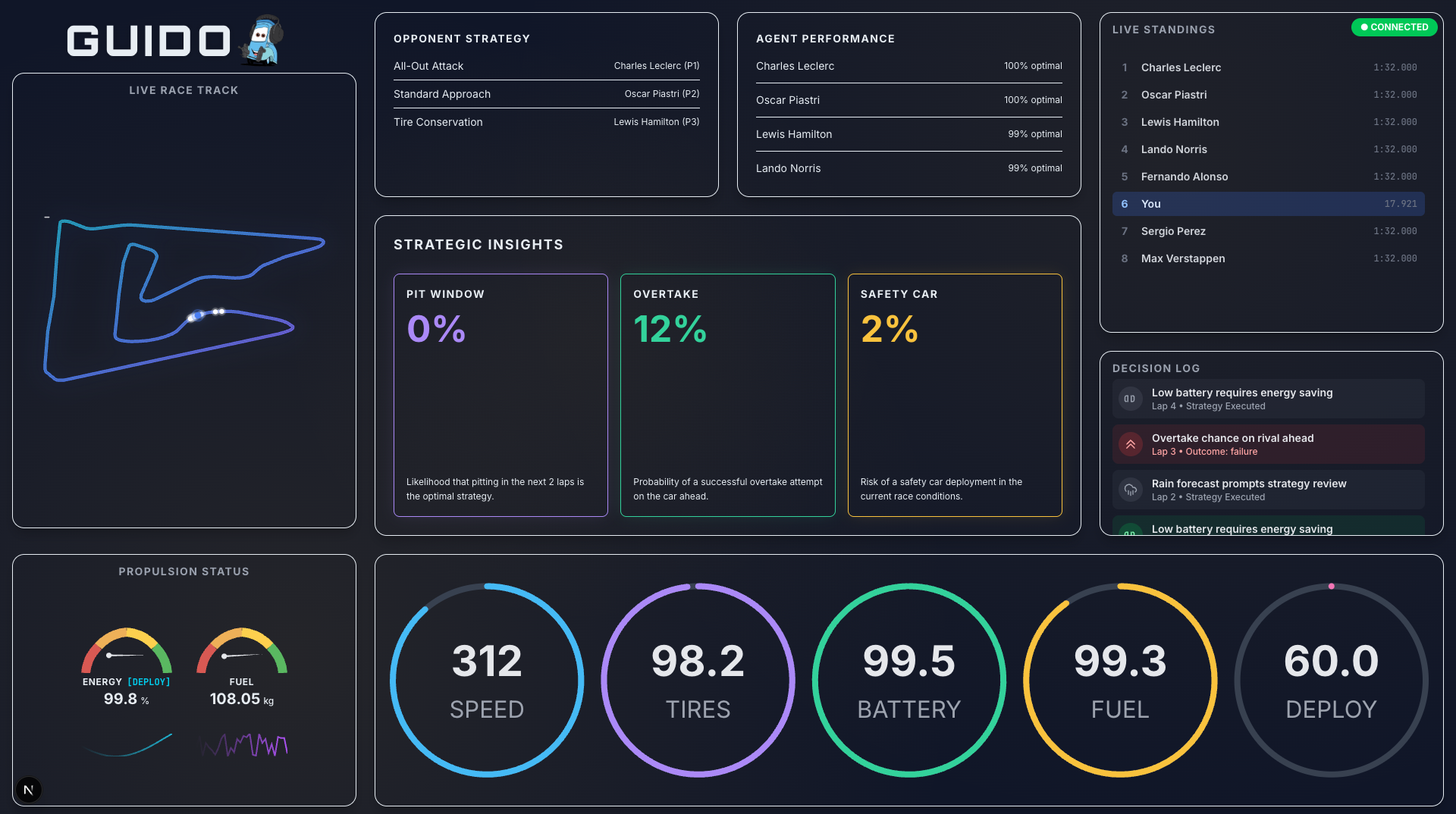
- Our system runs 1000+ realistic F1 races in 5 seconds, analyzes patterns with AI Agents, and provides a visual decision recommendation and opportunity cost analysis for every decision.
- Guido makes interpretation of such a huge amount of Time Series Data much easier than before.
- Paul Williams loved our idea and said they do have systems like these for today's rules, but there are no tools like Guido for 2026 changes.
- They need to train the crew and the drivers and also make 800 million simulations; that is where NorthMark Compute Cloud comes in and can solve all the compute problem they will have when they will be running pre-race simulations and also real-time inference.
Challenges
- Took us 5 hours to dumb the idea down enough to make it doable in 20 hours
- Extrapolating 2024 physics to 2026 regulations accurately without real data was hard to simulate in 24 hours
- Getting 186 races/second without losing accuracy was a extremely difficult task
- Convincing AI to find actual patterns vs overfitting random noise, we had to pivot only because of some limitations we couldn't solve in 20 hours
- Real-time sub-millisecond recommendation latency and realtime user feedback implementation.
What we learned
We discovered how to reverse-engineer realistic F1 physics from real telemetry data and extrapolate it confidently to future regulations, building the foundation for all downstream simulations. We mastered high-performance Python using NumPy vectorization and multiprocessing to achieve 186 simulations per second without sacrificing accuracy. Finally, we learned how to leverage AI (Gemini) at scale to synthesize patterns from massive simulation datasets into actionable strategic rules that beat hand-tuned baseline strategies by 100%.


Log in or sign up for Devpost to join the conversation.