Inspiration
As someone who’s long been fascinated by how dreams reflect our inner lives, I noticed a gap—most dream journals lack meaningful, evidence-based analysis. Drawing on Jungian and Freudian psychological frameworks (core to Western therapeutic practices), I set out to build a tool that turns raw dream memories into actionable insights for mental wellness.
What it does
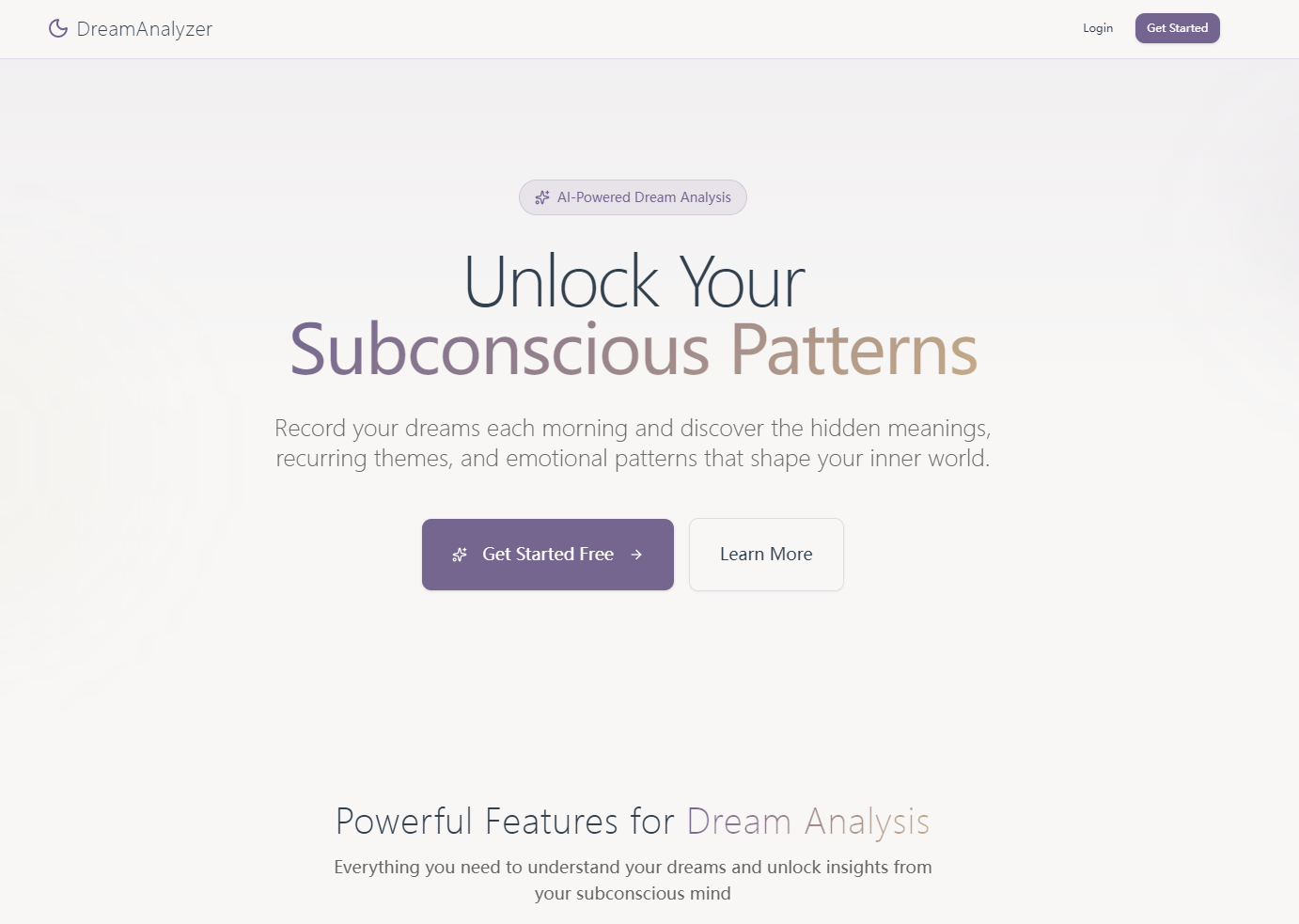
DreamAnalyzer AI lets users record dreams via voice (optimized for morning use), transcribes speech to text, and generates AI-driven analyses of symbols, emotions, and recurring patterns. It also creates monthly reports with visual trends—empowering self-reflection and supporting therapy conversations.
How we built it
I started by mapping user flows (e.g., morning recording, premium access) and defining free/premium tier rules. I built the mobile-first frontend with React Native, integrated Firebase for authentication, PostgreSQL for data persistence, and used OpenAI/Google Speech-to-Text APIs for core AI/transcription features. Stripe handled payment processing, and Chart.js powered visual trend tracking.
Challenges we ran into
Speech-to-text accuracy with mumbled/half-remembered dream descriptions was a major hurdle—we added edit tools to let users correct transcriptions. We also struggled with dynamic pattern detection (triggered after 3 entries) and ensuring seamless offline draft saving for morning use without internet.
Accomplishments that we're proud of
We created a tool that balances accessibility (free tier for basic use) and depth (premium pattern tracking/reports). The AI analysis stays true to established psychological frameworks, and the mobile optimization makes it easy to log dreams immediately after waking—our top user priority.
What we learned
I deepened my understanding of psychological symbol interpretation and how to translate that into AI prompts. I also learned to balance user experience with business rules (e.g., free tier limits) and the importance of offline functionality for real-world use cases.
What's next for this project
We plan to expand emotional classification to include nuanced states, add historical pattern comparison tools, and refine the monthly report visualizations. We’re also exploring integration with therapy note apps to make sharing insights with clinicians even easier.
