-
-
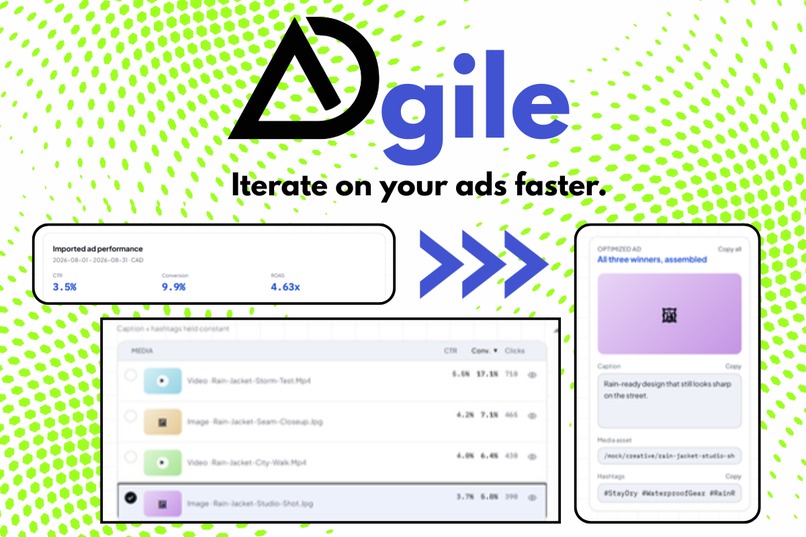
Adgile overview.
-
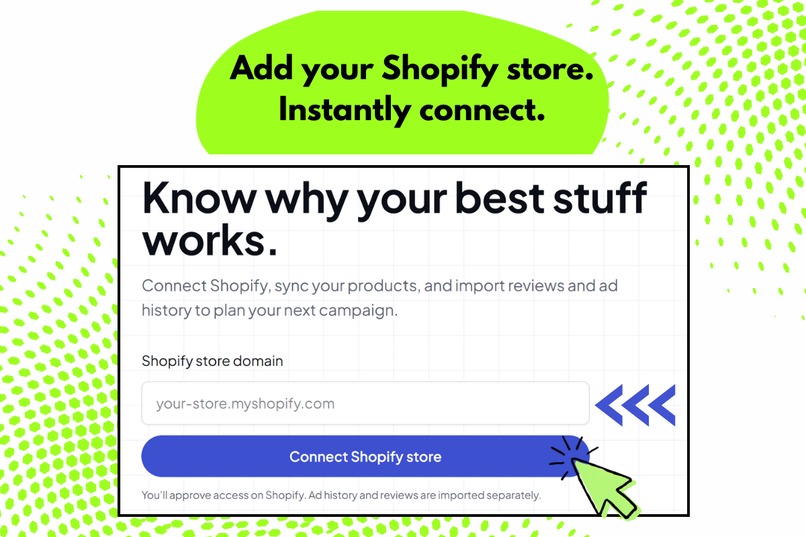
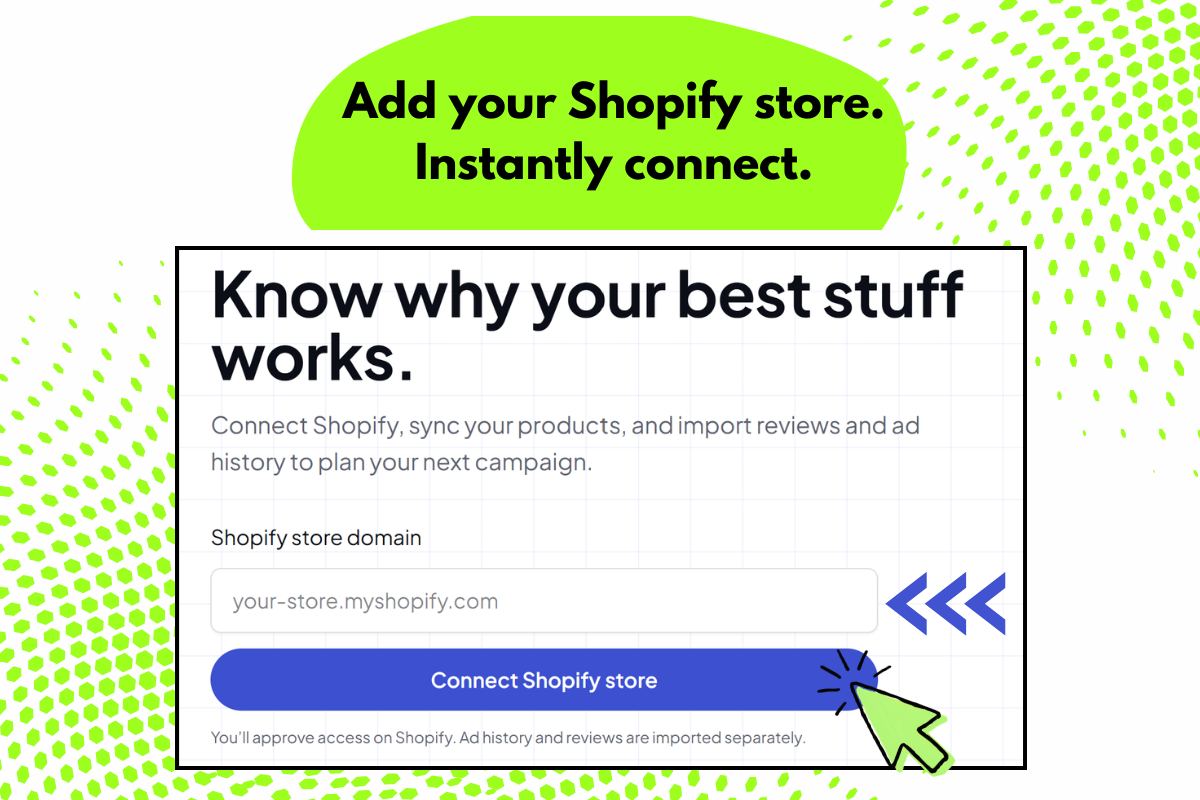
Connect to your store instantly.
-
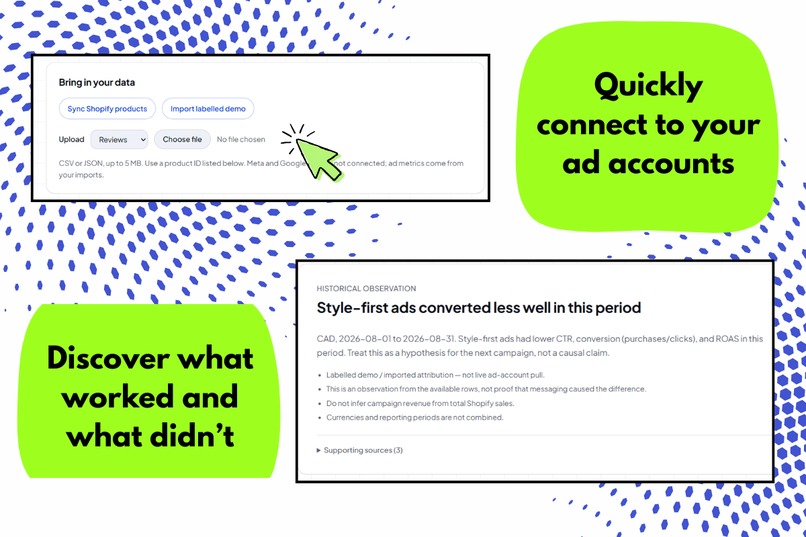
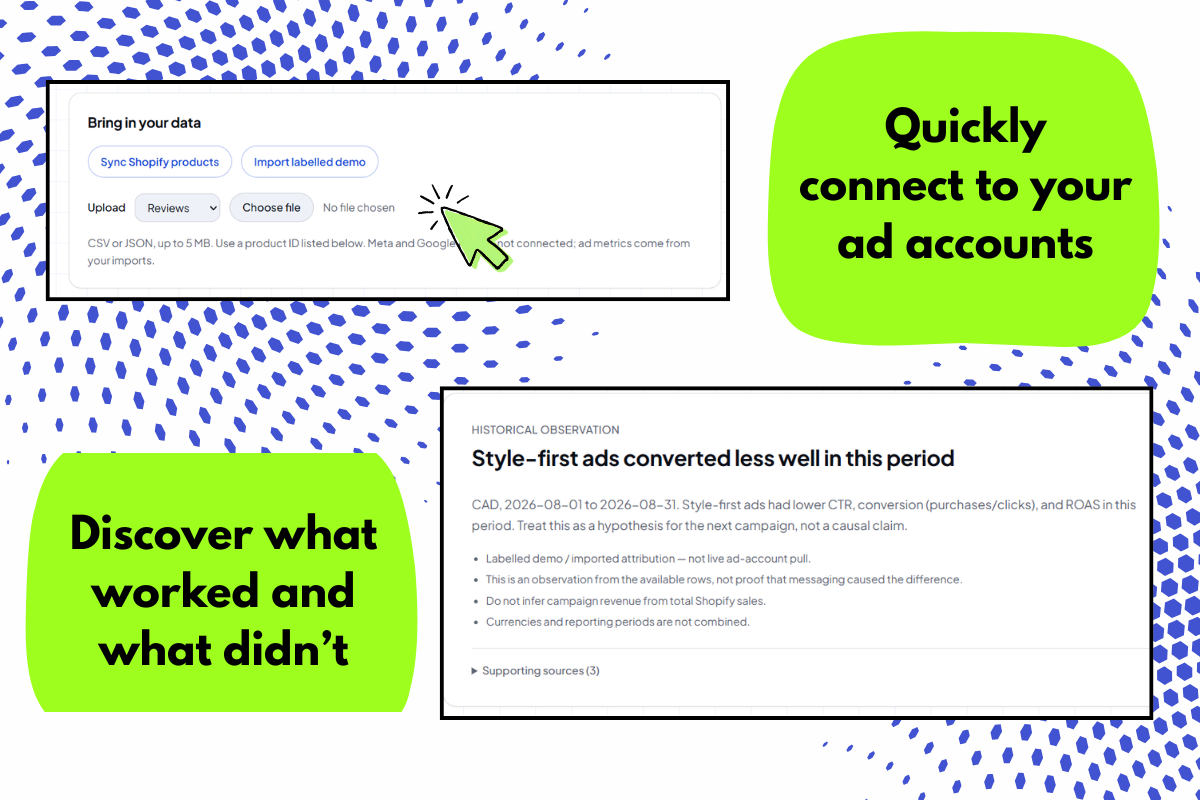
Connect to your ad accounts or import your ad data.
-
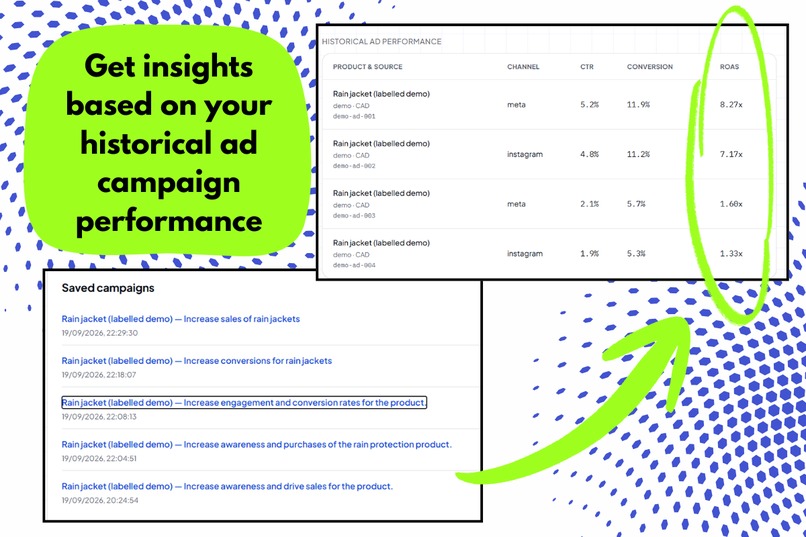
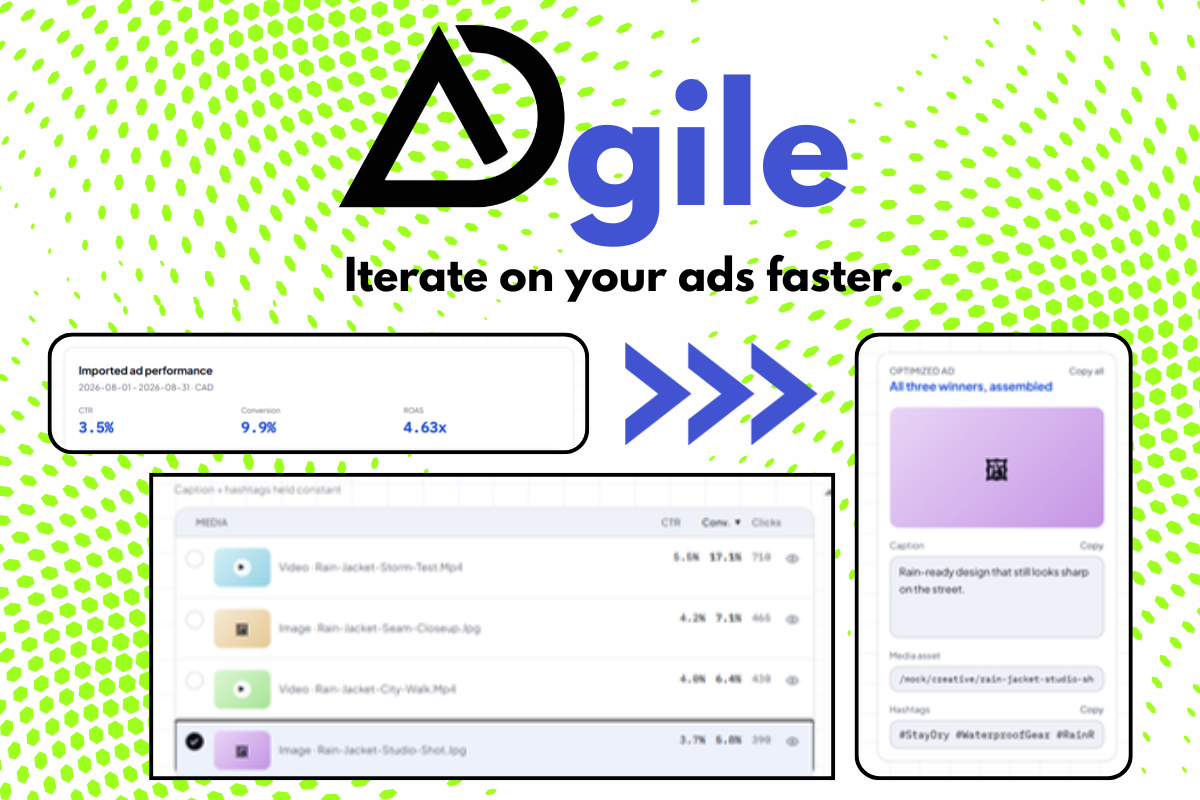
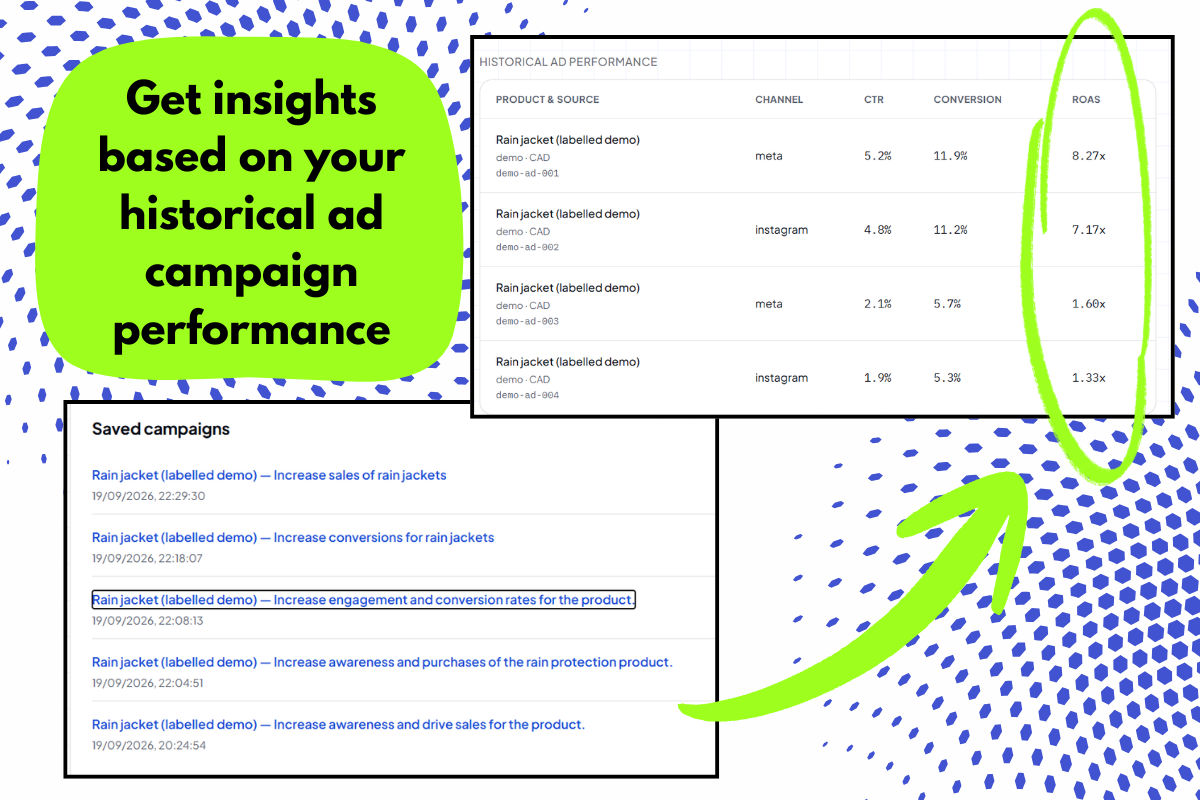
Get a full dashboard of your top ads across multiple platforms.
-
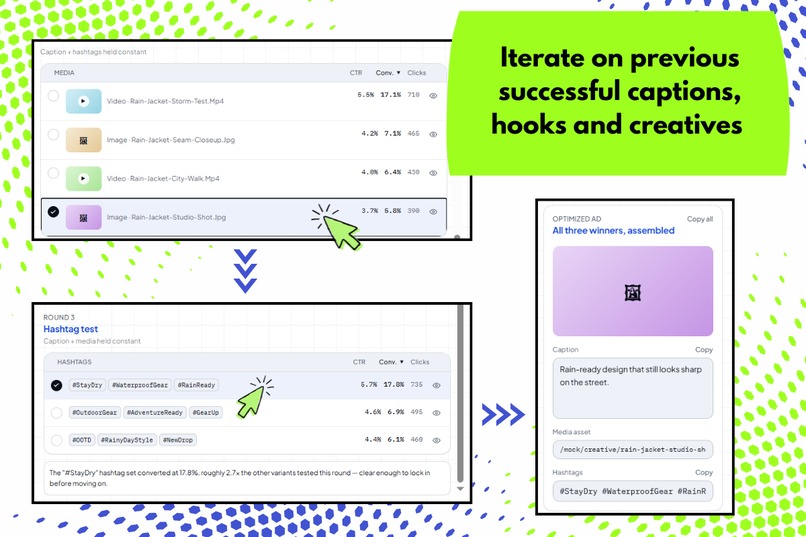
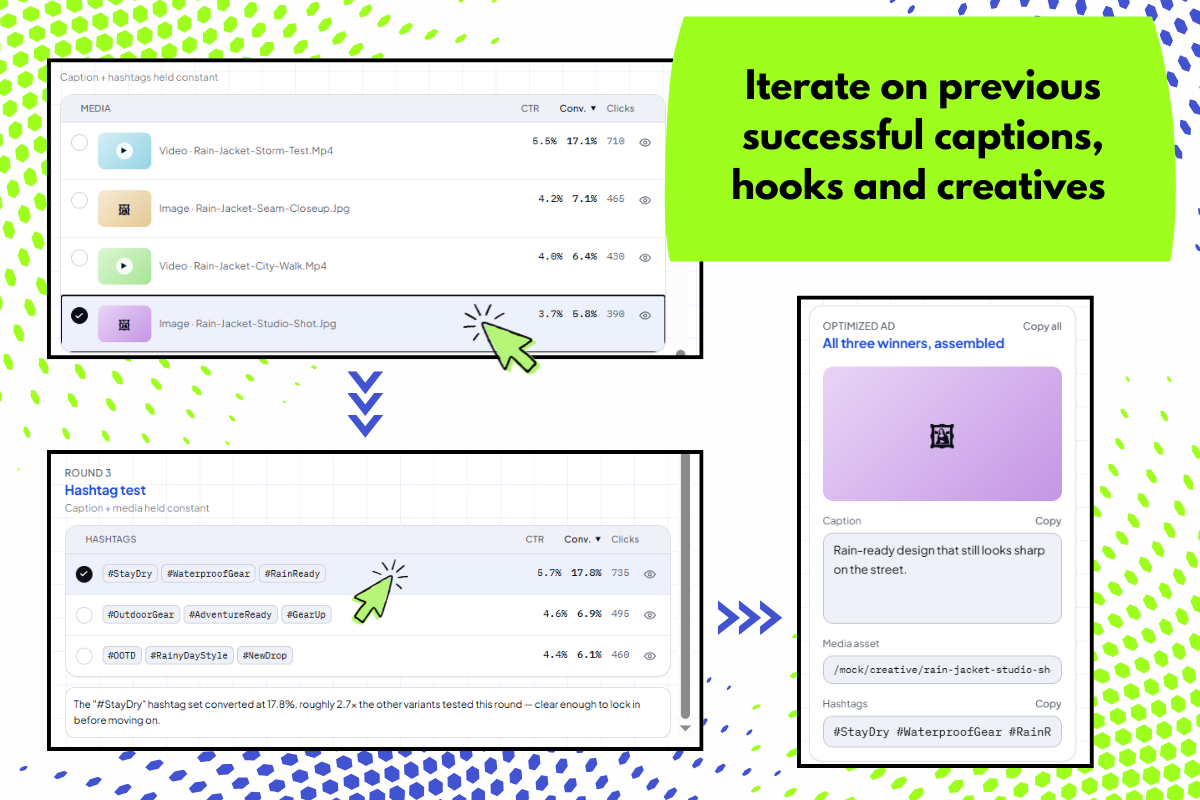
Quickly iterate on your previously performing ads by customizing creatives.
-
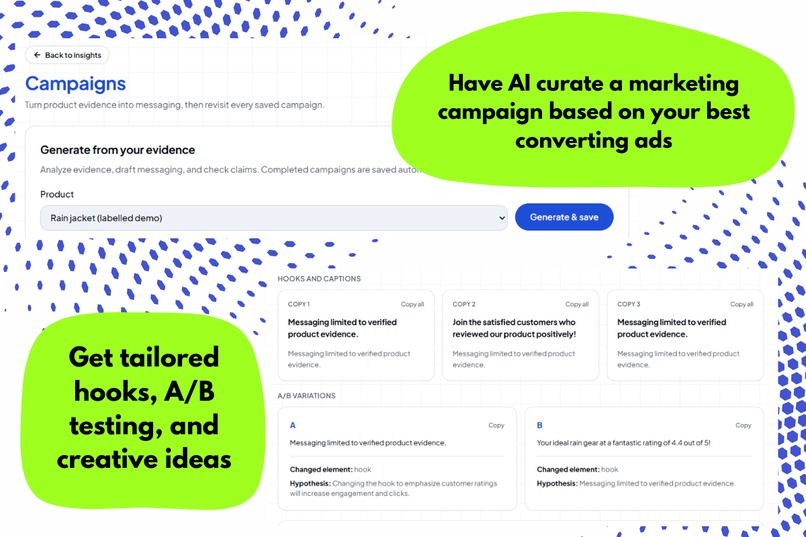
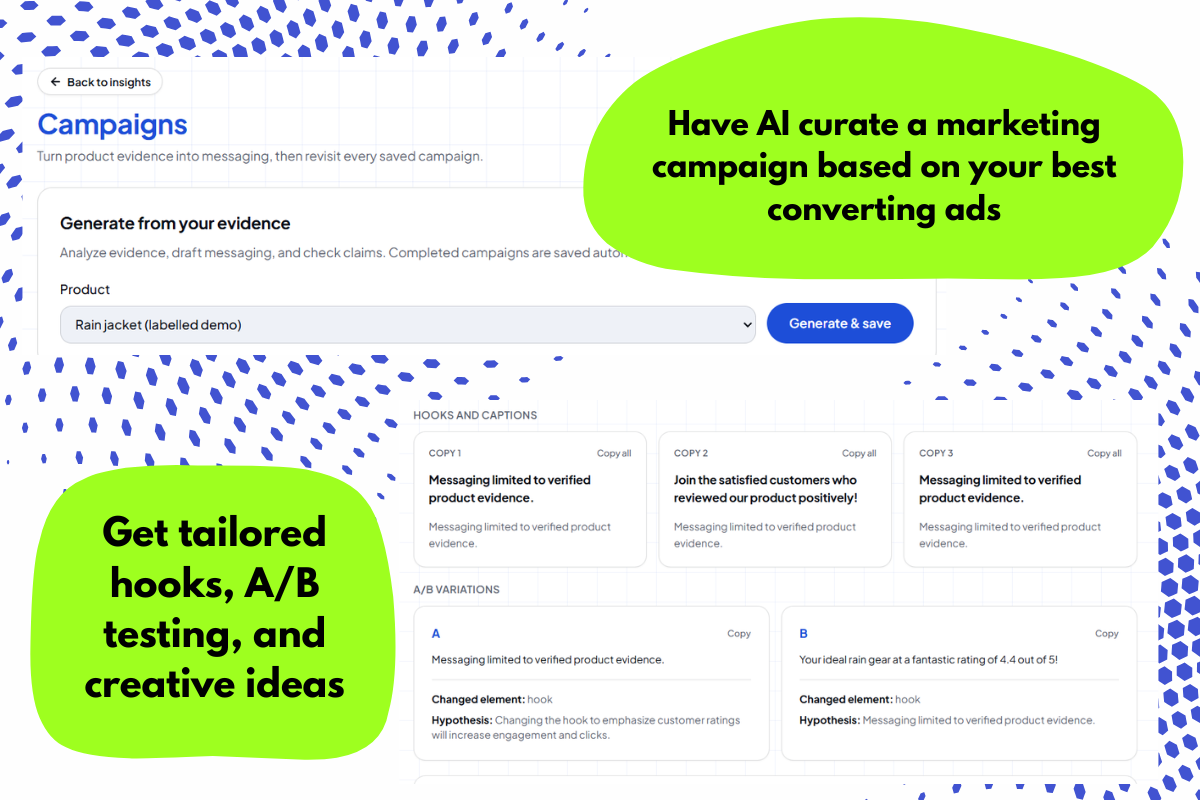
Generate a completely new ad campaign based on smart metrics, curated specifically for your store front.
Inspiration
Small and growing merchants often have access to a huge amount of marketing data, but turning that data into useful decisions is difficult.
A merchant may have product and sales data in Shopify, ad performance in platforms like Meta or Google, customer reviews across their storefront, and different campaign metrics such as click-through rate, conversion rate, and engagement. The problem is that these signals are often fragmented across different platforms.
We wanted to build a tool that could bring those signals together and answer a much simpler question:
What is actually working, why is it working, and what should I do next?
Our goal was to create an AI-powered optimizer for the marketing lifecycle that helps merchants move from raw performance data to actionable insights and new campaigns.
Instead of requiring merchants to manually compare dashboards, read hundreds of reviews, analyze previous ads, and brainstorm their next campaign, our platform helps automate that process.
What it does
Our platform analyzes commerce, customer, and advertising data to help Shopify merchants understand and optimize their marketing.
For example, imagine a merchant selling rain jackets.
The platform may discover that:
- customer reviews frequently mention waterproofing,
- ads centered around waterproofing have a higher click-through rate,
- those same campaigns also generate stronger conversions,
- while ads emphasizing other product features perform significantly worse.
Rather than simply showing those metrics, the platform explains the pattern and uses it to help generate the merchant's next campaign.
A merchant can use the platform to:
- identify their best-performing ads and campaigns,
- compare CTR, conversions, and other performance metrics,
- analyze recurring themes in customer reviews,
- understand which product benefits resonate most with customers,
- discover opportunities in their existing marketing,
- generate new campaign concepts,
- create captions, hooks, and messaging,
- create variations for A/B testing,
- and continuously optimize campaigns based on previous performance.
The result is a feedback loop:
Analyze → Learn → Generate → Test → Optimize
How we built it
We designed the project as a browser-based dashboard for Shopify merchants.
The frontend was built with React, with the goal of making complicated marketing data easy to understand at a glance. Instead of presenting merchants with another dense analytics dashboard, we focused on surfacing the most important insights and connecting those insights directly to campaign creation.
Our backend handles several different types of information, including:
- Shopify product and commerce data,
- historical marketing campaign data,
- advertising metrics,
- customer reviews,
- and generated campaign content.
We use AI to reason across these different signals and transform quantitative and qualitative information into understandable recommendations.
For example, the analytics layer can determine which campaigns have the strongest CTR or conversion rate, while the AI layer can compare those results against customer reviews and product information to explain why a particular message may be resonating.
We then use those insights as context when generating new campaign ideas, rather than generating generic marketing copy from a single prompt.
This allows the system to produce recommendations tailored to the specific merchant and their customers.
Why Shopify
Shopify is central to the product because it provides the commerce context behind the marketing decisions.
Products, descriptions, pricing, orders, and sales performance help us understand what the merchant is selling and how customers are responding.
By combining Shopify data with external marketing signals, we can move beyond simply asking:
"Which ad had the most clicks?"
and instead ask:
"Which marketing message is actually contributing to meaningful commerce outcomes?"
This makes the system both a marketing assistant and a commerce intelligence tool for merchants.
Challenges we faced
One of the biggest challenges was deciding how to combine very different forms of data.
Advertising metrics such as CTR and conversion rate are highly structured, while customer reviews and marketing copy are unstructured text. Simply sending all of that information directly to a language model would make it difficult to determine which conclusions were actually supported by the data.
We addressed this by separating responsibilities between the analytics and AI layers.
Traditional analytics are used for calculations such as:
- click-through rate,
- conversion rate,
- campaign comparisons,
- and performance ranking.
The AI layer then uses those results alongside customer feedback and product information to identify patterns, explain insights, and generate new campaign directions.
Another challenge was scope.
Modern marketing platforms are extremely complex, and fully integrating Shopify, Meta Ads, Google Ads, content generation, campaign publishing, and real-time performance tracking would be far beyond the scope of a hackathon.
We therefore focused on demonstrating the most important part of the product:
the intelligence loop between marketing performance and campaign creation.
Instead of attempting to recreate an entire advertising platform, we built a workflow that demonstrates how merchants could use their existing data to automatically improve what they create next.
What we learned
One of our biggest takeaways was that generative AI becomes much more useful when it is grounded in real-world context.
It is easy to ask an AI model to generate an advertisement.
It is much more interesting to ask it to generate an advertisement while knowing:
- which campaigns previously performed well,
- which product benefits customers repeatedly praise,
- which messaging resulted in conversions,
- what the merchant actually sells,
- and what the brand has tried before.
We also learned how important it is to combine traditional software engineering and analytics with AI rather than relying entirely on model outputs.
The strongest part of the system is not simply generating content. It is connecting business signals → insights → decisions → new campaigns.
What's next
We see the project eventually becoming a continuous optimization layer for a merchant's entire marketing lifecycle.
Future versions could:
- connect directly to Meta and Google Ads,
- monitor live campaign performance,
- automatically propose new A/B tests,
- generate additional creative assets,
- learn a merchant's brand voice over time,
- detect changes in customer sentiment,
- identify emerging product selling points,
- and recommend when underperforming campaigns should be adjusted.
Ultimately, we want the platform to act like a data analyst, marketing strategist, and creative assistant working together for every merchant.
Built With
- backboard
- gptzero
- openai
- railway
- react
- typescript
- vite


Log in or sign up for Devpost to join the conversation.