🏥 The Problem
What if “waiting at the hospital” didn't actually mean waiting at the hospital?
Hospital waiting rooms can become extremely crowded, especially during OPD hours. Patients often have no idea how many people are ahead of them or how long they will have to wait.
This creates unnecessary anxiety for patients and operational pressure for clinical staff.
HQMS (Hospital Queue Management System) was built to solve this problem by replacing traditional physical waiting with a real-time virtual queue.
💡 The Solution
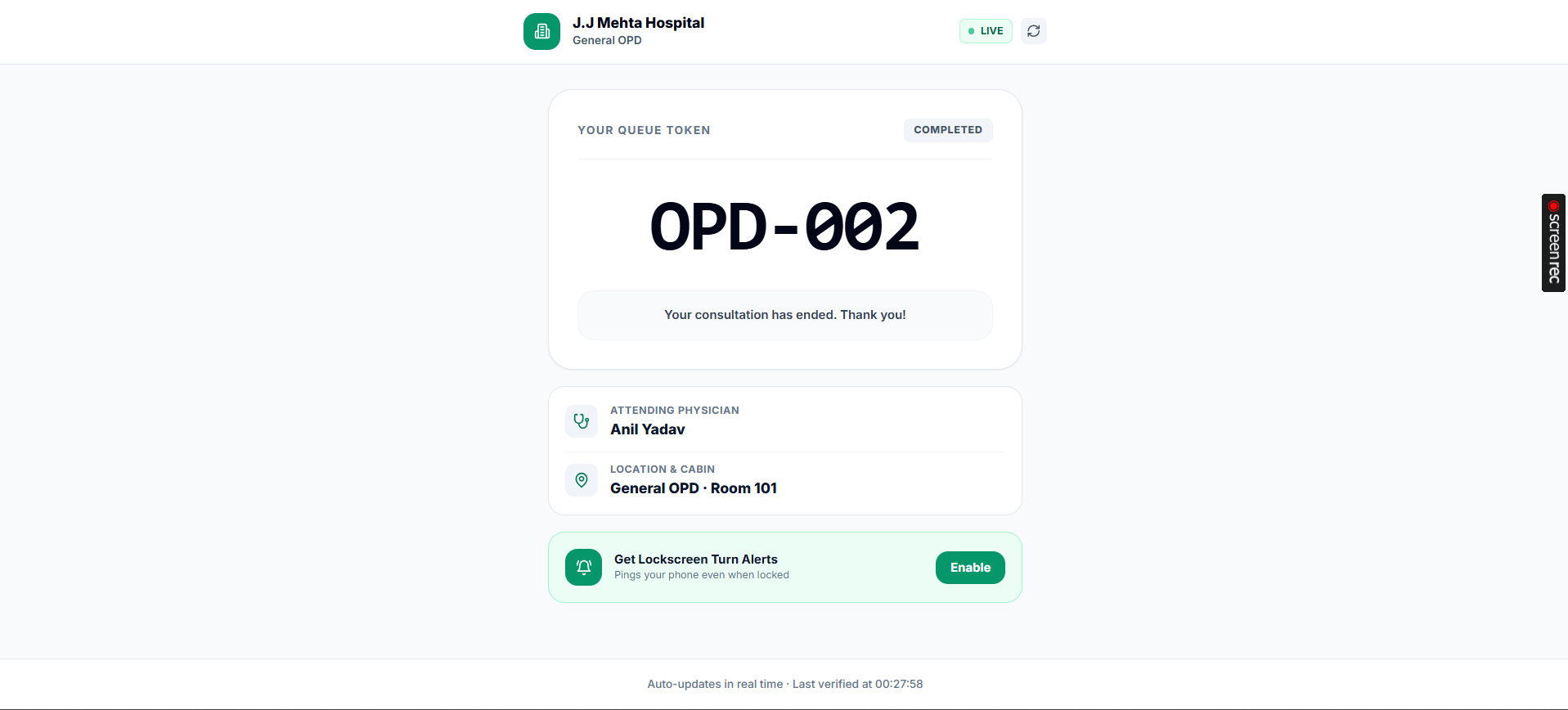
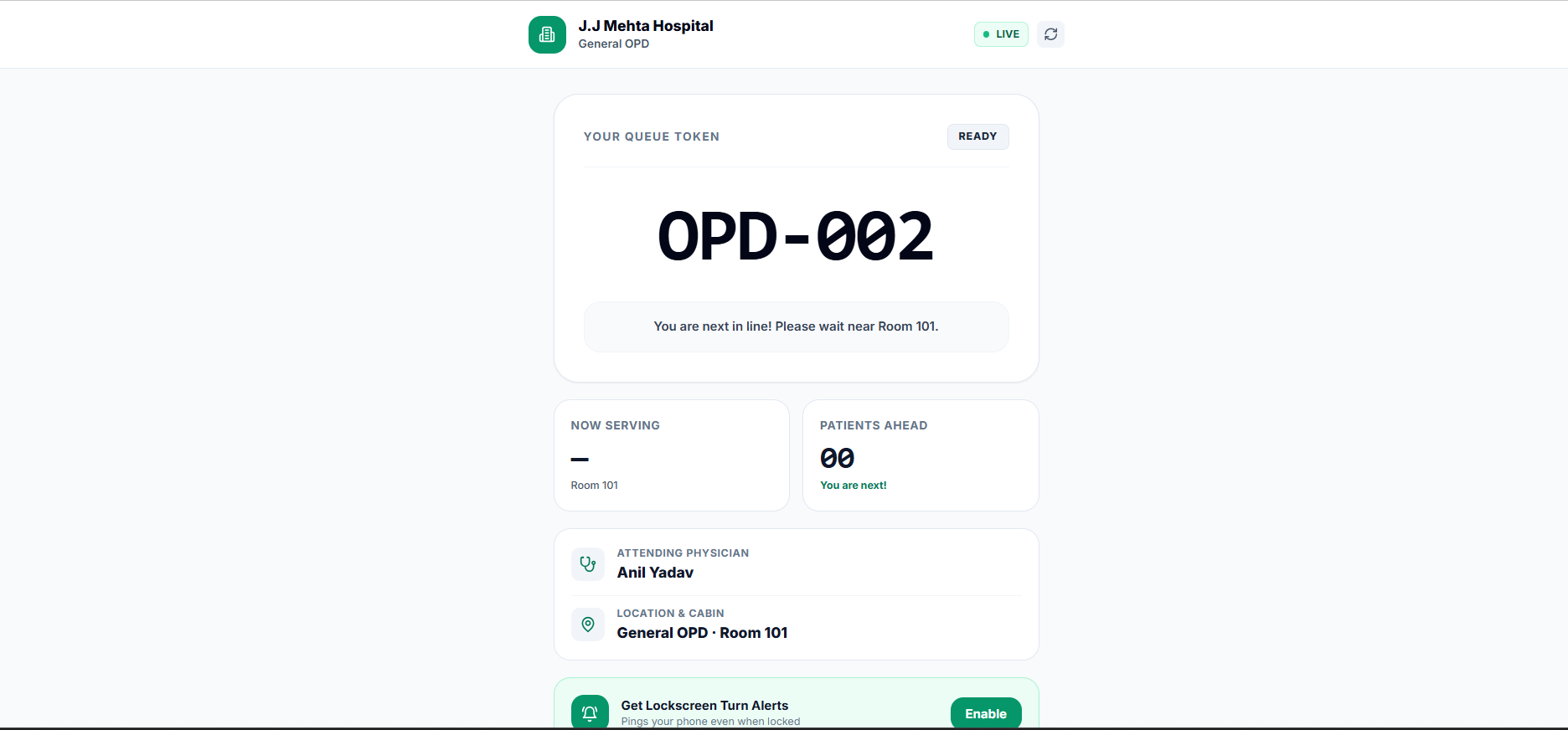
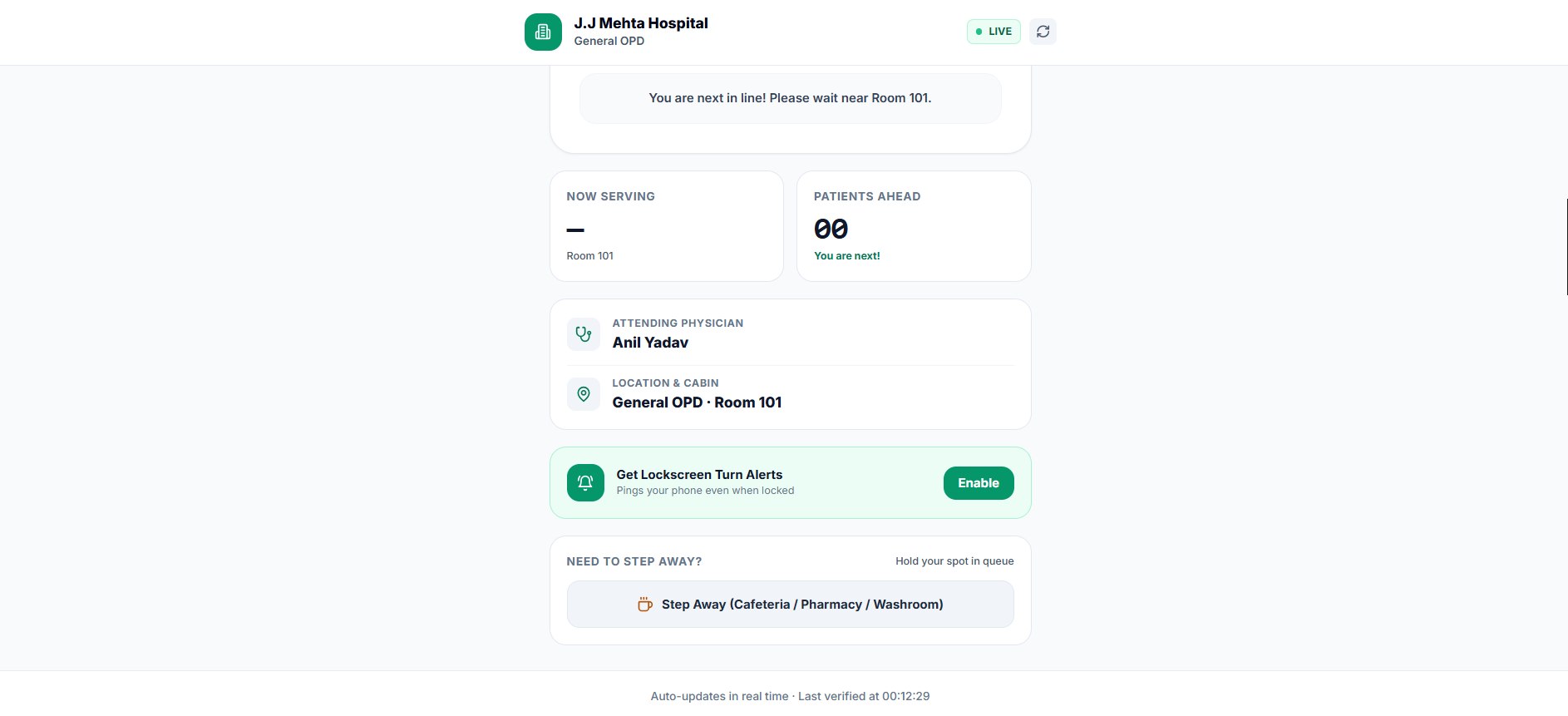
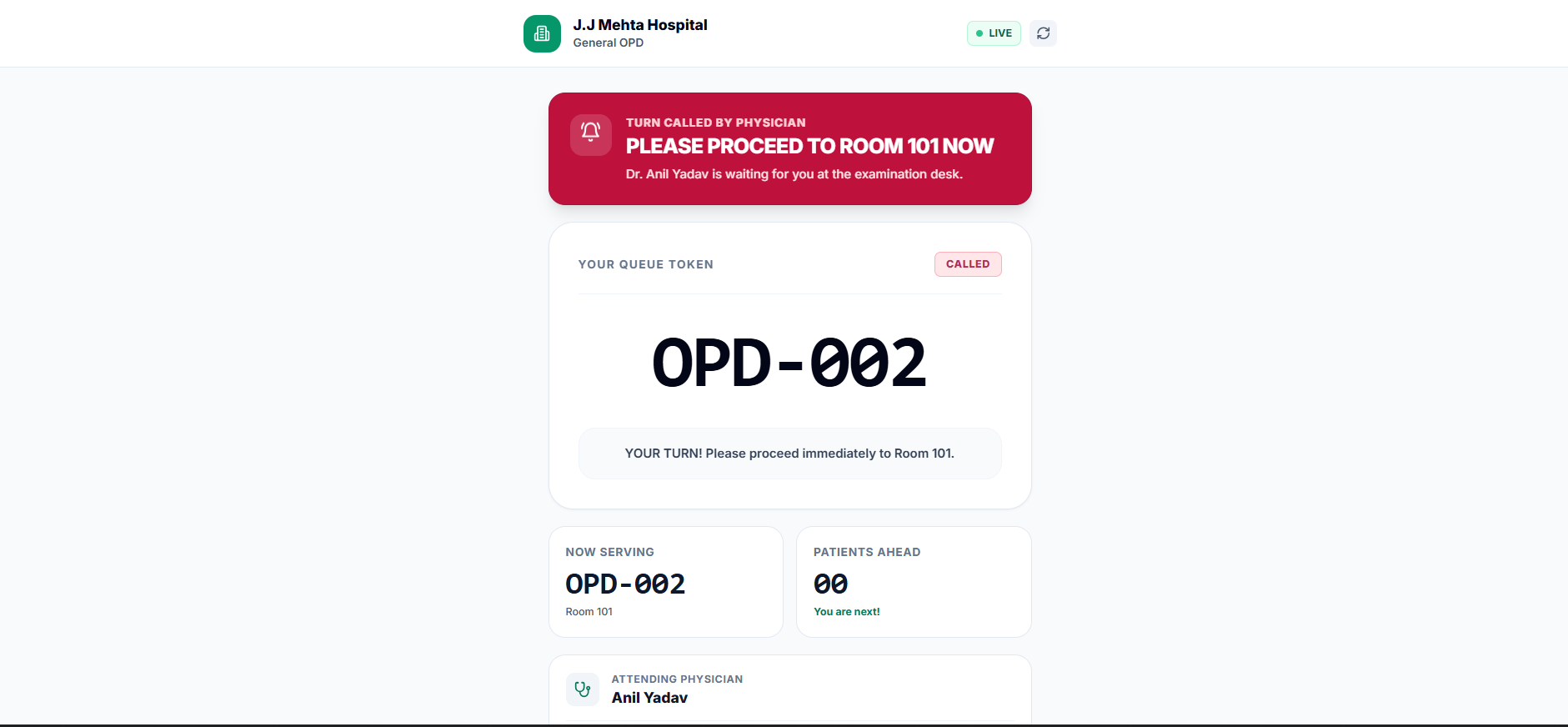
HQMS allows patients to join and track their hospital queue directly from a mobile browser without installing an app or creating an account.
Patients can see:
- Current queue position
- Estimated waiting time
- Real-time queue updates
- Audio alerts
- Presence status such as "Stepping Away" and "Returning"
Instead of spending hours sitting in a waiting room, patients can step away and return when their turn is approaching.
🏢 Hospital Management
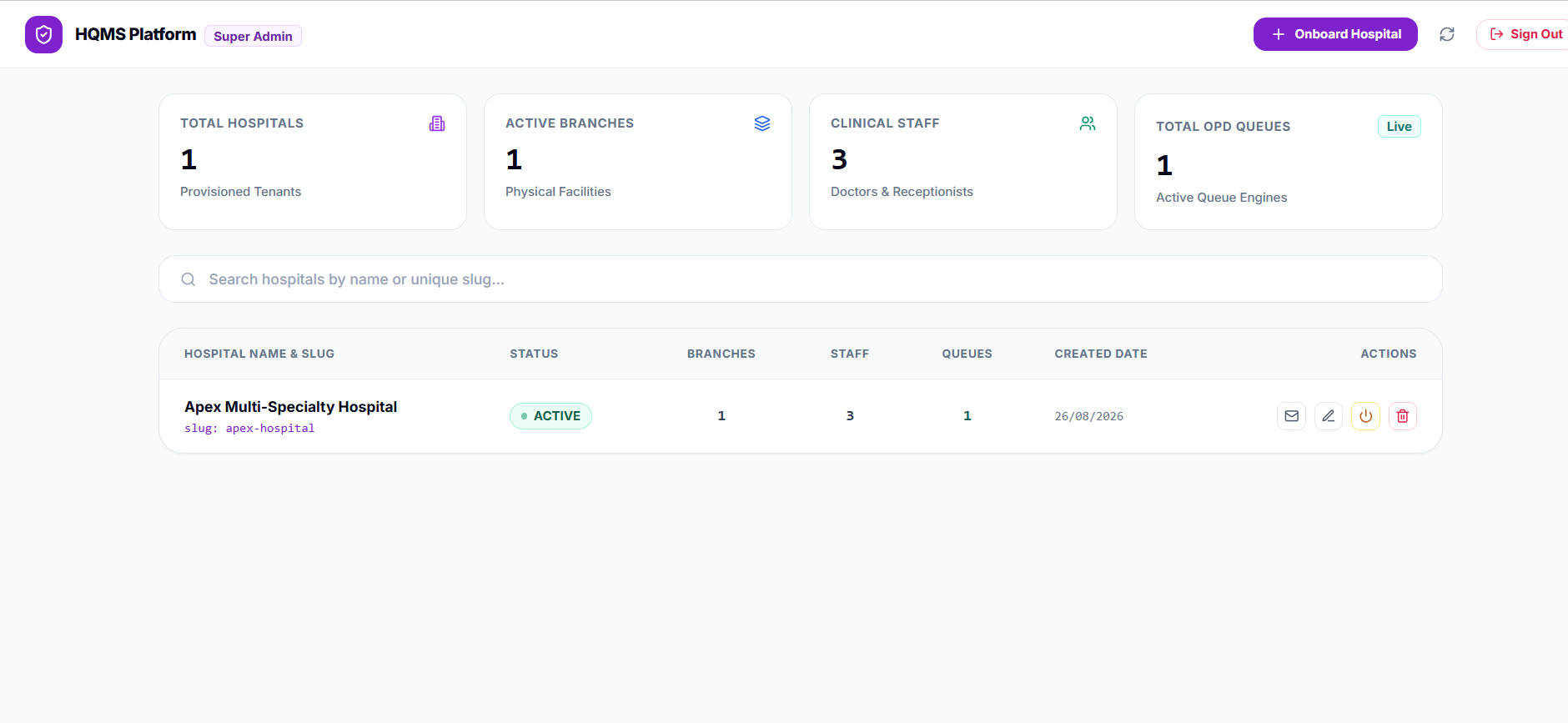
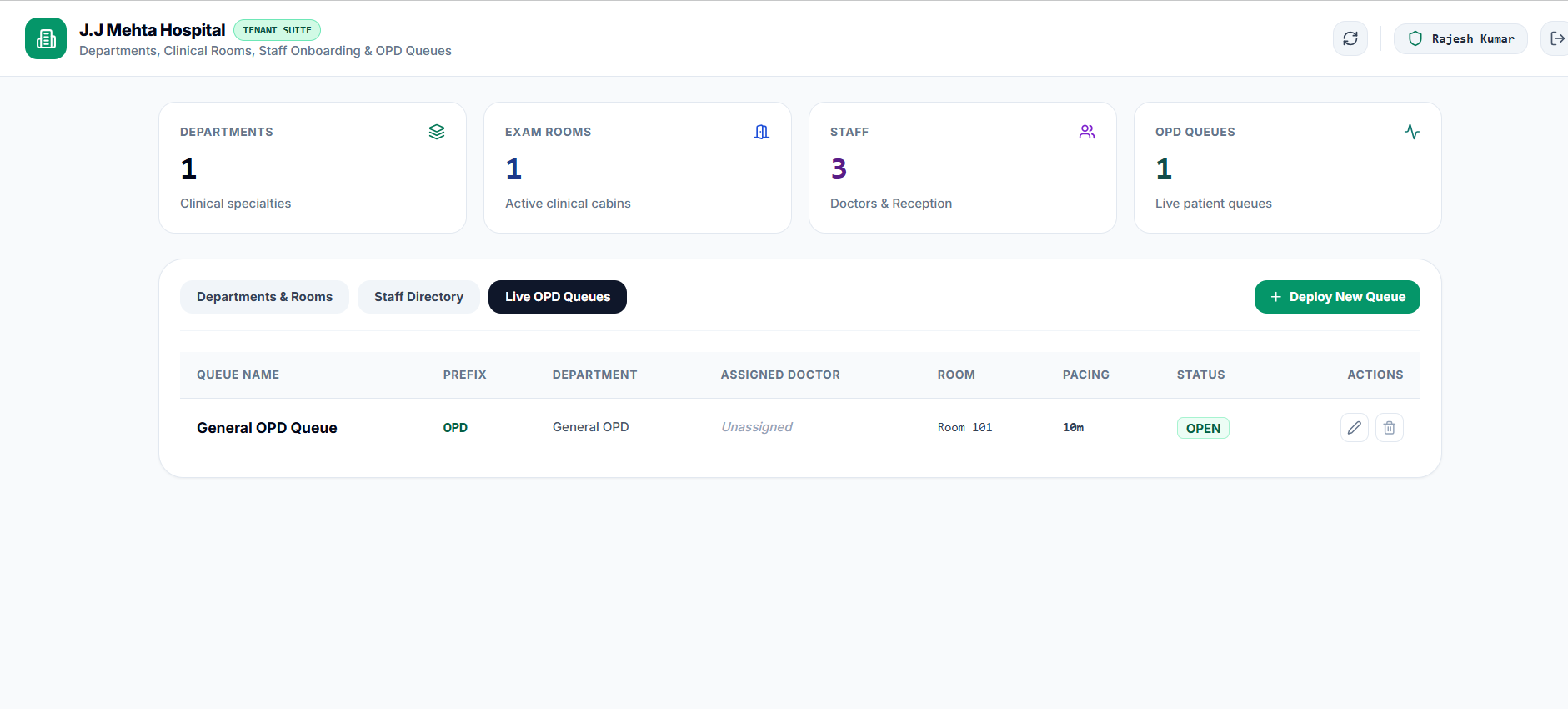
HQMS provides dedicated workflows for hospital operations.
Hospital administrators can manage:
- Departments
- OPDs
- Consultation rooms
- Doctors
- Doctor assignments
- Patient queues
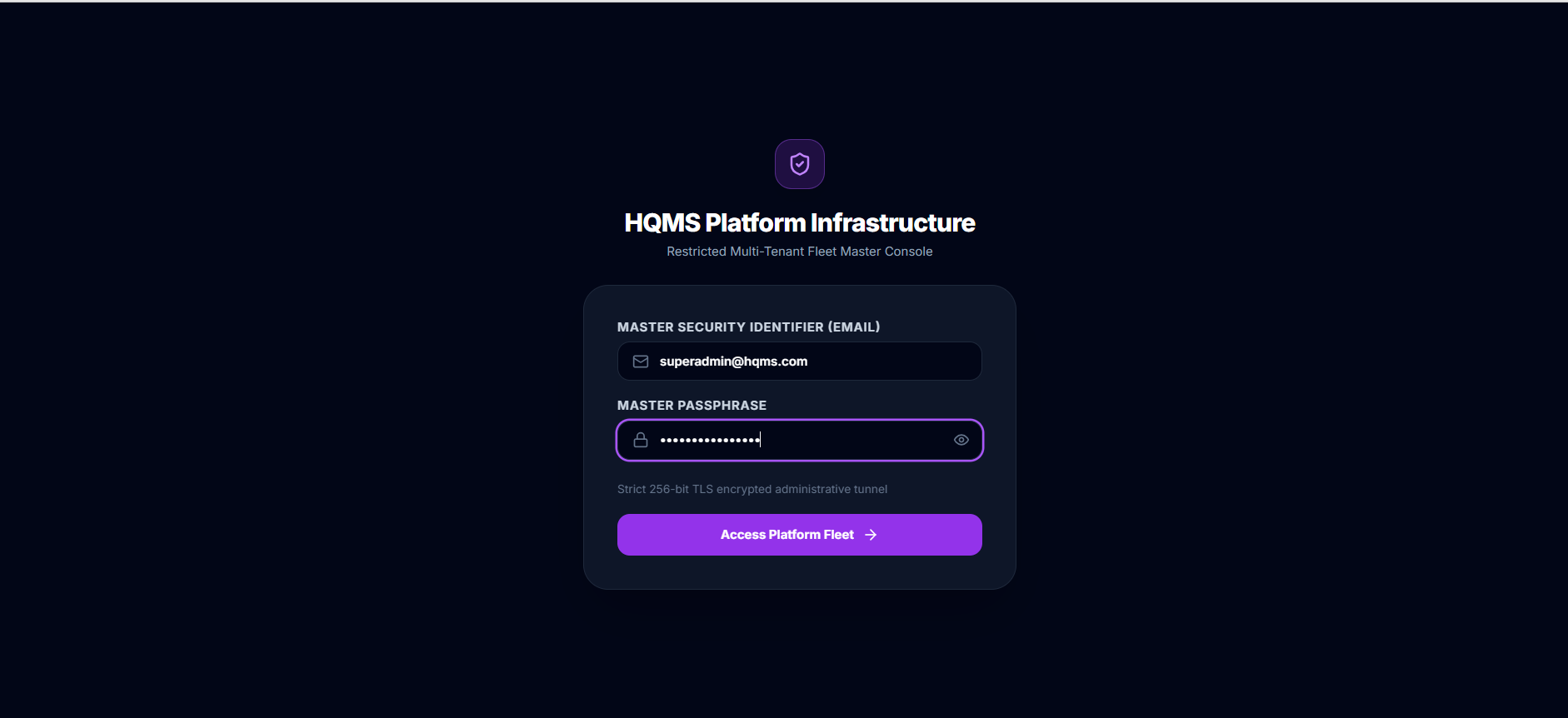
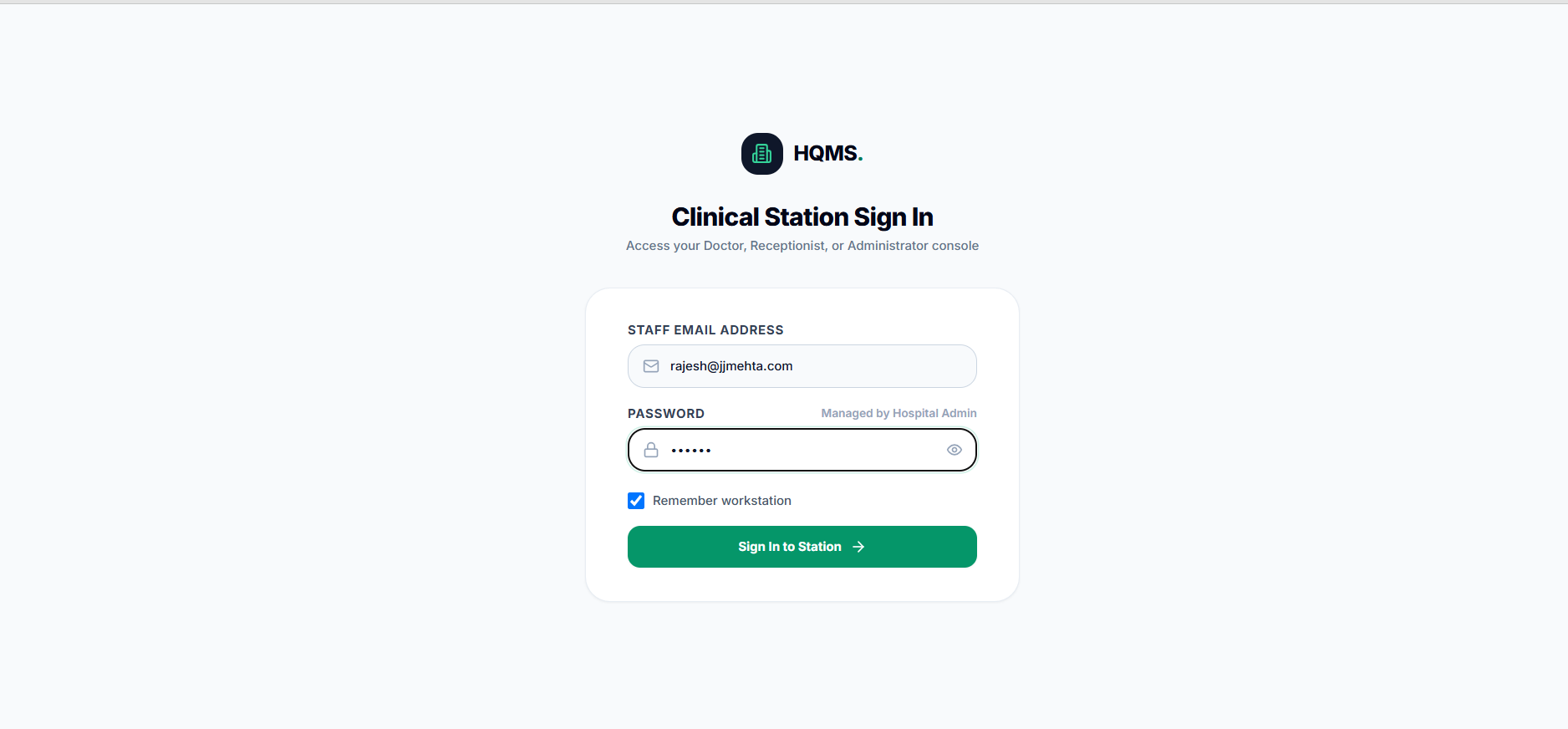
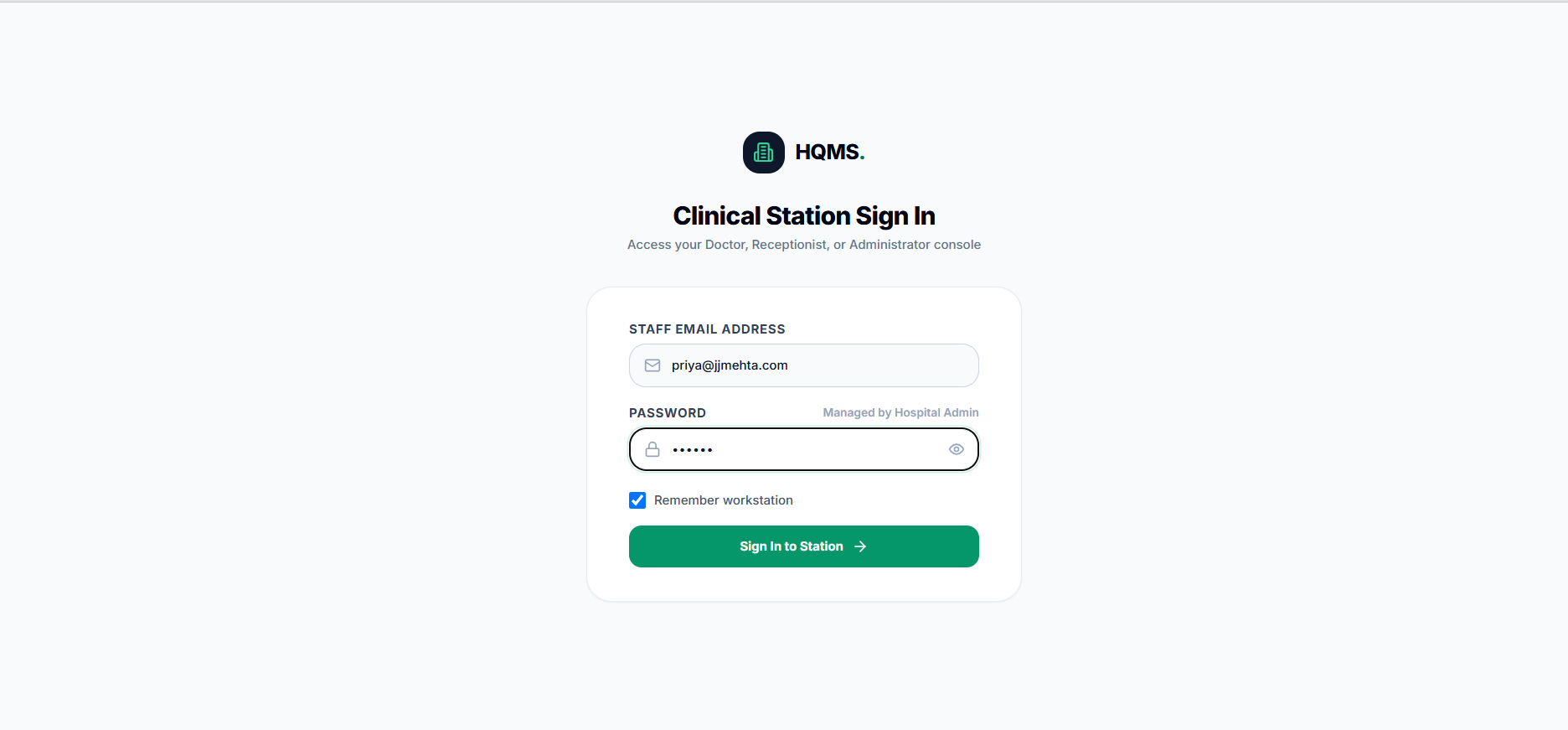
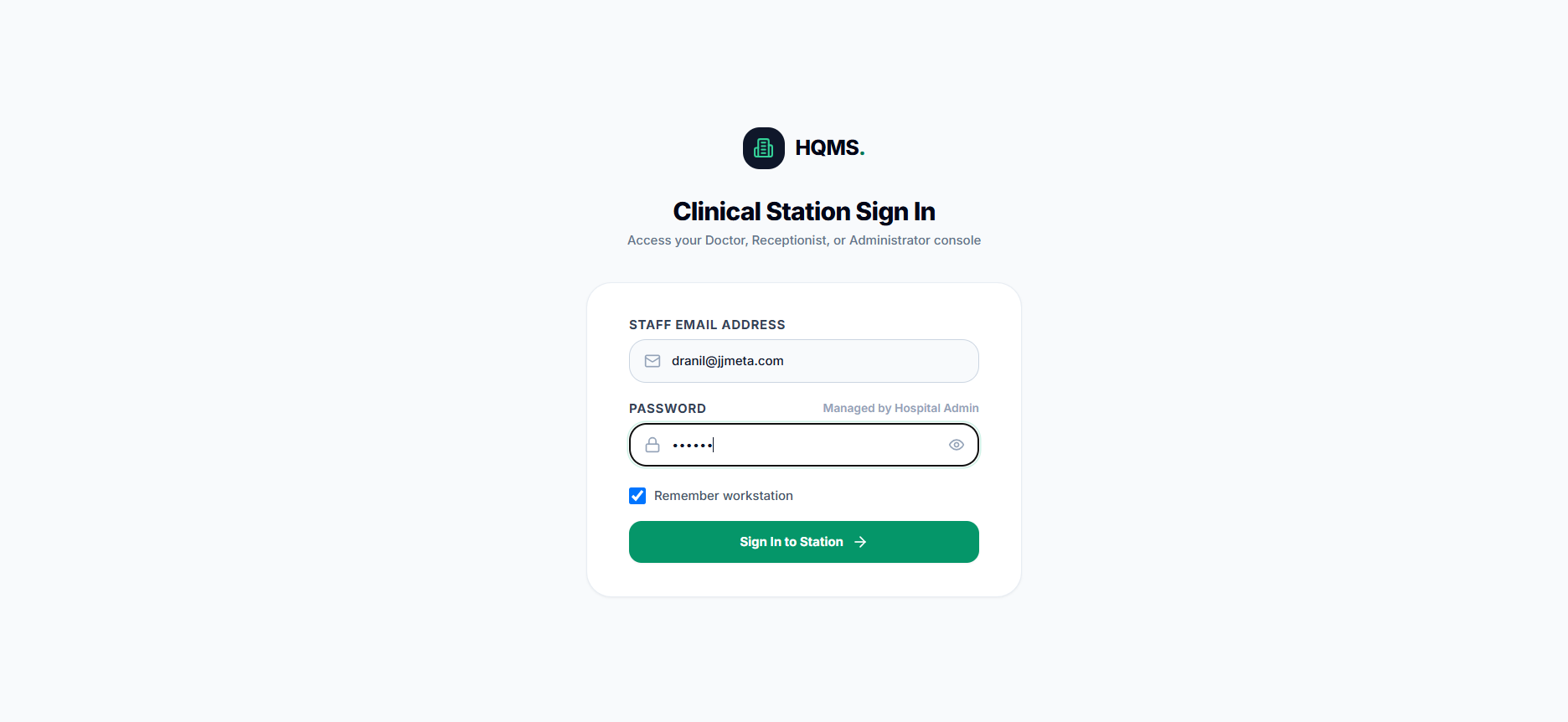
The platform uses role-based access control so administrators, doctors, and patients have different experiences based on their responsibilities.
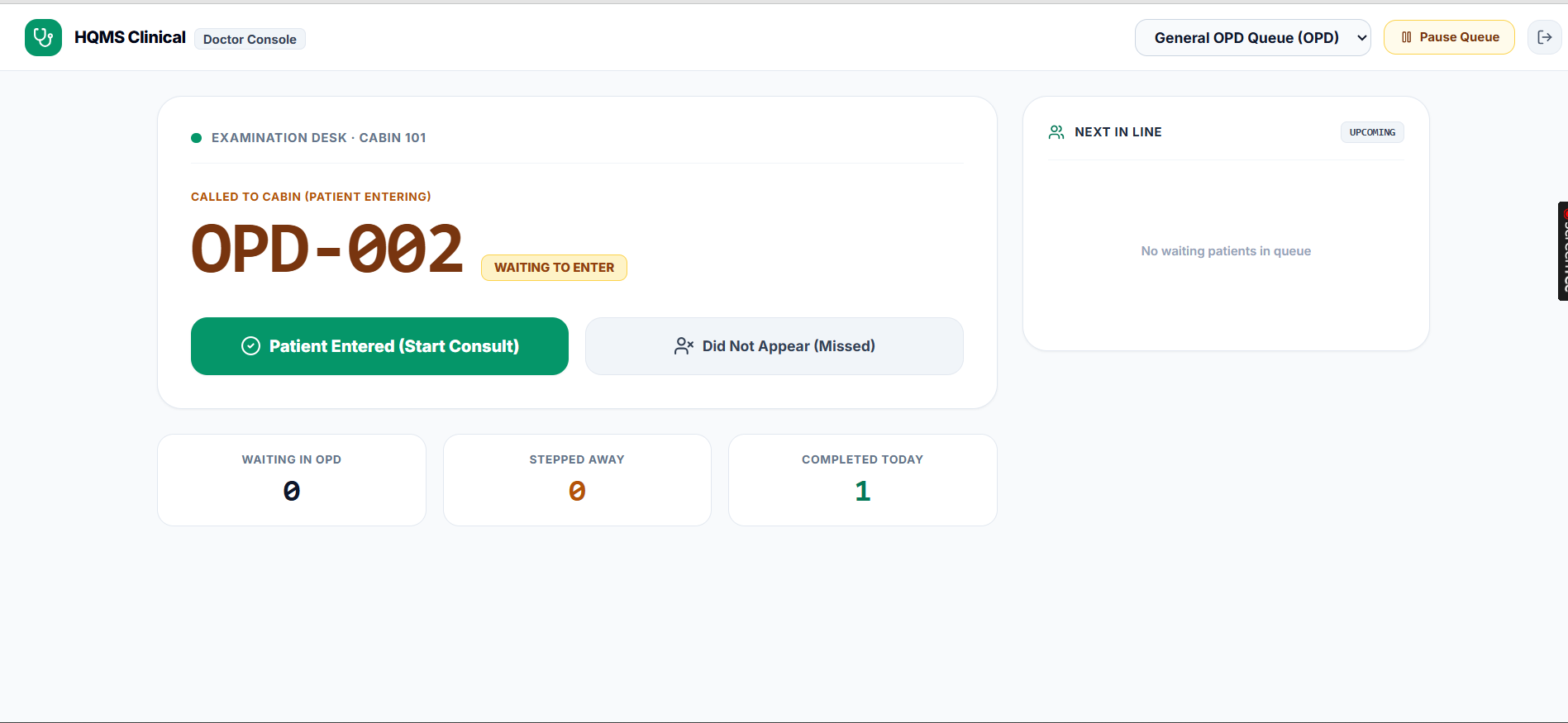
🩺 Doctor Workstation
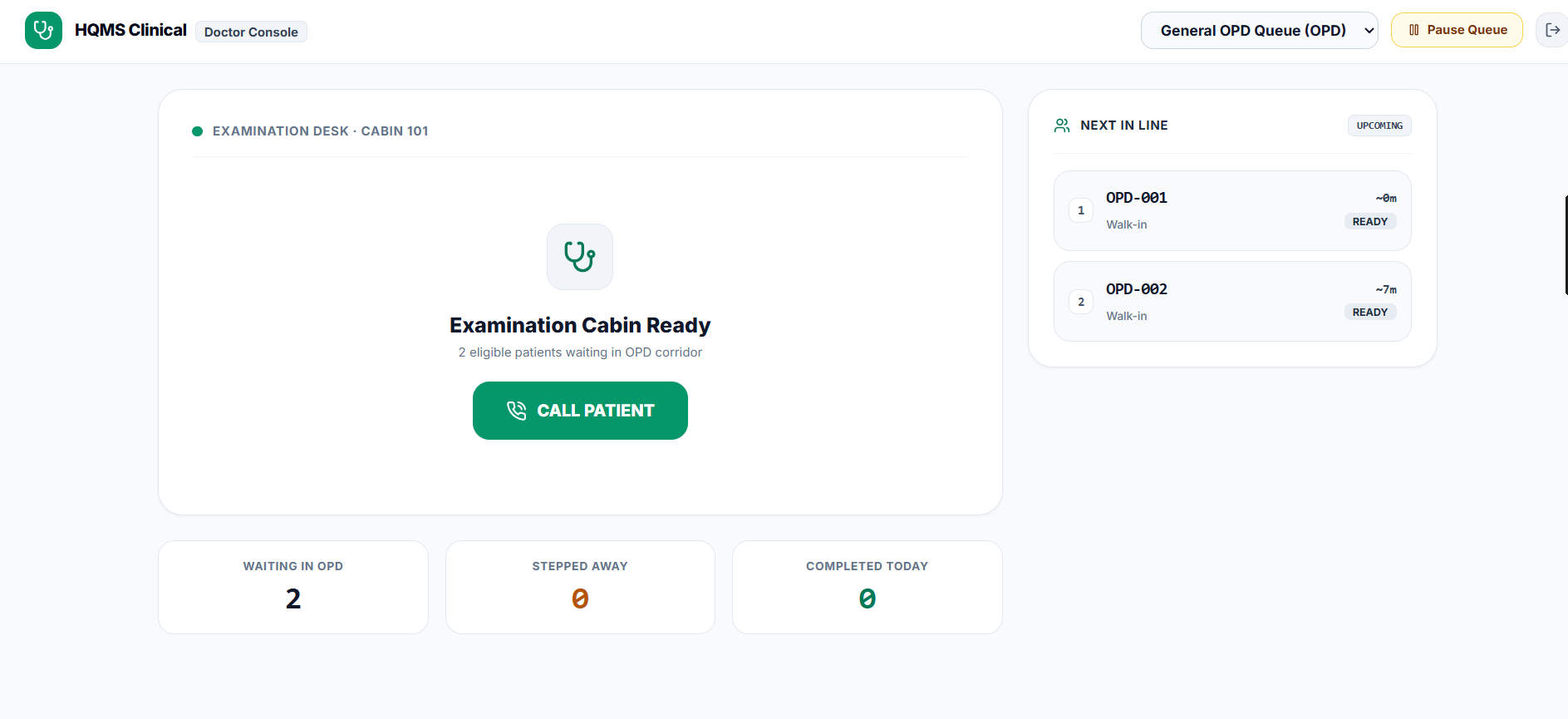
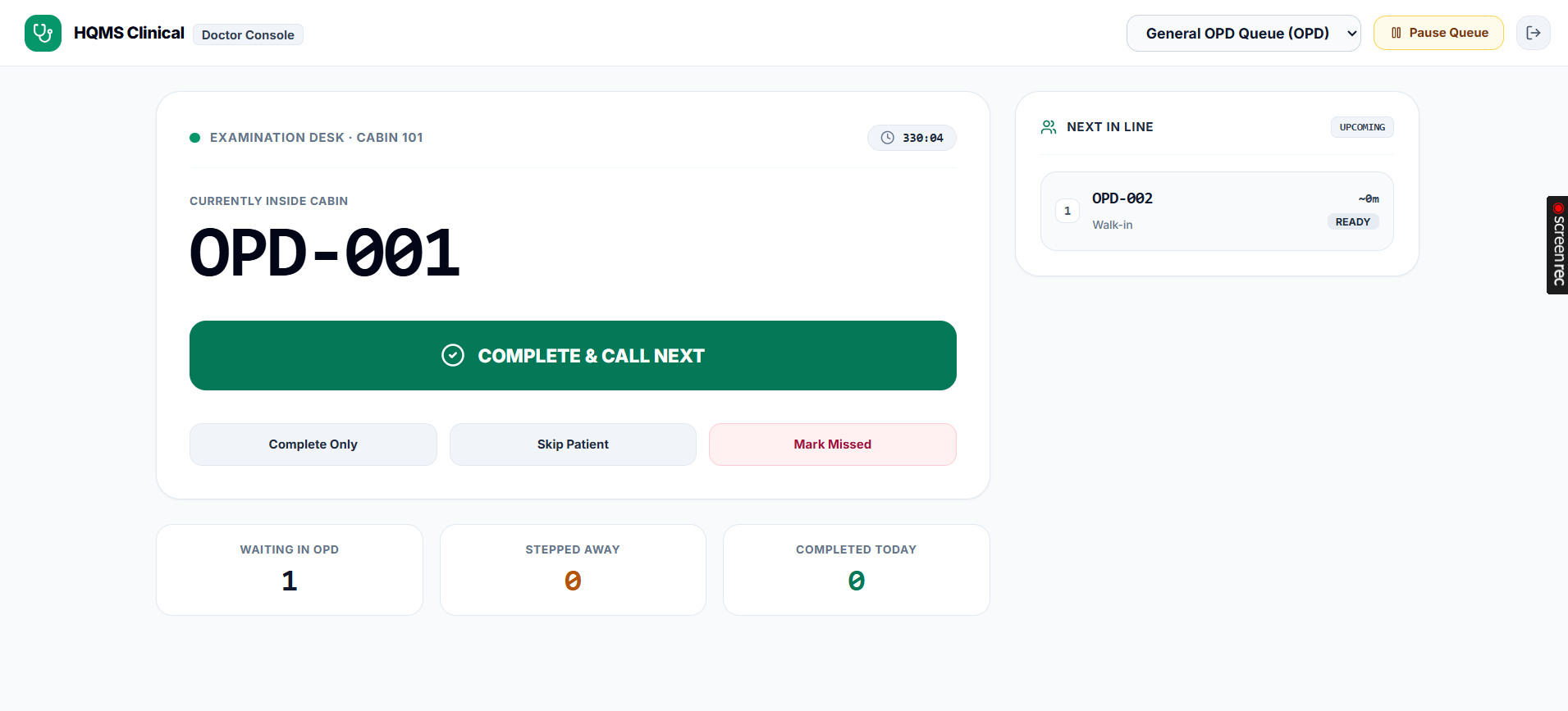
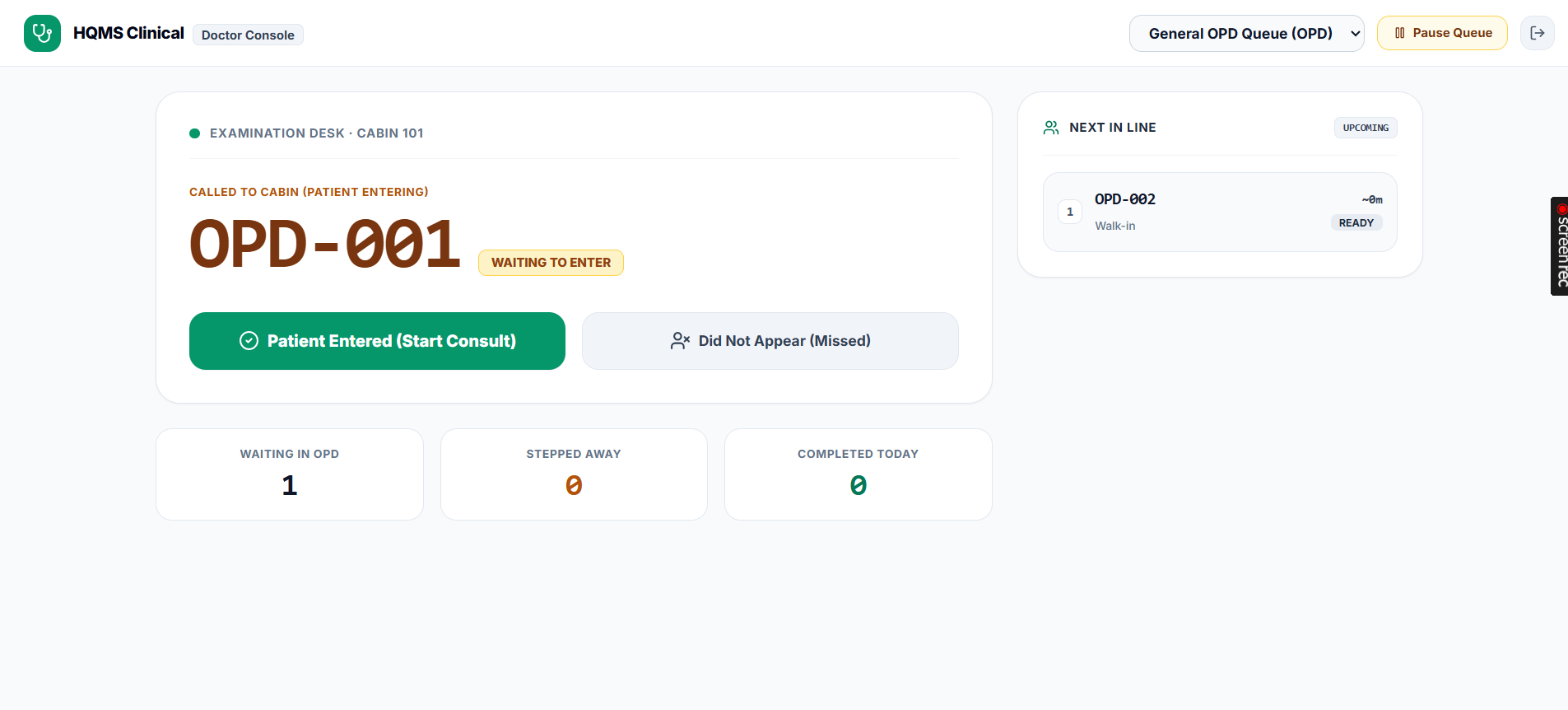
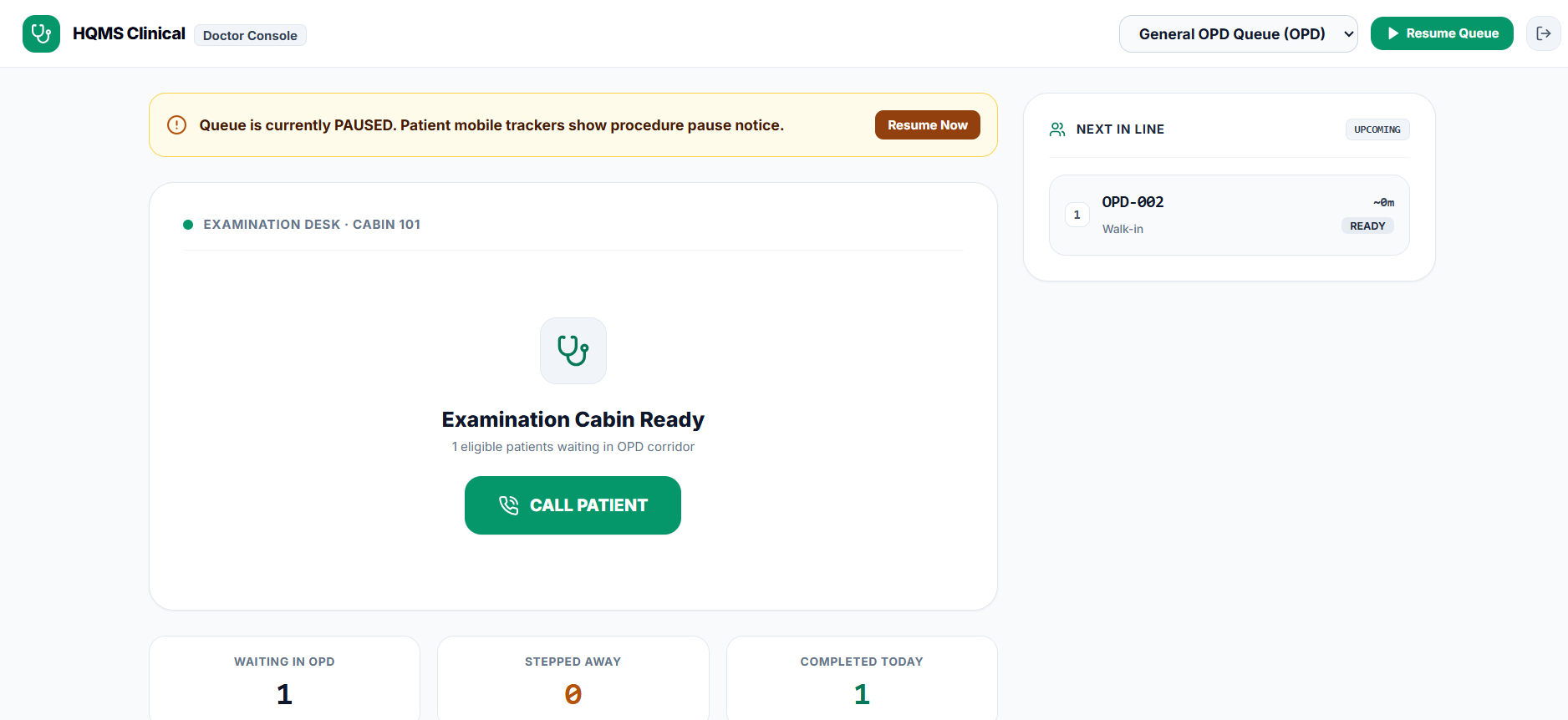
Doctors get a dedicated workstation for managing their active queue.
They can:
- Call the next patient
- Start and track consultations
- Monitor consultation duration
- Manage the active queue
- Resume the queue after a consultation
The goal is to keep the workflow simple enough for busy clinical environments.
📱 Zero-Install Patient Experience
Patients don't need to download an application or create an account.
A secure, unguessable tokenized URL gives the patient access to their queue tracker from any mobile browser.
This keeps the experience simple while still providing real-time information.
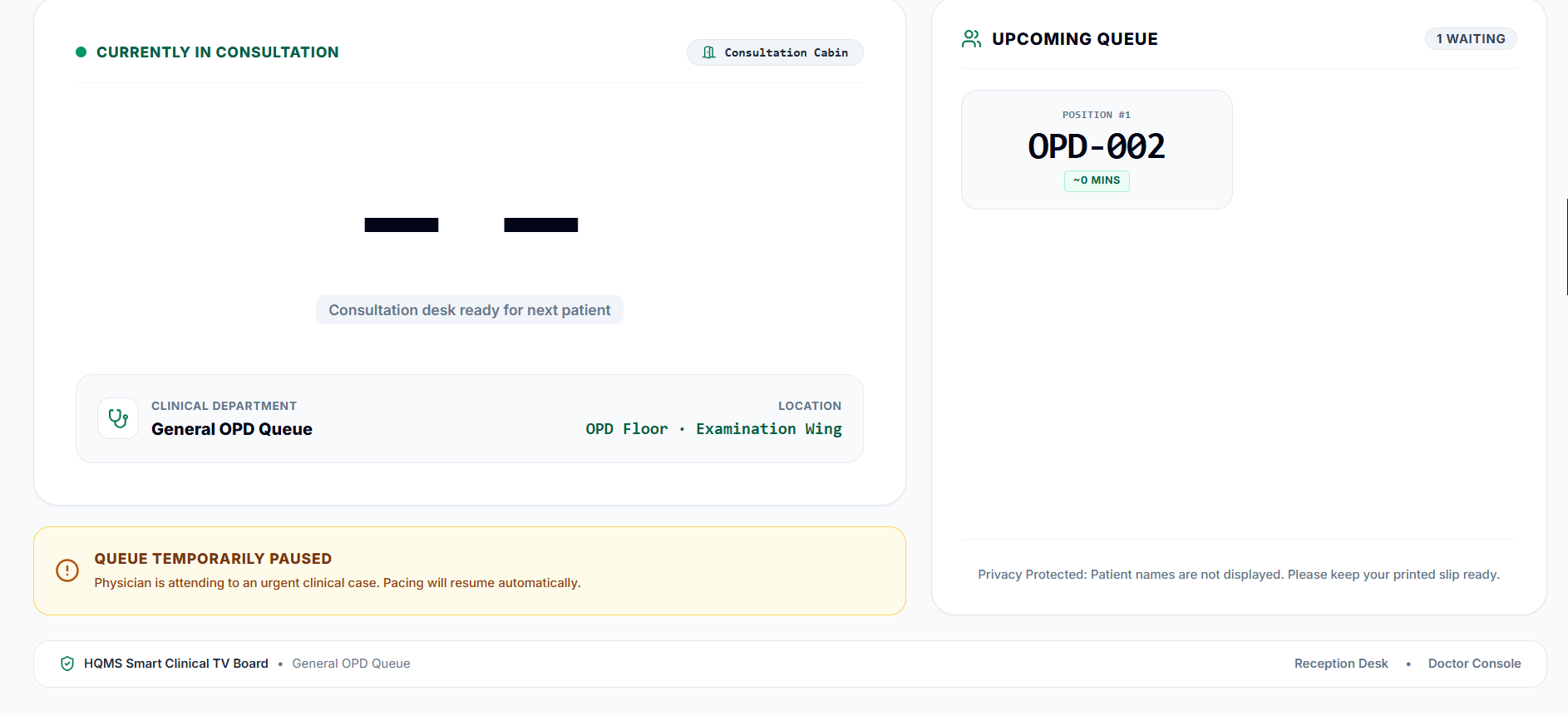
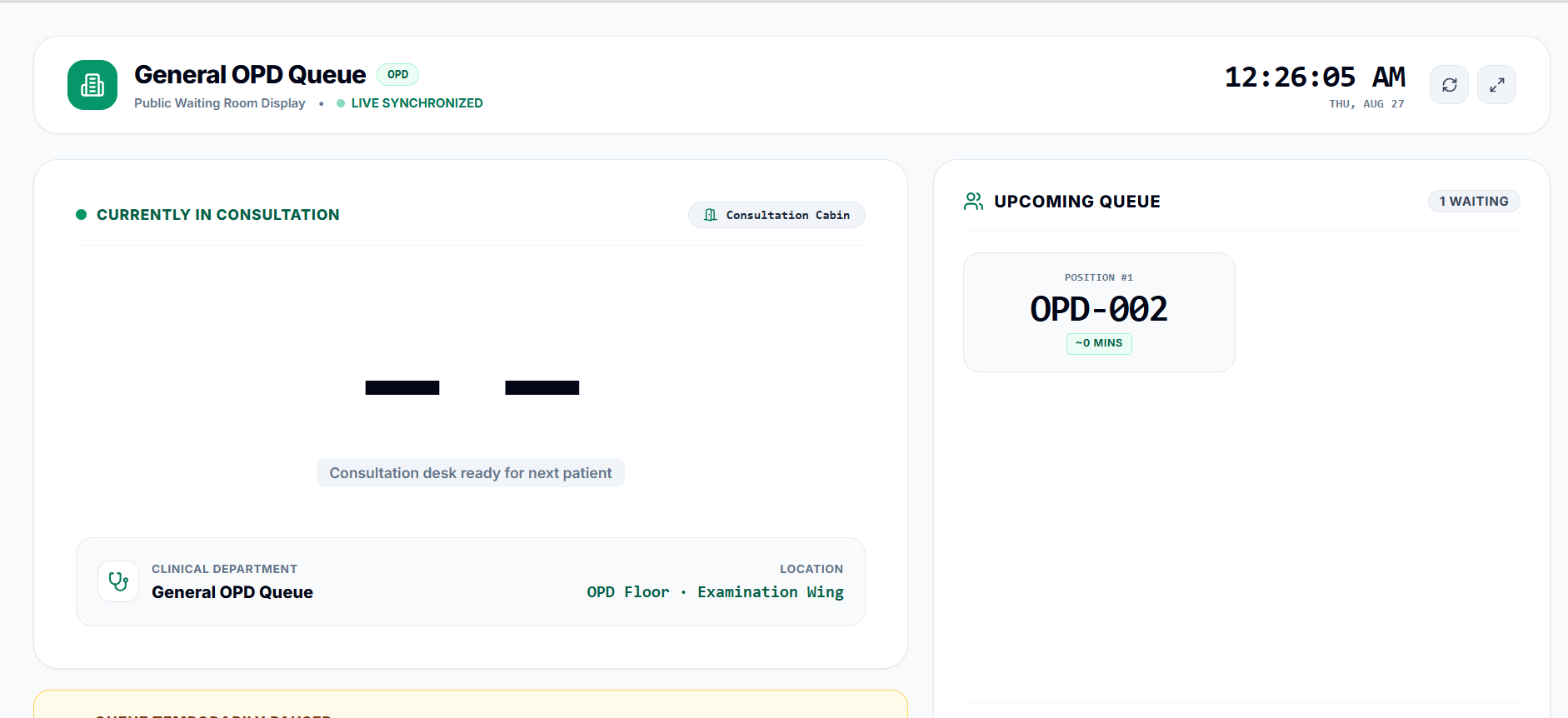
📺 Public Waiting Board
HQMS also includes a real-time public waiting board designed for hospital TVs and wall-mounted displays.
It provides a high-contrast interface for displaying queue information while avoiding unnecessary patient information.
🔒 Concurrency-Safe Queue Engine
One of the most challenging parts of the project was building a reliable queue engine.
Multiple staff members may interact with the same queue at the same time, so the system needs to prevent race conditions and duplicate queue assignments.
HQMS uses a deterministic Finite State Machine (FSM) for queue state transitions together with PostgreSQL pessimistic locking:
SELECT ... FOR UPDATE
This ensures critical queue operations are properly synchronized at the database level.
🏢 Multi-Tenant Architecture
HQMS was designed as a multi-tenant SaaS platform.
Multiple hospitals can operate on the same application while maintaining tenant-level isolation.
Each hospital has its own:
- Departments
- OPDs
- Doctors
- Consultation rooms
- Queues
- Staff access
Queue numbering is also independent between hospitals.
⚡ Real-Time Architecture
The platform uses WebSockets to synchronize queue changes in real time.
When a doctor calls a patient or the queue changes, connected patient trackers and public waiting boards can receive the update without requiring a page refresh.
This creates a synchronized experience between hospital staff, patients, and waiting-room displays.
🛠️ How It Was Built
Backend
- Python 3.12
- FastAPI
- SQLAlchemy Async
- Pydantic v2
- Alembic
Frontend
- Next.js 14
- TypeScript
- Tailwind CSS
- Lucide Icons
Database & Real-Time
- PostgreSQL
- Neon
- WebSockets
- Async database engine
Deployment
- Vercel
- Render
- Neon
🧪 Testing
The project currently has 34/34 automated unit and integration tests passing.
Testing covers important application workflows and queue operations.
✉️ Notifications
I also experimented with Fast2SMS and Meta WhatsApp APIs for notifications.
These integrations were kept optional because external messaging services introduce ongoing costs. The core HQMS experience does not depend on paid messaging services.
🚧 Challenges
The most interesting challenges were beyond basic CRUD functionality.
The project required solving problems around:
- Concurrent queue operations
- Race-condition prevention
- Multi-tenant data isolation
- Real-time WebSocket synchronization
- Queue state management using an FSM
- Designing separate workflows for administrators, doctors, patients, and public displays
These challenges made HQMS a practical exercise in concurrency, real-time systems, multi-tenancy, and backend architecture.
📚 What I Learned
Building HQMS gave me practical experience with asynchronous backend development, real-time WebSockets, PostgreSQL concurrency control, state machines, multi-tenant SaaS architecture, and role-based access control.
The biggest lesson was that building a real-world system isn't only about making individual features work. The system also needs to remain consistent when multiple users interact with it simultaneously.
🌐 Try HQMS
Live Demo:
https://frontend-three-sooty-14.vercel.app/
The live demo is not a public environment where anyone can freely create or modify hospital data.
If you want to actually explore the complete system, DM me and I'll create a dedicated hospital environment for you.
You can configure departments, doctors and OPDs, join queues, use the doctor workstation, and experience the patient-side virtual queue.
💻 Open Source
GitHub:
https://github.com/Frpratik/HQMS
The complete project and architecture are available on GitHub.
HQMS is an attempt to make hospital waiting more predictable for patients and easier to manage for clinical staff.
Built With
- alembic
- css
- fastapi
- neon
- next.js
- postgresql
- pydantic
- python
- render
- sqlalchemy
- tailwind
- typescript
- vercel
- websockets


Log in or sign up for Devpost to join the conversation.