The problem
Health apps give you dozens of numbers — steps, calories, sleep stages, heart rate — and leave you to work out what they mean together. Most people don't. They glance, feel judged, and stop opening the app.
What people actually want to know is simple: how much do I have left today, and what gets it back?
What HP does
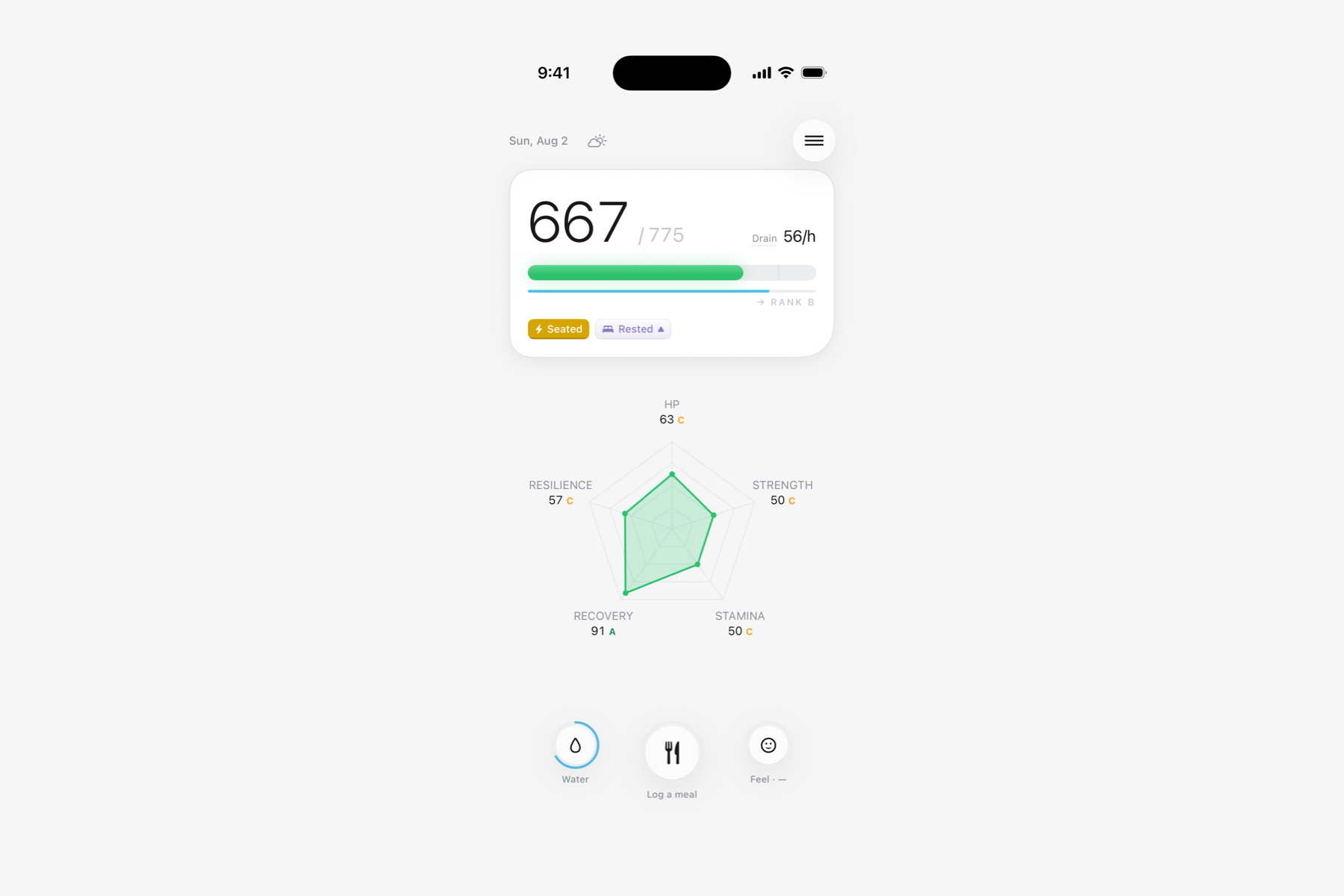
HP translates your body into the one interface everyone already understands: a hit-point bar.
- Drain. Your HP falls as you live your day, based on your basal metabolism and the activity Apple Health records.
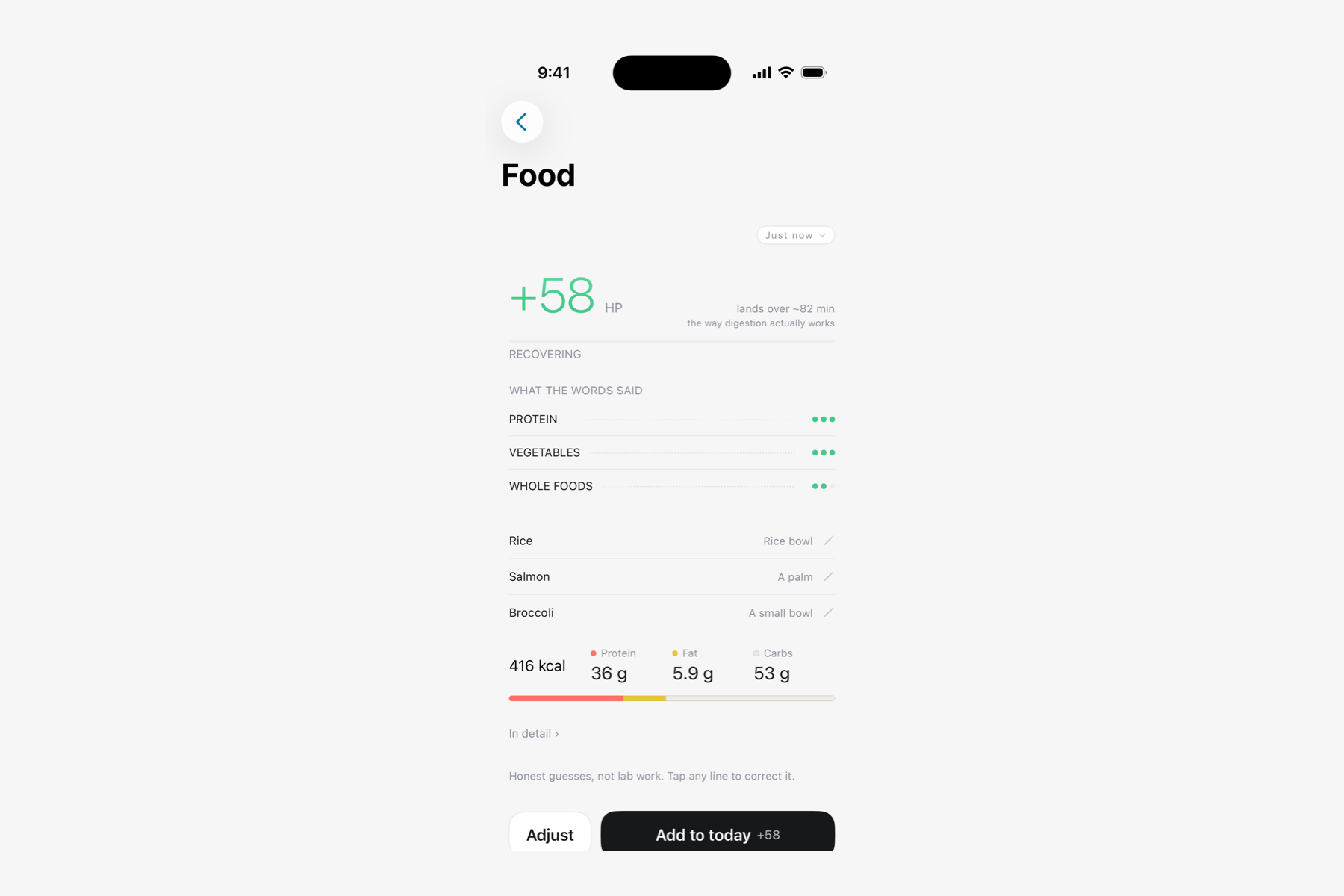
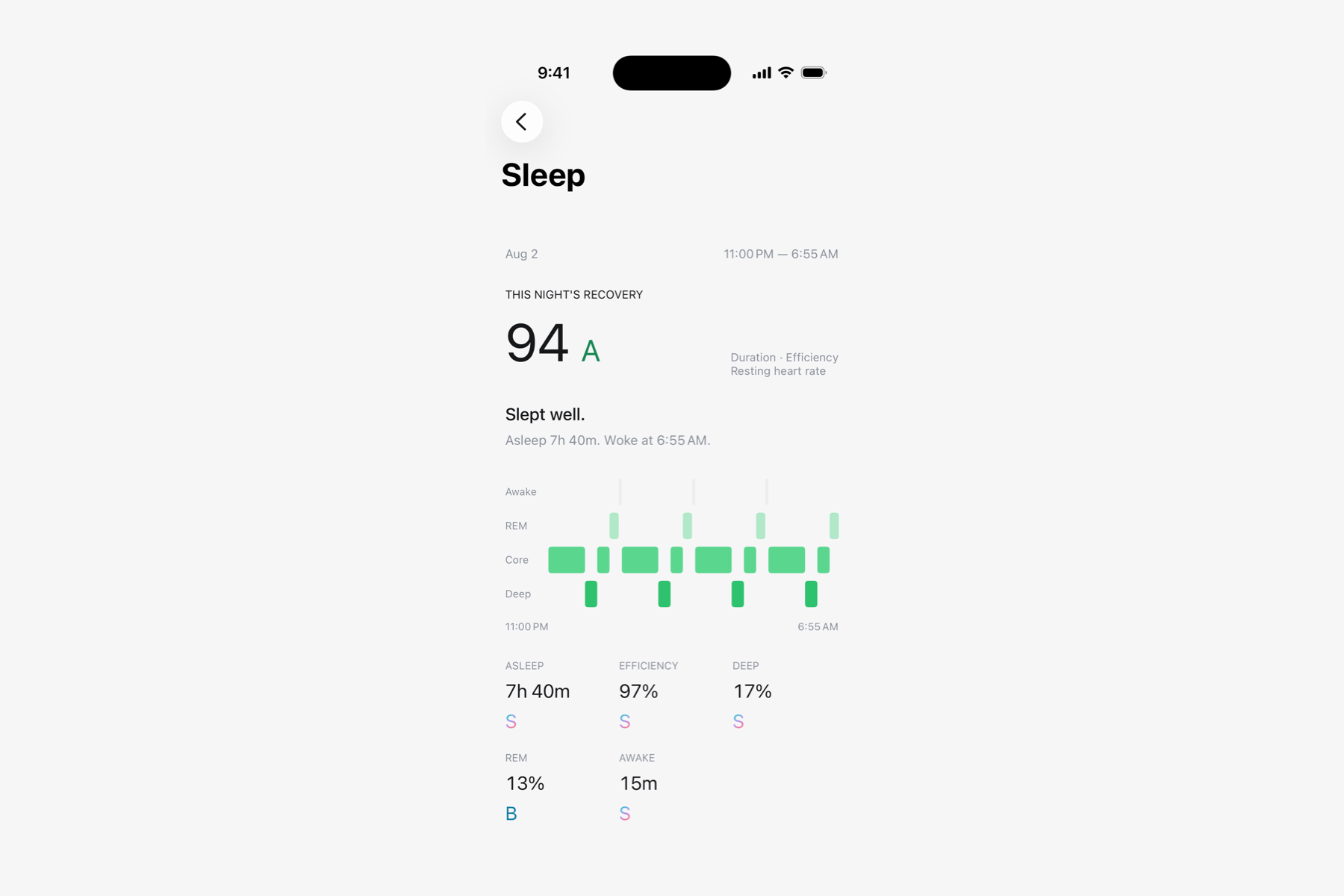
- Recover. A night's sleep gives back at most 73% of your maximum HP; the rest has to come from food. Meals restore HP as they digest, not instantly.
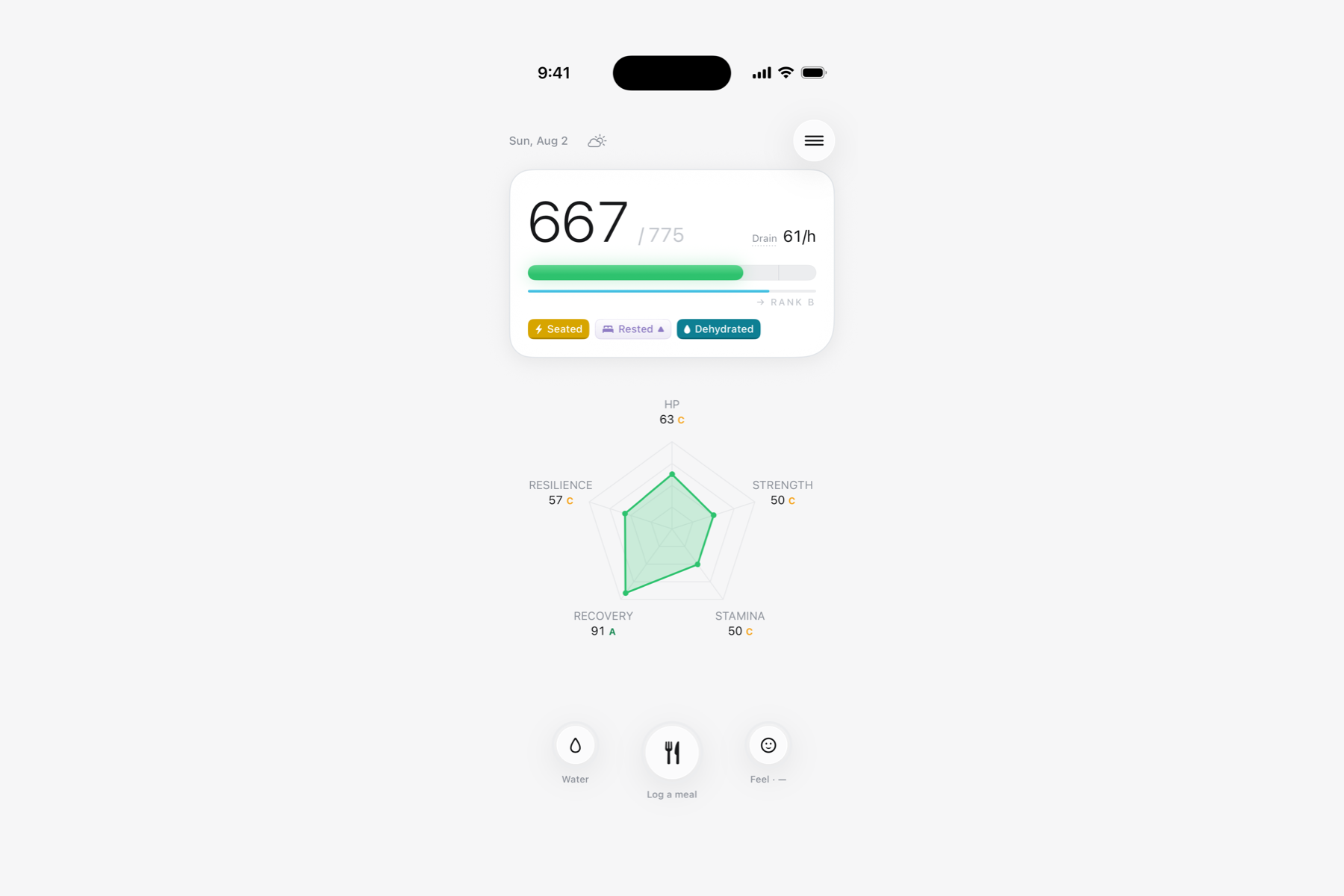
- Status effects. Dehydrated, Seated, Fever, Hangover, Strained — each is a small chip that changes how fast you drain (a few, like Fatigue, lower your maximum instead), and each card says what clears it.
- Stats and rank. HP, strength, stamina, recovery and resilience form a radar chart, each ranked F to S against published norms where they exist and HP's documented scales where they don't.
- Water as a gauge. A small tank that empties over a few hours, so it works as a gentle cue to drink, not a daily quota.
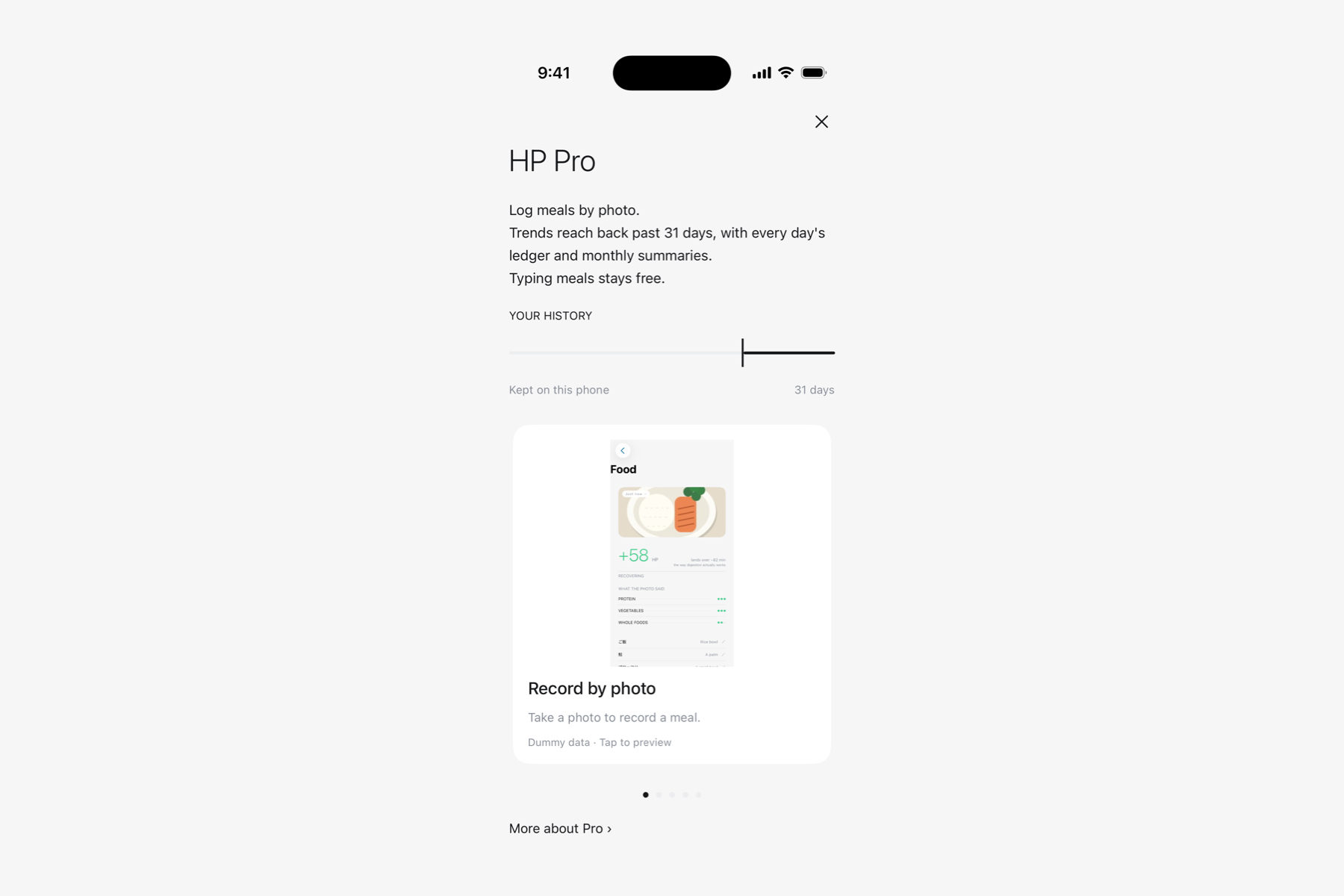
- Meals by text or photo. Type what you ate for free, or snap a photo with Pro. Results show kcal, protein, fat and carbs, say plainly that they are honest guesses, and any line can be tapped to correct it.
- Widgets and Apple Watch keep your HP one glance away.
Who it's for
People who want to take care of their body but find traditional health apps noisy, clinical or guilt-inducing. HP was built first for its developer — someone who wanted to see his own HP in real life — and for anyone who grew up reading HP bars and would rather play their health than audit it.
Design principles
- Magic on the surface, precision underneath. One bar on the Home screen; every term opens a one-line plain-language definition.
- Silent and never blaming. No streaks to lose, no red warnings for eating "too much", no push notifications nagging you to log. Missing data stays missing; it never becomes a penalty.
- Calibrated to how you feel. Recovery curves were tuned against the developer's own felt experience (how full you feel after six hours of sleep versus eight) and replayed against real logged days.
Monetization
- Free, forever: all logging (text meals, water, drinks, conditions), the HP bar, status effects, stats, widgets, Watch, and the last 31 days of history.
- HP Pro (monthly / annual auto-renewing subscription via RevenueCat): photo meal analysis; trends, the daily ledger and monthly summaries reaching back past 31 days; and medium-widget options. Both plans include a 7-day free trial.
- The line is deliberate: being able to record what you ate is never behind a paywall. Pro sells convenience and depth, not access to your own data.
What makes it different
Most wellness apps measure. HP translates. It turns the full loop — spend, recover, status effects, growth — into a single game-native model that stays honest about what is measured, what is estimated, and what is unknown.
Built with
Swift, SwiftUI, WidgetKit, watchOS, HealthKit, WeatherKit, RevenueCat, Cloudflare Workers, OpenAI (meal analysis from photos and text, with separate consent for each).

Log in or sign up for Devpost to join the conversation.